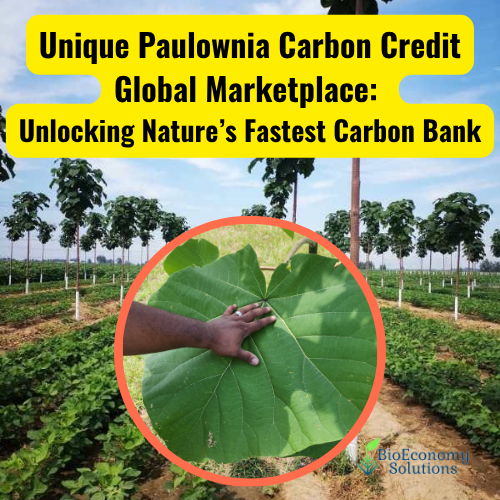
We’re happy to organize a time to speak with you about our paulownia trees and lumber we have for sale. Please book your preferred time to speak directly.
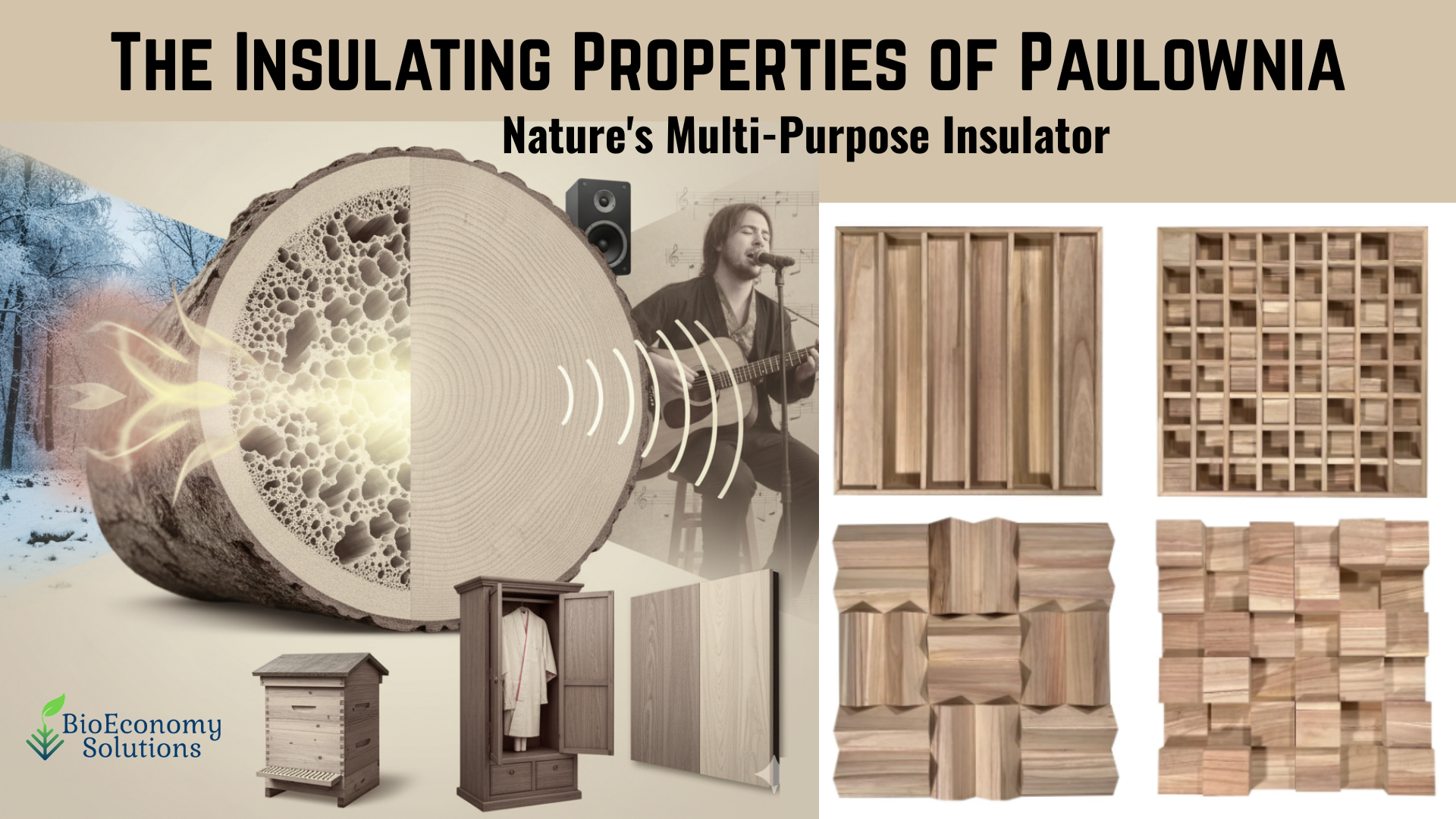
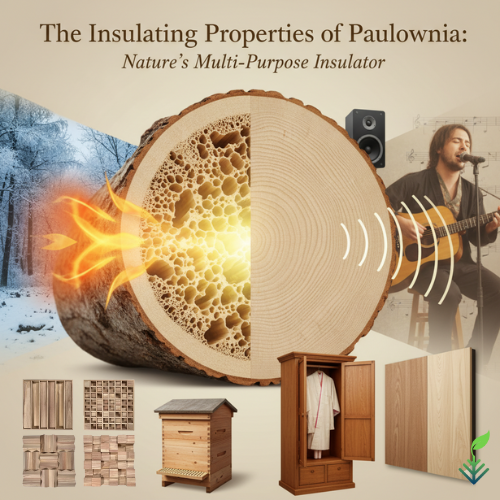
The combination of thermal, fire, and acoustic insulation properties makes Paulownia unique among natural materials – offering multiple performance benefits in a single, sustainable, fast-growing resource.
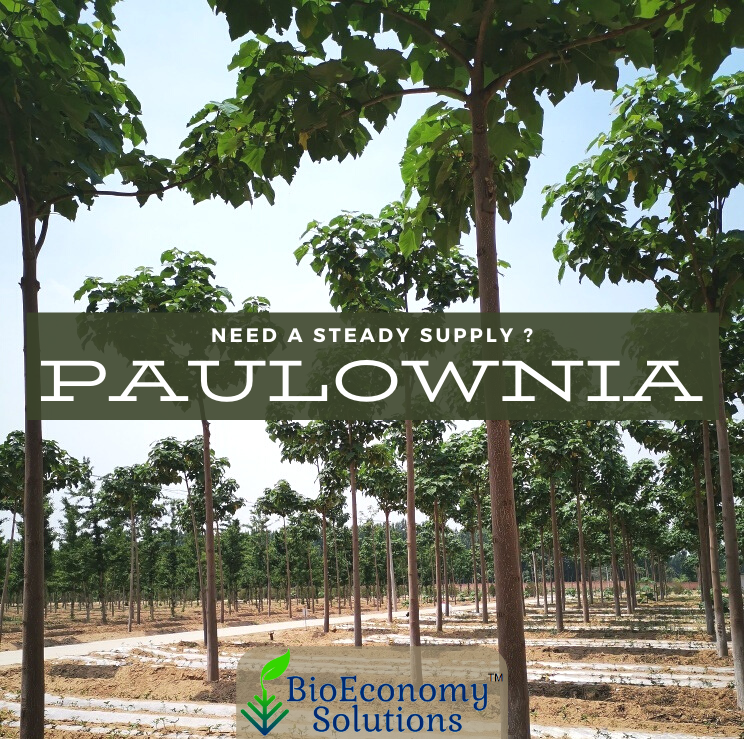
Where To Buy USA Paulownia Lumber?
Need paulownia for your next project?
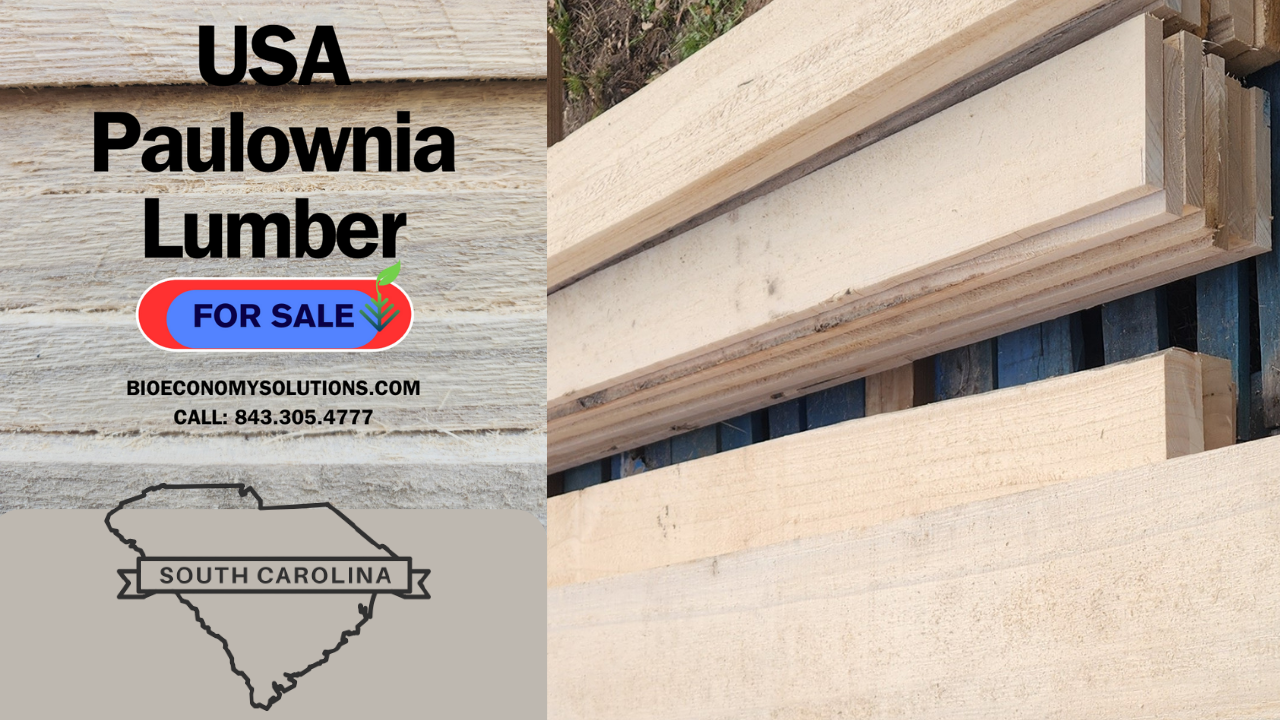
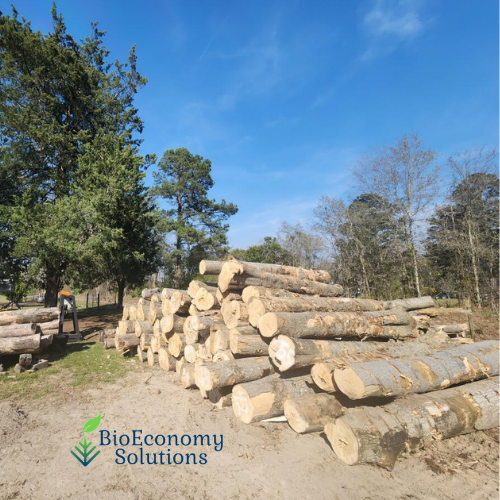
Where to buy paulownia? We’re harvesting our mature U.S. South Carolina Paulownia Timber and have millions of board foot available. We can mill lumber for your business needs. Contact Us for details. Office: 843.305.4777 | Email: mail@bioeconomysolutions.com Here’s a link to our online calendar, schedule a conference call with us:
You will discover that paulownia wood is the “Light Strong Alternative Wood” used in many processes to obtain many types of products.
Weather you are a hobbyist or full time manufacturing company, paulownia wood grown in South Carolina USA may be a new expression of your talent.
We sell Custom Paulownia boards: rough sawn or planed, we offer various sizes and thicknesses. Our Paulownia boards are processed using sustainable Paulownia hardwood grown right here in South Carolina USA.
🤝 CSR = The Action
Corporate giving
Community programs
Ethical business practices
“Doing good” initiatives
Think of it this way:
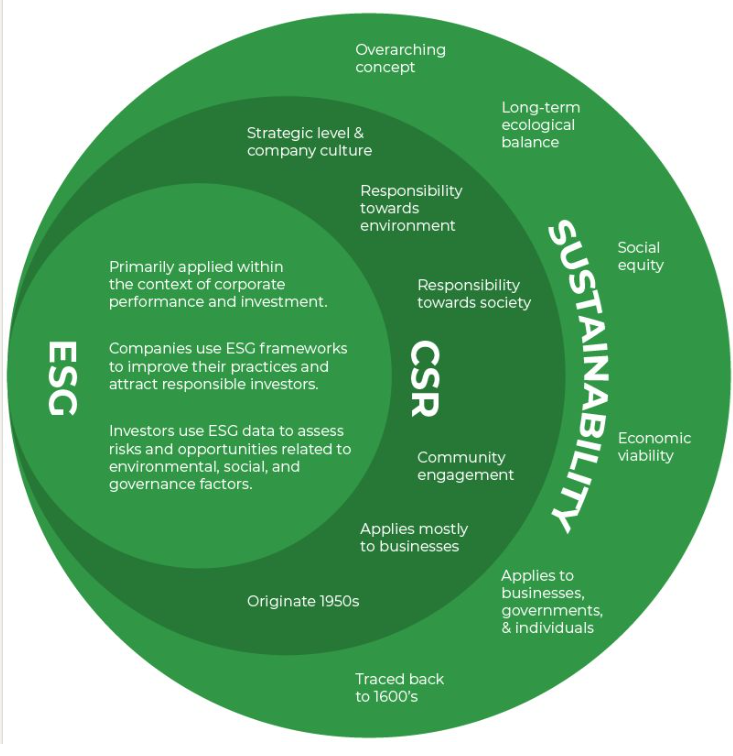
Sustainability is the destination.
ESG is the GPS.
CSR is the vehicle.
The problem?
Most companies treat them as separate things.
Smart companies connect them:
✅ Use ESG data to guide CSR programs
✅ Align CSR actions with sustainability goals
✅ Measure everything for investor transparency
Real example:
Our company BioEconomy Solutions plants trees (CSR action) → Tracks carbon sequestration (ESG metric) → Contributes to net-zero goals (Sustainability outcome).
Total addressable revenue: $67-92M from European market alone
ESG Integration Multiplier:
Premium pricing for verified ESG impact: +25-40%
Long-term offtake agreements: Reduced market risk
Diversified revenue streams: Timber, carbon, biochar, data
The Regulatory Tailwind
EU Taxonomy Alignment:
Climate change mitigation (carbon sequestration)
Climate change adaptation (soil restoration)
Sustainable use of water and marine resources
Transition to circular economy (waste-to-value)
Pollution prevention and control (soil remediation)
Protection of healthy ecosystems (biodiversity enhancement)
CSRD Reporting Benefits:
Quantifiable environmental impact metrics
Verifiable carbon removal documentation
Supply chain sustainability evidence
Stakeholder engagement proof points
The Bottom Line
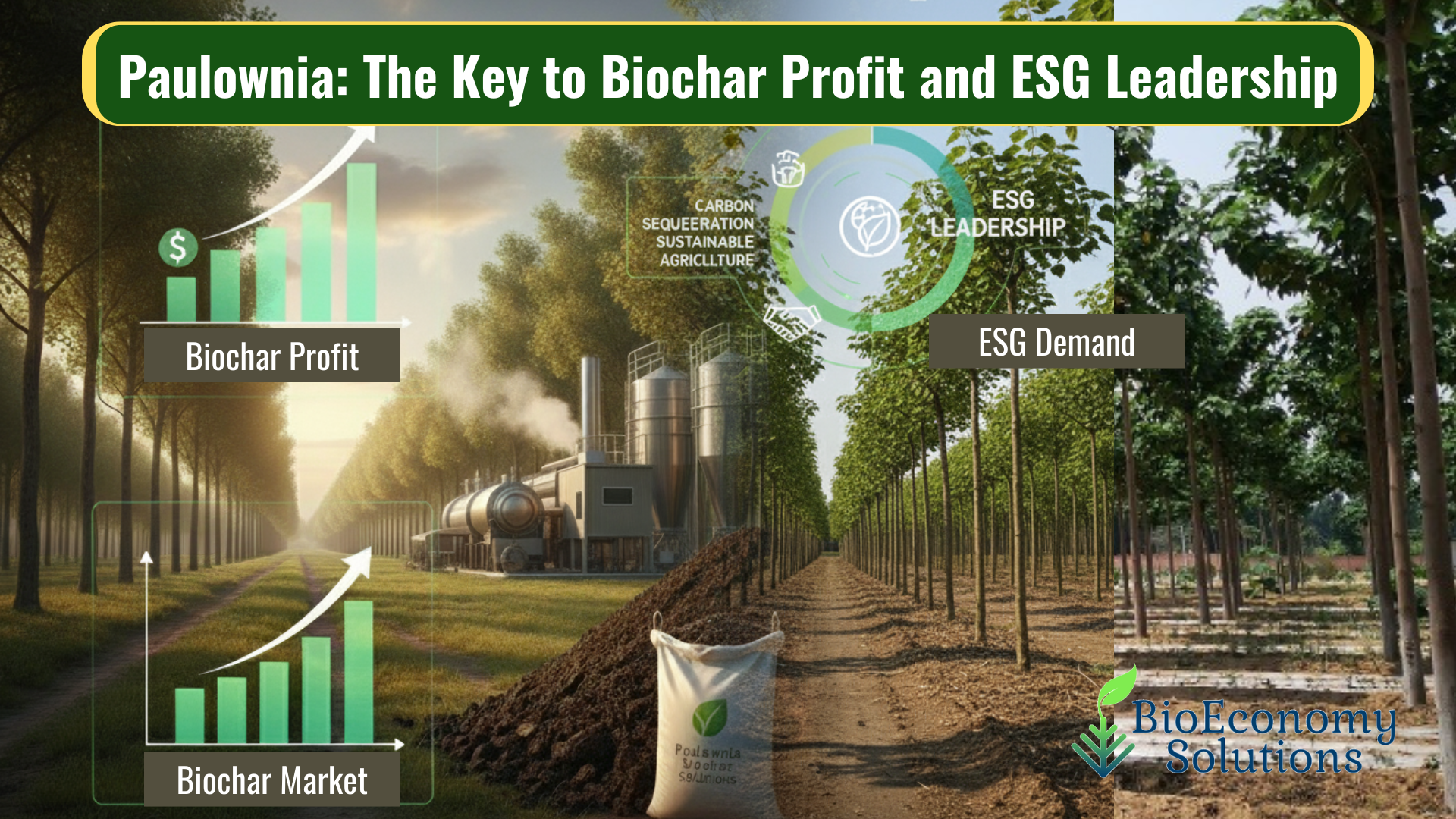
The biochar market is exploding, but feedstock supply is the bottleneck.
The ESG market demands verifiable impact, but most solutions lack transparency.
Paulownia solves both problems:
Reliable, scalable biochar feedstock
Integrated ESG impact with audit-grade documentation
Multiple revenue streams reducing investment risk
Regulatory alignment across EU frameworks
While competitors struggle with feedstock shortages and ESG compliance, Paulownia-based solutions capture both the $340M biochar opportunity and the $20B ESG market through integrated, verifiable impact.
The question isn’t whether these markets will grow—it’s whether you’ll be positioned to capture them.
Ready to explore how Paulownia can position your organization in the biochar and ESG growth markets? Contact BioEconomy Solutions to learn how purpose-grown feedstock and integrated ESG solutions create competitive advantages in rapidly expanding markets.
The biochar boom needs feedstock. The ESG market needs proof. Paulownia delivers both.
Contact Us for paulownia saplings and planning assistance.
Where To Buy Paulownia? Paulownia For Sale – QUESTIONS?
We’re happy to organize a time to speak with you about our paulownia trees and lumber we have for sale. Please book your preferred time to speak directly.
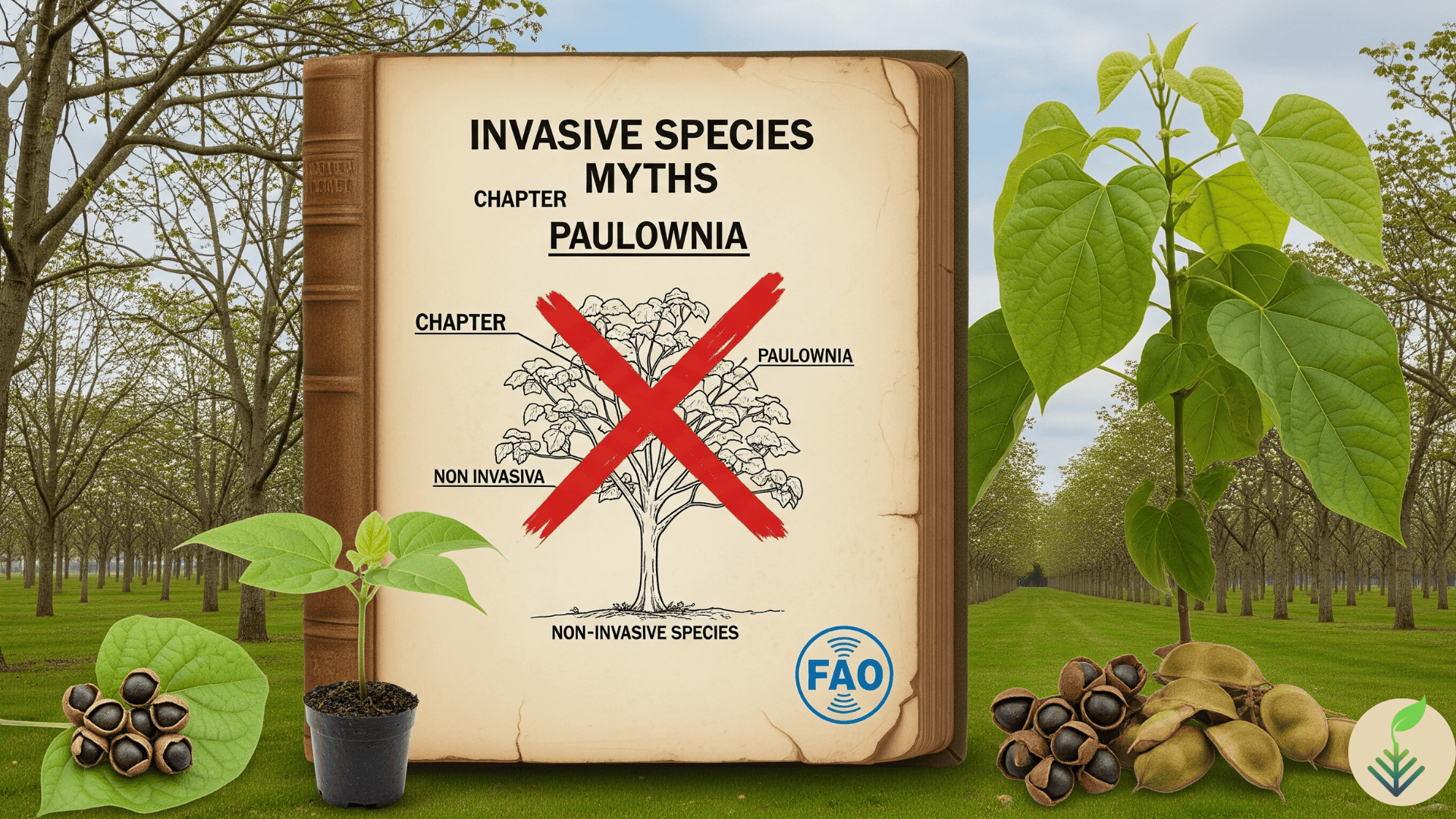
For decades, one Google search result has cost investors millions in missed opportunities. Type “Paulownia” and the first thing you see: “INVASIVE SPECIES.”
That lie just died.
The UN’s Food and Agriculture Organization—the world’s leading forestry authority—released their 27th Session, October 2024 report on fast-growing trees.
Paulownia got the official green light
WHY? 📖
Here’s the truth that changes everything:
The Scientific Validation
Dr. Nicola La Porta of FEM conducted definitive studies: Even in naturalization conditions, Paulownia tomentosa cannot permanently colonize environments. Only transitory colonization occurs—then it disappears.
Translation: The invasive species fear was based on incomplete science.
The Commercial Proof
Wonder K Green has planted 1,200 hectares since 2013 across Central and Southern Italy using Cotevisa 2 clone (P. elongata x P. fortunei hybrid).
FAO’s assessment: “Technical reports indicate good performance.”
Real-world result: Zero invasive incidents. Zero ecological disruption. Just rapid growth and economic returns.
The Industry Recognition
PEFC Italia initiated certification for Paulownia plantations and wood—the same standards used for sustainable forestry worldwide.
What this means: Paulownia is now recognized as a legitimate forestry species, not an ecological threat.
The Competitive Landscape
While the FAO report shows other species struggling:
Eucalyptus: Disease outbreaks (Teratosphaeria gauchensis) and variable productivity (6-16 m³/ha/year)
Douglas Fir: Limited to specific mountain regions, requires 40+ years to mature
Poplar: Increasing pest pressure from climate change, woolly aphid resistance issues
Paulownia emerges as the viable alternative with unique advantages the FAO couldn’t ignore.
The Research Momentum
Institutional backing is accelerating:
Veneto Agricoltura comparative studies at demonstration farms
Collaboration with Chinese Academy of Forestry (CAF)
CNR IBAF research partnerships
Multiple Italian regions reporting success
The Market Timing
The FAO report emphasizes “growing international interest in fast-growing species for climate mitigation” and “Bioeconomy Solutions applications including bioenergy and biochemicals.”
We’re happy to organize a time to speak with you about our paulownia trees and lumber we have for sale. Please book your preferred time to speak directly.
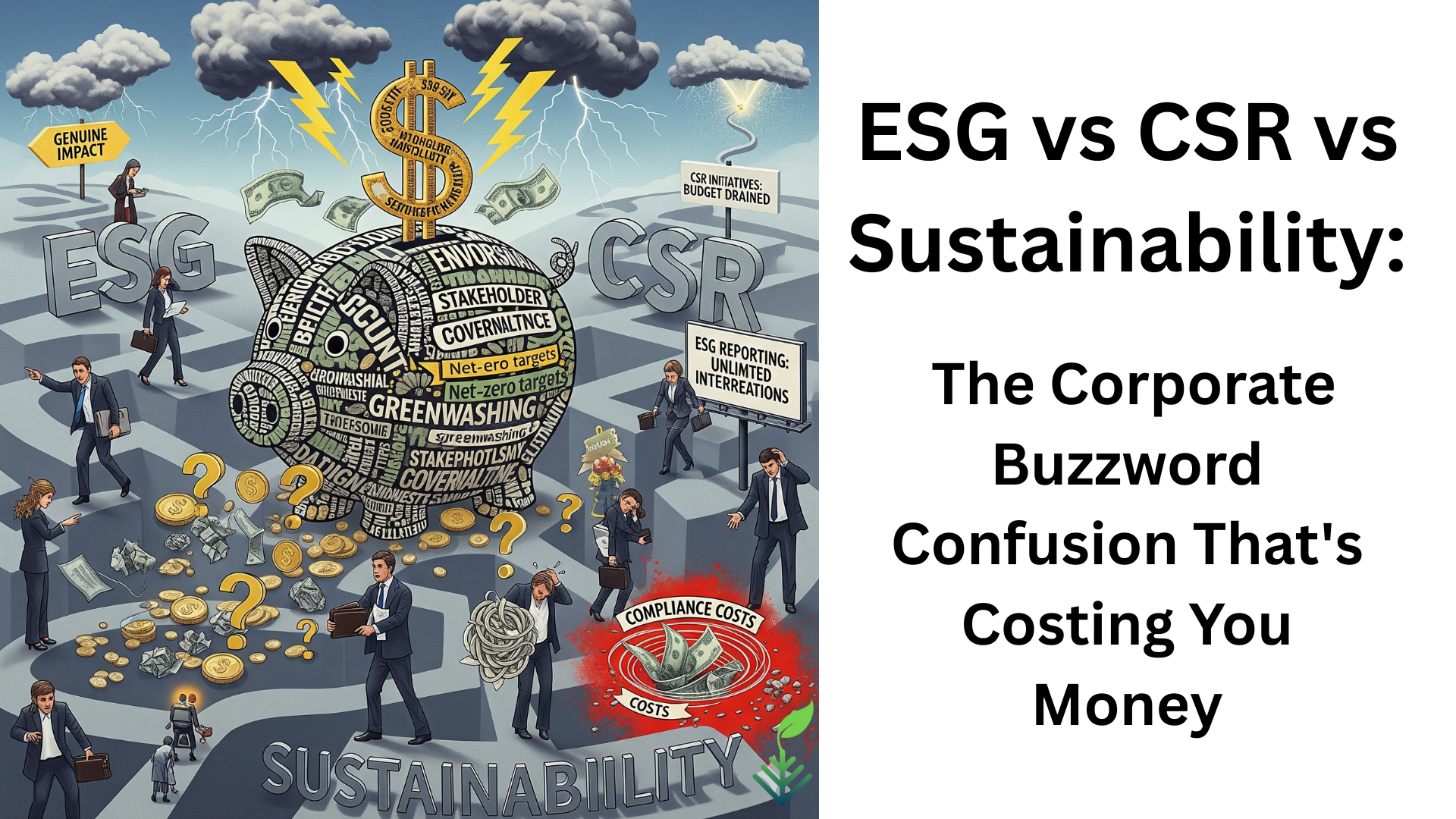
Stop using these terms wrong. It’s hurting your business.
What’s the missing link between corporate buzzwords and measurable climate action?
Most companies struggle to connect their ESG metrics, CSR programs, and sustainability goals. They end up with scattered initiatives that don’t reinforce each other.
Paulownia-based carbon credits solve this integration problem—creating a single solution that strengthens all three pillars while generating measurable returns.
Here’s how it works.
The Integration Challenge Most Companies Face
Typical Corporate Disconnect:
Sustainability Goal: “Be carbon neutral by 2030”
ESG Metrics: Track emissions but struggle with Scope 3 and removal verification
CSR Programs: Plant trees somewhere, donate to environmental causes
The Paulownia Solution: One integrated platform that addresses sustainability goals, improves ESG scores, and powers authentic CSR programs—while generating profit.
How Paulownia Strengthens Each Pillar
🌱 Sustainability: The Destination
Paulownia delivers on the triple bottom line:
People:
Creates rural jobs and economic development
Improves soil health and water retention
Enables food crop intercropping for food security
Provides sustainable building materials
Planet:
Sequesters 80-100 tons CO₂ per acre in 5 years
Grows on degraded land without competing with food crops
Converts to permanent biochar storage (1,000+ year permanence)
Combats desertification and restores ecosystems
Profit:
Generates 5-10% IRR through multiple revenue streams
Creates tradeable carbon assets
Reduces compliance costs through verified removals
Builds long-term asset value through timber and land appreciation
📊 ESG: The GPS
Environmental Metrics:
Scope 1 & 2: Direct emissions reduction through renewable biomass
Scope 3: Supply chain decarbonization through verified removals
Carbon Intensity: Measurable reduction per dollar of revenue
Biodiversity Impact: Quantified habitat restoration and soil improvement
Social Metrics:
Community Investment: Direct economic impact in rural areas
Job Creation: Sustainable employment in agriculture and processing
Food Security: Intercropping capabilities support local food systems
Environmental Justice: Restoration of degraded lands in underserved communities
CORSIA (Aviation): Verified carbon removals for airline compliance
Article 6 (Paris Agreement): International carbon market participation
Audit-Ready Documentation:
ISO 14064-3 verification
Registry serialization
Clear compliance controls
Immutable blockchain audit trails
The Investment Case
Traditional ESG/CSR Approach:
$2.3M average annual ESG compliance costs
CSR programs as pure expense
Difficult to measure ROI
Investor skepticism about “greenwashing”
Paulownia Integration Model:
ESG compliance generates measurable returns
CSR programs create tradeable assets
Clear ROI metrics for every sustainability dollar
Investor confidence through verified impact
Getting Started: Your Integration Roadmap
Phase 1: Assessment (30 days)
Map current ESG metrics to carbon removal opportunities
Identify CSR programs that could generate carbon assets
Assess sustainability goals for Paulownia alignment
Phase 2: Pilot Program (90 days)
Launch 500-acre Paulownia demonstration project
Integrate with existing CSR community partnerships
Begin ESG metric tracking and reporting
Phase 3: Scale-Up (12 months)
Expand to 5,000+ acres across multiple regions
Develop biochar processing partnerships
Launch carbon credit trading program
Phase 4: Full Integration (24 months)
Achieve material impact on corporate carbon footprint
Generate positive ROI from sustainability investments
Establish industry leadership in integrated ESG/CSR
The Competitive Advantage
While competitors struggle to connect ESG metrics, CSR programs, and sustainability goals, your company will have:
Integrated Strategy:
Every sustainability dollar generates measurable returns
CSR programs directly improve ESG scores
Clear line of sight from community impact to corporate goals
Authentic Impact:
Real carbon removal, not accounting tricks
Genuine community economic development
Verifiable environmental restoration
Financial Performance:
Sustainability as profit center, not cost center
Diversified revenue streams reduce risk
Premium valuations for ESG leadership
The Bottom Line
Paulownia-based carbon credits don’t just check ESG boxes or fund CSR programs—they create an integrated system where:
Sustainability goals drive profitable business decisions
ESG metrics improve through measurable environmental and social impact
CSR programs generate tradeable assets while supporting communities
Financial returns prove that doing good and doing well aren’t mutually exclusive
The future belongs to companies that can integrate purpose and profit.
Paulownia trees make that integration not just possible, but profitable.
Ready to integrate your ESG, CSR, and sustainability strategies through verified carbon removal? Contact BioEconomy Solutions to explore how Paulownia-based carbon credits can transform your corporate climate strategy from cost center to profit center.
Stop managing ESG, CSR, and Sustainability as separate initiatives. Start building an integrated system that delivers measurable impact and measurable returns.
We’re happy to organize a time to speak with you about our paulownia trees and lumber we have for sale. Please book your preferred time to speak directly.
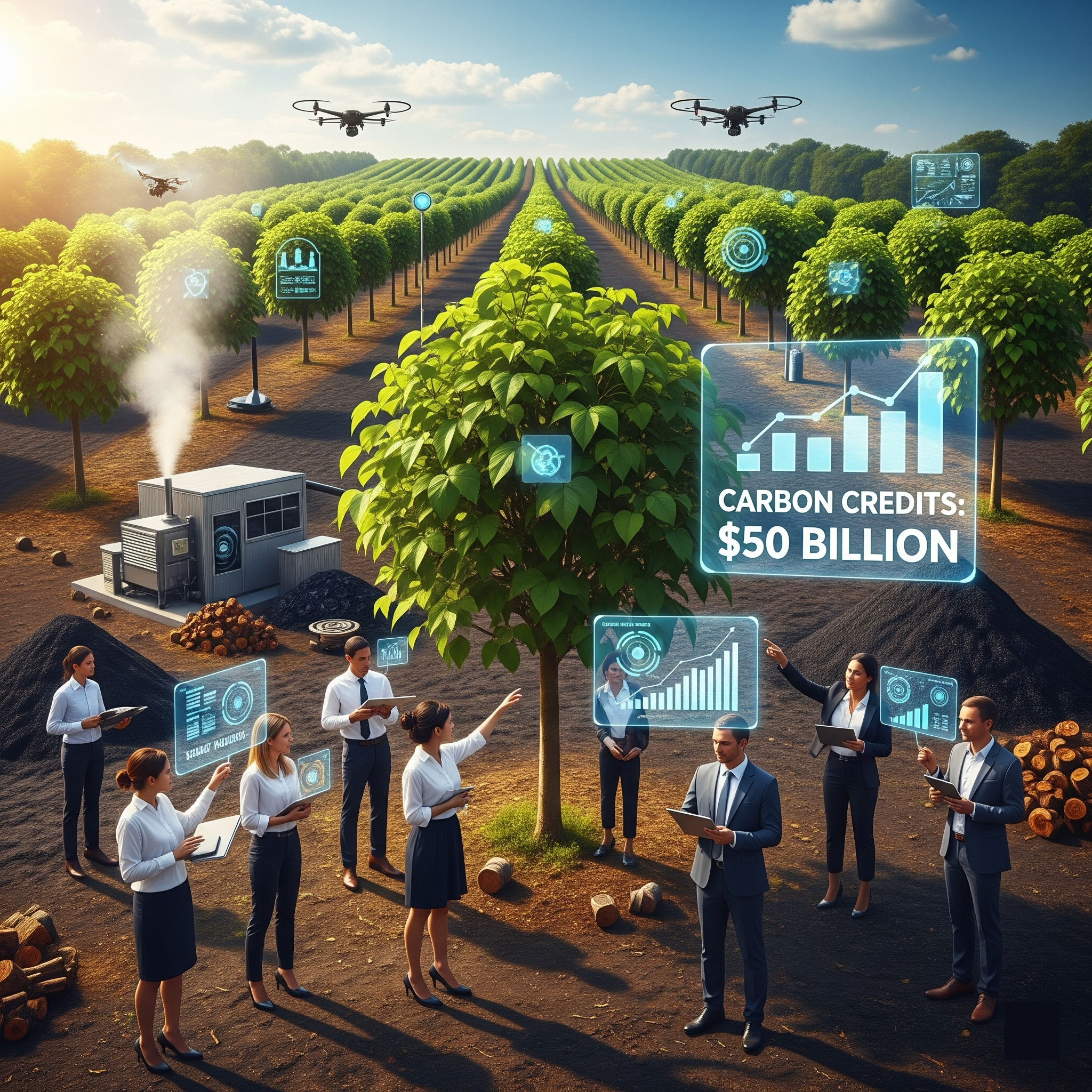
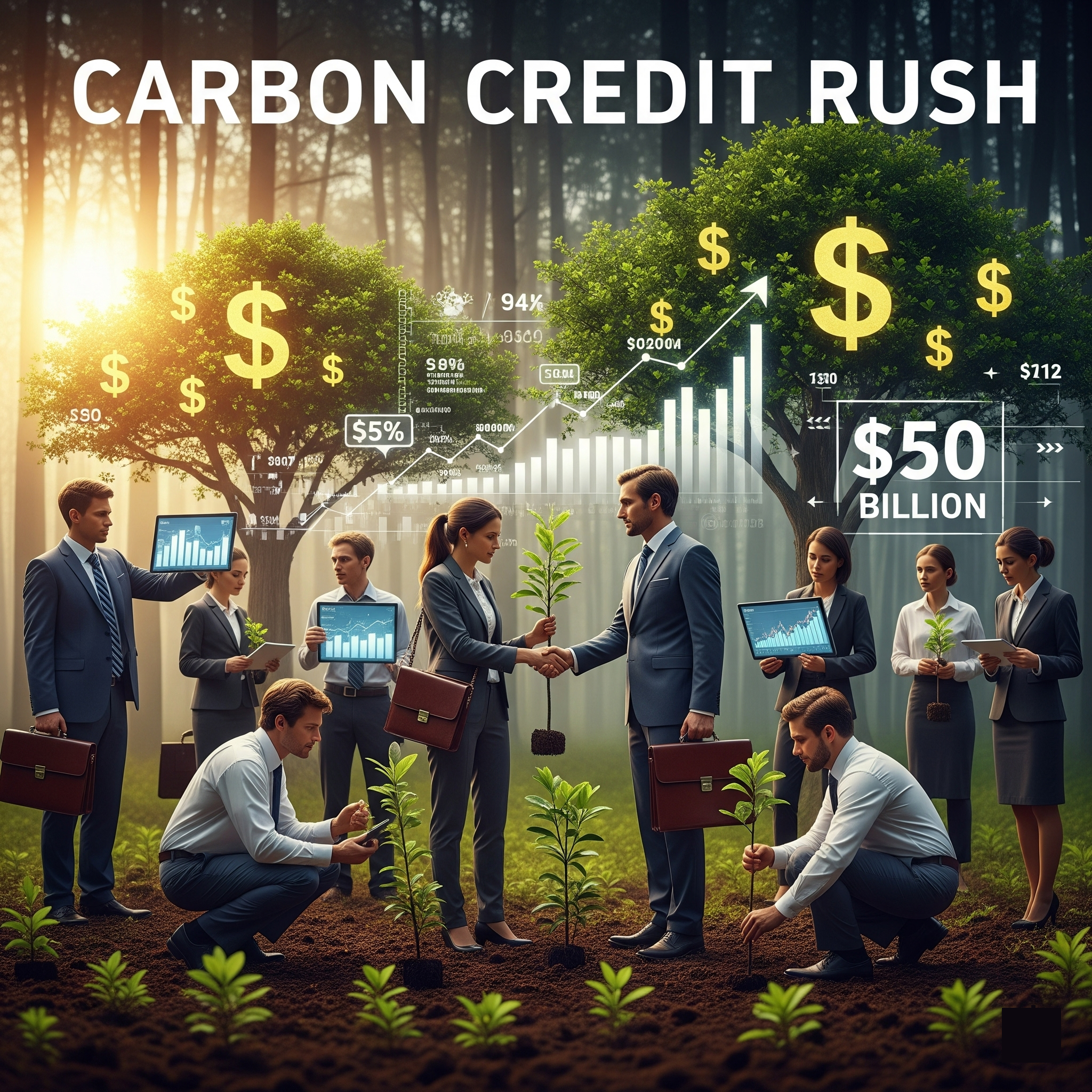
The $50 Billion Carbon Credit Rush: Why Smart Money Is Buying Trees (Before It’s Too Late)
The market that’s about to explode from $8 billion to $200 billion in the next 6 years – and 99% of people have no idea it exists.
While everyone’s chasing crypto and AI stocks, the smartest investors are quietly buying something that literally grows money from dirt. And the supply is running out faster than anyone expected.
Here’s exactly what’s happening in the carbon credit market and how you can position yourself before this opportunity disappears forever.
SECTION 1: The Market Explosion Nobody Sees Coming
Right now, only 537 companies globally are buying carbon removal credits. But over 10,000 companies have committed to net-zero targets by 2030.
The Math Is Staggering:
If just 10% start buying, the market needs to scale 25 times overnight
New regulations force companies to buy starting in 2026
Current market: $8 billion → Projected: $200+ billion
The Clear Winner: Biochar dominates everything:
86% of all carbon removal deliveries in 2024
80% of buyers choose biochar over other solutions
Delivers credits in 1-3 years vs. 20+ years for traditional forestry
But here’s the problem that’s about to make early investors very wealthy..
SECTION 2: The Supply Crisis Creating Millionaires
Supply Is Disappearing Before Our Eyes:
62% of high-quality biochar capacity for 2025: SOLD OUT
28% of 2026 supply: LOCKED UP in contracts
Only 30% of biochar projects meet institutional quality standards
Smart Money Strategy: While most people buy carbon credits at market price, companies like Microsoft, Google, and Stripe are signing “offtake agreements” – pre-ordering years in advance at massive discounts.
The Results Speak for Themselves:
15-30% discounts compared to spot prices
One company saved $918,750 on a single 3-year deal
Historical example: $125/tonne (2022 offtake) vs. today’s $165/tonne
SECTION 3: The Price Explosion That’s Already Started
Why Prices Will Skyrocket:
Biochar prices already grew 29.2% annually for 4 consecutive years
By 2030, demand could be 6 times larger than available supply
70% of new biochar capacity fails quality standards
The Perfect Storm Is Brewing:
10,000+ companies must start buying by 2026 (regulatory requirements)
Each biochar facility caps at 100,000 tonnes/year maximum
Less than half of 2030 demand is currently financed
Reality Check: Companies without secured supply contracts risk missing their climate targets entirely due to supply shortages.
SECTION 4: How to Position Yourself in This Rush
Your Investment Options:
1. Direct Offtake Agreements
15-30% discounts vs. spot market
1,000+ ton minimums required
Multi-year contracts lock in favorable pricing
2. Carbon Credit Investment Funds
Lower minimums for smaller investors
Professional management handles sourcing and verification
2026: Regulatory requirements kick in, demand surge begins
2027+: Spot market chaos, premium pricing becomes the norm
The Numbers Don’t Lie: This Is Bigger Than Anyone Realizes
Market Reality Check:
Current CDR capacity: 0.003% of what’s needed by 2050
Demand growth: 78% in 2024 while broader carbon markets contracted 61%
Supply concentration: Only 36% of CDR suppliers have registered any sales
Quality crisis: 70% of expected biochar capacity by 2026 fails standards
What the Smart Money Knows: Microsoft, Google, and Stripe drove 80% of all CDR purchases in 2024. They’re not buying on the spot market—they’re locking up supply years in advance through offtake agreements.
Why This Opportunity Won’t Last
The biochar landgrab is already underway. Here’s what’s happening behind closed doors:
Major corporations are signing exclusive multi-year supply deals
High-quality producers are getting locked up by early movers
Spot market buyers will be left competing for scraps at premium prices
The window to act is measured in months, not years.
Your Next Move
The carbon credit market is moving from speculation to necessity. In 5 years, you’ll either thank yourself for understanding this early, or watch others profit from the biggest commodity rush of our lifetime.
The facts are clear:
Supply is disappearing faster than new capacity comes online
Prices are rising at 29%+ annually with no ceiling in sight
Regulatory requirements will force 10,000+ companies to become buyers
Early movers are securing 15-30% discounts while latecomers pay premiums
This isn’t about saving the planet anymore—it’s about positioning yourself in a supply-constrained market before everyone else figures it out.
Ready to explore your options in the carbon credit rush?
Contact BioEconomySolutions.com and book your private strategy session today. We’ll show you exactly how to position yourself in this market before the opportunity disappears.
The carbon credit landgrab is happening now. The question isn’t whether you’ll participate—it’s whether you’ll be early or late.
Contact Us
BioEconomy Solutions is a Carbon Dioxide Removal (CDR) Project Developer. Talk to us about our TREE PLANTING strategies with Paulownia trees.
We’re happy to organize a time to speak with you about our paulownia trees and lumber we have for sale. Please book your preferred time to speak directly.
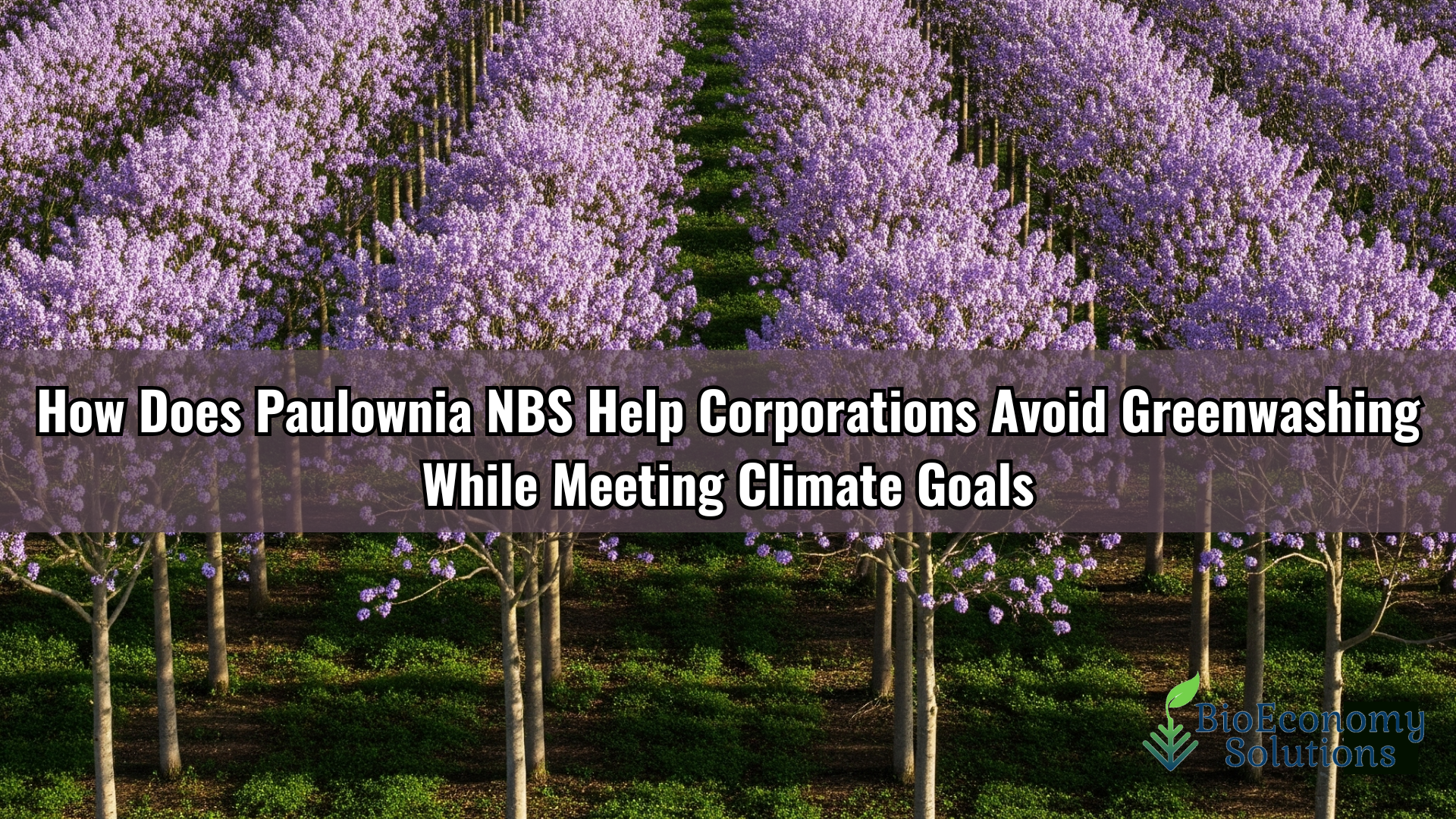
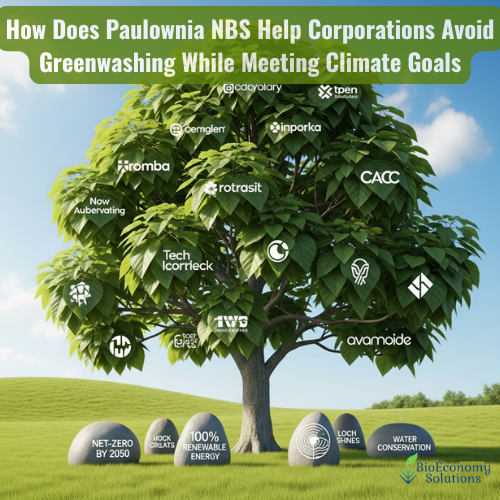
Paulownia Nature-Based Solutions: A Practical Wedge Toward 10 Gigatons of CO₂ Removal by 2050
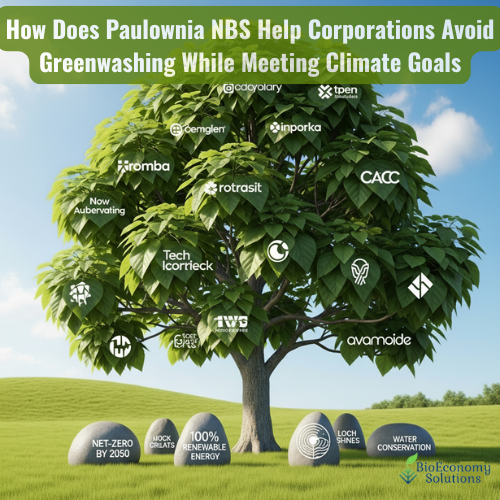
The Challenge: Science says we need 10 billion tons of CO₂ removed annually by 2050. Corporations want to help but face greenwashing accusations and rising compliance pressure from CSRD, SEC climate rules, and CORSIA.
The Solution: Paulownia-based nature solutions that convert ultra-fast tree growth into permanent biochar storage—with audit-grade transparency that regulators & buyers trust.
Why Corporate Carbon Buyers Get Stuck
• Greenwashing fears: “Phantom” credits, double counting, and reversals make buyers avoid temporary nature credits
• Compliance pressure: New rules require defensible tracking and clear separation of reductions vs. removals
• Market confusion: Multiple registries and opaque pricing slow procurement.
What Makes Paulownia Different
Speed & Scale:
• Grows 10-15 feet per year with mechanized harvesting (80-100 tons/hour) • Coppices after cutting—regrows from stumps without replanting
• Thrives on degraded/semi-arid land without competing with food crops
Integrity by Design:
• Only sterile, non-invasive hybrids
• ISO 14064-3 verified with satellite monitoring and public audit trails
• Registry serialization for transparent pricing
Permanent Storage:
• Harvested biomass becomes biochar (1,000+ year carbon storage)
• Generates 2.5-3.3 carbon credits per ton of biochar
• Market-proven: 93% of biochar credits sell within 22 days at €125-145/ton
Zero Double Counting—Guaranteed
Our system ensures one ton of carbon is never sold twice:
Growth phase: Credits labeled “pledged/pending”—visible but not claimable
Harvest: System automatically retires growth credits when biochar credits are issued
Result: Buyers get permanent removal credits with immutable audit trails
Meeting Your Compliance Needs
Carbon Compliance:
✅ CSRD/SEC reporting with audit-ready documentation
✅ CORSIA eligibility through recognized registries
✅ California AB 1305 compliance with full traceability
Corporate Climate Goals:
✅ Durable removals that satisfy SBTi requirements
✅ Rapid impact while engineered solutions scale up
✅ Co-benefits: soil health, water retention, habitat restoration
What Procurement Teams Get
• Transparent pricing: Exchange-traded with daily price indices
• Fast settlement: Average 22 days from issuance to transfer
• Retirement proofs: Blockchain-verified certificates for compliance filing
The Bottom Line
Paulownia delivers what corporations need most: permanent carbon removal at scale, with verifiable tracking that stands up in audits.
❌ No greenwashing risk. No double counting. No compliance headaches.
✅ Just credible climate action you can defend.
Ready to explore Paulownia carbon solutions for your climate strategy? Contact us to see how permanent removal credits can strengthen your net-zero plan while avoiding greenwashing risks.
Conclusion
The Paulownia tree, with its FAST growth rate, carbon capture abilities, and adaptability, is a powerful tool in climate change mitigation, biodiversity support, and sustainable forest management. When used appropriately in afforestation and reforestation projects, it holds the potential to restore ecosystems, combat deforestation, and provide long-term environmental and economic benefits.
Contact Us
BioEconomy Solutions is a Carbon Dioxide Removal (CDR) Project Developer. Talk to us about our TREE PLANTING strategies with Paulownia trees.
We’re happy to organize a time to speak with you about our paulownia trees and lumber we have for sale. Please book your preferred time to speak directly.
Steve Martinez, a Boise contractor, watches lumber prices swing wildly—sometimes increasing tenfold overnight. Canada has historically accounted for a very high percentage of U.S. softwood lumber imports, typically in the 70–85% range. Recent data shows this percentage has shifted. For example, in 2024, Canada accounted for 84.3% of U.S. softwood lumber imports.
The new potential tariffs jumping from 14.5% to 34.5%, America’s construction industry faces an unprecedented crisis which ultimately the end consumer pays the price.
The numbers are staggering: over 100 million American households can’t afford the median $460,000 home price, while builders struggle with fixed contracts and volatile material costs that make up 15-18% of total construction expenses.
But what if there was a domestic solution growing right under our noses?
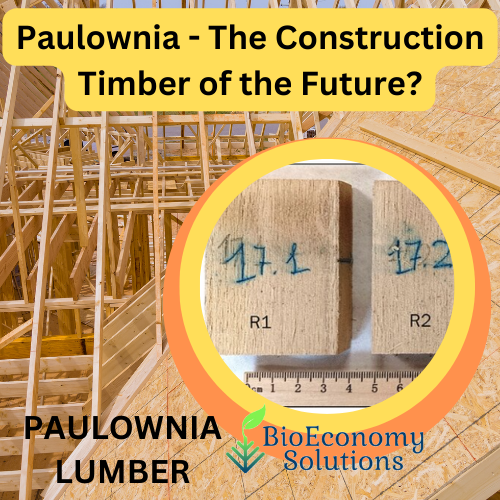
Enter Paulownia: America’s Untapped Lumber Goldmine
While politicians debate tariffs and regulations, a revolutionary wood species is quietly proving itself across American soil. Paulownia—often called the “aluminum of lumber”—offers properties that could transform the U.S. construction landscape.
The Paulownia Advantage: Superior Performance Metrics
Strength-to-Weight Champion:
30% lighter than traditional hardwoods
Twice as strong as balsa wood
Highest strength-to-weight ratio of any wood globally
Perfect for reducing transportation costs and construction labor
Termite and rot resistant without chemical treatment
Dimensionally stable—resists warping, shrinking, and cracking
Ideal for moisture-prone applications like saunas and pool decks
Construction Versatility:
Non-load-bearing structural components
Interior finishing and trim work
Flooring with superior dimensional stability
Natural insulation properties
Acoustic panels for soundproofing
Paulownia Bearing The Load
Non-load-bearing structural components are elements of a building that do not support the main weight of the structure, such as the roof or floors. Instead, they primarily serve functions like dividing spaces, providing insulation or soundproofing, or acting as decorative finishes. Examples include interior partition walls, drywall, and exterior cladding.
Paulownia Wood and Load-Bearing Applications
Paulownia wood is exceptionally lightweight, often compared to balsa wood, but it has a high strength-to-weight ratio. While it is naturally a non-load-bearing material by itself, its properties can be enhanced through existing engineered wood technologies to make it suitable for some load-bearing applications.
These technologies generally involve processing the wood to create composite materials with improved structural properties:
Laminated Veneer Lumber (LVL): This process involves bonding thin layers (veneers) of wood together with adhesives. By arranging the grain of all veneers parallel to the long direction, LVL creates a strong, stiff, and dimensionally stable product.
Sandwich Panels: Paulownia wood can be used as the lightweight core material in a sandwich panel, with stronger, denser materials like fiberglass, plywood, or other hardwoods bonded to its surfaces. This structure provides high stiffness and strength while keeping the overall product lightweight.
Glued Laminated Timber (Glulam): Similar to LVL, glulam is made by bonding together smaller pieces of wood into larger, more stable members. This process can utilize the lightweight properties of paulownia for the core while potentially using stronger wood or other materials for the outer laminations to increase its load-bearing capacity.
The use of these engineered wood products allows paulownia to be utilized in structural applications where its natural properties alone would be insufficient, leveraging its fast growth and sustainable characteristics for a greener building industry.
Engineered wood technologies, including laminated veneer lumber (LVL) and cross-laminated timber (CLT), are used in modern construction.
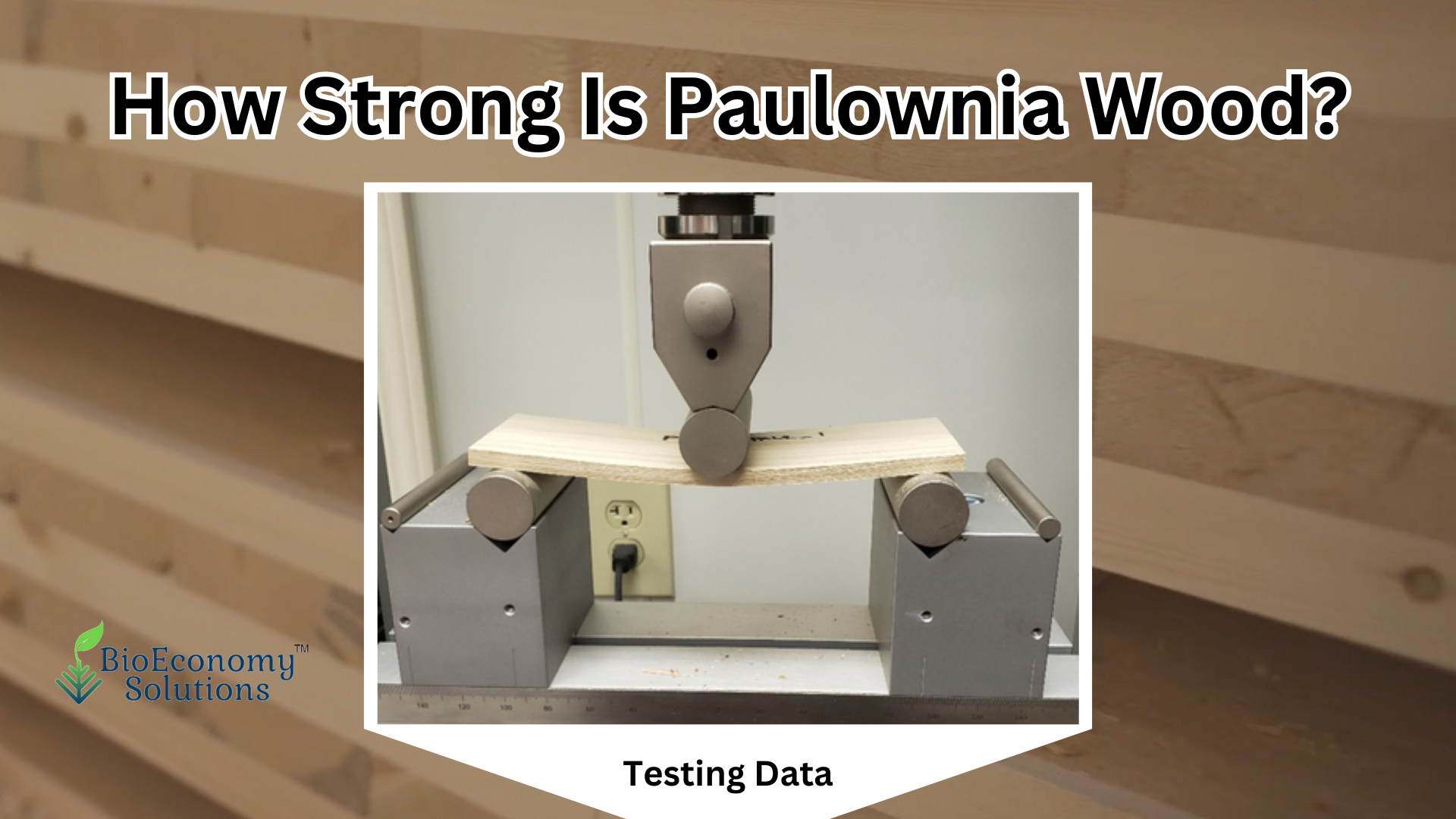
How Strong Is Paulownia Wood?
Solving America’s Lumber Supply Chain Crisis
Speed to Market: The Game-Changer
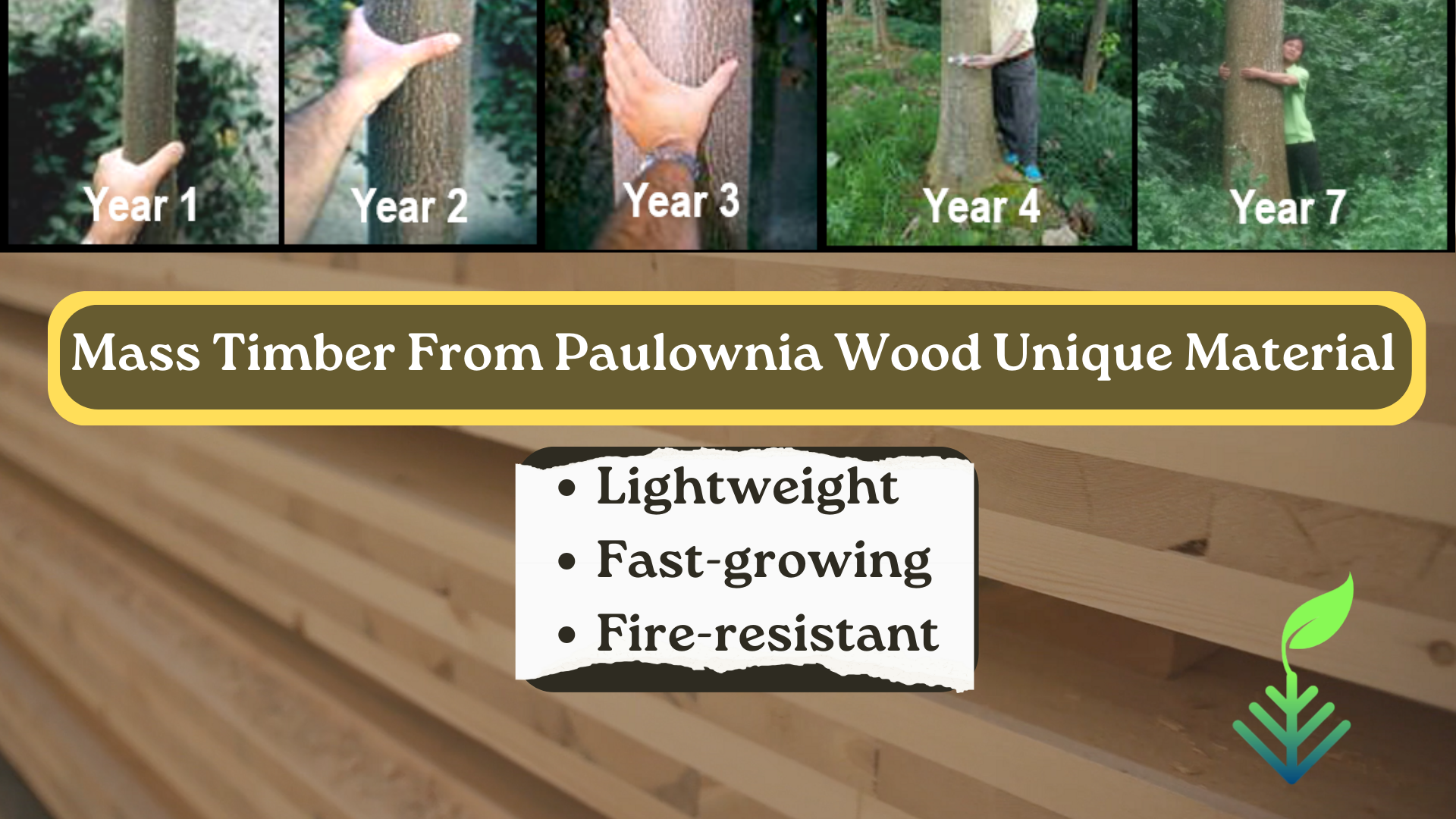
While traditional softwood takes 20-50 years to mature, Paulownia delivers:
Harvestable timber in 5-7 years
15-30 feet of growth in first season
Coppicing ability: Regrows from cut stumps without replanting
Multiple harvests from single planting
This means American landowners could establish domestic lumber supply chains in less than a decade—not the generations required for traditional forestry.
Geographic Flexibility
Unlike softwood forests concentrated in the Pacific Northwest and Southeast, Paulownia thrives across diverse American landscapes:
Semi-arid regions previously unsuitable for timber
Degraded agricultural land generating new rural income
Marginal soils where food crops struggle
Urban periphery for distributed lumber production
USA Paulownia Lumber now has “Class A” ASTM E84 Flame Spread Rating.
A Class A ASTM E84 flame spread rating for Paulownia lumber is highly significant for its advancement in the U.S. structural lumber and interior building materials market. Here’s why:
Economic Impact: Beyond Lumber
For Rural America:
Farmers diversify income with fast-growing timber crops
Abandoned farmland becomes productive again
Local sawmills process regional Paulownia supply
Carbon credit revenue provides additional income streams
For Builders:
Reduced transportation costs from distributed production
Price stability through domestic supply chains
Superior performance characteristics reduce callbacks
Lightweight properties decrease labor costs
For Homeowners:
Lower construction costs through domestic supply
Superior insulation reduces energy bills
Fire-resistant properties may lower insurance premiums
Sustainable building materials increase property values
The Construction Applications Revolution
Mass Timber Potential
While Paulownia isn’t suitable for primary load-bearing applications, its unique properties make it ideal for paulownia mass timber applications:
Sandwich Construction:
Paulownia core with hardwood exterior
Maintains strength while reducing weight
Significant material cost savings
Enhanced insulation properties
Engineered Wood Products:
Laminated veneer lumber (LVL) applications
Cross-laminated timber (CLT) components
Glue-laminated beams for specific applications
Specialty Markets
High-Value Applications:
Musical instrument construction (proven market)
Boat building and marine applications
RV and mobile home construction
Modular housing components
Addressing the Labor Crisis
The U.S. lumber industry faces severe labor shortages, with employment expected to decline 2-4% by 2033. Paulownia offers solutions:
Mechanized Harvesting:
Forage harvesters process 80-100 green tons per hour
Reduced dependence on skilled logging crews
Safer harvesting operations
Lower labor costs per board foot
Distributed Processing:
Smaller, regional mills reduce transportation
Less specialized labor required
Community-based economic development
Reduced infrastructure investment
The Regulatory Advantage
While traditional forestry battles the Endangered Species Act and National Environmental Policy Act, Paulownia offers regulatory benefits:
Environmental Positives:
Carbon sequestration during growth phase
Soil improvement on degraded lands
No impact on old-growth forests
Biodiversity enhancement when properly managed
Fast Permitting:
Agricultural land conversion simpler than forest management
Market Opportunity: With lumber representing a $60+ billion annual U.S. market, even capturing 10% would create a $6 billion Paulownia industry—enough to meaningfully impact supply and pricing.
Implementation Strategy: A Roadmap Forward
Phase 1: Pilot Projects (Years 1-3)
Establish demonstration plantations in key regions
Partner with progressive builders for testing
Develop processing and grading standards
Create supply chain partnerships
Phase 2: Scale-Up (Years 3-7)
Expand acreage based on proven demand
Build regional processing facilities
Establish distribution networks
Develop specialized applications
Phase 3: Market Integration (Years 7-15)
Achieve meaningful market share in specialty applications
Integrate with existing lumber supply chains
Export surplus production
Establish Paulownia as standard construction material
The Investment Opportunity
For Landowners:
Convert marginal land to productive timber assets
Generate income while trees mature through carbon credits
Benefit from multiple harvest cycles
Participate in growing domestic lumber market
For Investors:
Early entry into emerging domestic lumber supply
ESG-compliant investment with measurable impact
Multiple exit strategies through various end markets
Hedge against lumber price volatility
For Communities:
Rural economic development opportunities
Reduced dependence on volatile agricultural markets
Local processing jobs
Sustainable economic base
Overcoming the Challenges
Market Acceptance:
Education about Paulownia’s superior properties
Demonstration projects proving performance
Building code acceptance and standards development
Architect and engineer training programs
Supply Chain Development:
Processing equipment adaptation
Quality grading systems
Distribution network establishment
End-user education and support
Scale Requirements:
Coordinated planting across multiple landowners
Processing facility investment
Market development initiatives
Policy support for domestic alternatives
The Climate Bonus
While solving America’s lumber crisis, Paulownia delivers massive climate benefits:
80-100 tons CO₂ sequestered per acre in first 5 years
Carbon-negative construction materials
Reduced transportation emissions from domestic supply
Soil improvement on degraded lands
This creates additional revenue through carbon credit markets while addressing climate goals.
The Time Is Now
America’s lumber crisis demands innovative solutions. While politicians debate tariffs and regulations, Paulownia offers a market-based path forward:
✅ Domestic supply security
✅ Superior performance characteristics
✅ Rapid deployment timeline
✅ Rural economic development
✅ Climate benefits
✅ Regulatory advantages
The question isn’t whether Paulownia can help solve America’s lumber crisis—it’s whether we’ll act fast enough to capture the opportunity.
Every month we delay is another month of volatile prices, housing unaffordability, and missed economic development.
The solution is growing. Literally.
Ready to explore Paulownia opportunities for your land, business, or investment portfolio? The domestic lumber revolution starts with the first tree planted.
Contact us to learn how Paulownia can transform your piece of America’s lumber future.
Conclusion
The Paulownia tree, with its FAST growth rate, carbon capture abilities, and adaptability, is a powerful tool in climate change mitigation, biodiversity support, and sustainable forest management. When used appropriately in afforestation and reforestation projects, it holds the potential to restore ecosystems, combat deforestation, and provide long-term environmental and economic benefits.
Contact Us
BioEconomy Solutions is a Carbon Dioxide Removal (CDR) Project Developer. Talk to us about our TREE PLANTING strategies with Paulownia trees.
We’re happy to organize a time to speak with you about our paulownia trees and lumber we have for sale. Please book your preferred time to speak directly.
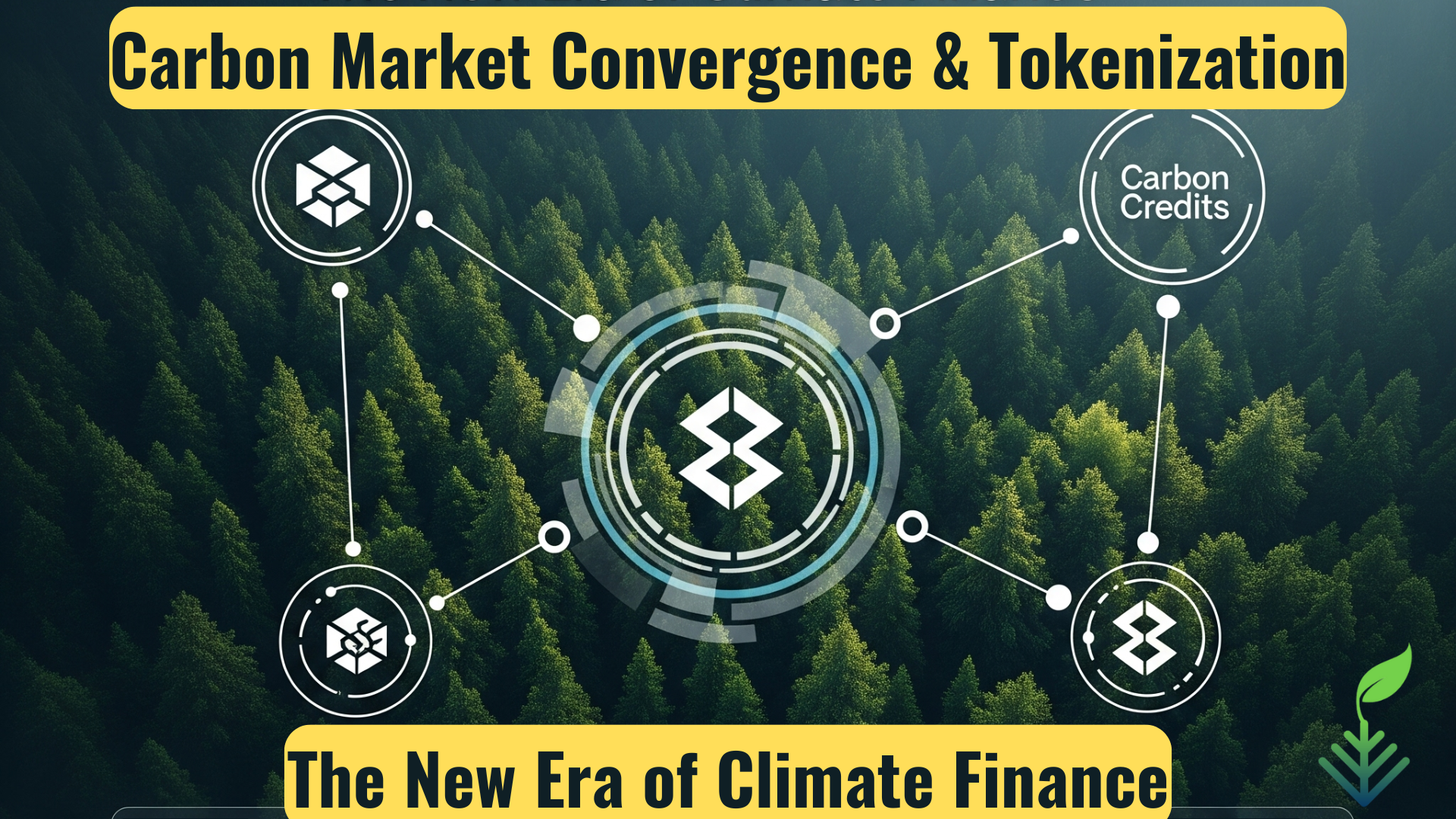
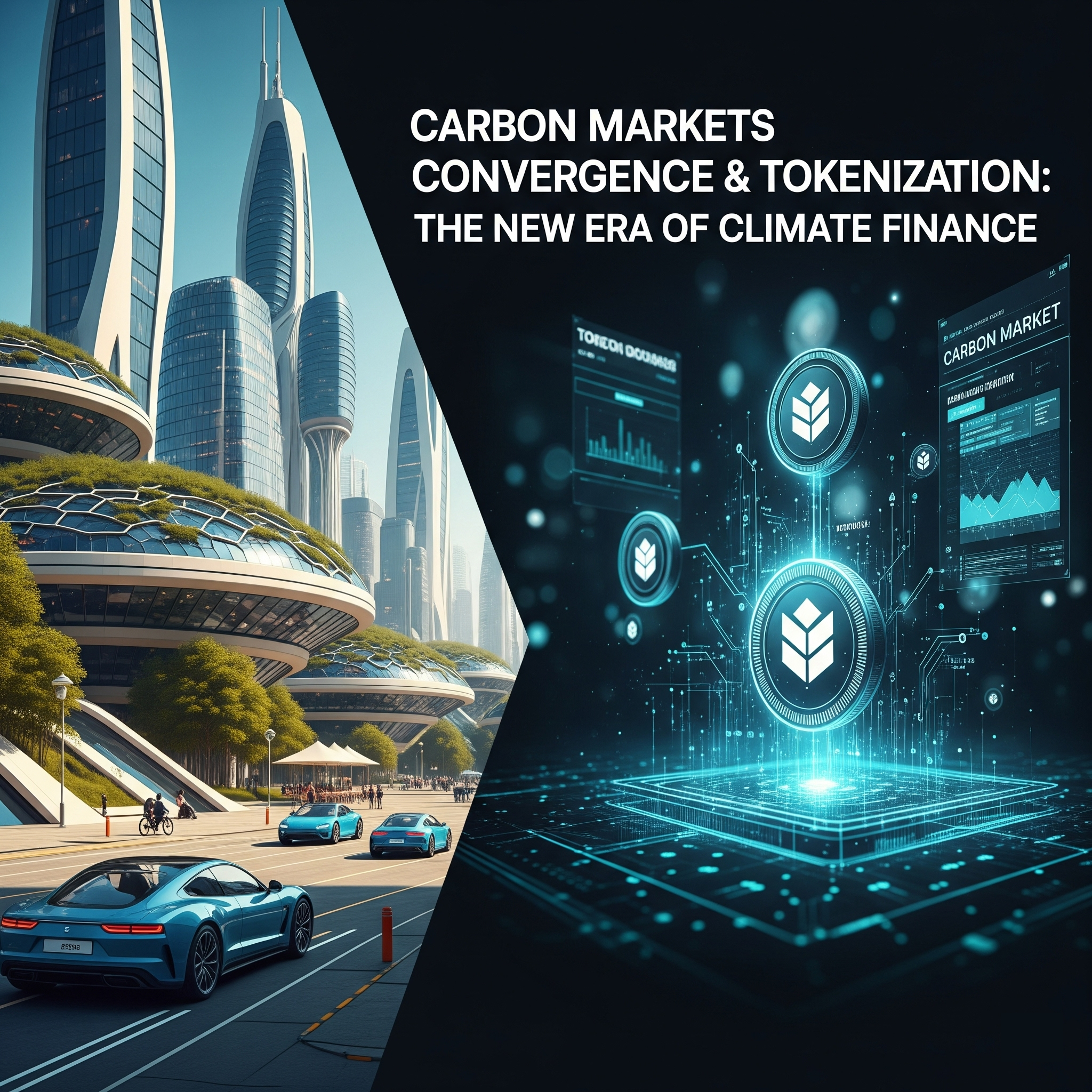
The world accelerates toward a low-carbon economy, two powerful financial innovations are converging: carbon markets and tokenization. What was once considered a fringe overlap between environmentalism and crypto is now emerging as a serious frontier for climate action and sustainable finance.
Why This Convergence Matters
Carbon credits have long been viewed as a crucial tool for offsetting emissions and achieving net-zero goals. Yet the traditional carbon market infrastructure has faced consistent challenges: lack of transparency, inefficiency, and concerns about credit legitimacy.
Enter Cryptocurrency
Tokenization, powered by blockchain technology, introduces a radical new layer of transparency, efficiency, and accessibility to carbon markets. By converting carbon credits into digital tokens, the process of buying, selling, and retiring credits becomes faster, cheaper, and more traceable.
One of the biggest criticisms of voluntary carbon markets (VCMs) has been the difficulty in verifying the origin, legitimacy, and retirement of carbon credits. Double-counting and greenwashing have eroded trust among investors and stakeholders.
Blockchain’s immutable, decentralized ledger offers a solution. By tokenizing carbon credits, each unit can be traced from issuance to retirement in real time. Platforms like Toucan Protocol, KlimaDAO, and EcoRegistry are leading this transformation, bringing visibility and accountability to what was once an opaque system.
Carbon trading has traditionally been encumbered by high administrative costs, long settlement times, and limited market access. Through tokenization, smart contracts automate and streamline the process, enabling:
Instant settlements
Fractional ownership of carbon assets
Lower transaction fees
Greater liquidity in secondary markets
This not only reduces friction for large players but also makes the market accessible to individuals, small businesses, and decentralized autonomous organizations (DAOs).
✅ New Technologies and Platforms Are Emerging
The digital infrastructure around tokenized carbon is rapidly evolving. According to Carbonmark and others, we’re seeing the emergence of platforms that bridge traditional registries with programmable finance.
Notable initiatives include:
Xpansiv – a marketplace for on-chain carbon
ICR (Integrated Carbon Registry) – focusing on digitized MRV systems
Tether – helping integrate blockchain with existing carbon credit standards
These tools are helping carbon markets evolve from analog to digital—bringing them in line with 21st-century capital markets.
✅ Rising ESG Demand and Climate Consciousness
As climate change intensifies, the global appetite for ESG-compliant assets and sustainable investment vehicles is growing. Tokenized carbon credits offer a new channel for retail and institutional investors alike to align financial portfolios with climate goals.
This convergence also democratizes climate action. Instead of being limited to governments and large corporations, individuals and startups can now engage in carbon offsetting with low entry barriers and real-time verification.
Challenges on the Road Ahead
Despite the enormous potential, the convergence of carbon and token markets isn’t without its hurdles:
Regulatory Uncertainty: Legal frameworks for both carbon credits and blockchain assets are still evolving. This creates risk for token issuers and investors alike.
Credit Quality and Verification: Not all carbon credits are created equal. Ensuring the integrity and additionality of tokenized credits is vital to avoid greenwashing.
Technical Integration: Bridging legacy carbon registries with blockchain systems is complex, and interoperability between platforms remains a major issue.
Market Acceptance: For large-scale adoption, traditional investors and corporations need to see clear, credible benefits from tokenization—beyond hype.
ESG Investment Trend
The trend toward Environmental, Social, and Governance (ESG) investing is real and growing.
Tokenization helps democratize access, which is key to bringing in individuals, SMEs, and impact investors into a market previously dominated by large corporates.
The Path Forward
While still in its early days, the convergence of tokenized finance and environmental markets is one of the most promising developments in climate tech. It holds the potential to:
Unlock new capital for nature-based solutions
Bring carbon offsetting to a global, decentralized audience
Ensure trust, traceability, and liquidity in climate finance
If executed responsibly—with the right safeguards, standards, and collaboration—it can become a cornerstone of the global decarbonization strategy.
This is more than a financial innovation. It’s the infrastructure for a more transparent, inclusive, and impactful carbon economy.
Conclusion
The Paulownia tree, with its FAST growth rate, carbon capture abilities, and adaptability, is a powerful tool in climate change mitigation, biodiversity support, and sustainable forest management. When used appropriately in afforestation and reforestation projects, it holds the potential to restore ecosystems, combat deforestation, and provide long-term environmental and economic benefits.
Contact Us
BioEconomy Solutions is a Carbon Dioxide Removal (CDR) Project Developer. Talk to us about our TREE PLANTING strategies with Paulownia trees.
We’re happy to organize a time to speak with you about our paulownia trees and lumber we have for sale. Please book your preferred time to speak directly.