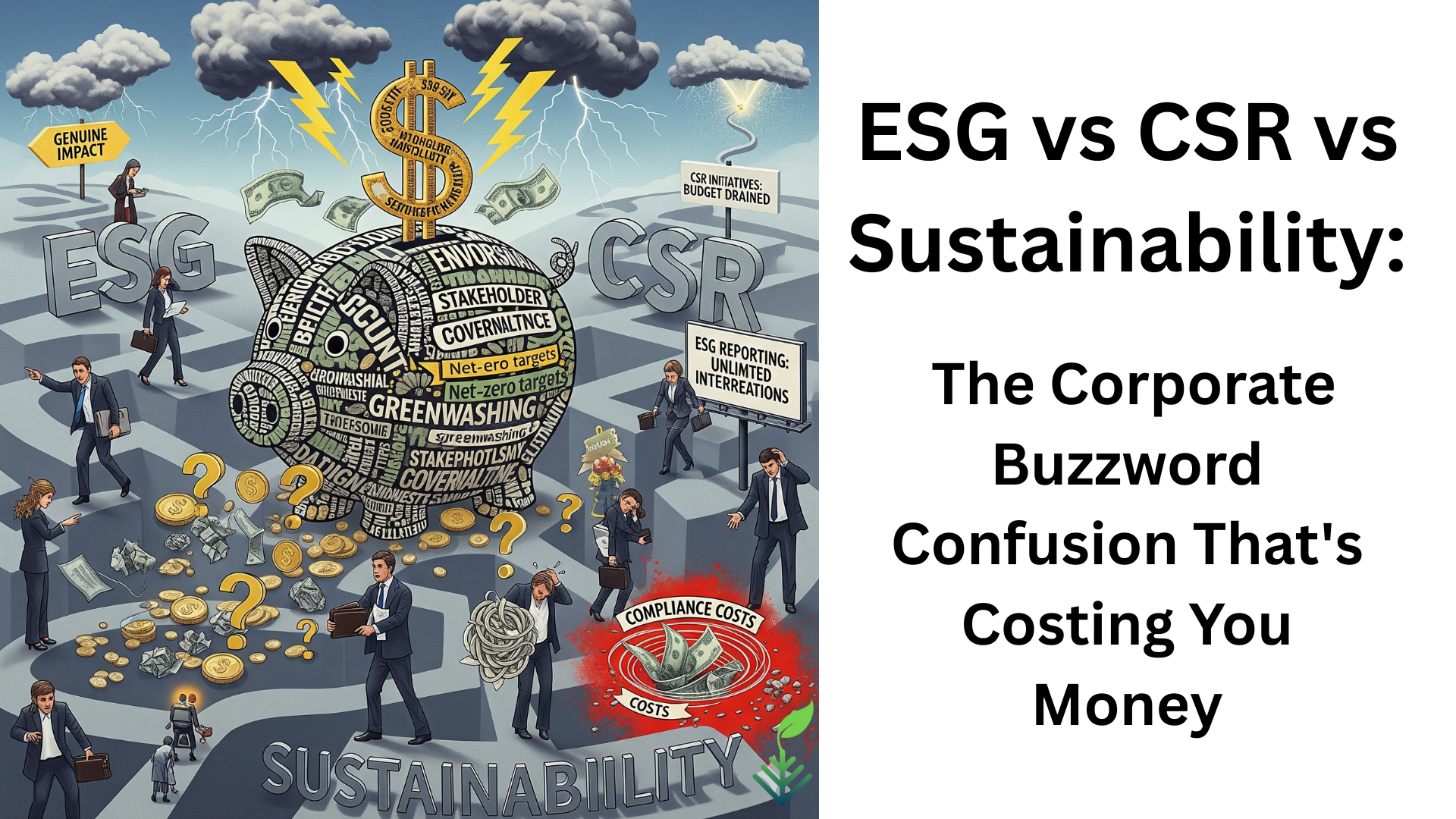
ESG vs CSR vs Sustainability — The Truth About Corporate Buzzwords
These terms get thrown around like confetti. But most people use them wrong.

Here’s what they actually mean:
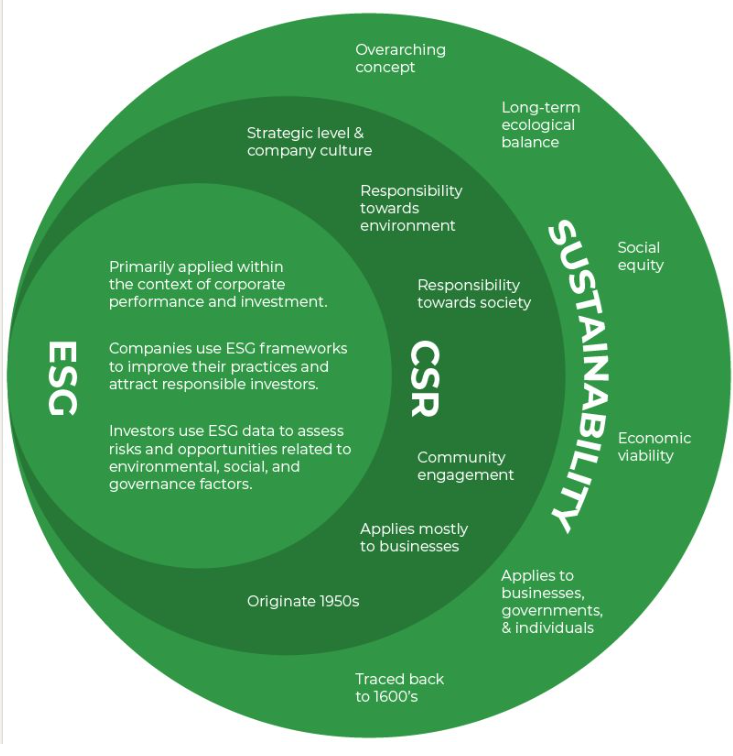
🌱 Sustainability = The Goal
Balance people, planet, profit
Long-term thinking
Applies to everyone (not just companies)

📊 ESG = The Measurement
Environmental, Social, Governance metrics
Investment decisions
Risk management
Data-driven approach

🤝 CSR = The Action
Corporate giving
Community programs
Ethical business practices
“Doing good” initiatives

Think of it this way:
Sustainability is the destination.
ESG is the GPS.
CSR is the vehicle.

The problem?
Most companies treat them as separate things.
Smart companies connect them:
✅ Use ESG data to guide CSR programs
✅ Align CSR actions with sustainability goals
✅ Measure everything for investor transparency

Real example:
Our company BioEconomy Solutions plants trees (CSR action) → Tracks carbon sequestration (ESG metric) → Contributes to net-zero goals (Sustainability outcome).

👉 LEARN MORE HERE: https://bioeconomysolutions.com/esg-vs-csr-vs-sustainability-the-corporate-buzzword-confusion-thats-costing-you-money/

👉 Get a FREE copy of Paulownia Carbon Report: https://bioeconomysolutions.com/carbonreport
————————————
LIKE | SHARE | SUBSCRIBE | FOLLOW | COMMENT

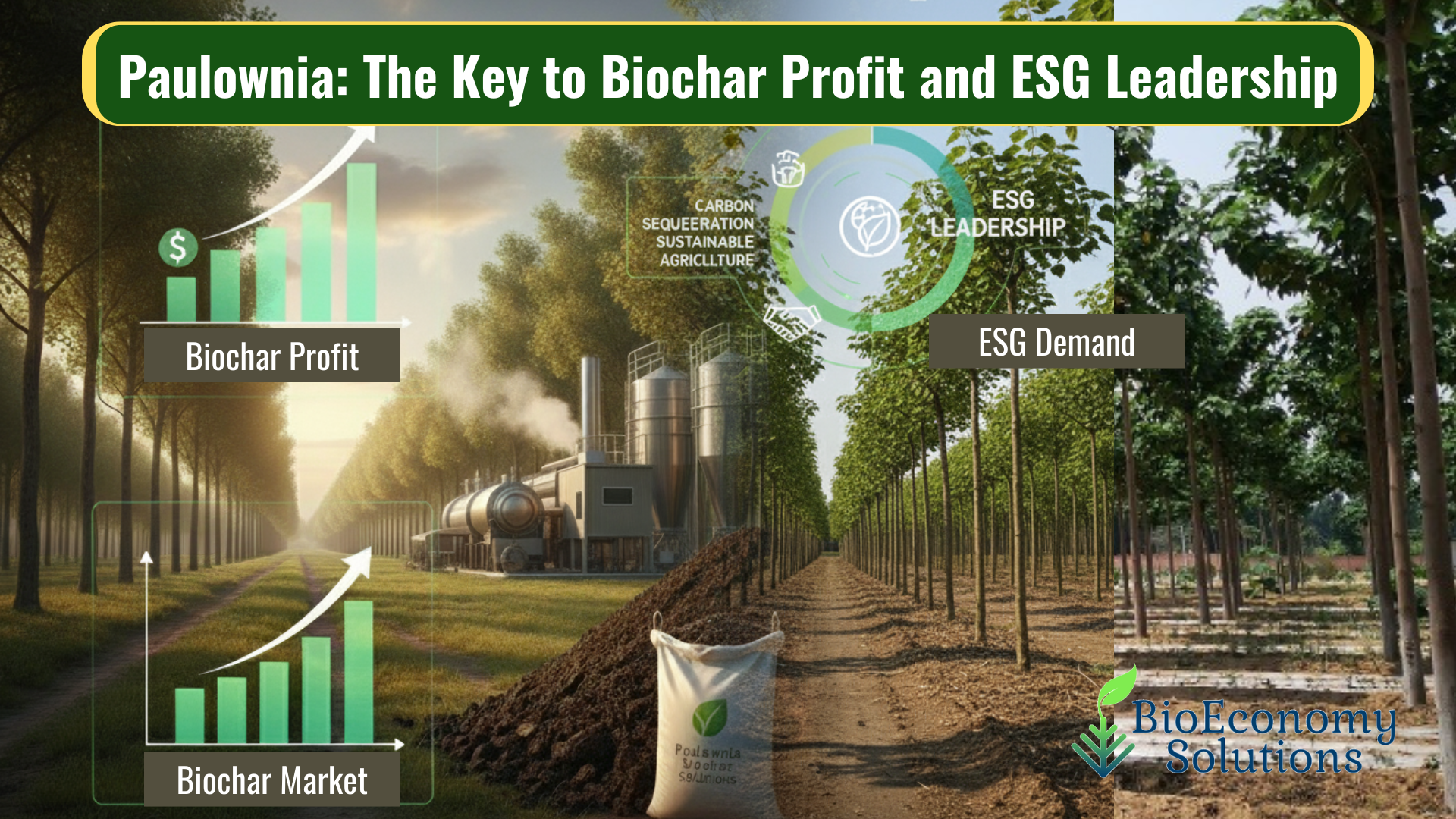
How Paulownia Trees Capture the $340M European Biochar Boom and $20B ESG Market.

The numbers are staggering:

European biochar market: $340M by 2030 US biochar market: $1.3B by 2033 European ESG market: $20.48B by 2030

But here’s what most people miss:

The feedstock bottleneck is about to choke growth.

The Supply Crisis Nobody’s Talking About

Current biochar production relies on:

  • Agricultural waste (seasonal, inconsistent)
  • Forest residues (limited, transportation costs)
  • Energy crops (compete with food production)

Result: 180+ European biochar plants by 2023, but feedstock shortages limiting scale.
Enter Paulownia: The Biochar Game-Changer

Why Paulownia solves the feedstock crisis:

🌱 Consistent Supply:Coppices every 3-5 years, predictable biomass

🌱 High Yield:80-100 green tons per hectare annually

🌱 Purpose-Grown:Dedicated energy crops, not competing with food

🌱 Marginal Land:Grows on degraded soil, doesn’t displace agriculture

🌱 Mechanized Harvest: 80-100 tons/hour processing capacity

The Perfect Market Timing

European Biochar Drivers = Paulownia Advantages:

Sustainable Agriculture ✅

  • Paulownia biochar improves soil structure and nutrient retention
  • Intercropping capabilities support regenerative farming
  • Grows on marginal land, restores degraded soils

Climate Mitigation ✅

  • 2.5-3.3 carbon credits per ton of biochar produced
  • Permanent carbon storage (1,000+ years)
  • Dual sequestration: growth phase + biochar storage

Technological Advancement ✅

  • Optimized for pyrolysis (low ash, high carbon content)
  • Consistent feedstock quality for industrial-scale production
  • Integrated biorefinery potential (biochar + biofuels + chemicals)

Regulatory Support ✅

  • EU Taxonomy alignment for sustainable activities
  • CSRD reporting requirements favor verifiable carbon removal
  • Article 6 carbon market opportunities

ESG Market Integration Strategy

How Paulownia captures the $20B ESG opportunity:

Environmental (E)

  • Verified Carbon Removal: Blockchain-tracked from tree to biochar
  • Biodiversity Enhancement: Habitat corridors, pollinator support
  • Soil Restoration: Degraded land rehabilitation, erosion control
  • Water Management: Improved infiltration, reduced runoff

Social (S)

  • Rural Development: Farmer partnerships, local job creation
  • Community Investment: Processing facilities in rural areas
  • Food Security: Intercropping capabilities, soil improvement
  • Environmental Justice: Restoration of underserved communities

Governance (G)

  • Transparency: Crystal Validator™ compliance controls
  • Traceability: Registry serialization through Xpansiv
  • Risk Management: Diversified revenue streams, climate resilience
  • Stakeholder Engagement: Community-based growing programs

The Competitive Advantage

Traditional Biochar Feedstock:

❌ Seasonal availability

❌ Quality inconsistency

❌ Transportation costs

❌ Competing uses

Paulownia Biochar Feedstock:

✅ Year-round production planning

✅ Consistent quality parameters

✅ Local production networks

✅ Purpose-grown for biochar
Market Capture Strategy

Phase 1: European Market Entry (2025-2026)

  • Partner with existing biochar producers facing feedstock shortages
  • Establish 5,000-hectare demonstration plantations
  • Secure offtake agreements with industrial biochar facilities
  • Target €125-145/ton biochar credit pricing (current CORCCHAR index)

Phase 2: Scale-Up (2027-2029)

  • Expand to 50,000+ hectares across multiple EU countries
  • Develop integrated biorefineries (biochar + biofuels + chemicals)
  • Launch direct ESG partnerships with Fortune 500 companies
  • Capture 5-10% of European biochar feedstock market

Phase 3: Market Leadership (2030+)

  • Achieve 100,000+ hectare production network
  • Establish Paulownia as premium biochar feedstock standard
  • Export model to US market ($1.3B opportunity)
  • Lead consolidation of fragmented biochar supply chains

Financial Projections

Conservative Market Capture (5% of European biochar market by 2030):

  • Market opportunity: $17M annually (5% of $340M)
  • Feedstock premium: 20-30% above agricultural waste
  • Carbon credit revenue: Additional $50-75M annually
  • Total addressable revenue: $67-92M from European market alone

ESG Integration Multiplier:

  • Premium pricing for verified ESG impact: +25-40%
  • Long-term offtake agreements: Reduced market risk
  • Diversified revenue streams: Timber, carbon, biochar, data

The Regulatory Tailwind

EU Taxonomy Alignment:

  • Climate change mitigation (carbon sequestration)
  • Climate change adaptation (soil restoration)
  • Sustainable use of water and marine resources
  • Transition to circular economy (waste-to-value)
  • Pollution prevention and control (soil remediation)
  • Protection of healthy ecosystems (biodiversity enhancement)

CSRD Reporting Benefits:

  • Quantifiable environmental impact metrics
  • Verifiable carbon removal documentation
  • Supply chain sustainability evidence
  • Stakeholder engagement proof points

The Bottom Line

The biochar market is exploding, but feedstock supply is the bottleneck.

The ESG market demands verifiable impact, but most solutions lack transparency.

Paulownia solves both problems:

  • Reliable, scalable biochar feedstock
  • Integrated ESG impact with audit-grade documentation
  • Multiple revenue streams reducing investment risk
  • Regulatory alignment across EU frameworks

While competitors struggle with feedstock shortages and ESG compliance, Paulownia-based solutions capture both the $340M biochar opportunity and the $20B ESG market through integrated, verifiable impact.

The question isn’t whether these markets will grow—it’s whether you’ll be positioned to capture them.


Ready to explore how Paulownia can position your organization in the biochar and ESG growth markets? Contact BioEconomy Solutions to learn how purpose-grown feedstock and integrated ESG solutions create competitive advantages in rapidly expanding markets.

The biochar boom needs feedstock. The ESG market needs proof. Paulownia delivers both.

Contact Us for paulownia saplings and planning assistance.

Where To Buy Paulownia? Paulownia For Sale – QUESTIONS?

Learn more about paulownia carbon projects here: https://bioeconomysolutions.com/paulownia-carbon-credits/

We’re happy to organize a time to speak with you about our paulownia trees and lumber we have for sale. Please book your preferred time to speak directly.

Here’s a link to my online calendar/schedule:

www.bioeconomysolutions.com/bookcall

BioEconomy Solutions

mail@BioEconomySolutions.com

Office: 843.305.4777


Download FREE Paulownia Carbon REPORT

Subscribe to our newsletter

Subscribe to our newsletter & get FREE Paulownia Carbon Report
Stop using these terms wrong. It’s hurting your business.

What’s the missing link between corporate buzzwords and measurable climate action?

Most companies struggle to connect their ESG metrics, CSR programs, and sustainability goals. They end up with scattered initiatives that don’t reinforce each other.

Paulownia-based carbon credits solve this integration problem—creating a single solution that strengthens all three pillars while generating measurable returns.

Here’s how it works.

The Integration Challenge Most Companies Face

Typical Corporate Disconnect:

  • Sustainability Goal: “Be carbon neutral by 2030”
  • ESG Metrics: Track emissions but struggle with Scope 3 and removal verification
  • CSR Programs: Plant trees somewhere, donate to environmental causes
  • Result: Fragmented efforts, questionable impact, investor skepticism

The Paulownia Solution: One integrated platform that addresses sustainability goals, improves ESG scores, and powers authentic CSR programs—while generating profit.

How Paulownia Strengthens Each Pillar

🌱 Sustainability: The Destination

Paulownia delivers on the triple bottom line:

People:

  • Creates rural jobs and economic development
  • Improves soil health and water retention
  • Enables food crop intercropping for food security
  • Provides sustainable building materials

Planet:

  • Sequesters 80-100 tons CO₂ per acre in 5 years
  • Grows on degraded land without competing with food crops
  • Converts to permanent biochar storage (1,000+ year permanence)
  • Combats desertification and restores ecosystems

Profit:

  • Generates 5-10% IRR through multiple revenue streams
  • Creates tradeable carbon assets
  • Reduces compliance costs through verified removals
  • Builds long-term asset value through timber and land appreciation

📊 ESG: The GPS

Environmental Metrics:

  • Scope 1 & 2: Direct emissions reduction through renewable biomass
  • Scope 3: Supply chain decarbonization through verified removals
  • Carbon Intensity: Measurable reduction per dollar of revenue
  • Biodiversity Impact: Quantified habitat restoration and soil improvement

Social Metrics:

  • Community Investment: Direct economic impact in rural areas
  • Job Creation: Sustainable employment in agriculture and processing
  • Food Security: Intercropping capabilities support local food systems
  • Environmental Justice: Restoration of degraded lands in underserved communities

Governance Metrics:

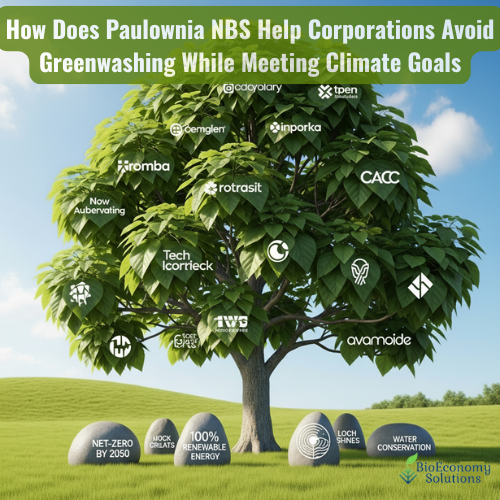
  • Transparency: Blockchain-verified carbon tracking eliminates greenwashing
  • Risk Management: Diversified revenue streams reduce climate transition risk
  • Stakeholder Engagement: Community-based growing programs
  • Regulatory Compliance: CSRD, SEC, and CORSIA-ready documentation

🤝 CSR: The Vehicle

Authentic Community Programs:

  • Farmer Partnerships: Direct contracts with landowners for Paulownia cultivation
  • Educational Initiatives: Training programs for sustainable agriculture
  • Technology Transfer: Sharing fast-growing tree expertise globally
  • Local Economic Development: Processing facilities in rural communities

Measurable Impact:

  • Every CSR dollar generates quantified carbon removal
  • Community programs directly support ESG metrics
  • Local partnerships advance global sustainability goals
  • Transparent reporting shows real outcomes, not just good intentions

Real-World Integration Example

Company: Fortune 500 manufacturer with 2030 net-zero commitment

Integrated Paulownia Strategy:

Sustainability Goal: Carbon neutrality + rural economic development

ESG Implementation:

  • Environmental: 500,000 tons CO₂ removal over 10 years
  • Social: 1,000 rural jobs created through farmer partnerships
  • Governance: Blockchain-verified carbon tracking with quarterly reporting

CSR Programs:

  • Partner with 200 farmers across 10,000 acres
  • Fund agricultural training and equipment
  • Support local processing facilities
  • Create community profit-sharing programs

Financial Results:

  • $50M investment generates $75M in carbon assets
  • 15% annual returns through diversified revenue streams
  • Reduced compliance costs through verified removals
  • Enhanced brand value through authentic impact

Stakeholder Benefits:

  • Investors: Clear ESG metrics with measurable ROI
  • Employees: Pride in authentic climate action
  • Communities: Economic opportunity and environmental restoration
  • Customers: Verified carbon-neutral products

Why Traditional Carbon Credits Fall Short

Typical Forest Credits:

  • 20-50 year payback periods
  • Reversal risk from fires, disease, pests
  • Limited community economic impact
  • Difficult to verify and track
  • Often compete with food production

Paulownia Advantage:

  • 5-7 year harvest cycles with continuous regrowth
  • Permanent storage through biochar conversion
  • Multiple revenue streams for communities
  • Blockchain-verified transparency
  • Grows on marginal land, improves soil health

The Compliance Advantage

Regulatory Alignment:

  • CSRD (EU): Detailed sustainability reporting with verified data
  • SEC Climate Rules (US): Scope 3 emissions and climate risk disclosure
  • CORSIA (Aviation): Verified carbon removals for airline compliance
  • Article 6 (Paris Agreement): International carbon market participation

Audit-Ready Documentation:

  • ISO 14064-3 verification
  • Registry serialization
  • Clear compliance controls
  • Immutable blockchain audit trails

The Investment Case

Traditional ESG/CSR Approach:

  • $2.3M average annual ESG compliance costs
  • CSR programs as pure expense
  • Difficult to measure ROI
  • Investor skepticism about “greenwashing”

Paulownia Integration Model:

  • ESG compliance generates measurable returns
  • CSR programs create tradeable assets
  • Clear ROI metrics for every sustainability dollar
  • Investor confidence through verified impact

Getting Started: Your Integration Roadmap

Phase 1: Assessment (30 days)

  • Map current ESG metrics to carbon removal opportunities
  • Identify CSR programs that could generate carbon assets
  • Assess sustainability goals for Paulownia alignment

Phase 2: Pilot Program (90 days)

  • Launch 500-acre Paulownia demonstration project
  • Integrate with existing CSR community partnerships
  • Begin ESG metric tracking and reporting

Phase 3: Scale-Up (12 months)

  • Expand to 5,000+ acres across multiple regions
  • Develop biochar processing partnerships
  • Launch carbon credit trading program

Phase 4: Full Integration (24 months)

  • Achieve material impact on corporate carbon footprint
  • Generate positive ROI from sustainability investments
  • Establish industry leadership in integrated ESG/CSR

The Competitive Advantage

While competitors struggle to connect ESG metrics, CSR programs, and sustainability goals, your company will have:

Integrated Strategy:

  • Every sustainability dollar generates measurable returns
  • CSR programs directly improve ESG scores
  • Clear line of sight from community impact to corporate goals

Authentic Impact:

  • Real carbon removal, not accounting tricks
  • Genuine community economic development
  • Verifiable environmental restoration

Financial Performance:

  • Sustainability as profit center, not cost center
  • Diversified revenue streams reduce risk
  • Premium valuations for ESG leadership

The Bottom Line

Paulownia-based carbon credits don’t just check ESG boxes or fund CSR programs—they create an integrated system where:

  • Sustainability goals drive profitable business decisions
  • ESG metrics improve through measurable environmental and social impact
  • CSR programs generate tradeable assets while supporting communities
  • Financial returns prove that doing good and doing well aren’t mutually exclusive

The future belongs to companies that can integrate purpose and profit.

Paulownia trees make that integration not just possible, but profitable.

Ready to integrate your ESG, CSR, and sustainability strategies through verified carbon removal? Contact BioEconomy Solutions to explore how Paulownia-based carbon credits can transform your corporate climate strategy from cost center to profit center.

Stop managing ESG, CSR, and Sustainability as separate initiatives. Start building an integrated system that delivers measurable impact and measurable returns.

Where To Buy Paulownia? – QUESTIONS?

Visit our web page. https://bioeconomysolutions.com

We’re happy to organize a time to speak with you about our paulownia trees and lumber we have for sale. Please book your preferred time to speak directly.

Here’s a link to my online calendar/schedule:

www.bioeconomysolutions.com/bookcall

BioEconomy Solutions

mail@BioEconomySolutions.com

Office: 843.305.4777

LIKE|SHARE|COMMENT

Enjoy this article? You may also enjoy “Carbon Developers Choose Paulownia Trees” https://www.linkedin.com/pulse/carbon-developers-choose-paulownia-trees-victor-garlington-imh4e/

Join Our Newsletter – Get a FREE copy of Paulownia Carbon Report

Subscribe to our newsletter

Subscribe to our newsletter