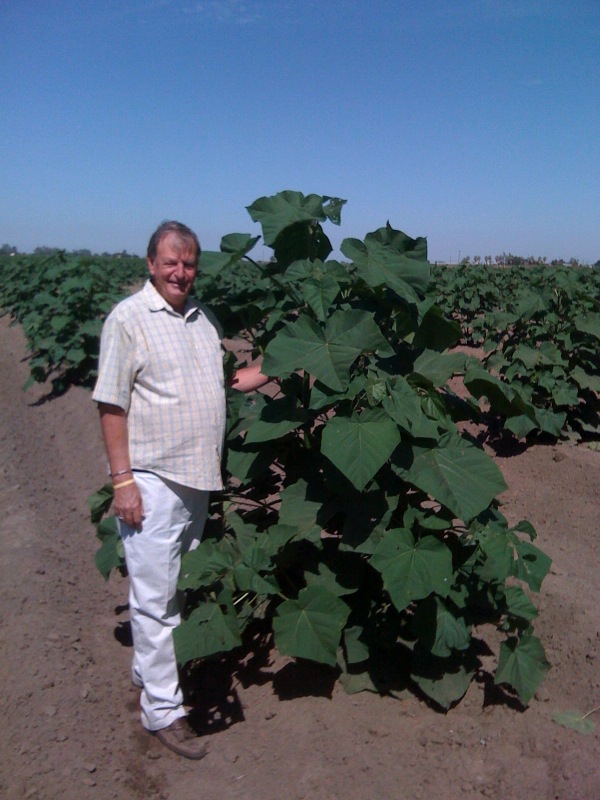
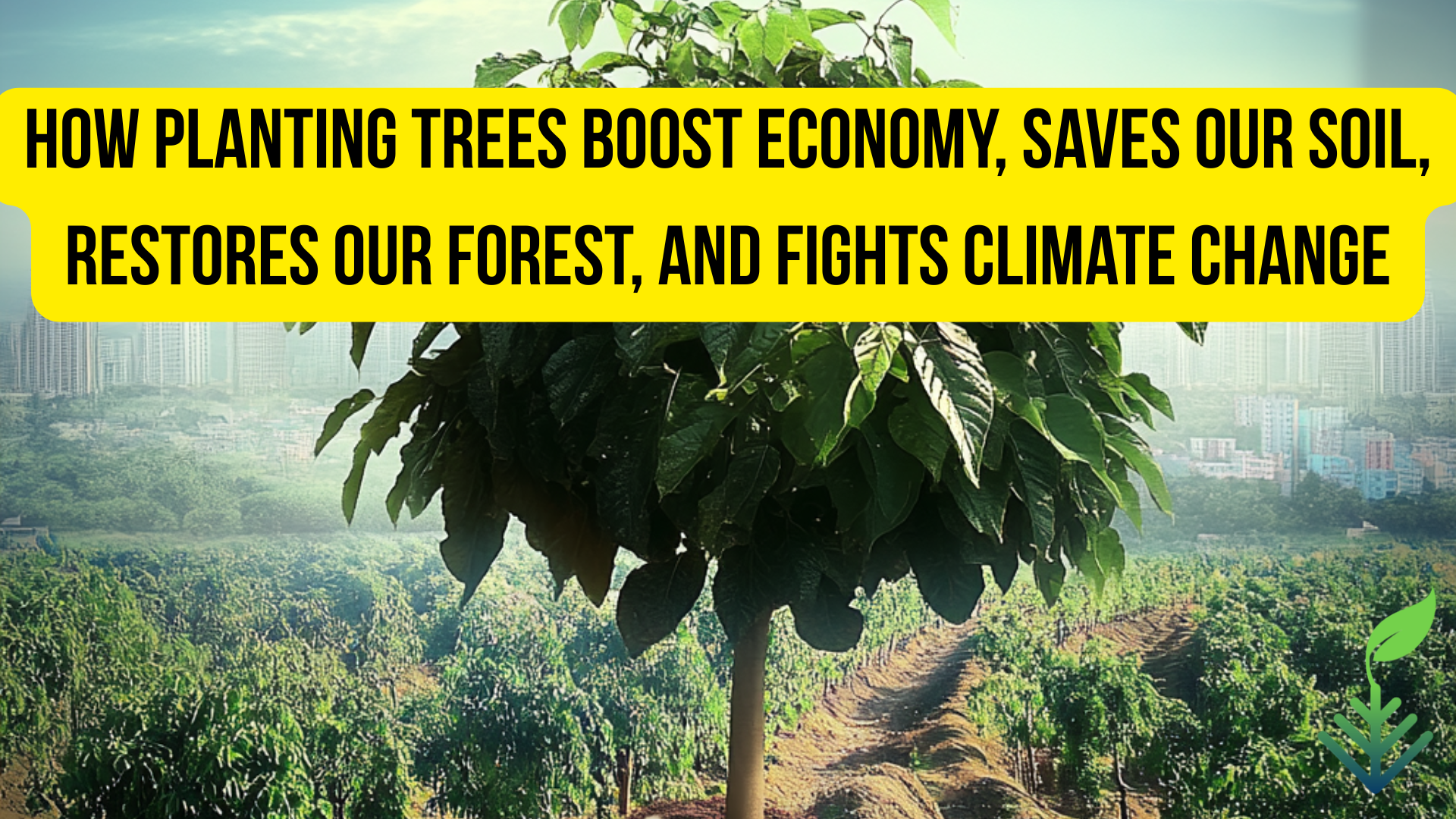
The Perfect Storm Hitting American Construction!

Steve Martinez, a Boise contractor, watches lumber prices swing wildly—sometimes increasing tenfold overnight. Canada has historically accounted for a very high percentage of U.S. softwood lumber imports, typically in the 70–85% range. Recent data shows this percentage has shifted. For example, in 2024, Canada accounted for 84.3% of U.S. softwood lumber imports.

The new potential tariffs jumping from 14.5% to 34.5%, America’s construction industry faces an unprecedented crisis which ultimately the end consumer pays the price.

The numbers are staggering: over 100 million American households can’t afford the median $460,000 home price, while builders struggle with fixed contracts and volatile material costs that make up 15-18% of total construction expenses.

But what if there was a domestic solution growing right under our noses?

Enter Paulownia: America’s Untapped Lumber Goldmine

While politicians debate tariffs and regulations, a revolutionary wood species is quietly proving itself across American soil. Paulownia—often called the “aluminum of lumber”—offers properties that could transform the U.S. construction landscape.

The Paulownia Advantage: Superior Performance Metrics

Strength-to-Weight Champion:

  • 30% lighter than traditional hardwoods
  • Twice as strong as balsa wood
  • Highest strength-to-weight ratio of any wood globally
  • Perfect for reducing transportation costs and construction labor

Built-in Durability:

  • Naturally fire-resistant (higher ignition temperature)
  • Termite and rot resistant without chemical treatment
  • Dimensionally stable—resists warping, shrinking, and cracking
  • Ideal for moisture-prone applications like saunas and pool decks

Construction Versatility:

  • Non-load-bearing structural components
  • Interior finishing and trim work
  • Flooring with superior dimensional stability
  • Natural insulation properties
  • Acoustic panels for soundproofing

Paulownia Bearing The Load

Non-load-bearing structural components are elements of a building that do not support the main weight of the structure, such as the roof or floors. Instead, they primarily serve functions like dividing spaces, providing insulation or soundproofing, or acting as decorative finishes. Examples include interior partition walls, drywall, and exterior cladding.

Paulownia Wood and Load-Bearing Applications

Paulownia wood is exceptionally lightweight, often compared to balsa wood, but it has a high strength-to-weight ratio. While it is naturally a non-load-bearing material by itself, its properties can be enhanced through existing engineered wood technologies to make it suitable for some load-bearing applications.

These technologies generally involve processing the wood to create composite materials with improved structural properties:

Laminated Veneer Lumber (LVL): This process involves bonding thin layers (veneers) of wood together with adhesives. By arranging the grain of all veneers parallel to the long direction, LVL creates a strong, stiff, and dimensionally stable product.

Sandwich Panels: Paulownia wood can be used as the lightweight core material in a sandwich panel, with stronger, denser materials like fiberglass, plywood, or other hardwoods bonded to its surfaces. This structure provides high stiffness and strength while keeping the overall product lightweight.

Glued Laminated Timber (Glulam): Similar to LVL, glulam is made by bonding together smaller pieces of wood into larger, more stable members. This process can utilize the lightweight properties of paulownia for the core while potentially using stronger wood or other materials for the outer laminations to increase its load-bearing capacity.

The use of these engineered wood products allows paulownia to be utilized in structural applications where its natural properties alone would be insufficient, leveraging its fast growth and sustainable characteristics for a greener building industry.

Engineered wood technologies, including laminated veneer lumber (LVL) and cross-laminated timber (CLT), are used in modern construction.

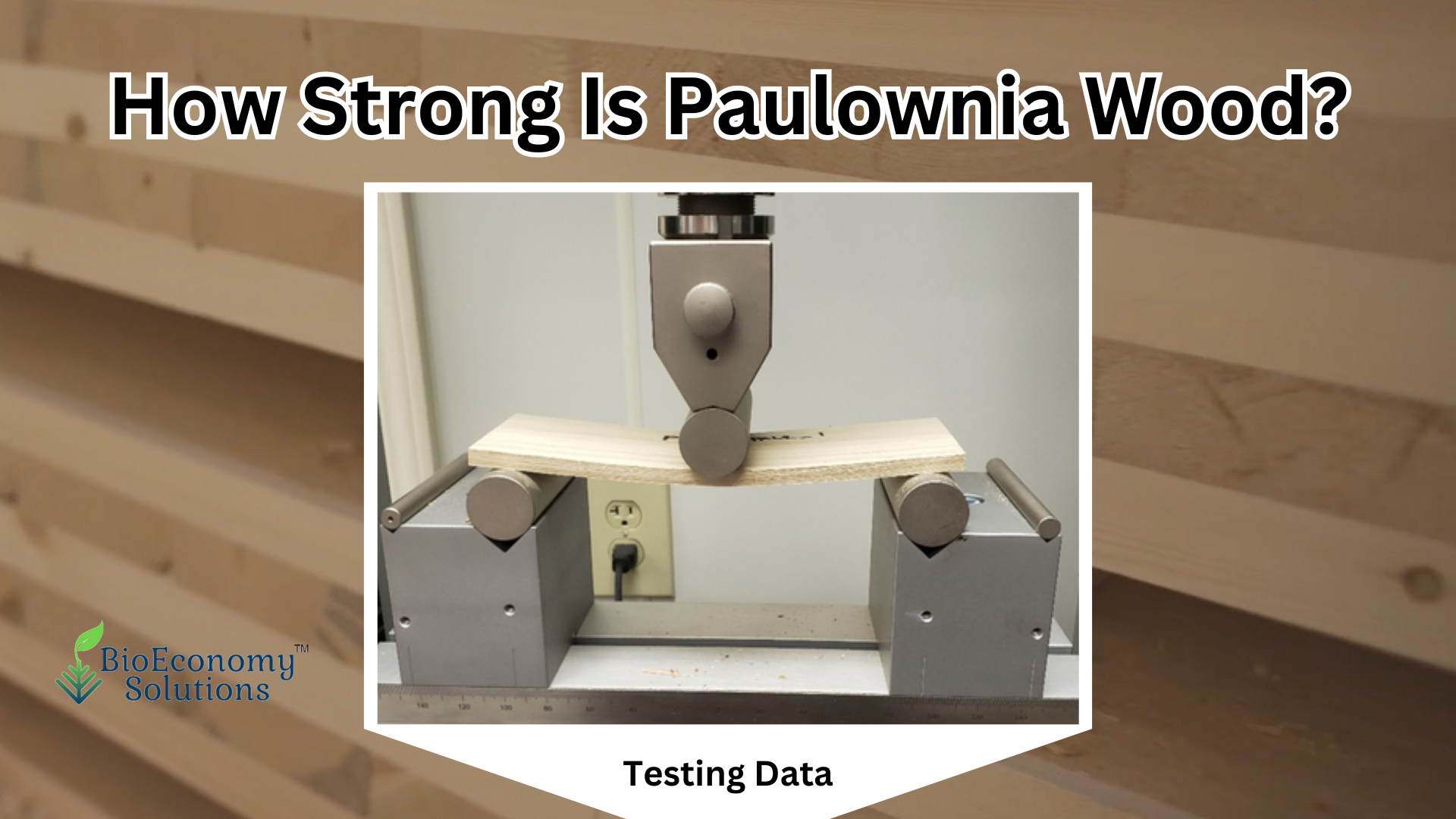
How Strong Is Paulownia Wood?
Solving America’s Lumber Supply Chain Crisis

Speed to Market: The Game-Changer

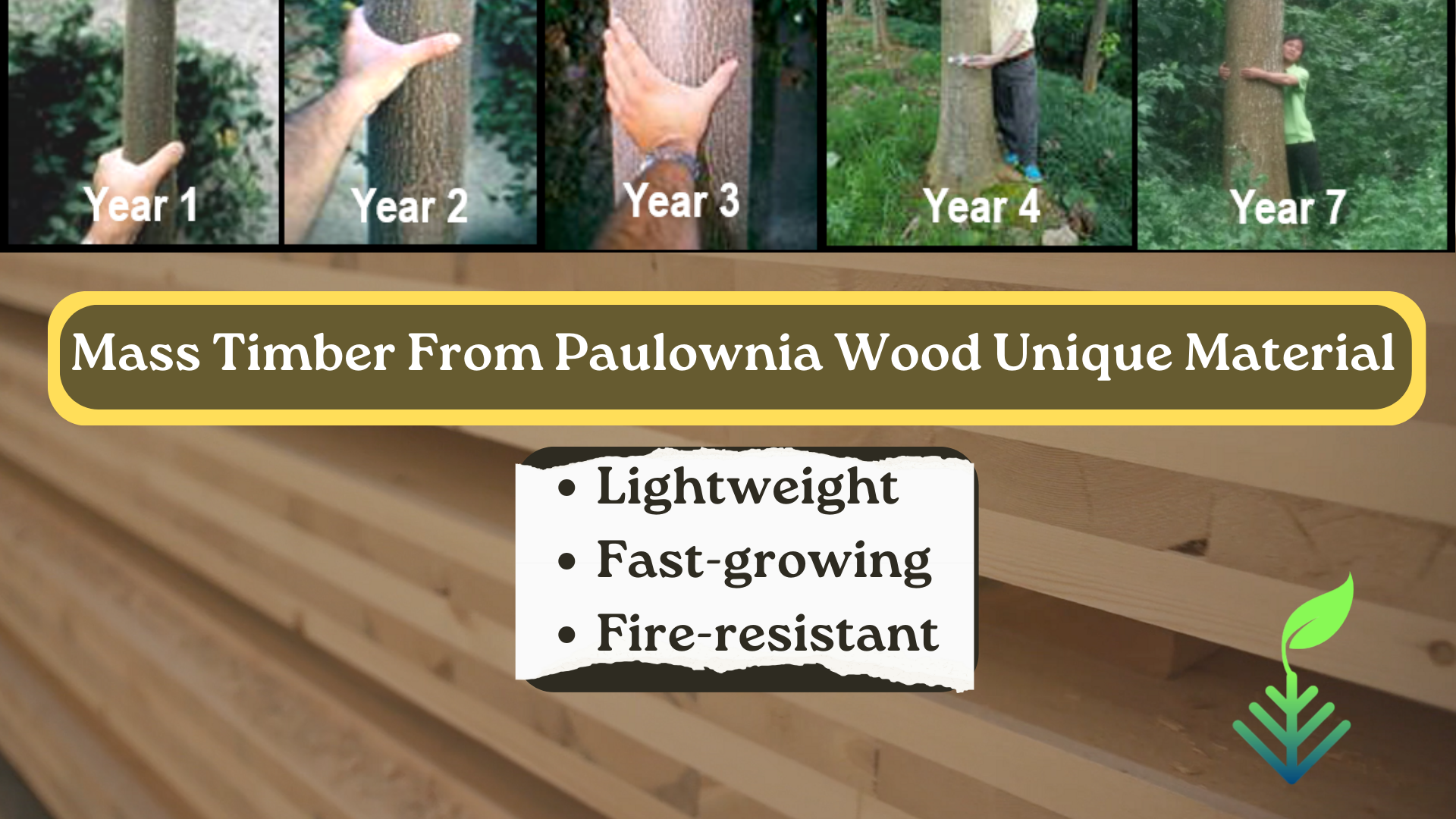
While traditional softwood takes 20-50 years to mature, Paulownia delivers:

  • Harvestable timber in 5-7 years
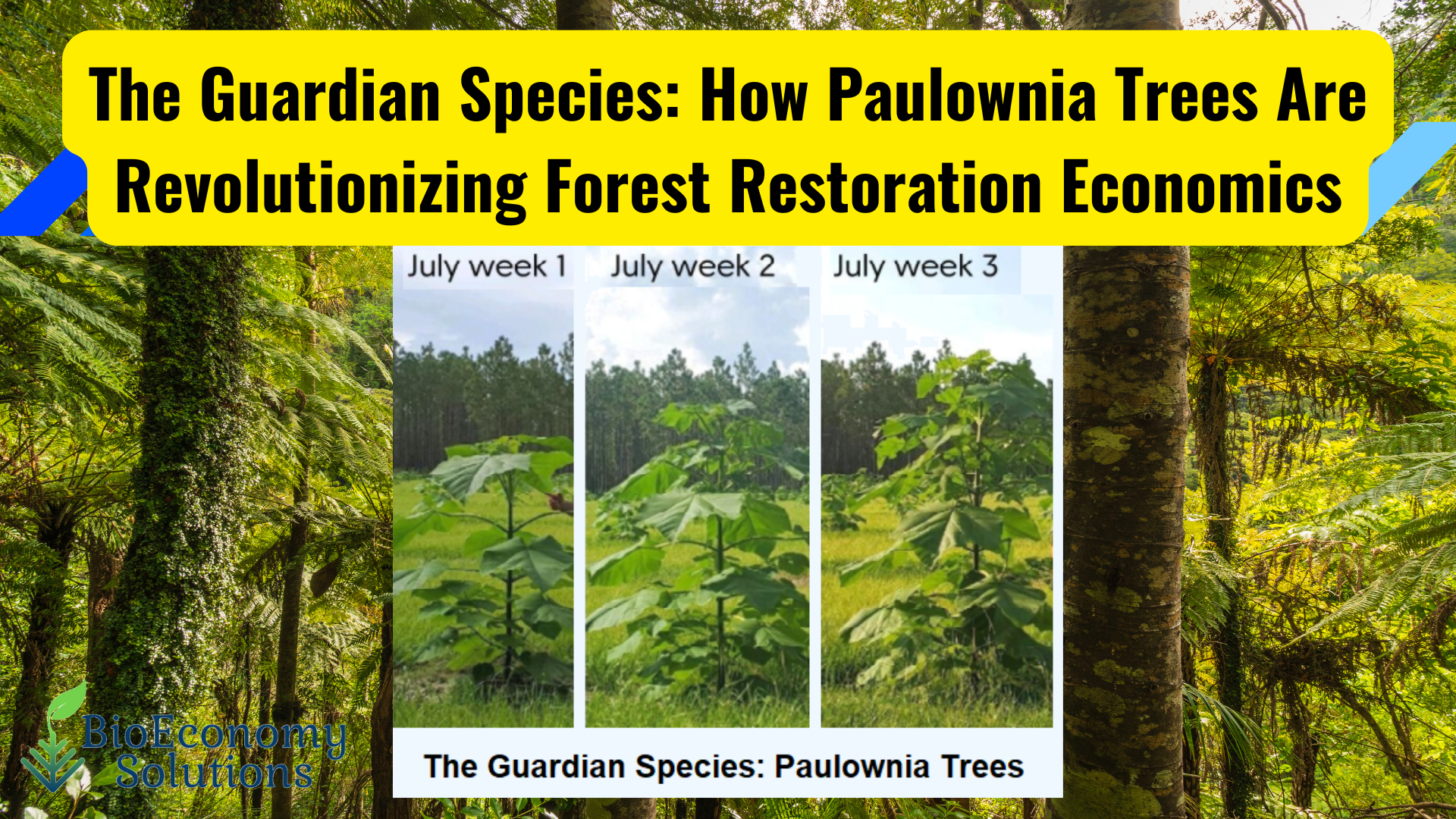
  • 15-30 feet of growth in first season
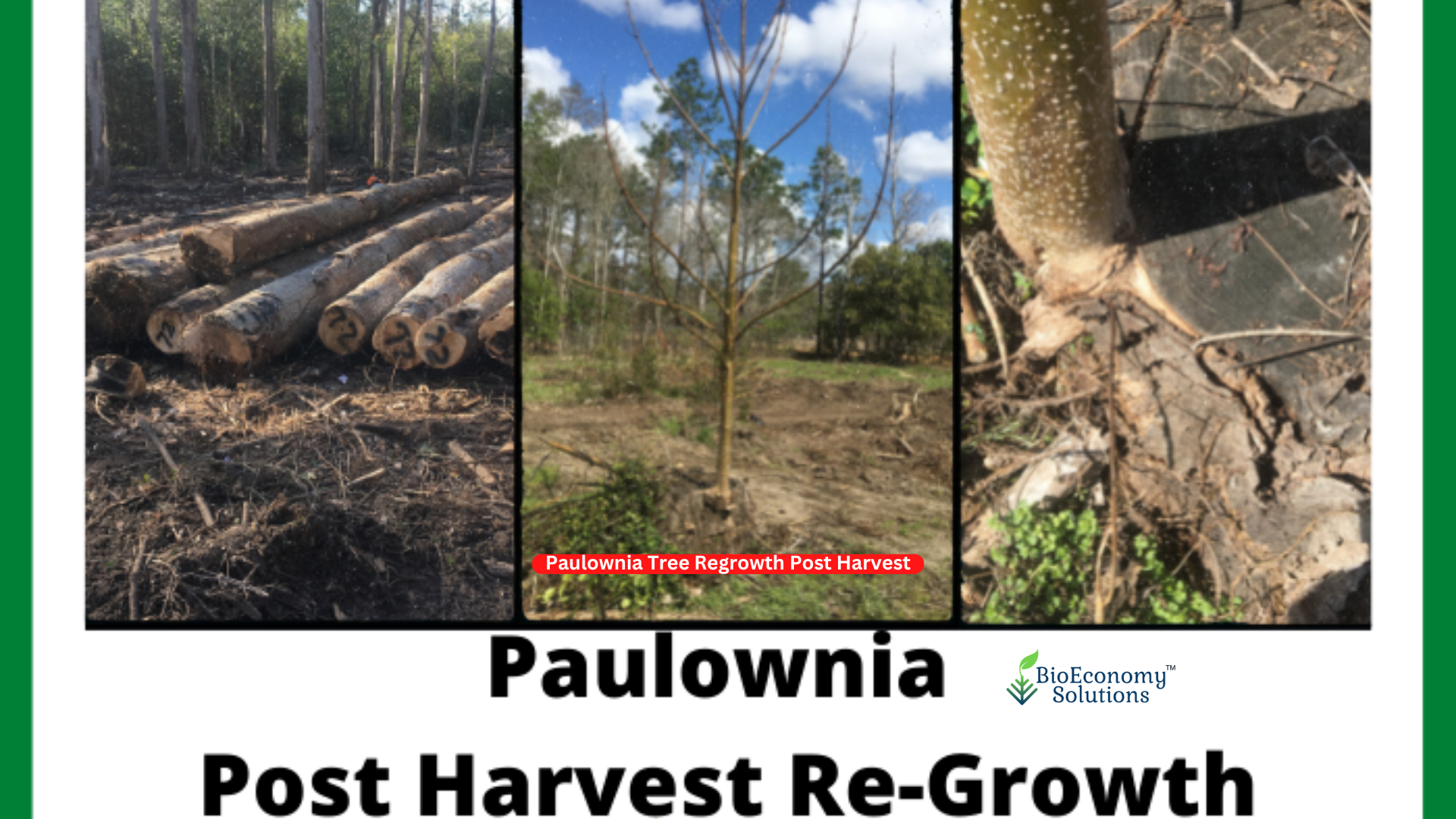
  • Coppicing ability: Regrows from cut stumps without replanting
  • Multiple harvests from single planting

This means American landowners could establish domestic lumber supply chains in less than a decade—not the generations required for traditional forestry.

Geographic Flexibility

Unlike softwood forests concentrated in the Pacific Northwest and Southeast, Paulownia thrives across diverse American landscapes:

  • Semi-arid regions previously unsuitable for timber
  • Degraded agricultural land generating new rural income
  • Marginal soils where food crops struggle
  • Urban periphery for distributed lumber production

USA Paulownia Lumber now has “Class A” ASTM E84 Flame Spread Rating.

Download: Flame-Retardancy-of-Paulownia-Wood-and-Its-Mechanism.pdf

A Class A ASTM E84 flame spread rating for Paulownia lumber is highly significant for its advancement in the U.S. structural lumber and interior building materials market. Here’s why:

Economic Impact: Beyond Lumber

For Rural America:

  • Farmers diversify income with fast-growing timber crops
  • Abandoned farmland becomes productive again
  • Local sawmills process regional Paulownia supply
  • Carbon credit revenue provides additional income streams

For Builders:

  • Reduced transportation costs from distributed production
  • Price stability through domestic supply chains
  • Superior performance characteristics reduce callbacks
  • Lightweight properties decrease labor costs

For Homeowners:

  • Lower construction costs through domestic supply
  • Superior insulation reduces energy bills
  • Fire-resistant properties may lower insurance premiums
  • Sustainable building materials increase property values

The Construction Applications Revolution

Mass Timber Potential

While Paulownia isn’t suitable for primary load-bearing applications, its unique properties make it ideal for paulownia mass timber applications:

Sandwich Construction:

  • Paulownia core with hardwood exterior
  • Maintains strength while reducing weight
  • Significant material cost savings
  • Enhanced insulation properties

Engineered Wood Products:

  • Laminated veneer lumber (LVL) applications
  • Cross-laminated timber (CLT) components
  • Glue-laminated beams for specific applications

Specialty Markets

High-Value Applications:

  • Musical instrument construction (proven market)
  • Boat building and marine applications
  • RV and mobile home construction
  • Modular housing components

Addressing the Labor Crisis

The U.S. lumber industry faces severe labor shortages, with employment expected to decline 2-4% by 2033. Paulownia offers solutions:

Mechanized Harvesting:

  • Forage harvesters process 80-100 green tons per hour
  • Reduced dependence on skilled logging crews
  • Safer harvesting operations
  • Lower labor costs per board foot

Distributed Processing:

  • Smaller, regional mills reduce transportation
  • Less specialized labor required
  • Community-based economic development
  • Reduced infrastructure investment

The Regulatory Advantage

While traditional forestry battles the Endangered Species Act and National Environmental Policy Act, Paulownia offers regulatory benefits:

Environmental Positives:

  • Carbon sequestration during growth phase
  • Soil improvement on degraded lands
  • No impact on old-growth forests
  • Biodiversity enhancement when properly managed

Fast Permitting:

  • Agricultural land conversion simpler than forest management
  • No endangered species habitat conflicts
  • Positive environmental impact assessments
  • Community economic development benefits
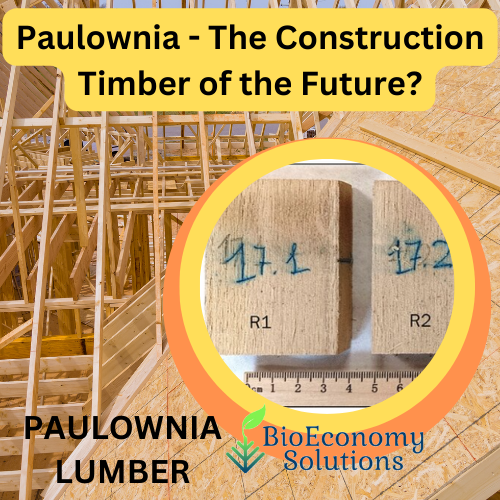
Economic Modeling: The Numbers Work

Traditional Softwood Economics:

  • 20-50 year investment horizon
  • High land acquisition costs
  • Regulatory compliance expenses
  • Transportation from limited regions

Paulownia Economics:

  • 5-7 year payback period
  • Utilizes lower-cost marginal land
  • Multiple revenue streams (timber, carbon, biomass)
  • Distributed production reduces logistics costs

Market Opportunity: With lumber representing a $60+ billion annual U.S. market, even capturing 10% would create a $6 billion Paulownia industry—enough to meaningfully impact supply and pricing.

Implementation Strategy: A Roadmap Forward

Phase 1: Pilot Projects (Years 1-3)

  • Establish demonstration plantations in key regions
  • Partner with progressive builders for testing
  • Develop processing and grading standards
  • Create supply chain partnerships

Phase 2: Scale-Up (Years 3-7)

  • Expand acreage based on proven demand
  • Build regional processing facilities
  • Establish distribution networks
  • Develop specialized applications

Phase 3: Market Integration (Years 7-15)

  • Achieve meaningful market share in specialty applications
  • Integrate with existing lumber supply chains
  • Export surplus production
  • Establish Paulownia as standard construction material

The Investment Opportunity

For Landowners:

  • Convert marginal land to productive timber assets
  • Generate income while trees mature through carbon credits
  • Benefit from multiple harvest cycles
  • Participate in growing domestic lumber market

For Investors:

  • Early entry into emerging domestic lumber supply
  • ESG-compliant investment with measurable impact
  • Multiple exit strategies through various end markets
  • Hedge against lumber price volatility

For Communities:

  • Rural economic development opportunities
  • Reduced dependence on volatile agricultural markets
  • Local processing jobs
  • Sustainable economic base

Overcoming the Challenges

Market Acceptance:

  • Education about Paulownia’s superior properties
  • Demonstration projects proving performance
  • Building code acceptance and standards development
  • Architect and engineer training programs

Supply Chain Development:

  • Processing equipment adaptation
  • Quality grading systems
  • Distribution network establishment
  • End-user education and support

Scale Requirements:

  • Coordinated planting across multiple landowners
  • Processing facility investment
  • Market development initiatives
  • Policy support for domestic alternatives

The Climate Bonus

While solving America’s lumber crisis, Paulownia delivers massive climate benefits:

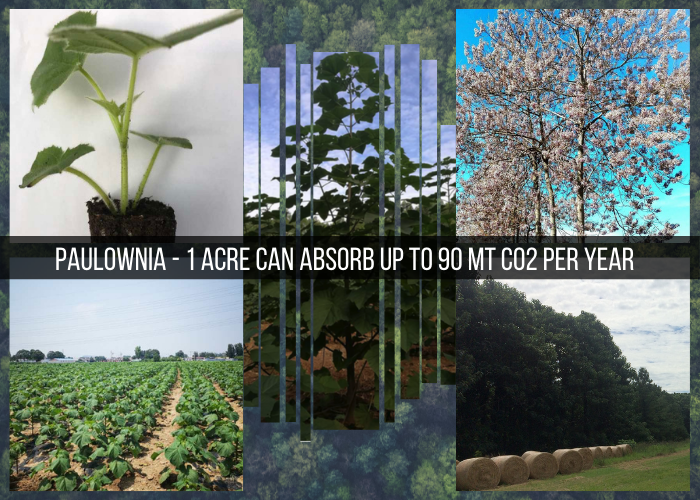
  • 80-100 tons CO₂ sequestered per acre in first 5 years
  • Carbon-negative construction materials
  • Reduced transportation emissions from domestic supply
  • Soil improvement on degraded lands

This creates additional revenue through carbon credit markets while addressing climate goals.

The Time Is Now

America’s lumber crisis demands innovative solutions. While politicians debate tariffs and regulations, Paulownia offers a market-based path forward:

Domestic supply security

Superior performance characteristics

Rapid deployment timeline

Rural economic development

Climate benefits

Regulatory advantages

The question isn’t whether Paulownia can help solve America’s lumber crisis—it’s whether we’ll act fast enough to capture the opportunity.

Every month we delay is another month of volatile prices, housing unaffordability, and missed economic development.

The solution is growing. Literally.


Ready to explore Paulownia opportunities for your land, business, or investment portfolio? The domestic lumber revolution starts with the first tree planted.

Contact us to learn how Paulownia can transform your piece of America’s lumber future.

Conclusion

The Paulownia tree, with its FAST growth rate, carbon capture abilities, and adaptability, is a powerful tool in climate change mitigation, biodiversity support, and sustainable forest management. When used appropriately in afforestation and reforestation projects, it holds the potential to restore ecosystems, combat deforestation, and provide long-term environmental and economic benefits.

Contact Us

BioEconomy Solutions is a Carbon Dioxide Removal (CDR) Project Developer. Talk to us about our TREE PLANTING strategies with Paulownia trees.

We’re happy to organize a time to speak with you about our paulownia trees and lumber we have for sale. Please book your preferred time to speak directly.

Here’s a link to my online calendar/schedule:

www.bioeconomysolutions.com/bookcall

BioEconomy Solutions

mail@BioEconomySolutions.com

Office: 843.305.4777

Visit us at: https://bioeconomysolutions.com/paulownia-carbon-credits/ Let’s chat about paulownia tree solutions for sustainable Forest carbon credits projects.

LIKE|SHARE|COMMENT

Enjoy this article? You may also enjoy “Carbon Developers Choose Paulownia Trees” https://www.linkedin.com/pulse/carbon-developers-choose-paulownia-trees-victor-garlington-imh4e/

Subscribe to our newsletter
Subscribe to our newsletter

The world is racing to decarbonize agriculture and heavy industry. One of the biggest game-changers? Green ammonia—a clean fuel and fertilizer made without fossil fuels. But what if you could produce it from a fast-growing, carbon-sequestering tree? Enter Paulownia.

Why Green Ammonia?

Ammonia (NH₃) is a critical ingredient in fertilizer and a promising zero-carbon fuel. Traditionally, it’s made from natural gas, releasing huge amounts of CO₂. Green ammonia, produced using renewable energy and sustainable feedstocks, is the future of both food and energy security.

The primary USDA program supporting alternative fertilizers is the Fertilizer Production Expansion Program (FPEP), which provides grants to U.S. businesses and organizations to increase domestic manufacturing and processing of fertilizers and nutrient alternatives, aiming to lower costs, reduce reliance on foreign suppliers, and promote sustainable practices. Eligible projects include modernizing equipment, adopting new technologies, and building plants for producing innovative fertilizers, including biobased and organic options, and those that enhance soil health and nutrient use efficiency.

What the Program Does

  • Increases Domestic Production:
  • Promotes Innovation:
  • Boosts Competition:
  • Reduces Foreign Dependence:

The Paulownia Advantage

Paulownia trees are among the fastest-growing on earth, thriving on degraded land and capturing massive amounts of CO₂. Their wood chips are a renewable, high-yield biomass source—perfect for green ammonia production.

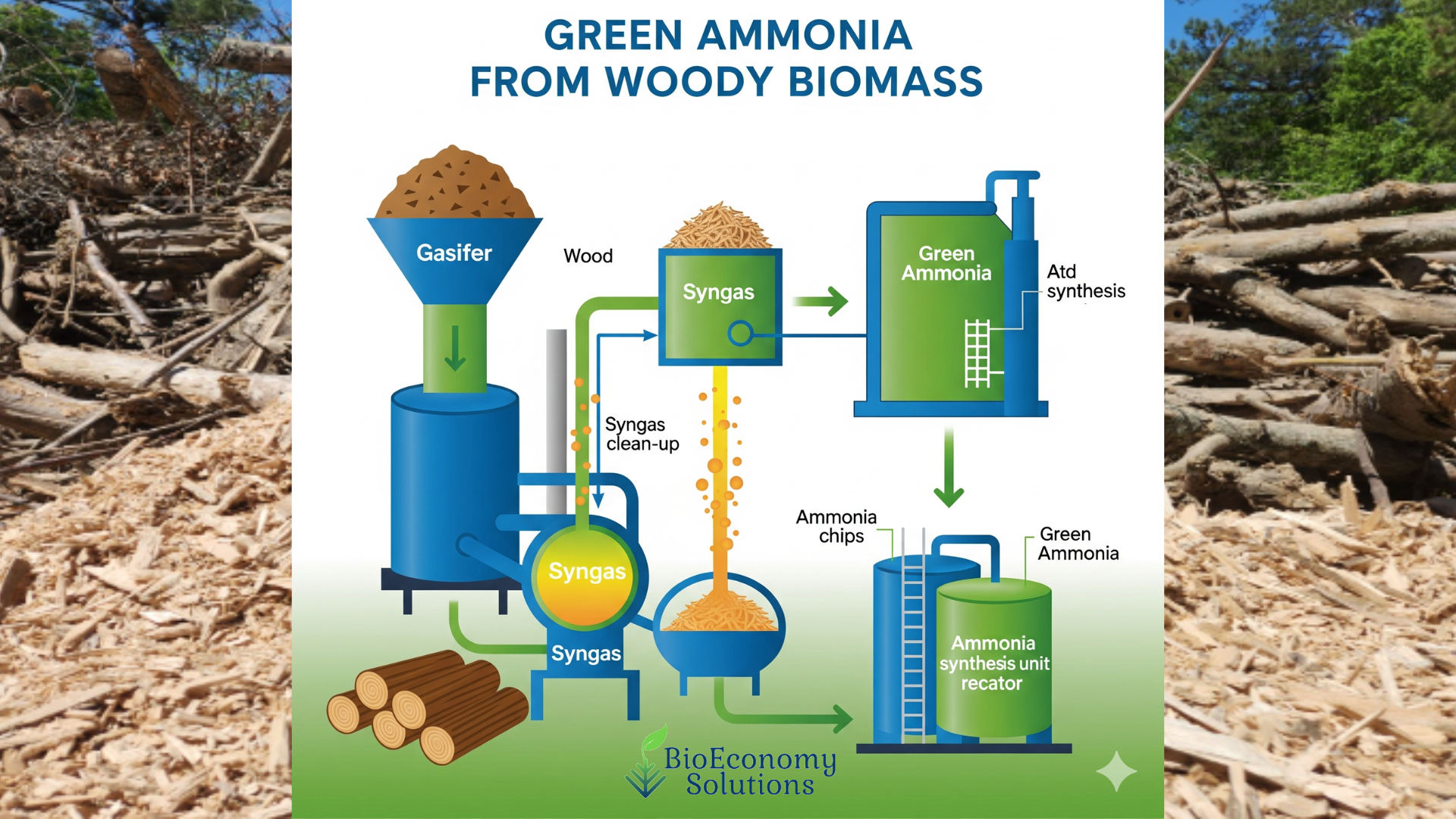
How It Works: Biomass Pathways

  1. Paulownia Cultivation
  2. Biomass Gasification
  3. Hydrogen Extraction
  4. Green Ammonia Synthesis

Why Carbon is Money

  • Carbon Credits: Every ton of CO₂ sequestered by Paulownia and every ton avoided by green ammonia production can be monetized as carbon credits. Biochar byproducts can generate 2.5–3.26 credits per ton.
  • Premium Markets: Green ammonia commands a price premium in global fertilizer and shipping markets.
  • Multiple Revenue Streams: Timber, carbon credits, biochar, and now green ammonia—all from the same tree.

Real-World Impact

  • Decarbonize Agriculture: Replace fossil-based fertilizers with green ammonia, slashing emissions.
  • Clean Shipping Fuel: Ammonia is emerging as a zero-carbon fuel for ships.
  • Rural Economic Growth: Farmers and landowners can profit from carbon, timber, and energy markets.

The Bottom Line

Paulownia isn’t just a tree—it’s a carbon mining platform. By turning its biomass into green ammonia, you’re not just growing trees. You’re growing money, decarbonizing the planet, and building the future of clean energy and agriculture.

Carbon is money. Paulownia is the bank. Green ammonia is the future.


Conclusion

The Paulownia tree, with its FAST growth rate, carbon capture abilities, and adaptability, is a powerful tool in climate change mitigation, biodiversity support, and sustainable forest management. When used appropriately in afforestation and reforestation projects, it holds the potential to restore ecosystems, combat deforestation, and provide long-term environmental and economic benefits.

Contact Us

BioEconomy Solutions is a Carbon Dioxide Removal (CDR) Project Developer. Talk to us about our TREE PLANTING strategies with Paulownia trees.

We’re happy to organize a time to speak with you about our paulownia trees and lumber we have for sale. Please book your preferred time to speak directly.

Here’s a link to my online calendar/schedule:

www.bioeconomysolutions.com/bookcall

BioEconomy Solutions

mail@BioEconomySolutions.com

Office: 843.305.4777

Visit us at: https://bioeconomysolutions.com/paulownia-carbon-credits/ Let’s chat about paulownia tree solutions for sustainable Forest carbon credits projects.

LIKE|SHARE|COMMENT

Enjoy this article? You may also enjoy “Carbon Developers Choose Paulownia Trees” https://www.linkedin.com/pulse/carbon-developers-choose-paulownia-trees-victor-garlington-imh4e/

Subscribe to our newsletter
Subscribe to our newsletter

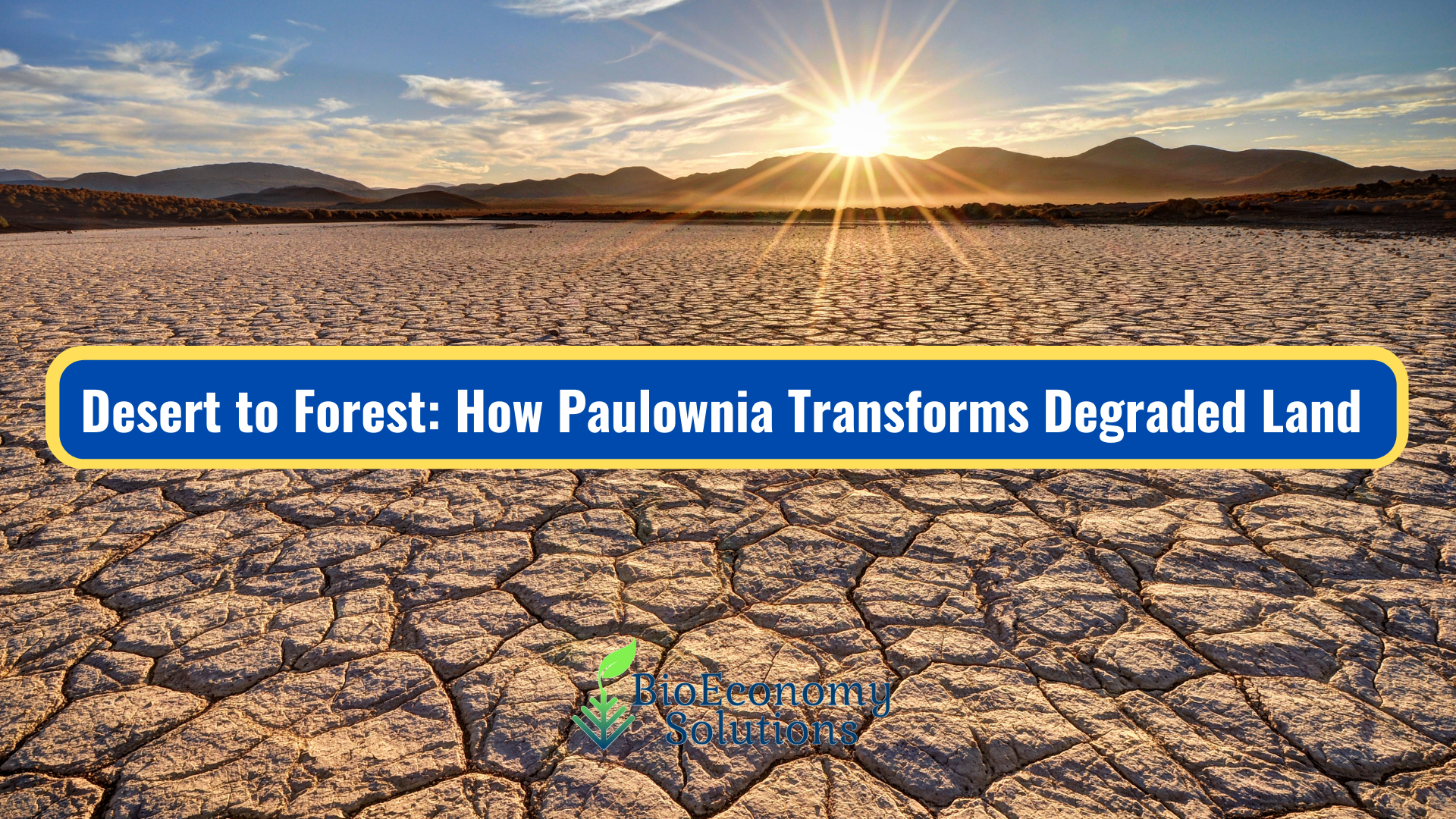
They said this desert land was worthless.

5 years later, it’s a thriving forest ecosystem.

Here’s how Paulownia trees are turning the world’s most degraded landscapes into carbon-sequestering goldmines:

I just reviewed restoration data from 7 countries.

The results will change how you think about “impossible” land.

The Degraded Land Crisis:

• 2 billion hectares of degraded land globally

• $10.6 trillion in lost ecosystem services annually

• Traditional restoration: 50+ years, 60% failure rate

• Climate change accelerating desertification

Enter Paulownia’s secret weapon: The taproot system

While other trees struggle in compacted, nutrient-poor soil…

Paulownia’s roots dive 15+ feet deep, breaking through hardpan layers that have defeated restoration efforts for decades.

The Phytoremediation Process:

Year 1-2: Soil Breaking • Deep taproots fracture compacted earth • Root channels improve water infiltration by 300% • Mycorrhizal networks begin soil biology restoration

Year 3-5: Chemical Cleanup • Absorbs heavy metals (lead, cadmium, zinc) into biomass • Nitrogen fixation improves soil fertility • Large leaves create beneficial microclimate

Year 5+: Ecosystem Transformation • Soil organic matter increases 400% • Native species survival rates jump to 85% • Water table stabilization prevents further erosion

Real-World Success Stories:

🏜️ China’s Gobi Desert Project

  • 17+ million Paulownia planted
  • 35,000 square miles restored
  • 2.5 million people lifted from poverty

🌍 Pakistan’s Punjab Province

  • Degraded farmland rehabilitation
  • Sustainable timber + biomass production
  • Community-based economic development

🔅 Ethiopian Highlands

  • Slope stabilization preventing landslides
  • Watershed protection for downstream communities
  • Carbon credit revenue funding expansion

🔆 Spain’s Mediterranean Drylands

  • Drought-resistant restoration model
  • Integration with native oak recovery
  • Tourism revenue from restored landscapes

The Economics of Restoration:

Traditional Approach:

  • $15,000/hectare upfront cost
  • 20+ years to see results
  • High failure rates in degraded soils

Paulownia-Led Restoration:

  • $5,000/hectare initial investment
  • Revenue generation starts Year 3
  • 90%+ establishment success rate
  • Self-funding through timber/carbon sales

The Multiplier Effect:

Each Paulownia tree enables: • 5-10 native species to establish successfully • 50+ tons additional carbon sequestration • 1,000+ liters annual water retention • Habitat for 20+ bird species.

Why This Matters Now:

The UN Decade on Ecosystem Restoration needs to restore 1 billion hectares by 2030.

At current rates, we’ll achieve maybe 10% of that goal.

Paulownia doesn’t replace native forests. It makes native forest restoration economically viable.

The Investment Opportunity:

• $50+ billion in degraded land available globally • Carbon credits: $50-150/ton for restoration projects • Timber markets: $200-500/cubic meter for fast-growth species • Biodiversity offsets: Emerging premium market

Countries actively scaling Paulownia restoration: China, Pakistan, Ethiopia, Spain, Kenya, Niger, India, Egypt, Australia, USA

The Climate Urgency:

We can’t wait 50 years for traditional restoration.

We need solutions that work in degraded soils, generate immediate economic returns, and scale across continents.

Paulownia isn’t just growing trees. It’s growing hope on land the world gave up on.


What “impossible” restoration challenges are you facing?

Sometimes the fastest way forward is to plant the right tree first. 🌳

Tag someone working on land restoration projects – they need to see this.


Conclusion

The Paulownia tree, with its FAST growth rate, carbon capture abilities, and adaptability, is a powerful tool in climate change mitigation, biodiversity support, and sustainable forest management. When used appropriately in afforestation and reforestation projects, it holds the potential to restore ecosystems, combat deforestation, and provide long-term environmental and economic benefits.

Contact Us

BioEconomy Solutions is a Carbon Dioxide Removal (CDR) Project Developer. Talk to us about our TREE PLANTING strategies with Paulownia trees.

We’re happy to organize a time to speak with you about our paulownia trees and lumber we have for sale. Please book your preferred time to speak directly.

Here’s a link to my online calendar/schedule:

www.bioeconomysolutions.com/bookcall

BioEconomy Solutions

mail@BioEconomySolutions.com

Office: 843.305.4777

Visit us at: https://bioeconomysolutions.com/paulownia-carbon-credits/ Let’s chat about paulownia tree solutions for sustainable Forest carbon credits projects.

LIKE|SHARE|COMMENT

Enjoy this article? You may also enjoy “Carbon Developers Choose Paulownia Trees” https://www.linkedin.com/pulse/carbon-developers-choose-paulownia-trees-victor-garlington-imh4e/

Subscribe to our newsletter
Subscribe to our newsletter

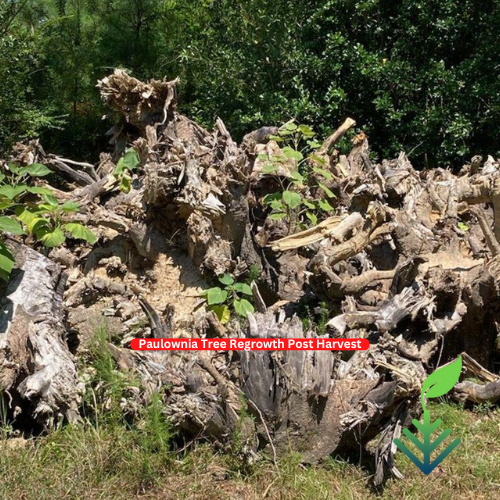
Cut it Down. Watch it Regrow in 90 Days.

In traditional forestry, cutting down a tree means starting over. You plant a seedling, wait years—or even decades—before it matures. That lag time makes lumber production slow, costly, and often unsustainable.

But what if a tree could regrow from its own stump in just 90 days?

That’s not science fiction—it’s the Paulownia tree.

The Tree That Refuses to Die

The Paulownia is sometimes called the “Phoenix Tree” for a reason. After harvest, it doesn’t need replanting. Instead, it regenerates from its existing root system—sprouting new growth within weeks.

In just three months, you can witness significant regrowth. In a few short years, the tree is ready for another harvest cycle—without ever having to replant.

This ability to regrow rapidly isn’t just a neat biological trick. It’s a game-changer for forestry, climate solutions, and the bioeconomy.

Why This Matters for Sustainability

Deforestation is one of the planet’s biggest challenges. Conventional logging wipes out ecosystems, requires constant replanting, and disrupts soil health. Paulownia changes that model.

Here’s why:

  • Regenerative Harvesting – Instead of clear-cutting and replanting, Paulownia keeps regenerating from the same root system.
  • Faster Growth – It’s among the fastest-growing hardwoods in the world, reaching maturity in just 7–10 years.
  • Carbon Capture – The tree absorbs CO₂ at up to 10x the rate of oak, turning forestry into a powerful climate solution.
  • Premium Wood – Lightweight, strong, and water-resistant, Paulownia lumber has high demand in global markets.

This isn’t just sustainable forestry—it’s forestry upgraded.

A New Standard for the Bioeconomy

At BioEconomy Solutions, we’re scaling Paulownia agroforestry to redefine what’s possible in sustainable wood production and carbon markets.

✅ Regrowth in 90 days.

✅ No replanting required.

✅ Verified carbon credits at a fraction of current costs.

✅ Sustainable lumber supply for the future.

Imagine a world where we can meet global wood demand without destroying forests—and remove carbon affordably in the process. That’s the Paulownia promise.

The Takeaway

The Paulownia isn’t just another tree. It’s proof that nature already solved one of our biggest problems: how to grow, harvest, and regrow in harmony with the planet.

The 90-Day Regrowth Time-lapse is more than a visual—it’s a window into the future of forestry, climate finance, and sustainable development.

👉 See how we’re building that future at BioEconomySolutions.com and schedule a private consultation


Conclusion

The Paulownia tree, with its FAST growth rate, carbon capture abilities, and adaptability, is a powerful tool in climate change mitigation, biodiversity support, and sustainable forest management. When used appropriately in afforestation and reforestation projects, it holds the potential to restore ecosystems, combat deforestation, and provide long-term environmental and economic benefits.

Contact Us

BioEconomy Solutions is a Carbon Dioxide Removal (CDR) Project Developer. Talk to us about our TREE PLANTING strategies with Paulownia trees.

We’re happy to organize a time to speak with you about our paulownia trees and lumber we have for sale. Please book your preferred time to speak directly.

Here’s a link to my online calendar/schedule:

www.bioeconomysolutions.com/bookcall

BioEconomy Solutions

mail@BioEconomySolutions.com

Office: 843.305.4777

Visit us at: https://bioeconomysolutions.com/paulownia-carbon-credits/ Let’s chat about paulownia tree solutions for sustainable Forest carbon credits projects.

LIKE|SHARE|COMMENT

Enjoy this article? You may also enjoy “Carbon Developers Choose Paulownia Trees” https://www.linkedin.com/pulse/carbon-developers-choose-paulownia-trees-victor-garlington-imh4e/

Subscribe to our newsletter
Subscribe to our newsletter

Here’s The Conservation Paradox We Can’t Ignore

Conservation projects fail at an alarming rate. Not because of bad intentions, but because of bad economics.

Traditional reforestation takes 20-50 years to show meaningful results. Investors lose patience. Communities lose income. And our climate crisis can’t wait.

But what if there was a way to accelerate ecosystem restoration while generating immediate economic returns?

Enter the concept of “guardian species” – fast-growing trees that protect and nurture native forests while delivering rapid carbon sequestration and sustainable revenue streams.

Why Native-Only Approaches Fall Short

The Brutal Reality:

  • Native tree seedlings have 30-60% mortality rates in degraded soils
  • Zero economic returns for the first 10-15 years
  • Vulnerable to drought, pests, and human encroachment
  • Limited carbon sequestration during critical establishment phase

The Economic Death Spiral: Without immediate returns, conservation projects become charity cases. Funding dries up. Local communities seek alternative income sources. The cycle of deforestation continues.

The Guardian Species Solution

Paulownia trees don’t compete with native species – they enable their success.

Here’s how the guardian model works:

Phase 1: Rapid Establishment (Years 1-3)

  • Paulownia trees establish quickly in degraded soils
  • Deep taproots break up compacted earth
  • Large leaves create beneficial microclimate
  • Immediate carbon sequestration begins (10-15 tons CO2/acre/year)

Phase 2: Ecosystem Preparation (Years 3-5)

  • Nitrogen fixation improves soil fertility
  • Canopy provides wind protection for native seedlings
  • Root systems prevent erosion and improve water retention
  • First timber harvest generates revenue for native species planting

Phase 3: Native Integration (Years 5-15)

  • Native species planted in improved soil conditions
  • Paulownia provides nurse tree protection
  • Selective Paulownia harvesting creates forest gaps for native growth
  • Continuous revenue stream funds long-term conservation

Phase 4: Mature Ecosystem (Years 15+)

  • Native canopy established with 80%+ higher survival rates
  • Paulownia transitions to understory or edge species
  • Diversified forest ecosystem with enhanced biodiversity
  • Sustainable economic model proven and replicable

The Economic Game-Changer

Traditional Conservation Model:

  • $5,000-10,000/acre upfront investment
  • 20+ years to break even
  • High failure rates
  • Dependent on grants and donations

Guardian Species Model:

  • $3,000-5,000/acre initial investment
  • Revenue generation begins Year 3
  • 15-20% IRR over 10 years
  • Self-sustaining economic engine

Revenue Streams Include:

  • Premium timber harvests every 5-7 years
  • Carbon credits ($50-150/ton for biochar)
  • Soil improvement services
  • Biodiversity offset credits
  • Sustainable biomass for local energy needs

Real-World Success Stories

China’s Loess Plateau Restoration: The world’s largest ecosystem restoration project used fast-growing pioneer species to restore 35,000 square miles of degraded land. The economic model? Guardian species generated income that funded native forest establishment, lifting 2.5 million people out of poverty while sequestering massive amounts of carbon.

Costa Rica’s Payment for Ecosystem Services: By combining fast-growing timber species with native conservation, Costa Rica reversed deforestation while creating a $500 million forest economy. Forest cover increased from 24% to 54% in just 30 years.

The Climate Urgency Factor

We don’t have 50 years to wait for native forests to mature.

Climate models show we need massive carbon sequestration within the next decade. Guardian species like Paulownia can:

  • Sequester 50-100 tons CO2/acre in first 5 years
  • Enable native species establishment with 3x higher success rates
  • Create economic incentives for long-term forest protection
  • Scale rapidly across degraded landscapes worldwide

Addressing the Skeptics

“Isn’t this just greenwashing with exotic species?”

No. Guardian species are carefully selected, sterile hybrids that cannot spread naturally. They’re tools for ecosystem restoration, not ecosystem replacement.

“What about biodiversity concerns?”

Guardian species actually enhance biodiversity by:

  • Creating habitat corridors during establishment
  • Improving soil conditions for native species
  • Providing economic alternatives to habitat destruction
  • Enabling larger-scale conservation projects through economic viability

“How do we ensure native species aren’t abandoned?”

The economic model requires native species success for long-term sustainability. Guardian species revenue funds native planting, monitoring, and protection in perpetuity.

The Investment Opportunity

ESG funds and impact investors are sitting on $30+ trillion in assets seeking measurable environmental returns. The guardian species model offers:

Measurable Impact:

  • Verified carbon sequestration
  • Biodiversity monitoring protocols
  • Soil health improvements
  • Community economic development

Financial Returns:

  • 15-20% IRR potential
  • Multiple exit strategies
  • Inflation-hedged timber assets
  • Growing carbon credit premiums

Scalability:

  • Applicable across 60+ countries
  • Proven in diverse ecosystems
  • Standardized implementation protocols
  • Technology-enabled monitoring

The Path Forward

The guardian species model isn’t just about trees – it’s about reimagining conservation economics.

For Investors: Access to a $50 billion nature-based asset class with measurable returns and impact.

For Conservationists: A tool to accelerate ecosystem restoration while ensuring long-term economic sustainability.

For Communities: Immediate income opportunities that grow into generational wealth through forest stewardship.

For Our Planet: A scalable solution that addresses climate change, biodiversity loss, and rural poverty simultaneously

The Time Is Now

Every month we delay ecosystem restoration is another month of accelerating climate damage. Traditional approaches, while well-intentioned, simply can’t scale fast enough.

Guardian species offer a bridge between urgent climate action and long-term conservation success. They’re not the complete solution – but they’re the catalyst that makes comprehensive solutions economically viable.

The question isn’t whether we can afford to try this approach.

The question is whether we can afford not to.


Ready to explore guardian species opportunities for your portfolio or conservation project? The economics of forest restoration are changing. The early movers will capture both the highest returns and the greatest impact.

Contact us to learn how Paulownia guardian species can accelerate your ecosystem restoration timeline while generating sustainable returns.

Contact Us!

📣 If you’re an investor, policy leader, or sustainability advocate—we invite you to connect. Let’s put capital to work in nature-based carbon sequestration that delivers at scale.

This isn’t just green finance. This is regenerative economics.

BioEconomy Solutions is a Carbon Dioxide Removal (CDR) Project Developer. Talk to us about our TREE PLANTING strategies with Paulownia trees.

We’re happy to organize a time to speak with you about our paulownia trees and lumber we have for sale. Please book your preferred time to speak directly.

Here’s a link to my online calendar/schedule:

www.bioeconomysolutions.com/bookcall

BioEconomy Solutions

mail@BioEconomySolutions.com

Office: 843.305.4777

Visit us at: https://bioeconomysolutions.com/paulownia-carbon-credits/ Let’s chat about paulownia tree solutions for sustainable Forest carbon credits projects.

LIKE|SHARE|COMMENT

Enjoy this article? You may also enjoy “Carbon Developers Choose Paulownia Trees” https://www.linkedin.com/pulse/carbon-developers-choose-paulownia-trees-victor-garlington-imh4e/

Download Your FREE REPORT 

Subscribe to our newsletter
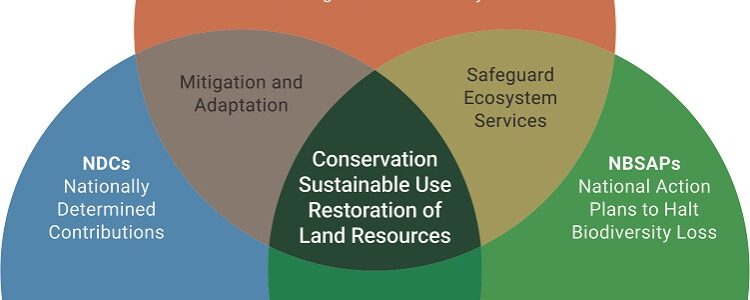
Why the 2025 Green Bond Principles Are a Game-Changer for Nature-Based Carbon Projects. We’re not planting trees. We’re building a regenerative asset class—and the bond market just caught up.

The world is waking up to a new generation of climate finance—and BioEconomy Solutions is at the forefront.

With the release of the 2025 Green Bond Principles (GBP) by ICMA, the door is now open for companies like ours to raise sustainable capital for nature-based solutions rooted in science, scalability, and impact.

International Capital Market Association’s (ICMA)
The International Capital Market Association’s (ICMA) Green Bond Principles (GBP) are voluntary guidelines that promote transparency and integrity in the green bond market. The June 2025 update clarifies how the Green Enabling Projects Guidance is linked to the GBP and expands the definition of “Green Projects” to include “activities” in addition to assets and investments.

The GBP’s four core components for alignment are:

  • Use of Proceeds
  • Process for Project Evaluation and Selection
  • Management of Proceeds
  • Reporting

The principles aim to help issuers finance environmentally sound and sustainable projects that support a net-zero emissions economy and protect the environment. They also provide categories for eligible Green Projects, such as renewable energy, clean transportation, and sustainable water management, and encourage issuers to report on the use of proceeds to improve transparency and track the environmental impact.

Core Updates in 2025 Version

1. Expanded Definition of “Green Projects”

  • Now explicitly includes “activities” such as R&D and supporting actions in addition to assets and investments.
  • Aligns with new Green Enabling Projects Guidance (June 2024), recognizing enabling infrastructure (e.g. manufacturing of components) as eligible if they support broader green initiatives.

2. Four Core Components Remain Foundation

  • Use of Proceeds: Funds must go exclusively to eligible green assets, investments, or activities, with quantified environmental benefits.
  • Project Evaluation & Selection: Clear disclosure of selection process, sustainability objectives, and risk mitigation.
  • Management of Proceeds: Net bond proceeds must be tracked via specific sub-accounts or portfolios, adjusted until full allocation; external verification is encouraged.
  • Reporting: Annual and timely impact reports required, including list of funded projects, descriptions, amounts allocated, and expected environmental impact figures—using ICMA’s Harmonised Framework where feasible.

3. Strengthened Recommendations

  • Green Bond Frameworks: Issuers are expected to publish frameworks or legal documentation aligning with the four core components and situate disclosure within broader sustainability strategy (e.g. references to taxonomies, Paris-aligned transition plans, or Climate Transition Finance Handbook).
  • External Reviews: Pre- and post‑issuance reviews by qualified third parties are recommended. Providers should disclose credentials and scope; templates are available on ICMA’s site.

Green Enabling Projects Guidance

  • Clarifies that some projects not directly delivering environmental impact may be eligible if they form enabling elements of broader green initiatives (e.g. infrastructure manufacturing).
  • Mapped to existing GBP categories, these should still avoid locking in high emissions and monitor risks like double-counting in impact reporting.

Related 2025 Releases

  • A Practitioner’s Guide: Sustainable Bonds for Nature was launched concurrently, introducing a thematic overlay for nature‑related projects and allowing issuers to use the secondary label “Nature Bond.” It also offers nature-related KPIs for inclusion in SLBs or sustainability frameworks.
  • Updates were issued to ICMA’s Guidance Handbook, Allocation Reporting Guidance, and Q&A sections, alongside other frameworks like the Social Bond Principles (SBP) and Sustainability‑Linked Loans financing Bonds Guidelines.

Why Paulownia?

Every hectare of Paulownia under cultivation can sequester up to 560 tons of CO₂ annually, while restoring degraded land, and produces Class A fire-rated lumber—making it ideal for low-carbon construction.

It’s a WIN WIN for the local economy & environment!

Combined with our nature-based methodologies and end-to-end traceability, we’re ready to turn regenerative forestry into a green financial instrument.

Contact Us!

📣 If you’re an investor, policy leader, or sustainability advocate—we invite you to connect. Let’s put capital to work in nature-based carbon sequestration that delivers at scale.

This isn’t just green finance. This is regenerative economics.

BioEconomy Solutions is a Carbon Dioxide Removal (CDR) Project Developer. Talk to us about our TREE PLANTING strategies with Paulownia trees.

We’re happy to organize a time to speak with you about our paulownia trees and lumber we have for sale. Please book your preferred time to speak directly.

Here’s a link to my online calendar/schedule:

www.bioeconomysolutions.com/bookcall

BioEconomy Solutions

mail@BioEconomySolutions.com

Office: 843.305.4777

Visit us at: https://bioeconomysolutions.com/paulownia-carbon-credits/ Let’s chat about paulownia tree solutions for sustainable Forest carbon credits projects.

LIKE|SHARE|COMMENT

Enjoy this article? You may also enjoy “Carbon Developers Choose Paulownia Trees” https://www.linkedin.com/pulse/carbon-developers-choose-paulownia-trees-victor-garlington-imh4e/

Get a FREE copy of Paulownia Carbon Report

Get a FREE copy of Paulownia Carbon Report

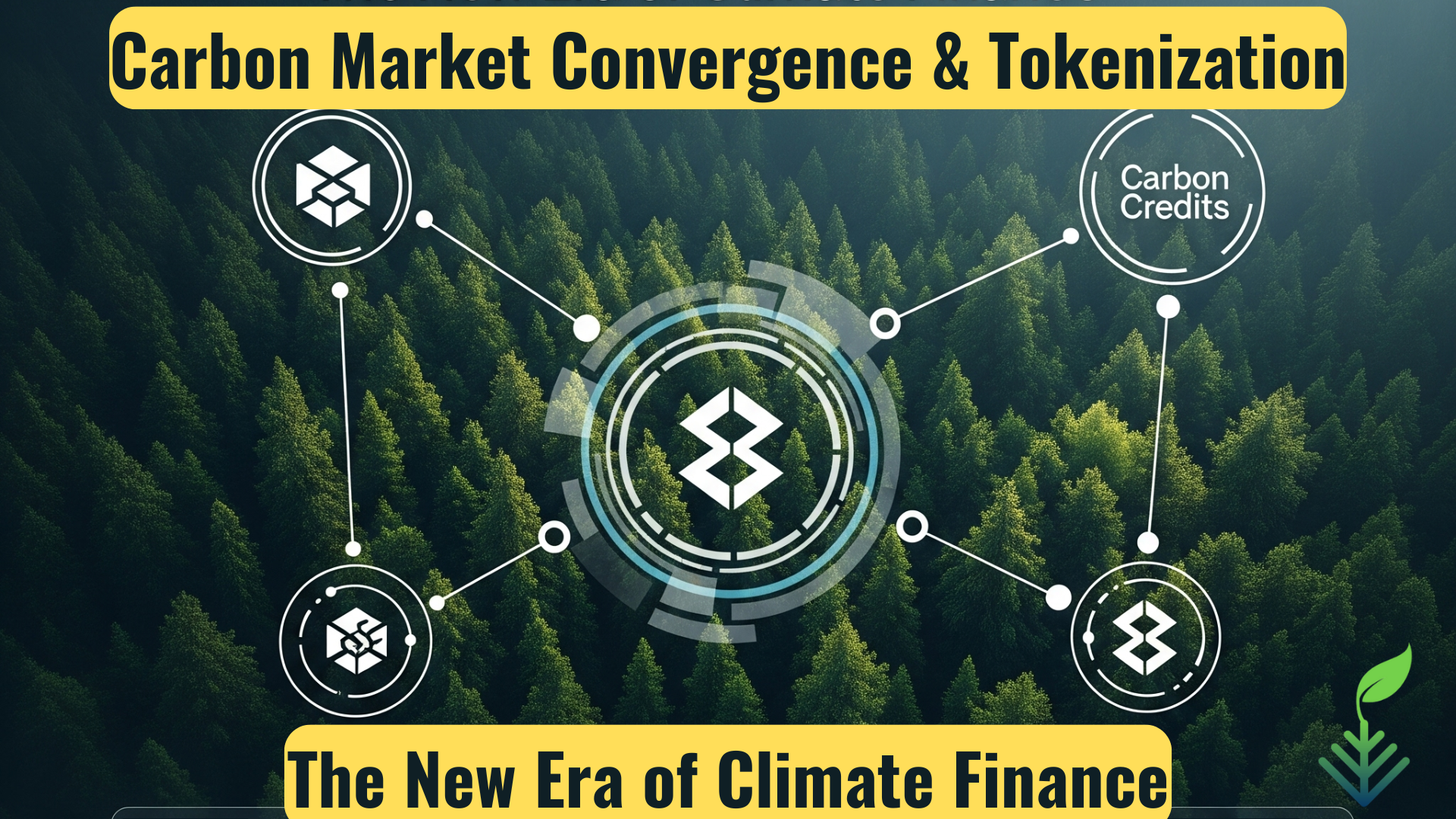
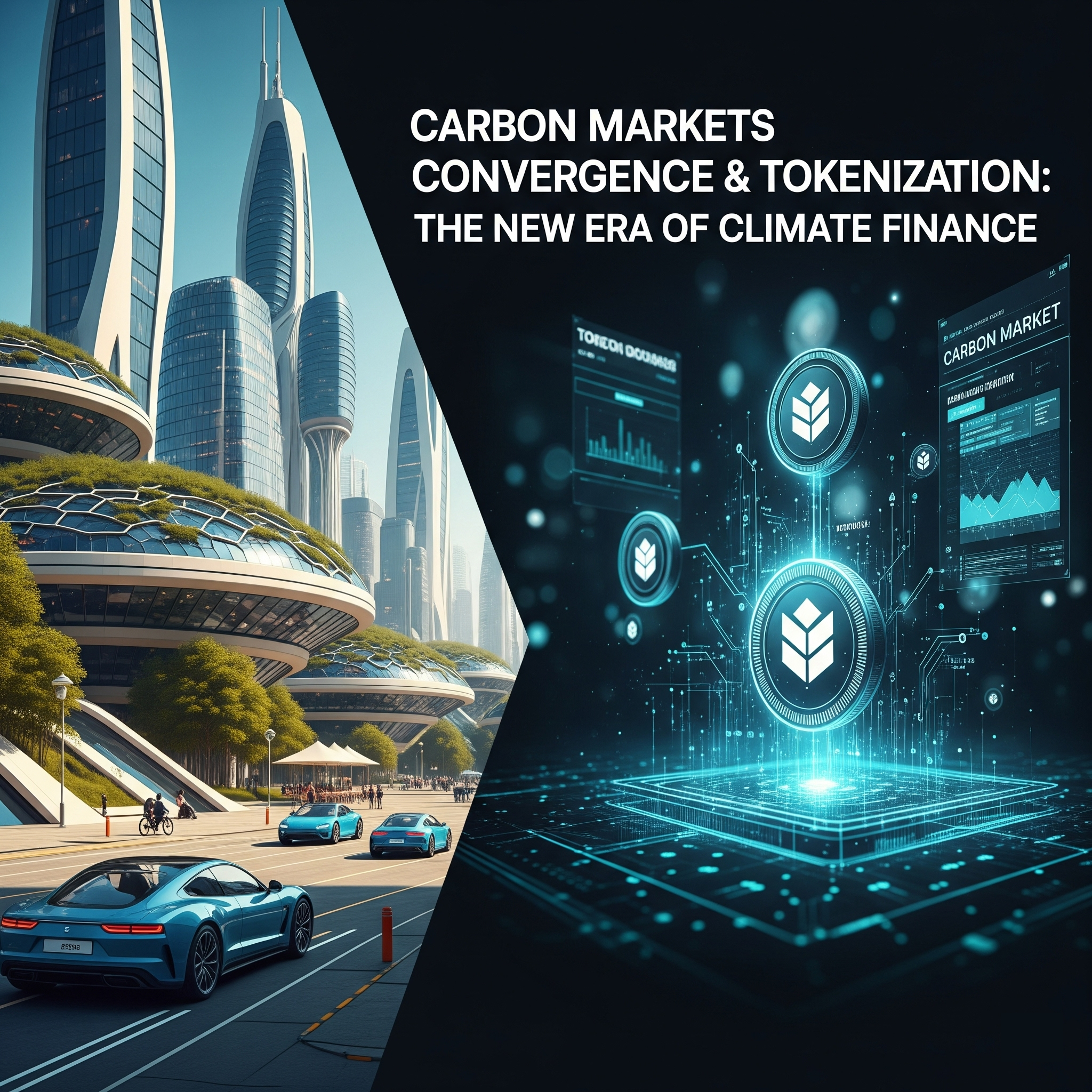
The world accelerates toward a low-carbon economy, two powerful financial innovations are converging: carbon markets and tokenization. What was once considered a fringe overlap between environmentalism and crypto is now emerging as a serious frontier for climate action and sustainable finance.

Why This Convergence Matters
Carbon credits have long been viewed as a crucial tool for offsetting emissions and achieving net-zero goals. Yet the traditional carbon market infrastructure has faced consistent challenges: lack of transparency, inefficiency, and concerns about credit legitimacy.

Enter Cryptocurrency
Tokenization, powered by blockchain technology, introduces a radical new layer of transparency, efficiency, and accessibility to carbon markets. By converting carbon credits into digital tokens, the process of buying, selling, and retiring credits becomes faster, cheaper, and more traceable.

✅ Transparency & Trust: Blockchain Solves Legacy Problems

One of the biggest criticisms of voluntary carbon markets (VCMs) has been the difficulty in verifying the origin, legitimacy, and retirement of carbon credits. Double-counting and greenwashing have eroded trust among investors and stakeholders.

Blockchain’s immutable, decentralized ledger offers a solution. By tokenizing carbon credits, each unit can be traced from issuance to retirement in real time. Platforms like Toucan Protocol, KlimaDAO, and EcoRegistry are leading this transformation, bringing visibility and accountability to what was once an opaque system.


✅ Efficiency & Liquidity: Smart Contracts Meet Climate Action

Carbon trading has traditionally been encumbered by high administrative costs, long settlement times, and limited market access. Through tokenization, smart contracts automate and streamline the process, enabling:

  • Instant settlements
  • Fractional ownership of carbon assets
  • Lower transaction fees
  • Greater liquidity in secondary markets

This not only reduces friction for large players but also makes the market accessible to individuals, small businesses, and decentralized autonomous organizations (DAOs).

✅ New Technologies and Platforms Are Emerging

The digital infrastructure around tokenized carbon is rapidly evolving. According to Carbonmark and others, we’re seeing the emergence of platforms that bridge traditional registries with programmable finance.

Notable initiatives include:

  • Xpansiv – a marketplace for on-chain carbon
  • ICR (Integrated Carbon Registry) – focusing on digitized MRV systems
  • Tether – helping integrate blockchain with existing carbon credit standards

These tools are helping carbon markets evolve from analog to digital—bringing them in line with 21st-century capital markets.


✅ Rising ESG Demand and Climate Consciousness

As climate change intensifies, the global appetite for ESG-compliant assets and sustainable investment vehicles is growing. Tokenized carbon credits offer a new channel for retail and institutional investors alike to align financial portfolios with climate goals.

This convergence also democratizes climate action. Instead of being limited to governments and large corporations, individuals and startups can now engage in carbon offsetting with low entry barriers and real-time verification.

Challenges on the Road Ahead

Despite the enormous potential, the convergence of carbon and token markets isn’t without its hurdles:

  • Regulatory Uncertainty: Legal frameworks for both carbon credits and blockchain assets are still evolving. This creates risk for token issuers and investors alike.
  • Credit Quality and Verification: Not all carbon credits are created equal. Ensuring the integrity and additionality of tokenized credits is vital to avoid greenwashing.
  • Technical Integration: Bridging legacy carbon registries with blockchain systems is complex, and interoperability between platforms remains a major issue.
  • Market Acceptance: For large-scale adoption, traditional investors and corporations need to see clear, credible benefits from tokenization—beyond hype.

ESG Investment Trend

  • The trend toward Environmental, Social, and Governance (ESG) investing is real and growing.
  • Tokenization helps democratize access, which is key to bringing in individuals, SMEs, and impact investors into a market previously dominated by large corporates.

The Path Forward

While still in its early days, the convergence of tokenized finance and environmental markets is one of the most promising developments in climate tech. It holds the potential to:

  • Unlock new capital for nature-based solutions
  • Bring carbon offsetting to a global, decentralized audience
  • Ensure trust, traceability, and liquidity in climate finance

If executed responsibly—with the right safeguards, standards, and collaboration—it can become a cornerstone of the global decarbonization strategy.

This is more than a financial innovation. It’s the infrastructure for a more transparent, inclusive, and impactful carbon economy.

Conclusion

The Paulownia tree, with its FAST growth rate, carbon capture abilities, and adaptability, is a powerful tool in climate change mitigation, biodiversity support, and sustainable forest management. When used appropriately in afforestation and reforestation projects, it holds the potential to restore ecosystems, combat deforestation, and provide long-term environmental and economic benefits.

Contact Us

BioEconomy Solutions is a Carbon Dioxide Removal (CDR) Project Developer. Talk to us about our TREE PLANTING strategies with Paulownia trees.

We’re happy to organize a time to speak with you about our paulownia trees and lumber we have for sale. Please book your preferred time to speak directly.

Here’s a link to my online calendar/schedule:

www.bioeconomysolutions.com/bookcall

BioEconomy Solutions

mail@BioEconomySolutions.com

Office: 843.305.4777

Visit us at: https://bioeconomysolutions.com/paulownia-carbon-credits/ Let’s chat about paulownia tree solutions for sustainable Forest carbon credits projects.

LIKE|SHARE|COMMENT

Enjoy this article? You may also enjoy “Carbon Developers Choose Paulownia Trees” https://www.linkedin.com/pulse/carbon-developers-choose-paulownia-trees-victor-garlington-imh4e/

Get a FREE copy of Paulownia Carbon Report

Get a FREE copy of Paulownia Carbon Report


🍃 In Fresno’s sun, where orchards sleep,

A man once sowed a dream so deep.

Dr. Ray Allen, humble and wise,

☄️ Looked not just down — but to the skies.

With roots that whisper to the ground,

🌎 He found a tree not often found.

🍀 Not native, no — but nature-blessed,

🌼 A royal bloom, unlike the rest.

🌲 Three trees were blended, branch by leaf,

Through Stanford’s quiet, green belief.

🌱 A sterile seed, so it won’t roam —

Yet gives the earth a living home.

🐾 Its pods don’t spread in wild decree,

It honors rules of each state tree.

🐻 Even in California’s care,

It grows with grace — and leaves none bare.

🌬 The soil it heals, the sky it clears,

It answers prayers of future years.

And though the world has much to learn,

🌈 These trees give more than they could earn.

I walk like Muir among their shade,

And marvel at the life he made.

🌸Dr. Allen, like Appleseed,

Planted more than just a seed.

🌷 So raise your eyes and watch them grow,

From Fresno’s fields to winds that blow.

🔥 Thank Bio Economy for the flame

They keep alive — in Ray’s great name.

🍃 Let this tree’s truth at last be known:


The Empress stands where hope is grown.

An ode to a friend & Mentor -Dr. Ray Allen Inventor of the MegaFlora Paulownia Tree! 🌲

-Michael McCauley @ Neo Forest


♻️ Repost this to help your network

👉 Follow BioEconomy Solutions for more

🌍 Let’s build the carbon-negative future—one Paulownia tree at a time.

👉 Book a call: https://bioeconomysolutions.com/bookcall

👉 Get a FREE copy of Paulownia Carbon Report: https://bioeconomysolutions.com/carbonreport

👉 What Is Paulownia? https://bioeconomysolutions.com/what-is-paulownia-wood/

Paulownia lumber just leveled up with the introduction of its Class A ASTM E84 Flame Spread Rating—a significant milestone that opens the door for its wider use in fire-resistant, sustainable construction.

Why Is This Important?

Here’s how this new rating ties into the bigger picture of reducing embodied carbon emissions while providing safe, eco-friendly alternatives to traditional building materials.


1. 🔥 Class A Flame Spread Rating: A Major Safety Upgrade

  • Fire-Resistant and Safe: The Class A flame spread rating from ASTM E84 places Paulownia lumber among the most fire-resistant materials available on the market. This rating indicates that the wood exhibits minimal flame spread and smoke development during fire testing—key safety considerations for buildings, especially in commercial or high-density residential spaces.

  • Safer High-Rise and Commercial Builds: With this fire safety certification, Paulownia wood is now a viable candidate for high-rise buildings, commercial spaces, and other fire-sensitive areas. In a post-Grenfell world, fire safety is a critical concern, and this certification makes Paulownia lumber a strong alternative to more traditional, carbon-intensive materials like steel and concrete, without compromising safety.


2. 🌱 Lower Embodied Carbon, Higher Safety Standards

  • Carbon-Friendly, Flame-Smart: Paulownia is already known for its rapid growth and carbon sequestration, absorbing CO₂ from the atmosphere as it matures. Now, with the Class A flame spread rating, it offers the best of both worlds: a low-carbon footprint and enhanced fire safety. This makes it an even more compelling choice for sustainable construction.

  • Carbon Savings with Safety: By using Paulownia lumber, builders can lower the embodied carbon emissions of their projects while adhering to safety regulations that are becoming stricter in fire-prone regions. It’s not just about carbon credits anymore—it’s about eco-friendly, fire-resistant materials that meet the highest safety standards.


3. 💡 Increasing Demand for Low-Carbon, Fire-Safe Alternatives

  • A Solution for “Buy Clean” Policies: With more and more cities and governments enforcing “buy clean” policies—which prioritize the use of low-carbon, environmentally friendly materials in public procurement—Paulownia lumber’s new flame rating positions it as a top-tier choice for government projects, school buildings, hospitals, and other public structures.

  • Enhanced Market Appeal: This development will attract builders and developers looking to meet green building certification standards (e.g., LEED, WELL), especially when combined with its rapid growth and carbon sequestration. With an increased demand for sustainable and fire-safe building materials, Paulownia’s Class A rating gives it a major competitive edge.


4. 🛠 A Game-Changer for Mass Timber and Sustainable Structures

  • Mass Timber with Safety and Sustainability: Paulownia’s strength-to-weight ratio, coupled with its fire-resistant properties, makes it an ideal choice for mass timber construction. Whether in glulam beams, cross-laminated timber (CLT), or timber-frame construction, the Class A flame rating adds an extra layer of confidence in projects where fire safety is a priority.

  • Sustainability Meets Structural Integrity: Builders can now use Paulownia mass timber in large structural components of buildings without compromising on safety. This allows for the reduction of steel and concrete—the most carbon-intensive materials—while ensuring that buildings are safe, durable, and compliant with fire safety standards.


5. 🌍 Paulownia Lumber: A Catalyst for Carbon Markets & Financial Incentives

  • Carbon Credits for Low-Carbon Builds: As Paulownia trees sequester significant amounts of CO₂, landowners and developers involved in Paulownia plantations can earn carbon credits for the environmental benefits of the wood. This makes the transition to sustainable, low-carbon materials more financially appealing, with the added incentive of earning revenue from carbon markets.

  • Class A + Carbon Credits = Double Benefit: Now, with Paulownia lumber’s Class A flame spread rating, builders can tap into both safety and carbon reduction benefits. They can reduce embodied carbon in their buildings, earn carbon credits, and enhance the financial returns of their projects while contributing to sustainability goals.


6. 🏗 Impact on the U.S. Construction Industry

  • Boosting Local Timber Economies: As the demand for fire-safe, sustainable materials increases, Paulownia lumber can become a key driver of economic growth in timber-producing regions of the U.S. This creates new opportunities for local farmers and foresters, boosting job creation in sustainable timber production and carbon management.

  • Alignment with U.S. Green Building Initiatives: The Class A flame rating aligns perfectly with the U.S. Green Building Council’s (USGBC) goals of promoting safe, low-carbon materials in construction. Paulownia lumber now has the necessary credentials to participate in green certifications, federal procurement, and net-zero initiatives across the country.


7. 📊 Setting the Stage for Future Innovation in Sustainable Building

  • Incentivizing R&D in Fire-Resistant, Low-Carbon Materials: As fire-resistant Paulownia lumber becomes more widely accepted, it will likely spark additional research and development into even more advanced low-carbon and fire-resistant building materials. This could lead to the creation of new construction systems that use even less carbon-intensive material without compromising safety.

  • Attracting Investment: The combination of sustainability, fire resistance, and carbon credits makes Paulownia lumber an attractive investment opportunity for venture capitalists and sustainability-focused funds. As demand for eco-friendly and safe materials rises, Paulownia lumber is positioned to be a key player in the construction sector’s green revolution.


Conclusion: Paulownia Lumber’s Class A Rating Is a Game-Changer for Sustainable Construction

With the new Class A ASTM E84 Flame Spread Rating, Paulownia lumber has cemented its role as a fire-safe, low-carbon building material for the future. Builders and developers now have a safer, eco-friendly alternative to traditional construction materials like steel and concrete—allowing them to meet green building certifications, reduce carbon emissions, and increase fire safety.

As the construction industry pushes toward net-zero emissions and carbon-neutral goals, Paulownia lumber offers a powerful solution that meets both environmental and safety standards—making it a game changer for sustainable construction and a low-carbon economy.


Bottom Line

A Class A ASTM E84 rating positions Paulownia as a safe, sustainable, and high-performance alternative in interior and potentially structural applications in the U.S. market. This could accelerate its adoption in architectural design, commercial construction, and green building sectors, provided it clears structural grading and durability hurdles.

Download: Flame-Retardancy-of-Paulownia-Wood-and-Its-Mechanism.pdf

🌿Where To Buy USA Paulownia Lumber?

Need paulownia for your next project?

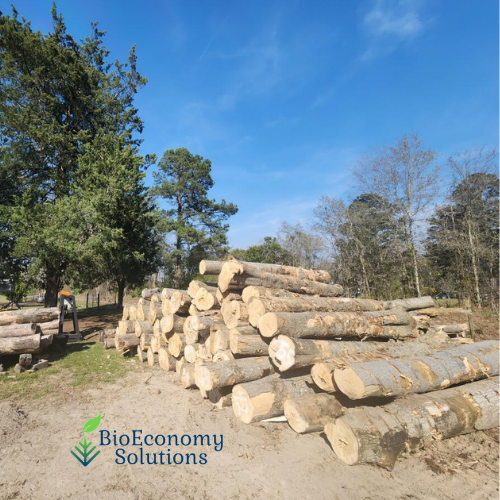
Where to buy paulownia? We’re harvesting our mature U.S. South Carolina Paulownia Timber and have millions of board foot available. We can mill lumber for your business needs. Contact Us for detailsOffice: 843.305.4777 | Email: mail@bioeconomysolutions.com Here’s a link to our online calendar, schedule a conference call with us:

https://info586.youcanbook.me

USA Paulownia Wood Lumber For Sale – Need paulownia wood lumber for your next project? https://bioeconomysolutions.com/paulownia-lumber/

You will discover that paulownia wood is the “Light Strong Alternative Wood” used in many processes to obtain many types of products.

Weather you are a hobbyist or full time manufacturing company, paulownia wood grown in South Carolina USA may be a new expression of your talent.

We sell Custom Paulownia boards: rough sawn or planed, we offer various sizes and thicknesses. Our Paulownia boards are processed using sustainable Paulownia hardwood grown right here in South Carolina USA.

👉 If you’re interested in paulownia, want to grow or currently growing, Subscribe to our newsletter: https://bioeconomysolutions.com/carbonreport

LIKE|SHARE|COMMENT

If you enjoyed this article, you may also like “Do Wood Carvers Use Paulownia Wood?”

Join Our News Letter

Subscribe Right Here

Get a FREE copy of Paulownia Carbon Report

Get a FREE copy of Paulownia Carbon Report

U.S. Paulownia Hardwood Lumber

Paulownia USA Hardwood Lumber has officially achieved a “Class A” ASTM E84 Flame Spread Rating.

Planting trees offers multifaceted benefits, impacting the economy, soil health, forest restoration, and climate change mitigation.

Trees enhance air and water quality, sequester carbon, and contribute to a more stable climate. They also play a crucial role in soil conservation, reducing erosion and improving water retention.

Additionally, tree planting can create economic opportunities through sustainable forestry practices and agroforestry.

Here’s a more detailed look at the benefits:

Economic Boost:

  • Agroforestry:Integrating trees into farms can increase crop yields, diversify income sources (timber, fruits, nuts), boosting farm revenues.
  • Sustainable Forestry:Reforestation projects can create jobs in nurseries, planting, and sustainable harvesting of forest products.
  • Tourism:Healthy forests attract tourists, supporting local economies.

Soil Conservation:

  • Erosion Control: Tree roots bind soil together, preventing erosion from wind and water.
  • Water Retention: Trees absorb rainwater, reducing runoff and allowing it to slowly infiltrate the soil, replenishing groundwater.
  • Soil Fertility: Trees contribute to soil health by adding organic matter and improving nutrient cycling.

Forest Restoration:

  • Ecosystem Services: Forests provide clean air and water, regulate climate, and support biodiversity.
  • Habitat Restoration: Reforestation can restore habitats for numerous species, contributing to overall biodiversity.
  • Resilience: Healthy forests are resilient to climate change impacts like droughts and extreme weather.

Climate Change Mitigation:

  • Carbon Sequestration: Trees absorb carbon dioxide from the atmosphere and store it in biomass.
  • Reduced Greenhouse Gases: By absorbing CO2, trees reduce the concentration of greenhouse gases in the atmosphere.
  • Cooling Effects: Trees reduce temperatures through shading and transpiration.

Why Paulownia Trees?

We’re facing growing climate challenges and seeing a continued global push to reduce deforestation, boost biodiversity, and combat the adverse effects of climate change.

One remarkable tool in this fight is the Paulownia tree (genus Paulownia), a fast-growing hardwood that has gained attention for its numerous environmental benefits. From its rapid growth to its ability to support biodiversity and aid in reforestation efforts.

Here is why the Paulownia trees is a vital tool in the fight against deforestation, and why they’re invaluable for afforestation and reforestation efforts.


1. Paulownia Trees and Climate Action

Fast Carbon Sequestration Paulownia is one of the fastest-growing trees in the world, with some species reaching up to 15 feet of growth per year under optimal conditions. This rapid growth rate translates to an impressive ability to absorb carbon dioxide from the atmosphere. In fact, Paulownia has been shown to sequester more carbon than many other tree species due to its large leaves, vigorous growth, and high biomass production.

By planting Paulownia trees, we can significantly contribute to climate change mitigation by removing CO2 from the air, a crucial step in reducing global warming. A young Paulownia tree can absorb around 48 pounds of CO2 annually in the early stages of growth, with the potential to store more as it matures.

Soil Regeneration Another climate benefit of Paulownia is its ability to regenerate soil. The tree’s deep roots help in breaking up compacted soils and improving soil structure. This makes Paulownia ideal for areas with poor, eroded, or degraded soils, a common issue in regions struggling with deforestation. By restoring the soil’s health, Paulownia trees not only boost the local ecosystem but also enable other plants to thrive in the area.


2. Biodiversity Support: A Key to Ecosystem Health

Creating Habitat for Wildlife Paulownia trees provide important habitats for a variety of species. Their large leaves offer shelter and their blossoms provide nectar to pollinators like bees and butterflies, which are crucial for maintaining ecosystem health. Although Paulownia trees are not native in many parts of the world, they are being used successfully in agroforestry and reforestation projects to support wildlife in biodiversity hotspots.

In addition to being a pollinator-friendly tree, Paulownia’s diverse ecosystem of roots, leaves, and flowers serves as a food source for various insects, birds, and small mammals. When used in afforestation or reforestation efforts, it can enhance biodiversity by attracting a wide range of species that rely on tree-based ecosystems for sustenance and shelter.

Resilient to Pests and Diseases One of the advantages of Paulownia is its resilience to pests. It has a natural resistance to insects and diseases, which means it requires fewer pesticides and other harmful chemicals to thrive. This reduces the need for harmful agricultural practices, which is vital when looking to preserve both biodiversity and soil health.

3. Paulownia Trees and Deforestation: A Sustainable Alternative

Reducing Pressure on Natural Forests Deforestation is one of the most pressing issues facing our planet today. The world loses over 10 million hectares of forest each year due to agricultural expansion, logging, and urbanization. This loss of forested land has devastating effects on biodiversity, soil quality, and the climate.

However, Paulownia trees offer a solution to this crisis. Because they grow quickly and can be harvested for timber in as little as 8-12 years, they provide a sustainable alternative to traditional timber harvesting. This shorter harvest cycle reduces the need for logging old-growth forests, thus easing the pressure on natural ecosystems.

Additionally, Paulownia can be planted on marginal land or in agroforestry systems—a method of growing trees alongside crops. This combination of crops and trees not only helps preserve forest ecosystems but also generates additional income for farmers. By using Paulownia for sustainable timber and biomass, we can combat illegal logging and support legal, sustainable forestry practices.


4. Afforestation & Reforestation: Restoring Our Ecosystems

Rapid Reforestation Paulownia’s exceptional growth rate makes it an ideal candidate for reforestation and afforestation efforts. In reforestation, where the goal is to restore damaged or destroyed ecosystems, Paulownia can quickly cover large areas of land, providing critical canopy cover and stabilizing soil.

Its multi-stem growth (when coppiced) makes it a good candidate for restoring degraded lands, especially in areas affected by desertification or overgrazing. Once established, these trees can form the foundation of a larger ecosystem, paving the way for native species to reintroduce themselves into the area.

Afforestation for Carbon Credits In afforestation (the process of planting trees in areas where there were no previous forests), Paulownia’s rapid growth allows for large-scale planting projects that can have immediate environmental benefits. These trees help to build carbon credits, which can be sold to businesses and governments looking to offset their carbon emissions. This creates a financial incentive for afforestation projects that contribute positively to the environment.

UGANDA Paulownia Trees Growing Fast

UGANDA Paulownia Trees Growing on Arid Land

5. The Future of Paulownia in Forest Restoration and Sustainability

As the world grapples with the urgent need for climate action, Paulownia trees offer a unique tool for tackling deforestation, boosting biodiversity, and supporting afforestation and reforestation efforts. With their fast growth, carbon-sequestering power, and ability to thrive in degraded soils, Paulownia is becoming a key player in the battle against climate change.

However, it’s essential that Paulownia is planted thoughtfully in the right ecosystems, as it is not native to many parts of the world and can become invasive if not managed properly. In regions where it’s appropriate, Paulownia’s role in sustainable forestry, habitat restoration, and ecosystem management cannot be overstated.

By integrating Paulownia trees into climate strategies, we can move closer to reversing the damage done to our planet, one tree at a time. Whether it’s by reforesting degraded lands, creating sustainable timber resources, or supporting biodiversity, Paulownia proves to be a valuable ally in our shared goal of restoring a healthy, thriving planet.


Conclusion

The Paulownia tree, with its FAST growth rate, carbon capture abilities, and adaptability, is a powerful tool in climate change mitigation, biodiversity support, and sustainable forest management. When used appropriately in afforestation and reforestation projects, it holds the potential to restore ecosystems, combat deforestation, and provide long-term environmental and economic benefits.

Contact Us

BioEconomy Solutions is a Carbon Dioxide Removal (CDR) Project Developer. Talk to us about our TREE PLANTING strategies with Paulownia trees.

We’re happy to organize a time to speak with you about our paulownia trees and lumber we have for sale. Please book your preferred time to speak directly.

Here’s a link to my online calendar/schedule:

www.bioeconomysolutions.com/bookcall

BioEconomy Solutions

mail@BioEconomySolutions.com

Office: 843.305.4777

Visit us at: https://bioeconomysolutions.com/paulownia-carbon-credits/

Let’s chat about paulownia tree solutions for sustainable Forest carbon credits projects.

LIKE|SHARE|COMMENT

Enjoy this article? You may also enjoy “Carbon Developers Choose Paulownia Trees”

https://www.linkedin.com/pulse/carbon-developers-choose-paulownia-trees-victor-garlington-imh4e/

Get a FREE copy of Paulownia Carbon Report: https://bioeconomy-solutions.kit.com/45b34109e5

Get a FREE copy of Paulownia Carbon Report

Get a FREE copy of Paulownia Carbon Report