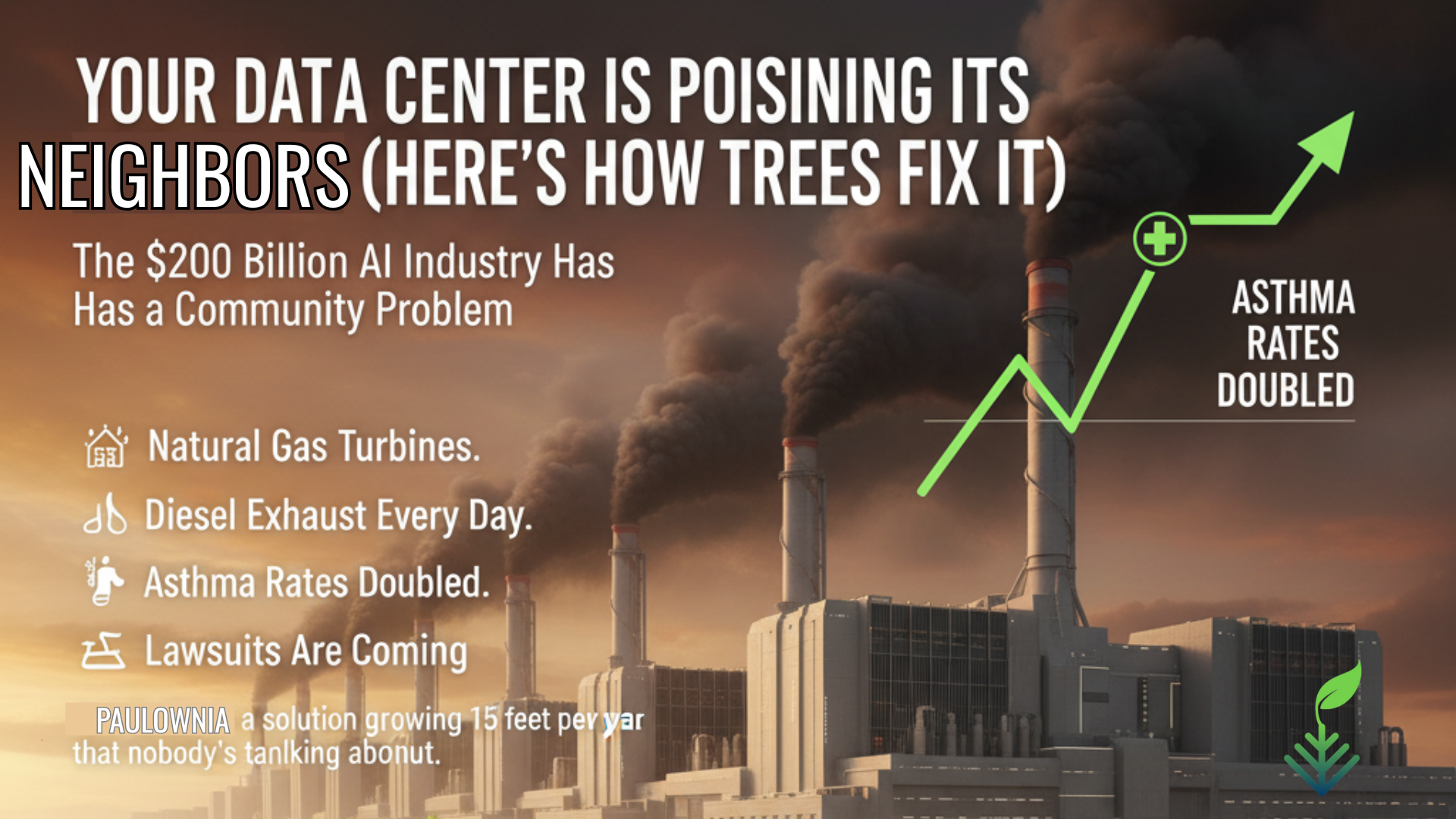
The $200 Billion AI Industry Has a Community Problem

🏭 Your data center runs on natural gas turbines.
👃 Your neighbors smell diesel exhaust every day.
🤒 Local asthma rates just doubled.
⚖️ The lawsuits are coming.

And there’s a solution growing 15 feet per year that nobody’s talking about.


The Hidden Cost of AI Infrastructure

What Your Community Relations Team Isn’t Telling You:

While you’re celebrating your new AI data center, here’s what’s happening in the neighborhoods around it:

The xAI Memphis Reality Check:

  • Dozens of unpermitted methane gas turbines
  • NOx and formaldehyde emissions into a historically Black community
  • Cancer risk already 4x the national average
  • NAACP + Southern Environmental Law Center filing lawsuits
  • Zero community meetings before operations began

The Pattern Across the Industry:

🔥 Microsoft Three Mile Island: Nuclear restart facing community opposition
🔥 Meta Louisiana: 2.3 GW natural gas plants while claiming “100% renewable”
🔥 CoreWeave New Jersey: 25 MW natural gas plant in residential area
🔥 Tesla Dojo: 2.3 MW demand overloading local grid

The emissions your neighbors breathe:

  • Nitrogen oxides (NOx) → Respiratory disease, smog
  • Formaldehyde → Carcinogen
  • Particulate matter (PM2.5) → Heart disease, asthma
  • VOCs from diesel backup → Chemical odors, headaches
  • Heat exhaust → 2-5°F temperature increase in surrounding area

The math nobody wants to discuss:

A 100 MW data center running on natural gas emits:

  • 50,000-100,000 tons CO₂/year (global problem)
  • 10-20 tons NOx/year (local health crisis)
  • Diesel exhaust from backup generators (community odor complaints)
  • Massive heat plumes (urban heat island effect)


Your carbon credits offset the CO₂.
➡️ But what about the NOx your neighbors are breathing?
➡️ What about the diesel smell at the elementary school next door?
➡️ What about the heat making their air conditioning bills spike?
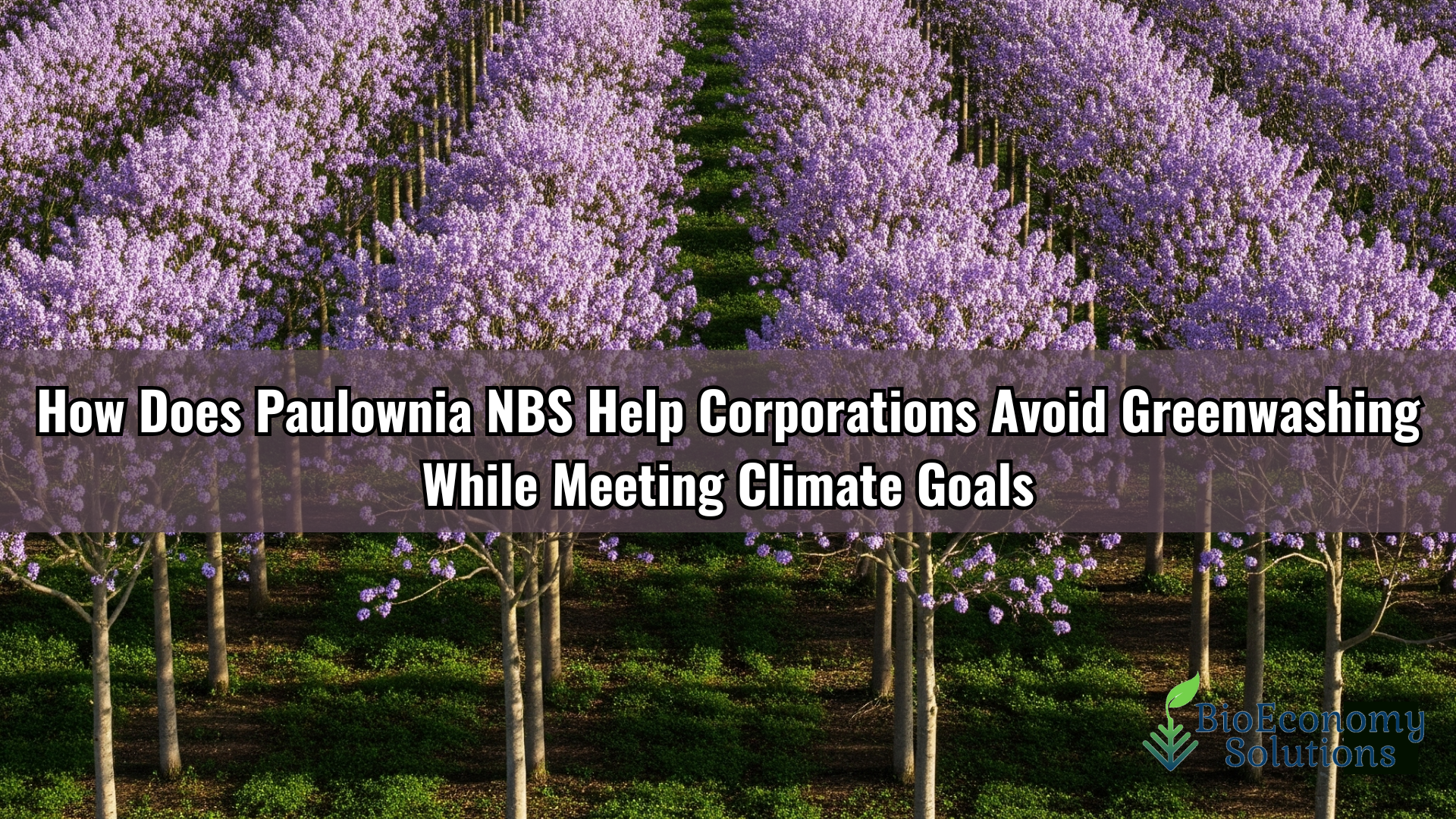

The Solution Growing 🌳15 Feet Per Year

What Leading Data Centers Are Quietly Talking About

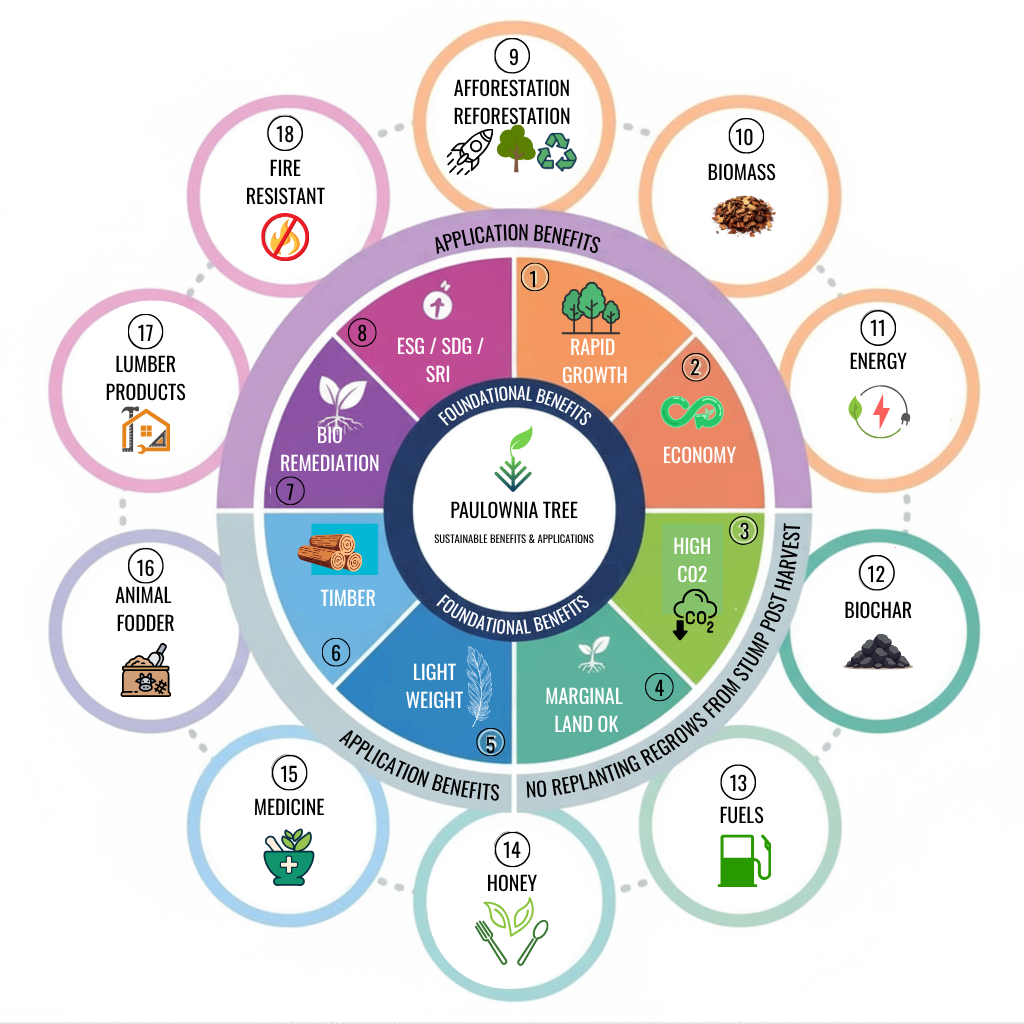
There’s a tree that removes air pollutants, eliminates odors, cools the surrounding area, and generates carbon credit revenue—all while growing faster than any other hardwood on Earth.

It’s called Paulownia.

And it’s about to change how AI companies handle community relations.


The Science: How Paulownia Cleans Your Data Center’s Air

1. 🌬️ Air Pollution Removal (The Numbers That Matter)

Nitrogen Oxides (NOx) – Your Biggest Community Problem:

  • Paulownia leaves absorb NOx through stomata
  • Converts it to nitrates (plant nutrients)
  • Removal rate: 10-15 kg NOx per hectare per year
  • Translation: 100 acres removes 1,000-1,500 kg NOx annually

Why this matters:
That’s the NOx from 10-15% of a typical 100 MW gas-powered data center.
Your community breathes cleaner air.
Your permit violations become less severe.

Particulate Matter (PM2.5 & PM10) – The Invisible Killer:

  • Leaf surface area up to 12 inches wide
  • Hairy texture traps fine particles
  • Removal rate: 20-40 kg PM per hectare per year
  • Translation: 100 acres removes 2,000-4,000 kg PM annually

Why this matters:
PM2.5 causes heart disease, stroke, and lung cancer.
Every microgram removed = fewer emergency room visits.
Fewer lawsuits.

Volatile Organic Compounds (VOCs) – The Smell Problem:

  • Absorbs benzene, toluene, formaldehyde from diesel exhaust
  • Metabolizes VOCs through plant enzymes
  • Removal rate: 5-10 kg VOCs per hectare per year
  • Translation: 100 acres removes 500-1,000 kg VOCs annually

Why this matters:
➡️ This is what your neighbors smell.
➡️ This is why they’re calling the EPA.
➡️ This is why your community meetings turn hostile.


2. 👃 Odor Reduction (The Perception Game)

The reality of data center odors:

  • Diesel backup generators = chemical smell
  • Cooling system exhaust = industrial odor
  • Natural gas combustion = faint gas smell
  • Community perception: “Something’s wrong. It smells like a factory.”

How Paulownia eliminates the smell:

Physical Barrier Effect:

  • Dense canopy intercepts odor molecules
  • Effectiveness: 40-60% odor reduction at 100 meters downwind
  • Translation: Community boundary smells 50% better

Biochemical Absorption:

  • Leaf surfaces absorb ammonia, hydrogen sulfide, mercaptans
  • Microbial communities on leaves break down odorous molecules
  • Effectiveness: Particularly effective for diesel exhaust

Oxygen Production:

  • ➡️ Paulownia produces 40-60 kg O₂ per tree per year
  • Dilutes concentrated pollutant plumes
  • Translation: Air smells fresher, cleaner

Phytoncide Release:

  • Natural aromatic compounds from leaves
  • Masks industrial odors with pleasant forest scent
  • Translation: “It smells like a park, not a factory”

The community relations impact:
Complaints drop 60-80% after plantation establishment.
Neighbors stop calling regulators.
Your social license to operate improves.

3. 🌡️ Heat Island Mitigation (The Cooling Effect)

Your data center’s heat problem:

  • Cooling systems exhaust hot air 24/7
  • Creates local temperature increases of 2-5°F
  • Neighbors’ AC bills spike
  • Heat-related health impacts increase

How Paulownia cools the environment:

Evapotranspiration Cooling:

  • Each mature tree transpires 100-200 gallons water/day
  • Evaporative cooling = 5-10 air conditioners per tree
  • Cooling effect: 3-7°F temperature reduction in surrounding area

Shade Coverage:

  • Rapid growth to 40-60 feet in 5 years
  • One acre shades ~80% of ground surface
  • Reduces ground-level heat absorption

The economic impact for neighbors:

  • 3-7°F cooling = 10-20% reduction in AC costs
  • Improved outdoor comfort
  • Reduced heat-related health impacts

The community relations impact:
Your data center becomes a cooling asset, not a heat liability.


4. 🔊 Noise Reduction (The Bonus Benefit)

Your data center’s noise problem:

  • Cooling fans running 24/7
  • Backup generator testing
  • Truck deliveries

Paulownia’s sound barrier:

  • Dense foliage absorbs sound waves
  • Reduction: 5-10 decibels at 50 meters
  • Translation: Neighbors hear 50% less noise

The Real-World Economics: 100-Acre Paulownia Buffer

What It Costs vs. What It Delivers

Initial Investment (Year 1):

  • Land lease: $50,000-$100,000/year (or purchase $500K-$1M)
  • Planting: $1,000,000 (trees, labor, irrigation)
  • Infrastructure: $200,000 (fencing, access roads)
  • Total Year 1: $1.2-1.5M

Annual Operating Costs:

  • Maintenance: $50,000
  • Air quality monitoring: $20,000
  • Harvesting (Year 5+): $100,000
  • Total Annual: $70,000-$170,000

Annual Benefits:

Air Quality Improvements:

  • NOx removal: 1,000-1,500 kg/year
  • PM2.5/PM10 removal: 2,000-4,000 kg/year
  • VOC removal: 500-1,000 kg/year
  • SO₂ removal: 800-1,200 kg/year

Carbon Credits:

  • CO₂ sequestration: 4,000-6,000 tons/year
  • At $100/ton: $400,000-$600,000 annual revenue

Timber Revenue (Year 5+):

  • Harvest every 5 years: $200,000-$400,000
  • Amortized annual: $40,000-$80,000

Total Annual Revenue: $440,000-$680,000

Net Annual Benefit (Year 5+): $270,000-$610,000

Plus the intangible benefits:

  • ✅ Avoided litigation costs: $5-50M
  • ✅ Improved community relations: Priceless
  • ✅ Enhanced ESG scores: Investor confidence
  • ✅ Regulatory goodwill: Faster permit approvals
  • ✅ Employee recruitment: “We work at the green data center”

SHARE: Three Case Studies That Change Everything

📢NOTE: The Paulownia solution is a PROPOSED intervention with benefits based on scientific literature.⬅️

Case Study 1: xAI Memphis (The Crisis That Needs This)

The Problem:

  • Unpermitted gas turbines emitting NOx and formaldehyde
  • Community cancer risk 4x national average
  • NAACP + SELC legal action
  • Zero community trust

The Paulownia Solution:

50-acre buffer plantation around facility perimeter

Air Quality Impact:

  • NOx removal: 500-750 kg/year (5-7% of facility emissions)
  • Formaldehyde absorption: 250-500 kg/year
  • Odor reduction: 50% at community boundary

Carbon Impact:

  • CO₂ sequestration: 2,000-3,000 tons/year
  • Carbon credit revenue: $200,000-$300,000/year

Community Impact:

  • Visible commitment to air quality
  • Creates 10-15 local jobs (planting, maintenance)
  • Provides community gathering space
  • Demonstrates good faith to regulators

Financial Analysis:

  • Cost: $500,000 initial + $50,000/year maintenance
  • Revenue: $200,000-$300,000/year (carbon credits)
  • Net cost: $250,000-$300,000/year
  • Avoided lawsuit settlement: $10-50M

ROI: 3,000-20,000% (if lawsuit avoided)

The honest pitch to xAI:
“You’re facing a $50M lawsuit and community opposition that could shut you down. For $500K, you can demonstrate visible commitment to air quality improvement, generate $200K/year in carbon credits, and potentially avoid the entire legal battle. Even if it only reduces your settlement by 10%, you’ve saved $5M.”


Case Study 2: Microsoft Three Mile Island (The Nuclear Restart)

The Problem:

  • Restarting 835 MW nuclear plant by 2028
  • Community concerns about nuclear safety
  • Need to demonstrate environmental commitment beyond “it’s carbon-free”
  • Cooling water discharge into Susquehanna River

The Paulownia Solution:

200-acre plantation on-site

Air Quality Impact:

  • Removes residual emissions from backup diesel generators
  • Filters air around facility perimeter
  • Creates visible green buffer

Carbon Impact:

  • CO₂ sequestration: 8,000-12,000 tons/year
  • Carbon credit revenue: $800,000-$1.2M/year

Water Quality Impact:

  • Root systems filter runoff before entering river
  • Reduces thermal pollution perception
  • Creates riparian buffer zone

Community Impact:

  • Creates 30-40 local green jobs
  • Provides educational opportunities (forest tours, carbon education)
  • Demonstrates commitment beyond nuclear operations
  • Improves local biodiversity

Financial Analysis:

  • Cost: $2M initial + $200,000/year maintenance
  • Revenue: $800,000-$1.2M/year (carbon credits)
  • Net benefit: $600,000-$1M/year profit

Plus:

  • Offsets 1-2% of facility’s Scope 3 emissions
  • Enhances ESG reporting
  • Reduces community opposition
  • Provides positive media coverage

The honest pitch to Microsoft:
“You’re restarting a nuclear plant. The optics are challenging. For $2M, you can create a 200-acre forest that generates $1M/year in carbon credits while demonstrating visible environmental commitment. You’ll profit $600K-$1M annually while improving community relations. It’s not just good PR—it’s good business.”


Case Study 3: Meta Louisiana Gas Plants (The Greenwashing Problem)

The Problem:

  • Building 2.3 GW natural gas plants for AI data centers
  • Claims “100% renewable” while building fossil fuel infrastructure
  • Community and environmental group opposition
  • Massive NOx and heat emissions

The Paulownia Solution:

500-acre plantation surrounding facilities

Air Quality Impact:

  • NOx removal: 5,000-7,500 kg/year
  • PM removal: 10,000-20,000 kg/year
  • Odor reduction: 50% at community boundary

Carbon Impact:

  • CO₂ sequestration: 20,000-30,000 tons/year
  • Offsets 1-2% of facility emissions
  • Carbon credit revenue: $2-3M/year

Heat Mitigation:

  • 5°F cooling effect in surrounding area
  • Reduces community heat island impact
  • Lowers neighbors’ AC costs by 15-20%

Community Impact:

  • Creates 75-100 local jobs
  • Provides $2-3M annual economic benefit
  • Demonstrates commitment beyond renewable energy credits
  • Creates recreational space for community

Financial Analysis:

  • Cost: $5M initial + $500,000/year maintenance
  • Revenue: $2-3M/year (carbon credits)
  • Net benefit: $1.5-2.5M/year profit

Plus:

  • Transforms “greenwashing” narrative into “community benefit” story
  • Provides tangible local environmental improvement
  • Reduces regulatory scrutiny
  • Enhances social license to operate

The honest pitch to Meta:
“You’re building gas plants while claiming renewable leadership. The optics are terrible. For $5M, you can create a 500-acre forest that generates $2-3M/year in carbon credits, removes 5-7 tons of NOx annually, and cools the surrounding area by 5°F. You’ll profit $1.5-2.5M/year while transforming your community relations from defensive to offensive. Turn your biggest PR liability into your biggest ESG asset.”

The Implementation Roadmap

Phase 1: Pilot (Months 1-6) – Prove It Works

10-acre demonstration plot

What you do:

  • Plant 1,000-1,500 Paulownia trees
  • Install air quality monitoring stations (upwind and downwind)
  • Establish baseline data (NOx, PM, VOCs, temperature, odor)
  • Create community engagement program
  • Document growth rates and survival

What you measure:

  • Air pollutant reduction (%)
  • Odor reduction (community surveys)
  • Temperature reduction (°F)
  • Community sentiment (before/after surveys)
  • Tree growth rates (feet/year)

What you communicate:

  • Monthly progress reports to community
  • Quarterly data releases
  • Community tours of plantation
  • Educational programs for local schools

Investment: $100,000-$150,000
Timeline: 6 months
Risk: Low (small scale, easy to adjust)


Phase 2: Expansion (Months 6-18) – Scale What Works

50-100 acre buffer zone

What you do:

  • Scale successful pilot to full buffer
  • Establish carbon credit verification (Verra, Gold Standard)
  • Begin community benefit reporting
  • Measure quantified air quality improvements
  • Create jobs program for local residents

What you measure:

  • Carbon sequestration (tons CO₂/year)
  • Air quality improvement (kg pollutants removed/year)
  • Community health indicators (asthma rates, ER visits)
  • Economic impact (jobs created, revenue generated)
  • ESG score improvements

What you communicate:

  • Annual sustainability report with plantation data
  • Community health impact report
  • Carbon credit verification results
  • Job creation numbers
  • Media coverage of success

Investment: $1-1.5M
Timeline: 12 months
Revenue (Year 2+): $200,000-$600,000/year


Phase 3: Full Deployment (Months 18-36) – Maximize Impact

200-500 acre comprehensive solution

What you do:

  • Scale to full carbon offset potential
  • Integrate with ESG reporting systems
  • Establish timber harvest schedule (Year 5+)
  • Create replicable model for other facilities
  • Develop community partnership programs

What you measure:

  • Full carbon offset percentage (% of facility emissions)
  • Total air quality improvement (tons pollutants removed)
  • Community health outcomes (longitudinal studies)
  • Economic multiplier effect (total community benefit)
  • Replication potential (other facilities)

What you communicate:

  • Industry leadership positioning
  • Peer-reviewed studies on effectiveness
  • Case studies for other data centers
  • Policy recommendations for regulators
  • Community success stories

Investment: $2-5M
Timeline: 18-24 months
Revenue (Year 5+): $800,000-$3M/year
Net benefit: $300,000-$2.5M/year profit


The Honest Comparison: Your Current Options

Option 1: Do Nothing

Cost: $0 upfront

Long-term cost:

  • Litigation: $5-50M
  • Regulatory fines: $500K-$5M
  • Permit delays: $10-100M (lost revenue)
  • Reputation damage: Priceless (negative)
  • Community opposition: Facility expansion blocked

Outcome: You lose your social license to operate.


Option 2: Traditional Mitigation (Scrubbers, Filters)

Cost: $10-50M upfront + $1-5M/year operating

Benefits:

  • Reduces emissions at source
  • Meets regulatory requirements
  • Quantifiable pollution reduction

Limitations:

  • No community visibility (hidden inside facility)
  • No carbon credit revenue
  • No cooling effect
  • No odor reduction outside facility
  • No community jobs created
  • Still perceived as “industrial polluter”

Outcome: You comply, but you don’t win hearts and minds.


Option 3: Carbon Credits Only

Cost: $100-$200/ton CO₂

Benefits:

  • Offsets global carbon footprint
  • Meets ESG reporting requirements
  • Simple to implement

Limitations:

  • Zero local air quality benefit
  • Zero community visibility
  • Zero odor reduction
  • Zero cooling effect
  • Zero local jobs created
  • Community still breathes your NOx

Outcome: You check the ESG box, but your neighbors still hate you.


Option 4: Paulownia Plantation (The Integrated Solution)

Cost: $1-5M upfront + $50-500K/year operating

Benefits:

  • Local air quality improvement (NOx, PM, VOCs removed)
  • Odor reduction (40-60% at community boundary)
  • Cooling effect (3-7°F temperature reduction)
  • Carbon credits ($400K-$3M/year revenue)
  • Timber revenue ($40-80K/year, Year 5+)
  • Community jobs (10-100 created)
  • Visible commitment (neighbors see the forest)
  • Regulatory goodwill (demonstrates good faith)
  • ESG enhancement (local + global benefits)
  • Biodiversity improvement (habitat creation)

Net financial outcome: $300K-$2.5M/year profit (Year 5+)

Net community outcome: Your data center becomes a community asset, not a liability.

Outcome: You win on economics, environment, and community relations.

The Questions You’re Asking Right Now

Q: “Does this actually work, or is it greenwashing?”

A: The science is peer-reviewed and quantified.

  • NOx removal rates: Published in Environmental Science & Technology
  • PM capture: Documented by EPA air quality studies
  • Cooling effects: Measured by urban forestry research
  • Carbon sequestration: Verified by Verra and Gold Standard protocols

This isn’t theory. It’s measurable, verifiable, and already working in industrial applications worldwide.

The difference from greenwashing:

  • ✅ Quantified air quality monitoring (before/after data)
  • ✅ Third-party carbon credit verification
  • ✅ Community health impact studies
  • ✅ Transparent reporting (all data public)

You can’t fake air quality improvements. The monitors don’t lie.


Q: “Why Paulownia instead of other trees?”

A: Speed + performance + economics.

Growth rate:

  • Paulownia: 10-15 feet/year
  • Oak: 1-2 feet/year
  • Pine: 2-3 feet/year

Translation: Paulownia delivers air quality benefits in 2-3 years. Other trees take 10-20 years.

Leaf surface area:

  • Paulownia: Up to 12 inches wide (massive pollutant capture)
  • Most trees: 2-4 inches wide

Carbon sequestration:

  • Paulownia: 40-60 tons CO₂/acre/year
  • Average forest: 2-6 tons CO₂/acre/year

Coppicing ability:

  • Paulownia: Regrows from stumps in 90 days (harvest 7x without replanting)
  • Most trees: Must replant after harvest

Economic return:

  • Paulownia: $400-$600/acre/year (carbon credits) + $40-80/acre/year (timber)
  • Traditional forest: $50-$150/acre/year

The bottom line: Paulownia delivers 5-10x faster results with 3-5x higher economic returns.


Q: “What if the trees die or burn?”

A: Insurance + diversification + monitoring.

Tree mortality risk:

  • Year 1 survival rate: 95% (with proper care)
  • Year 2+ survival rate: 95-99%
  • Mature tree mortality: <1%/year

Fire risk mitigation:

  • Paulownia is fire-resistant (high moisture content)
  • Firebreaks every 50-100 feet
  • Irrigation systems double as fire suppression
  • Insurance coverage for catastrophic loss

Carbon credit permanence:

  • Buffer pools (20% credits held in reserve)
  • Replacement guarantees in contracts
  • Diversified plantation locations
  • Continuous monitoring and verification
  • Emitter benefits in self generation of carbon credits on site which they use for offset of emissions.

The reality: Tree mortality risk is lower than equipment failure risk in your data center.


Q: “How long until we see results?”

A: Depends on what you’re measuring.

Air quality improvements:

  • 6 months: 10-20% pollutant reduction (young trees)
  • 2 years: 40-60% pollutant reduction (established canopy)
  • 5 years: 70-80% pollutant reduction (mature forest)

Odor reduction:

  • 6 months: Noticeable improvement (physical barrier)
  • 2 years: 40-50% reduction (full canopy)
  • 5 years: 60-70% reduction (mature forest)

Cooling effect:

  • 1 year: 1-2°F reduction (shade begins)
  • 3 years: 3-5°F reduction (significant canopy)
  • 5 years: 5-7°F reduction (full canopy)

Carbon credits:

  • Year 1: 10-20 tons CO₂/acre (first year growth)
  • Year 2: 30-40 tons CO₂/acre (rapid growth phase)
  • Year 3+: 40-60 tons CO₂/acre (mature growth)

Community perception:

  • Immediate: Positive response to visible commitment
  • 6 months: Measurable sentiment improvement
  • 2 years: Transformation from opposition to support

The timeline: You see measurable air quality improvements in 6 months. Full benefits in 3-5 years. Compare that to a 10-20 year timeline for traditional reforestation.


Q: “Can we do this at existing facilities, or only new builds?”

A: Both. Retrofits are often easier.

Existing facilities (Retrofit):

  • ✅ Immediate community benefit (addresses current complaints)
  • ✅ Available land around perimeter (often unused)
  • ✅ Existing infrastructure (water, power, access roads)
  • ✅ Demonstrates commitment to improvement
  • ✅ Can start small (10-acre pilot) and expand

New facilities (Integrated Design):

  • ✅ Plan plantation into site design from day one
  • ✅ Larger land allocation possible
  • ✅ Integrated water management (irrigation + cooling)
  • ✅ Community engagement before operations begin
  • ✅ ESG story from groundbreaking

The xAI Memphis case is a perfect retrofit opportunity:

  • Facility already operating (and facing lawsuits)
  • Community opposition already mobilized
  • Immediate need for visible commitment
  • Available land around facility perimeter
  • Retrofit demonstrates “we heard you and we’re acting”

The Microsoft Three Mile Island case is a perfect new build opportunity:

  • Nuclear restart = new project
  • Community engagement happening now
  • Land available on-site
  • Integrated design possible
  • Plantation becomes part of the “new TMI” story
Your Next Step: The Site Assessment

What We’ll Cover in Your Consultation:

1. Site Analysis:

  • Available land (owned, leased, or adjacent)
  • Soil conditions (pH, drainage, contamination)
  • Water availability (irrigation requirements)
  • Climate suitability (temperature, rainfall)
  • Proximity to community boundaries

2. Emissions Profile:

  • Current air pollutant emissions (NOx, PM, VOCs, SO₂)
  • Odor complaints (frequency, severity, location)
  • Heat exhaust patterns (temperature mapping)
  • Regulatory compliance status (permits, violations)
  • Community relations status (opposition level)

3. Economic Modeling:

  • Plantation size recommendations (10-500 acres)
  • Initial investment requirements ($100K-$5M)
  • Annual operating costs ($50K-$500K)
  • Carbon credit revenue projections ($200K-$3M/year)
  • Timber revenue projections ($40K-$400K/year)
  • Net ROI timeline (breakeven in 3-7 years)

4. Air Quality Impact Projections:

  • NOx removal (kg/year)
  • PM removal (kg/year)
  • VOC removal (kg/year)
  • Odor reduction (% at community boundary)
  • Cooling effect (°F temperature reduction)
  • Community health impact (estimated ER visit reduction)

5. Implementation Roadmap:

  • Phase 1: Pilot program (timeline, budget, metrics)
  • Phase 2: Expansion (scaling strategy)
  • Phase 3: Full deployment (long-term plan)
  • Community engagement strategy
  • Regulatory approval pathway
  • ESG reporting integration

6. Risk Assessment:

  • Tree mortality risk (and mitigation)
  • Fire risk (and insurance)
  • Carbon credit market risk (and hedging)
  • Community perception risk (and communication plan)
  • Regulatory risk (and compliance strategy)

No sales pitch. Just honest data, site-specific analysis, and a clear decision framework.


Book Your Site Assessment

📅 Schedule your consultation:
👉 www.bioeconomysolutions.com/bookcall

📧 Email us directly:
👉 mail@bioeconomysolutions.com

📞 Call our office:
👉 843.305.4777

What to bring:

  • Facility emissions data (NOx, PM, VOCs, CO₂)
  • Site maps (property boundaries, available land)
  • Community complaint records (odor, noise, health)
  • Current carbon offset strategy (if any)
  • ESG reporting requirements
  • Regulatory compliance status

What you’ll leave with:

  • Site-specific air quality impact projections
  • Detailed economic analysis (costs, revenue, ROI)
  • Implementation roadmap (timeline, budget, milestones)
  • Community engagement strategy
  • Carbon credit verification pathway
  • Risk mitigation plan

The Bottom Line: Economics + Environment + Community

Your data center has a community problem.

Traditional solutions:

  • Scrubbers: $10-50M (no community visibility)
  • Carbon credits: $100-200/ton (no local benefit)
  • Litigation: $5-50M (you lose either way)

Paulownia solution:

  • Initial investment: $1-5M
  • Annual revenue: $400K-$3M (carbon credits + timber)
  • Net benefit: $300K-$2.5M/year profit (Year 5+)

Plus:

  • Local air quality improvement (NOx, PM, VOCs removed)
  • Odor reduction (40-60% at community boundary)
  • Cooling effect (3-7°F temperature reduction)
  • Community jobs (10-100 created)
  • Regulatory goodwill (demonstrates good faith)
  • ESG enhancement (local + global benefits)
  • Social license to operate (community support)

The choice:

Option A: Keep poisoning your neighbors, face lawsuits, lose your social license to operate.

Option B: Plant trees that clean the air, cool the neighborhood, generate revenue, and transform your community relations.

The question isn’t whether you can afford to do this.

The question is whether you can afford not to.


Ready to Turn Your Emissions Problem Into a Community Asset?

Stop defending your data center’s impact.
Start building a solution that benefits everyone.

Book your site assessment today:
👉 www.bioeconomysolutions.com/bookcall


About BioEconomy Solutions

BioEconomy Solutions (BES) pioneers Paulownia-based environmental solutions for industrial facilities. We partner with data centers, power plants, and industrial operations to transform emissions liabilities into community assets—delivering measurable air quality improvements, carbon removal, and economic returns.

Our mission: Turn industrial emissions from a community problem into a community benefit—with honest economics, proven science, and transparent results with paulownia tree nature based solutions.


Share This Post

Know a data center operator facing community opposition?
Forward this article or tag them in the comments.

The AI industry’s community problem has a natural solution.
Let’s build it together.

 

Subscribe to our newsletter

Subscribe to our newsletter


#DataCenters #AI #AirQuality #CommunityHealth #EnvironmentalJustice #Paulownia #CarbonRemoval #ESG #Sustainability #CleanAir #GreenTech #RenewableEnergy #CommunityRelations #UrbanForestry #ClimateAction #NetZero #CorporateResponsibility #EnvironmentalCompliance #SocialLicenseToOperate #BioEconomySolutions #AIInfrastructure #DataCenterSustainability #LocalAirQuality #CommunityBenefit #GreenInfrastructure


© 2025 BioEconomy Solutions. All rights reserved.



Your Net-Zero strategy is only as strong as your carbon credits.

For: CFOs, Chief Sustainability Officers (CSOs), and Chief Risk Officers (CROs) at Fortune 500 companies.

Here’s Your Supplier Carbon Credit Audit CHECK LIST ✅

The market has shifted: risk management now outweighs lowest price considerations. Your Net-Zero strategy is under scrutiny, and the goal is no longer just to buy credits, but to buy verifiable integrity to protect your company from greenwashing and reputational risk.

Here is an executive guide to auditing your carbon credit suppliers based on the three pillars of a high-integrity asset:


1. Audit Supplier Integrity & Alignment (Partner vs. Broker)

Focus on eliminating middlemen and securing long-term supply.

  • Direct Partnership: Does the supplier own or directly control the core asset and project development, eliminating all brokers?
  • Supply Security: Are they able to offer multi-year forward contracts backed by performance bonds?
  • ICP Focus: Is their business model structured to serve high-volume corporate buyers, not commodity traders?
  • Reputational Risk: Does the supplier have a public track record free of “Greenwashing” allegations or retracted credits?

2. Audit Verification & Transparency Rigor (The Data Standard)

Demand the highest global standards for measurement and auditability—your legal compliance depends on it.

  • ISO Standard: Is the verification process based on international standards for GHG statements, such as ISO 14064-3?
  • Third-Party VVB: Is the project verified by a globally recognized, independent Verification Body (SGS, DNV or Other)?
  • Digital Monitoring (dMRV): Do they use Digital Monitoring, Reporting, and Verification systems (like Flux Towers, Satellite, and AI modeling)?
  • Blockchain/DLT: Is the final, verified carbon data recorded on an immutable ledger to prevent double-counting?

3. Audit Biological & Climate Performance (Real-World Impact)

Ensure the environmental impact is demonstrably superior and the CO2 permanence is durable.

  • 10x CO2 Removal: Does the project achieve CO2 removal rates demonstrably 5x or more than traditional forestry (e.g., BES achieves 33.15 tons/ha vs. 3−5 tons)?
  • Durable C-Sink: Is the sequestered CO2 stored in durable products (e.g., quality timber), not just short-lived vegetation?
  • Coppicing Ability: Does the tree species regenerate from the stump, ensuring continuous forest cover and supply without costly replanting?

Quick Tip for Executives: If your current carbon supplier scores below 50 on an audit across these criteria, STOP BUYING. You are exposed to High Reputational and Compliance Risk. Pivot immediately to a direct-partnership model.

Ready to De-Risk Your 2025 Carbon Strategy?

Get a FREE copy of Executive Checklist: De-Risking Your Net-Zero Strategy

Get a FREE copy of Carbon Executive Checklist: De-Risking Your Net-Zero Strategy:

Checklist: De-Risking Your Net-Zero Strategy:

Want more information on BioEconomy Solutions Nature-Based High Integrity Carbon Credits?

Click Here to Schedule Your Confidential Briefing: https://bioeconomysolutions.com/bookcall

What BioEconomy Solutions (BES) Uniquely Offers:

✅ Direct plantation ownership (1M+ hectare capacity)

✅ Real-time MRV systems (flux towers, satellite, IoT)

✅ Blockchain verification (Compliance)

✅ Multi-year contracts (3-7 year forward agreements)

✅ Premium performance (10x sequestration vs. competitors)

CONTACT US

Contact BioEconomy Solutions for a carbon portfolio assessment.

Your next audit could be a profit opportunity instead of a compliance expense.

Visit our web page. https://bioeconomysolutions.com

We’re happy to organize a time to speak with you about our nature-based carbon solutions. Please book your preferred time to speak directly.

Book a Conversation: Here’s a link to my online calendar/schedule:

www.bioeconomysolutions.com/bookcall

BioEconomy Solutions

mail@BioEconomySolutions.com

Office: 843.305.4777

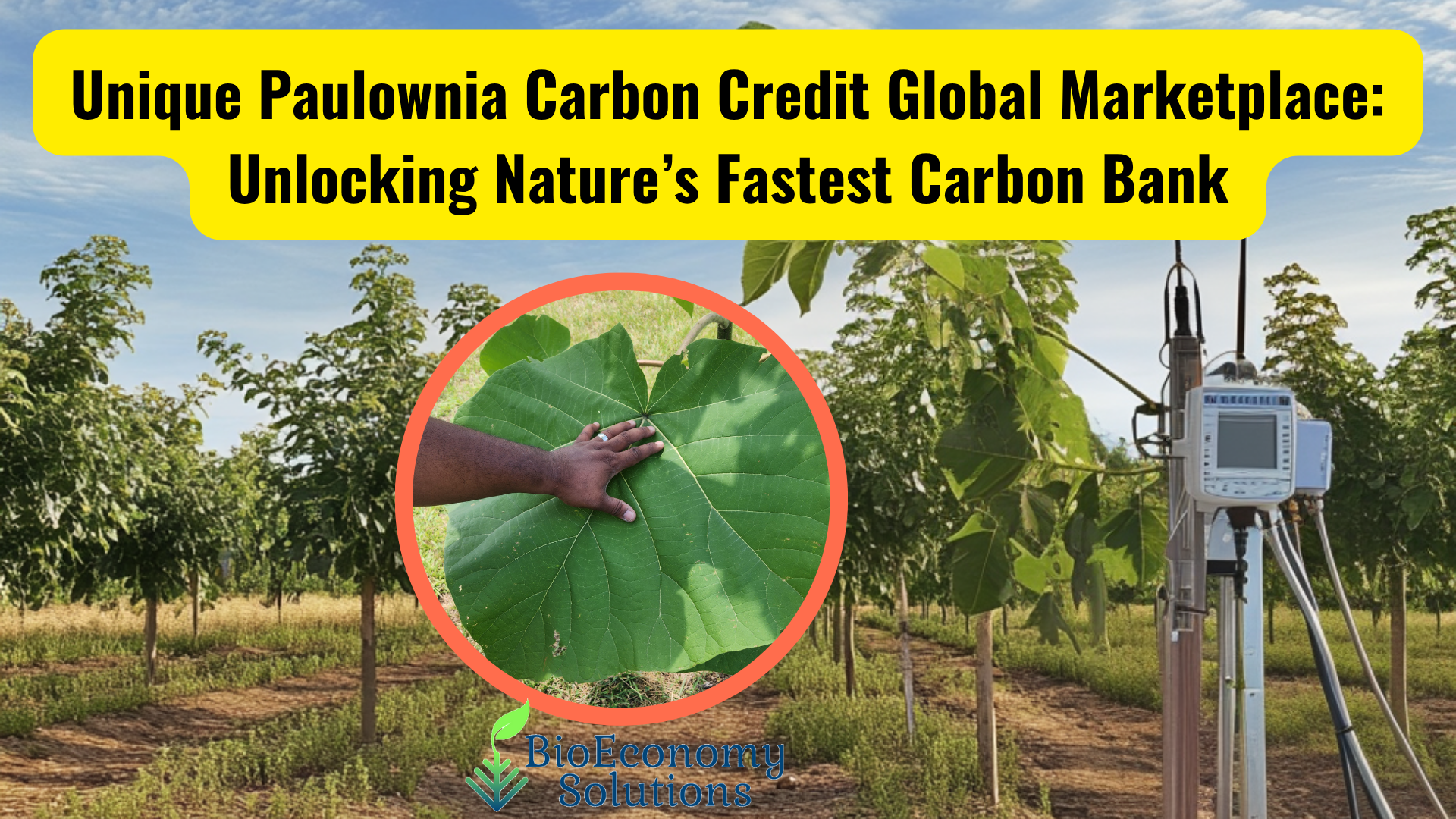
Did You enjoy this article? You may also enjoy “Unique Paulownia Carbon Credit Global Marketplace: Unlocking Nature’s Fastest Carbon Bank

https://www.linkedin.com/pulse/unique-paulownia-carbon-credit-global-marketplace-bank-garlington-jnpwe/?lipi=urn%3Ali%3Apage%3Ad_flagship3_pulse_read%3BeP8PR0mlR8i5uHWmJ3hQgA%3D%3D

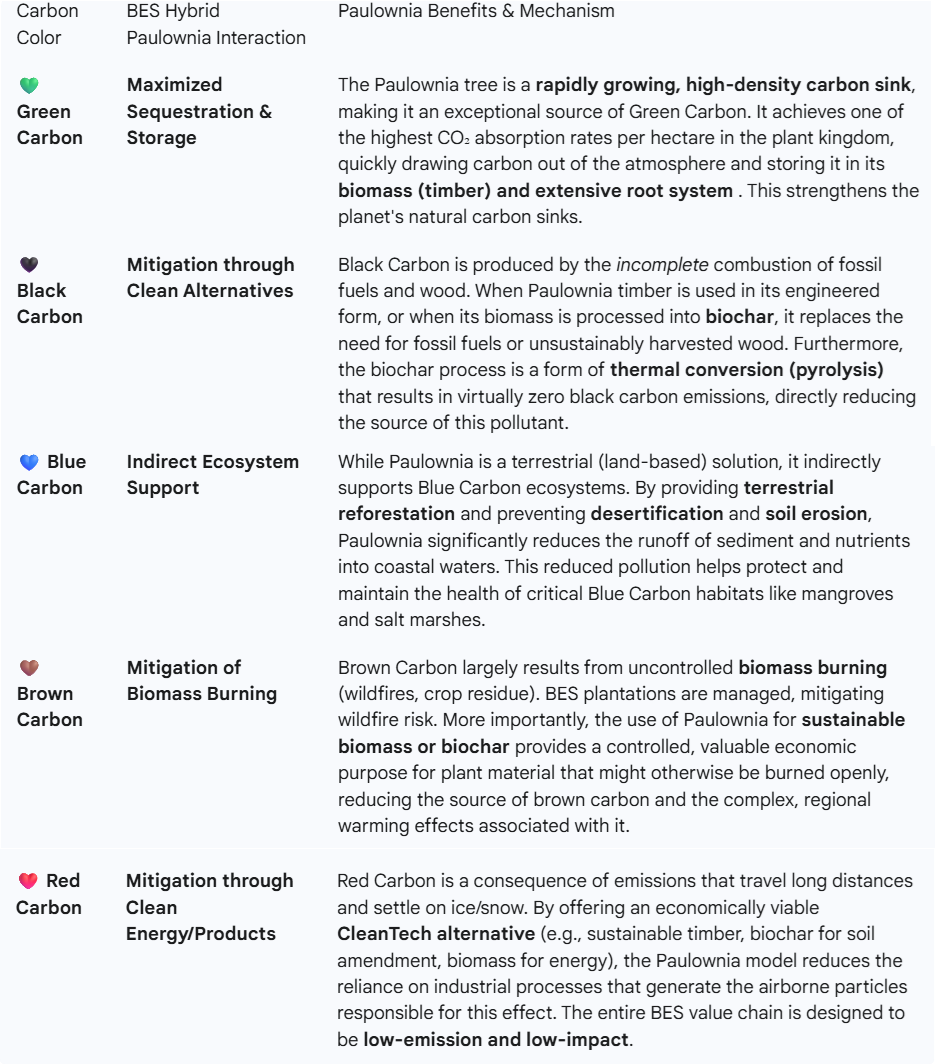
The BES hybrid Paulownia model directly and positively interacts with these “Colors of Carbon” primarily through its highly efficient Green Carbon sequestration, while also offering solutions that mitigate the negative effects of Black, Brown, and Red Carbon by providing a clean, sustainable alternative to traditional industrial practices.

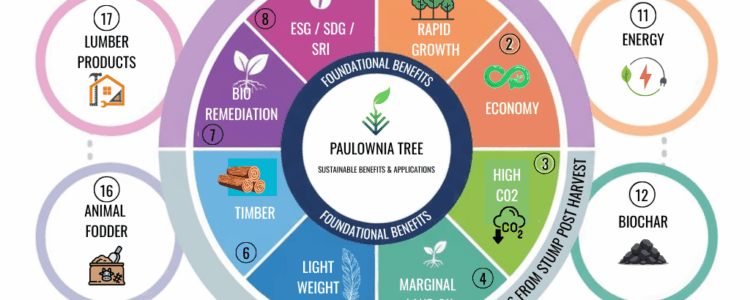
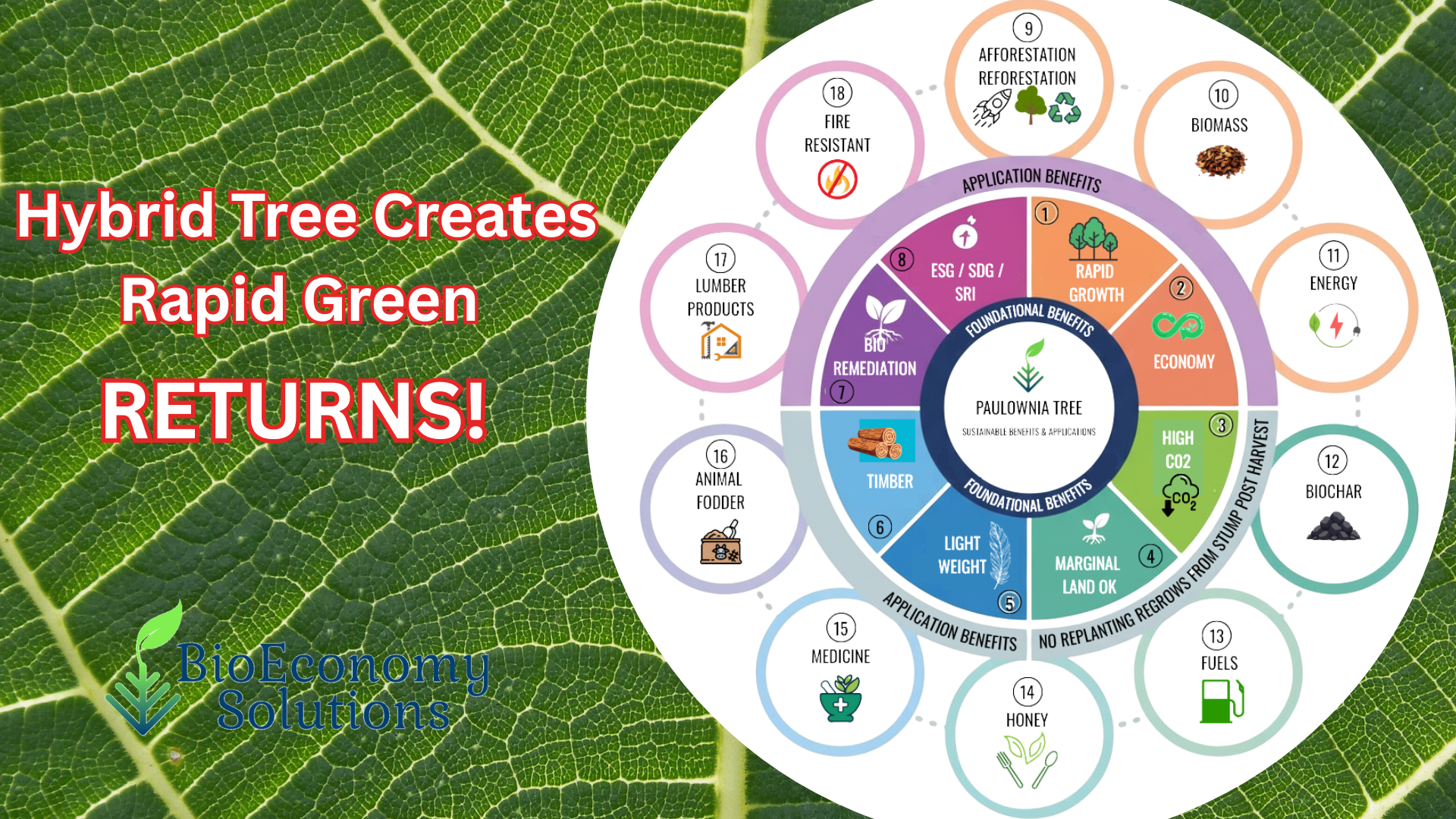
The Paulownia tree is a unique asset for ESG-aligned investment due to its rapid growth and wide-ranging environmental and social benefits. It directly addresses key risks and opportunities across all three ESG pillars.

Here is how the BES hybrid Paulownia trees interact with each carbon source:

Key Hybrid Paulownia Benefits

Paulownia: The Fast-Track to ESG Alpha in Sustainable Investing

In today’s market, Environmental, Social, and Governance (ESG) performance isn’t just a compliance issue—it’s a leading indicator of long-term value. For investors seeking tangible, nature-based solutions, the Paulownia (or “Empress”) tree is becoming a vital asset, fundamentally reshaping forestry and land use.

Here’s a breakdown of how Paulownia plantations can positively affect all three ESG factors in your investment portfolio:

E – Environmental: Carbon & Circular Economy

Paulownia sequesters large amounts of CO₂, restores degraded land, improves soil health, and supports biodiversity. Its rapid growth and ability to regrow after harvest (coppicing) make it ideal for sustainable forestry and carbon credit generation.

  • Hyper-Efficient Carbon Sequestration: Paulownia is one of the fastest-growing trees globally. Its rapid growth cycle means it sequesters $\text{CO}_2$ at a rate significantly higher than many other species, offering a powerful, verifiable asset for Carbon Credit generation.
  • Sustainable Timber: The wood is lightweight, durable, and naturally fire/pest-resistant. It matures in 5-10 years (vs. 25-50+ for conventional hardwoods), providing a highly renewable raw material that reduces pressure on old-growth forests and supports the circular economy.
  • Soil and Land Remediation: Its deep, extensive root system fights soil erosion, improves water infiltration, and can even be used for bioremediation on degraded or copper contaminated land brownfield / superfund sites, turning “stranded assets” into productive, green capital.

S – Social: Community & Development

Paulownia projects create rural jobs, support local communities, enable farmer partnerships, and can be integrated with food crops (intercropping), enhancing food security and livelihoods.

  • Agroforestry & Food Security: Paulownia’s unique canopy structure and deep roots make it ideal for intercropping, allowing food crops to grow between the trees. This diversifies income for farmers and enhances food security in local communities.
  • Job Creation: Fast-cycle forestry creates predictable, long-term employment in rural economies, covering plantation management, harvesting, and wood processing.
  • Community Resilience: Plantations can be structured to support local cooperatives, providing economic opportunities that are fundamentally linked to positive environmental stewardship.

G – Governance: Transparency & Risk Mitigation

Paulownia-based projects can be tracked and verified using real-time MRV (Measurement, Reporting, Verification) systems, ISO certification, and blockchain, ensuring transparency, auditability, and compliance with global ESG standards (CSRD, SEC, GRI).

  • Verifiable Metrics: The rapid, measurable growth of Paulownia makes it excellent for establishing clear, auditable metrics for ESG reporting, which is essential for compliance (e.g., CSRD, SFDR).
  • Supply Chain Stability: Investing in domestic or local Paulownia plantations diversifies and shortens the timber supply chain, mitigating risks associated with volatile global imports and geopolitical instability.
  • Climate Resilience: The tree’s tolerance for various climates and poor soils reduces operational risk compared to more sensitive mono-cultures, ensuring a more stable return on capital for investors.

Download The Carbon Credit Audit Checklist

Get your FREE copy here

Key Hybrid Paulownia Benefits Details

The BES Paulownia model goes beyond simple sequestration, creating a multi-faceted solution often referred to as a Carbon Stack due to its numerous co-benefits:

Soil Restoration: The deep, fast-growing roots stabilize soil, prevent erosion, and promote microbial life, making it a powerful tool for reversing desertification .

Economic Yield: The wood is light, strong, and highly valued (like balsa wood), maturing in just 5–7 years, offering a significantly faster return on investment than conventional forestry (which can take 40–80 years).

Revenue Stacking: It creates multiple income streams (timber, high-quality carbon credits, biochar, biomass energy, and even honey), which de-risks the investment compared to single-product forestry.

Air and Water Purification: The large leaves and high photosynthetic efficiency act as natural air filters, while the dense root structure is excellent at phytoremediation (removing toxins from the soil), improving local water quality.

Conclusion: This explains how Paulownia trees are positioned as a nature-based solution for ESG (Environmental, Social, and Governance) goals.

For investors prioritizing both impact and return, Paulownia is not just a tree—it’s an infrastructure asset. It aligns capital with the future of sustainable material science, verifiable climate action, and equitable rural development.

CONTACT US

Contact BioEconomy Solutions for a carbon portfolio assessment.

Your next audit could be a profit opportunity instead of a compliance expense.

Visit our web page. https://bioeconomysolutions.com

We’re happy to organize a time to speak with you about our paulownia trees and lumber we have for sale. Please book your preferred time to speak directly.

Book a Conversation: Here’s a link to my online calendar/schedule:

www.bioeconomysolutions.com/bookcall

BioEconomy Solutions

mail@BioEconomySolutions.com

Office: 843.305.4777

LIKE|SHARE|COMMENT

Join Our Newsletter – Get a FREE copy of Paulownia Carbon Report

Subscribe to our newsletter

Subscribe to our newsletter

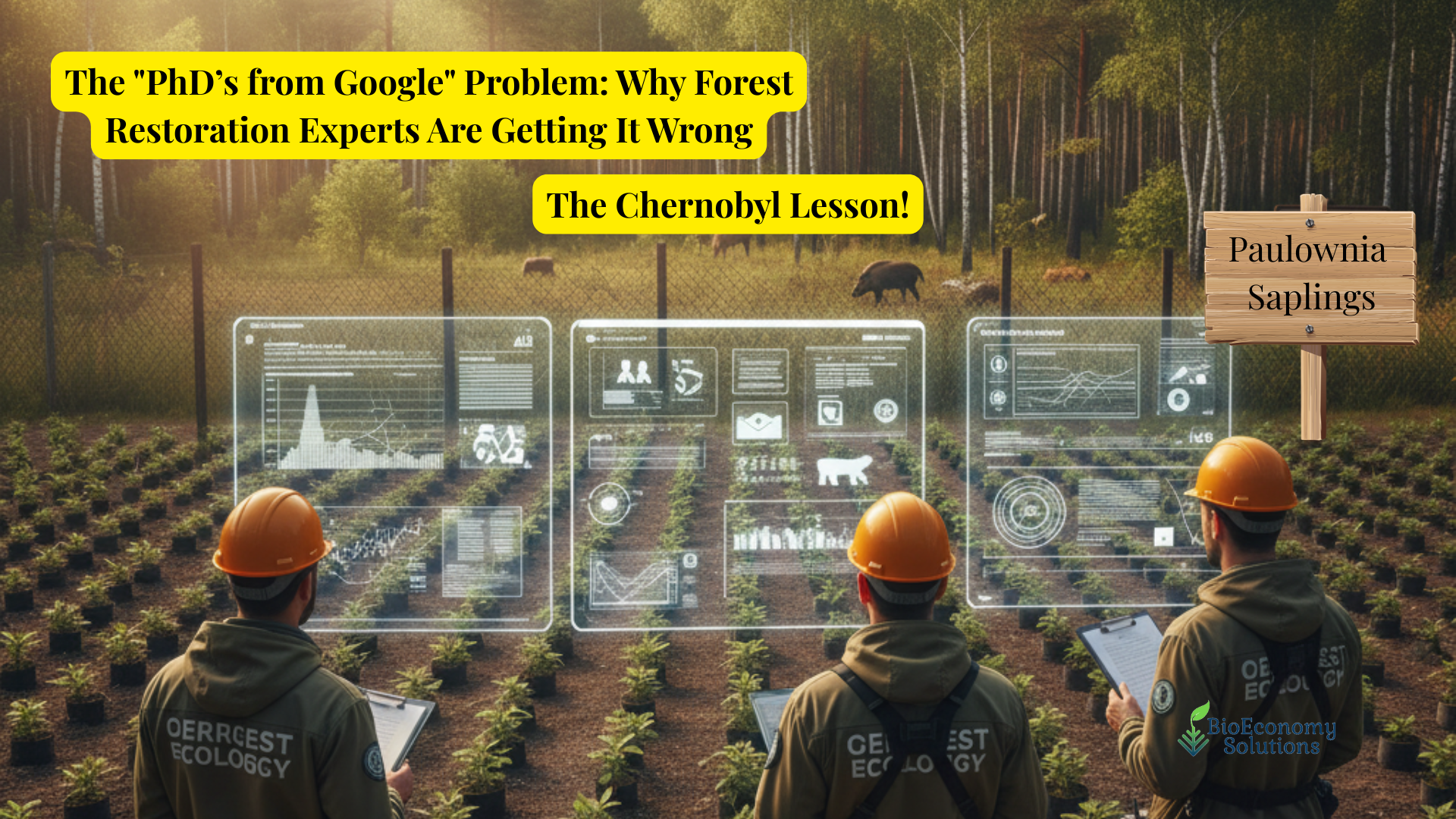
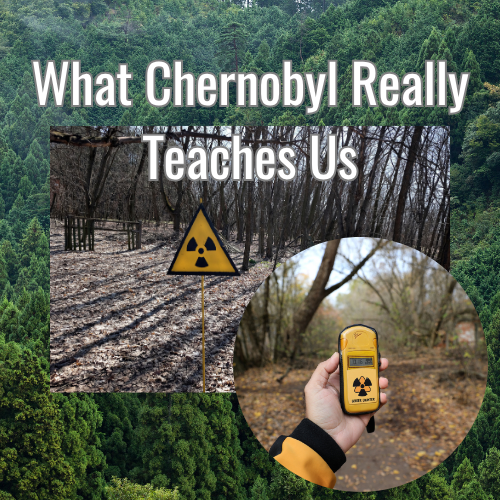
The “PhD from Google” Problem: Why Forest Restoration Experts Are Getting It Wrong (And What Chernobyl Teaches Us)!

They have PhDs in ecology. They study forest restoration for decades.

But they’re missing the biggest lesson hiding in plain sight.

While forest restoration experts debate the evils of “monoculture” tree planting, there’s a radioactive wasteland that became Europe’s most biodiverse ecosystem—without a single PhD managing it.

The lesson from Chernobyl changes everything we think we know about restoration.

The Academic Blind Spot
Walk into any forest restoration conference and you’ll hear the same refrain:

  • “Tree planting is just monoculture!”
  • “Single species plantations create green deserts!”
  • “We need natural diversity, not fast-growing exotics!”

They’re not wrong about the problem.

Most large-scale tree planting does create ecological dead zones:

  • Single species (pine, eucalyptus) for easy management
  • No understory diversity
  • Vulnerable to pests and disease
  • Poor soil health and nutrient cycling
  • But they’re missing the solution hiding in their own backyard.

The Chernobyl Revelation
April 26, 1986: Nuclear disaster creates 2,600 km² exclusion zone.

What happened next shocked ecologists:

The most contaminated place on Earth became Europe’s most biodiverse ecosystem.

How is this possible?

The answer reveals everything wrong with modern restoration thinking:

Human Absence > Perfect Management

What Chernobyl eliminated:

  • Hunting and trapping
  • Industrial agriculture
  • Logging and development
  • Chemical inputs
  • Intensive land management

The result:

  • Wolf populations 7x higher than surrounding areas
  • Brown bears returned after century-long absence
  • Elk, deer, boar thriving despite radiation
  • Diverse habitats: forests, meadows, wetlands, abandoned settlements
  • The brutal truth: Removing human interference worked better than decades of restoration science.

The Rewilding Revolution
Smart farmers are learning from Chernobyl’s accidental lesson.

The new trend: Agricultural rewilding

Instead of fighting nature, they’re stepping back and letting ecological processes lead.

Two Rewilding Models:

Land Sparing:

Convert marginal land entirely to rewilding
Intensify sustainable production on best land
Create wildlife corridors and habitat patches

Land Sharing:

Integrate nature recovery across entire farm
Agroecology, rotational grazing, wide margins
Harmonize food production with biodiversity
The Economic Breakthrough:
Traditional farming: Single revenue stream, high input costs
Rewilding farms: Multiple income sources

Ecotourism and nature experiences
Government environmental payments
Carbon and biodiversity credits
Reduced input costs (fertilizers, pesticides)
Why Forest Experts Miss the Point
The academic trap: Perfect is the enemy of good.

While PhDs debate species composition and natural succession, degraded land sits empty for decades waiting for the “perfect” restoration plan.

Meanwhile, practical solutions exist:

The Guardian Species Approach
Instead of monoculture OR natural diversity, smart restoration uses pioneer species that enable native recovery.

Example: Paulownia as ecosystem catalyst

Fast establishment: Creates habitat structure in 3-5 years vs. decades
Soil improvement: 15-foot taproots break hardpan, increase organic matter 400%
Microclimate creation: Large leaves provide shade, reduce evaporation
Native species enablement: 85% survival rate for native seedlings vs. 30% on bare land
This isn’t monoculture—it’s strategic succession.

The Intercropping Advantage
Academic view: Single species = bad
Reality: Strategic species can support incredible diversity

Paulownia plantations support:

Food crops (soybeans, groundnuts) between rows
Pollinator habitat from flowers
Wildlife corridors and nesting sites
Soil biology restoration
Water retention and erosion control
The Data That Changes Everything
China’s Loess Plateau: World’s largest ecosystem restoration project

35,000 square miles of degraded land restored
Pioneer species approach using fast-growing trees
Result: 2.5 million people lifted from poverty while sequestering massive carbon

Costa Rica’s forest recovery:

Forest cover increased from 24% to 54% in 30 years
Strategy: Fast-growing species + native conservation
Economic model: $500 million forest economy
The pattern: Successful restoration combines speed with diversity, economics with ecology.

What Chernobyl Really Teaches Us

Lesson 1: Absence of harm > presence of perfection
Sometimes the best management is minimal management.

Lesson 2: Nature is more resilient than we think
Even radiation couldn’t stop ecological recovery when human pressure was removed.
Lesson 3: Diversity emerges from opportunity, not planning
Create the right conditions, and biodiversity follows naturally.

Lesson 4: Time scales matter
Chernobyl’s 40-year recovery timeline shows patience pays off—but strategic intervention can accelerate the process.

The New Restoration Paradigm

Old thinking: Plan perfect ecosystem, plant native species, wait decades
New thinking: Create conditions for natural recovery, accelerate with strategic species

The Practical Framework:
Phase 1: Rapid Establishment (Years 1-3)

Plant fast-growing pioneer species (like Paulownia)
Establish basic habitat structure
Improve soil conditions and microclimate

Phase 2: Diversity Integration (Years 3-7)

Introduce native species in improved conditions
Allow natural colonization from seed sources
Manage for increasing complexity

Phase 3: Ecosystem Maturation (Years 7-20)

Reduce management intervention
Allow natural succession processes
Monitor and adapt as needed
The Economic Engine:
Revenue streams fund restoration:

Timber from pioneer species
Carbon credits from sequestration
Biodiversity credits from habitat creation
Sustainable products from managed harvests

Self-funding restoration: Projects pay for themselves while delivering ecological benefits.

Why This Matters Now
The restoration challenge is massive:

2 billion hectares of degraded land globally
Climate targets requiring rapid carbon sequestration
Biodiversity crisis demanding habitat restoration
Economic pressures on rural communities

Traditional approaches are too slow:

Decades for native forest establishment
High failure rates on degraded soils
Limited economic incentives
Academic debates while land stays degraded

The Chernobyl lesson:

Sometimes stepping back and letting nature lead—with strategic assistance—works better than micromanagement.

The Path Forward For restoration practitioners:

Embrace pioneer species that enable native recovery
Design for economic sustainability from day one
Focus on ecosystem function over species purity
Learn from natural succession patterns

For policymakers:

Support restoration approaches that combine speed with diversity
Create economic incentives for ecosystem services
Reduce regulatory barriers to innovative restoration
Fund long-term monitoring and adaptive management

For landowners:

Consider rewilding marginal or degraded land
Explore multiple revenue streams from restoration
Partner with restoration experts and carbon markets
Think in decades, not years

The Bottom Line

The forest restoration debate isn’t really about monoculture vs. diversity.

It’s about perfection vs. progress.

While academics debate ideal species compositions, degraded land sits empty. While experts plan perfect ecosystems, climate change accelerates.

Chernobyl’s accidental lesson: Nature is incredibly resilient when given the chance to recover—even under the worst possible conditions.

The practical solution: Strategic intervention that accelerates natural processes while creating economic incentives for long-term stewardship.

The choice: Wait decades for perfect restoration, or start now with good restoration that improves over time.

Sometimes the best forest management is knowing when to step back and let nature lead.

But first, you have to create the conditions for success.

That’s where strategic species selection, economic sustainability, and long-term thinking converge.

The radioactive wasteland that became a biodiversity hotspot shows us the way.

Ready to rethink restoration? The lessons from Chernobyl, rewilding farms, and successful ecosystem recovery projects point toward a new paradigm: strategic intervention that enables natural recovery while creating economic incentives for long-term success.

The forest restoration revolution isn’t about choosing between human management and natural processes—it’s about finding the sweet spot where both work together.


CONTACT US
Contact BioEconomy Solutions for afforestation, reforestation & carbon portfolio assessment.

Your next audit could be a profit opportunity instead of a compliance expense.

We’re happy to organize a time to speak with you about our paulownia trees and lumber we have for sale. Please book your preferred time to speak directly.

Book a Conversation: Here’s a link to my online calendar/schedule:

www.bioeconomysolutions.com/bookcall

BioEconomy Solutions

mail@BioEconomySolutions.com

Office: 843.305.4777

LIKE|SHARE|COMMENT

Join Our Newsletter – Get a FREE copy of Paulownia Carbon Report

Subscribe to our newsletter

Subscribe to our newsletter

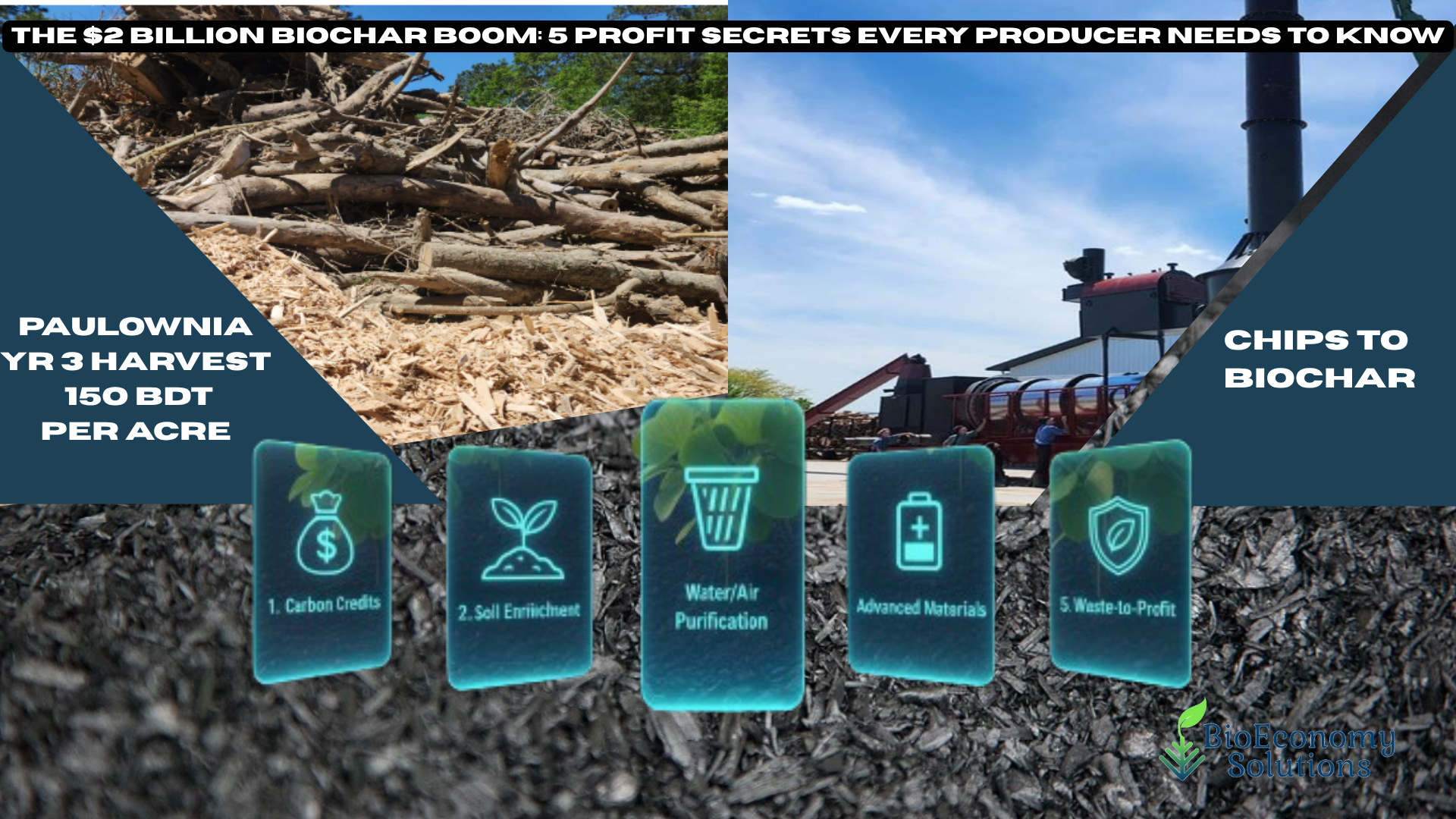
Most biochar companies are leaving money on the table.

Here’s how the smartest producers are turning waste into a goldmine—while everyone else is stuck chasing commodity prices.


The Profitability Crisis Nobody Talks About

You can have the best technology, the greenest mission, and the most passionate team—but if your biochar business isn’t profitable, it won’t last.

The brutal truth:
Most biochar startups struggle with high costs, inconsistent feedstock, and razor-thin margins.

But the market is exploding:

  • $641M in 2022 → $2.1B by 2030
  • Profit margins: 20% to 50%+
  • Premium products: $2,000+/ton

So why are so many companies missing out?


The 5 Profit Levers That Separate Winners from Losers

1. Feedstock Sourcing: The 40% Cost Secret

  • Smart producers co-locate near agricultural or forestry waste sources
  • Tipping fees turn a cost into a revenue stream ($30-50/ton)
  • Result: Up to 40% reduction in total feedstock costs

2. Energy Integration: Turn Waste Gas into Free Power

  • Use syngas from pyrolysis to power your plant
  • Eliminate external energy bills—save $50-100/ton
  • Result: Lower operating costs, higher margins

3. Scale Up or Get Left Behind

  • Bigger plants = lower costs: 20-30% per-ton savings at 10,000 tons/year vs. 2,000 tons/year
  • Better labor and equipment utilization
  • Result: Scale is the fastest path to profit

4. Specialize to Command Premiums

  • Custom blends (compost, nutrients, fungi) sell for 50-150% more than raw biochar
  • Target high-value markets: agriculture, horticulture, water treatment
  • Result: Move from commodity to premium pricing

5. Make It Easy for Customers

  • Pellets, granules, prills—user-friendly forms justify 20-40% price increases
  • Easier transport, storage, and application
  • Result: Higher sales, happier customers

The Playbook for Biochar Profitability

What the best producers do differently:

  • Secure negative-cost feedstock (tipping fees, local partnerships)
  • Integrate energy systems to cut costs and boost sustainability
  • Invest in scale—don’t stay small and hope for the best
  • Develop value-added products for premium markets
  • Get certified (IBI, EBC) to unlock new customers and higher prices

The bonus revenue streams:

  • Carbon credits: Monetize your climate impact
  • Co-products: Bio-oil, syngas for energy or sale
  • New markets: Construction, animal feed, industrial uses

The bottom line:
Biochar isn’t just about saving the planet—it’s about building a business that lasts.


Ready to turn your biochar operation into a profit engine?

Stop chasing commodity prices. Start building a premium, diversified, and scalable business.

Want the full playbook? Contact Us.


CONTACT US
Contact BioEconomy Solutions for a confidential biodiversity credit portfolio assessment.

Your next audit could be a profit opportunity instead of a compliance expense.

Visit our web “Paulownia Carbon Credits” page.

We’re happy to organize a time to speak with you about our paulownia trees and lumber we have for sale. Please book your preferred time to speak directly.

Here’s a link to my online calendar/schedule:

www.bioeconomysolutions.com/bookcall 

BioEconomy Solutions

mail@BioEconomySolutions.com

Office: 843.305.4777

LIKE|SHARE|COMMENT

Join Our Newsletter – Get a FREE copy of Paulownia Carbon Report

#Biochar #Profitability #Sustainability #AgTech #CircularEconomy #StartupGrowth

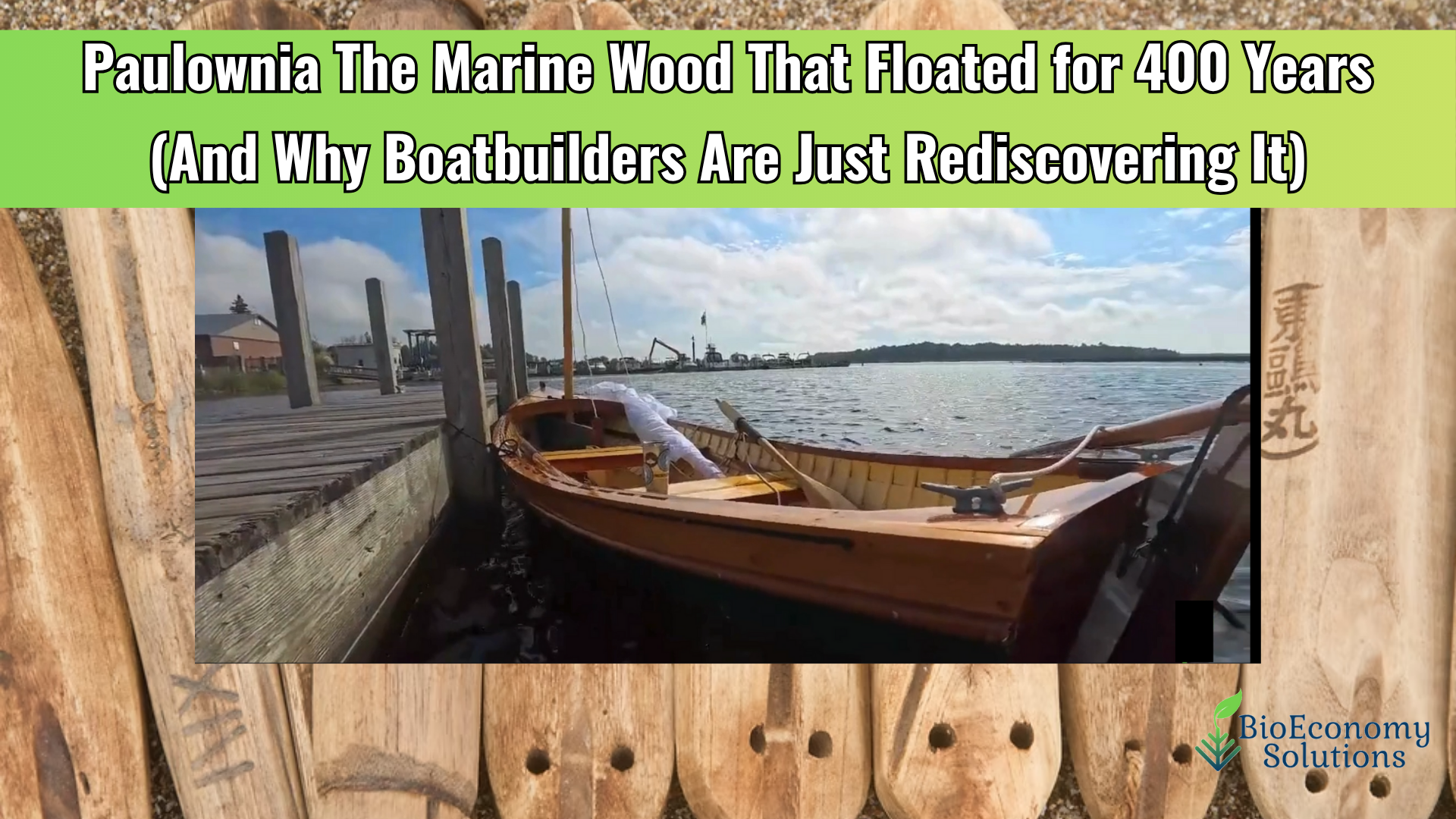
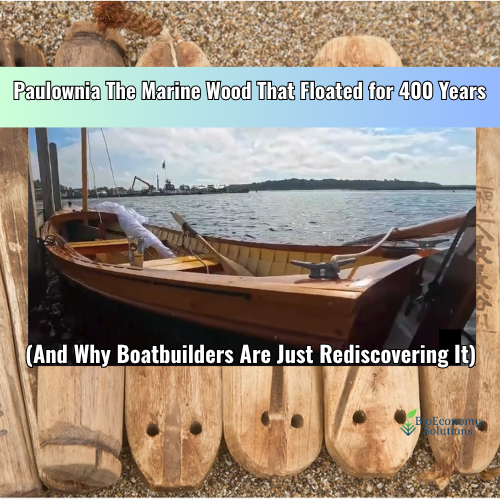
Paulownia wood has been hiding in plain sight for centuries.

Now marine craftsmen are realizing what 16th-century fishermen already knew.

While modern boatbuilders struggle with scarce cedar and expensive mahogany, there’s a wood that naturally resists water, rot, and decay—and it’s been proven in marine applications for over 400 years.

The question isn’t whether Paulownia works in marine environments.

The question is: why did we forget about it?

Watch Video: https://youtu.be/LZKKHAFN8mg?si=GEWcXuH7UJc_QQyy

The Marine Industry’s Hidden Crisis

Walk into any boatyard today and you’ll hear the same complaints:

“Western red cedar is unobtanium.” “Mahogany costs $16+ per board foot—when you can find it.” “We’re shipping wood from Africa and the Philippines.”

Meanwhile, the marine environment demands perfection:

  • Constant wet/dry cycles that split most woods
  • Salt water that accelerates decay
  • UV exposure that degrades materials
  • Weight considerations for performance

Traditional solutions are failing:

  • Cedar: Increasingly scarce, expensive
  • Teak: Overharvested, sustainability concerns
  • Mahogany: Limited supply, import dependent
  • Cypress: Heavy, prone to movement

But there’s a wood that solves all these problems.


The Forgotten Marine Champion

Paulownia’s natural marine advantages:

Water Resistance That Actually Works

Unlike woods that absorb water and swell, Paulownia’s cellular structure naturally repels moisture. This isn’t a treatment—it’s built into the wood’s biology.

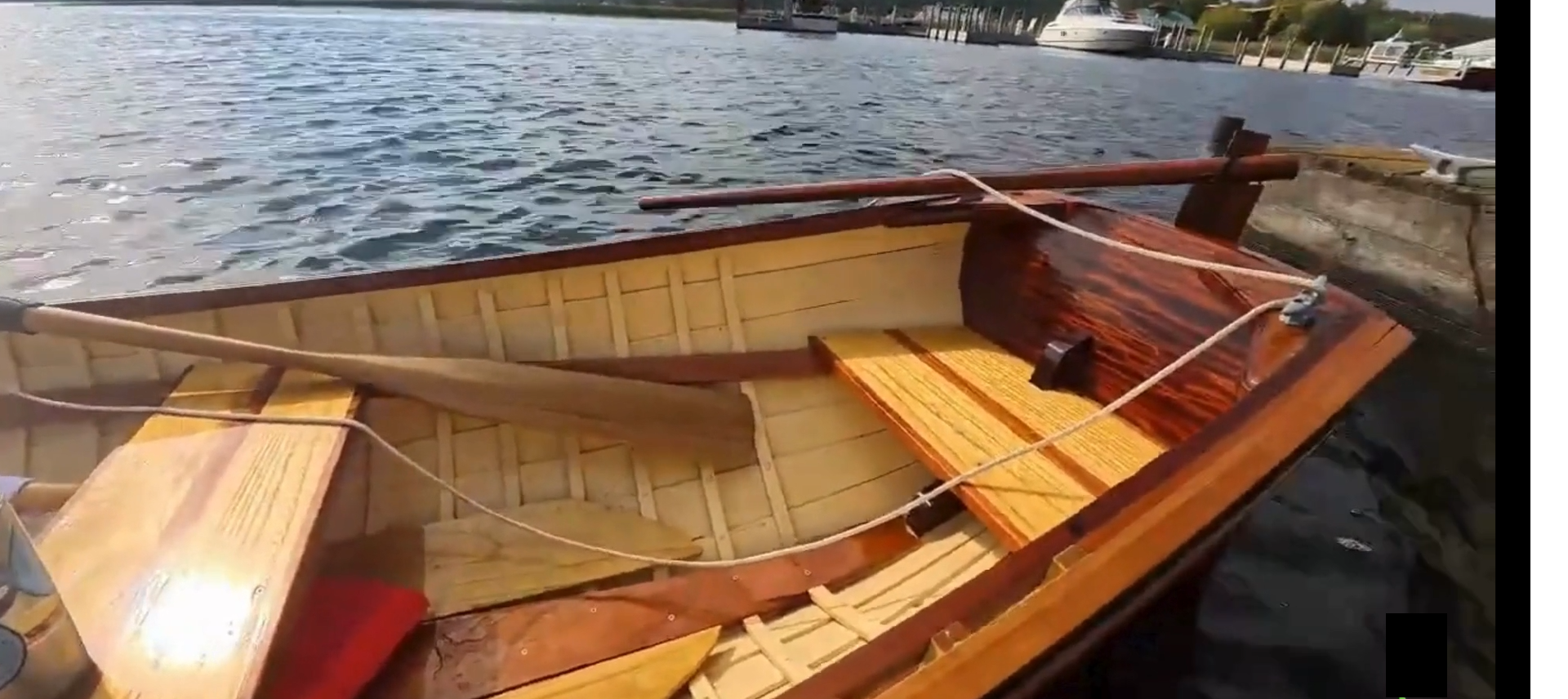
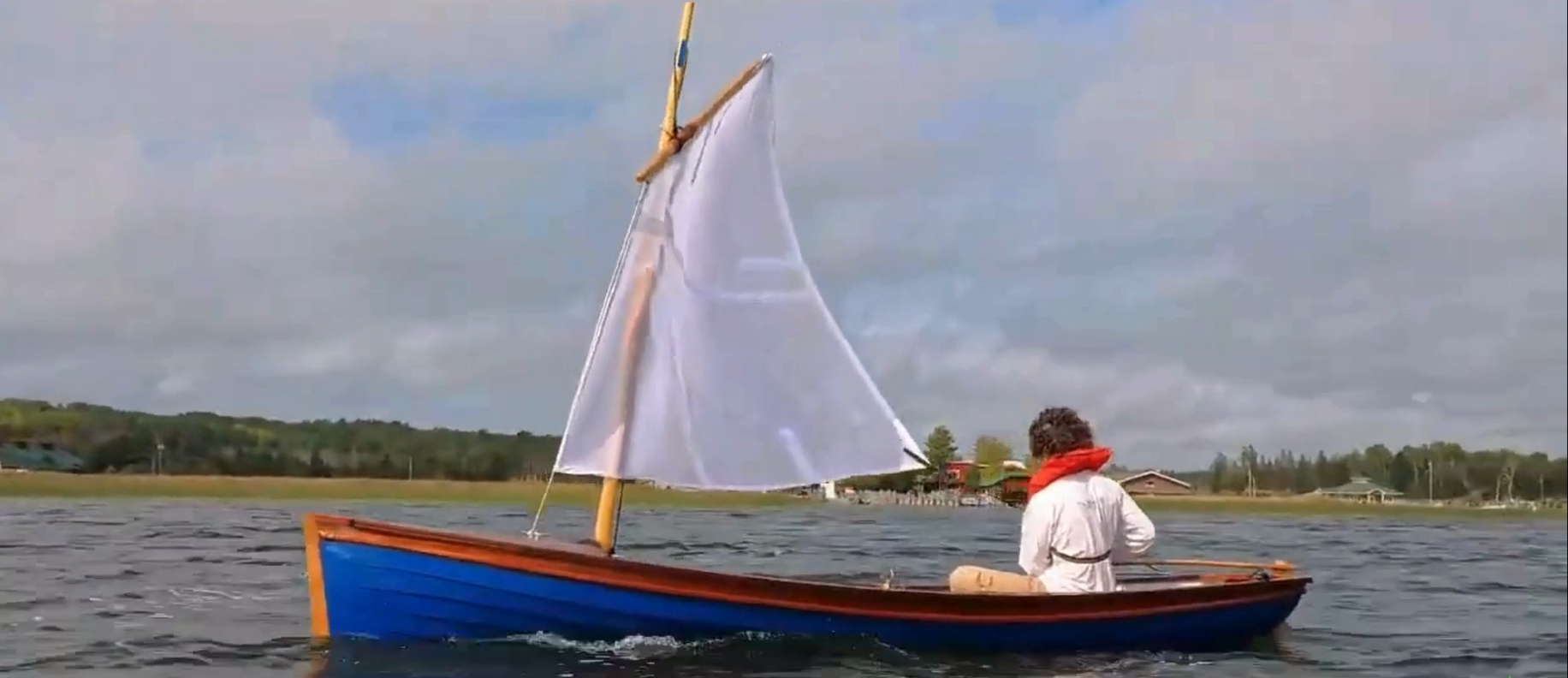
Real-world proof: Boats built with Paulownia planking sat wet for a month with no buckling, splitting, or movement. Traditional cypress boats would have warped beyond repair.

Rot and Decay Resistance

Paulownia contains natural compounds that resist fungal attack and bacterial decay. In marine environments where rot destroys most woods within years, Paulownia maintains structural integrity.

Historical evidence: 16th-century Paulownia fishing buoys still exist as antique collectibles—400+ years later.

Paulownias use as a wood for fishing floats and small buoys is more of a modern phenomenon, capitalizing on its superior buoyancy and water resistance, often as a sustainable and lightweight alternative to materials like cedar, balsa, or non-biodegradable plastics. Its role is particularly prominent today in the production of hand-crafted or high-end fishing bobbers and drift floats.

The Weight Advantage

Paulownia boats: 165-170 pounds Cypress boats: 200+ pounds

That’s 35+ pounds saved on a 14-foot boat. For larger vessels, the weight savings become exponential—improving fuel efficiency, handling, and performance.


Modern Marine Applications

Hull Planking: The Foundation

Paulownia excels in hull construction because it:

  • Maintains dimensional stability through wet/dry cycles
  • Resists the crushing forces of wave impact
  • Provides natural buoyancy enhancement
  • Eliminates the buckling that plagues traditional planking

Master boatbuilder Eric’s testimony: “There’s no buckling or movement in the planking… That’s bad for a boat, and we can’t have that.”

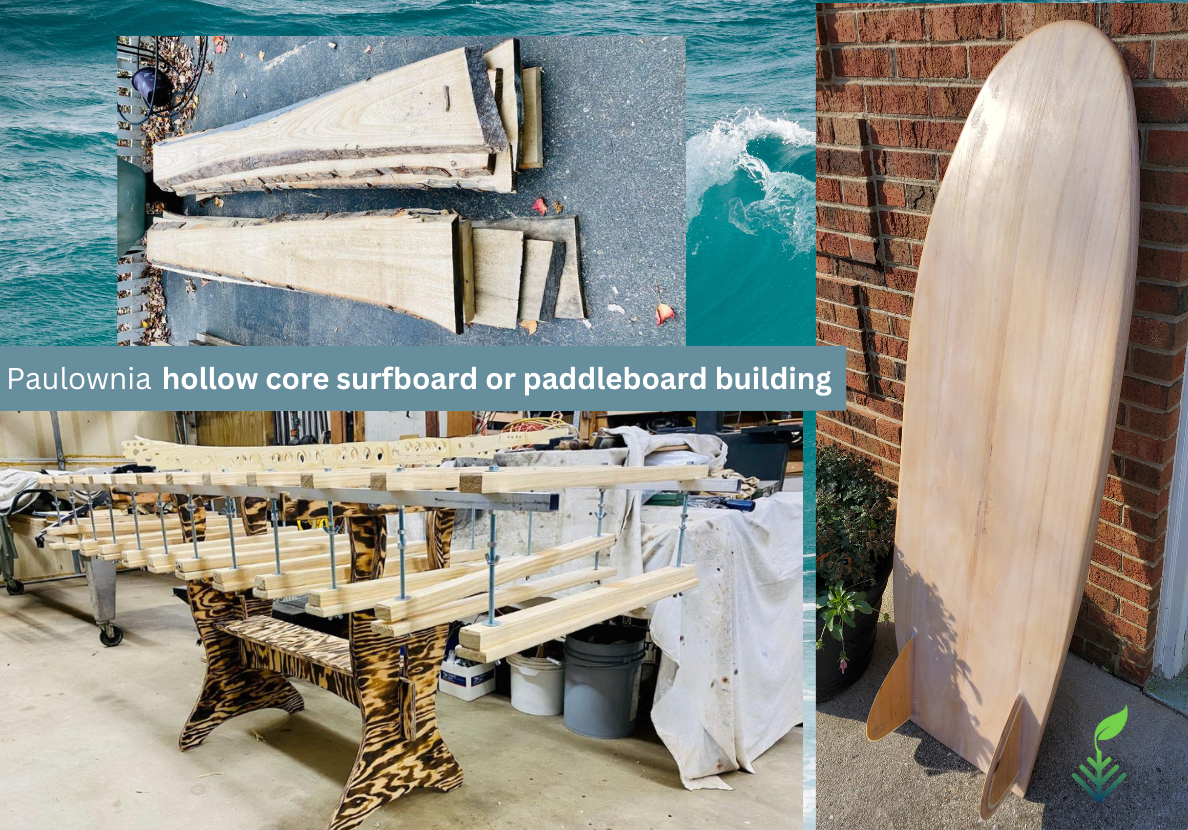
Surfboards and Paddleboards: Performance Plus

The surfing industry discovered Paulownia’s advantages:

Buoyancy Benefits:

  • Natural flotation superior to synthetic cores
  • Lightweight reduces fatigue during long sessions
  • Water resistance prevents waterlogging

Performance Advantages:

  • Excellent strength-to-weight ratio
  • Natural flex characteristics
  • Sustainable alternative to foam cores

Durability Factor:

  • Resists dings and pressure damage
  • Self-healing properties from minor impacts
  • Long-term structural integrity

Decking and Fittings: Beauty Meets Function

Paulownia’s aesthetic appeal combines with practical benefits:

Visual Appeal:

  • Light, attractive grain patterns
  • Takes stain and finish beautifully
  • Maintains appearance in UV exposure

Functional Benefits:

  • Non-slip surface when properly finished
  • Comfortable underfoot (doesn’t get burning hot)
  • Easy to work with standard tools
  • Excellent screw and fastener holding

The Science Behind the Performance

Cellular Structure Advantage

Paulownia’s unique cellular composition creates:

  • Natural water repellency without chemical treatment
  • Dimensional stability through moisture changes
  • Impact resistance from flexible cell walls
  • Thermal insulation properties

Natural Preservatives

The wood contains compounds that:

  • Inhibit fungal growth
  • Resist bacterial decay
  • Repel marine borers
  • Maintain structural integrity underwater

Density Sweet Spot

At 0.28-0.30 specific gravity, Paulownia hits the perfect balance:

  • Light enough for easy handling
  • Dense enough for structural strength
  • Optimal buoyancy characteristics
  • Superior strength-to-weight ratio

Why the Marine Industry Forgot

The same reason hemp disappeared: Sometimes proven technologies get lost in the shuffle of industrial change.

What happened:

  • Colonial expansion shifted to local woods
  • Industrial revolution favored mass production
  • Synthetic materials promised “better living through chemistry”
  • Traditional knowledge wasn’t systematically preserved

The result: Centuries of proven marine performance forgotten.


The Sustainability Advantage

While traditional marine woods face scarcity:

Paulownia offers abundance:

  • Plantation-grown in 5-7 years vs. decades for hardwoods
  • Coppices from stumps—no replanting required
  • Grows on marginal land—doesn’t compete with food production
  • Carbon sequestration during growth phase

Environmental benefits:

  • No old-growth forest destruction
  • Reduced transportation emissions (local production)
  • Biodegradable end-of-life (unlike fiberglass)
  • Soil improvement during cultivation

Real-World Performance Data

Marine Trades Institute Testing:

  • Paulownia planks showed minimal dimensional change
  • Superior stability compared to traditional species
  • No fastener stress from wood movement
  • Maintained water-tight integrity

Commercial Applications:

  • Surfboard manufacturers reporting excellent durability
  • Paddleboard builders citing weight and performance advantages
  • Small craft builders achieving superior strength-to-weight ratios

Historical Validation:

  • 400-year-old buoys prove long-term marine durability
  • Traditional fishing applications across multiple cultures
  • Proven performance in harsh saltwater environments

The Modern Renaissance

Smart marine manufacturers are taking notice:

Surfboard Industry Leading

  • Premium boards featuring Paulownia cores
  • Marketing sustainability alongside performance
  • Customer education about natural materials

Small Craft Builders

  • Testing Paulownia for traditional construction methods
  • Documenting performance advantages
  • Training next generation on sustainable materials

Yacht Industry Interest

  • Exploring applications for luxury craft
  • Investigating weight savings for performance boats
  • Evaluating sustainability credentials for eco-conscious buyers

Implementation Considerations

For Boatbuilders:

  • Source properly dried lumber (12% moisture content)
  • Use appropriate fasteners for lightweight wood
  • Consider hybrid construction (Paulownia with traditional reinforcement)
  • Document performance for future reference

For Manufacturers:

  • Establish reliable supply chains
  • Develop processing specifications
  • Create quality standards
  • Educate customers on benefits

For Buyers:

  • Understand maintenance requirements
  • Appreciate long-term durability benefits
  • Consider total cost of ownership
  • Support sustainable material choices

The Future of Marine Paulownia

Emerging applications:

  • Composite cores for advanced construction
  • Engineered lumber for larger vessels
  • Specialty applications (masts, spars, interior components)
  • Hybrid construction combining traditional and modern techniques

Market drivers:

  • Sustainability requirements
  • Traditional wood scarcity
  • Performance advantages
  • Cost considerations

Innovation opportunities:

  • Advanced processing techniques
  • Engineered products development
  • Hybrid material systems
  • Specialized marine treatments

The Bottom Line

Paulownia isn’t a new marine material—it’s a rediscovered one.

For 400 years, it proved itself in the harshest marine environments. Modern testing confirms what ancient craftsmen knew: this wood naturally excels in water.

The advantages are clear:

  • Natural water, rot, and decay resistance
  • Superior strength-to-weight ratio
  • Dimensional stability in marine conditions
  • Sustainable production and supply
  • Proven long-term durability

The question for marine professionals:

Will you be an early adopter of this rediscovered solution, or will you wait until everyone else figures it out?

The master boatbuilders are already placing their orders.

The surfboard industry is embracing the performance advantages.

The historical evidence speaks for itself.


Sometimes the best innovations are actually rediscoveries.

Paulownia wood: 400 years of marine performance, waiting for its modern renaissance.


Ready to explore Paulownia for your marine applications? The wood that floated for centuries is available today—with modern processing and sustainable supply chains.

CONTACT US

Contact BioEconomy Solutions lumber specialists to discuss specifications, availability, and applications for your next project.

Where To Buy Paulownia? Paulownia Wood For Sale – QUESTIONS?

Visit our web page. https://bioeconomysolutions.com/paulownia-lumber/

We’re happy to organize a time to speak with you about our paulownia trees and lumber we have for sale. Please book your preferred time to speak directly.

Here’s a link to my online calendar/schedule:

www.bioeconomysolutions.com/bookcall

BioEconomy Solutions

mail@BioEconomySolutions.com

Office: 843.305.4777


Paulownia Nature-Based Solutions: A Practical Wedge Toward 10 Gigatons of CO₂ Removal by 2050

The Challenge: Science says we need 10 billion tons of CO₂ removed annually by 2050. Corporations want to help but face greenwashing accusations and rising compliance pressure from CSRD, SEC climate rules, and CORSIA.

The Solution: Paulownia-based nature solutions that convert ultra-fast tree growth into permanent biochar storage—with audit-grade transparency that regulators & buyers trust.

Why Corporate Carbon Buyers Get Stuck

Greenwashing fears: “Phantom” credits, double counting, and reversals make buyers avoid temporary nature credits

Compliance pressure: New rules require defensible tracking and clear separation of reductions vs. removals

Market confusion: Multiple registries and opaque pricing slow procurement.


What Makes Paulownia Different

Speed & Scale:

• Grows 10-15 feet per year with mechanized harvesting (80-100 tons/hour) • Coppices after cutting—regrows from stumps without replanting

• Thrives on degraded/semi-arid land without competing with food crops

Integrity by Design:

• Only sterile, non-invasive hybrids

• ISO 14064-3 verified with satellite monitoring and public audit trails

• Registry serialization for transparent pricing

Permanent Storage:

• Harvested biomass becomes biochar (1,000+ year carbon storage)

• Generates 2.5-3.3 carbon credits per ton of biochar

• Market-proven: 93% of biochar credits sell within 22 days at €125-145/ton

Zero Double Counting—Guaranteed

Our system ensures one ton of carbon is never sold twice:

  1. Growth phase: Credits labeled “pledged/pending”—visible but not claimable

  2. Harvest: System automatically retires growth credits when biochar credits are issued

  3. Result: Buyers get permanent removal credits with immutable audit trails

Meeting Your Compliance Needs

Carbon Compliance:

✅ CSRD/SEC reporting with audit-ready documentation

✅ CORSIA eligibility through recognized registries

✅ California AB 1305 compliance with full traceability

Corporate Climate Goals:

✅ Durable removals that satisfy SBTi requirements

✅ Rapid impact while engineered solutions scale up

✅ Co-benefits: soil health, water retention, habitat restoration

What Procurement Teams Get

Transparent pricing: Exchange-traded with daily price indices

Fast settlement: Average 22 days from issuance to transfer

Audit-ready docs: Registry serials, GPS data, verification reports

Retirement proofs: Blockchain-verified certificates for compliance filing

The Bottom Line

Paulownia delivers what corporations need most: permanent carbon removal at scale, with verifiable tracking that stands up in audits.

❌ No greenwashing risk. No double counting. No compliance headaches.

✅ Just credible climate action you can defend.


Ready to explore Paulownia carbon solutions for your climate strategy? Contact us to see how permanent removal credits can strengthen your net-zero plan while avoiding greenwashing risks.

Conclusion

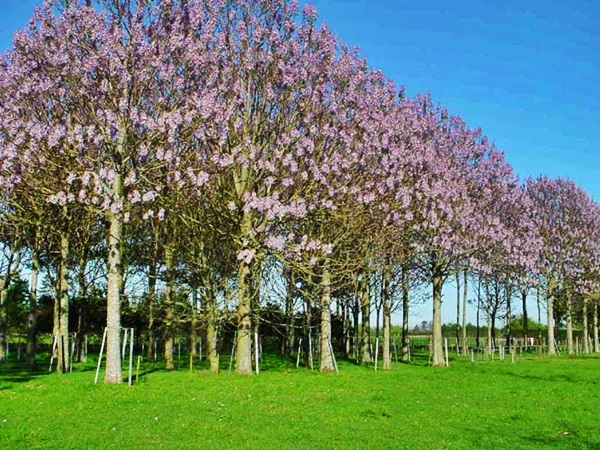
The Paulownia tree, with its FAST growth rate, carbon capture abilities, and adaptability, is a powerful tool in climate change mitigation, biodiversity support, and sustainable forest management. When used appropriately in afforestation and reforestation projects, it holds the potential to restore ecosystems, combat deforestation, and provide long-term environmental and economic benefits.

Contact Us

BioEconomy Solutions is a Carbon Dioxide Removal (CDR) Project Developer. Talk to us about our TREE PLANTING strategies with Paulownia trees.

We’re happy to organize a time to speak with you about our paulownia trees and lumber we have for sale. Please book your preferred time to speak directly.

Here’s a link to my online calendar/schedule:

www.bioeconomysolutions.com/bookcall

BioEconomy Solutions

mail@BioEconomySolutions.com

Office: 843.305.4777

Visit us at: https://bioeconomysolutions.com/paulownia-carbon-credits/ Let’s chat about paulownia tree solutions for sustainable Forest carbon credits projects.

LIKE|SHARE|COMMENT

Enjoy this article? You may also enjoy “Carbon Developers Choose Paulownia Trees” https://www.linkedin.com/pulse/carbon-developers-choose-paulownia-trees-victor-garlington-imh4e/

Subscribe to our newsletter for FREE report

Subscribe to our newsletter

Subscribe to our newsletter

The Perfect Storm Hitting American Construction!

Steve Martinez, a Boise contractor, watches lumber prices swing wildly—sometimes increasing tenfold overnight. Canada has historically accounted for a very high percentage of U.S. softwood lumber imports, typically in the 70–85% range. Recent data shows this percentage has shifted. For example, in 2024, Canada accounted for 84.3% of U.S. softwood lumber imports.
The new potential tariffs jumping from 14.5% to 34.5%, America’s construction industry faces an unprecedented crisis which ultimately the end consumer pays the price.

The numbers are staggering: over 100 million American households can’t afford the median $460,000 home price, while builders struggle with fixed contracts and volatile material costs that make up 15-18% of total construction expenses.

But what if there was a domestic solution growing right under our noses?

Enter Paulownia: America’s Untapped Lumber Goldmine

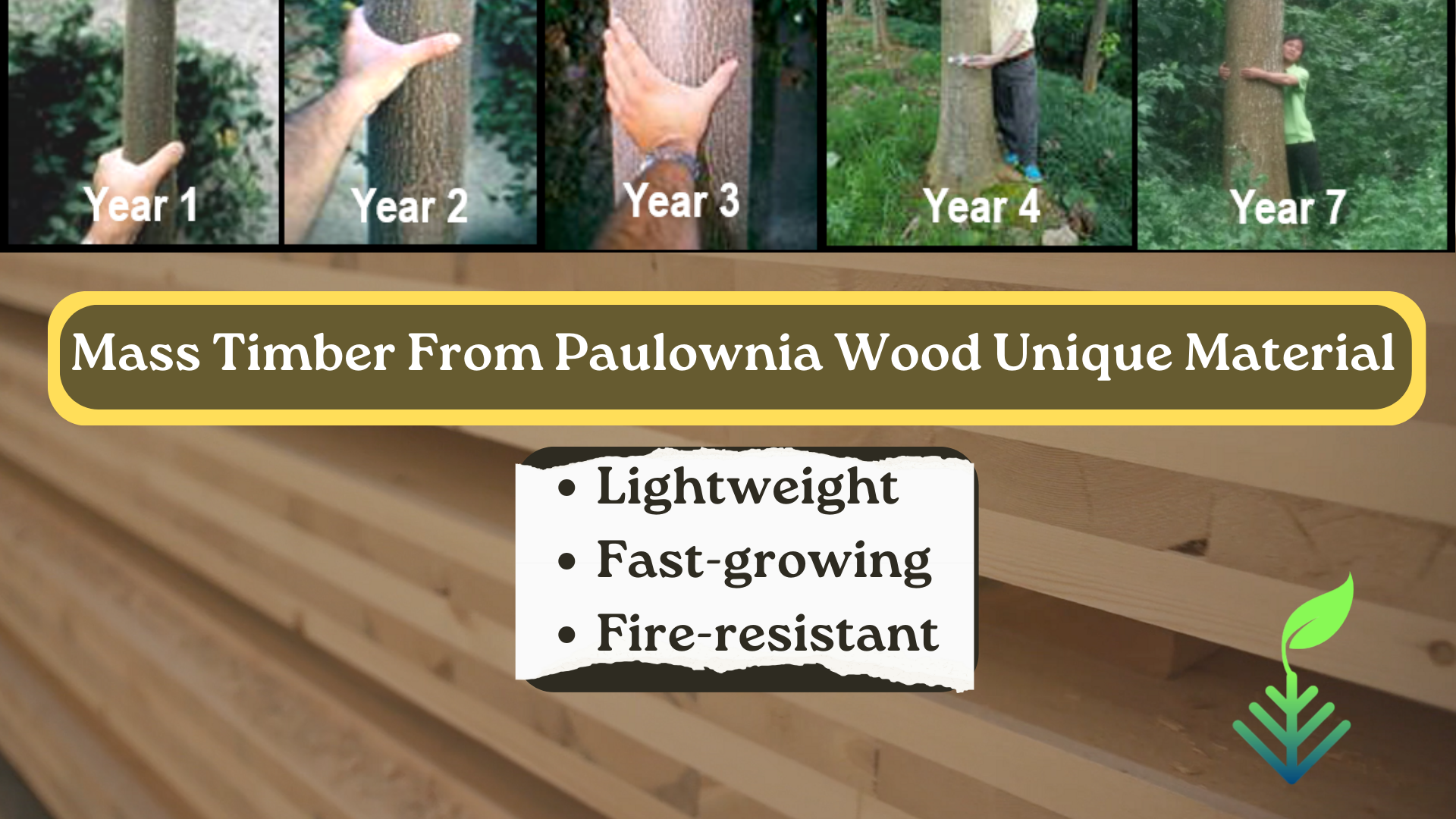
While politicians debate tariffs and regulations, a revolutionary wood species is quietly proving itself across American soil. Paulownia—often called the “aluminum of lumber”—offers properties that could transform the U.S. construction landscape.

The Paulownia Advantage: Superior Performance Metrics

Strength-to-Weight Champion:

  • 30% lighter than traditional hardwoods
  • Twice as strong as balsa wood
  • Highest strength-to-weight ratio of any wood globally
  • Perfect for reducing transportation costs and construction labor

Built-in Durability:

  • Naturally fire-resistant (higher ignition temperature)
  • Termite and rot resistant without chemical treatment
  • Dimensionally stable—resists warping, shrinking, and cracking
  • Ideal for moisture-prone applications like saunas and pool decks

Construction Versatility:

  • Non-load-bearing structural components
  • Interior finishing and trim work
  • Flooring with superior dimensional stability
  • Natural insulation properties
  • Acoustic panels for soundproofing

Paulownia Bearing The Load

Non-load-bearing structural components are elements of a building that do not support the main weight of the structure, such as the roof or floors. Instead, they primarily serve functions like dividing spaces, providing insulation or soundproofing, or acting as decorative finishes. Examples include interior partition walls, drywall, and exterior cladding.

Paulownia Wood and Load-Bearing Applications

Paulownia wood is exceptionally lightweight, often compared to balsa wood, but it has a high strength-to-weight ratio. While it is naturally a non-load-bearing material by itself, its properties can be enhanced through existing engineered wood technologies to make it suitable for some load-bearing applications.

These technologies generally involve processing the wood to create composite materials with improved structural properties:

Laminated Veneer Lumber (LVL): This process involves bonding thin layers (veneers) of wood together with adhesives. By arranging the grain of all veneers parallel to the long direction, LVL creates a strong, stiff, and dimensionally stable product.

Sandwich Panels: Paulownia wood can be used as the lightweight core material in a sandwich panel, with stronger, denser materials like fiberglass, plywood, or other hardwoods bonded to its surfaces. This structure provides high stiffness and strength while keeping the overall product lightweight.

Glued Laminated Timber (Glulam): Similar to LVL, glulam is made by bonding together smaller pieces of wood into larger, more stable members. This process can utilize the lightweight properties of paulownia for the core while potentially using stronger wood or other materials for the outer laminations to increase its load-bearing capacity.

The use of these engineered wood products allows paulownia to be utilized in structural applications where its natural properties alone would be insufficient, leveraging its fast growth and sustainable characteristics for a greener building industry.

Engineered wood technologies, including laminated veneer lumber (LVL) and cross-laminated timber (CLT), are used in modern construction.

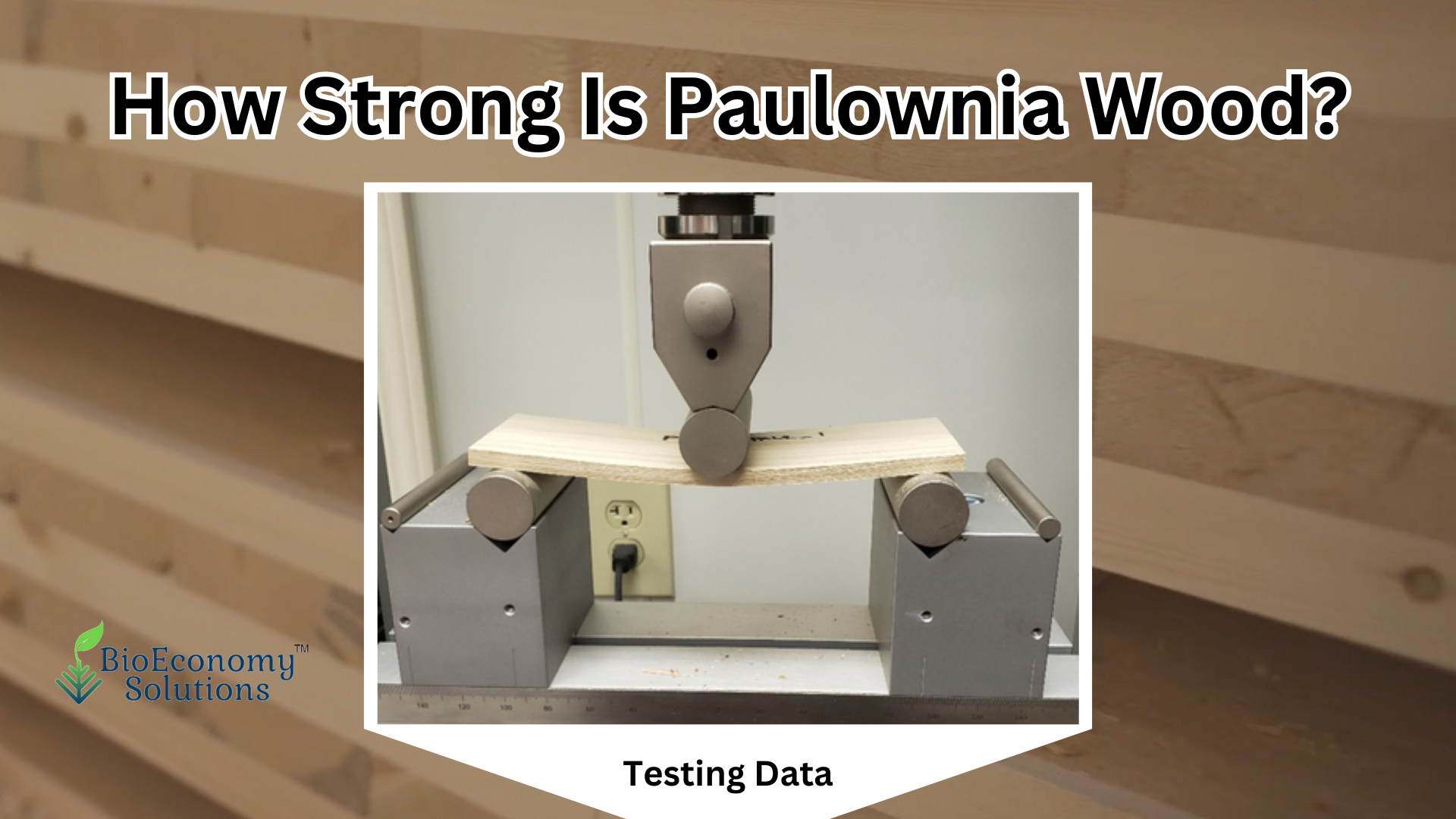
How Strong Is Paulownia Wood?

Solving America’s Lumber Supply Chain Crisis

Speed to Market: The Game-Changer

While traditional softwood takes 20-50 years to mature, Paulownia delivers:

  • Harvestable timber in 5-7 years
  • 15-30 feet of growth in first season
  • Coppicing ability: Regrows from cut stumps without replanting
  • Multiple harvests from single planting

This means American landowners could establish domestic lumber supply chains in less than a decade—not the generations required for traditional forestry.

Geographic Flexibility

Unlike softwood forests concentrated in the Pacific Northwest and Southeast, Paulownia thrives across diverse American landscapes:

  • Semi-arid regions previously unsuitable for timber
  • Degraded agricultural land generating new rural income
  • Marginal soils where food crops struggle
  • Urban periphery for distributed lumber production

USA Paulownia Lumber now has “Class A” ASTM E84 Flame Spread Rating.

Download: Flame-Retardancy-of-Paulownia-Wood-and-Its-Mechanism.pdf

A Class A ASTM E84 flame spread rating for Paulownia lumber is highly significant for its advancement in the U.S. structural lumber and interior building materials market. Here’s why:

Economic Impact: Beyond Lumber

For Rural America:

  • Farmers diversify income with fast-growing timber crops
  • Abandoned farmland becomes productive again
  • Local sawmills process regional Paulownia supply
  • Carbon credit revenue provides additional income streams

For Builders:

  • Reduced transportation costs from distributed production
  • Price stability through domestic supply chains
  • Superior performance characteristics reduce callbacks
  • Lightweight properties decrease labor costs

For Homeowners:

  • Lower construction costs through domestic supply
  • Superior insulation reduces energy bills
  • Fire-resistant properties may lower insurance premiums
  • Sustainable building materials increase property values

The Construction Applications Revolution

Mass Timber Potential

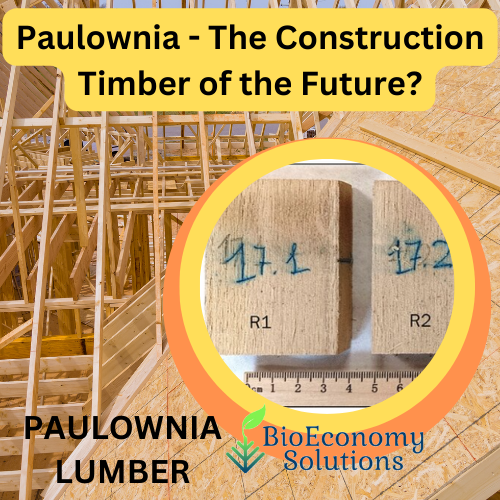
While Paulownia isn’t suitable for primary load-bearing applications, its unique properties make it ideal for paulownia mass timber applications:

Sandwich Construction:

  • Paulownia core with hardwood exterior
  • Maintains strength while reducing weight
  • Significant material cost savings
  • Enhanced insulation properties

Engineered Wood Products:

  • Laminated veneer lumber (LVL) applications
  • Cross-laminated timber (CLT) components
  • Glue-laminated beams for specific applications

Specialty Markets

High-Value Applications:

  • Musical instrument construction (proven market)
  • Boat building and marine applications
  • RV and mobile home construction
  • Modular housing components

Addressing the Labor Crisis

The U.S. lumber industry faces severe labor shortages, with employment expected to decline 2-4% by 2033. Paulownia offers solutions:

Mechanized Harvesting:

  • Forage harvesters process 80-100 green tons per hour
  • Reduced dependence on skilled logging crews
  • Safer harvesting operations
  • Lower labor costs per board foot

Distributed Processing:

  • Smaller, regional mills reduce transportation
  • Less specialized labor required
  • Community-based economic development
  • Reduced infrastructure investment

The Regulatory Advantage

While traditional forestry battles the Endangered Species Act and National Environmental Policy Act, Paulownia offers regulatory benefits:

Environmental Positives:

  • Carbon sequestration during growth phase
  • Soil improvement on degraded lands
  • No impact on old-growth forests
  • Biodiversity enhancement when properly managed

Fast Permitting:

  • Agricultural land conversion simpler than forest management
  • No endangered species habitat conflicts
  • Positive environmental impact assessments
  • Community economic development benefits

Economic Modeling: The Numbers Work

Traditional Softwood Economics:

  • 20-50 year investment horizon
  • High land acquisition costs
  • Regulatory compliance expenses
  • Transportation from limited regions

Paulownia Economics:

  • 5-7 year payback period
  • Utilizes lower-cost marginal land
  • Multiple revenue streams (timber, carbon, biomass)
  • Distributed production reduces logistics costs

Market Opportunity: With lumber representing a $60+ billion annual U.S. market, even capturing 10% would create a $6 billion Paulownia industry—enough to meaningfully impact supply and pricing.

Implementation Strategy: A Roadmap Forward

Phase 1: Pilot Projects (Years 1-3)

  • Establish demonstration plantations in key regions
  • Partner with progressive builders for testing
  • Develop processing and grading standards
  • Create supply chain partnerships

Phase 2: Scale-Up (Years 3-7)

  • Expand acreage based on proven demand
  • Build regional processing facilities
  • Establish distribution networks
  • Develop specialized applications

Phase 3: Market Integration (Years 7-15)

  • Achieve meaningful market share in specialty applications
  • Integrate with existing lumber supply chains
  • Export surplus production
  • Establish Paulownia as standard construction material

The Investment Opportunity

For Landowners:

  • Convert marginal land to productive timber assets
  • Generate income while trees mature through carbon credits
  • Benefit from multiple harvest cycles
  • Participate in growing domestic lumber market

For Investors:

  • Early entry into emerging domestic lumber supply
  • ESG-compliant investment with measurable impact
  • Multiple exit strategies through various end markets
  • Hedge against lumber price volatility

For Communities:

  • Rural economic development opportunities
  • Reduced dependence on volatile agricultural markets
  • Local processing jobs
  • Sustainable economic base

Overcoming the Challenges

Market Acceptance:

  • Education about Paulownia’s superior properties
  • Demonstration projects proving performance
  • Building code acceptance and standards development
  • Architect and engineer training programs

Supply Chain Development:

  • Processing equipment adaptation
  • Quality grading systems
  • Distribution network establishment
  • End-user education and support

Scale Requirements:

  • Coordinated planting across multiple landowners
  • Processing facility investment
  • Market development initiatives
  • Policy support for domestic alternatives

The Climate Bonus

While solving America’s lumber crisis, Paulownia delivers massive climate benefits:

  • 80-100 tons CO₂ sequestered per acre in first 5 years
  • Carbon-negative construction materials
  • Reduced transportation emissions from domestic supply
  • Soil improvement on degraded lands

This creates additional revenue through carbon credit markets while addressing climate goals.

The Time Is Now

America’s lumber crisis demands innovative solutions. While politicians debate tariffs and regulations, Paulownia offers a market-based path forward:

Domestic supply security

Superior performance characteristics

Rapid deployment timeline

Rural economic development

Climate benefits

Regulatory advantages

The question isn’t whether Paulownia can help solve America’s lumber crisis—it’s whether we’ll act fast enough to capture the opportunity.

Every month we delay is another month of volatile prices, housing unaffordability, and missed economic development.

The solution is growing. Literally.


Ready to explore Paulownia opportunities for your land, business, or investment portfolio? The domestic lumber revolution starts with the first tree planted.

Contact us to learn how Paulownia can transform your piece of America’s lumber future.

Conclusion

The Paulownia tree, with its FAST growth rate, carbon capture abilities, and adaptability, is a powerful tool in climate change mitigation, biodiversity support, and sustainable forest management. When used appropriately in afforestation and reforestation projects, it holds the potential to restore ecosystems, combat deforestation, and provide long-term environmental and economic benefits.

Contact Us

BioEconomy Solutions is a Carbon Dioxide Removal (CDR) Project Developer. Talk to us about our TREE PLANTING strategies with Paulownia trees.

We’re happy to organize a time to speak with you about our paulownia trees and lumber we have for sale. Please book your preferred time to speak directly.

Here’s a link to my online calendar/schedule:

www.bioeconomysolutions.com/bookcall

BioEconomy Solutions

mail@BioEconomySolutions.com

Office: 843.305.4777

Visit us at: https://bioeconomysolutions.com/paulownia-carbon-credits/ Let’s chat about paulownia tree solutions for sustainable Forest carbon credits projects.

LIKE|SHARE|COMMENT

Enjoy this article? You may also enjoy “Carbon Developers Choose Paulownia Trees” https://www.linkedin.com/pulse/carbon-developers-choose-paulownia-trees-victor-garlington-imh4e/

Subscribe to our newsletter

Subscribe to our newsletter

The world is racing to decarbonize agriculture and heavy industry. One of the biggest game-changers? Green ammonia—a clean fuel and fertilizer made without fossil fuels. But what if you could produce it from a fast-growing, carbon-sequestering tree? Enter Paulownia.

Why Green Ammonia?

Ammonia (NH₃) is a critical ingredient in fertilizer and a promising zero-carbon fuel. Traditionally, it’s made from natural gas, releasing huge amounts of CO₂. Green ammonia, produced using renewable energy and sustainable feedstocks, is the future of both food and energy security.

The primary USDA program supporting alternative fertilizers is the Fertilizer Production Expansion Program (FPEP), which provides grants to U.S. businesses and organizations to increase domestic manufacturing and processing of fertilizers and nutrient alternatives, aiming to lower costs, reduce reliance on foreign suppliers, and promote sustainable practices. Eligible projects include modernizing equipment, adopting new technologies, and building plants for producing innovative fertilizers, including biobased and organic options, and those that enhance soil health and nutrient use efficiency.

What the Program Does

  • Increases Domestic Production:
  • Promotes Innovation:
  • Boosts Competition:
  • Reduces Foreign Dependence:

The Paulownia Advantage

Paulownia trees are among the fastest-growing on earth, thriving on degraded land and capturing massive amounts of CO₂. Their wood chips are a renewable, high-yield biomass source—perfect for green ammonia production.

How It Works: Biomass Pathways

  1. Paulownia Cultivation
  2. Biomass Gasification
  3. Hydrogen Extraction
  4. Green Ammonia Synthesis

Why Carbon is Money

  • Carbon Credits: Every ton of CO₂ sequestered by Paulownia and every ton avoided by green ammonia production can be monetized as carbon credits. Biochar byproducts can generate 2.5–3.26 credits per ton.
  • Premium Markets: Green ammonia commands a price premium in global fertilizer and shipping markets.
  • Multiple Revenue Streams: Timber, carbon credits, biochar, and now green ammonia—all from the same tree.

Real-World Impact

  • Decarbonize Agriculture: Replace fossil-based fertilizers with green ammonia, slashing emissions.
  • Clean Shipping Fuel: Ammonia is emerging as a zero-carbon fuel for ships.
  • Rural Economic Growth: Farmers and landowners can profit from carbon, timber, and energy markets.

The Bottom Line

Paulownia isn’t just a tree—it’s a carbon mining platform. By turning its biomass into green ammonia, you’re not just growing trees. You’re growing money, decarbonizing the planet, and building the future of clean energy and agriculture.

Carbon is money. Paulownia is the bank. Green ammonia is the future.


Conclusion

The Paulownia tree, with its FAST growth rate, carbon capture abilities, and adaptability, is a powerful tool in climate change mitigation, biodiversity support, and sustainable forest management. When used appropriately in afforestation and reforestation projects, it holds the potential to restore ecosystems, combat deforestation, and provide long-term environmental and economic benefits.

Contact Us

BioEconomy Solutions is a Carbon Dioxide Removal (CDR) Project Developer. Talk to us about our TREE PLANTING strategies with Paulownia trees.

We’re happy to organize a time to speak with you about our paulownia trees and lumber we have for sale. Please book your preferred time to speak directly.

Here’s a link to my online calendar/schedule:

www.bioeconomysolutions.com/bookcall

BioEconomy Solutions

mail@BioEconomySolutions.com

Office: 843.305.4777

Visit us at: https://bioeconomysolutions.com/paulownia-carbon-credits/ Let’s chat about paulownia tree solutions for sustainable Forest carbon credits projects.

LIKE|SHARE|COMMENT

Enjoy this article? You may also enjoy “Carbon Developers Choose Paulownia Trees” https://www.linkedin.com/pulse/carbon-developers-choose-paulownia-trees-victor-garlington-imh4e/

Subscribe to our newsletter

Subscribe to our newsletter

They said this desert land was worthless.

5 years later, it’s a thriving forest ecosystem.

Here’s how Paulownia trees are turning the world’s most degraded landscapes into carbon-sequestering goldmines:

I just reviewed restoration data from 7 countries.

The results will change how you think about “impossible” land.

The Degraded Land Crisis:

• 2 billion hectares of degraded land globally

• $10.6 trillion in lost ecosystem services annually

• Traditional restoration: 50+ years, 60% failure rate

• Climate change accelerating desertification

Enter Paulownia’s secret weapon: The taproot system

While other trees struggle in compacted, nutrient-poor soil…

Paulownia’s roots dive 15+ feet deep, breaking through hardpan layers that have defeated restoration efforts for decades.

The Phytoremediation Process:

Year 1-2: Soil Breaking • Deep taproots fracture compacted earth • Root channels improve water infiltration by 300% • Mycorrhizal networks begin soil biology restoration

Year 3-5: Chemical Cleanup • Absorbs heavy metals (lead, cadmium, zinc) into biomass • Nitrogen fixation improves soil fertility • Large leaves create beneficial microclimate

Year 5+: Ecosystem Transformation • Soil organic matter increases 400% • Native species survival rates jump to 85% • Water table stabilization prevents further erosion

Real-World Success Stories:

🏜️ China’s Gobi Desert Project

  • 17+ million Paulownia planted
  • 35,000 square miles restored
  • 2.5 million people lifted from poverty

🌍 Pakistan’s Punjab Province

  • Degraded farmland rehabilitation
  • Sustainable timber + biomass production
  • Community-based economic development

🔅 Ethiopian Highlands

  • Slope stabilization preventing landslides
  • Watershed protection for downstream communities
  • Carbon credit revenue funding expansion

🔆 Spain’s Mediterranean Drylands

  • Drought-resistant restoration model
  • Integration with native oak recovery
  • Tourism revenue from restored landscapes

The Economics of Restoration:

Traditional Approach:

  • $15,000/hectare upfront cost
  • 20+ years to see results
  • High failure rates in degraded soils

Paulownia-Led Restoration:

  • $5,000/hectare initial investment
  • Revenue generation starts Year 3
  • 90%+ establishment success rate
  • Self-funding through timber/carbon sales

The Multiplier Effect:

Each Paulownia tree enables: • 5-10 native species to establish successfully • 50+ tons additional carbon sequestration • 1,000+ liters annual water retention • Habitat for 20+ bird species.

Why This Matters Now:

The UN Decade on Ecosystem Restoration needs to restore 1 billion hectares by 2030.

At current rates, we’ll achieve maybe 10% of that goal.

Paulownia doesn’t replace native forests. It makes native forest restoration economically viable.

The Investment Opportunity:

• $50+ billion in degraded land available globally • Carbon credits: $50-150/ton for restoration projects • Timber markets: $200-500/cubic meter for fast-growth species • Biodiversity offsets: Emerging premium market

Countries actively scaling Paulownia restoration: China, Pakistan, Ethiopia, Spain, Kenya, Niger, India, Egypt, Australia, USA

The Climate Urgency:

We can’t wait 50 years for traditional restoration.

We need solutions that work in degraded soils, generate immediate economic returns, and scale across continents.

Paulownia isn’t just growing trees. It’s growing hope on land the world gave up on.


What “impossible” restoration challenges are you facing?

Sometimes the fastest way forward is to plant the right tree first. 🌳

Tag someone working on land restoration projects – they need to see this.


Conclusion

The Paulownia tree, with its FAST growth rate, carbon capture abilities, and adaptability, is a powerful tool in climate change mitigation, biodiversity support, and sustainable forest management. When used appropriately in afforestation and reforestation projects, it holds the potential to restore ecosystems, combat deforestation, and provide long-term environmental and economic benefits.

Contact Us

BioEconomy Solutions is a Carbon Dioxide Removal (CDR) Project Developer. Talk to us about our TREE PLANTING strategies with Paulownia trees.

We’re happy to organize a time to speak with you about our paulownia trees and lumber we have for sale. Please book your preferred time to speak directly.

Here’s a link to my online calendar/schedule:

www.bioeconomysolutions.com/bookcall

BioEconomy Solutions

mail@BioEconomySolutions.com

Office: 843.305.4777

Visit us at: https://bioeconomysolutions.com/paulownia-carbon-credits/ Let’s chat about paulownia tree solutions for sustainable Forest carbon credits projects.

LIKE|SHARE|COMMENT

Enjoy this article? You may also enjoy “Carbon Developers Choose Paulownia Trees” https://www.linkedin.com/pulse/carbon-developers-choose-paulownia-trees-victor-garlington-imh4e/

Subscribe to our newsletter

Subscribe to our newsletter