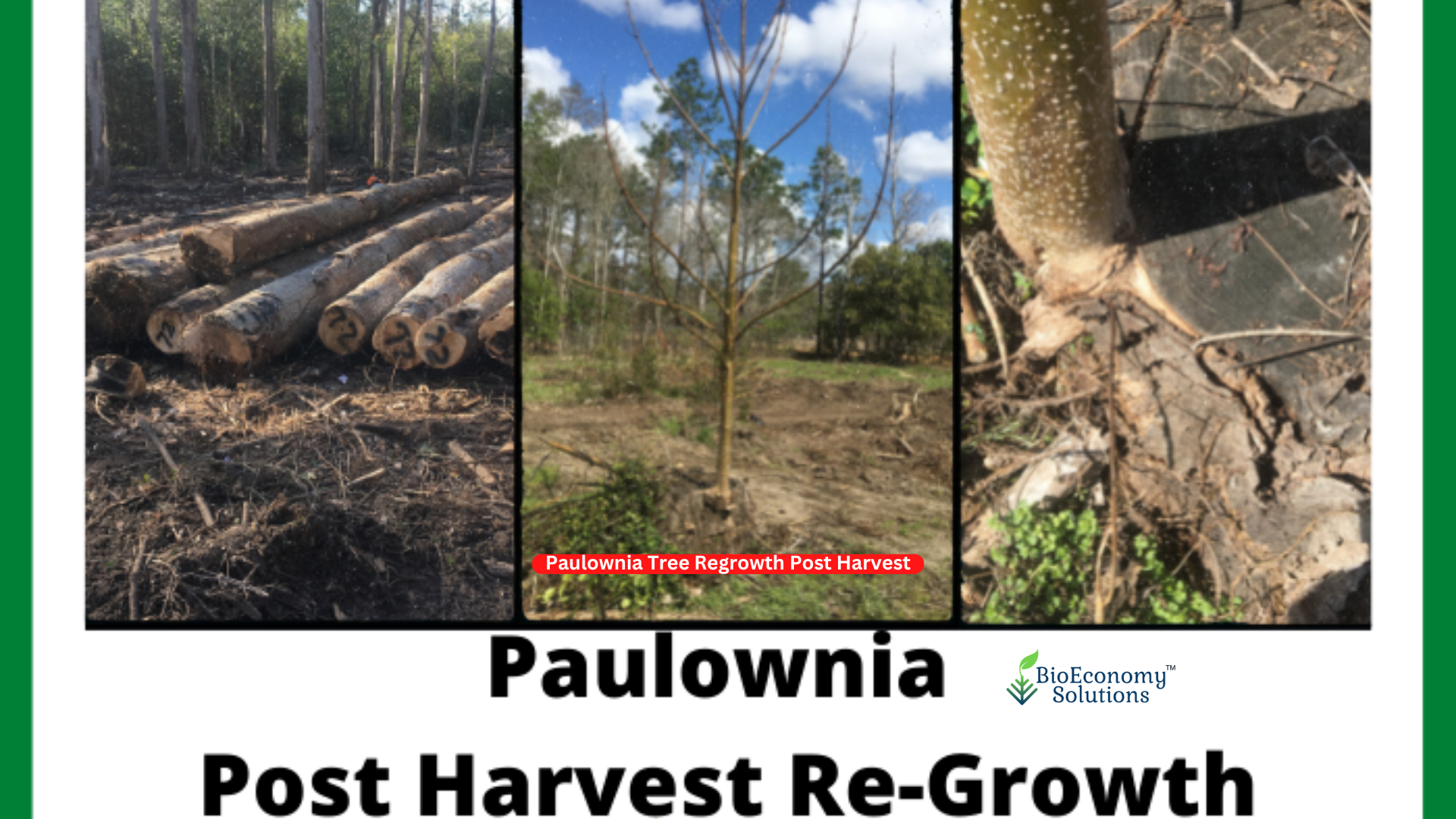
Cut it Down. Watch it Regrow in 90 Days.

In traditional forestry, cutting down a tree means starting over. You plant a seedling, wait years—or even decades—before it matures. That lag time makes lumber production slow, costly, and often unsustainable.

But what if a tree could regrow from its own stump in just 90 days?

That’s not science fiction—it’s the Paulownia tree.

The Tree That Refuses to Die

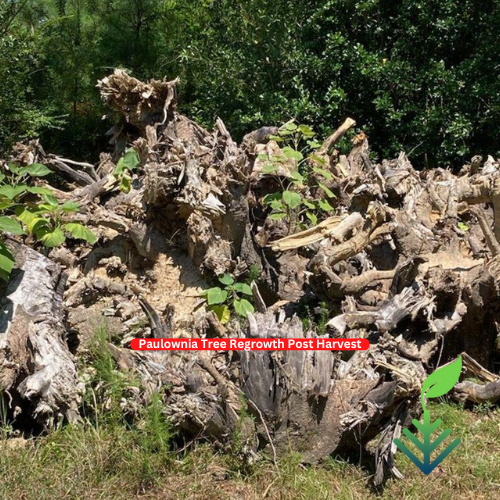
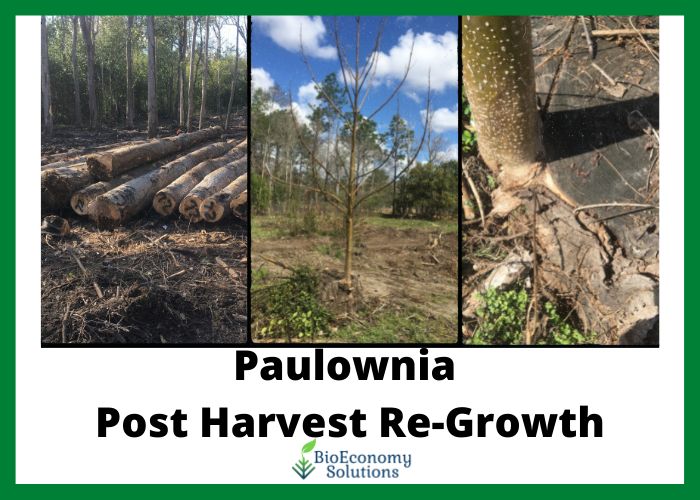
The Paulownia is sometimes called the “Phoenix Tree” for a reason. After harvest, it doesn’t need replanting. Instead, it regenerates from its existing root system—sprouting new growth within weeks.

In just three months, you can witness significant regrowth. In a few short years, the tree is ready for another harvest cycle—without ever having to replant.

This ability to regrow rapidly isn’t just a neat biological trick. It’s a game-changer for forestry, climate solutions, and the bioeconomy.

Why This Matters for Sustainability

Deforestation is one of the planet’s biggest challenges. Conventional logging wipes out ecosystems, requires constant replanting, and disrupts soil health. Paulownia changes that model.

Here’s why:

  • Regenerative Harvesting – Instead of clear-cutting and replanting, Paulownia keeps regenerating from the same root system.
  • Faster Growth – It’s among the fastest-growing hardwoods in the world, reaching maturity in just 7–10 years.
  • Carbon Capture – The tree absorbs CO₂ at up to 10x the rate of oak, turning forestry into a powerful climate solution.
  • Premium Wood – Lightweight, strong, and water-resistant, Paulownia lumber has high demand in global markets.

This isn’t just sustainable forestry—it’s forestry upgraded.

A New Standard for the Bioeconomy

At BioEconomy Solutions, we’re scaling Paulownia agroforestry to redefine what’s possible in sustainable wood production and carbon markets.

✅ Regrowth in 90 days.

✅ No replanting required.

✅ Verified carbon credits at a fraction of current costs.

✅ Sustainable lumber supply for the future.

Imagine a world where we can meet global wood demand without destroying forests—and remove carbon affordably in the process. That’s the Paulownia promise.

The Takeaway

The Paulownia isn’t just another tree. It’s proof that nature already solved one of our biggest problems: how to grow, harvest, and regrow in harmony with the planet.

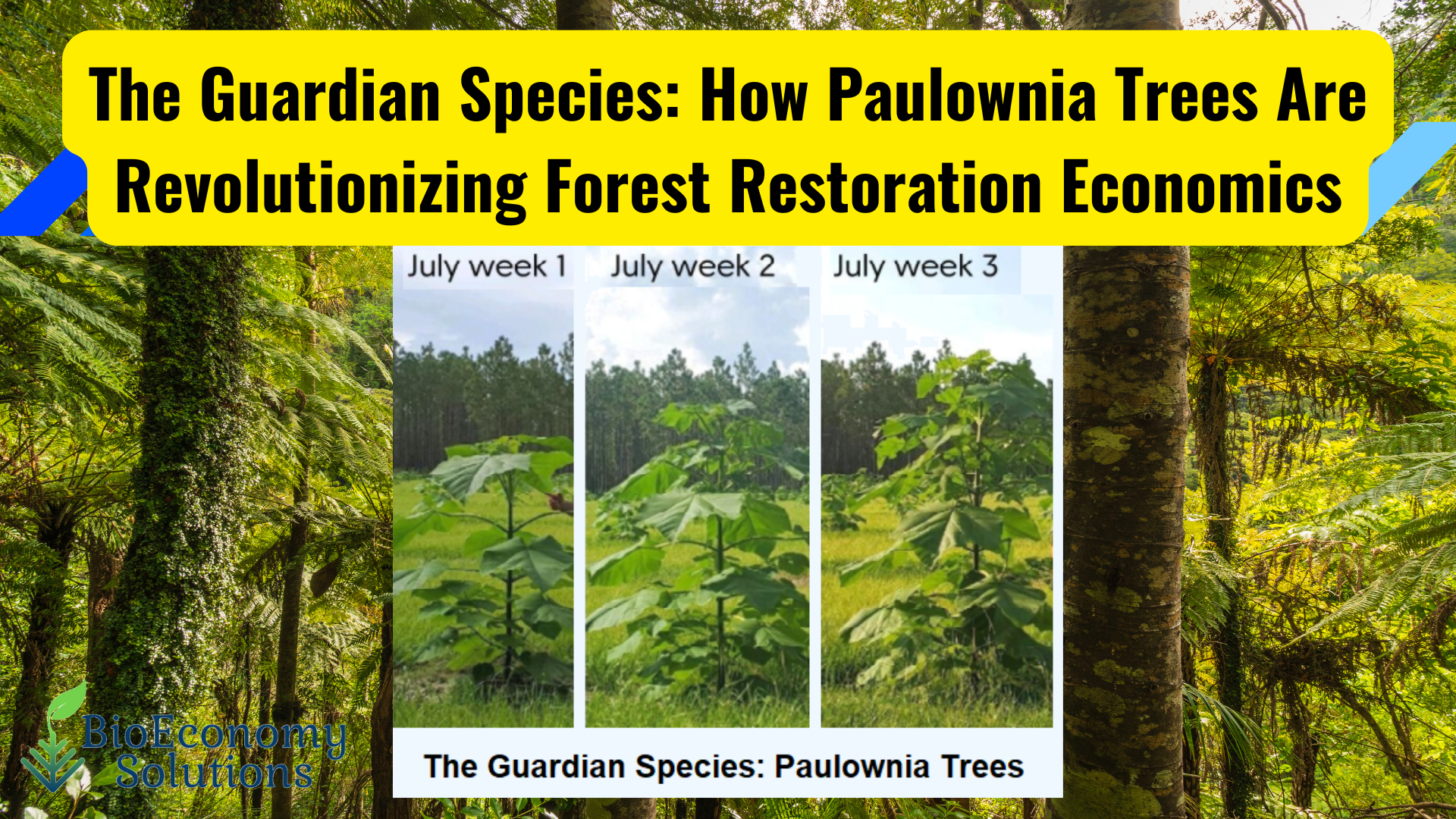
The 90-Day Regrowth Time-lapse is more than a visual—it’s a window into the future of forestry, climate finance, and sustainable development.

👉 See how we’re building that future at BioEconomySolutions.com and schedule a private consultation


Conclusion

The Paulownia tree, with its FAST growth rate, carbon capture abilities, and adaptability, is a powerful tool in climate change mitigation, biodiversity support, and sustainable forest management. When used appropriately in afforestation and reforestation projects, it holds the potential to restore ecosystems, combat deforestation, and provide long-term environmental and economic benefits.

Contact Us

BioEconomy Solutions is a Carbon Dioxide Removal (CDR) Project Developer. Talk to us about our TREE PLANTING strategies with Paulownia trees.

We’re happy to organize a time to speak with you about our paulownia trees and lumber we have for sale. Please book your preferred time to speak directly.

Here’s a link to my online calendar/schedule:

www.bioeconomysolutions.com/bookcall

BioEconomy Solutions

mail@BioEconomySolutions.com

Office: 843.305.4777

Visit us at: https://bioeconomysolutions.com/paulownia-carbon-credits/ Let’s chat about paulownia tree solutions for sustainable Forest carbon credits projects.

LIKE|SHARE|COMMENT

Enjoy this article? You may also enjoy “Carbon Developers Choose Paulownia Trees” https://www.linkedin.com/pulse/carbon-developers-choose-paulownia-trees-victor-garlington-imh4e/

Subscribe to our newsletter

Subscribe to our newsletter

Here’s The Conservation Paradox We Can’t Ignore

Conservation projects fail at an alarming rate. Not because of bad intentions, but because of bad economics.

Traditional reforestation takes 20-50 years to show meaningful results. Investors lose patience. Communities lose income. And our climate crisis can’t wait.

But what if there was a way to accelerate ecosystem restoration while generating immediate economic returns?

Enter the concept of “guardian species” – fast-growing trees that protect and nurture native forests while delivering rapid carbon sequestration and sustainable revenue streams.

Why Native-Only Approaches Fall Short

The Brutal Reality:

  • Native tree seedlings have 30-60% mortality rates in degraded soils
  • Zero economic returns for the first 10-15 years
  • Vulnerable to drought, pests, and human encroachment
  • Limited carbon sequestration during critical establishment phase

The Economic Death Spiral: Without immediate returns, conservation projects become charity cases. Funding dries up. Local communities seek alternative income sources. The cycle of deforestation continues.
The Guardian Species Solution

Paulownia trees don’t compete with native species – they enable their success.

Here’s how the guardian model works:

Phase 1: Rapid Establishment (Years 1-3)

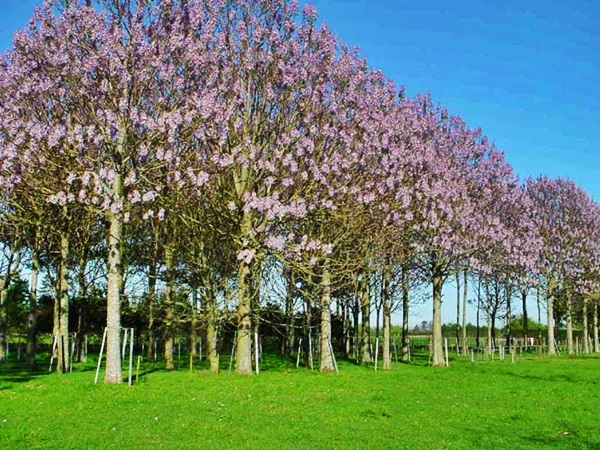
  • Paulownia trees establish quickly in degraded soils
  • Deep taproots break up compacted earth
  • Large leaves create beneficial microclimate
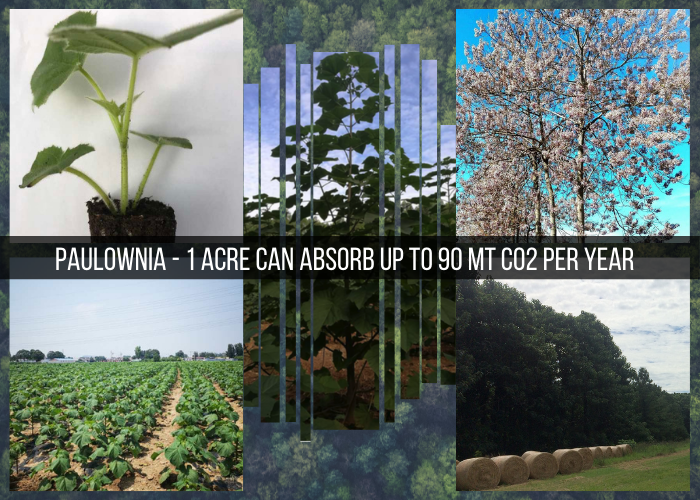
  • Immediate carbon sequestration begins (10-15 tons CO2/acre/year)

Phase 2: Ecosystem Preparation (Years 3-5)

  • Nitrogen fixation improves soil fertility
  • Canopy provides wind protection for native seedlings
  • Root systems prevent erosion and improve water retention
  • First timber harvest generates revenue for native species planting

Phase 3: Native Integration (Years 5-15)

  • Native species planted in improved soil conditions
  • Paulownia provides nurse tree protection
  • Selective Paulownia harvesting creates forest gaps for native growth
  • Continuous revenue stream funds long-term conservation

Phase 4: Mature Ecosystem (Years 15+)

  • Native canopy established with 80%+ higher survival rates
  • Paulownia transitions to understory or edge species
  • Diversified forest ecosystem with enhanced biodiversity
  • Sustainable economic model proven and replicable

The Economic Game-Changer

Traditional Conservation Model:

  • $5,000-10,000/acre upfront investment
  • 20+ years to break even
  • High failure rates
  • Dependent on grants and donations

Guardian Species Model:

  • $3,000-5,000/acre initial investment
  • Revenue generation begins Year 3
  • 15-20% IRR over 10 years
  • Self-sustaining economic engine

Revenue Streams Include:

  • Premium timber harvests every 5-7 years
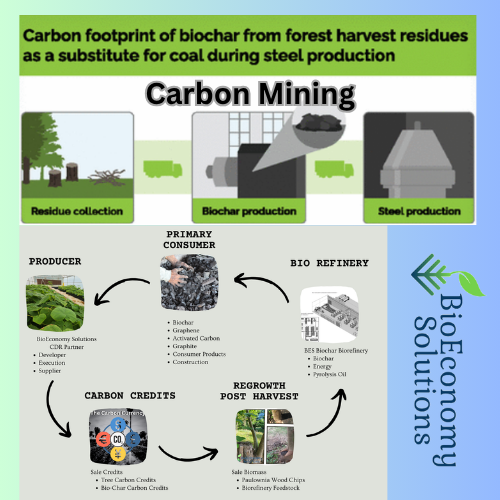
  • Carbon credits ($50-150/ton for biochar)
  • Soil improvement services
  • Biodiversity offset credits
  • Sustainable biomass for local energy needs
Real-World Success Stories

China’s Loess Plateau Restoration: The world’s largest ecosystem restoration project used fast-growing pioneer species to restore 35,000 square miles of degraded land. The economic model? Guardian species generated income that funded native forest establishment, lifting 2.5 million people out of poverty while sequestering massive amounts of carbon.

Costa Rica’s Payment for Ecosystem Services: By combining fast-growing timber species with native conservation, Costa Rica reversed deforestation while creating a $500 million forest economy. Forest cover increased from 24% to 54% in just 30 years.

The Climate Urgency Factor

We don’t have 50 years to wait for native forests to mature.

Climate models show we need massive carbon sequestration within the next decade. Guardian species like Paulownia can:

  • Sequester 50-100 tons CO2/acre in first 5 years
  • Enable native species establishment with 3x higher success rates
  • Create economic incentives for long-term forest protection
  • Scale rapidly across degraded landscapes worldwide

Addressing the Skeptics

“Isn’t this just greenwashing with exotic species?”

No. Guardian species are carefully selected, sterile hybrids that cannot spread naturally. They’re tools for ecosystem restoration, not ecosystem replacement.

“What about biodiversity concerns?”

Guardian species actually enhance biodiversity by:

  • Creating habitat corridors during establishment
  • Improving soil conditions for native species
  • Providing economic alternatives to habitat destruction
  • Enabling larger-scale conservation projects through economic viability

“How do we ensure native species aren’t abandoned?”

The economic model requires native species success for long-term sustainability. Guardian species revenue funds native planting, monitoring, and protection in perpetuity.

The Investment Opportunity

ESG funds and impact investors are sitting on $30+ trillion in assets seeking measurable environmental returns. The guardian species model offers:

Measurable Impact:

  • Verified carbon sequestration
  • Biodiversity monitoring protocols
  • Soil health improvements
  • Community economic development

Financial Returns:

  • 15-20% IRR potential
  • Multiple exit strategies
  • Inflation-hedged timber assets
  • Growing carbon credit premiums

Scalability:

  • Applicable across 60+ countries
  • Proven in diverse ecosystems
  • Standardized implementation protocols
  • Technology-enabled monitoring

The Path Forward

The guardian species model isn’t just about trees – it’s about reimagining conservation economics.

For Investors: Access to a $50 billion nature-based asset class with measurable returns and impact.

For Conservationists: A tool to accelerate ecosystem restoration while ensuring long-term economic sustainability.

For Communities: Immediate income opportunities that grow into generational wealth through forest stewardship.

For Our Planet: A scalable solution that addresses climate change, biodiversity loss, and rural poverty simultaneously
The Time Is Now

Every month we delay ecosystem restoration is another month of accelerating climate damage. Traditional approaches, while well-intentioned, simply can’t scale fast enough.

Guardian species offer a bridge between urgent climate action and long-term conservation success. They’re not the complete solution – but they’re the catalyst that makes comprehensive solutions economically viable.

The question isn’t whether we can afford to try this approach.

The question is whether we can afford not to.


Ready to explore guardian species opportunities for your portfolio or conservation project? The economics of forest restoration are changing. The early movers will capture both the highest returns and the greatest impact.

Contact us to learn how Paulownia guardian species can accelerate your ecosystem restoration timeline while generating sustainable returns.

Contact Us!

📣 If you’re an investor, policy leader, or sustainability advocate—we invite you to connect. Let’s put capital to work in nature-based carbon sequestration that delivers at scale.

This isn’t just green finance. This is regenerative economics.

BioEconomy Solutions is a Carbon Dioxide Removal (CDR) Project Developer. Talk to us about our TREE PLANTING strategies with Paulownia trees.

We’re happy to organize a time to speak with you about our paulownia trees and lumber we have for sale. Please book your preferred time to speak directly.

Here’s a link to my online calendar/schedule:

www.bioeconomysolutions.com/bookcall

BioEconomy Solutions

mail@BioEconomySolutions.com

Office: 843.305.4777

Visit us at: https://bioeconomysolutions.com/paulownia-carbon-credits/ Let’s chat about paulownia tree solutions for sustainable Forest carbon credits projects.

LIKE|SHARE|COMMENT

Enjoy this article? You may also enjoy “Carbon Developers Choose Paulownia Trees” https://www.linkedin.com/pulse/carbon-developers-choose-paulownia-trees-victor-garlington-imh4e/

Download Your FREE REPORT 

Subscribe to our newsletter

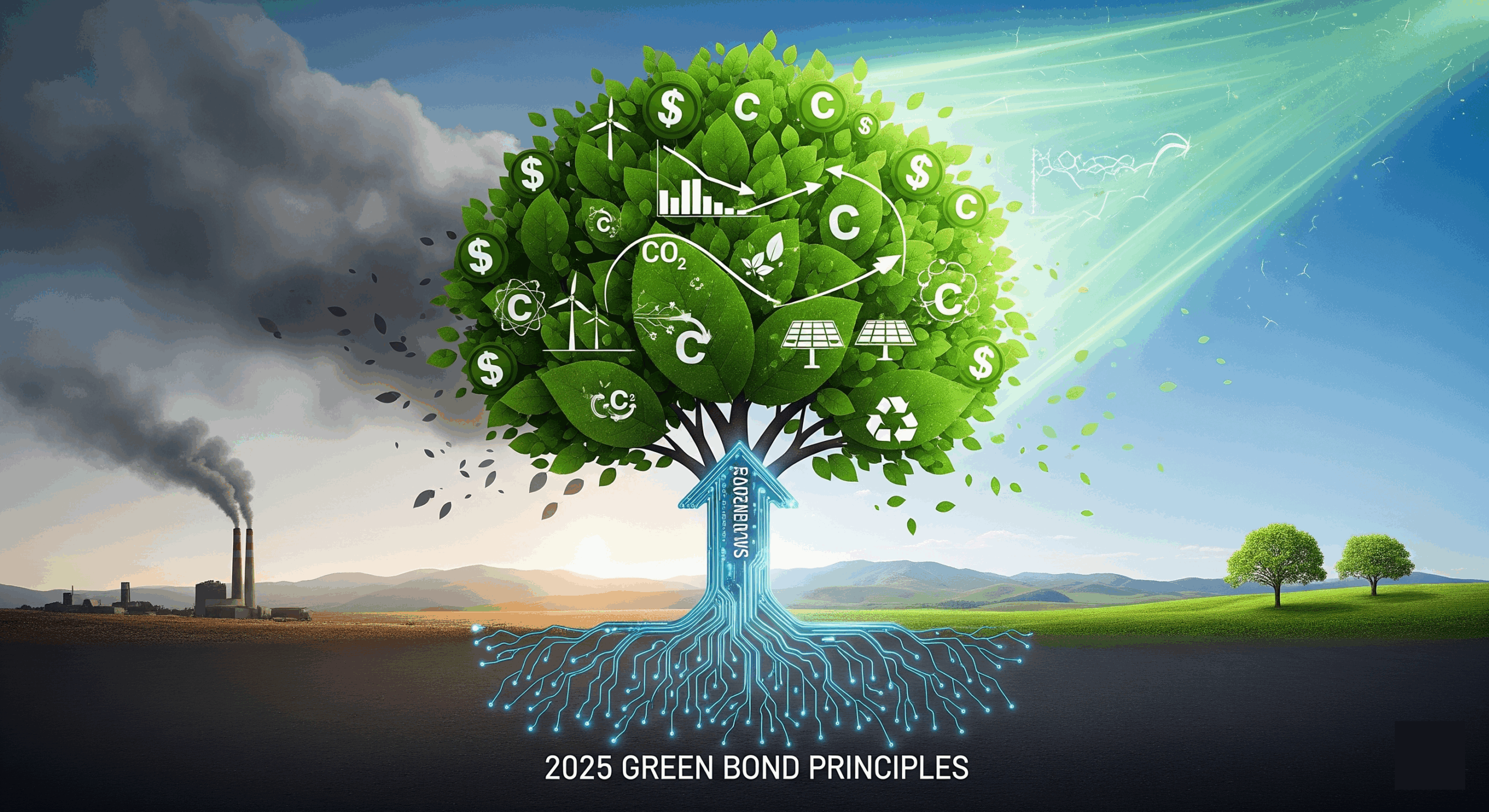
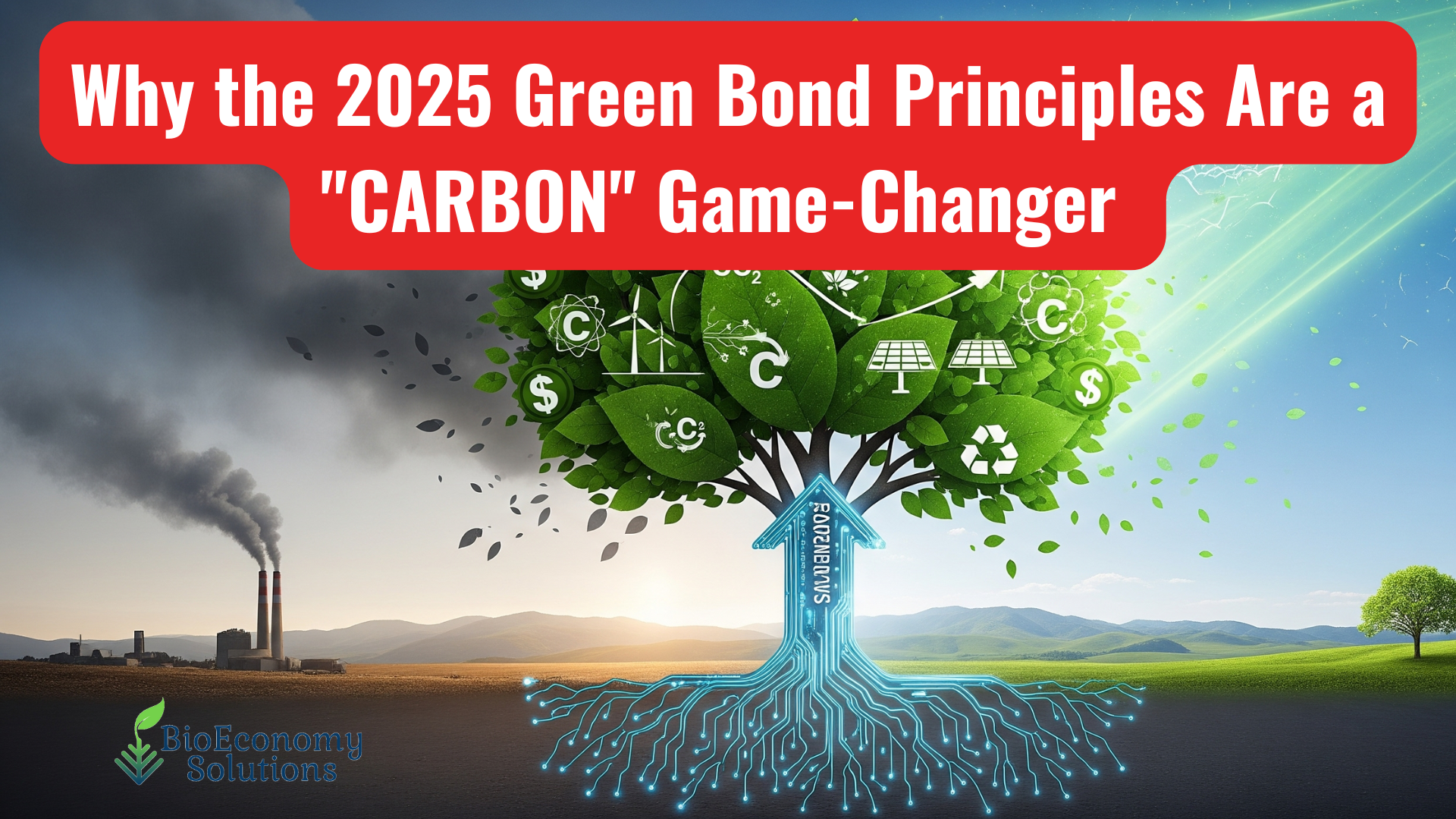
Why the 2025 Green Bond Principles Are a Game-Changer for Nature-Based Carbon Projects. We’re not planting trees. We’re building a regenerative asset class—and the bond market just caught up.

The world is waking up to a new generation of climate finance—and BioEconomy Solutions is at the forefront.

With the release of the 2025 Green Bond Principles (GBP) by ICMA, the door is now open for companies like ours to raise sustainable capital for nature-based solutions rooted in science, scalability, and impact.

International Capital Market Association’s (ICMA)
The International Capital Market Association’s (ICMA) Green Bond Principles (GBP) are voluntary guidelines that promote transparency and integrity in the green bond market. The June 2025 update clarifies how the Green Enabling Projects Guidance is linked to the GBP and expands the definition of “Green Projects” to include “activities” in addition to assets and investments.

The GBP’s four core components for alignment are:

  • Use of Proceeds
  • Process for Project Evaluation and Selection
  • Management of Proceeds
  • Reporting

The principles aim to help issuers finance environmentally sound and sustainable projects that support a net-zero emissions economy and protect the environment. They also provide categories for eligible Green Projects, such as renewable energy, clean transportation, and sustainable water management, and encourage issuers to report on the use of proceeds to improve transparency and track the environmental impact.

Core Updates in 2025 Version

1. Expanded Definition of “Green Projects”

  • Now explicitly includes “activities” such as R&D and supporting actions in addition to assets and investments.
  • Aligns with new Green Enabling Projects Guidance (June 2024), recognizing enabling infrastructure (e.g. manufacturing of components) as eligible if they support broader green initiatives.

2. Four Core Components Remain Foundation

  • Use of Proceeds: Funds must go exclusively to eligible green assets, investments, or activities, with quantified environmental benefits.
  • Project Evaluation & Selection: Clear disclosure of selection process, sustainability objectives, and risk mitigation.
  • Management of Proceeds: Net bond proceeds must be tracked via specific sub-accounts or portfolios, adjusted until full allocation; external verification is encouraged.
  • Reporting: Annual and timely impact reports required, including list of funded projects, descriptions, amounts allocated, and expected environmental impact figures—using ICMA’s Harmonised Framework where feasible.

3. Strengthened Recommendations

  • Green Bond Frameworks: Issuers are expected to publish frameworks or legal documentation aligning with the four core components and situate disclosure within broader sustainability strategy (e.g. references to taxonomies, Paris-aligned transition plans, or Climate Transition Finance Handbook).
  • External Reviews: Pre- and post‑issuance reviews by qualified third parties are recommended. Providers should disclose credentials and scope; templates are available on ICMA’s site.

Green Enabling Projects Guidance

  • Clarifies that some projects not directly delivering environmental impact may be eligible if they form enabling elements of broader green initiatives (e.g. infrastructure manufacturing).
  • Mapped to existing GBP categories, these should still avoid locking in high emissions and monitor risks like double-counting in impact reporting.

Related 2025 Releases

  • A Practitioner’s Guide: Sustainable Bonds for Nature was launched concurrently, introducing a thematic overlay for nature‑related projects and allowing issuers to use the secondary label “Nature Bond.” It also offers nature-related KPIs for inclusion in SLBs or sustainability frameworks.
  • Updates were issued to ICMA’s Guidance Handbook, Allocation Reporting Guidance, and Q&A sections, alongside other frameworks like the Social Bond Principles (SBP) and Sustainability‑Linked Loans financing Bonds Guidelines.

Why Paulownia?

Every hectare of Paulownia under cultivation can sequester up to 560 tons of CO₂ annually, while restoring degraded land, and produces Class A fire-rated lumber—making it ideal for low-carbon construction.

It’s a WIN WIN for the local economy & environment!

Combined with our nature-based methodologies and end-to-end traceability, we’re ready to turn regenerative forestry into a green financial instrument.

Contact Us!

📣 If you’re an investor, policy leader, or sustainability advocate—we invite you to connect. Let’s put capital to work in nature-based carbon sequestration that delivers at scale.

This isn’t just green finance. This is regenerative economics.

BioEconomy Solutions is a Carbon Dioxide Removal (CDR) Project Developer. Talk to us about our TREE PLANTING strategies with Paulownia trees.

We’re happy to organize a time to speak with you about our paulownia trees and lumber we have for sale. Please book your preferred time to speak directly.

Here’s a link to my online calendar/schedule:

www.bioeconomysolutions.com/bookcall

BioEconomy Solutions

mail@BioEconomySolutions.com

Office: 843.305.4777

Visit us at: https://bioeconomysolutions.com/paulownia-carbon-credits/ Let’s chat about paulownia tree solutions for sustainable Forest carbon credits projects.

LIKE|SHARE|COMMENT

Enjoy this article? You may also enjoy “Carbon Developers Choose Paulownia Trees” https://www.linkedin.com/pulse/carbon-developers-choose-paulownia-trees-victor-garlington-imh4e/

Get a FREE copy of Paulownia Carbon Report

Get a FREE copy of Paulownia Carbon Report

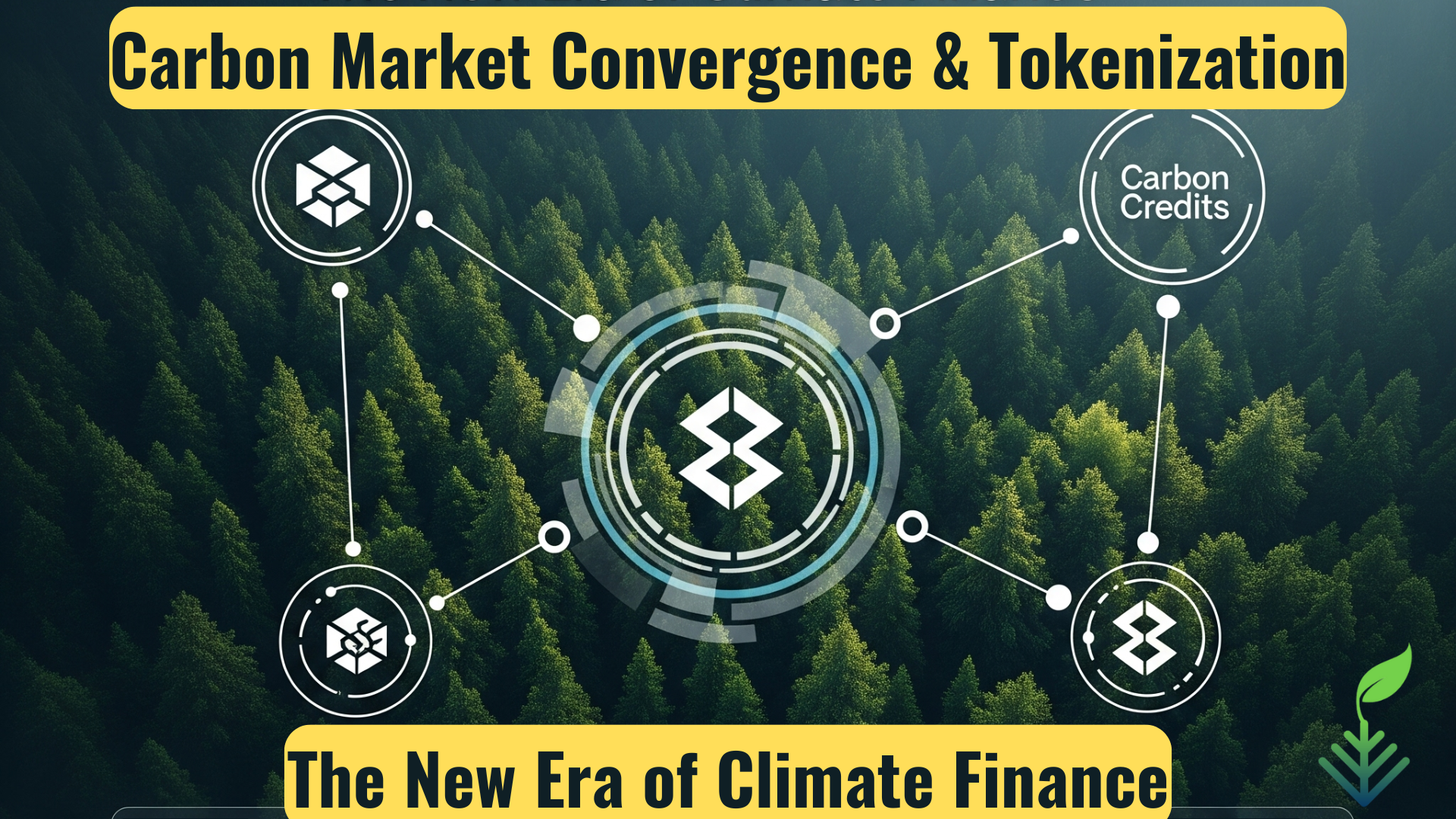
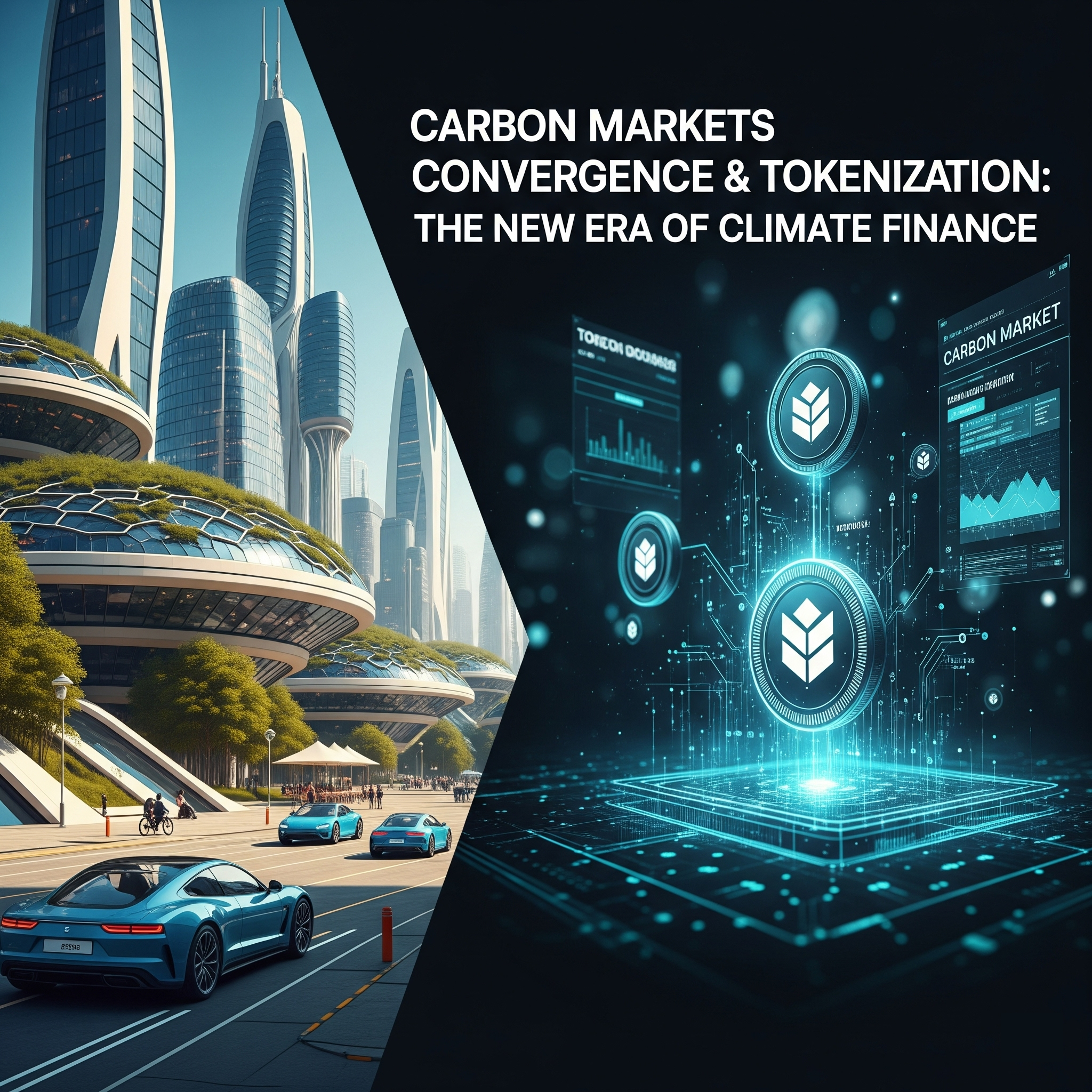
The world accelerates toward a low-carbon economy, two powerful financial innovations are converging: carbon markets and tokenization. What was once considered a fringe overlap between environmentalism and crypto is now emerging as a serious frontier for climate action and sustainable finance.

Why This Convergence Matters
Carbon credits have long been viewed as a crucial tool for offsetting emissions and achieving net-zero goals. Yet the traditional carbon market infrastructure has faced consistent challenges: lack of transparency, inefficiency, and concerns about credit legitimacy.

Enter Cryptocurrency
Tokenization, powered by blockchain technology, introduces a radical new layer of transparency, efficiency, and accessibility to carbon markets. By converting carbon credits into digital tokens, the process of buying, selling, and retiring credits becomes faster, cheaper, and more traceable.

✅ Transparency & Trust: Blockchain Solves Legacy Problems

One of the biggest criticisms of voluntary carbon markets (VCMs) has been the difficulty in verifying the origin, legitimacy, and retirement of carbon credits. Double-counting and greenwashing have eroded trust among investors and stakeholders.

Blockchain’s immutable, decentralized ledger offers a solution. By tokenizing carbon credits, each unit can be traced from issuance to retirement in real time. Platforms like Toucan Protocol, KlimaDAO, and EcoRegistry are leading this transformation, bringing visibility and accountability to what was once an opaque system.


✅ Efficiency & Liquidity: Smart Contracts Meet Climate Action

Carbon trading has traditionally been encumbered by high administrative costs, long settlement times, and limited market access. Through tokenization, smart contracts automate and streamline the process, enabling:

  • Instant settlements
  • Fractional ownership of carbon assets
  • Lower transaction fees
  • Greater liquidity in secondary markets

This not only reduces friction for large players but also makes the market accessible to individuals, small businesses, and decentralized autonomous organizations (DAOs).

✅ New Technologies and Platforms Are Emerging

The digital infrastructure around tokenized carbon is rapidly evolving. According to Carbonmark and others, we’re seeing the emergence of platforms that bridge traditional registries with programmable finance.

Notable initiatives include:

  • Xpansiv – a marketplace for on-chain carbon
  • ICR (Integrated Carbon Registry) – focusing on digitized MRV systems
  • Tether – helping integrate blockchain with existing carbon credit standards

These tools are helping carbon markets evolve from analog to digital—bringing them in line with 21st-century capital markets.


✅ Rising ESG Demand and Climate Consciousness

As climate change intensifies, the global appetite for ESG-compliant assets and sustainable investment vehicles is growing. Tokenized carbon credits offer a new channel for retail and institutional investors alike to align financial portfolios with climate goals.

This convergence also democratizes climate action. Instead of being limited to governments and large corporations, individuals and startups can now engage in carbon offsetting with low entry barriers and real-time verification.

Challenges on the Road Ahead

Despite the enormous potential, the convergence of carbon and token markets isn’t without its hurdles:

  • Regulatory Uncertainty: Legal frameworks for both carbon credits and blockchain assets are still evolving. This creates risk for token issuers and investors alike.
  • Credit Quality and Verification: Not all carbon credits are created equal. Ensuring the integrity and additionality of tokenized credits is vital to avoid greenwashing.
  • Technical Integration: Bridging legacy carbon registries with blockchain systems is complex, and interoperability between platforms remains a major issue.
  • Market Acceptance: For large-scale adoption, traditional investors and corporations need to see clear, credible benefits from tokenization—beyond hype.

ESG Investment Trend

  • The trend toward Environmental, Social, and Governance (ESG) investing is real and growing.
  • Tokenization helps democratize access, which is key to bringing in individuals, SMEs, and impact investors into a market previously dominated by large corporates.

The Path Forward

While still in its early days, the convergence of tokenized finance and environmental markets is one of the most promising developments in climate tech. It holds the potential to:

  • Unlock new capital for nature-based solutions
  • Bring carbon offsetting to a global, decentralized audience
  • Ensure trust, traceability, and liquidity in climate finance

If executed responsibly—with the right safeguards, standards, and collaboration—it can become a cornerstone of the global decarbonization strategy.

This is more than a financial innovation. It’s the infrastructure for a more transparent, inclusive, and impactful carbon economy.

Conclusion

The Paulownia tree, with its FAST growth rate, carbon capture abilities, and adaptability, is a powerful tool in climate change mitigation, biodiversity support, and sustainable forest management. When used appropriately in afforestation and reforestation projects, it holds the potential to restore ecosystems, combat deforestation, and provide long-term environmental and economic benefits.

Contact Us

BioEconomy Solutions is a Carbon Dioxide Removal (CDR) Project Developer. Talk to us about our TREE PLANTING strategies with Paulownia trees.

We’re happy to organize a time to speak with you about our paulownia trees and lumber we have for sale. Please book your preferred time to speak directly.

Here’s a link to my online calendar/schedule:

www.bioeconomysolutions.com/bookcall

BioEconomy Solutions

mail@BioEconomySolutions.com

Office: 843.305.4777

Visit us at: https://bioeconomysolutions.com/paulownia-carbon-credits/ Let’s chat about paulownia tree solutions for sustainable Forest carbon credits projects.

LIKE|SHARE|COMMENT

Enjoy this article? You may also enjoy “Carbon Developers Choose Paulownia Trees” https://www.linkedin.com/pulse/carbon-developers-choose-paulownia-trees-victor-garlington-imh4e/

Get a FREE copy of Paulownia Carbon Report

Get a FREE copy of Paulownia Carbon Report


🍃 In Fresno’s sun, where orchards sleep,

A man once sowed a dream so deep.

Dr. Ray Allen, humble and wise,

☄️ Looked not just down — but to the skies.

With roots that whisper to the ground,

🌎 He found a tree not often found.

🍀 Not native, no — but nature-blessed,

🌼 A royal bloom, unlike the rest.

🌲 Three trees were blended, branch by leaf,

Through Stanford’s quiet, green belief.

🌱 A sterile seed, so it won’t roam —

Yet gives the earth a living home.

🐾 Its pods don’t spread in wild decree,

It honors rules of each state tree.

🐻 Even in California’s care,

It grows with grace — and leaves none bare.

🌬 The soil it heals, the sky it clears,

It answers prayers of future years.

And though the world has much to learn,

🌈 These trees give more than they could earn.

I walk like Muir among their shade,

And marvel at the life he made.

🌸Dr. Allen, like Appleseed,

Planted more than just a seed.

🌷 So raise your eyes and watch them grow,

From Fresno’s fields to winds that blow.

🔥 Thank Bio Economy for the flame

They keep alive — in Ray’s great name.

🍃 Let this tree’s truth at last be known:


The Empress stands where hope is grown.

An ode to a friend & Mentor -Dr. Ray Allen Inventor of the MegaFlora Paulownia Tree! 🌲

-Michael McCauley @ Neo Forest


♻️ Repost this to help your network

👉 Follow BioEconomy Solutions for more

🌍 Let’s build the carbon-negative future—one Paulownia tree at a time.

👉 Book a call: https://bioeconomysolutions.com/bookcall

👉 Get a FREE copy of Paulownia Carbon Report: https://bioeconomysolutions.com/carbonreport

👉 What Is Paulownia? https://bioeconomysolutions.com/what-is-paulownia-wood/

Paulownia Powder + Rice Glue Paste in Dollmaking

rooted in traditional and practical craft techniques — particularly within certain circles of Japanese ball-jointed doll (BJD) or art doll making.

✅ Paulownia Powder + Rice Glue Paste in Dollmaking

This mixture is used as a strengthening and lightweight base layer when building larger BJD or art doll bodies, particularly in regions where traditional materials and methods are blended with modern art forms.

🟫 Why It’s Used:

  1. Lightweight Strength:
    Paulownia wood is very light but has strong structural integrity. The powdered form, when combined with rice glue, creates a sturdy but flexible filler or shell.

  2. Compatibility:
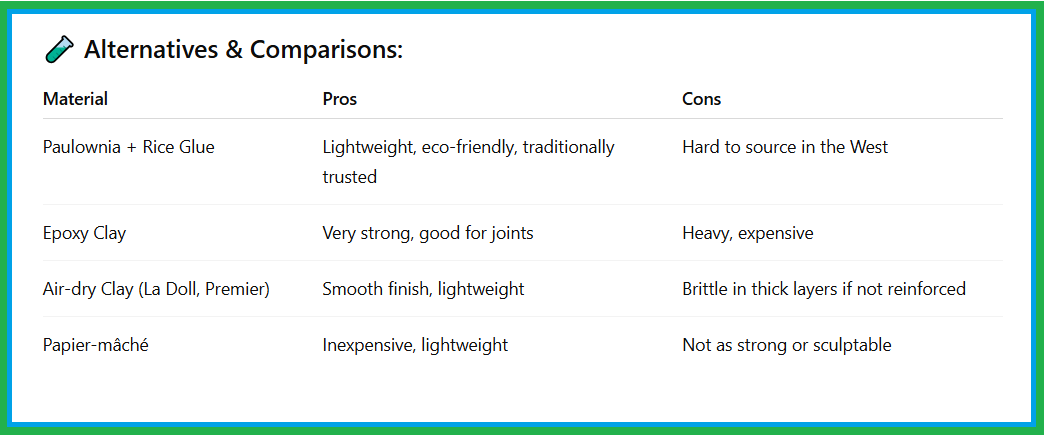
    Paulownia paste is chemically and physically compatible with clays like La Doll, Premier, and Papier-mâché, providing a base that won’t warp or overly contract.

  3. Cultural Precedent:
    In traditional Japanese woodworking and crafts (e.g., kimekomi dolls, kokeshi, and noh masks), rice glue + wood powder is used to fill gaps, build contours, and reinforce forms — this technique migrated to more contemporary applications like BJDs.


⚒️ How It’s Typically Used:

  • Paulownia powder is mixed with rice glue (shokunin nori) into a thick, clay-like paste.

  • The paste is applied over an armature (like aluminum foil or wire), often as a base coat or inner core.

  • Once dried and hardened, artists sculpt or refine the shape, then apply La Doll, stone clay, or epoxy putty over the surface for finer detail.

Sourcing:

  • Paulownia powder is sometimes sold as kiri powder in Japanese woodwork or craft shops.

  • Rice glue can be homemade (rice flour paste) or bought as nori paste used in washi/paper crafts.


Final Thought:

Using paulownia powder + rice glue is a smart, heritage-informed technique for larger BJD projects — especially if you’re aiming for a balance of strength, weight, and capability of being sculpted. It can reduce cracking and improve structure under air-dry clays like La Doll.

❎ 🤲🏽 Want to get your hands on some paulownia wood powder? 👉 Paulownia Wood For Sale

Where To Buy USA Paulownia Lumber?

Need paulownia for your next project?

Where to buy paulownia? We’re harvesting our mature U.S. South Carolina Paulownia Timber and have millions of board foot available. We can mill lumber for your business needs. Contact Us for details. Office: 843.305.4777 | Email: mail@bioeconomysolutions.com Here’s a link to our online calendar, schedule a conference call with us:

https://info586.youcanbook.me

USA Paulownia Wood Lumber For Sale – Need paulownia wood lumber for your next project? https://bioeconomysolutions.com/paulownia-lumber/

You will discover that paulownia wood is the “Light Strong Alternative Wood” used in many processes to obtain many types of products.

Weather you are a hobbyist or full time manufacturing company, paulownia wood grown in South Carolina USA may be a new expression of your talent.

We sell Custom Paulownia boards: rough sawn or planed, we offer various sizes and thicknesses. Our Paulownia boards are processed using sustainable Paulownia hardwood grown right here in South Carolina USA.

If you’re interested in paulownia, want to grow or currently growing, Subscribe to our newsletter:https://bioeconomysolutions.com/carbonreport

LIKE|SHARE|COMMENT

If you enjoyed this article, you may also like “Do Wood Carvers Use Paulownia Wood?

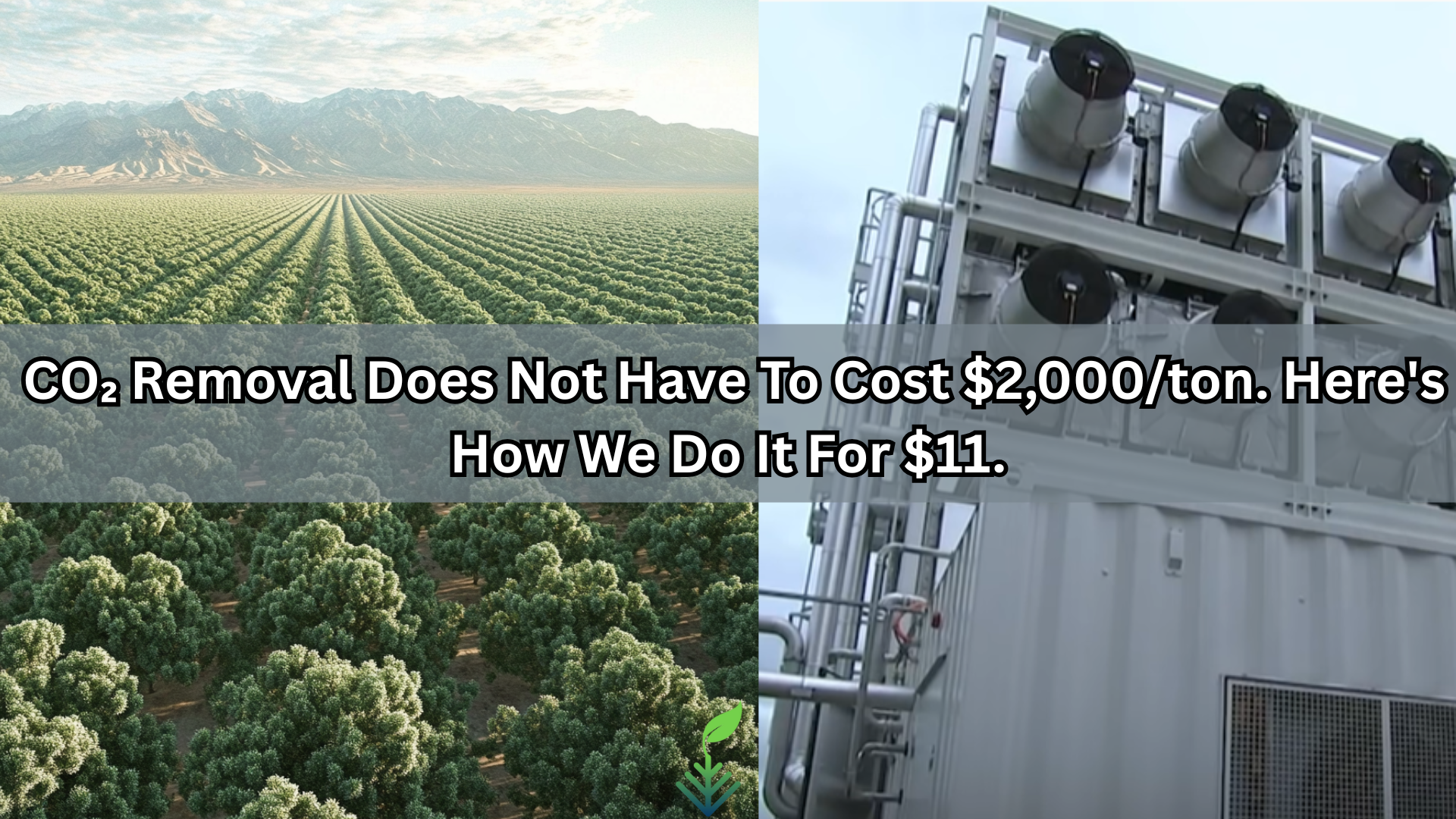
Tech v.s. Trees: What $6.66 Billion Taught Us About Real Carbon Removal

Carbon removal is no longer a future goal — it’s a present necessity.

But here’s the hard truth: most of the money is going to the wrong solutions. Direct Air Capture (DAC) has received the lions share of American government funding.

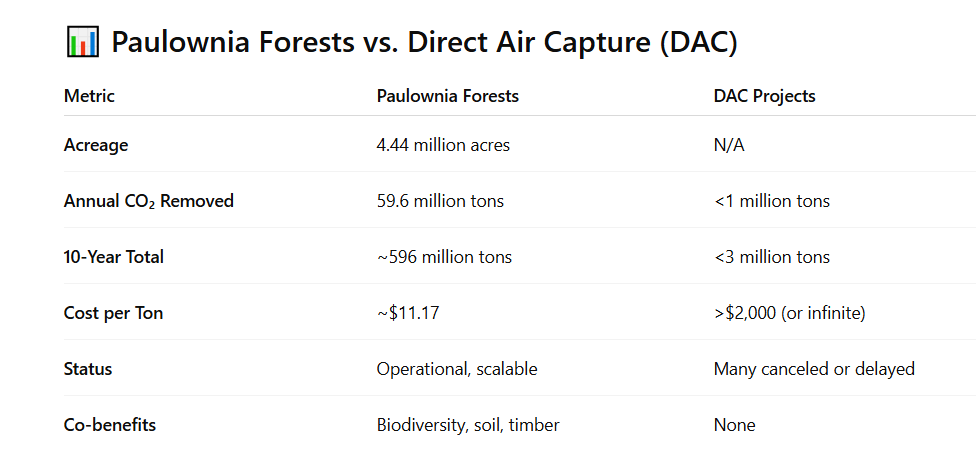
We compared two carbon removal paths using the same budget:
$6.66 billion. America already has spent billions on DAC.

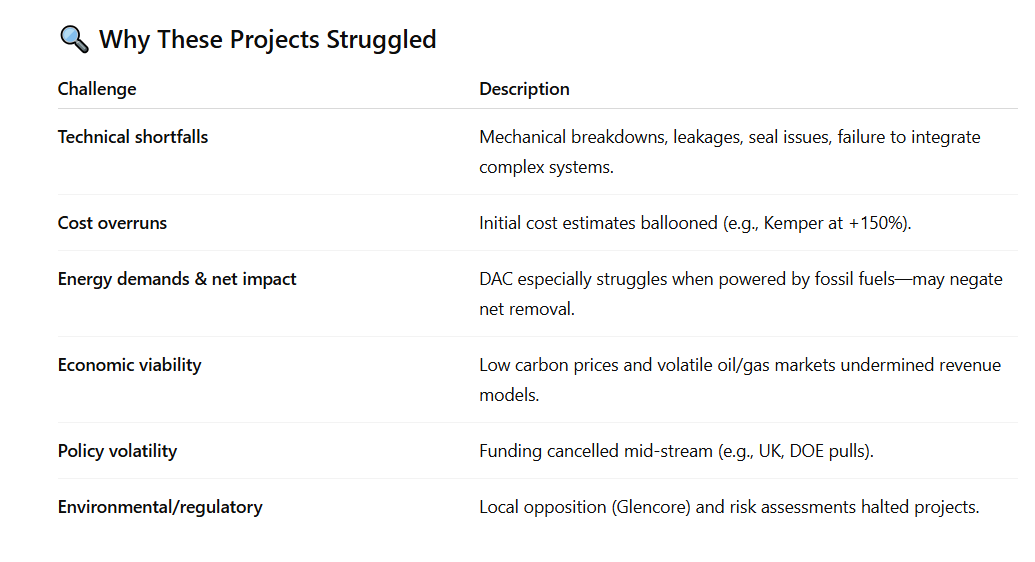
Failed Direct Air Capture Projects DAC 

Failed Direct Air Capture Projects DAC ($6.66 Billion Spent)

Download The FULL REPORT (Free Download)


🔍 What This Means

With Paulownia trees:

  • We remove nearly 600 million tons of CO₂ over a decade

  • The cost per ton is 99.5% lower than DAC

  • We also restore ecosystems, soil, generate sustainable timber, and create rural jobs

With DAC:

  • The same spend removes <0.5% of the CO₂

  • Many projects are stalled, shelved, or shut down

  • There are no added environmental or economic benefits


🌍 Nature Works. Tech Still Needs Work.

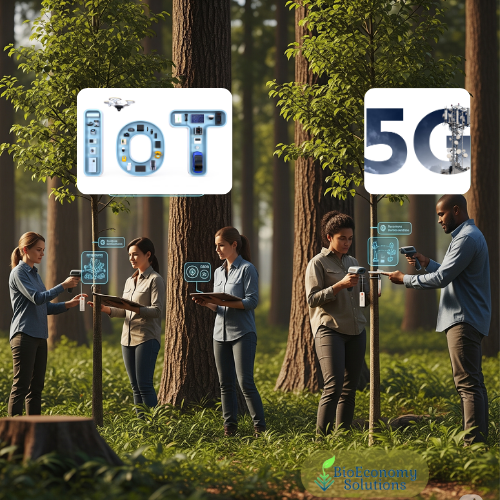
Paulownia isn’t just a tree. It’s a fast-growing, high-carbon-removal, IoT-tracked, blockchain-backed engine of climate regeneration.

We believe the future of carbon removal is nature-powered and digitally verified.

Instead of betting billions on unproven tech, it’s time to scale what’s already working.


✅ Want to See the Model?

We’re planting millions of trees now.
We’re tokenizing their carbon impact.
And we’re inviting partners to scale globally.

📩 Let’s talk:
📅 Book a call → info586.youcanbook.me
📧 Mail@BioEconomySolutions.com
📞 (843)-305-4777

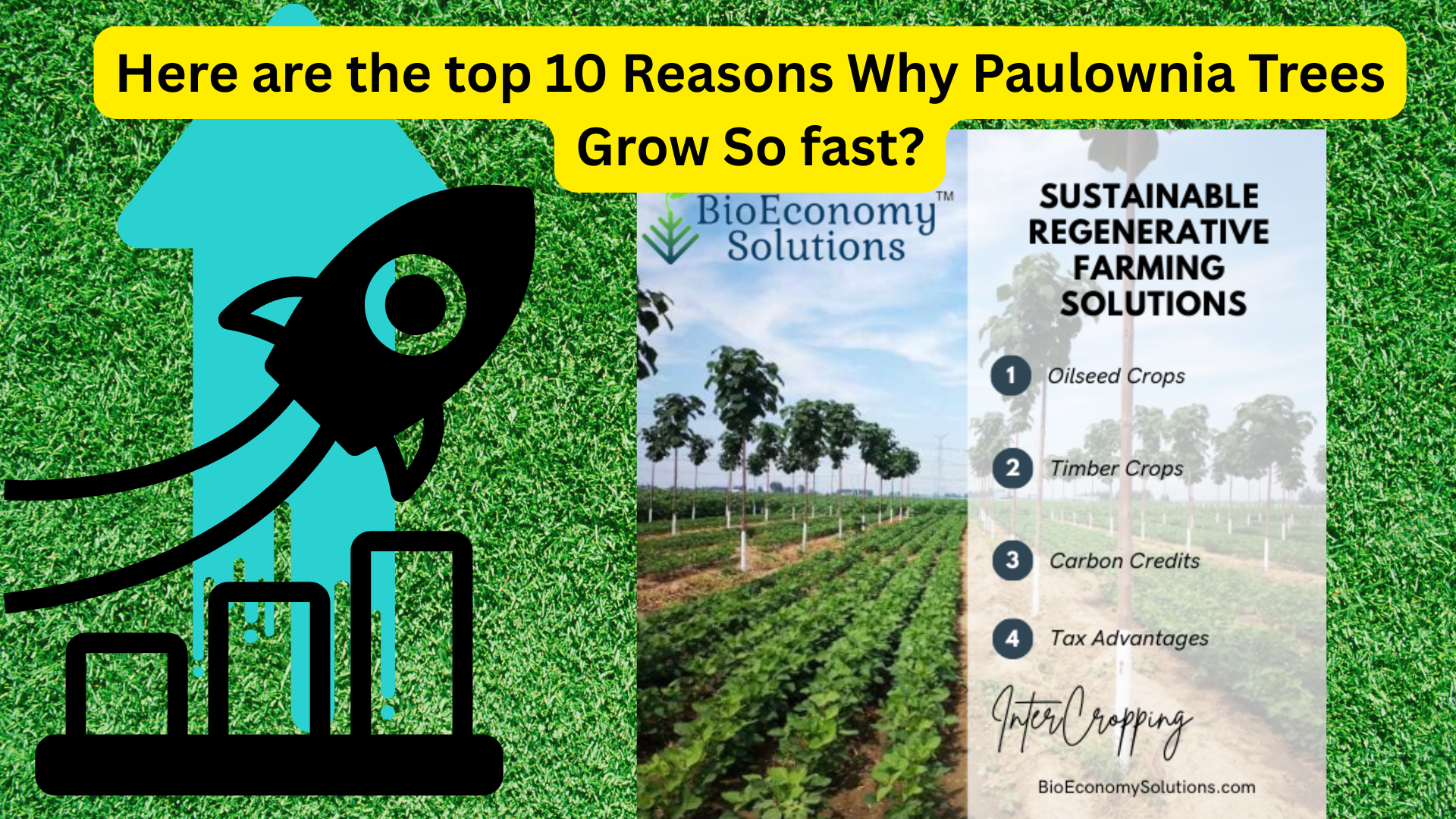
Paulownia The Fastest Growing Tree On The Planet

Top 10 Reasons Why Paulownia Trees Grow So fast?

Paulownia trees (especially Paulownia kiri, also known as the Empress Tree) are among the fastest-growing trees in the world. Their rapid growth is due to a combination of biological, physiological, and environmental adaptability traits. Here are the top 10 reasons why Paulownia trees grow so fast:


1. Large Leaf Surface Area

Paulownia trees have huge leaves (up to 40 cm wide), which allow for greater photosynthesis, accelerating biomass production.


2. Fast Cell Division and Elongation

The tree has rapid meristematic activity, meaning its cells divide and elongate quickly, especially in the stem and root tips.


3. Deep and Extensive Root System

Its deep taproot and lateral roots allow it to efficiently access water and nutrients from a large volume of soil, even in poor conditions.


4. C4-like Photosynthesis Efficiency

While Paulownia is technically a C3 plant, it shows high photosynthetic efficiency—similar to C4 plants—under optimal conditions like high light and warm temperatures.

5. Lightweight Wood

Paulownia wood has a low density but maintains good structural integrity. This means the tree can grow tall rapidly without needing to develop heavy structural tissue.


6. Tolerance to a Range of Soils

Paulownia thrives in a wide range of soils, including degraded and nutrient-poor areas, due to its adaptive nutrient uptake mechanisms.


7. Rapid Juvenile Growth Phase

The first few years of Paulownia’s life involve a very fast juvenile growth phase, where it can grow up to 3–5 meters (10–16 feet) in a single season.


8. Strong Coppicing Ability

After cutting or damage, Paulownia resprouts vigorously from the stump or roots, enabling multiple growth cycles from the same plant.


9. Minimal Pest and Disease Pressure

Paulownia has natural resistance to many pests and diseases, reducing the energy the tree needs to allocate for defense.


10. Early Maturity and Reproductive Readiness

Paulownia trees reach maturity in 7–10 years, much faster than most hardwoods, allowing them to channel energy into fast trunk and canopy development early in life.


Contact Us

Where To Buy Paulownia Core Materials? QUESTIONS?

Visit our web page. https://bioeconomysolutions.com/paulownia-lumber/

What is paulownia wood? https://bioeconomysolutions.com/what-is-paulownia-wood/

We’re happy to organize a time to speak with you about our paulownia trees and lumber we have for sale. Please book your preferred time to speak directly.

Here’s a link to my online calendar/schedule:

www.bioeconomysolutions.com/bookcall

BioEconomy Solutions

mail@BioEconomySolutions.com

Office: 843.305.4777

Visit us at: https://bioeconomysolutions.com/paulownia-carbon-credits/ Let’s chat about paulownia tree solutions for sustainable Forest carbon credits projects.

LIKE|SHARE|COMMENT

Enjoy this article? You may also enjoy “Carbon Developers Choose Paulownia Trees” https://www.linkedin.com/pulse/carbon-developers-choose-paulownia-trees-victor-garlington-imh4e/

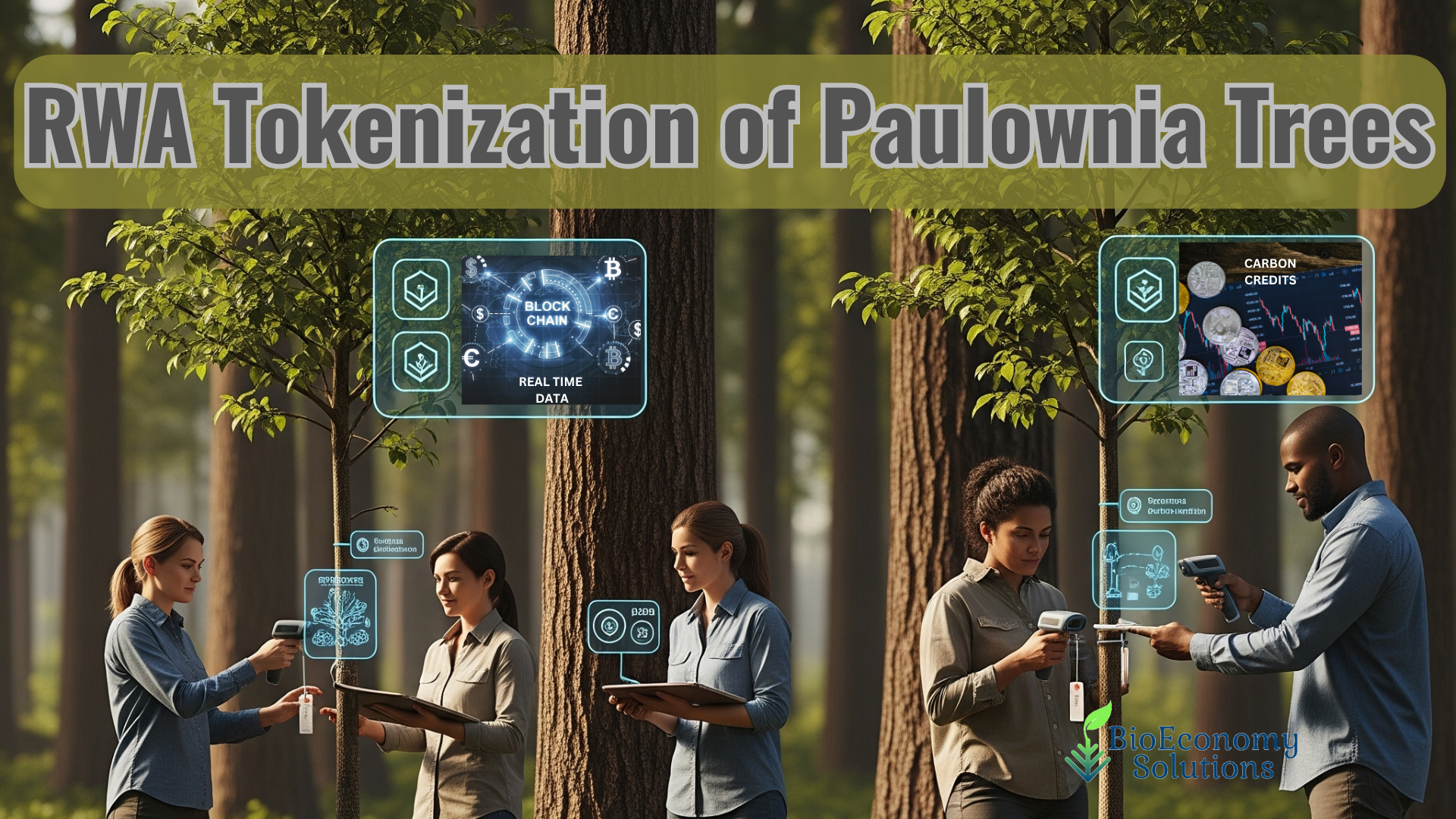
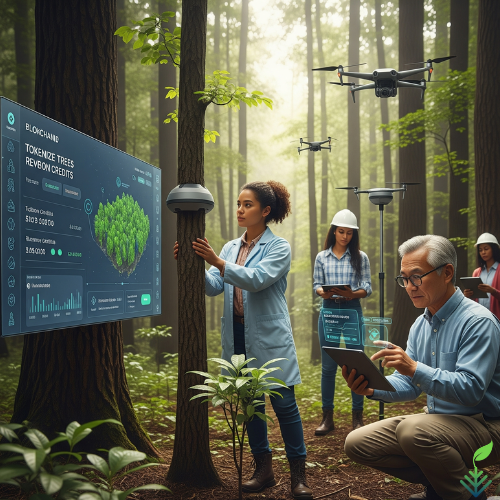
When considering Paulownia Tree Tokenizing Real-World Tree Assets. The Paulownia tree, known for its rapid growth, carbon absorption capacity, and economic value, is an ideal candidate for tree tokenization — a growing trend in climate tech and green finance. Here’s how Paulownia trees can be utilized within the tokenization framework to support environmental, economic, and social goals.

Tokenization of Paulownia Trees: How It Works and Why It Matters

What is Tokenization in this Context?
Tokenization involves converting ownership rights, carbon capture value, or economic benefits of a Paulownia tree (or a plot of them) into digital tokens on a blockchain. These tokens can be:

  • Sold or traded
  • Tracked transparently
  • Linked to real-world metrics like carbon sequestration or timber value

Why Paulownia is an Ideal Tree for Tokenization

1. High Carbon Sequestration

  • Paulownia trees absorb 10–20 times more CO₂ than many other tree species.
  • Their fast growth rate (up to 3–5 meters per year) means quicker and measurable carbon credit generation.
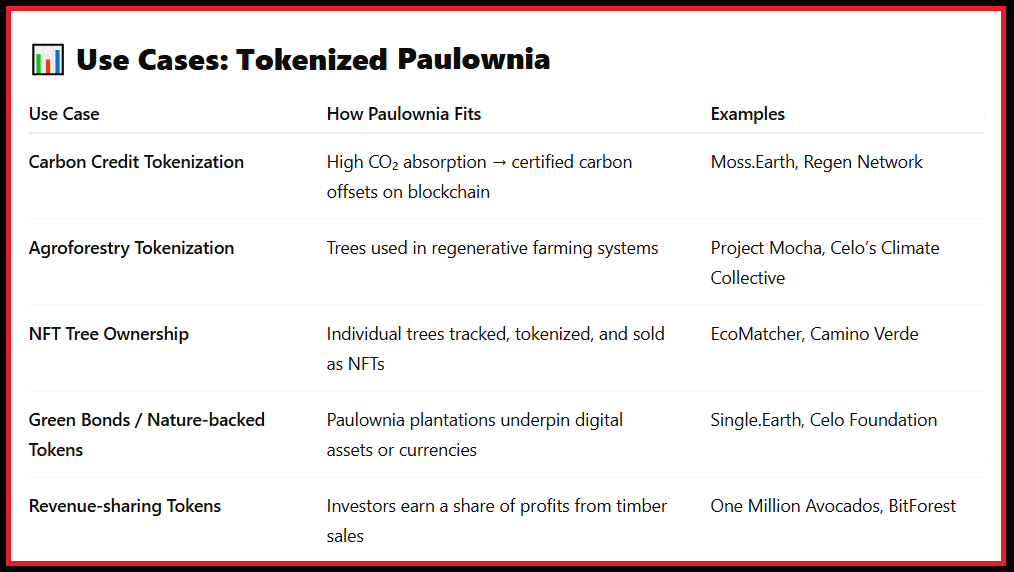
  • This makes them excellent for carbon offset tokens like those issued by other platforms.

2. Economic Value

  • The wood is lightweight, strong, and highly valuable in industries such as furniture, construction, and musical instruments.
  • Paulownia-based tokens can represent timber futures, making them attractive to investors — similar to the One Million Avocados or Project Mocha model.

3. Reforestation and Regenerative Agriculture

  • Paulownia trees can be used in reforestation and agroforestry, contributing to climate resilience and land restoration goals.
  • Like EcoMatcher or Camino Verde, projects can tokenize individual Paulownia trees using GPS tracking, growth data, and QR codes for transparency.

4. Shorter ROI Cycle

  • Due to their fast maturity (harvestable in 5–7 years), investors see returns sooner than with slow-growing trees.
  • This reduces risk and increases appeal for retail and institutional investors alike.

🔒 Benefits of Tokenizing Paulownia
✅ For Farmers: Upfront capital through token sales, improved livelihoods
✅ For Investors: Access to verified green assets, carbon offsets, or timber revenues
✅ For the Planet: Encourages tree planting, land restoration, and sustainable land use
✅ For Regulators: Easier monitoring and verification via immutable blockchain data

Strategic Path Forward
BioEconomy Solutions built a Paulownia tokenization platform by:

Partnering with forestry experts to establish high-quality plantations.
Working with carbon certifiers (like Net Eco Exchange, Verra or Gold Standard) to validate carbon offset.
Tokenizing assets using platforms like Polygon, Celo, or Ethereum.
Selling tokens to corporations, ESG investors, or climate-conscious individuals.

Today’s Real World Asset – Paulownia Trees

The Paulownia tree, thanks to its biological, economic, and environmental strengths, is perfectly suited for the tokenized future of forestry. By converting its carbon, growth, and timber value into blockchain-based tokens, Paulownia can help create a transparent, inclusive, and sustainable financial model that aligns with the goals of the UNCCD, Paris Agreement, and global reforestation efforts.

Contact Us

Where To Buy Paulownia Core Materials? QUESTIONS?

Visit our web page. https://bioeconomysolutions.com/paulownia-lumber/

What is paulownia wood? https://bioeconomysolutions.com/what-is-paulownia-wood/

We’re happy to organize a time to speak with you about our paulownia trees and lumber we have for sale. Please book your preferred time to speak directly.

Here’s a link to my online calendar/schedule:

www.bioeconomysolutions.com/bookcall

BioEconomy Solutions

mail@BioEconomySolutions.com

Office: 843.305.4777

Visit us at: https://bioeconomysolutions.com/paulownia-carbon-credits/ Let’s chat about paulownia tree solutions for sustainable Forest carbon credits projects.

LIKE|SHARE|COMMENT

In the world of sustainable forestry, few trees offer the impressive regenerative capabilities of the Paulownia species. Often dubbed the t, a practice known as coppicing, makes it an exceptionally valuable asset for timber production, biomass generation, and environmental restoration.

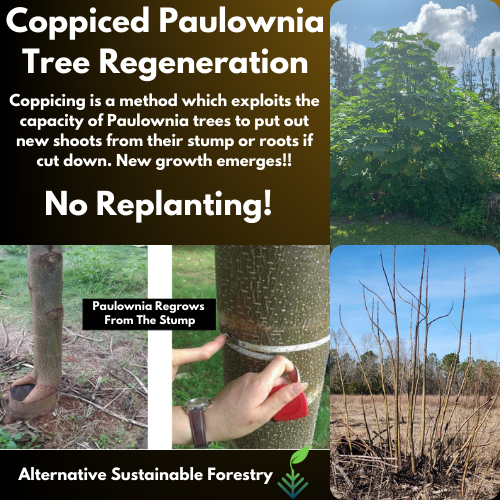
Coppicing is an ancient woodland management technique that harnesses a tree’s natural tendency to sprout new shoots from its base or root collar when its main stem is harvested. For Paulownia, this characteristic is particularly pronounced. Unlike many trees that require replanting after each harvest, Paulownia’s established root system remains intact, ready to fuel rapid new growth.

The Power of the Established Root System

The secret to Paulownia’s phenomenal regrowth lies in its extensive and mature root system. When a young Paulownia tree is cut back, especially in its dormant phase (typically one to three years after initial planting), the robust roots, which have been developing for years, provide an immediate and abundant supply of nutrients and energy to the new sprouts. This allows the fresh shoots to grow at an astonishing rate, sometimes reaching several feet in a single growing season.

Advantages of Coppicing Paulownia

  • Accelerated Growth Cycles: Coppicing significantly reduces the time between harvests. Paulownia can reach harvestable size in as little as 5-7 years, and after coppicing, subsequent rotations can be even quicker, often ready for cutting in 3-5 years. This rapid turnaround maximizes productivity from the same land area.
  • Reduced Reforestation Costs: Eliminating the need for replanting after each harvest dramatically cuts down on labor, seedling costs, and the associated environmental impact of site preparation. This makes Paulownia plantations highly economical and efficient.
  • Continuous Timber Supply: The consistent regeneration ensures a steady and predictable supply of wood, supporting a more stable timber market and reducing pressure on natural, old-growth forests.
  • Enhanced Carbon Sequestration: Paulownia’s rapid growth translates to impressive carbon sequestration rates. The continuous cycle of growth and regrowth means these trees are constantly absorbing atmospheric CO2, contributing significantly to climate change mitigation efforts.
  • Soil Stabilization and Health: The deep and widespread root system of Paulownia helps prevent soil erosion, especially on degraded or vulnerable lands. As the tree regrows, it continues to improve soil structure and enrich it with organic matter.
  • Multi-Cycle Harvesting: A single Paulownia root system can support multiple harvest cycles, often as many as 4 to 8 times over its lifespan, providing decades of continuous yield from the same planting.

Managing for Optimal Regrowth

To maximize Paulownia’s coppicing potential, careful management practices are crucial. This typically involves:

  • Initial Coppicing: Often, growers will coppice young Paulownia trees (1-3 years old) to encourage a single, straight, and vigorous stem for high-quality timber. This initial cut allows the root system to develop fully before focusing energy on a primary trunk.
  • Selective Sprout Management: After coppicing, multiple sprouts will emerge. For timber production, growers often select the strongest, straightest shoot and remove the others, directing all the root’s energy into developing a single, high-quality trunk. For biomass, multiple shoots may be allowed to grow for maximum yield.
  • Dormant Season Harvesting: Harvesting during the dormant season (winter) is generally recommended, as the tree’s energy reserves are concentrated in the roots, optimizing the subsequent spring’s regrowth.

A Sustainable Solution

Paulownia’s exceptional ability to regrow post-harvest solidifies its position as a leading species for sustainable forestry and renewable resource management. This inherent regenerative power offers a compelling solution for meeting the growing demand for timber and biomass while simultaneously contributing to environmental conservation and a more circular economy. As the world increasingly seeks eco-friendly alternatives, the “Phoenix tree” stands tall as a testament to nature’s remarkable capacity for renewal.


Contact Us

Where To Buy Paulownia Core Materials? QUESTIONS?

Visit our web page. https://bioeconomysolutions.com/paulownia-lumber/

What is paulownia wood? https://bioeconomysolutions.com/what-is-paulownia-wood/

We’re happy to organize a time to speak with you about our paulownia trees and lumber we have for sale. Please book your preferred time to speak directly.

Here’s a link to my online calendar/schedule:

www.bioeconomysolutions.com/bookcall

BioEconomy Solutions

mail@BioEconomySolutions.com

Office: 843.305.4777

Visit us at: https://bioeconomysolutions.com/paulownia-carbon-credits/ Let’s chat about paulownia tree solutions for sustainable Forest carbon credits projects.

LIKE|SHARE|COMMENT