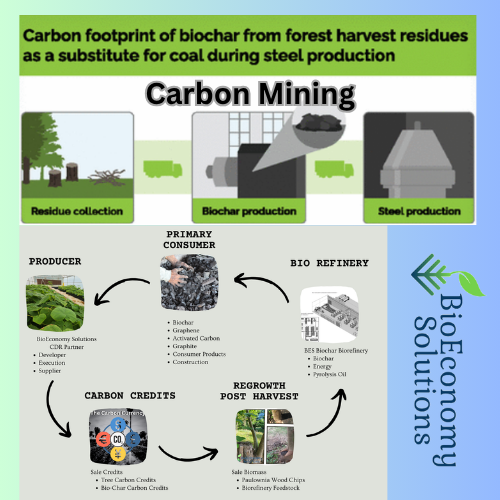
The steel industry is one of the largest industrial emitters of carbon dioxide, accounting for approximately 7–9% of global CO₂ emissions. At the heart of its carbon footprint is coal, used not only as a fuel but also as a chemical input in key processes. But what if we could replace that fossil carbon with a renewable, carbon-negative alternative?

Biochar Forging a Greener Future

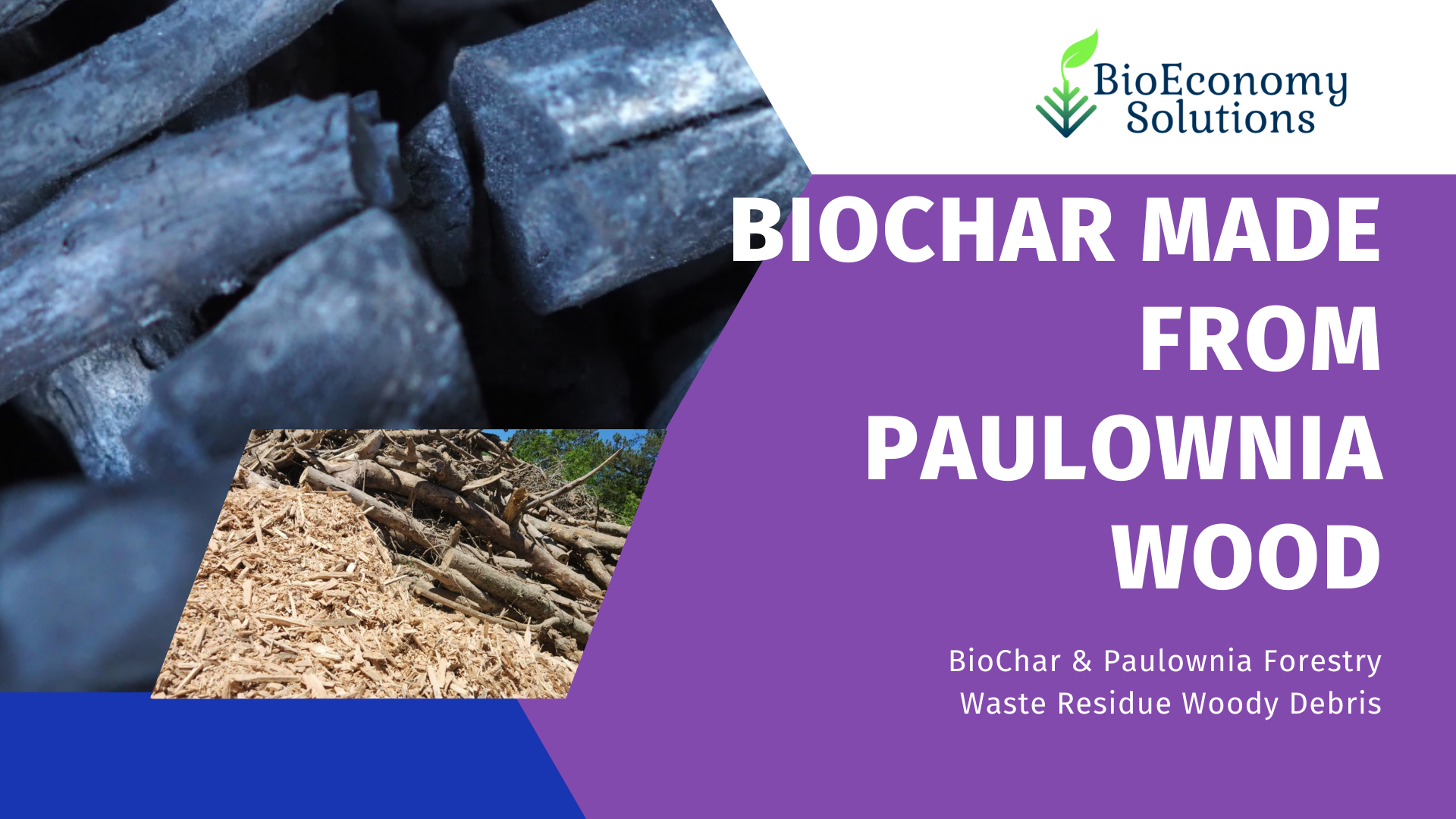
What’s biochar? — a carbon-rich, plant-based material produced through pyrolysis. Already gaining attention for its role in soil enhancement and carbon sequestration, biochar is now being explored as a sustainable substitute for coal in steelmaking — and the implications are enormous.

Coke-Making: Replacing Fossil Carbon With Biochar Source

Coke, produced from metallurgical coal, is traditionally the primary carbon source in blast furnace operations. Biochar can be blended into the coking process to partially replace this fossil carbon:

  • Biochar as a co-carbon in coke ovens improves reactivity while reducing overall CO₂ emissions.
  • ✅ Reduces dependency on imported coking coal, improving supply chain resilience.

Ongoing trials suggest up to 20% biochar substitution is feasible without compromising coke quality.

Sintering: Cleaner Agglomeration for Iron Ores
In sintering, iron ore fines are agglomerated into porous lumps using coke breeze. This step emits significant particulates and CO₂.

🌱 Biochar can replace up to 40% of coke breeze without harming sinter strength or productivity (per studies on ScienceDirect).

🧪 Its higher porosity also supports better combustion efficiency and lower emissions of SOx and NOx.

Blast Furnaces: Biochar Injection and Coke Replacement

The blast furnace is where most emissions occur in steelmaking — and it’s also where biochar shines:

  • 🌬️ Pulverized Biochar Injection (PBI) into the blast furnace air inlets, offers a direct, drop-in substitute for pulverized coal injection (PCI).
  • 🌱 Partial coke replacement with dense, high-carbon biochar is under advanced testing — it supports iron ore reduction while releasing less CO₂.

Early data shows up to 28% CO₂ reduction potential when biochar replaces both PCI and part of the coke input.


Direct Reduction: A Future-Forward Path

Biochar is being explored as a renewable reducing agent in Direct Reduced Iron (DRI) processes — an alternative to blast furnaces:

  • 🔁 Combines well with hydrogen or natural gas for low-emission DRI production.
  • ♻️ Can serve as the sole solid reductant in emerging rotary kiln technologies.

As green hydrogen scales, biochar-enhanced DRI could become a key player in near-zero-emission steel.


Electric Arc Furnaces (EAF): Slag Foaming & Carbon Additives

In EAFs — where scrap metal is melted using electricity — biochar can also replace traditional carbon sources:

  • 🌋 Used to enhance slag foaming, critical for thermal efficiency and protecting furnace linings.
  • 🌱 Biochar’s light density and high carbon content make it a strong candidate for carbon injection in EAFs.

Replacing Fossil Carbon With Green Carbon

Replacing fossil coal with biochar could cut steelmaking emissions by up to 28%, according to recent studies.

Net Benefits:

✅ Lower carbon footprint

✅ Renewable feedstock

✅ Cleaner air and water

✅ Supports regenerative agriculture

Our company offers:

  • Direct Biochar production feedstock supply chain contracts.
  • Quality and consistency that matches your industrial standards.
  • Biochar & cost-competitive supply chain over traditional coal.
  • Direct carbon credit purchases for carbon offsets.
From Black Coal to Black Gold

Biochar offers more than just a coal alternative — it offers a blueprint for regenerative industry. It supports climate goals, strengthens supply chains, and enables a circular approach to carbon — all while producing the steel that still forms the backbone of modern civilization.

As the world demands climate-smart industry, biochar may well be the key to unlocking net-zero steel.


Dedicated Biochar Feedstock Supply Chain

Contact Us For Details

BioEconomy Solutions is a BIOCHAR Carbon Dioxide Removal (CDR) Project Developer. Talk to us about our biochar processing technology.

We’re happy to organize a time to speak with you about our high carbon biochar we have for sale. Please book your preferred time to speak directly.

Here’s a link to my online calendar/schedule:

www.bioeconomysolutions.com/bookcall

BioEconomy Solutions

mail@BioEconomySolutions.com

Office: 843.305.4777

Visit us at: https://bioeconomysolutions.com/paulownia-carbon-credits/ Let’s chat about paulownia tree solutions for sustainable Forest carbon credits projects
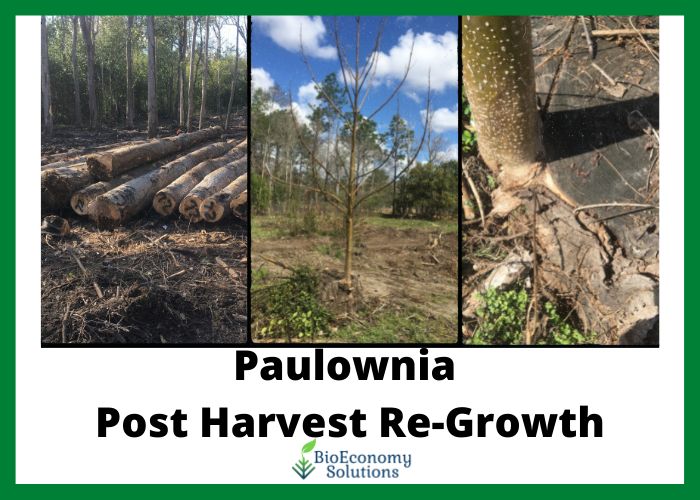
 

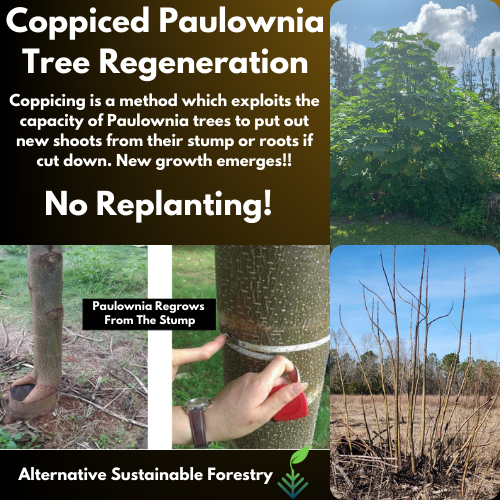
In the world of sustainable forestry, few trees offer the impressive regenerative capabilities of the Paulownia species. Often dubbed the t, a practice known as coppicing, makes it an exceptionally valuable asset for timber production, biomass generation, and environmental restoration.

Coppicing is an ancient woodland management technique that harnesses a tree’s natural tendency to sprout new shoots from its base or root collar when its main stem is harvested. For Paulownia, this characteristic is particularly pronounced. Unlike many trees that require replanting after each harvest, Paulownia’s established root system remains intact, ready to fuel rapid new growth.

The Power of the Established Root System

The secret to Paulownia’s phenomenal regrowth lies in its extensive and mature root system. When a young Paulownia tree is cut back, especially in its dormant phase (typically one to three years after initial planting), the robust roots, which have been developing for years, provide an immediate and abundant supply of nutrients and energy to the new sprouts. This allows the fresh shoots to grow at an astonishing rate, sometimes reaching several feet in a single growing season.

Advantages of Coppicing Paulownia

  • Accelerated Growth Cycles: Coppicing significantly reduces the time between harvests. Paulownia can reach harvestable size in as little as 5-7 years, and after coppicing, subsequent rotations can be even quicker, often ready for cutting in 3-5 years. This rapid turnaround maximizes productivity from the same land area.
  • Reduced Reforestation Costs: Eliminating the need for replanting after each harvest dramatically cuts down on labor, seedling costs, and the associated environmental impact of site preparation. This makes Paulownia plantations highly economical and efficient.
  • Continuous Timber Supply: The consistent regeneration ensures a steady and predictable supply of wood, supporting a more stable timber market and reducing pressure on natural, old-growth forests.
  • Enhanced Carbon Sequestration: Paulownia’s rapid growth translates to impressive carbon sequestration rates. The continuous cycle of growth and regrowth means these trees are constantly absorbing atmospheric CO2, contributing significantly to climate change mitigation efforts.
  • Soil Stabilization and Health: The deep and widespread root system of Paulownia helps prevent soil erosion, especially on degraded or vulnerable lands. As the tree regrows, it continues to improve soil structure and enrich it with organic matter.
  • Multi-Cycle Harvesting: A single Paulownia root system can support multiple harvest cycles, often as many as 4 to 8 times over its lifespan, providing decades of continuous yield from the same planting.

Managing for Optimal Regrowth

To maximize Paulownia’s coppicing potential, careful management practices are crucial. This typically involves:

  • Initial Coppicing: Often, growers will coppice young Paulownia trees (1-3 years old) to encourage a single, straight, and vigorous stem for high-quality timber. This initial cut allows the root system to develop fully before focusing energy on a primary trunk.
  • Selective Sprout Management: After coppicing, multiple sprouts will emerge. For timber production, growers often select the strongest, straightest shoot and remove the others, directing all the root’s energy into developing a single, high-quality trunk. For biomass, multiple shoots may be allowed to grow for maximum yield.
  • Dormant Season Harvesting: Harvesting during the dormant season (winter) is generally recommended, as the tree’s energy reserves are concentrated in the roots, optimizing the subsequent spring’s regrowth.

A Sustainable Solution

Paulownia’s exceptional ability to regrow post-harvest solidifies its position as a leading species for sustainable forestry and renewable resource management. This inherent regenerative power offers a compelling solution for meeting the growing demand for timber and biomass while simultaneously contributing to environmental conservation and a more circular economy. As the world increasingly seeks eco-friendly alternatives, the “Phoenix tree” stands tall as a testament to nature’s remarkable capacity for renewal.


Contact Us

Where To Buy Paulownia Core Materials? QUESTIONS?

Visit our web page. https://bioeconomysolutions.com/paulownia-lumber/

What is paulownia wood? https://bioeconomysolutions.com/what-is-paulownia-wood/

We’re happy to organize a time to speak with you about our paulownia trees and lumber we have for sale. Please book your preferred time to speak directly.

Here’s a link to my online calendar/schedule:

www.bioeconomysolutions.com/bookcall

BioEconomy Solutions

mail@BioEconomySolutions.com

Office: 843.305.4777

Visit us at: https://bioeconomysolutions.com/paulownia-carbon-credits/ Let’s chat about paulownia tree solutions for sustainable Forest carbon credits projects.

LIKE|SHARE|COMMENT

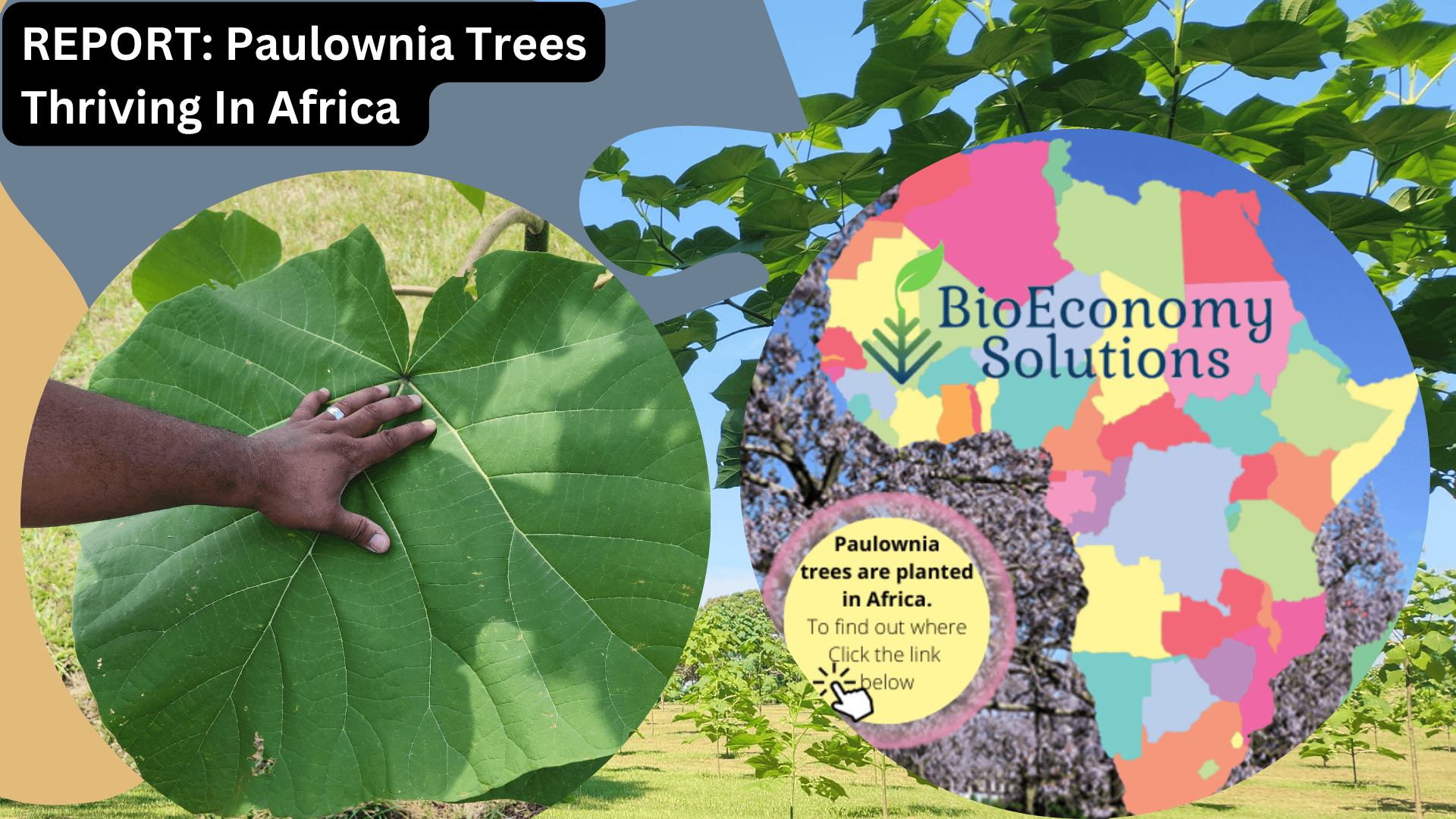
African paulownia tree farms are thriving! These initiatives were brought on by high temperatures and extreme drought. These efforts transform the area into a environment in the short term creating new jobs, cooling the environment and much more.

What Are Paulownia Trees?

Our hybrid Paulownia key benefits:

  • Fast growing
  • High-yield
  • Non-invasive
  • Non-GMO
  • Requires little water

Since 2012, our team has planted millions of Paulownia trees in the Gobi desert with great success.

Our Paulownia trees are a fast growing, high-yield, non-invasive, non-GMO hybrid. Paulownia tree that makes planet Earth a better place to live for all forms of life. Our hybrid paulownia tree is a trans-genera clone; it is not a genetically modified organism (GMO). As is the case with all trans-genera clones (example: peach x apricot = sterile nectarine), it is seed-sterile and therefore non-invasive.

Why Plant Paulownia

Planting paulownia trees promotes climate resilient investment across sub-Saharan Africa. These investment partnerships will provide policymakers with insights into where new infrastructure development can mitigate community vulnerabilities in .

Prosperity comes in the forms of monthly stipends for workers and those funds and sustainable ecology promote wealth in more ways than one for the local populations.

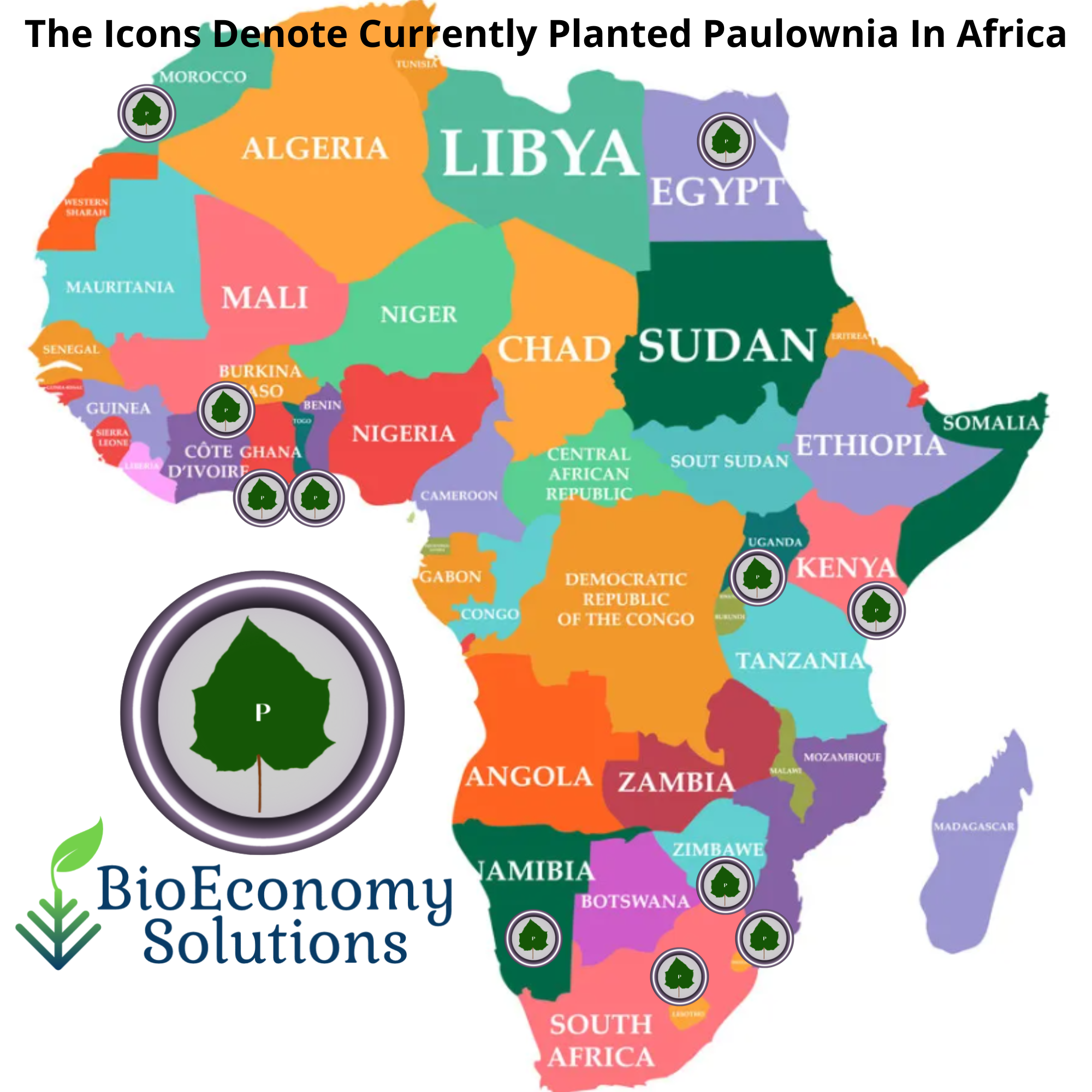
African countries with paulownia trees growing currently include:

  • Togo
  • South Africa
  • Kenya
  • Uganda
  • Morocco
  • Ghana
  • Namibia
  • Lesotho
  • Burkina Faso
  • Zimbabwe
  • Eswatini
  • Egypt

According to the United Nations there are 54 countries in Africa today. See the full list with current population and sub-region (based on the United Nations official statistics). So far 12 countries in Africa have planted paulownia trees, this is a good start but we can do so much more.

Together, these characteristics make the paulownia an ideal tree to grow for both economic and environmental reasons.

Want to purchase paulownia saplings for your project located In Africa? Have a reforestation or afforestation project? Contact us for more information.

Contact Us for details. Office: 843.305.4777 | Email: mail@bioeconomysolutions.com Here’s a link to our online calendar, schedule a conference call with us: https://info586.youcanbook.me

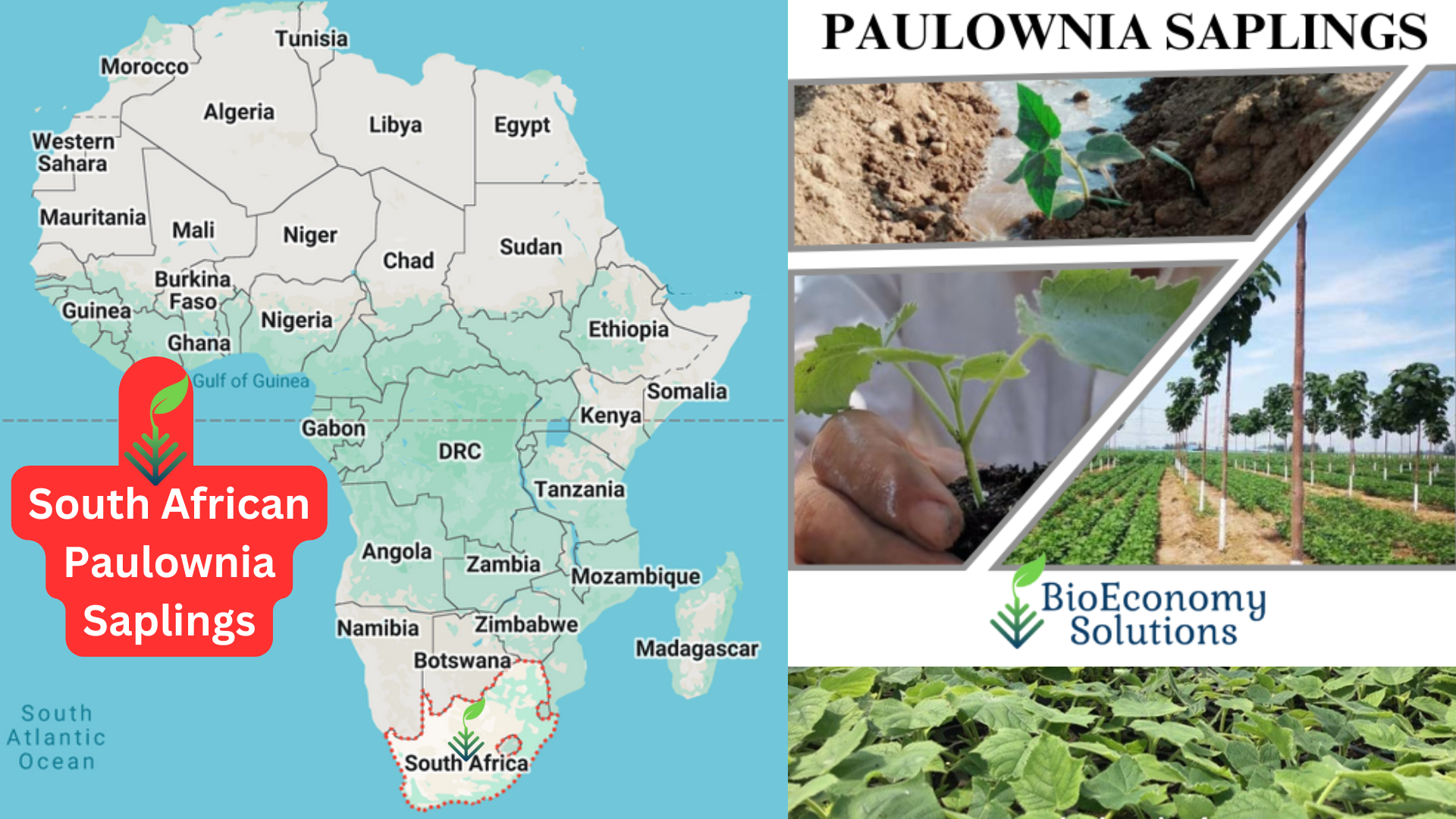
Learn more about South African drought tolerant hybrid species here: https://www.linkedin.com/pulse/south-african-paulownia-saplings-sale-victor-garlington-8kelc/

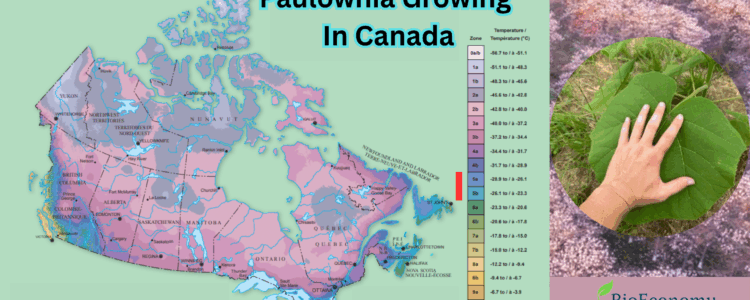
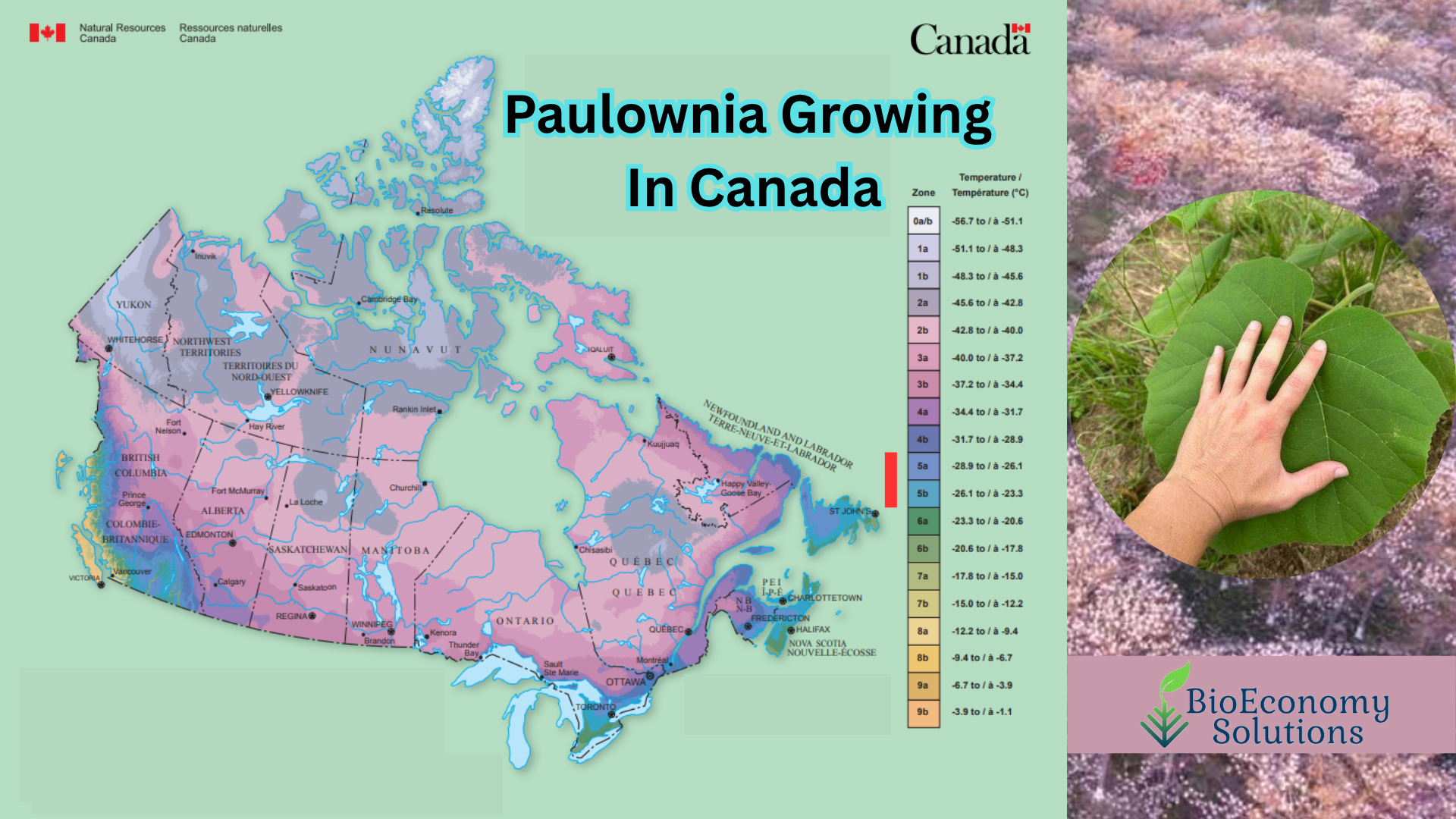
Paulownia Growing In Canada

Can the Paulownia Tree Thrive in Canada? Exploring the Potential of the Paulownia Empress Tree in Canada

The Paulownia tree, also known as the Empress Tree has gained international attention for its rapid growth, ornamental beauty, and high carbon sequestration potential. Native to China and named after Princess Anna Paulownia of Russia, this tree has become a symbol of ecological innovation. Can this fast-growing species adapt to the Canadian climate?


Botanical Profile: Fast Growth Meets Fragrant Beauty

The Empress Tree is known for:

  • Extraordinary growth rates — up to 3–4 meters per year under optimal conditions
  • Large, heart-shaped leaves — reaching up to 30 cm in length
  • Lavender-purple flowers — that appear in early spring before the leaves, exuding a sweet, jasmine-like fragrance

Because of its rapid growth and ability to regenerate from the root system, Paulownia has been studied for:

  • Carbon offset programs
  • Agroforestry
  • Reforestation of degraded land
  • Sustainable hardwood production

Paulownia in Canada: Possibilities and Precautions

Climate Compatibility

Paulownia species, especially Paulownia tomentosa, are surprisingly cold-tolerant, capable of growing in USDA hardiness zone 5, which includes parts of Southern Ontario, Quebec, and British Columbia. Some cold-hardy hybrids like Paulownia elongata × fortunei (e.g., “NordMax21” or “Phoenix One”) are even bred for cooler temperate zones.

Key requirements for growth in Canada:

  • Well-drained soil — Paulownia does not tolerate waterlogged roots
  • Full sun — Optimal photosynthesis fuels rapid growth
  • Shelter from strong winds — Especially important for young trees

Growth Timeline in Canadian Conditions

  • Year 1: Focuses energy on root development; above-ground growth may be limited
  • Years 2–3: Explosive vertical growth (2–3 meters annually)
  • Year 4+: Begins forming a broad canopy; suitable for use as a shade tree or windbreak

Carbon Sequestration Potential in Northern Latitudes

Paulownia’s rapid biomass accumulation makes it one of the top contenders for carbon offset projects. A single hectare of mature Paulownia plantation can sequester 10 to 20 metric tons of CO₂ per year, depending on conditions.

In Canada, this could:

  • Support climate adaptation goals
  • Reclaim marginal agricultural lands
  • Foster green economy jobs through agroforestry partnerships

While Paulownia is not considered invasive in most parts of Canada due to cold winters and shorter growing seasons.

Recommendation:

  • Use sterile hybrids or controlled planting methods in Canada
  • Avoid planting near sensitive natural habitats
  • Always follow local and provincial planting regulations

A Tree for Canada’s Future?

As climate conditions shift and sustainable forestry becomes a national priority, the Paulownia tree offers a compelling option — fast, functional, and beautiful. With proper species selection and site management, it may play a key role in carbon capture, reforestation, and rural economic development across suitable parts of Canada.


Key Takeaways

  • Paulownia can grow in parts of Canada, particularly zone 5 and above
  • It’s suitable for carbon farming, reforestation, and ornamental uses
  • Cold-hardy hybrids should be prioritized for Canadian projects
  • Plant responsibly — consider the local ecosystem

Contact Us For African Paulownia Saplings

Interested in starting a Paulownia planting project in Canada? Reach out to for details — and plant it in the right place.

Want to purchase paulownia saplings for your project? Have a reforestation or afforestation project? Contact us for more information.

Contact Us for details. Office: 843.305.4777 | Email: mail@bioeconomysolutions.com Here’s a link to our online calendar, schedule a conference call with us: https://info586.youcanbook.me

There is a lot of misinformation on the internet concerning paulownia trees. So we are here to set the record straight and give you real information from a real South Carolina paulownia farm owner.

Who are we? BioEconomy Solutions, we educate on the paulownia tree and it’s applications, we grow trees, harvest paulownia trees and sale paulownia timber and dimensional lumber from our saw mill operation right here in South Carolina USA.

Lot’s of famers around the world that are just beginning their journey with paulownia and have no idea of what to expect when it comes to harvesting the trees or who their potential buyers are for them.

Many new paulownia enthusiast have never held a sawn paulownia board in their hands.

We have been processing paulownia trees into lumber since 2019, so this is not theory, just practical experience you can apply to your own operation.

Let’s work together!

Paulownia Farming Facts – Video

Watch the Full Presentation

Want To Grow Paulownia?

👉Interested in growing paulownia?

https://bioeconomysolutions.com/unlock-the-secrets-of-growing-paulownia-with-the-ultimate-growers-guide/ 843.305.4777

Did you know that fast-growing Paulownia trees are being planted worldwide for their eco-friendly benefits? From reforestation projects to sustainable timber, these “miracle trees” are making a difference. Discover how Paulownias are helping the planet—one tree at a time! 🌱✨
What You Will Learn:

Paulownia trees are renowned for their remarkable ability to address and even reverse several negative environmental factors.

This will show you some key ecological benefits paulownia trees provide:

– Soil Restoration & Erosion Control

– Carbon Sequestration (Fights Climate Change)

– Phytoremediation (Cleans Polluted Soil & Water)

– Biodiversity Support

– Reduces Deforestation Pressure

– Fast Growth

– Where to purchase non-invasive paulownia hybrid tree saplings

If you’re interested in paulownia, want to grow or currently growing, this information is for you.

👉Get a FREE copy of Paulownia Carbon Report: https://bioeconomy-solutions.kit.com/45b34109e5

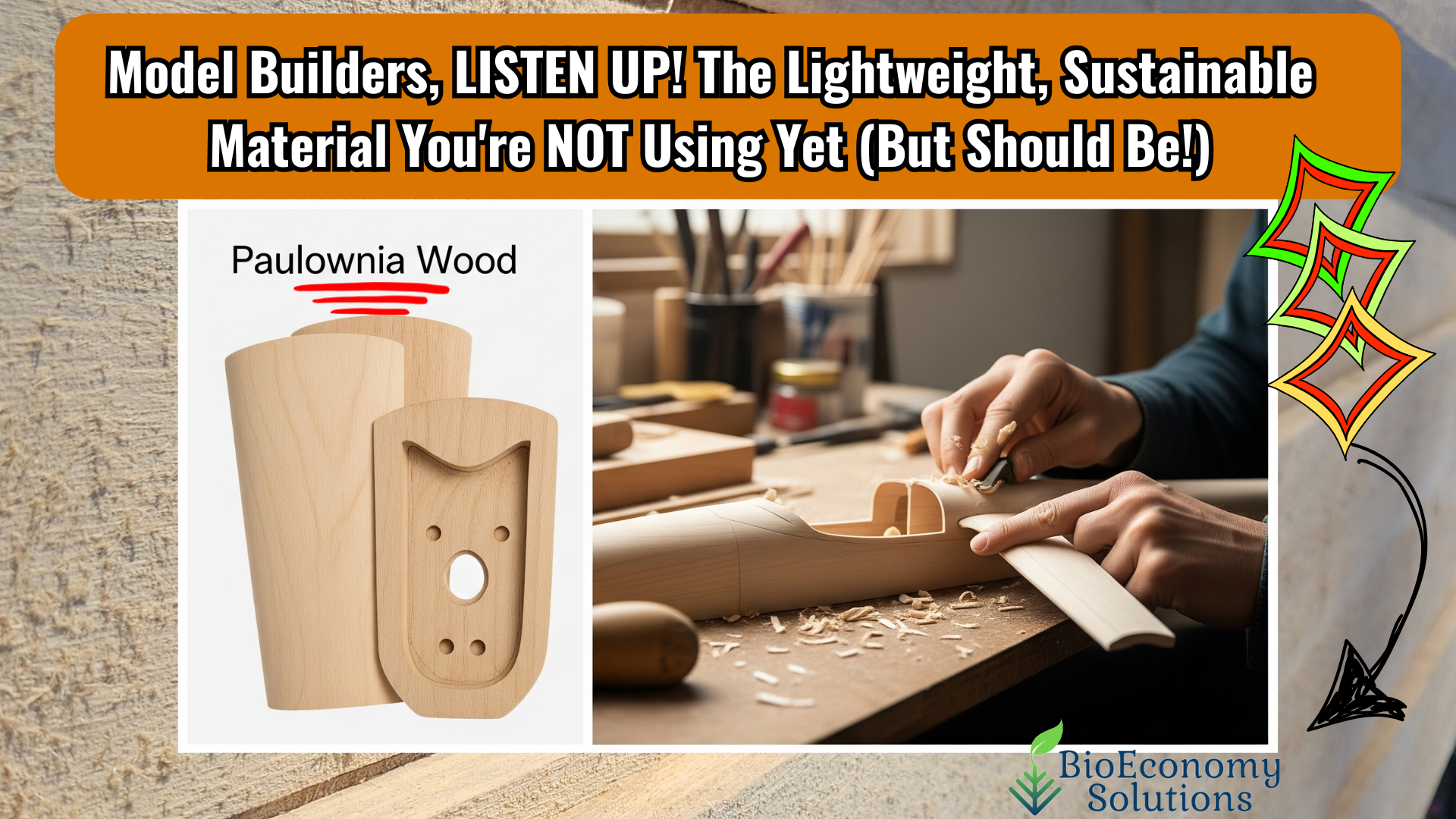
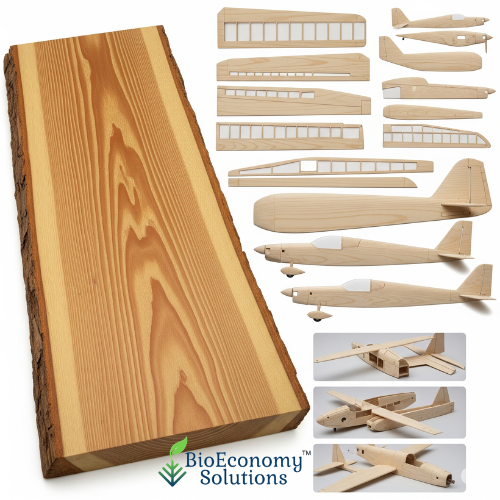
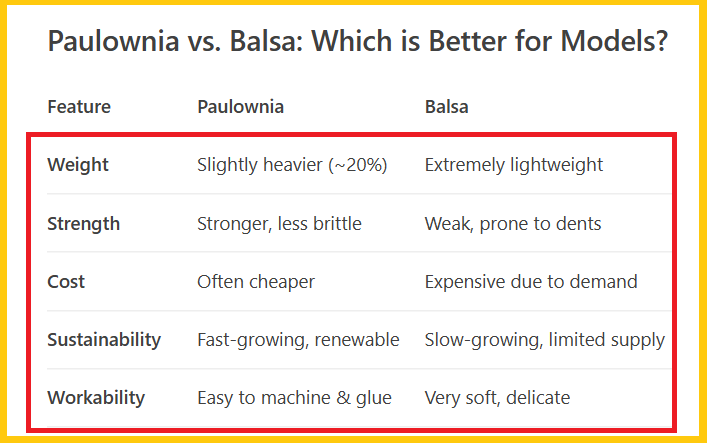
While Balsa wood has traditionally been the go-to material for aircraft models due to its exceptionally low density, Paulownia wood is gaining traction and is often considered a desirable alternative, particularly for its favorable strength-to-weight ratio.

The Difference

Here’s why some modelers might prefer Paulownia over Balsa:

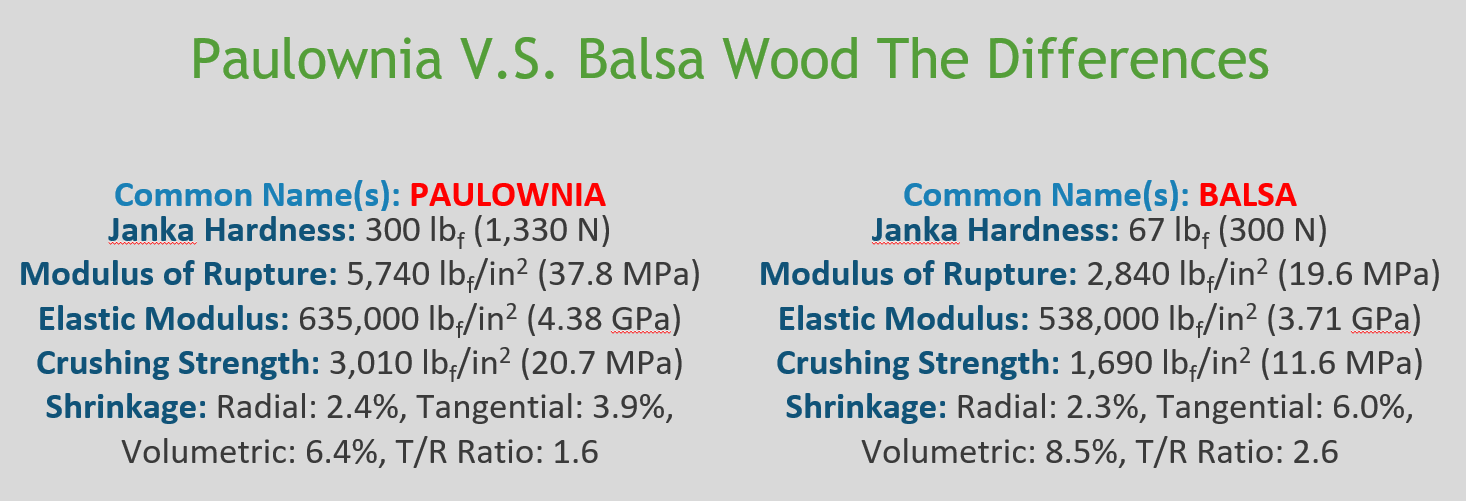
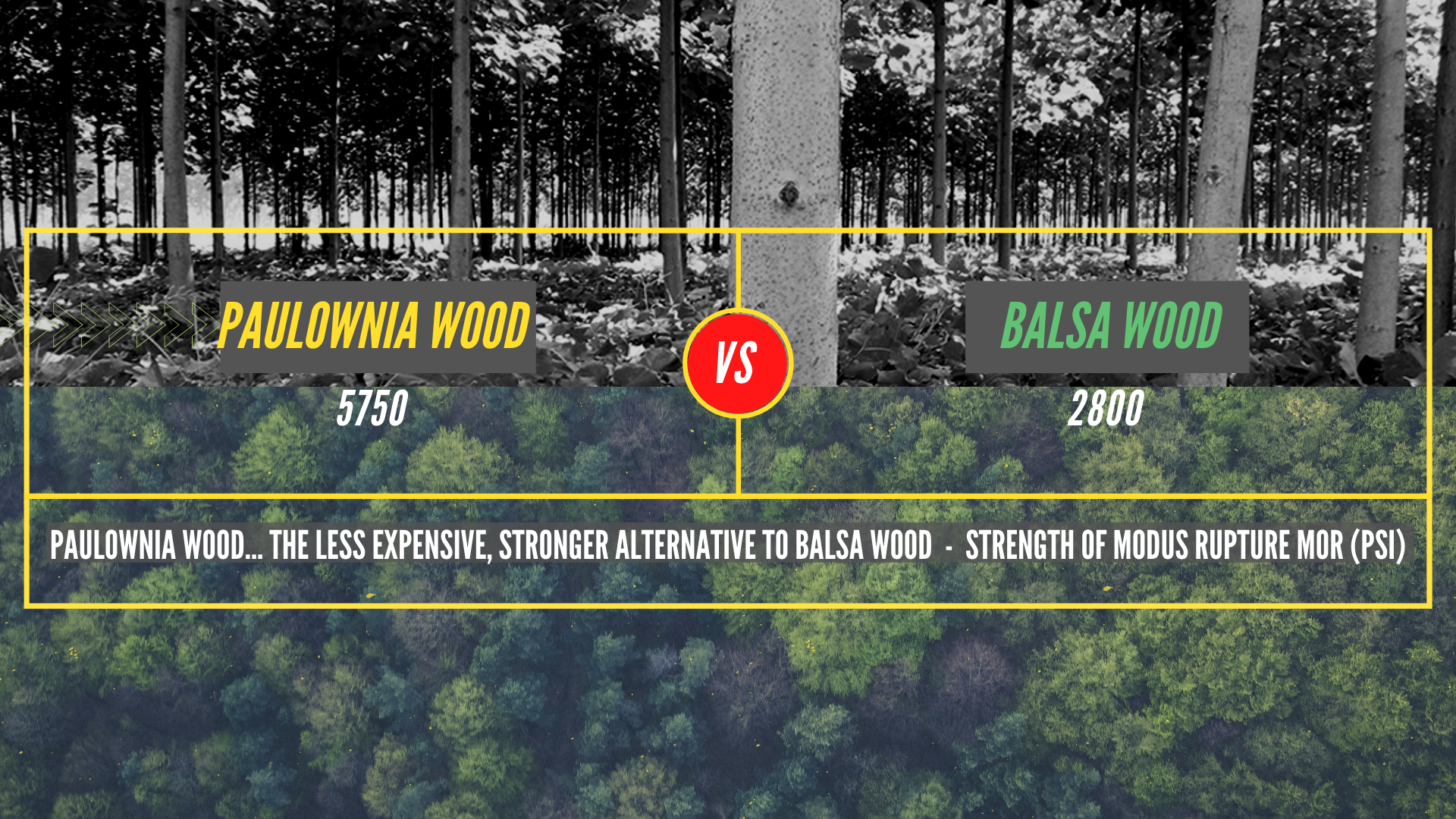
  • Higher Strength-to-Weight Ratio: Paulownia generally offers a better strength-to-weight ratio compared to Balsa, particularly at comparable densities. This means that while Paulownia might be slightly denser than Balsa, it can offer greater strength and structural integrity for its weight.
  • Increased Strength: Paulownia is demonstrably stronger than Balsa wood. One source mentions that while Balsa’s Brinell hardness was significantly lower than Paulownia’s, it was only 22.8% lower, suggesting that Paulownia’s strength is notably higher.
  • Reduced Resin Absorption: Paulownia has a less open grain than Balsa, meaning it absorbs less resin during construction. This can result in a lighter model overall, as resin contributes to weight.
  • Space-Saving Benefit: Due to its inherent strength, Paulownia can be used in thinner sections compared to Balsa to achieve similar structural integrity. This can lead to space savings in the model’s design.

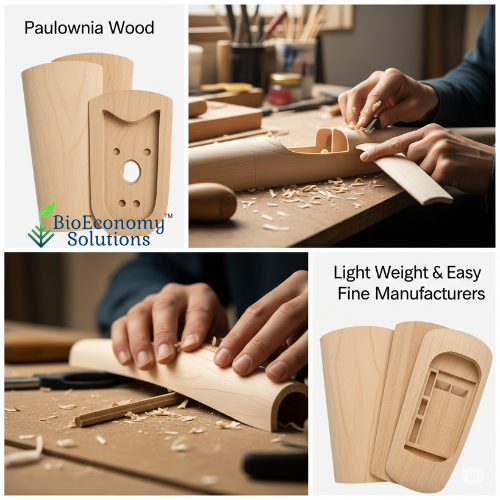
Also known as the “empress tree,” paulownia offers a unique blend of strength, lightness, and eco-friendliness—making it an excellent alternative for model manufacturers and hobbyists alike. In this post, we’ll explore:

What makes paulownia special
How it compares to balsa
Its growing role in model aviation
Where to find paulownia kits and materials

What is Paulownia Wood?
Paulownia (Paulownia tomentosa) is a fast-growing hardwood native to China but cultivated worldwide. Known for its rapid growth (up to 10 feet per year!), it’s a sustainable choice compared to slow-growing balsa.

Key Properties:
✔ Lightweight – Only slightly heavier than balsa, but stronger.

✔ Workability – Easy to cut, sand, and shape with hand tools.

✔ Stability – Resists warping and cracking better than balsa.

✔ Sustainability – Grows quickly, making it eco-friendly.

Best Uses for Paulownia:
Structural parts (spars, fuselage frames)
Foam-composite models (as a durable sheeting material)
Large-scale models (where extra strength is needed)

How Model Manufacturers Are Using Paulownia
While balsa still dominates traditional kits, paulownia is gaining traction in:

1. ARF (Almost-Ready-to-Fly) Kits
Companies like TW Models (The World Models) and HobbyKing now use paulownia in some ARFs to reduce costs while maintaining durability.

2. DIY & Scratch-Building
Experimental builders (e.g., Experimental Airlines on YouTube) use paulownia in foam-core designs.
Plans websites (AeroFred, RCGroups) feature user-designed paulownia models.

3. Laser-Cut Short Kits
Some small manufacturers offer paulownia laser-cut parts for custom builds, though availability is still limited compared to balsa.

The Future of Paulownia in Model Aviation

As balsa becomes scarcer and more expensive, paulownia is poised to become a mainstream alternative. Innovations in laser-cutting and hybrid designs (e.g., paulownia-foam composites) could make it even more popular.

For builders, the benefits are clear:

✅ More durable than balsa

✅ Better for the environment

✅ Cost-effective for large projects
The Choice

Paulownia is becoming a popular choice for aircraft modelers due to its superior strength-to-weight ratio and ability to save space while still maintaining structural integrity.However, Balsa’s lightweight nature and ease of use ensure its continued prominence in the hobby. The choice between the two often comes down to the specific requirements of the model being built and the preferences of the modeler.


Where to Buy Paulownia Wood for Model Building

Where to buy paulownia? We’re harvesting our mature U.S. South Carolina Paulownia Timber and have millions of board foot available. We can mill lumber for your business needs. Contact Us for details. Office: 843.305.4777 | Email: mail@bioeconomysolutions.com Here’s a link to our online calendar, schedule a conference call with us:

https://info586.youcanbook.me

USA Paulownia Wood Lumber For Sale – Need paulownia wood lumber for your next project? https://bioeconomysolutions.com/paulownia-lumber/

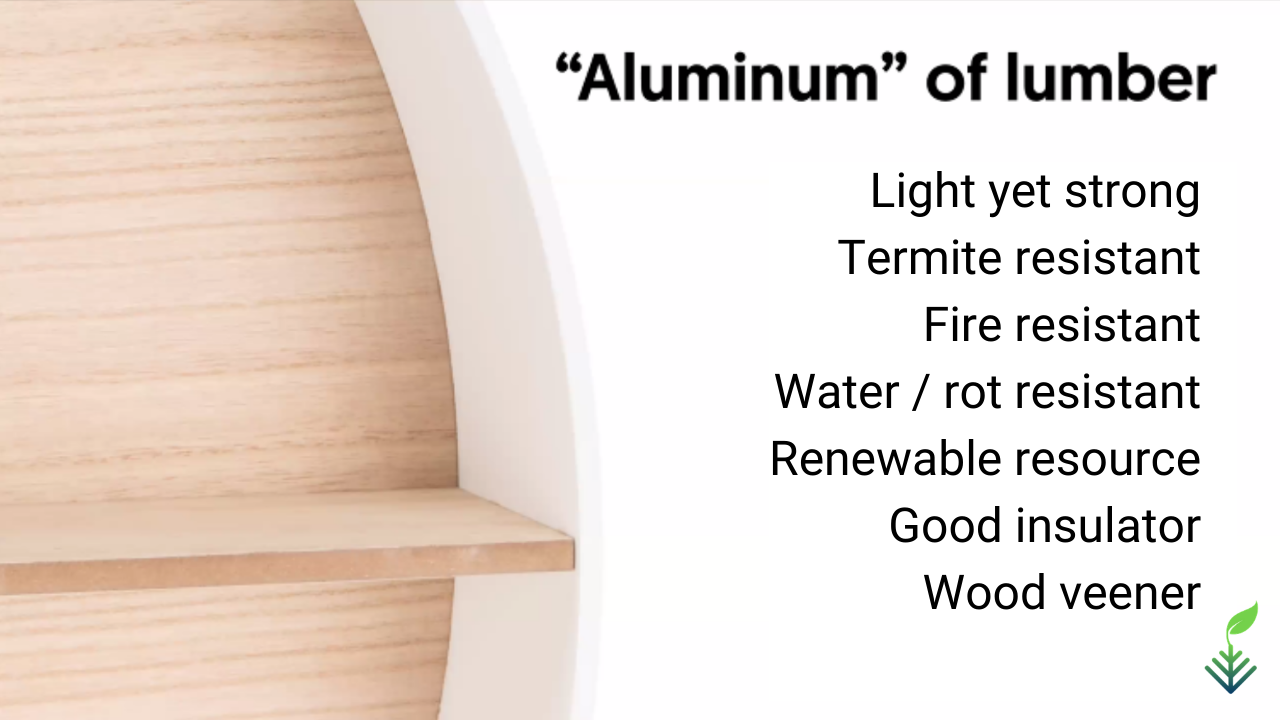
You will discover that paulownia wood is the “Light Strong Alternative Wood” used in many processes to obtain many types of products.

Weather you are a hobbyist or full time manufacturing company, paulownia wood grown in South Carolina USA may be a new expression of your talent.

We sell Custom Paulownia boards: rough sawn or planed, we offer various sizes and thicknesses. Our Paulownia boards are processed using sustainable Paulownia hardwood grown right here in South Carolina USA.

LIKE|SHARE|COMMENT

Want more information on the Paulownia vs. Balsa? You may also enjoy this article: “Paulownia Wood v.s. Balsa Wood

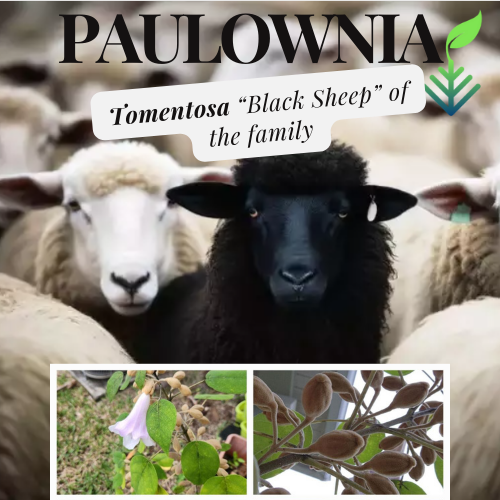
If You’re The Black Sheep Of Your Family, You’d be The One Who’d Break The Rules and is often accompanied by a sense of being misjudged or misunderstood. Well this is the story of Paulownia tomentosa…

THE BLACK SHEEP” of the Paulownia Family.

Paulownia tomentosa (also known as the Princess tree or Empress tree) is the most well-known species of Paulownia. When you search paulownia on the internet, this is the one that got the lion’s share of bad press listed as an invasive species.

Invasive Potential:

P. tomentosa, have become invasive in some parts of the world.Tomentosa paulownia has the potential to become invasive in some regions due to its rapid growth, prolific seed production, and ability to spread through root suckers. It is important to check local regulations and consider the potential impact before planting tomentosa paulownia trees.

Yet did you know?:

There are 17 different species of paulownia trees (depending on taxonomic authority) in the family Paulowniaceae.

Only one, the tomentosa, is listed as invasive in some areas. This single species has painted the entirety of the genus into the corner of being labeled as invasive and gets all the attention, while the other species are assumed to have the same traits. This is an incorrect assumption that requires further exploration.

The species as a whole should not be labeled as invasive. The seeds are extremely difficult to germinate and the trees actually have a low survival rate in the wild compared to native trees.

Paulownia offer many ecosystem benefits including:

  • carbon drawdown
  • soil restoration
  • pollination services
  • shade for companion crops not found in other trees.

All together, these characteristics make the paulownia an ideal tree to grow for both economic and environmental reasons.

Most of the information found on the internet does not differentiate between the 17 different species within the genus Paulownia, but only one, the tomentosa, is invasive in some areas of the world.

PAULOWNIA TREES

Six to 17 species, including: Paulownia catalpifolia Paulownia elongata Paulownia fargesii Paulownia fortunei Paulownia kawakamii Paulownia taiwaniana Paulownia tomentosa

Tested and confirmed species:[13]

  • Paulownia kawakamii
  • Paulownia tomentosa
  • Paulownia catalpifolia
  • Paulownia x taiwaniana
  • Paulownia elongata
  • Paulownia fargesii
  • Paulownia fortunei — dragon tree.[25]
  • Potential variety, hybrid, and synonym species:
  • Paulownia glabrata
  • Paulownia grandifolia
  • Paulownia imperialis
  • Paulownia australis
  • Paulownia lilacina
  • Paulownia longifolia
  • Paulownia meridionalis
  • Paulownia mikado
  • Paulownia recurva
  • Paulownia rehderiana
  • Paulownia shensiensis
  • Paulownia silvestrii
  • Paulownia thyrsoidea
  • Paulownia duclouxii
  • Paulownia viscosa

It is native to central and western China but has been widely cultivated in Asia, Europe, and North America. It’s a deciduous tree that can grow up to 50 feet tall, with large, heart-shaped leaves and showy, fragrant lavender flowers in spring.

There are at least 17 other species of Paulownia, and numerous hybrids. Some of the other notable species include:

  • Paulownia fortunei: Native to southeast Asia, this species is known for its rapid growth and tall stature. It’s often used for timber production.
  • Paulownia elongata: This species is similar to P. fortunei but is even faster-growing. It’s also used for timber production and is popular for carbon sequestration projects.
  • Paulownia kawakamii: Native to Taiwan, this species is smaller than most other Paulownias, typically growing to around 30 feet tall. It has beautiful, deep purple flowers.

There are also many hybrids of Paulownia, which are often created to combine the desirable traits of different species. For example, the hybrid Paulownia Shan Tong is a cross between P. tomentosa and P. fortunei and is known for its fast growth, cold hardiness, and high-quality timber.

LEAVES – Leaves: Large, heart-shaped leaves that can grow up to 12 inches wide.

  • Growth Rate: Extremely fast-growing, capable of adding 10-20 feet per year in optimal conditions.
  • Mature Size: Can reach heights of 30-50 feet with a similar spread.
  • Hardiness: Zones 5-9

Uses:

  • Ornamental: Popular for its attractive flowers and rapid growth, often used for shade or as a specimen tree.
  • Timber: Valued for its lightweight, strong, and rot-resistant wood, used for furniture, musical instruments, and other crafts.

Environmental: Used for erosion control, reforestation, and carbon sequestration due to its fast growth and ability to absorb pollutants.

The Paulownia Royal Empress Tree, also known as the Princess Tree or Foxglove Tree, is a fast-growing deciduous tree native to central and western China. It is known for its beautiful purple, foxglove-like flowers that bloom in the spring, large heart-shaped leaves, and rapid growth rate.

Characteristics:

  • Growth Rate: One of the fastest-growing trees in the world, it can grow up to 15 feet in a single year.
  • Flowers: Showy, fragrant, lavender-blue flowers that bloom in large clusters in the spring.
  • Leaves: Large, heart-shaped leaves that can grow up to 12 inches wide.
  • Hardiness: Hardy in USDA zones 5-9.
  • Size: Can reach heights of 30-50 feet with a spread of 20-30 feet.

Benefits:

  • Fast Shade: Due to its rapid growth, it can provide shade quickly.
  • Wind Block: Due to its rapid growth, it can provide a wind buffer quickly.
  • Ornamental Value: Its beautiful flowers and foliage make it a popular ornamental tree.
  • Erosion Control: Its extensive root system can help prevent soil erosion.
  • Wildlife Habitat: The flowers attract pollinators like bees and butterflies.

Overall, the Paulownia Royal Empress Tree is a beautiful and fast-growing tree that can be a great addition to a landscape. However, it is important to be aware of its potential drawbacks before planting.

The conclusion is…. There are 17 different species of paulownia which does not include the many hybrid species in the market place now. Everyone reading this post must do their homework.

At BioEconomy Solutions we grow a A fast growing, high-yield, non-invasive, non-GMO hybrid Paulownia tree that makes planet Earth a better place to live for all forms of life. The tree is a trans-genera clone; it is not a genetically modified organism (GMO). As is the case with all trans-genera clones (example:peach x apricot = sterile nectarine), it is seed-sterile and therefore non-invasive. Paulownia Trees:

Please let us know if you have any other questions.

Want to purchase paulownia saplings for your project? Have a reforestation or afforestation project? Contact us for more information.

Contact Us for details. Office: 843.305.4777 | Email: mail@bioeconomysolutions.com Here’s a link to our online calendar, schedule a conference call with us: https://info586.youcanbook.me

Termites Are Eating The Caribbean Alive.

From the Bahamas to St. Croix, these relentless pests cause millions in structural damage every year, forcing homeowners to spend heavily on repairs and chemical treatments. For decades, builders have relied on imported cypress and mahogany—durable, termite-resistant woods—to combat the problem. But rising costs, deforestation concerns, and long shipping distances make this an unsustainable solution.

Paulownia Species Hardwood

Paulownia wood is often stated to be termite resistant due to the presence of natural chemical compounds within its wood. Specifically, compounds like tannin, paulownin, and sesamin are frequently cited as contributing to its insect-repellent properties. These are considered “extractives” in the wood, which are non-structural chemical compounds that can offer defense mechanisms against environmental stresses, including pests.

Here’s a breakdown:

  • Tannin: This compound is known for its astringent properties and can act as a deterrent to various insects, including termites, by making the wood unpalatable or indigestible.
  • Paulownin and Sesamin: These are lignans that have been identified in Paulownia wood, and research suggests they possess antimicrobial and insect-repellent activities.

It’s important to note, however, that while Paulownia has a good natural resistance, no wood is completely impervious to rot or insect attack in all conditions. Some studies, particularly from the Forest Products Laboratory, have indicated that while Paulownia has a high extractive content, its durability against decay and termites might not always correlate to the expected level of performance in all conditions. This suggests that for exterior applications or prolonged exposure to moisture, or ground, proper treatment and design considerations are still recommended to maximize its longevity as with any wood structure.

Pressure-Treated Paulownia.

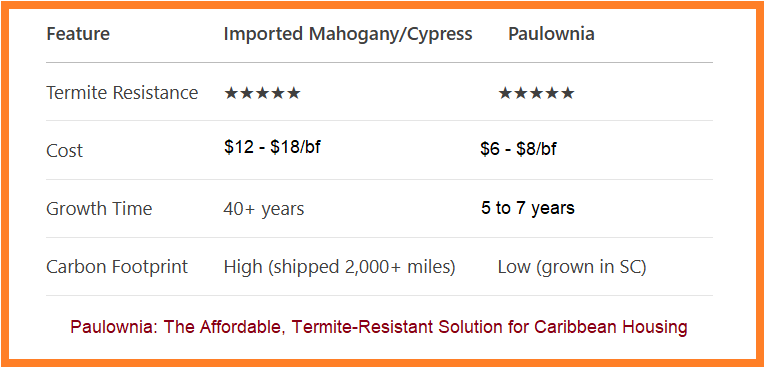
Grown sustainably in South Carolina, paulownia is fast becoming a game-changer for Caribbean construction. When properly treated paulownia lumber resists termites just as well as mahogany—at half the cost. Here’s why it could revolutionize island housing.


The Termite Crisis in the Caribbean

Termites thrive in tropical climates, and the Bahamas and U.S. Virgin Islands are no exception.

  • Homes require constant maintenance to prevent infestations.
  • Traditional chemical treatments wear off over time, requiring reapplication.
  • Imported cypress and mahogany are effective but expensive—costing $12−$18 per board foot after shipping.

With housing shortages and rising construction costs, the islands need a localized, affordable alternative.

Why Imported Timber Isn’t the Best Long-Term Solution

Cypress and mahogany are excellent termite-resistant woods, but they come with major drawbacks:

Deforestation concerns– Many tropical hardwoods are unsustainably logged.

High transportation costs– Shipping from Central/South America or Asia drives up prices.

Slow regrowth – Mahogany takes 40+ years to mature, creating long-term supply issues.

What if there was a fast-growing, locally available wood that could match their performance?


Paulownia: The Sustainable, Termite-Resistant Alternative

1. Naturally Pest-Resistant

  • Untreated paulownia has a natural defense to termites and can be increased with modern borate pressure treatments make it just as resistant as mahogany.
  • Lab tests confirm that treated paulownia repels termites as effectively as traditional hardwoods.

2. Grown in the U.S. (Lower Shipping Costs)

  • South Carolina farms are now cultivating paulownia, meaning shorter shipping distances to the Caribbean.
  • No need to rely on imports from distant rainforests—this is a localized, sustainable supply.

3. 60% Cheaper Than Mahogany

  • Mahogany: $12−$18/bf
  • Treated Paulownia: $6−$8/bf
  • Massive savings for builders and homeowners.

4. Faster Growth = Sustainable Supply

  • Mahogany: 40+ years to harvest
  • Paulownia: 5-7 years
  • Ideal for reforestation and agroforestry projects in hurricane-impacted areas.
Real-World Applications: Where Paulownia Can Replace Imported Wood

Roof rafters & framing(termites won’t touch treated paulownia)

Siding & exterior trim(when sealed properly)

Flooring & interior millwork(lightweight and stable)

Hurricane-resistant construction (flexible yet strong)

Already, builders in the Bahamas are testing paulownia—with promising results.

The Future: A Shift Toward Sustainable Island Construction

The Caribbean doesn’t have to keep relying on expensive, imported timber. With paulownia, islands can:

Reduce construction costs

Cut carbon emissionsfrom shipping

Support U.S. farmsinstead of unsustainable logging

Build termite-proof homes without toxic chemicals


Time for a Change

The termite problem isn’t going away—but the solution is evolving. Paulownia offers a less expensive, faster-growing, and equally durable alternative to mahogany and cypress.

For governments, builders, and homeowners in the Caribbean, the question is clear: Will you keep paying premium prices for imported wood? Or will you embrace a smarter, sustainable solution?

Demand paulownia. Build stronger. Save money. Protect the islands.


What do you think? Would you use paulownia in your next Caribbean construction project? Let’s discuss in the comments!


Resources

Termite Resistance, Chemical and Mechanical Characterization of Paulownia tomentosa Wood before and after Heat Treatment: https://www.mdpi.com/1999-4907/12/8/1114

Biological Activities in Sapwood and Heartwood Extractives from Paulownia tomentosa: https://www.mdpi.com/1999-4907/14/11/2171


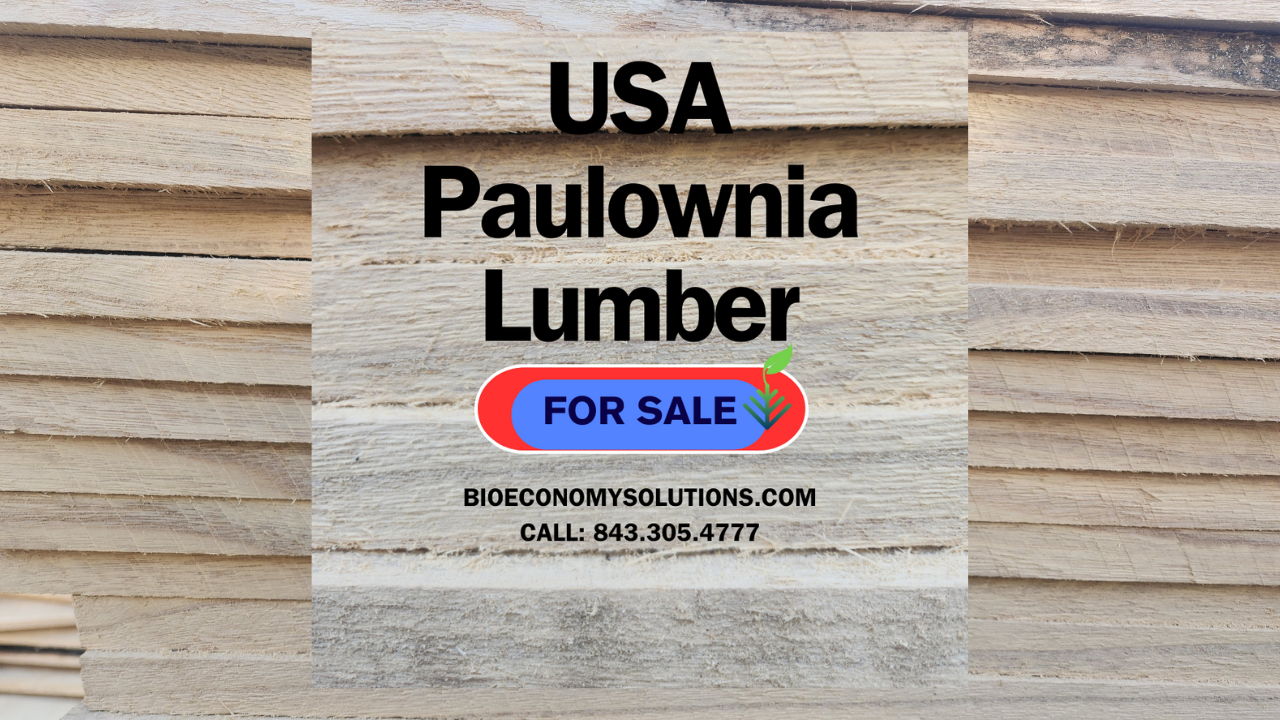
Where To Buy USA Paulownia Lumber

Where To Buy Paulownia? Paulownia Wood For Sale – QUESTIONS?

Visit our web page. https://bioeconomysolutions.com/paulownia-lumber/

We’re happy to organize a time to speak with you about our paulownia trees and lumber we have for sale. Please book your preferred time to speak directly.

Here’s a link to my online calendar/schedule:

www.bioeconomysolutions.com/bookcall

BioEconomy Solutions

mail@BioEconomySolutions.com

Office: 843.305.4777

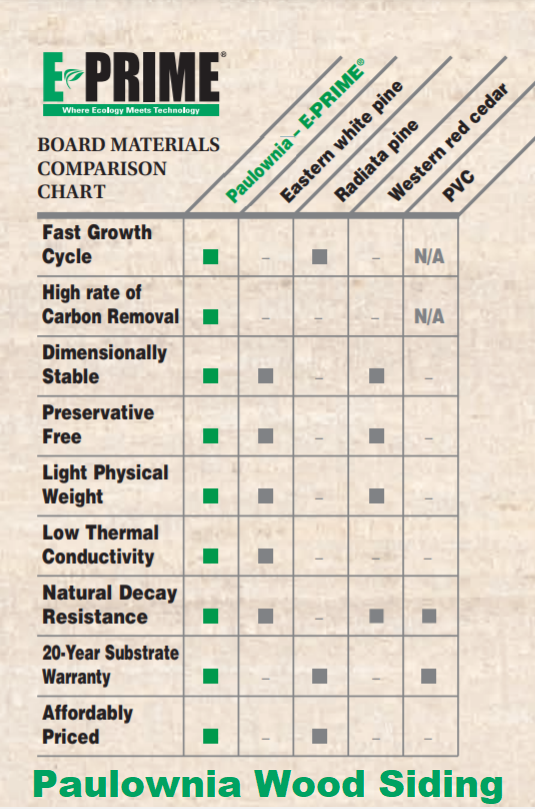
Currently Western Red Cedar is the main stay in many US Industries from housing to boat building. Now the price has risen, and the quality and quantity of cedar material has diminished.

Yes, Paulownia wood is generally considered to be naturally resistant to rot and decay, as well as insects. This is one of its notable properties and makes it suitable for various applications, including some outdoor uses.

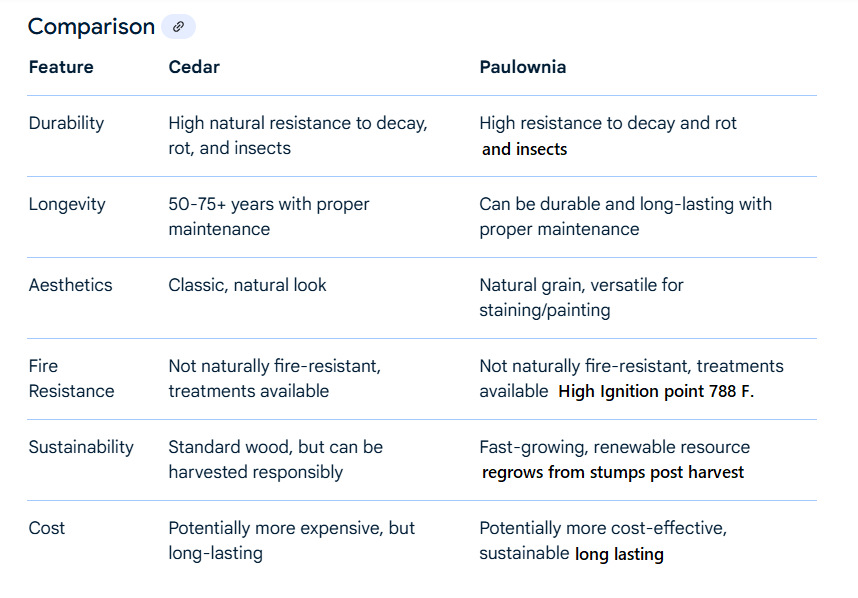
Comparison Chart


Why Is Paulownia Rot Resistant?

Here’s a breakdown of why:

Tannin content: Paulownia wood contains high levels of tannin, which acts as a natural preservative and helps deter decay.

Cell structure: When dried, the wood cells in Paulownia form a closed structure that provides protection against moisture and decay.

Low moisture absorption:Paulownia has a low moisture absorption rate, which further contributes to its resistance to rot and decay.

Insect resistance: The presence of compounds like paulonin and sesamin in the wood helps to repel insects. Paulonin is a compound found in some types of wood, particularly kiritansu, that provides insect repellent, antibacterial, and preservative properties.

While it has good natural resistance, its important to note that no wood is completely impervious to rot in all conditions. For exterior applications where Paulownia might be in constant contact with the ground or exposed to prolonged moisture, proper treatment and design considerations are still recommended to maximize its longevity.

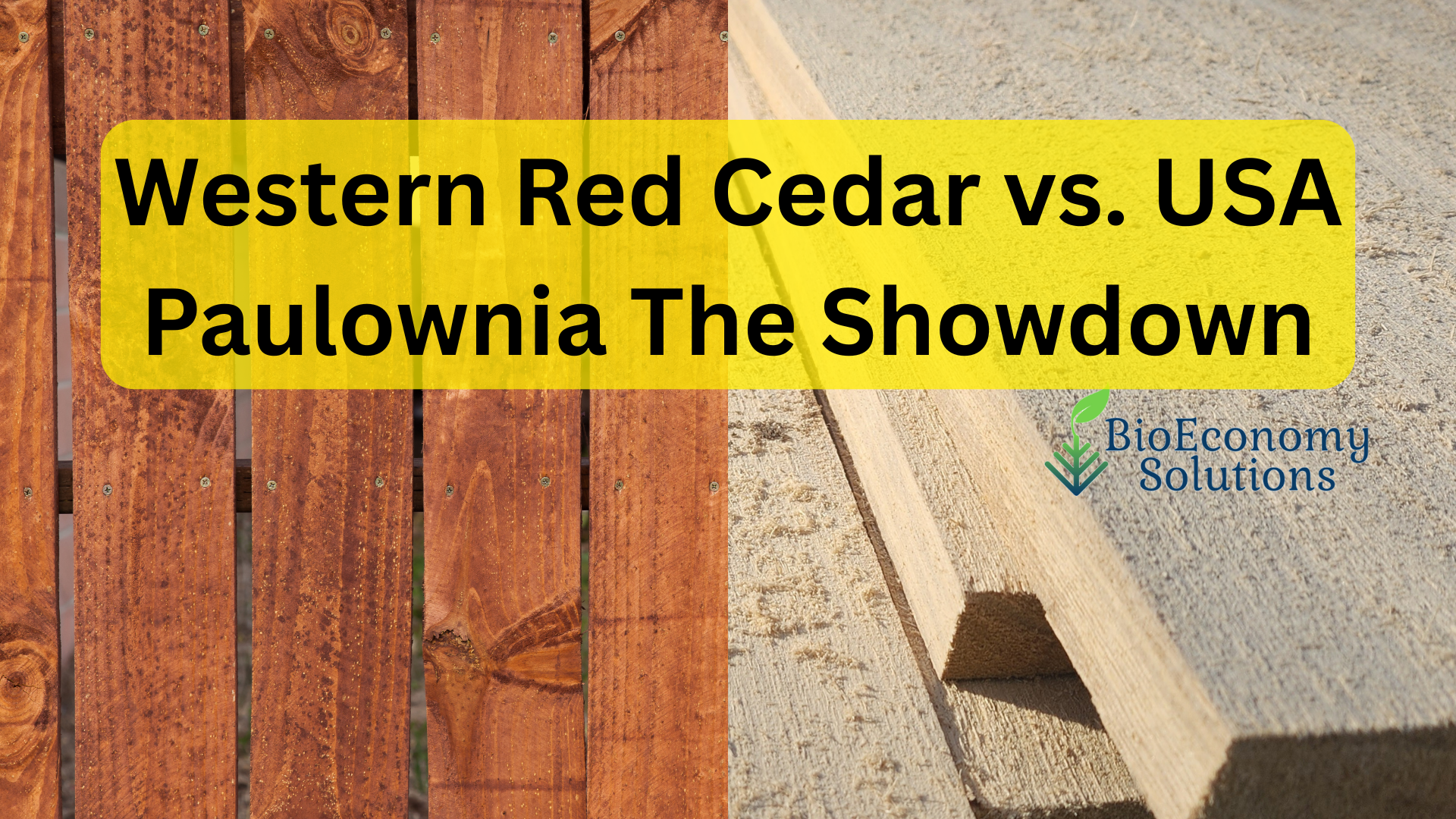
Western Red Cedar: Can the Paulownia Tree Replace a Classic?

Western red cedar (Thuja plicata) has long been a favorite for outdoor construction, siding, and furniture due to its natural durability and beauty. But with sustainability concerns and rising costs, could paulownia wood—the fast-growing “miracle tree”—be a viable alternative?

Let’s compare these two woods and explore how paulownia might supplant western red cedar in key applications

1. Growth Rate & Sustainability
Western Red Cedar: Slow-growing (takes 50+ years to mature).

Harvesting relies on old-growth forests or managed plantations, raising ecological concerns.

Increasingly expensive due to high demand and limited supply.

Paulownia: One of the fastest-growing hardwoods (harvestable in 5 – 7 years).

Thrives on marginal land, reducing pressure on natural forests.

Carbon sequestration powerhouse—absorbs 10x more CO₂ than cedar over the same period.

Winner? Paulownia is the clear choice for eco-conscious builders who want a renewable, low-impact material.

2. Weight & Workability

Western Red Cedar: Lightweight compared to other softwoods, but still denser than paulownia.

Easy to cut and shape but can split if nailed improperly.

Paulownia: Exceptionally lightweight (about 1/3 the weight of cedar).

Softer and easier to mill, carve, and sand—ideal for detailed woodworking.

Less prone to warping or cracking during drying.

Winner? Paulownia is better for crafts, models, and furniture where weight matters.

3. Durability & Weather Resistance

Western Red Cedar: Naturally rot- and insect-resistant due to oils and tannins.

Lasts decades untreated in outdoor applications (siding, decks, fences).

Paulownia: Naturally rot-resistant also and can be further enhanced with sealing or pressure treatment for outdoor use.

Naturally termite resistant if unprotected.

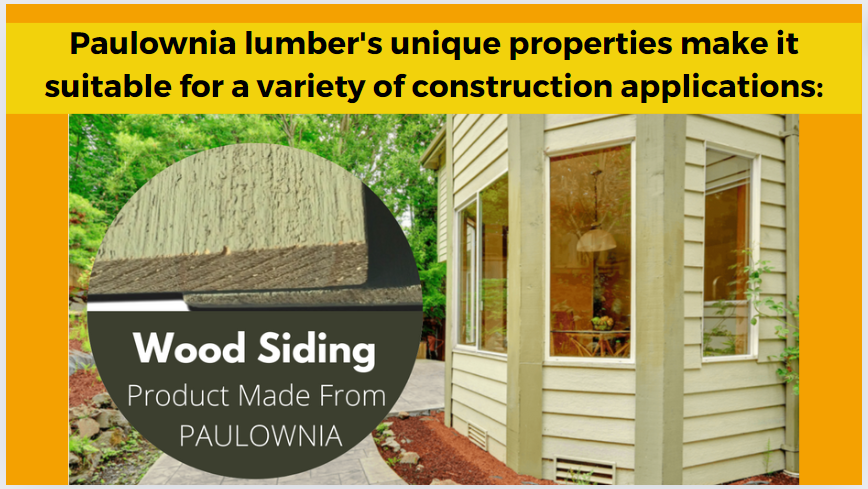
Cedar and paulownia shingle siding both offer natural, durable, and aesthetically pleasing options for home exteriors, but have distinct characteristics. Cedar is known for its natural resistance to decay, rot, and insects, and can last for decades with proper maintenance. Paulownia, while also durable and insect-resistant, is a faster-growing, more sustainable hardwood option.

Cedar Shingle Siding

  • Durability:
  • Longevity:
  • Aesthetics:
  • Fire Resistance:
  • Maintenance:
  • Cost: 16.00 /bf

Paulownia Shingle Siding

  • Durability:
  • Sustainability:
  • Aesthetics:
  • Fire Resistance:
  • Maintenance:
  • Cost: $6.00 /bf

4. Cost & Availability

Western Red Cedar

Prices have surged due to high demand and limited supply.

Premium grades (clear, knot-free) are especially expensive.

Paulownia

More affordable (often 30–50% cheaper than cedar).

Increasingly available from U.S. plantations.

Winner? Paulownia wins for budget-friendly projects.

5. Best Uses for Each Wood

Where Western Red Cedar Still Wins

  • Untreated outdoor projects (decking, shingles, fencing).
  • Aromatic applications (closets, saunas).
  • High-end siding where natural decay resistance is critical.

Where Paulownia Can Replace Cedar

  • Indoor furniture (lightweight, easy to carve).
  • Surfboards, Boats, Paddleboards musical instruments, and models (similar to balsa but stronger).
  • Treated outdoor structures (if sealed properly).
  • Sustainable construction (where fast regrowth is a priority).

Is Paulownia the Future?

While western red cedar remains unbeatable for natural outdoor durability, paulownia offers a sustainable, lightweight, and cost-effective alternative for many uses. As treatment methods improve and plantations expand, paulownia could supplant cedar in:

✅ Indoor woodworking

✅ Treated outdoor projects
✅ Eco-conscious construction

For builders and DIYers willing to seal or treat the wood, paulownia is a game-changer—offering the beauty and workability of cedar without the high cost or long wait for harvest.

Would you switch to paulownia? Let us know in the comments!

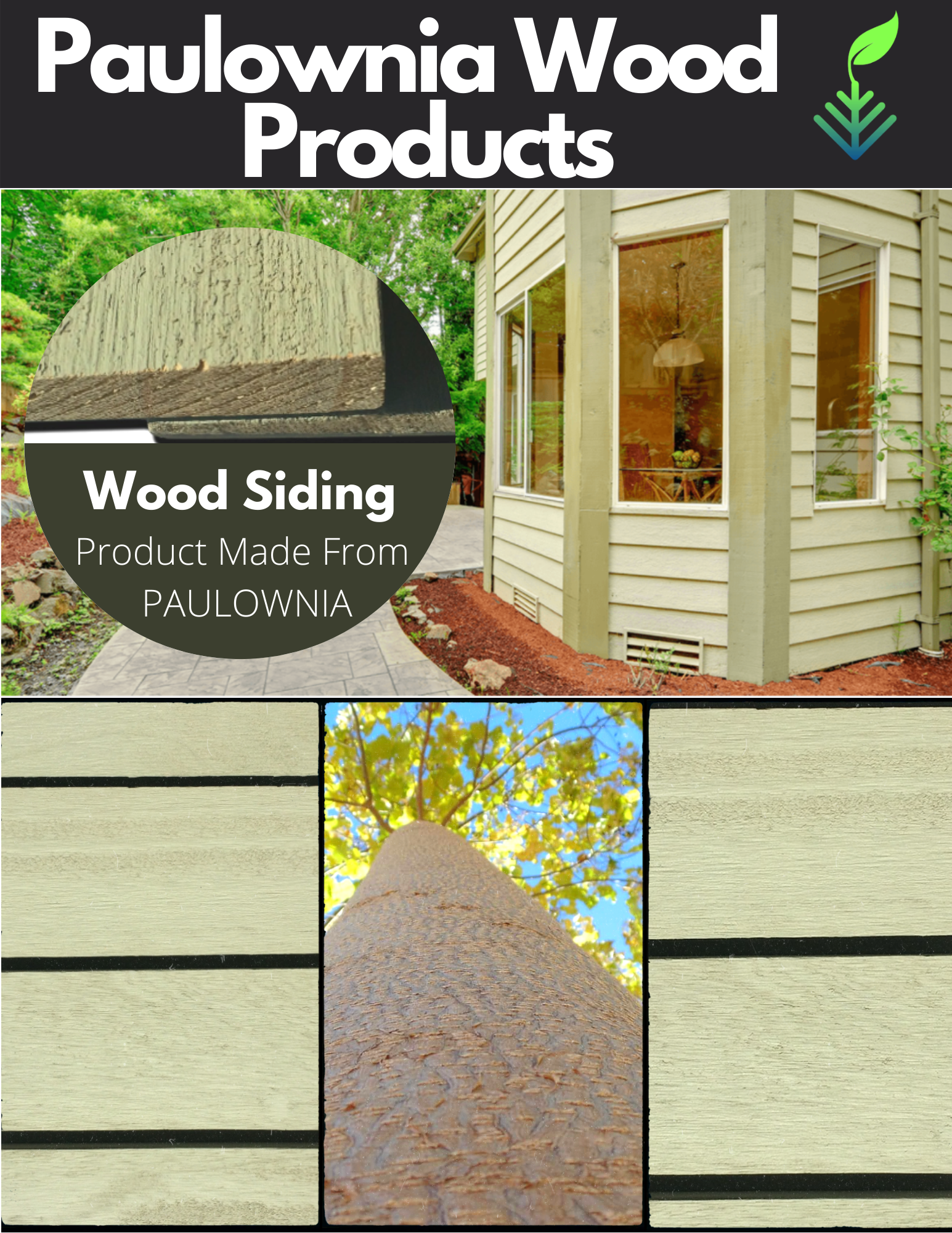
You can do better, paulownia is used for outdoor siding. James hardee siding uses paulownia.

Paulownia vs. Western Red Cedar: The Ultimate Showdown – Why Paulownia is the Future of Siding and Beyond

Western red cedar (Thuja plicata) has been the gold standard for premium outdoor wood for decades—revered for its natural beauty, durability, and resistance to rot. But in a world demanding faster-growing, more sustainable materials, paulownia is stepping into the spotlight.

Major manufacturers like James Hardie (a global leader in fiber cement siding) are already incorporating paulownia into their products, proving its viability as a high-performance building material. So, can paulownia truly replace western red cedar—not just in niche uses, but in siding, decking, and outdoor construction.

6. Cost & Availability – Paulownia is Disrupting the Market

Western Red Cedar: Prices have doubled in the past decade due to high demand and limited supply.

Premium clear cedar is becoming unaffordable for many builders.

Paulownia: 30–50% less expensive than cedar.

Increasingly available from U.S. plantations, reducing import reliance.

James Hardie’s use of paulownia signals industry confidence in its scalability.

Verdict: Paulownia is the budget-friendly, high-performance alternative.

7. The Future of Siding & Outdoor Construction

Where Cedar: Still Dominates (For Now) Untreated outdoor projects (fences, shingles, garden beds). High-end architectural siding where natural decay resistance is critical.
Where Paulownia is Taking Over: Engineered siding (like James Hardie’s products).

Treated decking and outdoor structures (sealed paulownia lasts as long as cedar).
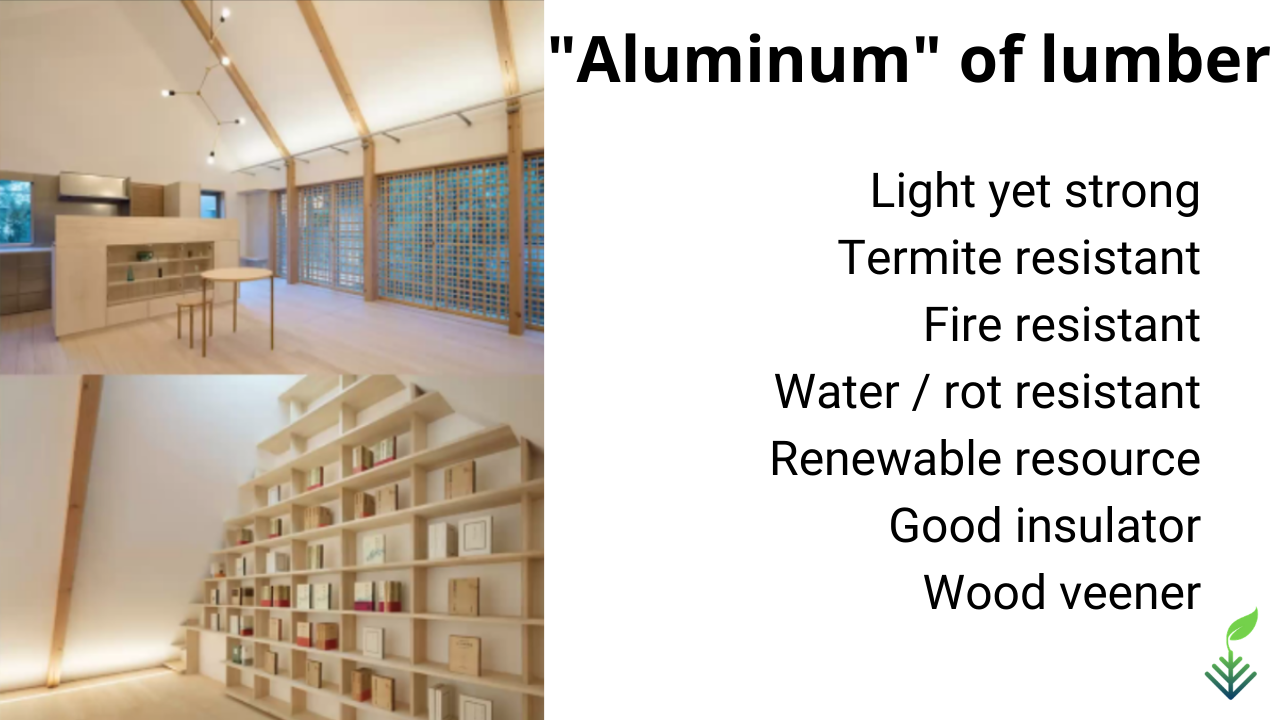
Sustainable mass timber construction (lightweight, fast-growing).

Indoor furniture, cabinetry, and millwork (easier to work with than cedar).

Final Verdict: Paulownia is the Next Big Thing

Western red cedar isn’t going away—it’s still the best choice for untreated, naturally durable outdoor projects. But with rising costs, environmental concerns, and advanced wood treatments, paulownia is poised to replace cedar in key markets:

✅ Siding (as seen with James Hardie)

✅ Treated outdoor structures (decks, pergolas, fencing)

✅ Eco-conscious construction (carbon-negative, fast-growing)

✅ Lightweight architectural applications

The bottom line? If you’re still using cedar for everything, it’s time to give paulownia a serious look. The future of sustainable building is here.

Would you switch to paulownia for your next project? Let us know in the comments!

Pricing of Both?

Include cost of both lumber prices. Western red cedar is $16.00 /bf and paulownia is $6.00 / bf.

The question isn’t “Is paulownia good enough?” – it’s “Can you afford NOT to use it?”

Where To Purchase USA Paulownia Lumber

Looking for paulownia lumber for your next project? We can ship what you need from our USA saw mill location.

Learn more about our South Carolina paulownia lumber here: https://bioeconomysolutions.com/paulownia-lumber/

We can also ship by rail or shipping container overseas as well.

Call us at 843.305.4777 OR Learn more about our South Carolina paulownia lumber here: https://bioeconomysolutions.com/paulownia-lumber/

Paulownia: The Billion-Dollar Green Asset Class Institutional Investors Can’t Afford to Ignore

Missed our live event, “Eco-Friendly Paulownia Trees Everywhere”? The replay is now available—and for institutional investors, or any organization interested in this subject, this is more than just an environmental discussion. Paulownia tree plantations are a lucrative, scalable, and future-proof investment opportunity with unparalleled ESG upside.

Why Paulownia? The High-Growth, Low-Risk Green Asset

Paulownia isn’t just a tree—it’s a high-yield, sustainable investment vehicle with institutional-grade potential. Our event revealed a fully developed 10,000-hectare plantation model, demonstrating how Paulownia delivers:

Exceptional ROI– Fast-growing (harvest-ready in 2-7 years), premium biomass & timber markets, and carbon credit revenue streams.

Climate-Resilient Investing – One of the world’s most efficient carbon sinks, generating high-value offsets for ESG portfolios.

Natural Hedge Against Volatility– Inflation-resistant, uncorrelated to traditional markets, with rising global demand for sustainable timber.

Government & Regulatory Tailwinds– Eligible for reforestation subsidies, tax incentives, and green financing programs.

Phytoremediation & Land Appreciation – Rehabilitates degraded land, increasing asset value while cleaning pollutants (heavy metals, toxins).

Who Should Watch the Replay?

🌍 Sovereign Wealth Funds & Pension Funds – Diversify into tangible, inflation-proof assetswith long-term appreciation.

💼 Venture Capital & Private Equity – Scalable agroforestry plays with exit opportunities in carbon markets, sustainable timber, and bioenergy.

🏦 Family Offices & Impact Investors– High-growth, mission-aligned investments that balance profit with planetary impact.

📈 ESG Fund Managers – A verified, measurable green asset to bolster sustainability mandates and reporting.

The Institutional Case for Paulownia

  • Carbon Credits: Paulownia plantations generate premium voluntary carbon offsets (VCS, Gold Standard).
  • Timber & Biomass: Global demand for sustainable wood is surging, with Paulownia as a lightweight, durable alternative to traditional hardwoods.
  • Land Banking: Strategic acquisition of marginal land for value appreciation through ecological restoration.
  • Phytoremediation Projects: Partner with governments/NGOs to monetize polluted land cleanup.

Watch The Replay Now

The event replay delivers actionable insights, financial models, and case studies tailored to institutional capital deployment. This is not theoretical—it’s a proven, scalable asset class ready for portfolio allocation.

🔗 Watch the Replay Here – CLICK THE IMAGE BELOW

Who Should Watch the Replay?
🌱 Farmers & Landowners – Learn how to integrate Paulownia into agroforestry for profit and sustainability.

♻️ Eco-Entrepreneurs – Discover business opportunities in carbon credits, eco-timber, and phytoremediation projects.

🌍 Environmental Advocates – See how large-scale Paulownia planting can combat desertification and pollution.

🌳 Anyone Passionate About Reforestation – Get actionable insights on starting your own Paulownia plantation.

Schedule Private Briefing
Interested in a private briefing? Contact our investment team for exclusive data rooms and deal flow opportunities.

Book a call with us

#SustainableInvesting #InstitutionalCapital #ESG #CarbonMarkets #Agroforestry #Paulownia

Review The Financial Model For Paulownia Plantation
Want to see the numbers?

During the event we also did a full review of the financial model that IS NOT AVAILABLE TO EVERYONE as you will not see it above. But you can have access now. SEE BELOW

Subscribe For Access

Subscribe to review the full financial deck

About BioEconomy Solutions
Where To Buy Paulownia? Paulownia Wood For Sale – QUESTIONS?

Visit our web page. https://bioeconomysolutions.com/paulownia-lumber/

We’re happy to organize a time to speak with you about our paulownia trees and lumber we have for sale. Please book your preferred time to speak directly.

Here’s a link to my online calendar/schedule:

www.bioeconomysolutions.com/bookcall

BioEconomy Solutions

mail@BioEconomySolutions.com

Office: 843.305.4777

LIKE|SHARE|COMMENT

Enjoy this article? You may also enjoy “Carbon Developers Choose Paulownia Trees” https://www.linkedin.com/pulse/carbon-developers-choose-paulownia-trees-victor-garlington-imh4e/