The GENIUS Act—short for “Guiding and Establishing National Innovation for U.S. Stablecoins—was signed into law on July 18, 2025, establishing the first comprehensive federal regulatory framework for dollar-backed, redeemable “payment stablecoins” in the U.S. Congress.


✅ What the GENIUS Act Does

  • Requires 1:1 backing of stablecoins with liquid assets—U.S. dollars or short-term Treasuries—held in segregated accounts, with monthly public disclosures and third-party audits.

  • Establishes a dual federal–state licensing system: large issuers go federal, smaller ones under $10 B can operate under a certified state regime.

  • Pre-empts state law for federally supervised issuers to simplify market entry.

  • Includes robust consumer protection and AML/sanctions rules, plus prioritizes stablecoin holders in issuer insolvency.

  • Excludes most algorithmic or crypto-native stablecoins from being payment stablecoins and leaves them under a Treasury study in the next year.

  • Adds foreign supervision equivalence rules, allowing foreign issuers—once deemed to have equivalent regulation—to operate in the U.S.

This legislation positions the U.S. stablecoin sector for rapid growth, potentially scaling from a $260B market to several trillion, and anchors more stablecoin backing in Treasuries—supporting U.S. debt markets & dollar dominance.


🌲 Implications for Paulownia‑Backed Tokenized Carbon Credits

Paulownia trees are increasingly used in carbon sequestration projects because of their rapid growth and high CO₂ uptake. BioEconomy Solutions is tokenizing these carbon credits—tying each credit derivatively to a Paulownia tree or plantation, often via NFTs or tradable tokens.

While the GENIUS Act targets payment-oriented stablecoins, its regulatory principles spill over into tokenized asset markets, and here’s how they affect Paulownia carbon tokens:

  1. Stablecoin compliance frameworks don’t directly apply to carbon-credit tokens, since they’re not pegged to fiat. But the Act pre-empts ambiguity—it clarifies that “payment stablecoins” require 1:1 reserve backing, monthly disclosures, audits, and state/federal licensing (when used for payment). Tokenized assets used for trading or payments—like carbon-credit tokens—may attract scrutiny akin to stablecoin regulations, especially if they serve liquidation or transactional functions. In such cases, the Treasury or agencies could decide these fall under “other crypto-asset” rules queued for post-GENIUS Acts study.

  2. For environmental token projects, higher transparency and audit expectations set a new bar. If these tokens become tradable or payment instruments, similar compliance (reserves audits, AML/KYC, segregation of assets) may follow.

  3. Cross-border issuers of tokenized credits may need equivalent regulatory certifications—mirroring the approach for stablecoins—especially for foreign-based Paulownia credit issuers targeting U.S. buyers.

  4. The Act’s emphasis on liability prioritization could inspire analogous frameworks in tokenized carbon credits—ensuring token holders have clear claims on physical carbon assets if a project defaults.


🛠 What This Means for Paulownia Carbon‑Credit Token Projects

  • ❎ If your token is intended for trading or payment in the U.S., it may need to comply with AML, consumer protection, and asset-reserve audit-type principles—even if not strictly labeled a stablecoin.

  • ❎ Adapting audit models: Payment stablecoins now require monthly reserve audits. Carbon-credit tokens could adopt similar transparency practices to appeal to institutional and regulatory eyes.

  • ❎ Prepare for the Treasury study by engaging early with regulators, building compliant frameworks that anticipate potential classification as tokenized financial products.

  • ❎ Cross-jurisdiction coordination matters: foreign-based carbon token issuers targeting U.S. markets should track stablecoin-style foreign supervision equivalence modeling.

  • ❎ Bridge financing & DeFi integration: tokenized carbon credits might eventually serve as collateral in financial systems; lessons from stablecoin compliance (reserve requisites, audits) are vital.


STABLECOINS – TL;DR

While the GENIUS Act doesn’t mandate rules for carbon‑credit tokens directly, it sets a new regulatory benchmark for tokenized assets intended for payments or trading. Tokenized Paulownia carbon credits that become easily exchangeable, cross-border, or used in DeFi may soon need to adopt stablecoin‑level transparency, auditability, AML/KYC, and reserve-like structures—or else face classification as emerging crypto‑financial instruments. Token platforms should proactively align with these principles now to stay ahead of anticipated regulations.

Conclusion: A Tree for the Times

As the world reimagines land use and carbon policy, the Paulownia carbon credit market represents a bold convergence of ecology, technology, and finance. It’s not just about planting trees—it’s about planting the right tree, in the right system, with the right data to turn carbon into capital.

With scalable potential and scientifically engineered reliability, Paulownia is more than a fast-growing tree—it’s a catalyst for a climate-resilient future and a profit center for forward-looking investors and landowners.


⏱ Next Steps

  • ❎ Landowners: Explore converting acreage into Paulownia carbon farms.
  • ❎ Investors: Evaluate biochar and carbon forestry funds linked to high-sequestration species.
  • ❎ Buyers: Offset emissions with premium, verifiable Paulownia-based removal credits.
  • ❎ Policymakers: Incentivize regenerative agroforestry under national carbon strategies.

🧭 Contact Us – Schedule a Call

Want to see what real-time ESG compliance looks like in action? Or need help building your ESG tech stack? Let’s talk.

By converting its carbon, growth, and timber value into blockchain-based tokens, Paulownia CDR creates a transparent, inclusive, and sustainable financial model that aligns with the goals of the UNCCDParis Agreement, and global reforestation efforts.

Contact Us

Where To Buy Paulownia Core Materials? QUESTIONS?

We’re happy to organize a time to speak with you about our ESG compliance solutions.

⏰ Here’s a link to my online calendar/schedule:

www.bioeconomysolutions.com/bookcall

BioEconomy Solutions

mail@BioEconomySolutions.com

Office: 843.305.4777

Visit us at: https://bioeconomysolutions.com/paulownia-carbon-credits/ Let’s chat about paulownia tree solutions for sustainable Forest carbon credits projects.

LIKE|SHARE|COMMENT

Subscribe to our newsletter: https://bioeconomy-solutions.kit.com/45b34109e5 

Get a FREE copy of Paulownia Carbon Report

Get a FREE copy of Paulownia Carbon Report


Learn More - How The GENIUS Act Is BIG For Paulownia? Nature Based Carbon Dioxide Removal with paulwonia fast growing hybrid trees from BioEconomy Solutions

Learn More – How The GENIUS Act Is BIG For Paulownia?

Learn More – How The GENIUS Act Is BIG For Paulownia? Nature Based Carbon Dioxide Removal with Paulwonia fast growing hybrid trees from BioEconomy Solutions.

Introduction

The Explosive Global Quest to combat climate change is in full swing, few “nature-based assets” are as overlooked—or as potent—as the Paulownia tree.

Desertification is also a significant concern which directly contributes to food and water insecurity worldwide. The persistent degradation of dryland ecosystems by climate change and human activities, such as unsustainable farming, overgrazing, and deforestation are the source causations.

The United Nations Convention to Combat Desertification (UNCCD)is an international agreement focused on addressing desertification, land degradation, and drought. It aims to achieve a land degradation-neutral world and is a key part of the Sustainable Development Goals.

Paulownia is rapidly becoming a centerpiece solution for re-greening and in the evolving carbon credit economy. As carbon markets expand in both scale and complexity, Paulownia-based carbon credits represent a high-growth opportunity for landowners, project developers, and institutional buyers alike.

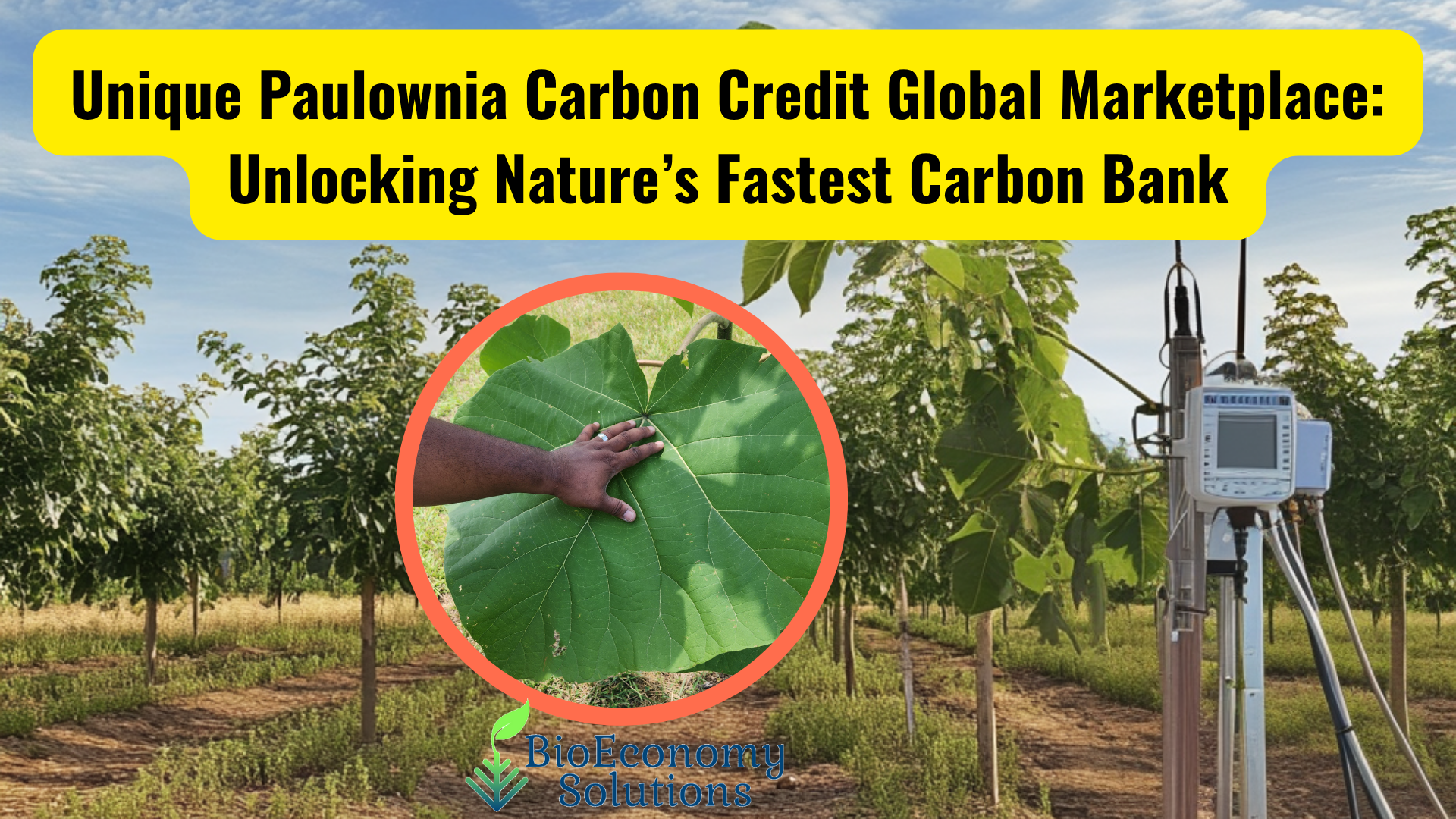
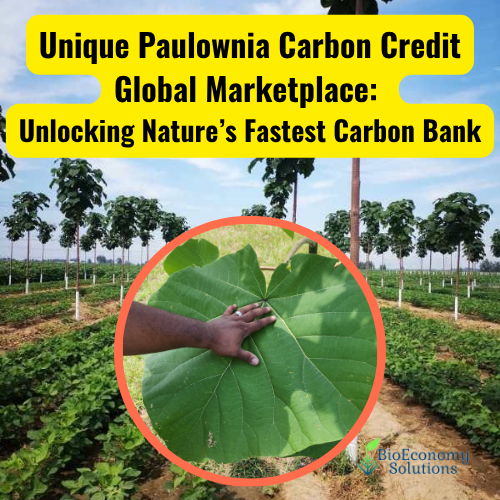
Paulownia is reshaping the global carbon credit marketplace—and here’s why it’s becoming the tree of choice for climate-forward agroforestry Carbon Dioxide Removal (CDR) investments. What Makes Paulownia Ideal for Carbon Sequestration?

Paulownia is one of the fastest-growing trees in the world, capable of reaching 10–20 feet in its first year and maturing in under a decade. But its real power lies underground and in its chemistry:

  • Deep taproots mine carbon and water deep into the soil.
  • Abundant biomass production allows for stable biochar production.
  • Sterile hybrid varieties (like MegaFlora) eliminate invasive species risks.
  • Paulownia forests regenerate after selective harvesting, making them ideal for rotational carbon capture and continuous credit generation.

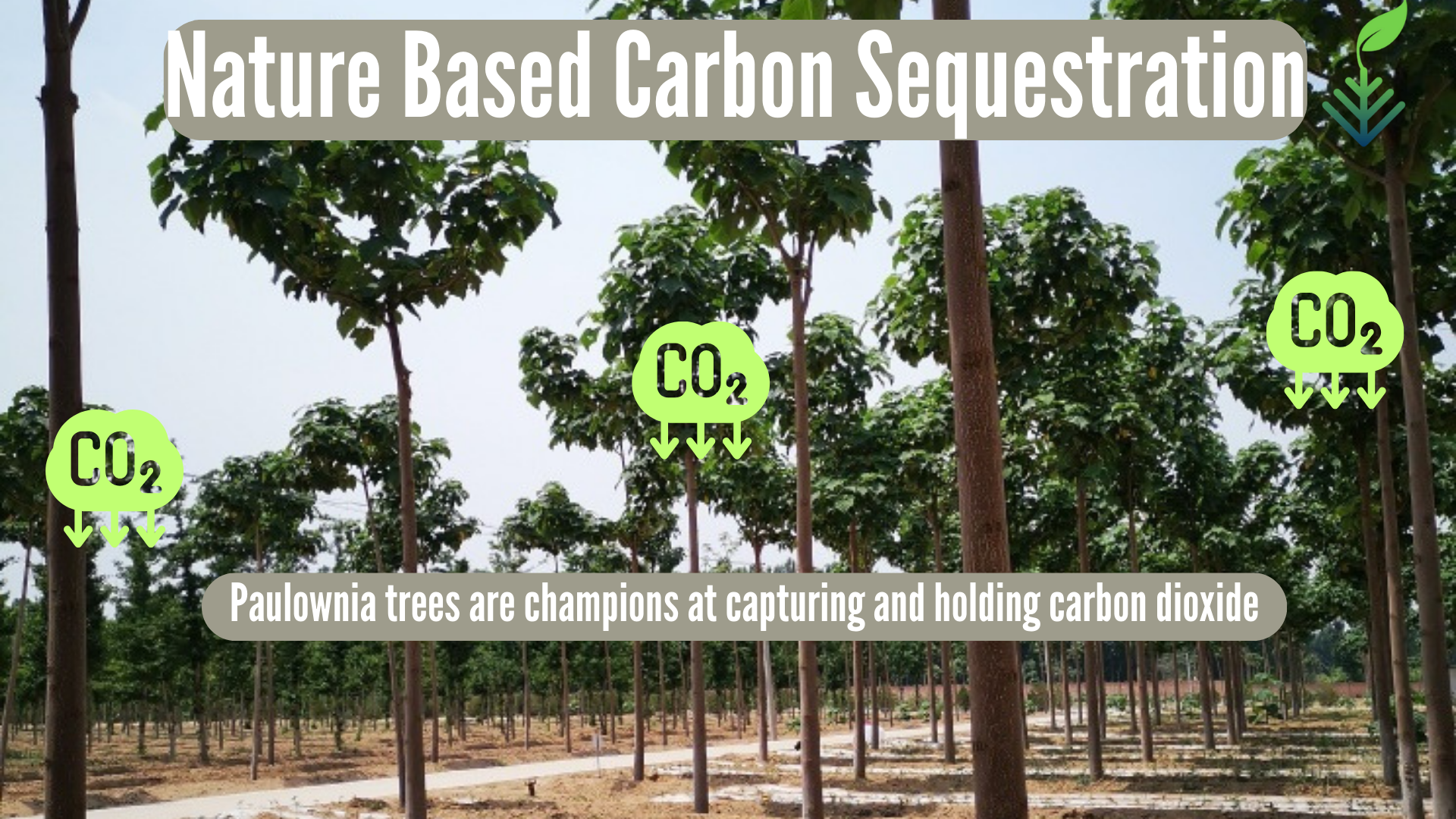
Each Paulownia tree can conservatively sequester 0.35 to 0.70 metric tons of CO₂ per year, and when planted at scale, these numbers rival DAC industrial-scale carbon offset programs.

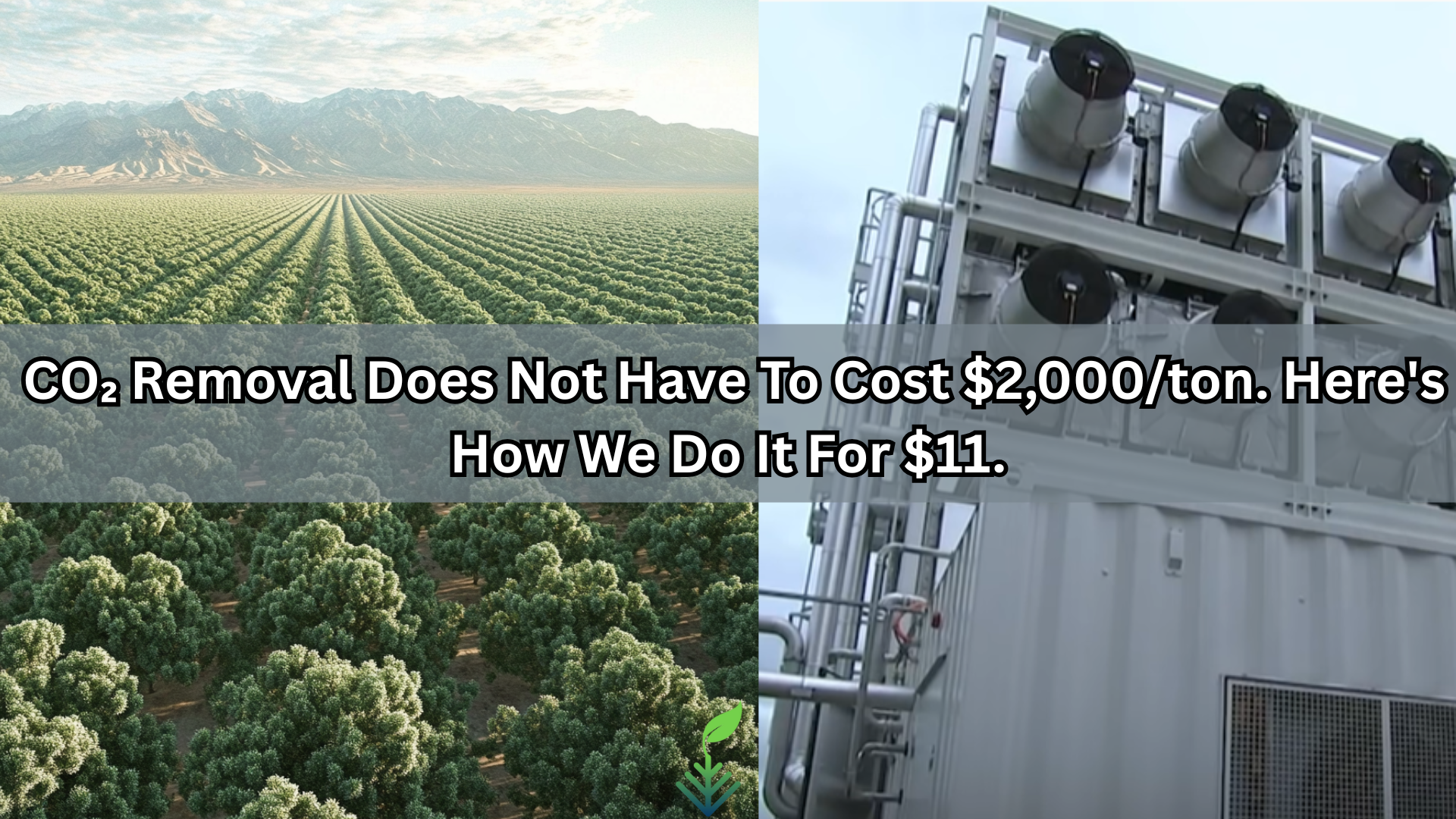
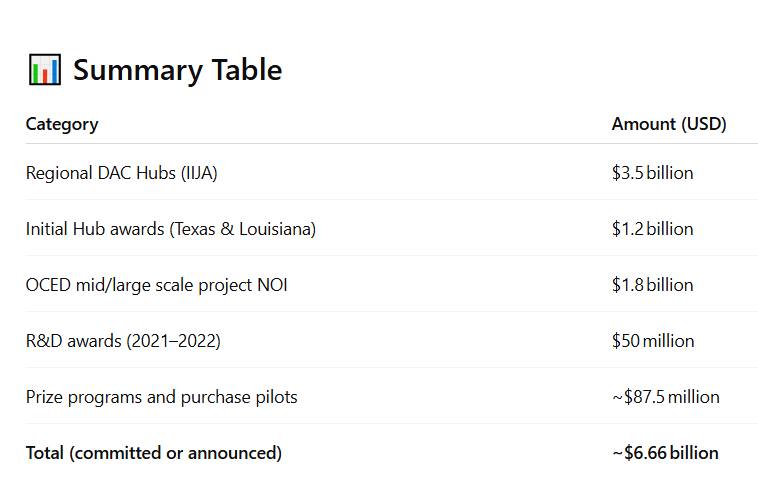
Tech v.s. Trees: What $6.66 Billion Taught Us About Real Carbon Removal. Carbon removal is no longer a future goal — it’s a present necessity read more.

The Structure of the Global Paulownia Carbon Marketplace

The carbon credit ecosystem for Paulownia operates through a coordinated series of stages:

1. Agroforestry Development

Projects typically start by converting degraded land (e.g., arid regions or post-mining zones) into productive, monitored plantations. The optimal model includes intercropping, which both supports biodiversity and boosts soil carbon.

2. Quantification & Monitoring

Platforms like Puro.Earth, Verra, and Net Eco Exchange are being used to certify Paulownia projects. Some use green tech real-time monitoring, which provides instant data of verifiable, high-frequency CO₂ uptake transparency for institutional buyers.

3. CRU and VCU Generation

Carbon Removal Units (CRUs) and Verified Carbon Units (VCUs) are issued based on performance metrics. Paulownia projects can sell these on voluntary markets or in compliance markets like CORSIA and EU ETS, where eligible.

4. Trading & Brokerage

Once credits are verified, they’re traded through brokers, or directly via aggregators and exchanges. Pricing depends on volume, verification, co-benefits, and credit type (removal vs. avoidance).

Market Potential and Revenue Forecast

Global Compliance Market

The global compliance market for carbon credits is massive. According to Refinitiv, the market has grown substantially, reaching a trading value of approximately $1.5 trillion in 2024, up from $950 billion in 2023. This represents about 15.7Gt CO2 equivalent traded across various compliance markets worldwide.

Global Voluntary Market

  • The voluntary carbon market reached a value of $2.5 billion in 2023 and is projected to grow to $100-250 billion by 2030, according to recent analyses.

Paulownia Carbon Credits

Paulownia projects are uniquely poised to capitalize on this growth:

  • Paulownia Per Tree Revenue: $8–$20 per tree/year depending on sequestration rates and market price.
  • Paulownia Per Acre Revenue: With annual carbon income exceeds $23,000/acre/year.
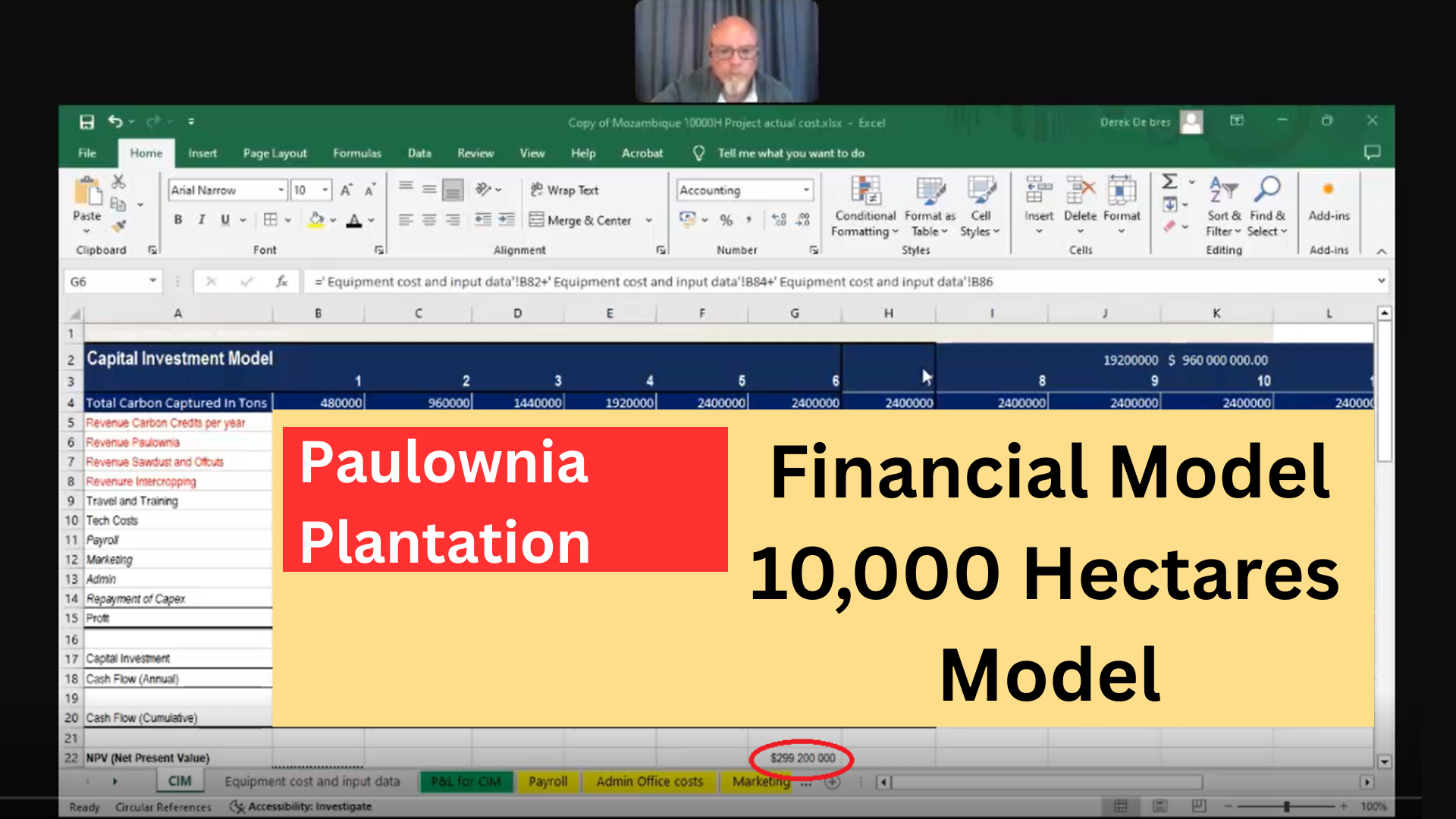
  • Paulownia Large-Scale Projects: A 10,000-acre plantation could generate millions in carbon revenue, excluding additional revenue from timber, biochar, or biomass energy.

Challenges to Overcome

While the promise is strong, success depends on:

  • Public perception: Planting mono-crops vs. integration of native species and food plots.
  • Upfront capital: High costs of propagation, planting, and monitoring demand innovative finance models—like green bonds, pre-sold credits or tokenized carbon futures.

The Role of the Paulownia Carbon Market in Global Climate Strategy

Governments and corporations alike are under pressure to meet Net Zero targets. Nature-based solutions, especially green tech engineered agroforestry with proven MRV systems (Measurement, Reporting, Verification), are increasingly attractive.

Paulownia provides:

  • ✅ High sequestration per acre
  • ✅ Low land-use conflict (can grow on degraded land)
  • ✅ Multi-benefit yield 💱 (carbon, timber, food, jobs)
  • ✅ Fast credit generation timeline

It also aligns with over 10 UN Sustainable Development Goals, from poverty alleviation to climate action.

🔗 Watch the Replay Here – CLICK THE IMAGE BELOW

Conclusion: A Tree for the Times

As the world reimagines land use and carbon policy, the Paulownia carbon credit market represents a bold convergence of ecology, technology, and finance. It’s not just about planting trees—it’s about planting the right tree, in the right system, with the right data to turn carbon into capital.

With scalable potential and scientifically engineered reliability, Paulownia is more than a fast-growing tree—it’s a catalyst for a climate-resilient future and a profit center for forward-looking investors and landowners.

⏱ Next Steps

  • ❎ Landowners: Explore converting acreage into Paulownia carbon farms.
  • ❎ Investors: Evaluate biochar and carbon forestry funds linked to high-sequestration species.
  • ❎ Buyers: Offset emissions with premium, verifiable Paulownia-based removal credits.
  • ❎ Policymakers: Incentivize regenerative agroforestry under national carbon strategies.

🧭 Contact Us – Schedule a Call

Want to see what real-time ESG compliance looks like in action? Or need help building your ESG tech stack? Let’s talk.

By converting its carbon, growth, and timber value into blockchain-based tokens, Paulownia CDR creates a transparent, inclusive, and sustainable financial model that aligns with the goals of the UNCCD, Paris Agreement, and global reforestation efforts.

Contact Us

Where To Buy Paulownia Core Materials? QUESTIONS?

We’re happy to organize a time to speak with you about our ESG compliance solutions.

⏰ Here’s a link to my online calendar/schedule:

www.bioeconomysolutions.com/bookcall

BioEconomy Solutions

mail@BioEconomySolutions.com

Office: 843.305.4777

Visit us at: https://bioeconomysolutions.com/paulownia-carbon-credits/ Let’s chat about paulownia tree solutions for sustainable Forest carbon credits projects.

LIKE|SHARE|COMMENT

Subscribe to our newsletter: https://bioeconomy-solutions.kit.com/45b34109e5 

Subscribe to our newsletter

Tech v.s. Trees: What $6.66 Billion Taught Us About Real Carbon Removal

Carbon removal is no longer a future goal — it’s a present necessity.

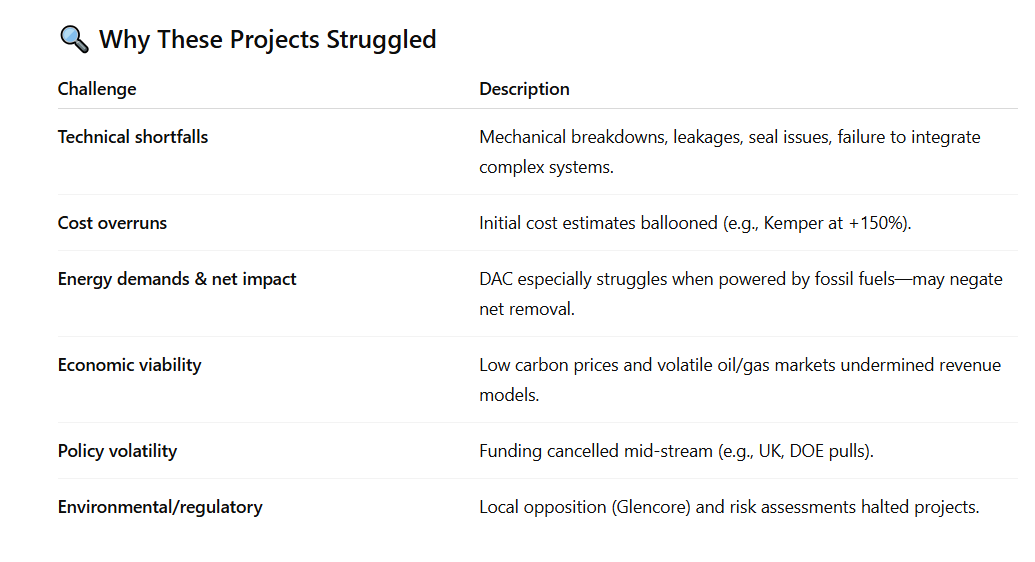
But here’s the hard truth: most of the money is going to the wrong solutions. Direct Air Capture (DAC) has received the lions share of American government funding.
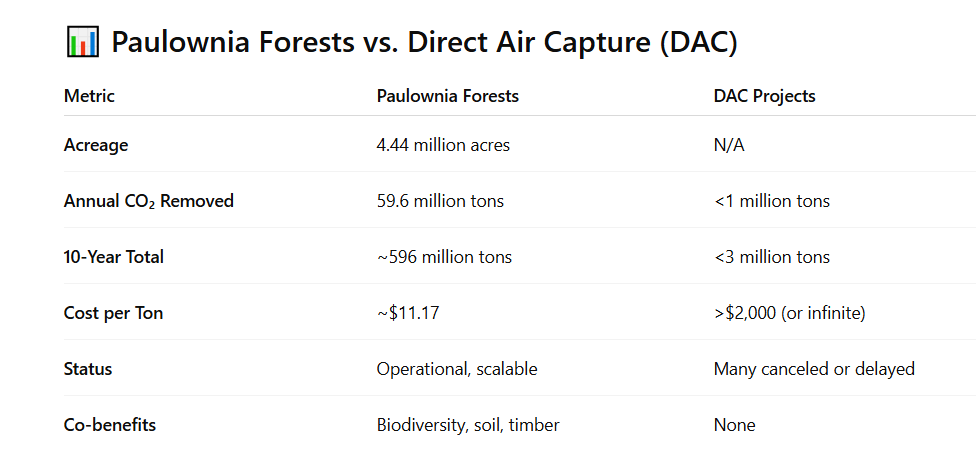
We compared two carbon removal paths using the same budget:
$6.66 billion. America already has spent billions on DAC.

Failed Direct Air Capture Projects DAC 

Failed Direct Air Capture Projects DAC ($6.66 Billion Spent)

Download The FULL REPORT (Free Download)


🔍 What This Means

With Paulownia trees:

  • We remove nearly 600 million tons of CO₂ over a decade

  • The cost per ton is 99.5% lower than DAC

  • We also restore ecosystems, soil, generate sustainable timber, and create rural jobs

With DAC:

  • The same spend removes <0.5% of the CO₂

  • Many projects are stalled, shelved, or shut down

  • There are no added environmental or economic benefits


🌍 Nature Works. Tech Still Needs Work.

Paulownia isn’t just a tree. It’s a fast-growing, high-carbon-removal, IoT-tracked, blockchain-backed engine of climate regeneration.

We believe the future of carbon removal is nature-powered and digitally verified.

Instead of betting billions on unproven tech, it’s time to scale what’s already working.


✅ Want to See the Model?

We’re planting millions of trees now.
We’re tokenizing their carbon impact.
And we’re inviting partners to scale globally.

📩 Let’s talk:
📅 Book a call → info586.youcanbook.me
📧 Mail@BioEconomySolutions.com
📞 (843)-305-4777

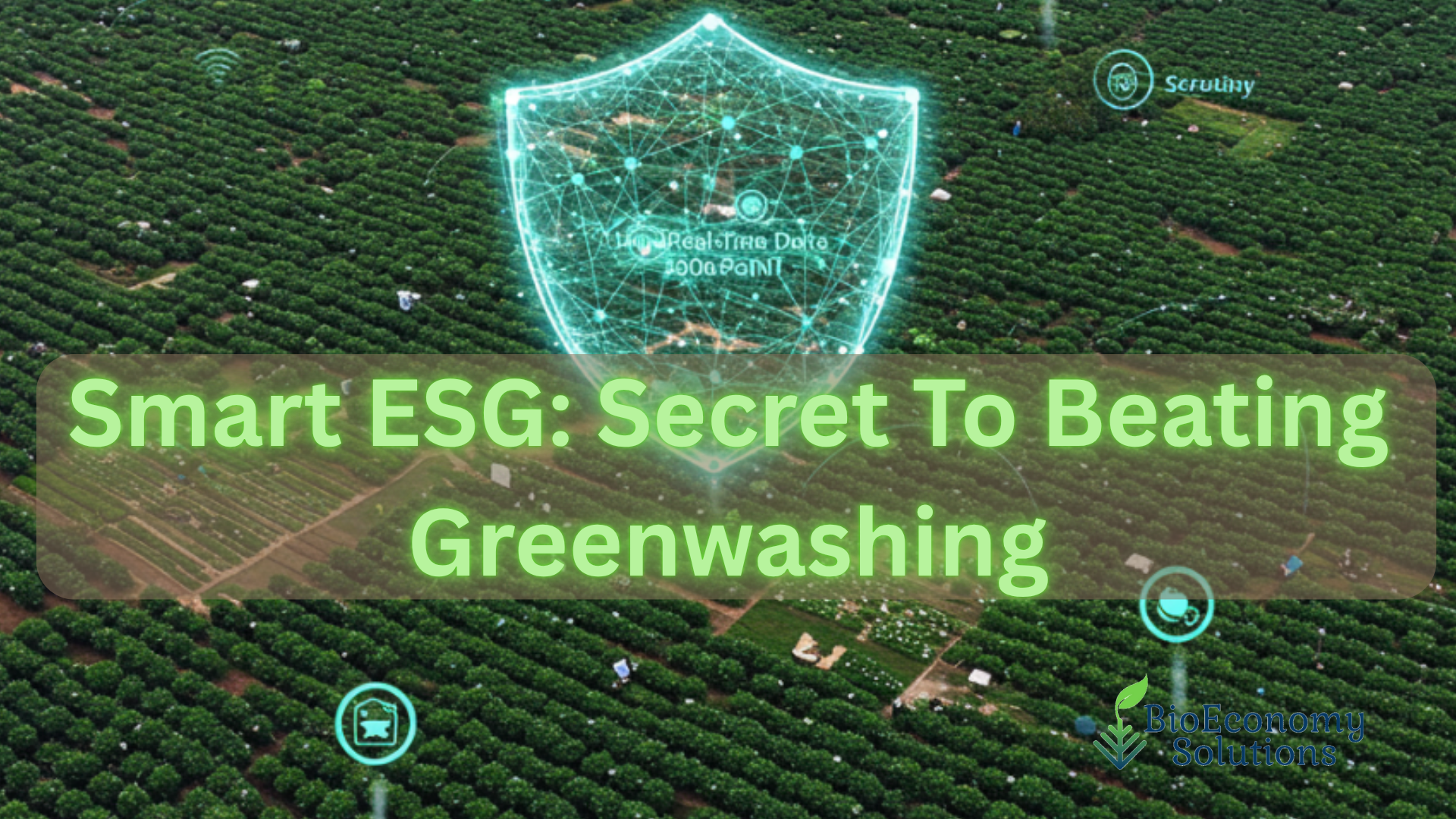
ESG Compliance in the Age of Scrutiny: Why Real-Time Data Is Your Best Defense Against Greenwashing.

In today’s sustainability-conscious marketplace, Environmental, Social, and Governance (ESG) performance isn’t just a buzzword — it’s a business imperative. But as ESG strategies grow more common, so too does the risk of greenwashing — the act of misleading stakeholders about a company’s environmental or social credentials. In 2023 alone, regulators in the U.S. and Europe levied tens of millions in fines for ESG misstatements, with firms like DWS, Invesco, and BNY Mellon under the microscope.

So how can companies stay compliant, credible, and competitive in an increasingly transparent world? The answer lies in real-time ESG data.


💡 What’s the Problem with Traditional ESG Reporting?

Traditional ESG reporting has a few fatal flaws:

  • Lagging data: ESG reports are typically published annually or quarterly — far too slow in a world of real-time disclosures and instant media.

  • Manual processes: Data is often collected through surveys, spreadsheets, and self-reported disclosures, which are prone to bias or error.

  • Lack of verification: Claims about carbon neutrality, sustainable sourcing, or social impact often lack third-party validation or audit trails.

These gaps don’t just raise reputational risk — they’re becoming compliance risks.


🧯 Greenwashing Enforcement Is Rising

Global regulators are cracking down hard on ESG misstatements:

  • SEC: Fined DWS $25M in 2023 for exaggerating its ESG investment practices.

  • FTC (U.S.): Penalized Kohl’s and Walmart for falsely marketing rayon products as bamboo.

  • EU: Found that over 40% of green claims were unsubstantiated and is introducing a Green Claims Directive to require evidence for all environmental claims.

Investors are also paying attention. Fund managers face growing pressure to demonstrate ESG integration with clear metrics, not marketing.


🛰️ Real-Time ESG Data: The Game-Changer

Real-time data empowers companies to track, validate, and communicate ESG performance in a transparent and dynamic way. Here’s how:

1. Live Monitoring of Emissions and Energy

  • Use IoT sensors and digital twins to measure Scope 1 & 2 emissions in real time.

  • Track energy use by facility or process to identify inefficiencies instantly.

2. Supply Chain Traceability

  • Use blockchain or API-connected platforms to verify sourcing, labor practices, and supplier sustainability credentials.

  • Real-time alerts if suppliers breach ESG requirements.

3. Automated ESG Dashboards

  • Integrate internal and third-party data to feed dashboards that show real-time ESG performance vs. targets.

  • Great for internal decision-making and external transparency.

4. Dynamic ESG Reporting

  • Move from static annual reports to interactive sustainability dashboards, updated monthly or even weekly.

  • Enables investors and consumers to see progress (or problems) without delay.


🎯 Benefits of Real-Time ESG Compliance

  • Avoid penalties and investigations: Proactive monitoring catches issues before regulators do.

  • Build investor confidence: Transparent, data-backed ESG performance is a competitive advantage.

  • Enhance brand trust: Consumers are more loyal to brands that show — not just say — they’re doing good.

  • Adapt faster: Real-time data lets you pivot operations, suppliers, or products when ESG risks emerge.


🧭 Key Takeaways

In the age of ESG scrutiny, greenwashing isn’t just unethical — it’s legally and financially dangerous. Relying on outdated, self-reported ESG data is no longer tenable.

Real-time ESG data isn’t just a tool for compliance — it’s a foundation for sustainable leadership.

Companies that invest in transparent, verifiable, and real-time ESG systems are far more likely to:

  • Avoid fines,

  • Attract long-term investors,

  • And stay ahead of regulatory and market expectations.


Next Steps Schedule Conversation

Want to see what real-time ESG compliance looks like in action? Or need help building your ESG tech stack? Let’s talk.

Today’s Real World Asset – Paulownia Trees

By converting its carbon, growth, and timber value into blockchain-based tokens, Paulownia creates a transparent, inclusive, and sustainable financial model that aligns with the goals of the UNCCD, Paris Agreement, and global reforestation efforts.

Contact Us

Where To Buy Paulownia Core Materials? QUESTIONS?

We’re happy to organize a time to speak with you about our paulownia trees and lumber we have for sale. Please book your preferred time to speak directly.

Here’s a link to our online calendar/schedule:

www.bioeconomysolutions.com/bookcall

BioEconomy Solutions

mail@BioEconomySolutions.com

Office: 843.305.4777

Visit us at: https://bioeconomysolutions.com/paulownia-carbon-credits/ Let’s chat about paulownia tree solutions for sustainable Forest carbon credits projects.

LIKE|SHARE|COMMENT

Enjoy this article? You may also enjoy “Carbon Developers Choose Paulownia Treeshttps://www.linkedin.com/pulse/carbon-developers-choose-paulownia-trees-victor-garlington-imh4e/

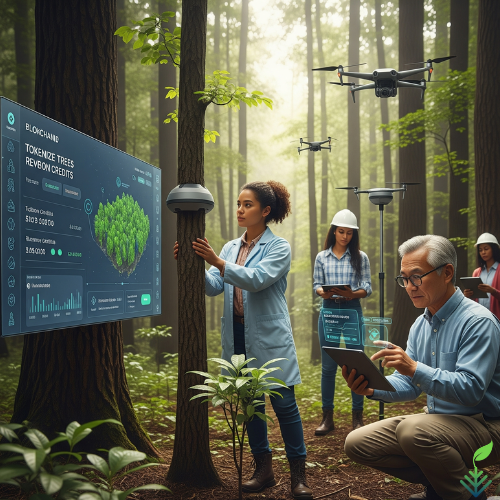
When considering Paulownia Tree Tokenizing Real-World Tree Assets. The Paulownia tree, known for its rapid growth, carbon absorption capacity, and economic value, is an ideal candidate for tree tokenization — a growing trend in climate tech and green finance. Here’s how Paulownia trees can be utilized within the tokenization framework to support environmental, economic, and social goals.

Tokenization of Paulownia Trees: How It Works and Why It Matters

What is Tokenization in this Context?
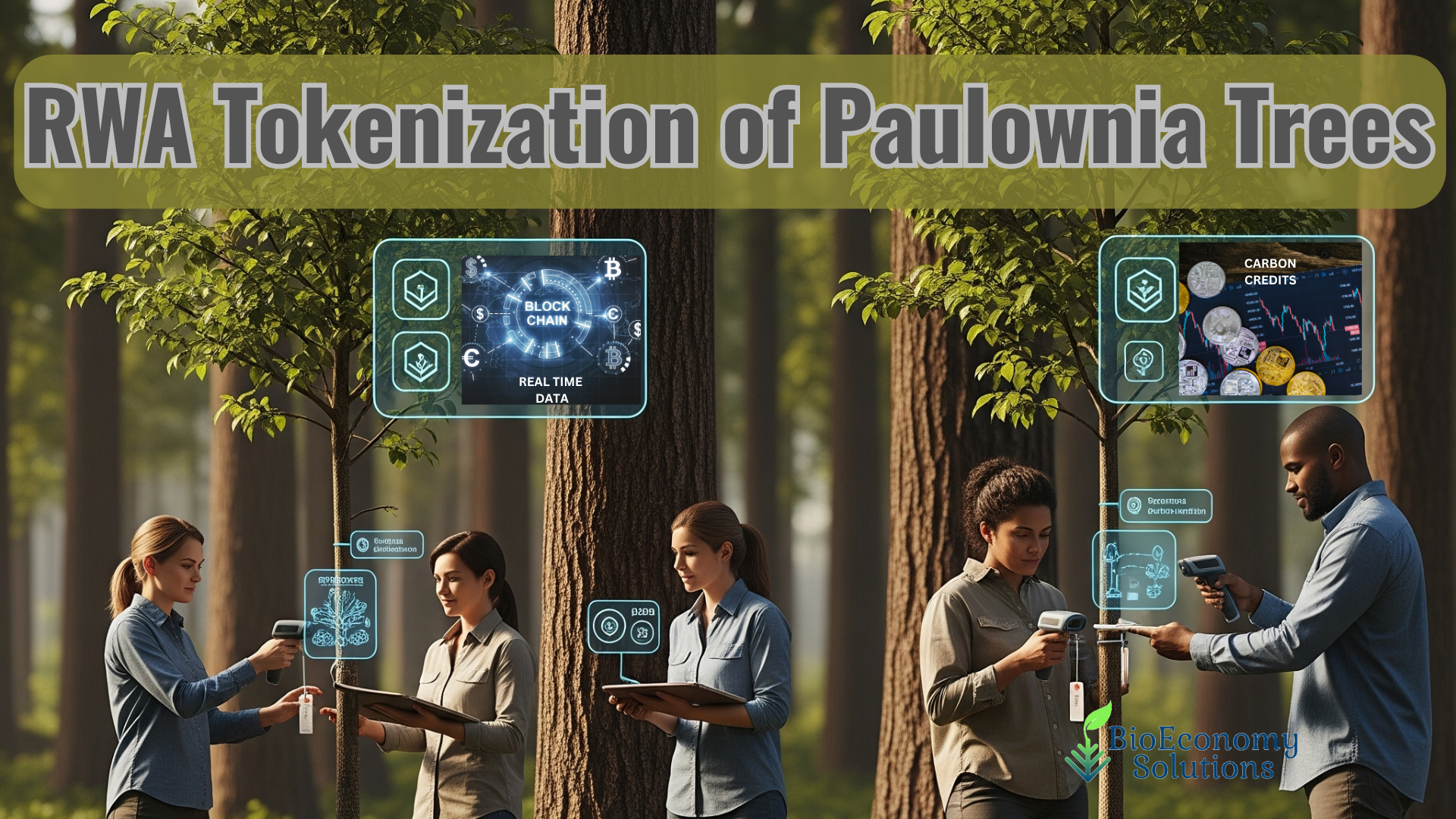
Tokenization involves converting ownership rights, carbon capture value, or economic benefits of a Paulownia tree (or a plot of them) into digital tokens on a blockchain. These tokens can be:

  • Sold or traded
  • Tracked transparently
  • Linked to real-world metrics like carbon sequestration or timber value

Why Paulownia is an Ideal Tree for Tokenization

1. High Carbon Sequestration

  • Paulownia trees absorb 10–20 times more CO₂ than many other tree species.
  • Their fast growth rate (up to 3–5 meters per year) means quicker and measurable carbon credit generation.
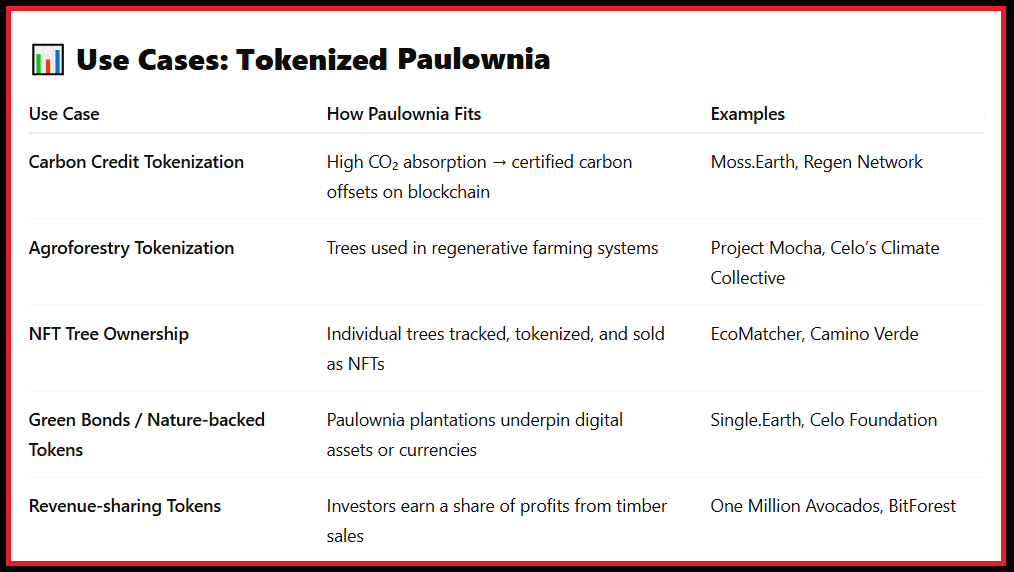
  • This makes them excellent for carbon offset tokens like those issued by other platforms.

2. Economic Value

  • The wood is lightweight, strong, and highly valuable in industries such as furniture, construction, and musical instruments.
  • Paulownia-based tokens can represent timber futures, making them attractive to investors — similar to the One Million Avocados or Project Mocha model.

3. Reforestation and Regenerative Agriculture

  • Paulownia trees can be used in reforestation and agroforestry, contributing to climate resilience and land restoration goals.
  • Like EcoMatcher or Camino Verde, projects can tokenize individual Paulownia trees using GPS tracking, growth data, and QR codes for transparency.

4. Shorter ROI Cycle

  • Due to their fast maturity (harvestable in 5–7 years), investors see returns sooner than with slow-growing trees.
  • This reduces risk and increases appeal for retail and institutional investors alike.

🔒 Benefits of Tokenizing Paulownia
✅ For Farmers: Upfront capital through token sales, improved livelihoods
✅ For Investors: Access to verified green assets, carbon offsets, or timber revenues
✅ For the Planet: Encourages tree planting, land restoration, and sustainable land use
✅ For Regulators: Easier monitoring and verification via immutable blockchain data

Strategic Path Forward
BioEconomy Solutions built a Paulownia tokenization platform by:

Partnering with forestry experts to establish high-quality plantations.
Working with carbon certifiers (like Net Eco Exchange, Verra or Gold Standard) to validate carbon offset.
Tokenizing assets using platforms like Polygon, Celo, or Ethereum.
Selling tokens to corporations, ESG investors, or climate-conscious individuals.

Today’s Real World Asset – Paulownia Trees

The Paulownia tree, thanks to its biological, economic, and environmental strengths, is perfectly suited for the tokenized future of forestry. By converting its carbon, growth, and timber value into blockchain-based tokens, Paulownia can help create a transparent, inclusive, and sustainable financial model that aligns with the goals of the UNCCD, Paris Agreement, and global reforestation efforts.

Contact Us

Where To Buy Paulownia Core Materials? QUESTIONS?

Visit our web page. https://bioeconomysolutions.com/paulownia-lumber/

What is paulownia wood? https://bioeconomysolutions.com/what-is-paulownia-wood/

We’re happy to organize a time to speak with you about our paulownia trees and lumber we have for sale. Please book your preferred time to speak directly.

Here’s a link to my online calendar/schedule:

www.bioeconomysolutions.com/bookcall

BioEconomy Solutions

mail@BioEconomySolutions.com

Office: 843.305.4777

Visit us at: https://bioeconomysolutions.com/paulownia-carbon-credits/ Let’s chat about paulownia tree solutions for sustainable Forest carbon credits projects.

LIKE|SHARE|COMMENT

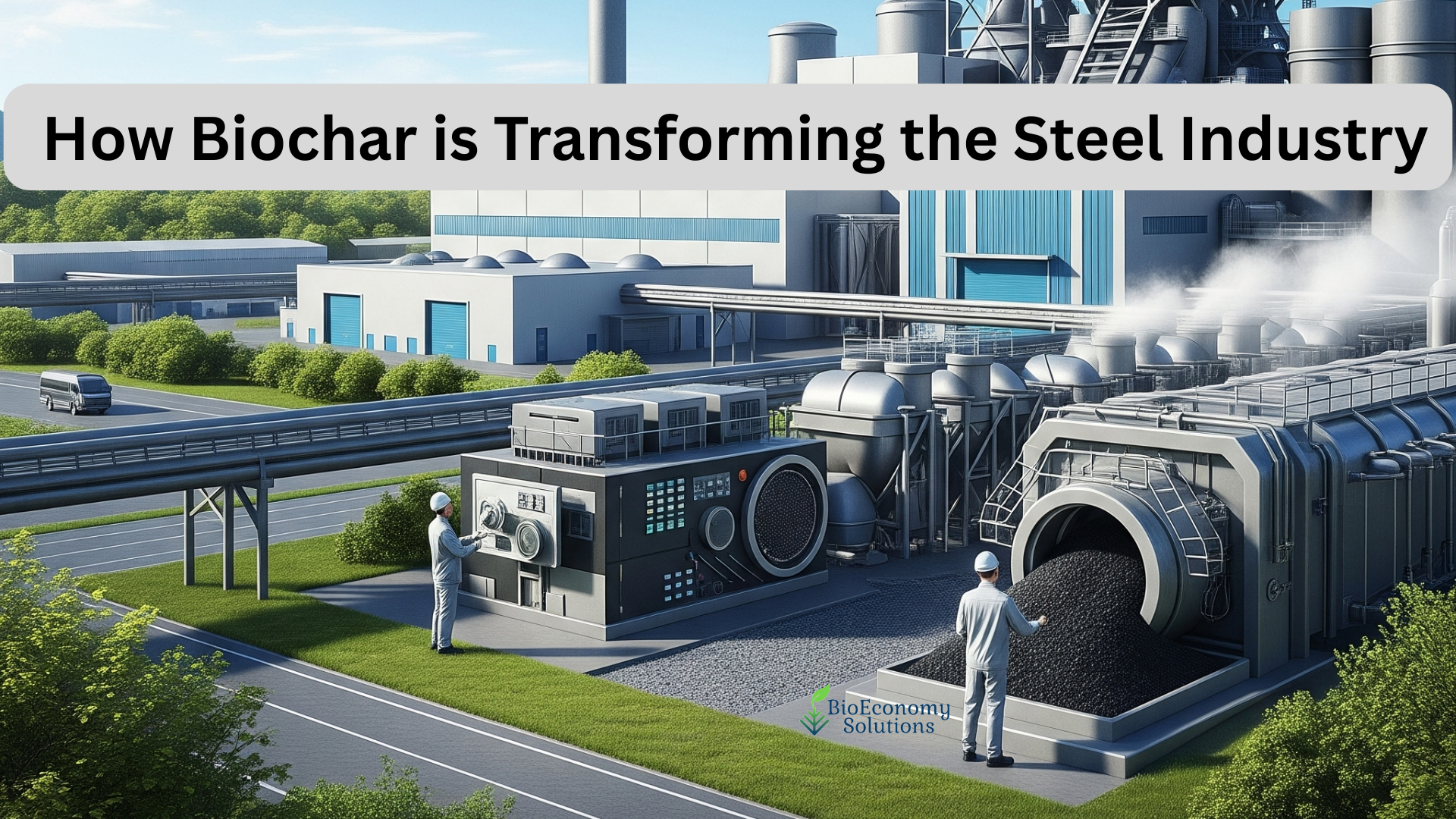
The steel industry is one of the largest industrial emitters of carbon dioxide, accounting for approximately 7–9% of global CO₂ emissions. At the heart of its carbon footprint is coal, used not only as a fuel but also as a chemical input in key processes. But what if we could replace that fossil carbon with a renewable, carbon-negative alternative?

Biochar Forging a Greener Future

What’s biochar? — a carbon-rich, plant-based material produced through pyrolysis. Already gaining attention for its role in soil enhancement and carbon sequestration, biochar is now being explored as a sustainable substitute for coal in steelmaking — and the implications are enormous.

Coke-Making: Replacing Fossil Carbon With Biochar Source

Coke, produced from metallurgical coal, is traditionally the primary carbon source in blast furnace operations. Biochar can be blended into the coking process to partially replace this fossil carbon:

  • Biochar as a co-carbon in coke ovens improves reactivity while reducing overall CO₂ emissions.
  • ✅ Reduces dependency on imported coking coal, improving supply chain resilience.

Ongoing trials suggest up to 20% biochar substitution is feasible without compromising coke quality.

Sintering: Cleaner Agglomeration for Iron Ores
In sintering, iron ore fines are agglomerated into porous lumps using coke breeze. This step emits significant particulates and CO₂.

🌱 Biochar can replace up to 40% of coke breeze without harming sinter strength or productivity (per studies on ScienceDirect).

🧪 Its higher porosity also supports better combustion efficiency and lower emissions of SOx and NOx.

Blast Furnaces: Biochar Injection and Coke Replacement

The blast furnace is where most emissions occur in steelmaking — and it’s also where biochar shines:

  • 🌬️ Pulverized Biochar Injection (PBI) into the blast furnace air inlets, offers a direct, drop-in substitute for pulverized coal injection (PCI).
  • 🌱 Partial coke replacement with dense, high-carbon biochar is under advanced testing — it supports iron ore reduction while releasing less CO₂.

Early data shows up to 28% CO₂ reduction potential when biochar replaces both PCI and part of the coke input.


Direct Reduction: A Future-Forward Path

Biochar is being explored as a renewable reducing agent in Direct Reduced Iron (DRI) processes — an alternative to blast furnaces:

  • 🔁 Combines well with hydrogen or natural gas for low-emission DRI production.
  • ♻️ Can serve as the sole solid reductant in emerging rotary kiln technologies.

As green hydrogen scales, biochar-enhanced DRI could become a key player in near-zero-emission steel.


Electric Arc Furnaces (EAF): Slag Foaming & Carbon Additives

In EAFs — where scrap metal is melted using electricity — biochar can also replace traditional carbon sources:

  • 🌋 Used to enhance slag foaming, critical for thermal efficiency and protecting furnace linings.
  • 🌱 Biochar’s light density and high carbon content make it a strong candidate for carbon injection in EAFs.

Replacing Fossil Carbon With Green Carbon

Replacing fossil coal with biochar could cut steelmaking emissions by up to 28%, according to recent studies.

Net Benefits:

✅ Lower carbon footprint

✅ Renewable feedstock

✅ Cleaner air and water

✅ Supports regenerative agriculture

Our company offers:

  • Direct Biochar production feedstock supply chain contracts.
  • Quality and consistency that matches your industrial standards.
  • Biochar & cost-competitive supply chain over traditional coal.
  • Direct carbon credit purchases for carbon offsets.

From Black Coal to Black Gold

Biochar offers more than just a coal alternative — it offers a blueprint for regenerative industry. It supports climate goals, strengthens supply chains, and enables a circular approach to carbon — all while producing the steel that still forms the backbone of modern civilization.

As the world demands climate-smart industry, biochar may well be the key to unlocking net-zero steel.


Dedicated Biochar Feedstock Supply Chain

Contact Us For Details

BioEconomy Solutions is a BIOCHAR Carbon Dioxide Removal (CDR) Project Developer. Talk to us about our biochar processing technology.

We’re happy to organize a time to speak with you about our high carbon biochar we have for sale. Please book your preferred time to speak directly.

Here’s a link to my online calendar/schedule:

www.bioeconomysolutions.com/bookcall

BioEconomy Solutions

mail@BioEconomySolutions.com

Office: 843.305.4777

Visit us at: https://bioeconomysolutions.com/paulownia-carbon-credits/ Let’s chat about paulownia tree solutions for sustainable Forest carbon credits projects


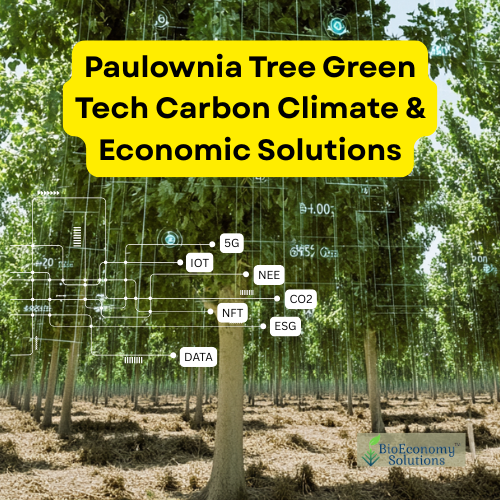
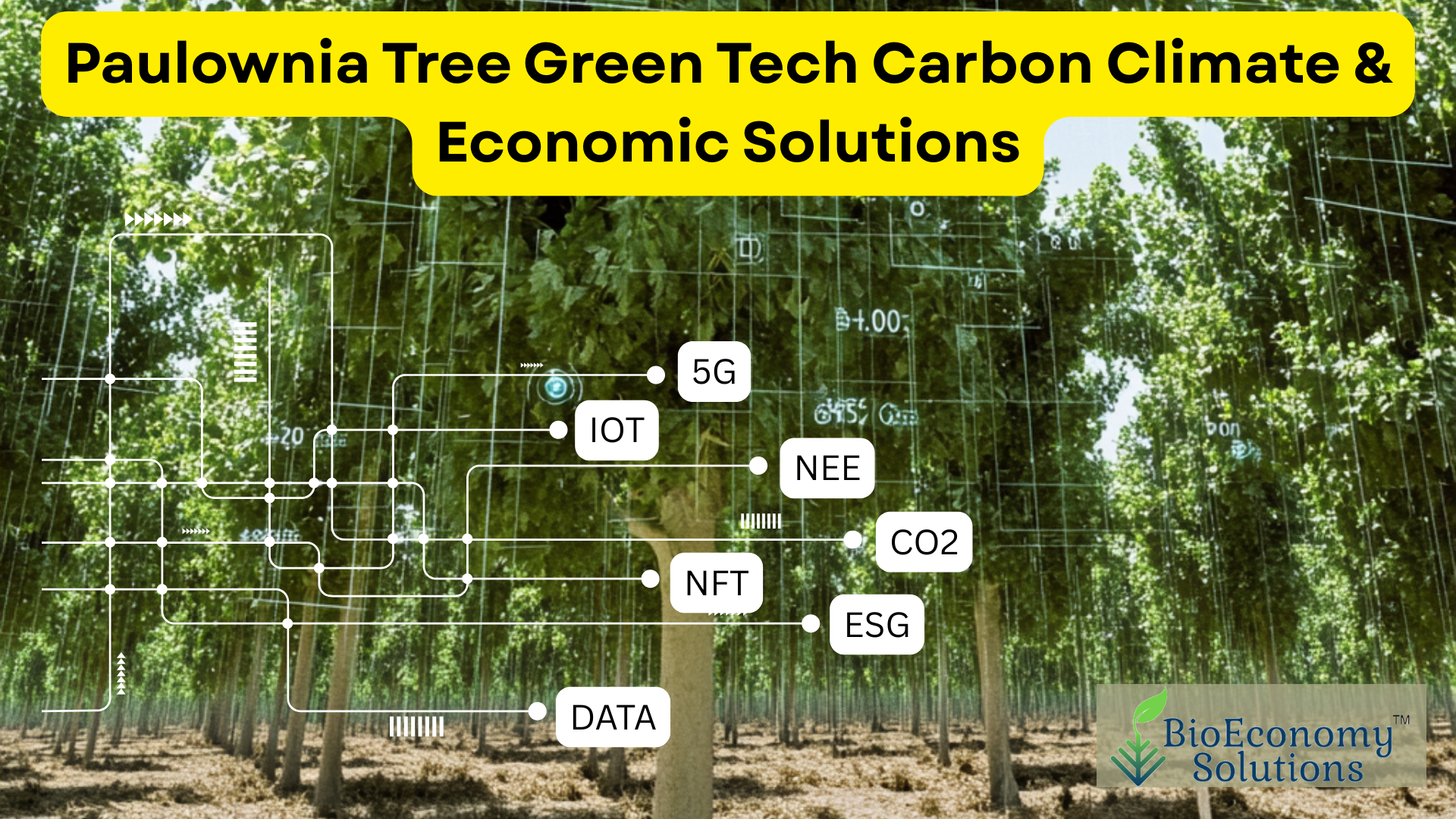
Paulownia Tree Green Tech Carbon Climate & Economic Solution

As regulatory frameworks tighten and stakeholder pressure grows, corporations face escalating demands to deliver transparent, measurable, and sustainable carbon removal solutions. Traditional carbon offsets are under scrutiny for lack of additionality, poor verification, and greenwashing risks. To meet ESG compliance mandates, businesses must adopt high-efficiency Carbon Dioxide Removal (CDR) strategies with real-time auditability—enter Paulownia-based reforestation, enhanced by IoT and blockchain tokenization.

Incase you missed it….? Here is our REPLAY of our live event on this subject. CLICK HERE

Why Paulownia? The ESG-Compliant Carbon Removal Powerhouse

Paulownia, often called the “Empress Tree,” is renowned for its rapid growth, reaching maturity in just 5-7 years compared to decades for traditional hardwoods. Its enormous leaves and high photosynthetic efficiency allow it to absorb up to 103 tons of CO₂ per hectare per year, far surpassing most other tree species.

Key Benefits of Paulownia for CDR:

Extreme CO₂ Absorption– 10x more efficient than typical trees.

Fast Growth– Matures in 5-7 years, enabling quicker carbon capture cycles.

High Biomass Production– Ideal for bioenergy and sustainable timber.

Drought & Disease Resistant– Thrives in diverse climates.

Soil Regeneration – Improves degraded land through deep root systems.

No Replanting – Post harvest, the tree regrows from the stumpage.

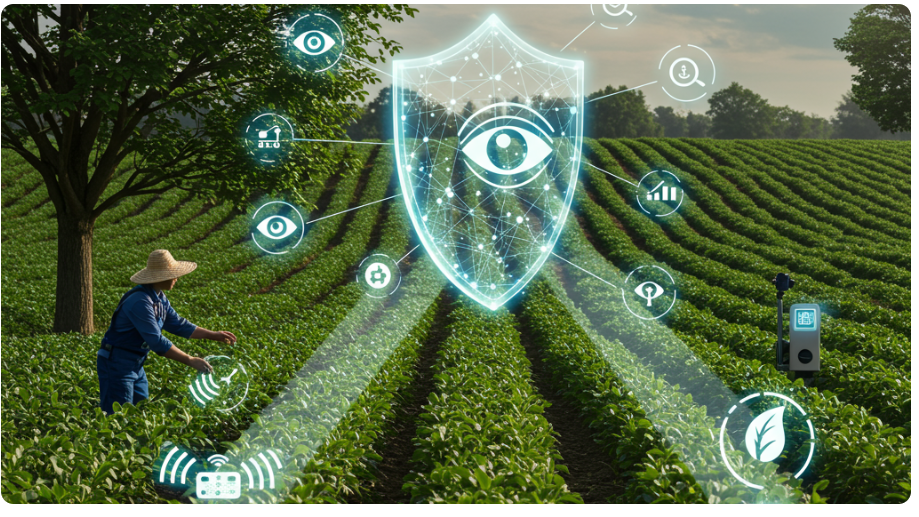
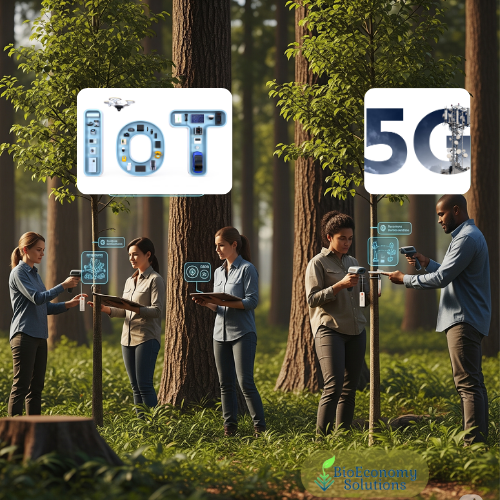
Paulownia’s unmatched CO₂ sequestration (10x more than average trees) and rapid growth make it ideal for high-impact ESG portfolios. But scalability alone isn’t enough—verifiability is key. By integrating IoT sensors and blockchain-tracked carbon data, corporations can transform Paulownia plantations into digitally verified carbon sinks, ensuring:

Real-Time Monitoring– IoT devices track CO₂ absorption, soil health, and tree growth.

Immutable Carbon Ledger– Blockchain records every ton of CO₂ removed, preventing double-counting.

Automated ESG Reporting– Smart contracts generate auditable reports for SEC, EU CSRD, and voluntary disclosures.

Tokenized Carbon Credits – Carbon removal verified on-chain, tradable as NFTs or security tokens in compliance with financial regulations.

Corporate Use Case: Tokenized Paulownia Carbon Projects

  1. A Fortune 500 company invests in a Paulownia reforestation project.
  2. IoT sensors transmit growth and CO₂ data to a DeFi-enabled carbon registry.
  3. Each ton of CO₂ removed is minted as a tokenized carbon credit (e.g., ERC-1155 or ERC-3643 for compliance).
  4. Smart contracts auto-settle carbon credit sales, with proceeds funding further CDR expansion.

Blockchain + IoT: The Future of ESG-Compliant Carbon Markets

Current carbon markets suffer from fragmented registries, opaque pricing, and verification delays. Tokenizing Paulownia’s CDR impact solves this by:

  • Enabling Liquid Carbon Markets – Corporations trade tokenized credits on regulated digital asset exchanges.
  • Ensuring Auditability – Every credit is backed by IoT-verified sequestration data stored on-chain.
  • Meeting CSRD & SEC Climate Rules – Real-time reporting aligns with EU’s Corporate Sustainability Reporting Directive (CSRD) and SEC climate disclosure mandates.

Monetizing Carbon Removal: From Compliance to Revenue

No longer is your ESG program a loss leader, It’s now a profit center to be recognized by CFOs and sustainability officers.

Paulownia-based CDR isn’t just a compliance cost—it’s a new revenue stream:

💰 Carbon Credit Sales– Tokenized offsets sold to net-zero buyers.

💰 Sustainable Timber & Biomass– Additional income from certified wood products.

💰 Biomass Energy – Fast-renewable feedstock for clean energy.

💰 ESG-Linked Financing – Lower borrowing costs via sustainability-linked bonds (SLBs) tied to verifiable CDR.

💰 Critical Mineral Production – Fast-renewable feedstock for biochar, graphite & graphene.

The Path Forward: Scaling Paulownia CDR with Corporate Adoption

To meet net-zero pledges, leading firms must:

Partner with AgriTech providers to deploy IoT-monitored Paulownia plantations.

Integrate blockchain carbon ledgersinto ESG accounting systems.

Lobby for standardized tokenized carbon policies to ensure regulatory acceptance.

Carbon Is Now a Digitally Native Asset

Paulownia’s biological efficiency, combined with blockchain transparency and IoT precision, creates a new class of ESG-compliant carbon removal. Corporations that adopt this model will not only meet compliance—they’ll lead the next generation of high-integrity carbon markets.

The future of CDR is verifiable, tradable, and profitable. Are you ready to tokenize your carbon strategy?


WHAT IS NEXT?

Next Steps for Corporations:

🔗 Contact BioEconomy Solutionsfor ESG IoT-enabled Paulownia CDR projects.

🔗 Explore EDMA carbon tokenization platformto digitize offsets.

🔗 Align with TCFD, CSRD, and SEC reporting frameworks using blockchain-audited data.


ABOUT BIOECONOMY SOLUTIONS

About BioEconomy SolutionsWe Develop Eco-Friendly Agricultural Crops For Energy, Timber & Food. 🌲#trees 💱 #carbonmining

Contact Us

FREE Guide – “Carbon Credits & Paulownia Trees”

Subscribe to our newsletter

You’re looking for a viable carbon offset solution and have considered tree planting. Before you make a decision, let us share why paulownia trees stand out in the world of natural carbon solutions:

Great Carbon Sequestration: Paulownia trees are known for their extraordinary ability to absorb and store carbon dioxide.

Fast-Growing: These trees grow astonishingly fast, meaning more carbon sequestration in less time.

Resilient: They are incredibly hardy, making them ideal for a variety of climates and regions.

High Biomass Production: Their high biomass production means they contribute significantly to carbon offset.

Economically Profitable: Paulownia wood is valuable and highly sought after for its lightweight and strong properties.

Environmentally Friendly: Besides their carbon sequestration capabilities, they improve soil quality and prevent erosion.

Low Maintenance: These trees require little water and care, making them an easy choice for entrepreneurs.

Sustainable Resource: Paulownia wood is a highly sustainable resource, providing an alternative to more environmentally destructive materials.

Aesthetic Appeal: These trees are not just functional; their lush foliage and beautiful flowers also provide aesthetic value.

Positive Brand Image: Choosing paulownia as your go-to tree sends a strong message about your commitment to innovative, natural carbon solutions.
Choosing paulownia trees for your carbon development project not only makes environmental sense but also business sense. It’s a fast, sustainable, and appealing way to improve our planet while also turning a profit. Learn more about paulownia carbon projects here: https://bioeconomysolutions.com/paulownia-carbon-credits/


What is BioChar?

What is BioChar

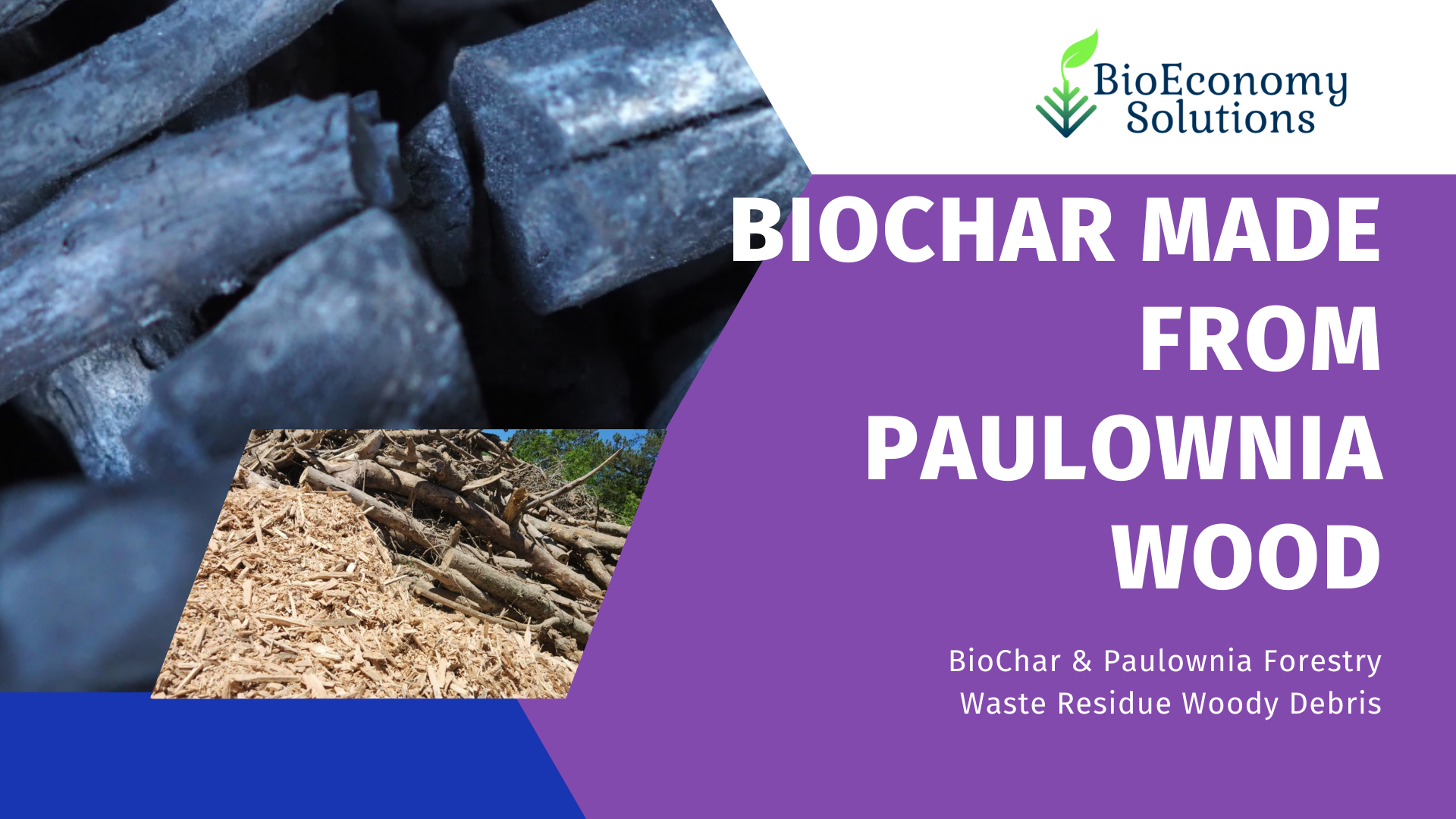
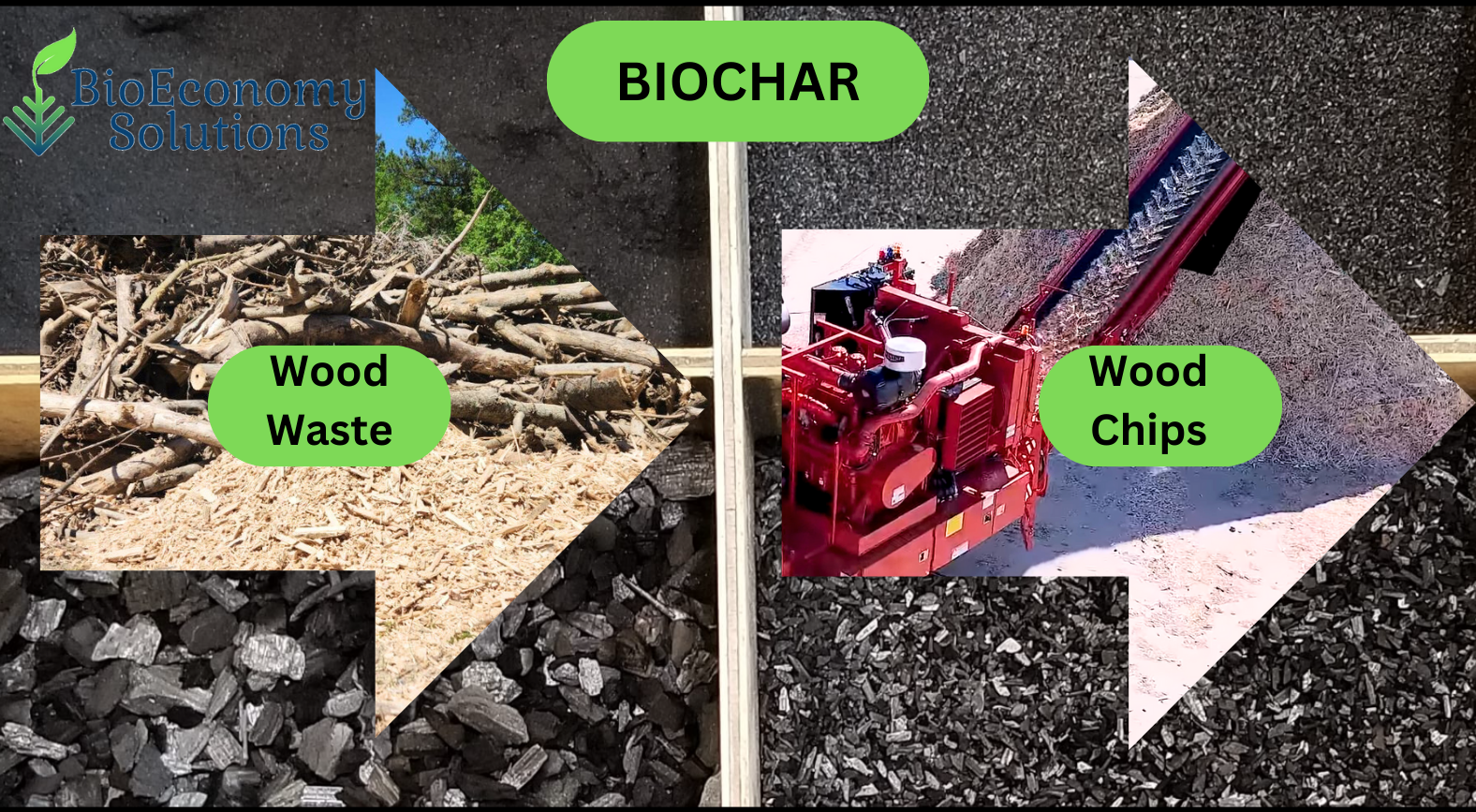
Biochar can be made from organic biomass. What is biomass? Biomass is every where: grass clippings, timber waste, trees with beetle infestation, crop waste, vegetable scraps, cardboard, paper, manure and even dead animals. After all we are just talking about durable carbon that remains in the soil for very long periods of time.

Biochar and charcoal may look alike but the difference is how they are used. Charcoal is used as a fuel and biochar is used in the soil as a valuable soil amendment. It holds nutrients in the soil preventing them from washing away from storms.

How is biochar made from organic biomass?

Organic biomass is heated to a high temperature absent of oxygen, in doing so a chemical process occurs and moisture is driven out of the material and dried out, what is left is a very light black material that under a microscope looks like a honeycomb.

Biochar For Climate Change

Biochar is a tool for linked to bioenergy production can be carbon negative and restore infertile soil to help reduce climate change.

By enriching the soil we remove and sequester excess carbon dioxide from the atmosphere into the soil.

Biochar Resources

BioChar on Paulownia Tree Farms

Our paulownia tree plantations that are utilized in carbon project managment for the the creation of carbon credits for the voluntary and compliance carbon markets utilize the biochar as a soil amendment to grow healthy paulownia trees.

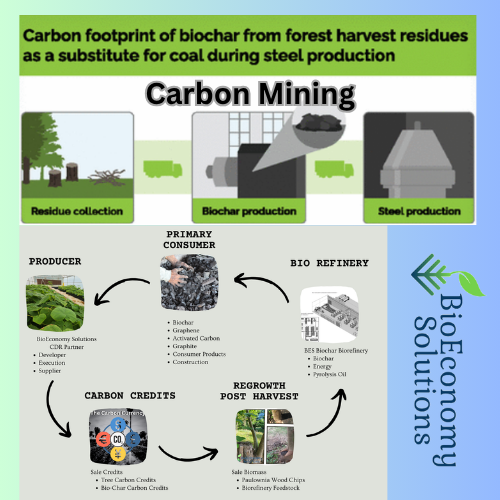
As you see how the use of biochar supports a 360 degree circular economy. Utilizing our paulownia forest waste, the limbs from the tops of the trees, the off cuts from our paulownia lumber operations and saw dust are used as biochar biomass to feed our trees the nutrients they need and support healthy soils for all of our agricultural operations.
***

LEARN MORE
Visit us at: https://bioeconomysolutions.com/paulownia-carbon-credits/ Let’s chat about paulownia tree solutions for sustainable Forest carbon credits projects.
Where to buy paulownia? We’re providing new paulownia trees from our U.S. South Carolina Paulownia tree farm facility.
Contact Us for details. Office: 843.305.4777 | Email: mail@bioeconomysolutions.com Here’s a link to our online calendar, schedule a conference call with us: www.bioeconomysolutions.com/bookcall

LIKE|SHARE|COMMENT
Enjoy this article? You may also enjoy “Paulownia Trees Planted Around The World” https://bioeconomysolutions.com/paulownia-trees-planted-around-the-world/

#biochar #healthysoil #soil #soilhealth #greentech #carbonfootprint #climatechange #sustainability #renewableenergy #globalwarming #environment #circulareconomy #sustainable #carbon #sequestration #carbondeveloper #carbonproject #carboncredit #paulownia #trees #naturebased #bioeconomy #solutions #kiri #empresstree

Paulownia Trees Planted Around The World

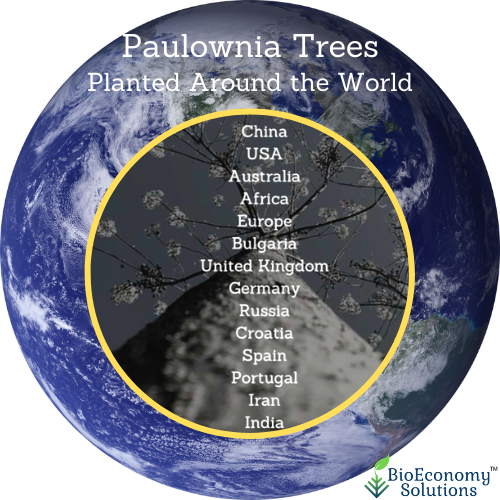
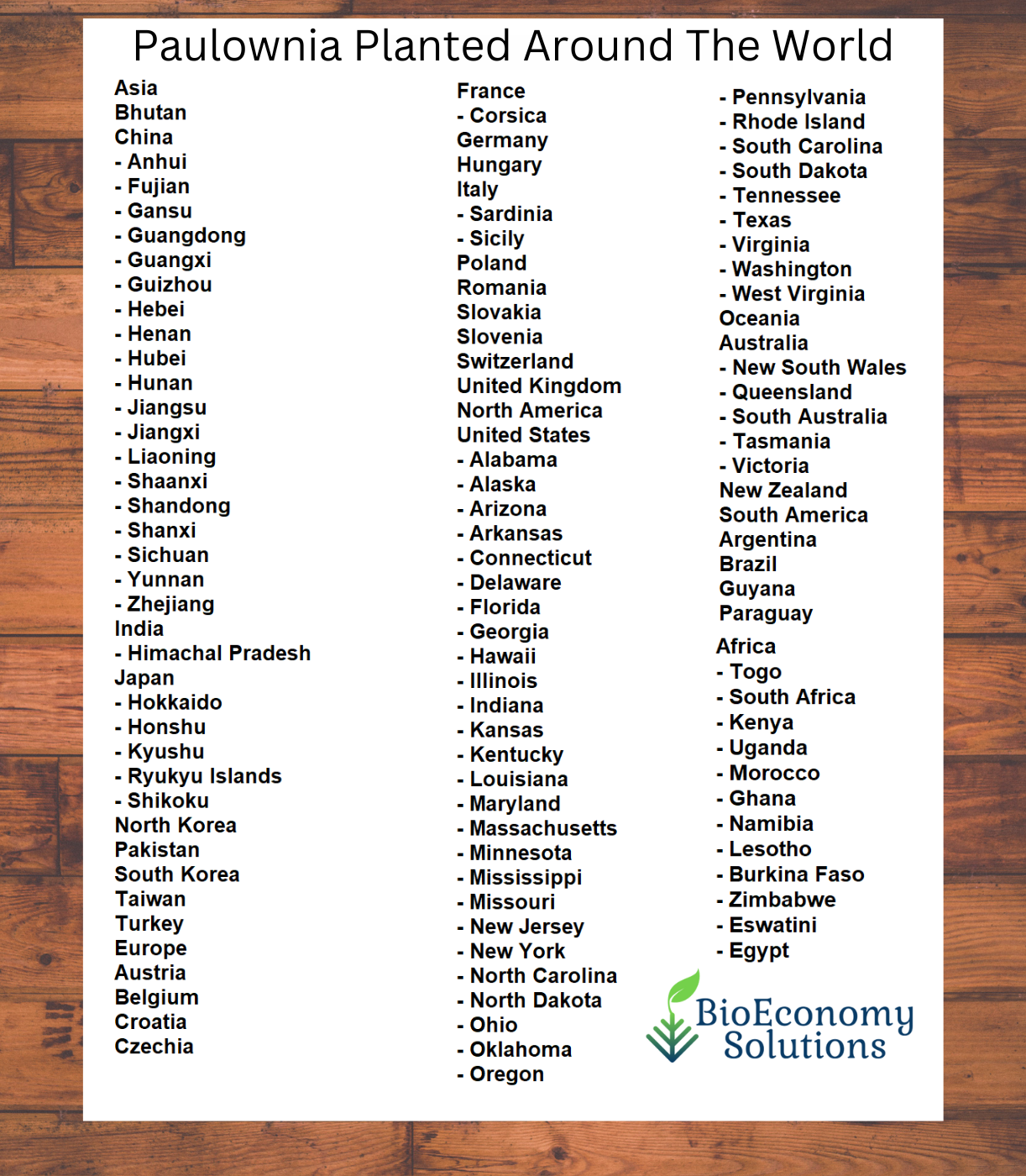
Paulownia trees are planted in over 60 countries.

History of Introduction Paulownia Trees and International Spread
In the past, P. tomentosa has been introduced as an ornamental in many European countries and in the USA. It was brought to Europe in the 1830s by the Dutch East India Company, and taken to North America a few years later, and has been naturalized in the eastern USA and is also grown on the west coast.

Details of Where Paulownia Are Planted CABI link: https://www.cabidigitallibrary.org/doi/10.1079/cabicompendium.39100

You must know that there are 17 different species of paulownia.
Everyone reading this post must do their homework. There are 17 different species of paulownia trees (depending on taxonomic authority) in the family Paulowniaceae.

TYPES OF PAULOWNIA TREES
Six to 17 species, including: Paulownia catalpifolia Paulownia elongata Paulownia fargesii Paulownia fortunei Paulownia kawakamii Paulownia taiwaniana Paulownia tomentosa

Tested and confirmed species:[13]
Paulownia kawakamii
Paulownia tomentosa
Paulownia catalpifolia
Paulownia x taiwaniana
Paulownia elongata
Paulownia fargesii
Paulownia fortunei — dragon tree.[25]
Potential variety, hybrid, and synonym species:
Paulownia glabrata
Paulownia grandifolia
Paulownia imperialis
Paulownia australis
Paulownia lilacina
Paulownia longifolia
Paulownia meridionalis
Paulownia mikado
Paulownia recurva
Paulownia rehderiana
Paulownia shensiensis
Paulownia silvestrii
Paulownia thyrsoidea
Paulownia duclouxii
Paulownia viscosa

Prepared by CABI of Wellington, UK for the purpose of identification of the Paulownia Elongata species for use in United Nation countries for Carbon Credit plantations. This document accepts the Paulownia Elongata as a non-invasive species in all United Nation Countries.
It says in that document “Paulownia is categorized as an invasive exotic”.
Yes it dos say that.

BUT IT ALSO SAYS:
Paulownia is categorized as an invasive exotic. Although there is little doubt that it is an exotic, the question of its invasiveness is open to conjecture. The many small seeds of Paulownia are windblown. However, the seeds do not germinate and survive unless the seed falls on sterile soil. New germinates of Paulownia have a high rate of mortality from damping-off disease caused by a variety of soil fungi. Generally, Paulownia does not colonize open areas unless sterile soil is present, as in construction activities, recent burned areas and road cuts. Rarely does Paulownia colonize fields, because of the ever-present fungi.

Only one, the tomentosa, is listed as invasive in some areas. This single species has painted the entirety of the genus into the corner of being labeled as invasive and gets all the attention, while the other species are assumed to have the same traits. This is an incorrect assumption that requires further exploration.

The species as a whole should not be labeled as invasive. The seeds are extremely difficult to germinate and the trees actually have a low survival rate in the wild compared to native trees.
Paulownia offer many ecosystem benefits including carbon drawdown, soil restoration, pollination services, and shade for companion crops not found in other trees. All together, these characteristics make the paulownia an ideal tree to grow for both economic and environmental reasons.
Most of the information found on the internet does not differentiate between the 17 different species within the genus Paulownia, but only one, the tomentosa, is invasive in some areas of the world.

Do Your Paulownia RESEARCH:
Plenty of research is available… perhaps start here: https://extension.tennessee.edu/publications/documents/pb1465.pdf
https://www.cabidigitallibrary.org/doi/10.1079/cabicompendium.39100

LEARN MORE

Visit us at: https://bioeconomysolutions.com/paulownia-carbon-credits/ Let’s chat about paulownia tree solutions for sustainable Forest carbon credits projects.

Where to buy paulownia? We’re providing new paulownia trees from our U.S. South Carolina Paulownia tree farm facility.

Contact Us for details. Office: 843.305.4777 | Email: mail@bioeconomysolutions.com Here’s a link to our online calendar, schedule a conference call with us: www.bioeconomysolutions.com/bookcall

LIKE|SHARE|COMMENT

Enjoy this article? You may also enjoy “Are U.S. Carbon Credits Key For Forests Project Commercial Viability?” https://www.linkedin.com/pulse/carbon-credits-key-forests-project-commercial-victor-garlington

#greentech #carbonfootprint #climatechange #sustainability #renewableenergy #globalwarming #environment #circulareconomy #sustainable #carbon #sequestration #carbondeveloper #carbonproject #carboncredit #paulownia #trees #naturebased #bioeconomy #solutions #kiri #empresstree