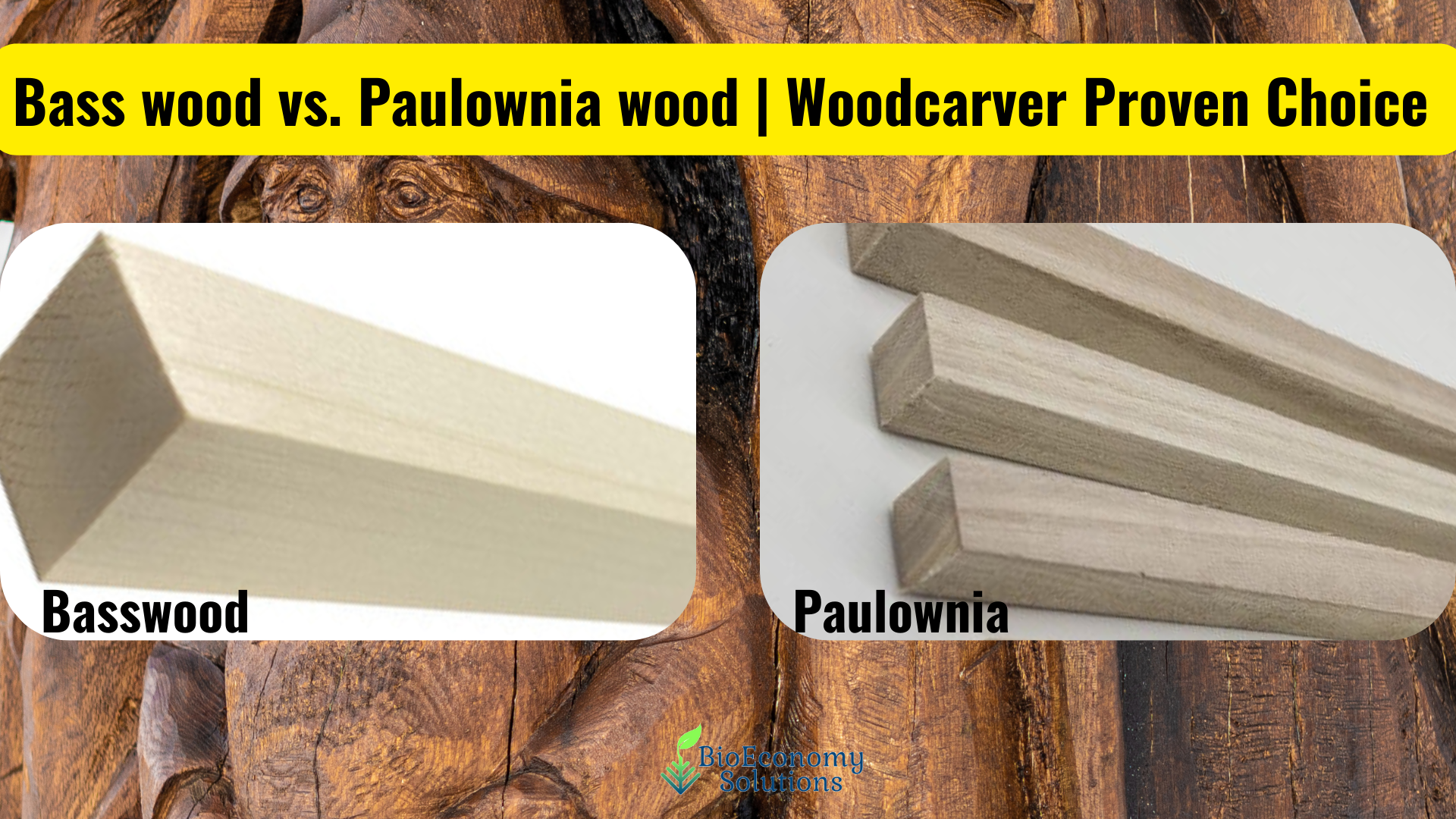
Basswood vs. Paulownia: Which Wood Should North American Carvers Choose?

For woodcarvers, selecting the right carving wood is as critical as choosing the right chisel. While basswood has been a main stay in carving circles for generations, paulownia is emerging as a compelling alternative—especially for those seeking sustainable, lightweight, and dimensionally stable options.

At BioEconomy Solutions, where innovation and sustainability meet natural materials, we believe a deeper look at these two woods can help artists, makers, and hobbyists find their ideal match with these two proven materials.


Overview: Why This Comparison Matters

  • Basswood is a time-tested favorite for carvers, especially beginners, prized for its ease of carving and fine grain.

  • Paulownia, often referred to as the “aluminum of hardwoods,” offers surprising strength-to-weight performance and environmental advantages thanks to its fast-growing, regenerative nature.

Whether you’re carving your first whittling project or crafting larger decorative sculptures, your wood choice can make or break your workflow—and your final results.


Basswood: The Classic Choice

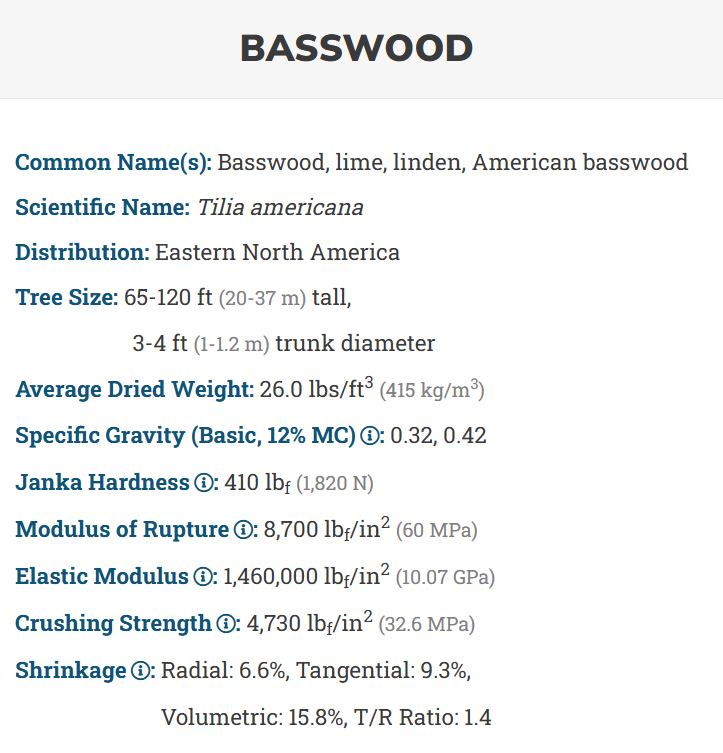
By The Numbers:
✅ Pros:

  • Easy to Carve: Basswood is soft and fine-grained, making it perfect for detailed carving.

  • Clean Finish: Its subtle grain doesn’t distract from intricate patterns or painted finishes.

  • Beginner-Friendly: It’s forgiving, readily available, and a favorite in starter carving kits.

  • Takes Paint Well: Its pale color serves as a blank canvas for finishes and stains.

⚠️ Considerations:

  • Dents Easily: Its softness is a double-edged sword—it can mark easily with pressure or impact.

  • Limited Durability: Better suited for indoor or display pieces, not heavy-use items.


Paulownia: The Sustainable Challenger

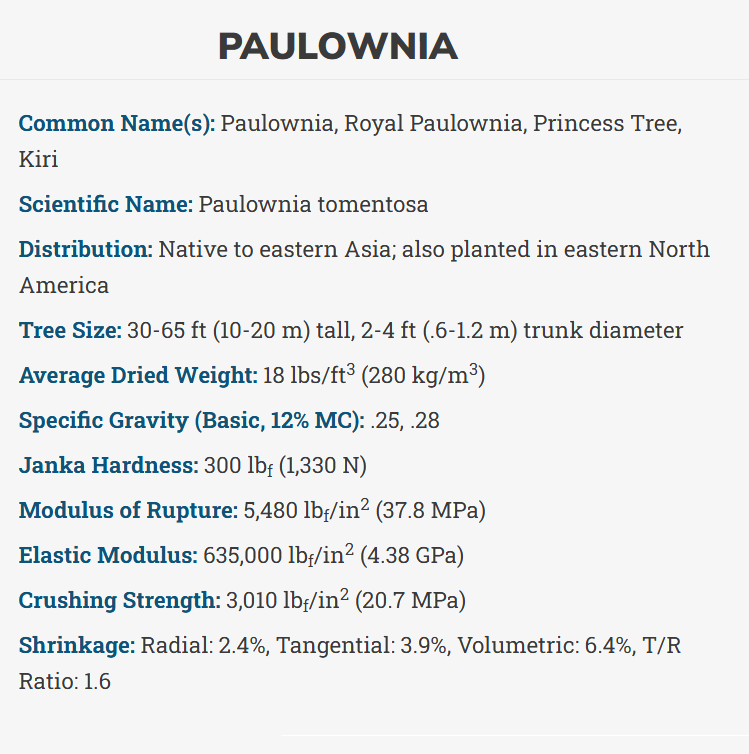
By The Numbers:
✅ Pros:

  • Lightweight but Strong: Exceptional strength-to-weight ratio—ideal for large carvings or portable art.

  • Sustainable & Fast-Growing: One of the fastest-growing trees in the world; regenerates from the same stump.

  • Dimensional Stability: Resists warping and shrinking, making it ideal for varied climates.

  • Workable Grain: Straight, fine grain allows for smooth cuts and clean shapes.

⚠️ Considerations:

  • Soft Surface: Like basswood, it can dent under pressure—careful handling is key.

  • Tool Maintenance: Some paulownia may contain silica, which can dull tools faster.

  • Moderate Detail: Suitable for decorative work, but ultra-fine details may not hold as crisply as in basswood.

Side By Side Comparison:
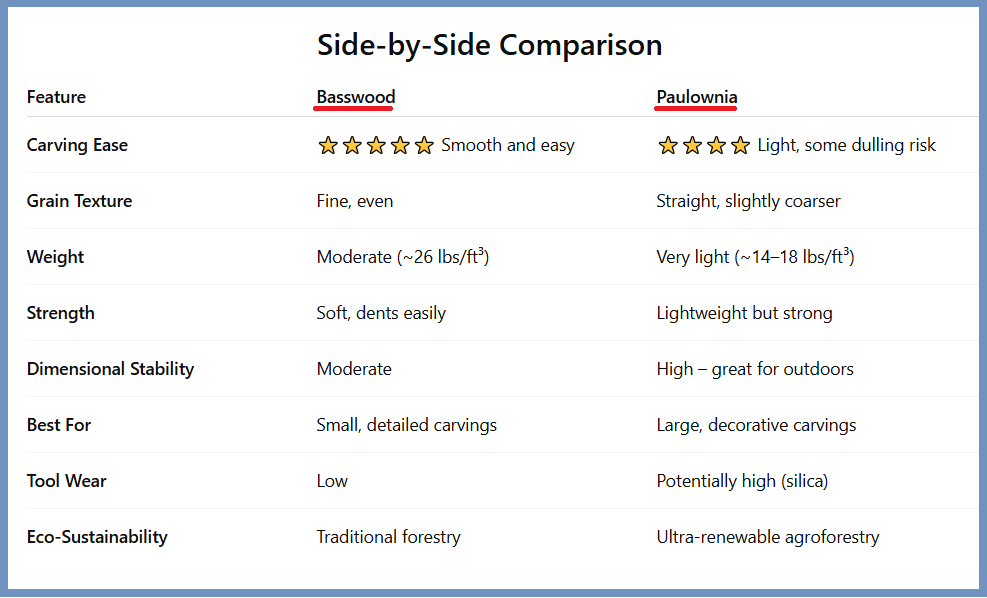
Choosing the Right Wood for Your Project

Basswood if you:

  • Are just starting out and want a friendly, predictable carving experience.

  • Plan on creating fine-detail figures, faces, or relief carvings.

  • Intend to paint or finish your piece for display.

Paulownia if you:

  • Want a lightweight, sustainable option with a modern day environmental story.

  • Are carving pieces or sculptures that need to resist warping or cracking.

  • Don’t mind sharpening your tools more frequently.


Final Thoughts from BioEconomy Solutions

At BioEconomy Solutions, we’re proud to support sustainable wood choices like Paulownia for carvers and makers across North America. Its rapid growth and versatility align with our mission to promote renewable materials for tomorrow’s creators.

Whether your 🎯 wood is traditional basswood or you want the lightweight of paulownia, both offer pathways to craft beautiful, lasting work. Try both, compare the results, and let your carving style guide you.

🌿Where To Buy USA Paulownia Lumber?

Need paulownia for your next project?

Where to buy paulownia? We’re harvesting our mature U.S. South Carolina Paulownia Timber and have millions of board foot available. We can mill lumber for your business needs. Contact Us for detailsOffice: 843.305.4777 | Email: mail@bioeconomysolutions.com Here’s a link to our online calendar, schedule a conference call with us:

https://info586.youcanbook.me

USA Paulownia Wood Lumber For Sale – Need paulownia wood lumber for your next project? https://bioeconomysolutions.com/paulownia-lumber/

You will discover that paulownia wood is the “Light Strong Alternative Wood” used in many processes to obtain many types of products.

Weather you are a hobbyist or full time manufacturing company, paulownia wood grown in South Carolina USA may be a new expression of your talent.

We sell Custom Paulownia boards: rough sawn or planed, we offer various sizes and thicknesses. Our Paulownia boards are processed using sustainable Paulownia hardwood grown right here in South Carolina USA.

👉 If you’re interested in paulownia, want to grow or currently growing, Subscribe to our newsletter: https://bioeconomysolutions.com/carbonreport

LIKE|SHARE|COMMENT

If you enjoyed this article, you may also like “Do Wood Carvers Use Paulownia Wood?”
 

You know of Teak Wood, but have you ever heard of Paulownia Wood? From surfboards to sailboats, the material we choose where water-based applications matter — not just for performance, but for longevity, sustainability, and safety.

Enter Paulownia, a remarkable hardwood that is quickly gaining recognition as a high-performance, eco-friendly alternative to traditional marine woods like teak.

When it comes to marine construction, choosing the right wood is a critical decision. Traditionally, Teak has been the gold standard for boat building due to its superior durability and natural resistance to water. However, with sustainability and environmental responsibility becoming top priorities in today’s economy, Paulownia is emerging as a compelling alternative.

At BioEconomy Solutions, we grow, eco-friendly materials that support a greener future—and Paulownia fits right into that mission.


⚓ Teak: The Marine Industry’s Time-Tested Favorite

Why boat builders love it:

  • Durability: Teak is famous for its exceptional resistance to rot, decay, and insects, even in harsh saltwater environments.

  • Water Resistance: Thanks to its natural oils, teak doesn’t swell or warp easily, making it ideal for wet conditions.

  • Grip & Aesthetics: Its textured grain offers a non-slip surface and a luxurious golden-brown color that ages beautifully.

But there’s a trade-off:

  • Cost: Teak is among the most expensive hardwoods in the world.

  • Maintenance: It still needs regular oiling and cleaning to retain its look and performance.

  • Sustainability: Illegal logging and overharvesting have raised concerns about the environmental cost of using teak.


🌱 Paulownia: The Lightweight, Sustainable Contender

Why Paulownia is gaining attention:

  • Extremely Lightweight: Ideal for hulls, masts, interior panels, and other boat components where weight reduction is crucial.

  • Natural Rot Resistance: Despite its softness, Paulownia is surprisingly resistant to insects and decay.

  • Stable and Easy to Work With: It resists warping and cracking while being easy to cut and shape.

  • Highly Sustainable: Paulownia trees reach maturity in just 5–7 years and can regrow from the same stump, making it a truly renewable resource, because the regrow from the stump post harvest. No need for replanting.

Considerations:

  • Softer Wood: Not recommended for high-wear areas like decks without additional treatment or protection.

  • Outdoor Durability: Requires sealing or treatment for prolonged use in marine environments, particularly in plywood form.

  • Newer to Marine Use: While used successfully in surfboards, canoes, and lightweight watercraft, it’s not yet the industry norm.


🛥️ Which Wood is Right for Your Boat?

  • Use Teak if you need maximum durability, premium aesthetics, and are willing to invest in both cost and maintenance. Ideal for decks, handrails, and other exposed surfaces.

  • Use Paulownia if you’re prioritizing sustainability, weight reduction, and affordability. It’s a smart choice for interiors, paneling, trim, or custom lightweight designs—especially when responsibly treated for marine use.

🌊 Naturally Water-Resistant: No Chemicals Required

Unlike many woods that need chemical treatments or sealants to survive wet conditions, Paulownia thrives in them naturally.

  • Tight Cellular Structure: Its fine, closed grain repels water, meaning it doesn’t easily absorb moisture.

  • Hydrophobic by Nature: Paulownia contains natural oils and tannins that protect against saltwater, rot, and fungal growth.

  • Minimal Warping: Even when exposed to harsh marine environments, Paulownia retains its shape and stability.

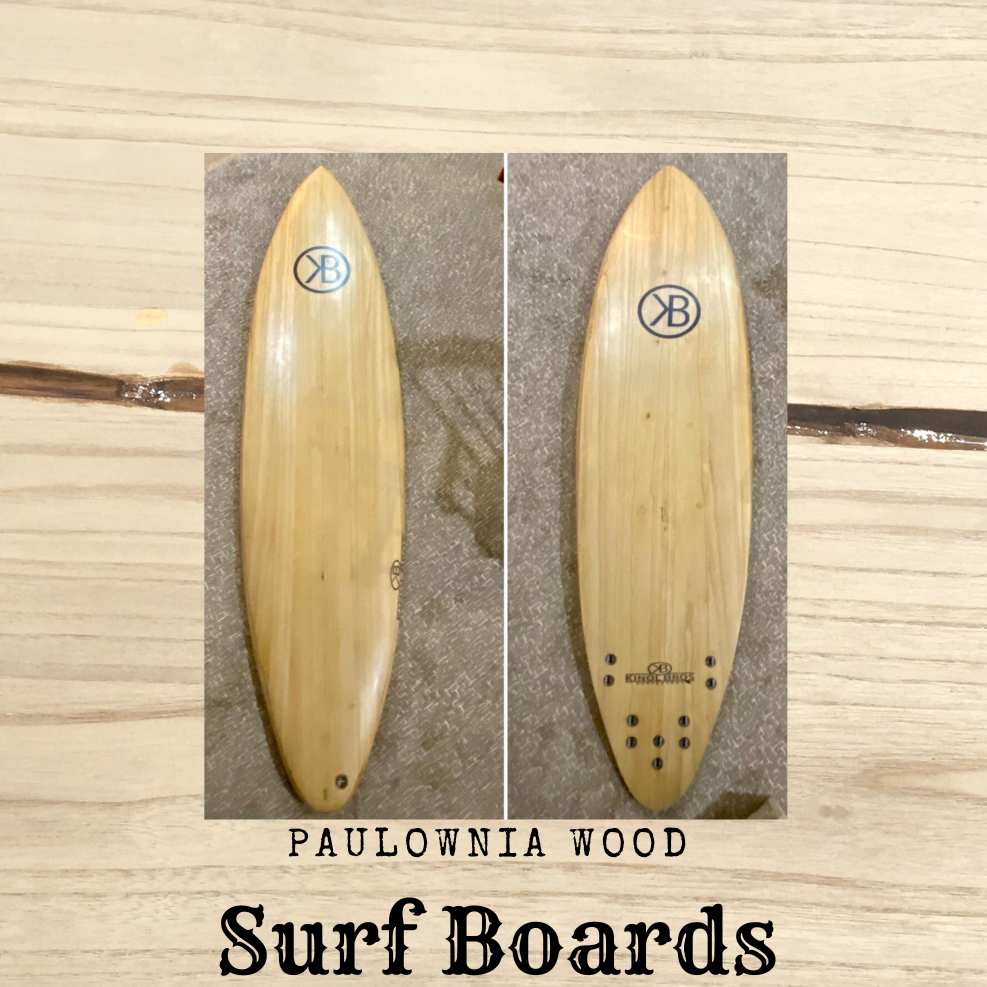
This makes Paulownia ideal for crafting durable surfboards, paddleboards, boat panels, and even skis — all without compromising on environmental responsibility.


🏄‍♂️ Real-World Proof: Tom Wegener’s Discovery

Tom Wegener, a master surfboard shaper and pioneer in wooden board design, discovered Paulownia’s exceptional marine qualities firsthand. After decades in the surf industry, he noticed something unusual:

“While surfing Paulownia boards, I saw that even cracked fins and nose blocks wouldn’t absorb saltwater — the wood stayed dry. That’s something I’d never seen before.”

Wegener helped popularize the use of hollow-core Paulownia surfboards, creating a new genre of finless surfing while proving that this wood not only performs — it endures.


⚙️ Durability Meets Sustainability

Paulownia’s lightweight yet dense composition makes it impact-resistant, and its hydrophobic properties mean even dings and cracks won’t cause it to soak or swell in the short term — a game-changer in marine design.

  • Impact Resistance: Dense yet light, Paulownia absorbs shocks without compromising structure.

  • Sun & Saltwater Tough: Resilient against UV exposure and the corrosive effects of ocean spray.

  • Long-Term Value: Greater longevity equals fewer replacements, making Paulownia a smart investment for marine manufacturers and eco-conscious consumers.


🌱 A Bio-Based Material for a BioEconomy Future

At BioEconomy Solutions, we’re not just supplying a tree — we’re offering a regenerative material for industries that demand both performance and responsibility.

  • Grows to maturity in just 5–7 years

  • Regenerates from the stump, minimizing land disturbance

  • Captures up to 103 tons of CO₂ per hectare annually

Whether you’re shaping surfboards, outfitting custom boats, or developing lightweight marine components, Paulownia offers a rare combination of performance, durability, and sustainability.

At BioEconomy Solutions, we’re advancing sustainable forestry by growing Paulownia for purpose — and its natural compatibility with water-based environments is one of the most exciting frontiers for this fast-growing species.


Where To Buy USA Paulownia Lumber?

Need paulownia for your next project?

Where to buy paulownia? We’re harvesting our mature U.S. South Carolina Paulownia Timber and have millions of board foot available. We can mill lumber for your business needs. Contact Us for details. Office: 843.305.4777 | Email: mail@bioeconomysolutions.com Here’s a link to our online calendar, schedule a conference call with us:

https://info586.youcanbook.me

USA Paulownia Wood Lumber For Sale – Need paulownia wood lumber for your next project? https://bioeconomysolutions.com/paulownia-lumber/

You will discover that paulownia wood is the “Light Strong Alternative Wood” used in many processes to obtain many types of products.

Weather you are a hobbyist or full time manufacturing company, paulownia wood grown in South Carolina USA may be a new expression of your talent.

We sell Custom Paulownia boards: rough sawn or planed, we offer various sizes and thicknesses. Our Paulownia boards are processed using sustainable Paulownia hardwood grown right here in South Carolina USA.

If you’re interested in paulownia, want to grow or currently growing, Subscribe to our newsletter: https://bioeconomysolutions.com/carbonreport

LIKE|SHARE|COMMENT

Join the paulownia movement, subscribe to our newsletter: https://bioeconomy-solutions.kit.com/45b34109e5

Subscribe to our Newsletter

Subscribe Today

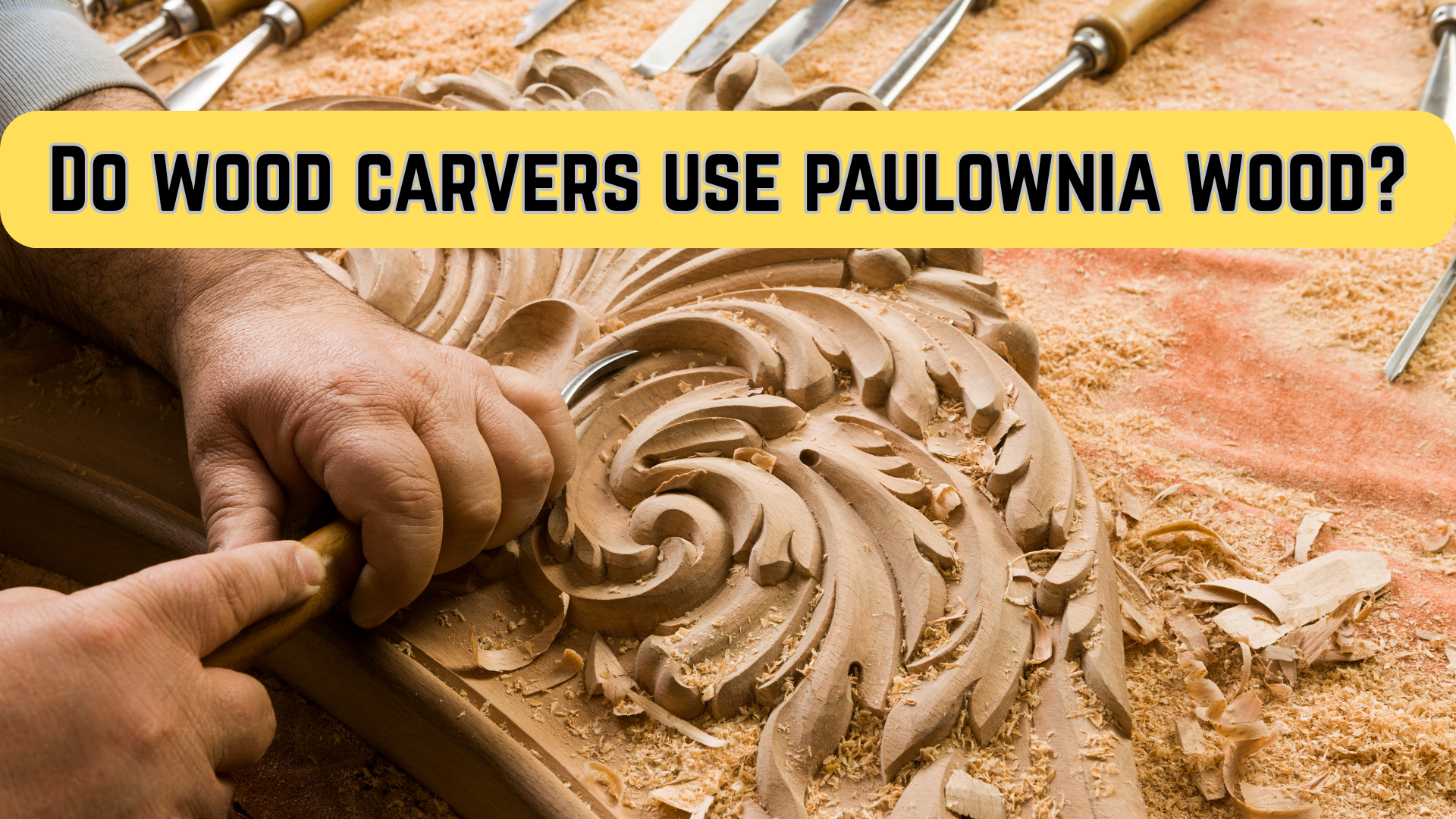
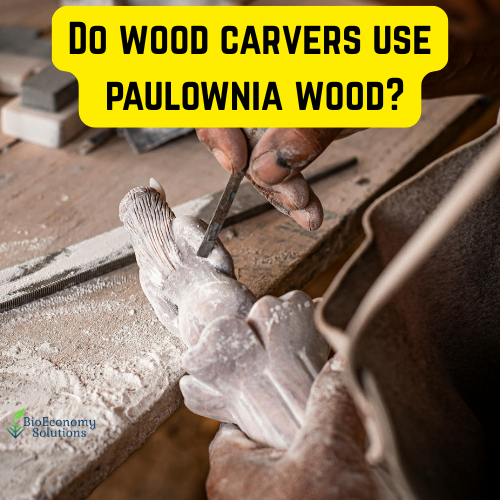
Do Wood Carvers Use Paulownia Wood? They SURE DO!

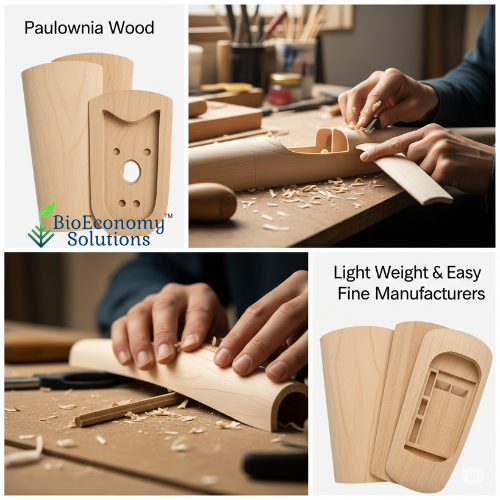
It is a popular choice due to its lightweight nature, fine grain, and ease of carving, making it suitable for both hand and power tool carving. Paulownia’s resistance to warping and cracking, further enhance its appeal for various carving projects. 

Why Carve With Paulownia Wood?

Here are the top reasons paulownia is considered suitable for carving, and why stumps specifically might be used:

  • Easy to Work With: Paulownia is known for being a very soft and lightweight wood with a straight, uniform grain. This makes it exceptionally easy to carve, especially for detailed work. It’s often compared to balsa wood in its workability, though it’s generally stronger.
  • Good for Beginners: Due to its softness, it’s a popular choice for those new to wood carving as it’s forgiving and less prone to splitting.
  • Takes Finishes Well: Paulownia readily accepts stains, glues, and other finishes, allowing carvers to achieve various aesthetic results.
  • Lightweight: Its low density makes it ideal for projects where weight is a concern, such as smaller decorative items or even larger, portable carvings.
  • Sustainability: Paulownia is one of the fastest-growing trees in the world, making it a sustainable and environmentally friendly choice for wood. This rapid growth also means that stumps can be readily available.
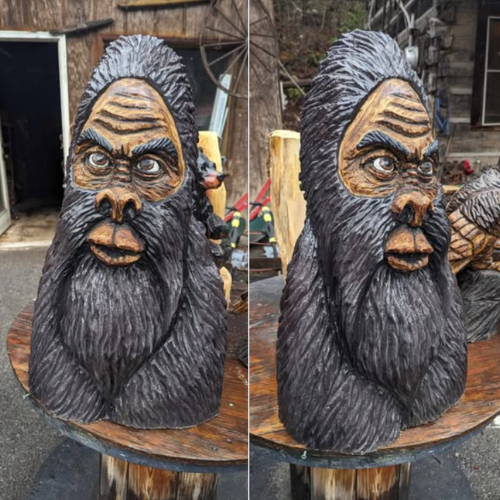
    Visit the great folks at Woogity Wood Works who carve with paulownia wood regularly.


Using Paulownia Stumps for Carving:

While dimensional lumber is common for carving, wood stumps offer unique possibilities:

  • Natural Shape and Form: Stumps provide an organic, often irregular shape that can inspire unique carvings. A carver might work with the natural contours of the stump to create a piece that feels deeply connected to the wood’s original form.
  • Larger Scale Projects: Depending on the size of the stump, it can be suitable for larger, more substantial carvings that might be difficult to create from smaller, milled pieces of wood.
  • Accessibility: In areas where paulownia trees are grown, stumps might be a readily available and potentially cost-effective source of carving material.

Basswood (also known as lime wood) is often cited as the most popular wood for carving, particularly for beginners, paulownia is gaining recognition for its unique properties and suitability for a range of carving projects. 

While paulownia is a good choice for many types of carving, due to its softness means it might become your second choice for very fine, intricate details that need to withstand heavy handling or impact, as it can dent relatively easily. However, for decorative carvings, sculptures, and art pieces, paulownia wood stumps can be an excellent medium.

Where To Buy USA Paulownia Lumber?

Need paulownia for your next project?

Where to buy paulownia? We’re harvesting our mature U.S. South Carolina Paulownia Timber and have millions of board foot available. We can mill lumber for your business needs. Contact Us for details. Office: 843.305.4777 | Email: mail@bioeconomysolutions.com Here’s a link to our online calendar, schedule a conference call with us:

https://info586.youcanbook.me

USA Paulownia Wood Lumber For Sale – Need paulownia wood lumber for your next project? https://bioeconomysolutions.com/paulownia-lumber/

You will discover that paulownia wood is the “Light Strong Alternative Wood” used in many processes to obtain many types of products.

Weather you are a hobbyist or full time manufacturing company, paulownia wood grown in South Carolina USA may be a new expression of your talent.

We sell Custom Paulownia boards: rough sawn or planed, we offer various sizes and thicknesses. Our Paulownia boards are processed using sustainable Paulownia hardwood grown right here in South Carolina USA.

👉 If you’re interested in paulownia, want to grow or currently growing, Subscribe to our newsletter: https://bioeconomysolutions.com/carbonreport

LIKE|SHARE|COMMENT

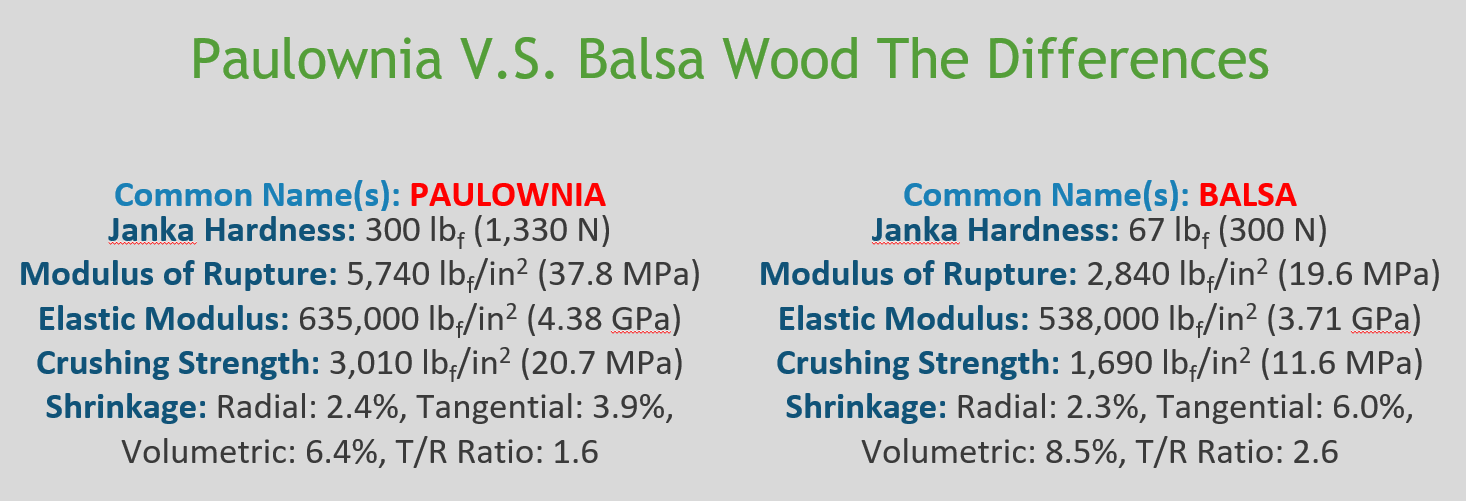
Want more information on the Paulownia vs. Balsa? You may also enjoy this article: Discussion Paulownia Wood v.s. Balsa??? Check out this post https://bioeconomysolutions.com/tag/model/


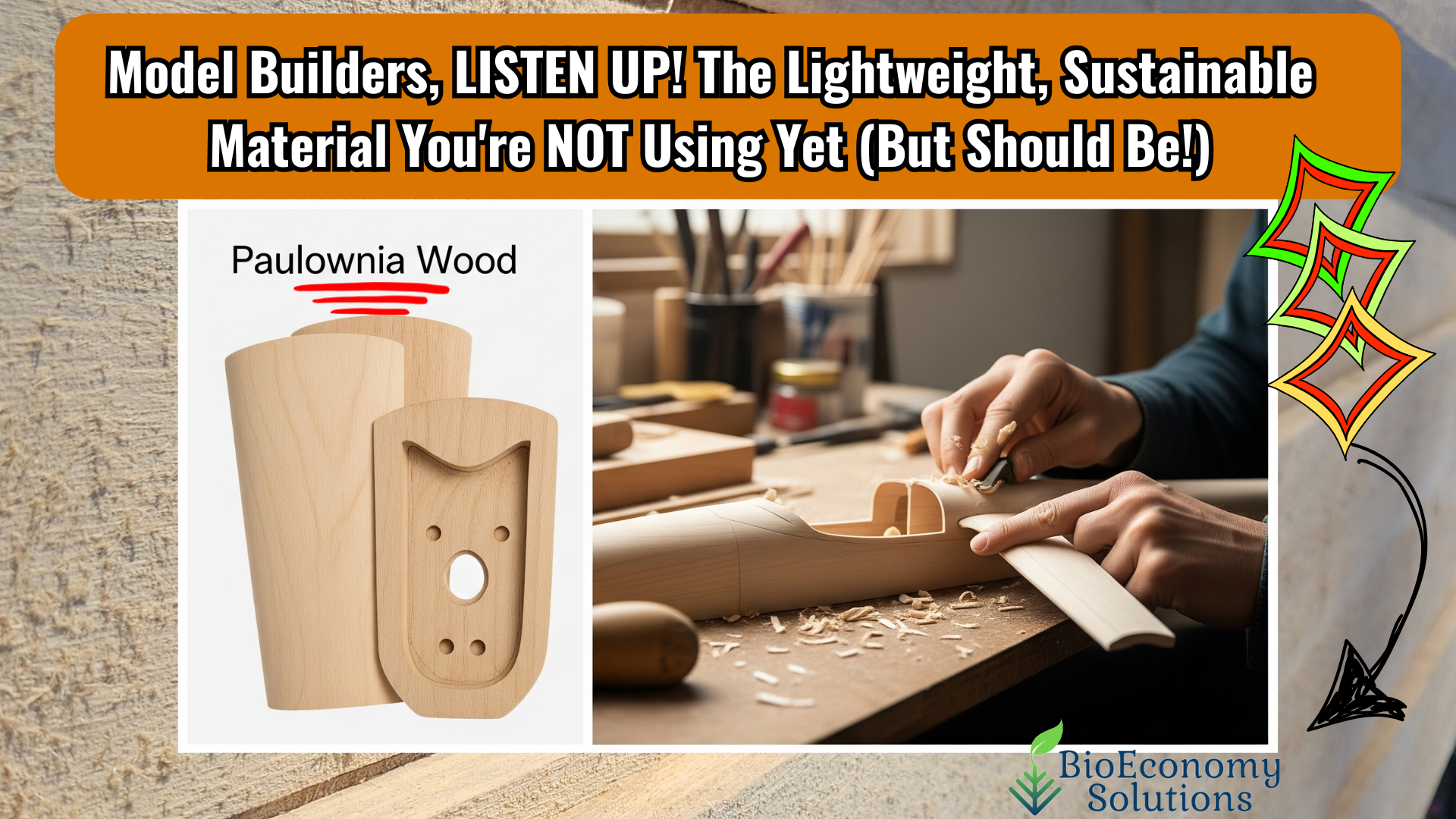
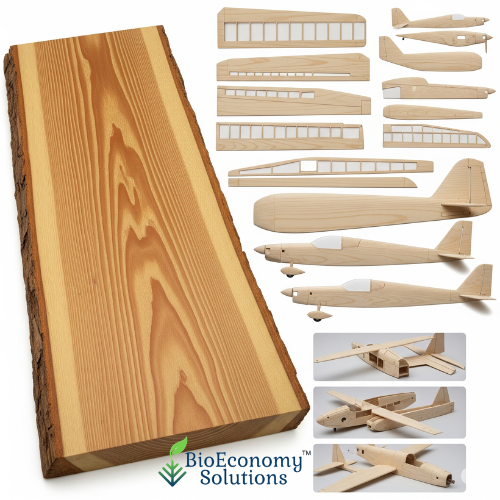
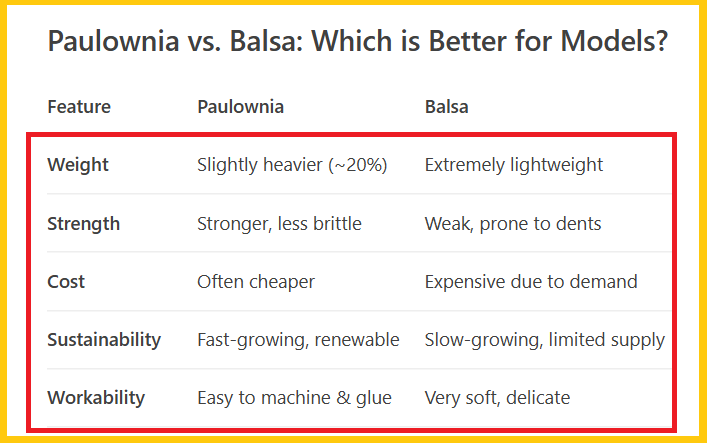
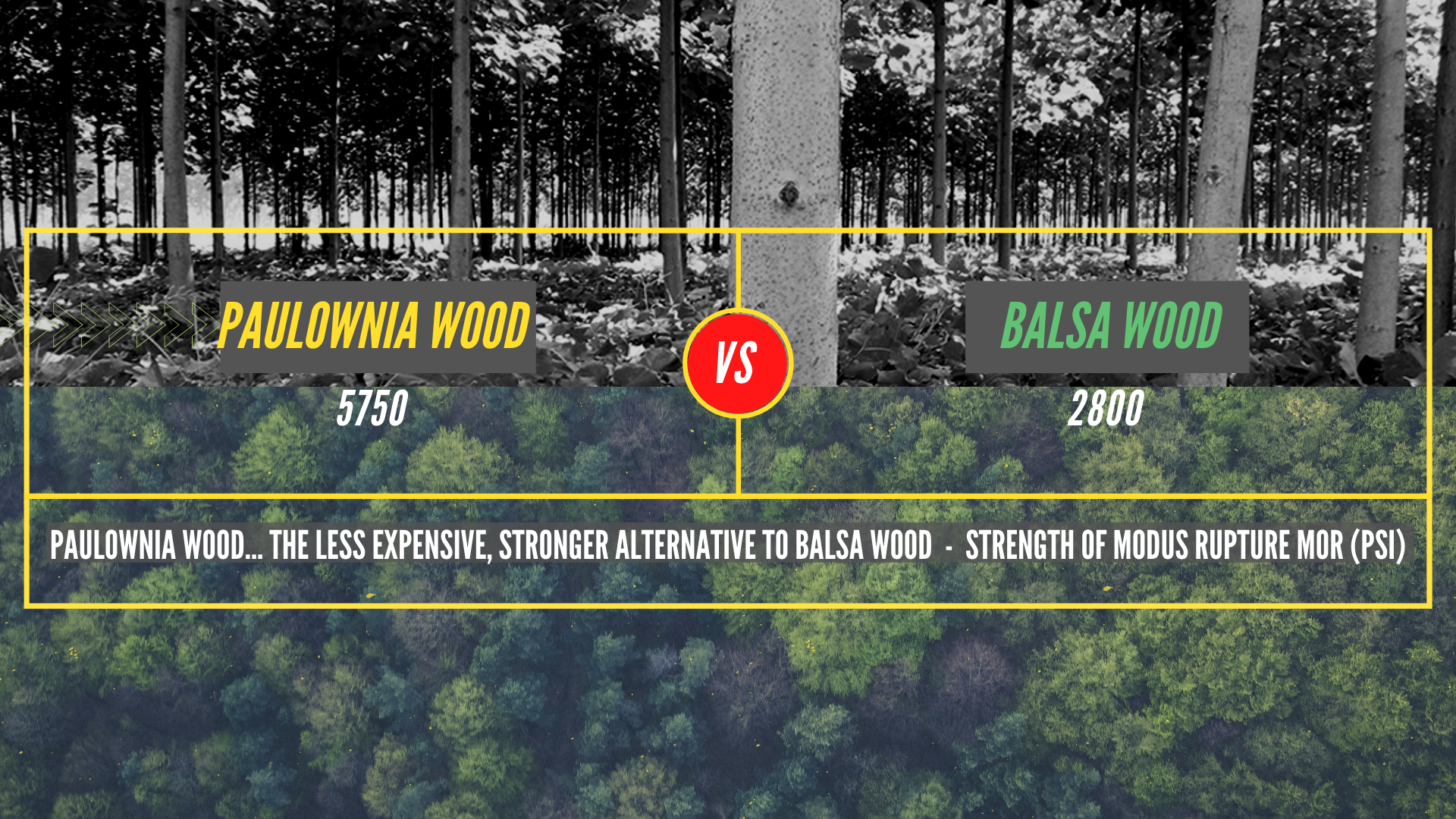
While Balsa wood has traditionally been the go-to material for aircraft models due to its exceptionally low density, Paulownia wood is gaining traction and is often considered a desirable alternative, particularly for its favorable strength-to-weight ratio.

The Difference

Here’s why some modelers might prefer Paulownia over Balsa:

  • Higher Strength-to-Weight Ratio: Paulownia generally offers a better strength-to-weight ratio compared to Balsa, particularly at comparable densities. This means that while Paulownia might be slightly denser than Balsa, it can offer greater strength and structural integrity for its weight.
  • Increased Strength: Paulownia is demonstrably stronger than Balsa wood. One source mentions that while Balsa’s Brinell hardness was significantly lower than Paulownia’s, it was only 22.8% lower, suggesting that Paulownia’s strength is notably higher.
  • Reduced Resin Absorption: Paulownia has a less open grain than Balsa, meaning it absorbs less resin during construction. This can result in a lighter model overall, as resin contributes to weight.
  • Space-Saving Benefit: Due to its inherent strength, Paulownia can be used in thinner sections compared to Balsa to achieve similar structural integrity. This can lead to space savings in the model’s design.

Also known as the “empress tree,” paulownia offers a unique blend of strength, lightness, and eco-friendliness—making it an excellent alternative for model manufacturers and hobbyists alike. In this post, we’ll explore:

What makes paulownia special
How it compares to balsa
Its growing role in model aviation
Where to find paulownia kits and materials

What is Paulownia Wood?
Paulownia (Paulownia tomentosa) is a fast-growing hardwood native to China but cultivated worldwide. Known for its rapid growth (up to 10 feet per year!), it’s a sustainable choice compared to slow-growing balsa.

Key Properties:
✔ Lightweight – Only slightly heavier than balsa, but stronger.

✔ Workability – Easy to cut, sand, and shape with hand tools.

✔ Stability – Resists warping and cracking better than balsa.

✔ Sustainability – Grows quickly, making it eco-friendly.

Best Uses for Paulownia:
Structural parts (spars, fuselage frames)
Foam-composite models (as a durable sheeting material)
Large-scale models (where extra strength is needed)

How Model Manufacturers Are Using Paulownia
While balsa still dominates traditional kits, paulownia is gaining traction in:

1. ARF (Almost-Ready-to-Fly) Kits
Companies like TW Models (The World Models) and HobbyKing now use paulownia in some ARFs to reduce costs while maintaining durability.

2. DIY & Scratch-Building
Experimental builders (e.g., Experimental Airlines on YouTube) use paulownia in foam-core designs.
Plans websites (AeroFred, RCGroups) feature user-designed paulownia models.

3. Laser-Cut Short Kits
Some small manufacturers offer paulownia laser-cut parts for custom builds, though availability is still limited compared to balsa.

The Future of Paulownia in Model Aviation

As balsa becomes scarcer and more expensive, paulownia is poised to become a mainstream alternative. Innovations in laser-cutting and hybrid designs (e.g., paulownia-foam composites) could make it even more popular.

For builders, the benefits are clear:

✅ More durable than balsa

✅ Better for the environment

✅ Cost-effective for large projects

The Choice

Paulownia is becoming a popular choice for aircraft modelers due to its superior strength-to-weight ratio and ability to save space while still maintaining structural integrity.However, Balsa’s lightweight nature and ease of use ensure its continued prominence in the hobby. The choice between the two often comes down to the specific requirements of the model being built and the preferences of the modeler.


Where to Buy Paulownia Wood for Model Building

Where to buy paulownia? We’re harvesting our mature U.S. South Carolina Paulownia Timber and have millions of board foot available. We can mill lumber for your business needs. Contact Us for details. Office: 843.305.4777 | Email: mail@bioeconomysolutions.com Here’s a link to our online calendar, schedule a conference call with us:

https://info586.youcanbook.me

USA Paulownia Wood Lumber For Sale – Need paulownia wood lumber for your next project? https://bioeconomysolutions.com/paulownia-lumber/

You will discover that paulownia wood is the “Light Strong Alternative Wood” used in many processes to obtain many types of products.

Weather you are a hobbyist or full time manufacturing company, paulownia wood grown in South Carolina USA may be a new expression of your talent.

We sell Custom Paulownia boards: rough sawn or planed, we offer various sizes and thicknesses. Our Paulownia boards are processed using sustainable Paulownia hardwood grown right here in South Carolina USA.

LIKE|SHARE|COMMENT

Want more information on the Paulownia vs. Balsa? You may also enjoy this article: “Paulownia Wood v.s. Balsa Wood

If You’re The Black Sheep Of Your Family, You’d be The One Who’d Break The Rules and is often accompanied by a sense of being misjudged or misunderstood. Well this is the story of Paulownia tomentosa…

THE BLACK SHEEP” of the Paulownia Family.

Paulownia tomentosa (also known as the Princess tree or Empress tree) is the most well-known species of Paulownia. When you search paulownia on the internet, this is the one that got the lion’s share of bad press listed as an invasive species.

Invasive Potential:

P. tomentosa, have become invasive in some parts of the world.Tomentosa paulownia has the potential to become invasive in some regions due to its rapid growth, prolific seed production, and ability to spread through root suckers. It is important to check local regulations and consider the potential impact before planting tomentosa paulownia trees.

Yet did you know?:

There are 17 different species of paulownia trees (depending on taxonomic authority) in the family Paulowniaceae.

Only one, the tomentosa, is listed as invasive in some areas. This single species has painted the entirety of the genus into the corner of being labeled as invasive and gets all the attention, while the other species are assumed to have the same traits. This is an incorrect assumption that requires further exploration.

The species as a whole should not be labeled as invasive. The seeds are extremely difficult to germinate and the trees actually have a low survival rate in the wild compared to native trees.

Paulownia offer many ecosystem benefits including:

  • carbon drawdown
  • soil restoration
  • pollination services
  • shade for companion crops not found in other trees.

All together, these characteristics make the paulownia an ideal tree to grow for both economic and environmental reasons.

Most of the information found on the internet does not differentiate between the 17 different species within the genus Paulownia, but only one, the tomentosa, is invasive in some areas of the world.

PAULOWNIA TREES

Six to 17 species, including: Paulownia catalpifolia Paulownia elongata Paulownia fargesii Paulownia fortunei Paulownia kawakamii Paulownia taiwaniana Paulownia tomentosa

Tested and confirmed species:[13]

  • Paulownia kawakamii
  • Paulownia tomentosa
  • Paulownia catalpifolia
  • Paulownia x taiwaniana
  • Paulownia elongata
  • Paulownia fargesii
  • Paulownia fortunei — dragon tree.[25]
  • Potential variety, hybrid, and synonym species:
  • Paulownia glabrata
  • Paulownia grandifolia
  • Paulownia imperialis
  • Paulownia australis
  • Paulownia lilacina
  • Paulownia longifolia
  • Paulownia meridionalis
  • Paulownia mikado
  • Paulownia recurva
  • Paulownia rehderiana
  • Paulownia shensiensis
  • Paulownia silvestrii
  • Paulownia thyrsoidea
  • Paulownia duclouxii
  • Paulownia viscosa

It is native to central and western China but has been widely cultivated in Asia, Europe, and North America. It’s a deciduous tree that can grow up to 50 feet tall, with large, heart-shaped leaves and showy, fragrant lavender flowers in spring.

There are at least 17 other species of Paulownia, and numerous hybrids. Some of the other notable species include:

  • Paulownia fortunei: Native to southeast Asia, this species is known for its rapid growth and tall stature. It’s often used for timber production.
  • Paulownia elongata: This species is similar to P. fortunei but is even faster-growing. It’s also used for timber production and is popular for carbon sequestration projects.
  • Paulownia kawakamii: Native to Taiwan, this species is smaller than most other Paulownias, typically growing to around 30 feet tall. It has beautiful, deep purple flowers.

There are also many hybrids of Paulownia, which are often created to combine the desirable traits of different species. For example, the hybrid Paulownia Shan Tong is a cross between P. tomentosa and P. fortunei and is known for its fast growth, cold hardiness, and high-quality timber.

LEAVES – Leaves: Large, heart-shaped leaves that can grow up to 12 inches wide.

  • Growth Rate: Extremely fast-growing, capable of adding 10-20 feet per year in optimal conditions.
  • Mature Size: Can reach heights of 30-50 feet with a similar spread.
  • Hardiness: Zones 5-9

Uses:

  • Ornamental: Popular for its attractive flowers and rapid growth, often used for shade or as a specimen tree.
  • Timber: Valued for its lightweight, strong, and rot-resistant wood, used for furniture, musical instruments, and other crafts.

Environmental: Used for erosion control, reforestation, and carbon sequestration due to its fast growth and ability to absorb pollutants.

The Paulownia Royal Empress Tree, also known as the Princess Tree or Foxglove Tree, is a fast-growing deciduous tree native to central and western China. It is known for its beautiful purple, foxglove-like flowers that bloom in the spring, large heart-shaped leaves, and rapid growth rate.

Characteristics:

  • Growth Rate: One of the fastest-growing trees in the world, it can grow up to 15 feet in a single year.
  • Flowers: Showy, fragrant, lavender-blue flowers that bloom in large clusters in the spring.
  • Leaves: Large, heart-shaped leaves that can grow up to 12 inches wide.
  • Hardiness: Hardy in USDA zones 5-9.
  • Size: Can reach heights of 30-50 feet with a spread of 20-30 feet.

Benefits:

  • Fast Shade: Due to its rapid growth, it can provide shade quickly.
  • Wind Block: Due to its rapid growth, it can provide a wind buffer quickly.
  • Ornamental Value: Its beautiful flowers and foliage make it a popular ornamental tree.
  • Erosion Control: Its extensive root system can help prevent soil erosion.
  • Wildlife Habitat: The flowers attract pollinators like bees and butterflies.

Overall, the Paulownia Royal Empress Tree is a beautiful and fast-growing tree that can be a great addition to a landscape. However, it is important to be aware of its potential drawbacks before planting.

The conclusion is…. There are 17 different species of paulownia which does not include the many hybrid species in the market place now. Everyone reading this post must do their homework.

At BioEconomy Solutions we grow a A fast growing, high-yield, non-invasive, non-GMO hybrid Paulownia tree that makes planet Earth a better place to live for all forms of life. The tree is a trans-genera clone; it is not a genetically modified organism (GMO). As is the case with all trans-genera clones (example:peach x apricot = sterile nectarine), it is seed-sterile and therefore non-invasive. Paulownia Trees:

Please let us know if you have any other questions.

Want to purchase paulownia saplings for your project? Have a reforestation or afforestation project? Contact us for more information.

Contact Us for details. Office: 843.305.4777 | Email: mail@bioeconomysolutions.com Here’s a link to our online calendar, schedule a conference call with us: https://info586.youcanbook.me

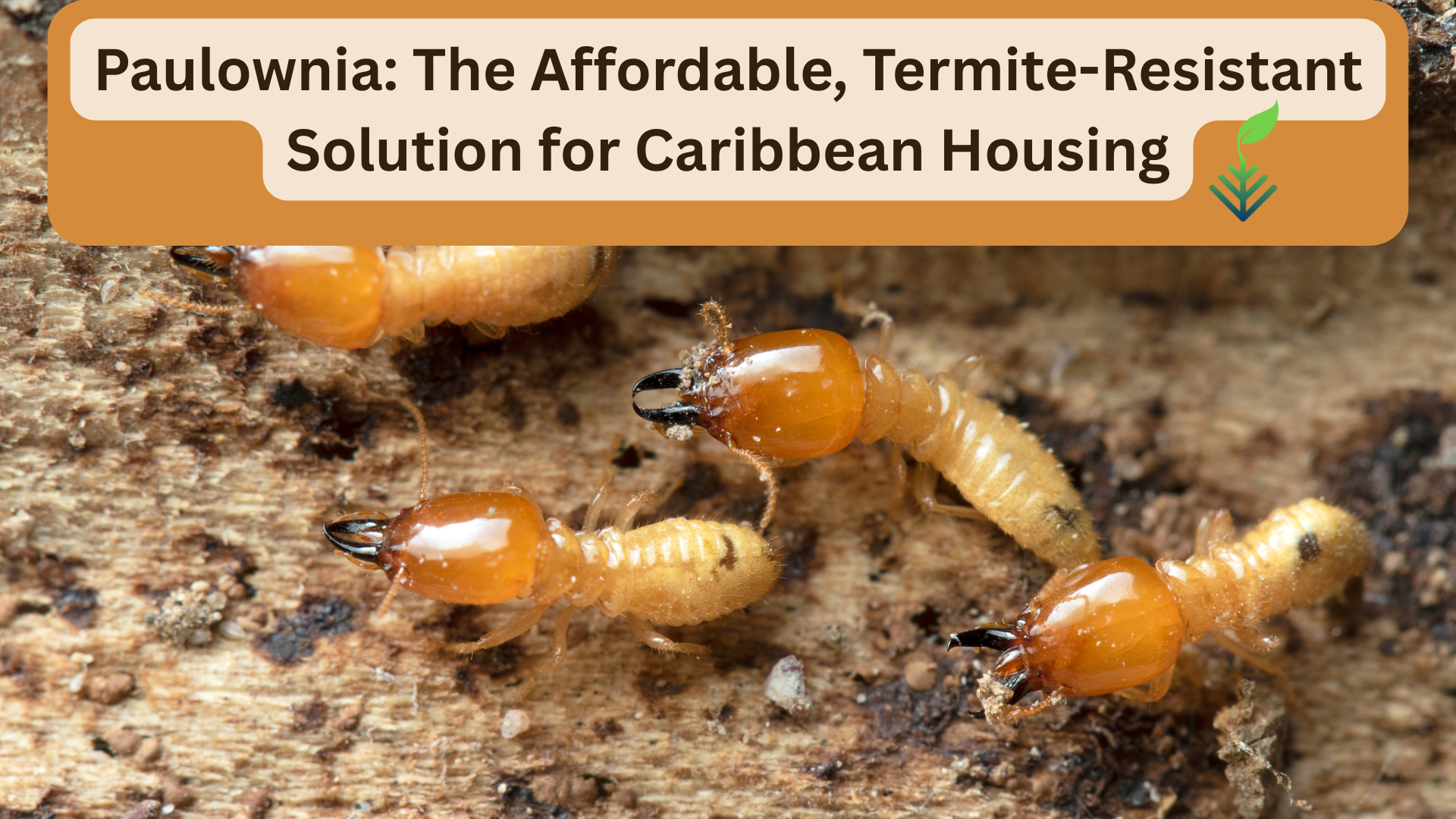
Termites Are Eating The Caribbean Alive.

From the Bahamas to St. Croix, these relentless pests cause millions in structural damage every year, forcing homeowners to spend heavily on repairs and chemical treatments. For decades, builders have relied on imported cypress and mahogany—durable, termite-resistant woods—to combat the problem. But rising costs, deforestation concerns, and long shipping distances make this an unsustainable solution.

Paulownia Species Hardwood

Paulownia wood is often stated to be termite resistant due to the presence of natural chemical compounds within its wood. Specifically, compounds like tannin, paulownin, and sesamin are frequently cited as contributing to its insect-repellent properties. These are considered “extractives” in the wood, which are non-structural chemical compounds that can offer defense mechanisms against environmental stresses, including pests.

Here’s a breakdown:

  • Tannin: This compound is known for its astringent properties and can act as a deterrent to various insects, including termites, by making the wood unpalatable or indigestible.
  • Paulownin and Sesamin: These are lignans that have been identified in Paulownia wood, and research suggests they possess antimicrobial and insect-repellent activities.

It’s important to note, however, that while Paulownia has a good natural resistance, no wood is completely impervious to rot or insect attack in all conditions. Some studies, particularly from the Forest Products Laboratory, have indicated that while Paulownia has a high extractive content, its durability against decay and termites might not always correlate to the expected level of performance in all conditions. This suggests that for exterior applications or prolonged exposure to moisture, or ground, proper treatment and design considerations are still recommended to maximize its longevity as with any wood structure.

Pressure-Treated Paulownia.

Grown sustainably in South Carolina, paulownia is fast becoming a game-changer for Caribbean construction. When properly treated paulownia lumber resists termites just as well as mahogany—at half the cost. Here’s why it could revolutionize island housing.


The Termite Crisis in the Caribbean

Termites thrive in tropical climates, and the Bahamas and U.S. Virgin Islands are no exception.

  • Homes require constant maintenance to prevent infestations.
  • Traditional chemical treatments wear off over time, requiring reapplication.
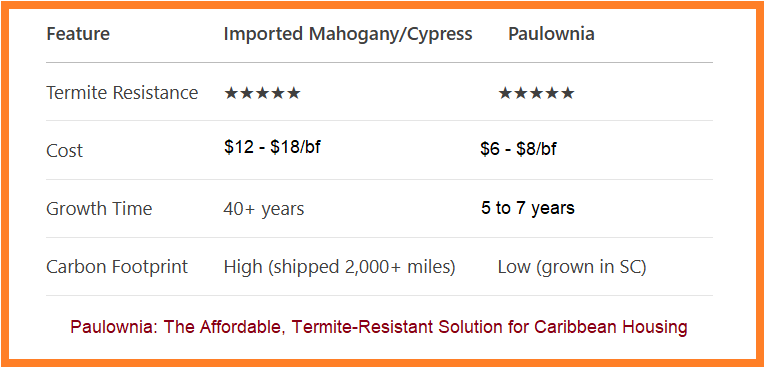
  • Imported cypress and mahogany are effective but expensive—costing $12−$18 per board foot after shipping.

With housing shortages and rising construction costs, the islands need a localized, affordable alternative.

Why Imported Timber Isn’t the Best Long-Term Solution

Cypress and mahogany are excellent termite-resistant woods, but they come with major drawbacks:

Deforestation concerns– Many tropical hardwoods are unsustainably logged.

High transportation costs– Shipping from Central/South America or Asia drives up prices.

Slow regrowth – Mahogany takes 40+ years to mature, creating long-term supply issues.

What if there was a fast-growing, locally available wood that could match their performance?


Paulownia: The Sustainable, Termite-Resistant Alternative

1. Naturally Pest-Resistant

  • Untreated paulownia has a natural defense to termites and can be increased with modern borate pressure treatments make it just as resistant as mahogany.
  • Lab tests confirm that treated paulownia repels termites as effectively as traditional hardwoods.

2. Grown in the U.S. (Lower Shipping Costs)

  • South Carolina farms are now cultivating paulownia, meaning shorter shipping distances to the Caribbean.
  • No need to rely on imports from distant rainforests—this is a localized, sustainable supply.

3. 60% Cheaper Than Mahogany

  • Mahogany: $12−$18/bf
  • Treated Paulownia: $6−$8/bf
  • Massive savings for builders and homeowners.

4. Faster Growth = Sustainable Supply

  • Mahogany: 40+ years to harvest
  • Paulownia: 5-7 years
  • Ideal for reforestation and agroforestry projects in hurricane-impacted areas.

Real-World Applications: Where Paulownia Can Replace Imported Wood

Roof rafters & framing(termites won’t touch treated paulownia)

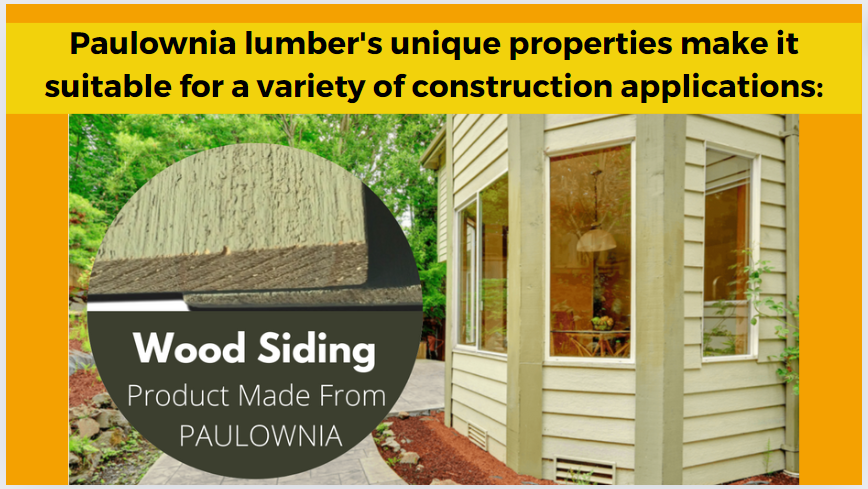
Siding & exterior trim(when sealed properly)

Flooring & interior millwork(lightweight and stable)

Hurricane-resistant construction (flexible yet strong)

Already, builders in the Bahamas are testing paulownia—with promising results.

The Future: A Shift Toward Sustainable Island Construction

The Caribbean doesn’t have to keep relying on expensive, imported timber. With paulownia, islands can:

Reduce construction costs

Cut carbon emissionsfrom shipping

Support U.S. farmsinstead of unsustainable logging

Build termite-proof homes without toxic chemicals


Time for a Change

The termite problem isn’t going away—but the solution is evolving. Paulownia offers a less expensive, faster-growing, and equally durable alternative to mahogany and cypress.

For governments, builders, and homeowners in the Caribbean, the question is clear: Will you keep paying premium prices for imported wood? Or will you embrace a smarter, sustainable solution?

Demand paulownia. Build stronger. Save money. Protect the islands.


What do you think? Would you use paulownia in your next Caribbean construction project? Let’s discuss in the comments!


Resources

Termite Resistance, Chemical and Mechanical Characterization of Paulownia tomentosa Wood before and after Heat Treatment: https://www.mdpi.com/1999-4907/12/8/1114

Biological Activities in Sapwood and Heartwood Extractives from Paulownia tomentosa: https://www.mdpi.com/1999-4907/14/11/2171


Where To Buy USA Paulownia Lumber

Where To Buy Paulownia? Paulownia Wood For Sale – QUESTIONS?

Visit our web page. https://bioeconomysolutions.com/paulownia-lumber/

We’re happy to organize a time to speak with you about our paulownia trees and lumber we have for sale. Please book your preferred time to speak directly.

Here’s a link to my online calendar/schedule:

www.bioeconomysolutions.com/bookcall

BioEconomy Solutions

mail@BioEconomySolutions.com

Office: 843.305.4777

Currently Western Red Cedar is the main stay in many US Industries from housing to boat building. Now the price has risen, and the quality and quantity of cedar material has diminished.

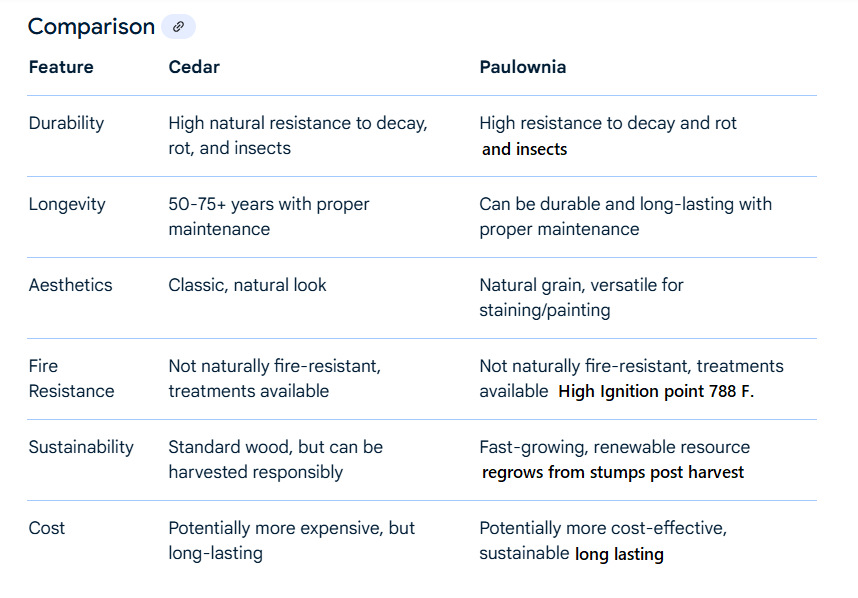
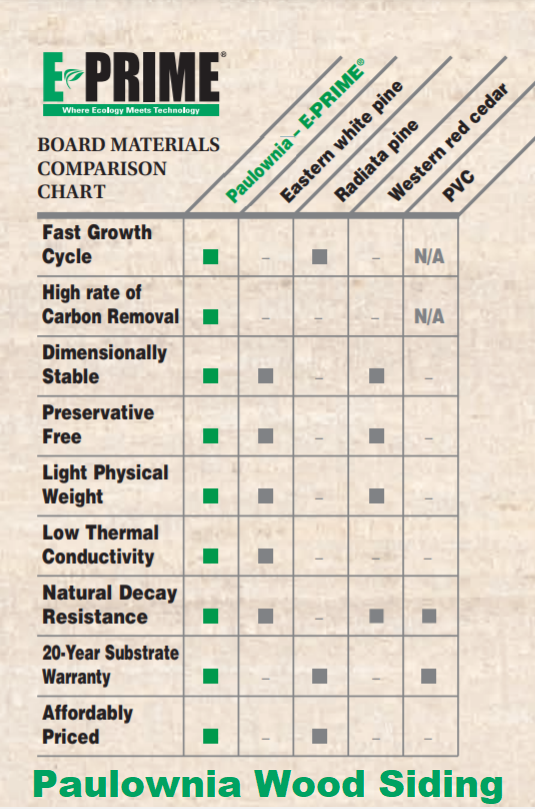
Yes, Paulownia wood is generally considered to be naturally resistant to rot and decay, as well as insects. This is one of its notable properties and makes it suitable for various applications, including some outdoor uses.

Comparison Chart


Why Is Paulownia Rot Resistant?

Here’s a breakdown of why:

Tannin content: Paulownia wood contains high levels of tannin, which acts as a natural preservative and helps deter decay.

Cell structure: When dried, the wood cells in Paulownia form a closed structure that provides protection against moisture and decay.

Low moisture absorption:Paulownia has a low moisture absorption rate, which further contributes to its resistance to rot and decay.

Insect resistance: The presence of compounds like paulonin and sesamin in the wood helps to repel insects. Paulonin is a compound found in some types of wood, particularly kiritansu, that provides insect repellent, antibacterial, and preservative properties.

While it has good natural resistance, its important to note that no wood is completely impervious to rot in all conditions. For exterior applications where Paulownia might be in constant contact with the ground or exposed to prolonged moisture, proper treatment and design considerations are still recommended to maximize its longevity.

Western Red Cedar: Can the Paulownia Tree Replace a Classic?

Western red cedar (Thuja plicata) has long been a favorite for outdoor construction, siding, and furniture due to its natural durability and beauty. But with sustainability concerns and rising costs, could paulownia wood—the fast-growing “miracle tree”—be a viable alternative?

Let’s compare these two woods and explore how paulownia might supplant western red cedar in key applications

1. Growth Rate & Sustainability
Western Red Cedar: Slow-growing (takes 50+ years to mature).

Harvesting relies on old-growth forests or managed plantations, raising ecological concerns.

Increasingly expensive due to high demand and limited supply.

Paulownia: One of the fastest-growing hardwoods (harvestable in 5 – 7 years).

Thrives on marginal land, reducing pressure on natural forests.

Carbon sequestration powerhouse—absorbs 10x more CO₂ than cedar over the same period.

Winner? Paulownia is the clear choice for eco-conscious builders who want a renewable, low-impact material.

2. Weight & Workability

Western Red Cedar: Lightweight compared to other softwoods, but still denser than paulownia.

Easy to cut and shape but can split if nailed improperly.

Paulownia: Exceptionally lightweight (about 1/3 the weight of cedar).

Softer and easier to mill, carve, and sand—ideal for detailed woodworking.

Less prone to warping or cracking during drying.

Winner? Paulownia is better for crafts, models, and furniture where weight matters.

3. Durability & Weather Resistance

Western Red Cedar: Naturally rot- and insect-resistant due to oils and tannins.

Lasts decades untreated in outdoor applications (siding, decks, fences).

Paulownia: Naturally rot-resistant also and can be further enhanced with sealing or pressure treatment for outdoor use.

Naturally termite resistant if unprotected.

Cedar and paulownia shingle siding both offer natural, durable, and aesthetically pleasing options for home exteriors, but have distinct characteristics. Cedar is known for its natural resistance to decay, rot, and insects, and can last for decades with proper maintenance. Paulownia, while also durable and insect-resistant, is a faster-growing, more sustainable hardwood option.

Cedar Shingle Siding

  • Durability:
  • Longevity:
  • Aesthetics:
  • Fire Resistance:
  • Maintenance:
  • Cost: 16.00 /bf

Paulownia Shingle Siding

  • Durability:
  • Sustainability:
  • Aesthetics:
  • Fire Resistance:
  • Maintenance:
  • Cost: $6.00 /bf

4. Cost & Availability

Western Red Cedar

Prices have surged due to high demand and limited supply.

Premium grades (clear, knot-free) are especially expensive.

Paulownia

More affordable (often 30–50% cheaper than cedar).

Increasingly available from U.S. plantations.

Winner? Paulownia wins for budget-friendly projects.

5. Best Uses for Each Wood

Where Western Red Cedar Still Wins

  • Untreated outdoor projects (decking, shingles, fencing).
  • Aromatic applications (closets, saunas).
  • High-end siding where natural decay resistance is critical.

Where Paulownia Can Replace Cedar

  • Indoor furniture (lightweight, easy to carve).
  • Surfboards, Boats, Paddleboards musical instruments, and models (similar to balsa but stronger).
  • Treated outdoor structures (if sealed properly).
  • Sustainable construction (where fast regrowth is a priority).

Is Paulownia the Future?

While western red cedar remains unbeatable for natural outdoor durability, paulownia offers a sustainable, lightweight, and cost-effective alternative for many uses. As treatment methods improve and plantations expand, paulownia could supplant cedar in:

✅ Indoor woodworking

✅ Treated outdoor projects

✅ Eco-conscious construction

For builders and DIYers willing to seal or treat the wood, paulownia is a game-changer—offering the beauty and workability of cedar without the high cost or long wait for harvest.

Would you switch to paulownia? Let us know in the comments!

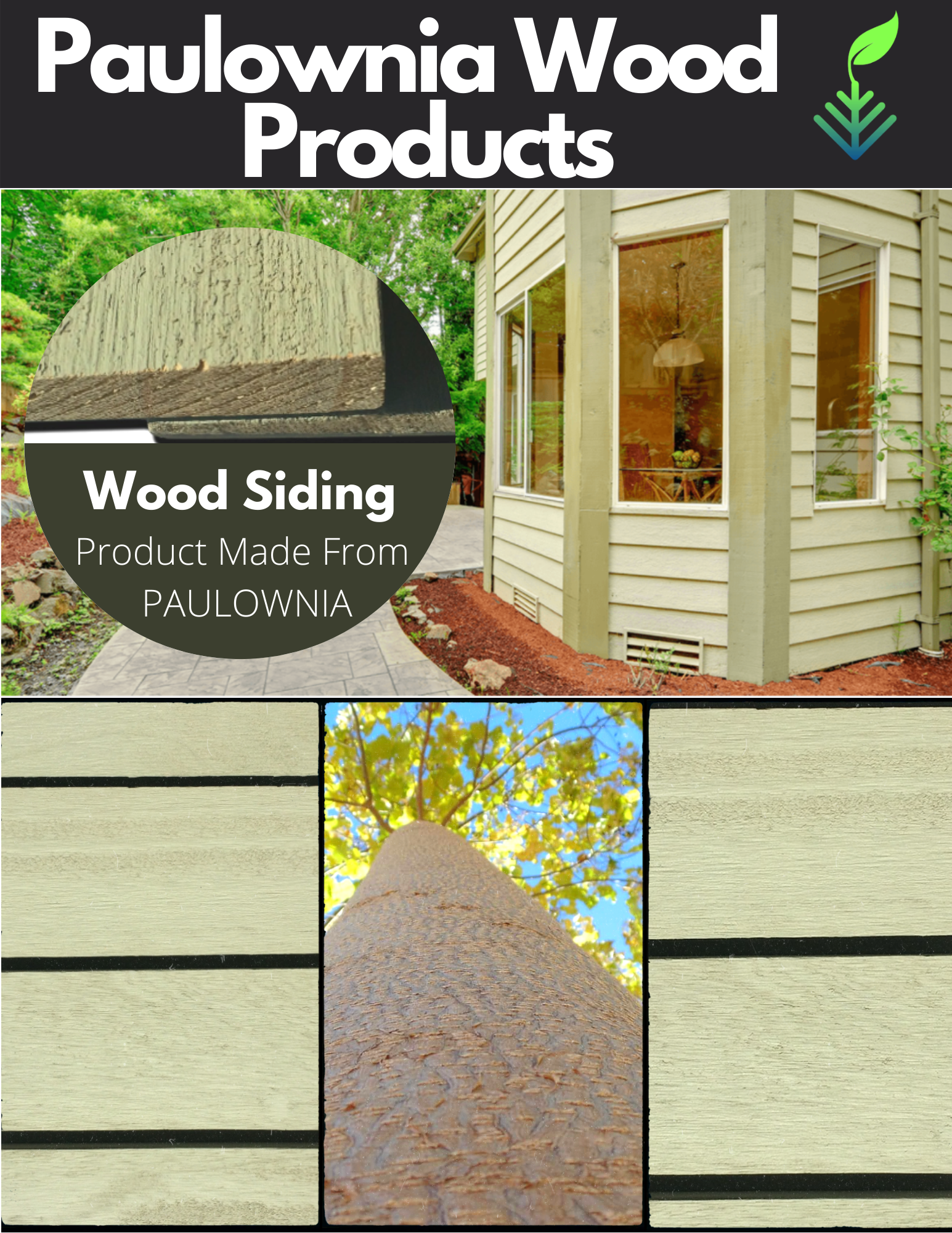
You can do better, paulownia is used for outdoor siding. James hardee siding uses paulownia.

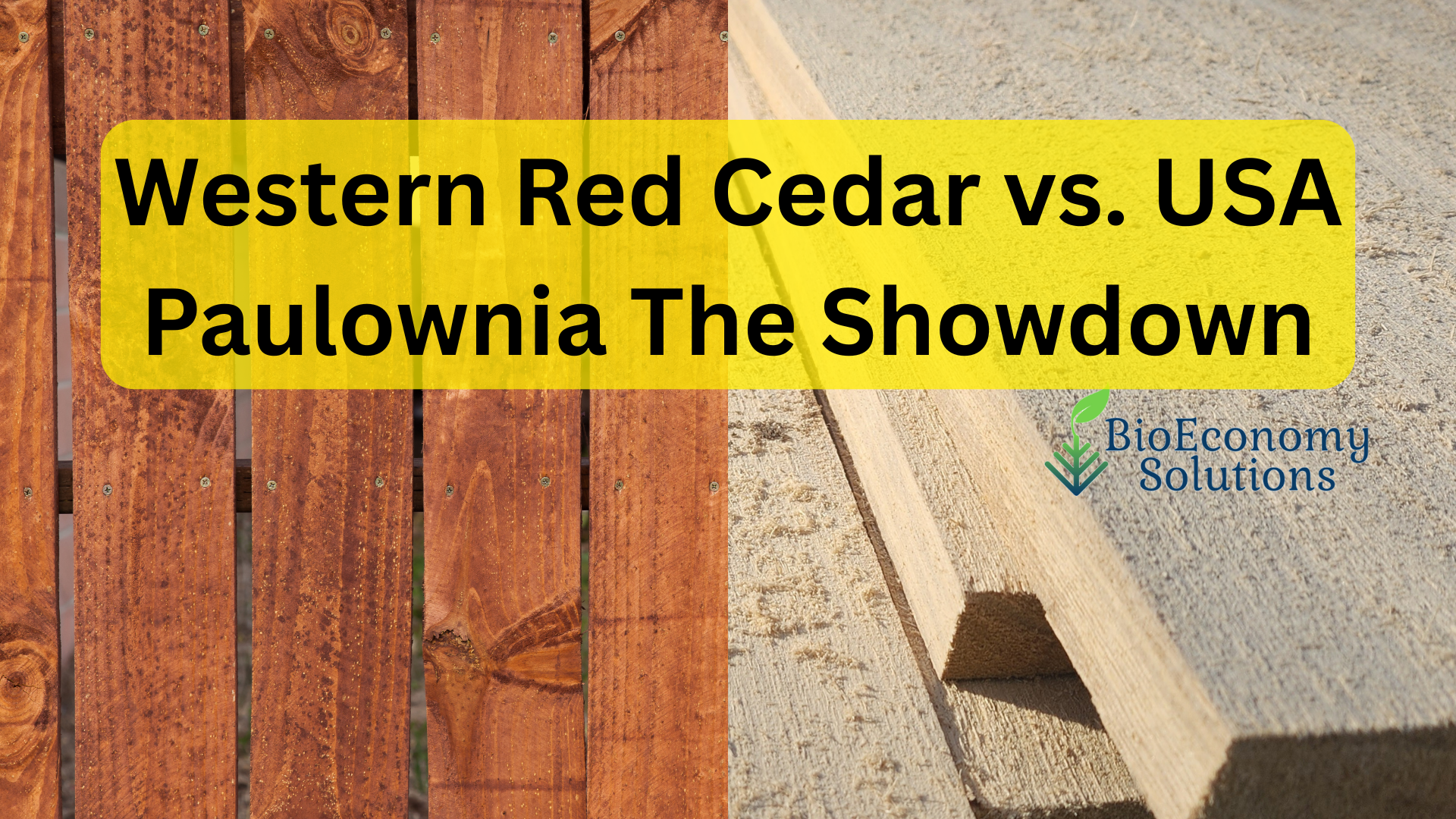
Paulownia vs. Western Red Cedar: The Ultimate Showdown – Why Paulownia is the Future of Siding and Beyond

Western red cedar (Thuja plicata) has been the gold standard for premium outdoor wood for decades—revered for its natural beauty, durability, and resistance to rot. But in a world demanding faster-growing, more sustainable materials, paulownia is stepping into the spotlight.

Major manufacturers like James Hardie (a global leader in fiber cement siding) are already incorporating paulownia into their products, proving its viability as a high-performance building material. So, can paulownia truly replace western red cedar—not just in niche uses, but in siding, decking, and outdoor construction.

6. Cost & Availability – Paulownia is Disrupting the Market

Western Red Cedar: Prices have doubled in the past decade due to high demand and limited supply.

Premium clear cedar is becoming unaffordable for many builders.

Paulownia: 30–50% less expensive than cedar.

Increasingly available from U.S. plantations, reducing import reliance.

James Hardie’s use of paulownia signals industry confidence in its scalability.

Verdict: Paulownia is the budget-friendly, high-performance alternative.

7. The Future of Siding & Outdoor Construction

Where Cedar: Still Dominates (For Now) Untreated outdoor projects (fences, shingles, garden beds). High-end architectural siding where natural decay resistance is critical.

Where Paulownia is Taking Over: Engineered siding (like James Hardie’s products).

Treated decking and outdoor structures (sealed paulownia lasts as long as cedar).

Sustainable mass timber construction (lightweight, fast-growing).

Indoor furniture, cabinetry, and millwork (easier to work with than cedar).

Final Verdict: Paulownia is the Next Big Thing

Western red cedar isn’t going away—it’s still the best choice for untreated, naturally durable outdoor projects. But with rising costs, environmental concerns, and advanced wood treatments, paulownia is poised to replace cedar in key markets:

✅ Siding (as seen with James Hardie)

✅ Treated outdoor structures (decks, pergolas, fencing)

✅ Eco-conscious construction (carbon-negative, fast-growing)

✅ Lightweight architectural applications

The bottom line? If you’re still using cedar for everything, it’s time to give paulownia a serious look. The future of sustainable building is here.

Would you switch to paulownia for your next project? Let us know in the comments!

Pricing of Both?

Include cost of both lumber prices. Western red cedar is $16.00 /bf and paulownia is $6.00 / bf.

The question isn’t “Is paulownia good enough?” – it’s “Can you afford NOT to use it?”
Where To Purchase USA Paulownia Lumber

Looking for paulownia lumber for your next project? We can ship what you need from our USA saw mill location.

Learn more about our South Carolina paulownia lumber here: https://bioeconomysolutions.com/paulownia-lumber/

We can also ship by rail or shipping container overseas as well.

Call us at 843.305.4777 OR Learn more about our South Carolina paulownia lumber here: https://bioeconomysolutions.com/paulownia-lumber/

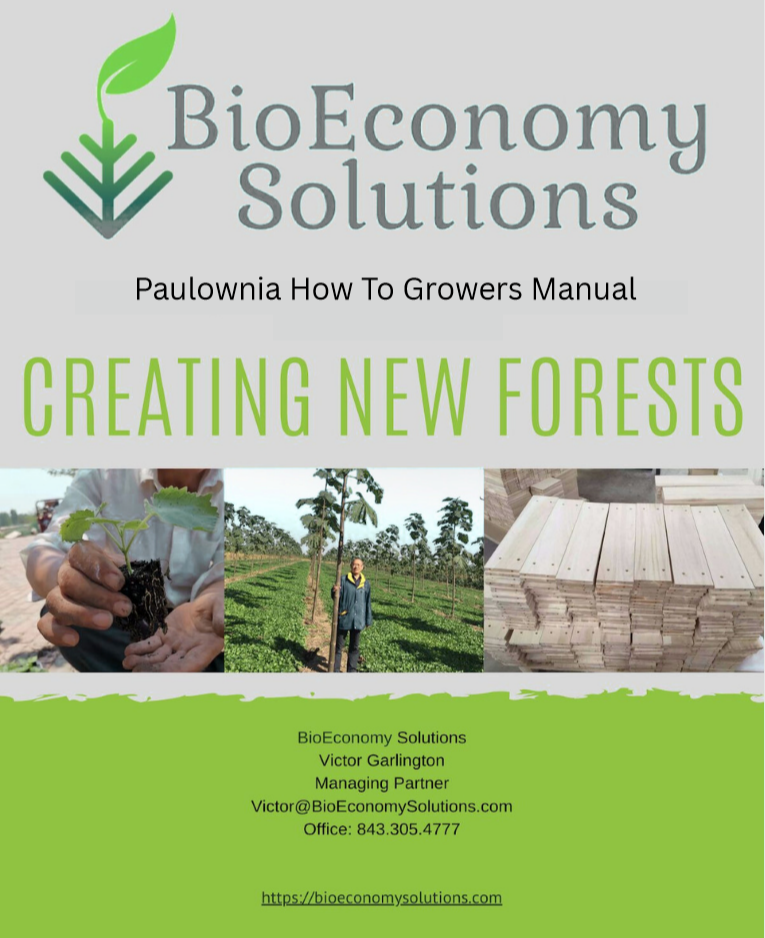
Unlock the Secrets of Growing Paulownia with the Ultimate Grower’s Guide!

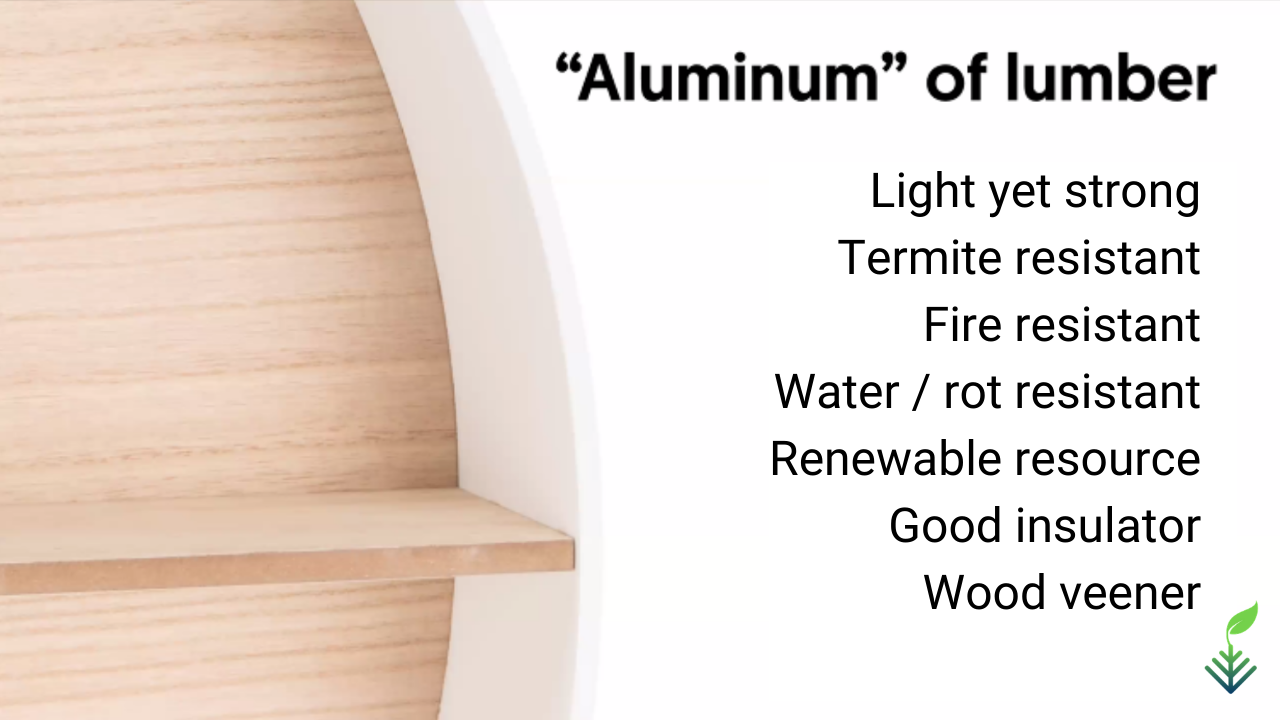
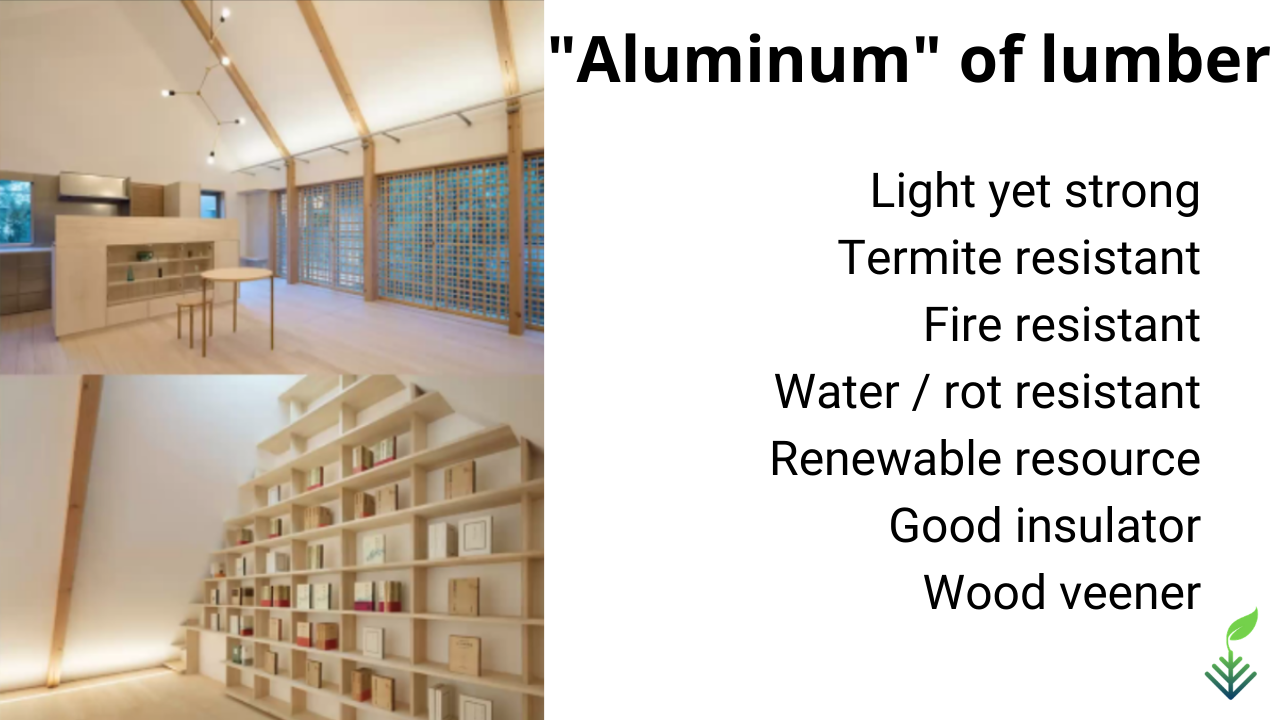
Are you interested in fast-growing, sustainable timber that’s profitable and eco-friendly? Look no further than Paulownia—the “aluminum of lumber” known for its lightweight strength, rot resistance, and rapid growth.

Now, you can master Paulownia cultivation with the BioEconomy Solutions Paulownia Grower’s Manual! This comprehensive e-book is packed with expert insights, step-by-step growing techniques, and proven strategies to maximize your yields—in just 5 years!

Why Paulownia?

  • Grows 5x faster than traditional timber (harvest in 5 years vs. 25+).

  • Highly profitable—earn from lumber, carbon credits, honey, and more.

  • Eco-friendly—sequesters 90 metric tons of CO2 per acre/year!

  • Versatile uses—furniture, veneers, surfboards, and even wind turbine blades.

What’s Inside the Guide?

✅ Step-by-step planting & maintenance (greenhouse to harvest).
✅ Revenue streams—timber sales, carbon credits, intercropping, and leasing.
✅ Tax incentives & grants to boost your ROI.
✅ Real-world case studies from successful MegaFlora farms.

Whether you’re a farmer, investor, or eco-entrepreneur, this manual is your blueprint to profitable, sustainable forestry.

🌱 Download Your Copy Today and Grow the Future!
👉 Get the Paulownia Grower’s Manual Now

Plant trees. Profit sooner. Cool the planet. 🌍💚

P.S. Limited-time bonus: Exclusive access to BES’s expert support network for buyers!

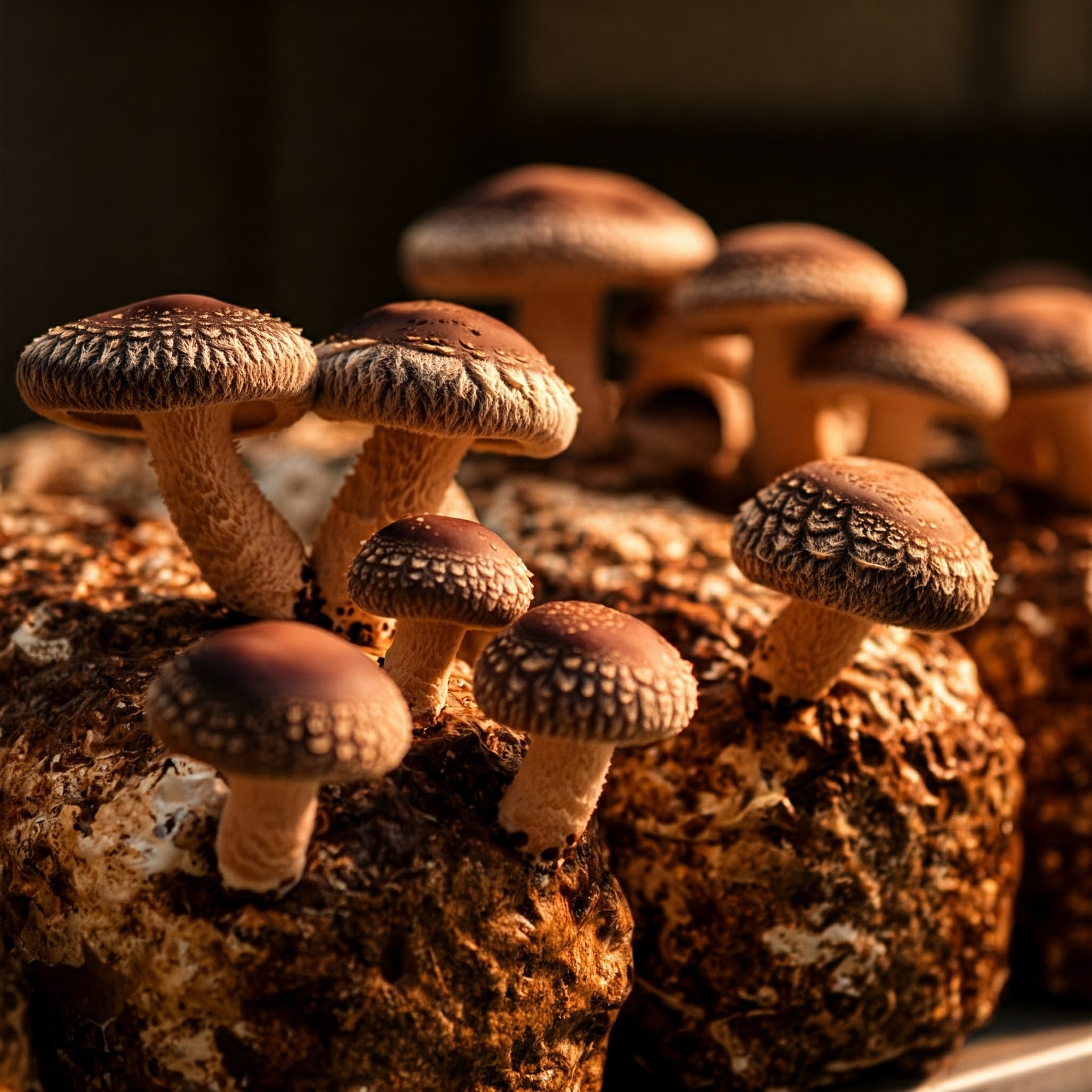
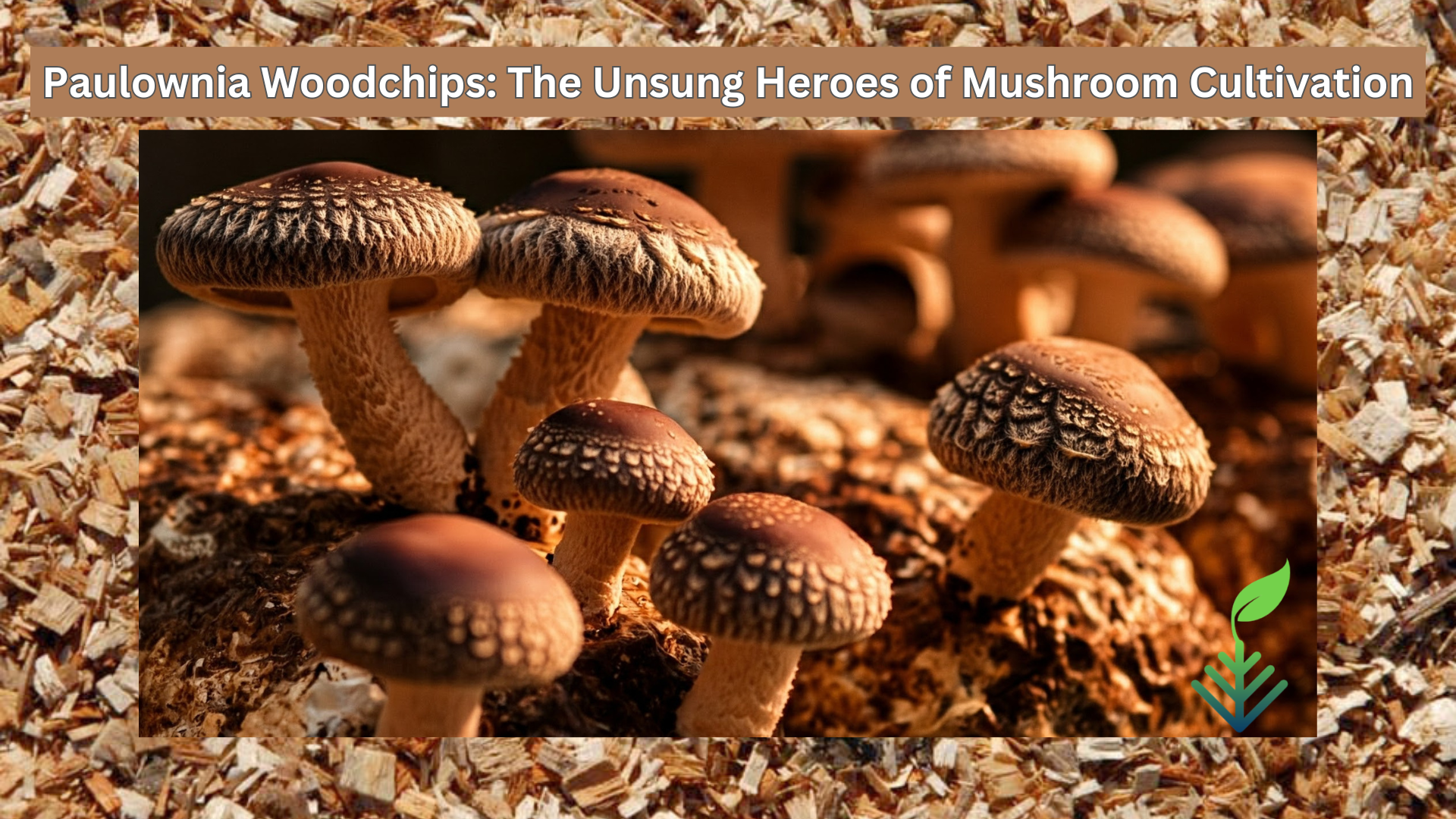
When you think of mushrooms, you might picture the fruiting bodies popping up from the forest floor, rotted logs or a neatly packaged container at your favorite grocery store. But behind those delicious fungi lies a fascinating world of cultivation, and Paulownia Woodchip fiber plays a starring role.

Why Paulownia Woodchips?

Mushroom cultivation requires a substrate, a material that provides nutrients and support for the growing mycelium (the network of fungal threads). Paulownia Woodchips have emerged as a favorite substrate for many mushroom growers, and here’s why:

  • Nutrient-rich: Paulownia Woodchips contain lignin and cellulose, complex carbohydrates that many mushroom species can break down and utilize for growth.
  • Regionally available: Paulownia Woodchips are often a byproduct of the forestry and lumber industries, making them a cost-effective and sustainable option for growers.
  • Excellent moisture retention: Paulownia Woodchips hold moisture well, creating a humid environment that is ideal for mushroom growth.
  • Good aeration: The spaces between Paulownia Woodchips allow for proper air circulation, which is essential for healthy mycelium development.
  • Versatile: Paulownia Woodchips differ from other hardwood species like oak. Chips from softwoods like pine and fir, can be used to cultivate a variety of mushroom species.

What Is Paulownia?

The first thing is to answer the question of what is Paulownia? The paulownia tree is one of the fastest growing trees on earth. Once harvested, you do not have to replant it as it will regrow new shoots from the stumpage.

How Paulownia Woodchips are Used:

  • Substrate preparation: Paulownia Woodchips are typically sterilized or pasteurized to eliminate competing fungi and bacteria. They may also be supplemented with other materials, like bran or gypsum, to provide additional nutrients.
  • Inoculation: The prepared woodchip substrate is inoculated with mushroom spawn (a material containing the mycelium of the desired mushroom species).
  • Incubation: The inoculated substrate is kept in a controlled environment to allow the mycelium to colonize the Paulownia Woodchips.
  • Fruiting: Once the substrate is fully colonized, environmental conditions are adjusted to trigger the formation of mushrooms.

Benefits of Using Paulownia Woodchips:

  • Sustainable cultivation: Utilizing Paulownia Woodchips as a substrate promotes sustainable forestry practices and reduces waste.
  • High yields: Paulownia Woodchips can support robust mushroom growth, leading to high yields for growers.
  • Versatility: A wide range of mushroom species, including shiitake, oyster, and lion’s mane, can be cultivated on Paulownia Woodchips.
  • Cost-effective: Paulownia Woodchips are often a more affordable substrate option compared to other materials

Beyond the Basics:

  • Specialty mushrooms: Some gourmet mushrooms, like reishi, shiitake and maitake, thrive on hardwood Paulownia Woodchips.
  • Indoor cultivation: Paulownia Woodchips can be used for outdoor mushroom cultivation, creating mushroom beds
  • Home growing: Paulownia Woodchips are a popular choice for home mushroom growers due to their accessibility and ease of use.

The Future of Paulownia Woodchips in Mushroom Cultivation:

As the demand for mushrooms continues to grow, Paulownia Woodchips are likely to remain a key substrate for cultivation. Ongoing research is exploring ways to optimize woodchip substrate preparation and enhance mushroom yields. The use of Paulownia Woodchips in mushroom cultivation not only provides a sustainable and efficient growing method but also contributes to a more circular economy by utilizing a valuable byproduct of the forestry industry.


Want To Buy Paulownia Wood Chips?

Contact Us!

Where To Buy Paulownia Wood Chips? Paulownia Wood Chips For Sale – QUESTIONS?

Visit our web page. https://bioeconomysolutions.com/paulownia-lumber/

We’re happy to organize a time to speak with you about our paulownia wood chips and lumber we have for sale. Please book your preferred time to speak directly.

Here’s a link to my online calendar/schedule:

www.bioeconomysolutions.com/bookcall

BioEconomy Solutions

mail@BioEconomySolutions.com

Office: 843.305.4777


USA PAULOWNIA LUMBER GROWN IN SOUTH CAROLINA

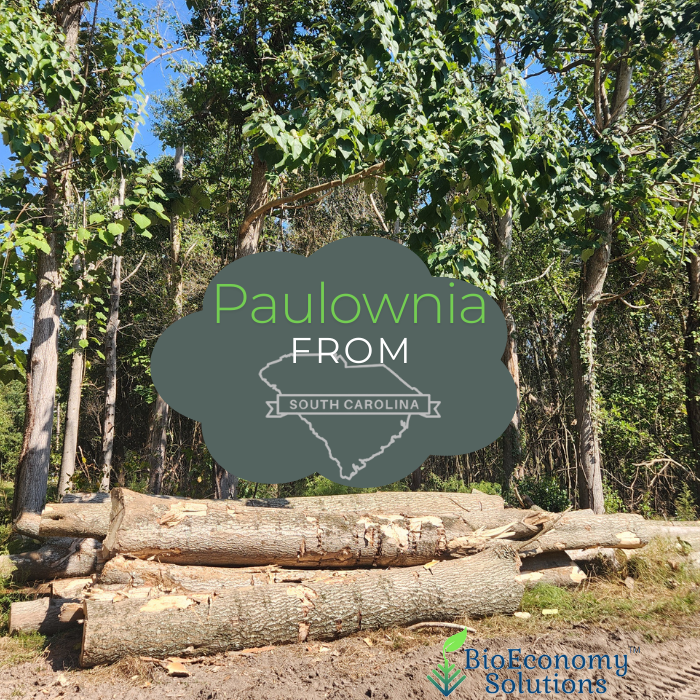
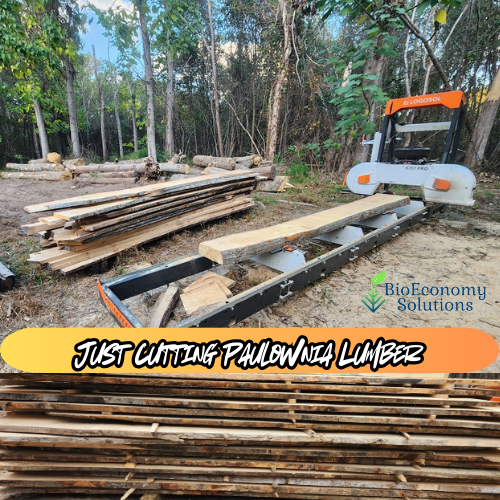
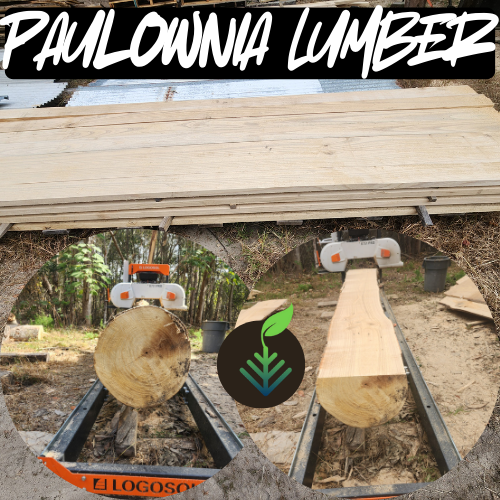
We have some fresh slabs that are drying and ready for milling. South Carolina grown Paulownia tree lumber which is #sustainable, light & strong!

Let us know when you are ready for your lumber?

Learn More About Paulownia Hardwood Lumber For Sale Here:

https://bioeconomysolutions.com/paulownia-lumber/

Paulownia Hardwood Lumber Pricing: Visit our paulownia lumber page on this site.

We also sell Custom Paulownia boards: rough sawn, and we offer various sizes and thicknesses. Paulownia timber and slabs available also, please let us know if we may assist you with your next paulownia lumber project.

Shipping:

You can send us a shipping label from your preferred carrier or call us for a shipping quote.
You can ship lumber as long as 96” with standard ground carriers, such as FedEx or UPS. You can also ship it via USPS if it’s under 72” in length. If your lumber is any longer than that you’ll have to use LTL truck freight. Keep in mind that LTL truck freight isn’t very economical for shipments under 150 lbs. We ship by rail or shipping container overseas as well.

I’m happy to organize a time to speak with you. Please book your preferred time to speak directly.

Here’s a link to my online calendar/schedule:
www.bioeconomysolutions.com/bookcall

Send us an email or call:

BioEconomy Solutions
Mail@BioEconomySolutions.com
Office: 843.305.4777