Paulownia wood has been hiding in plain sight for centuries.

Now marine craftsmen are realizing what 16th-century fishermen already knew.

While modern boatbuilders struggle with scarce cedar and expensive mahogany, there’s a wood that naturally resists water, rot, and decay—and it’s been proven in marine applications for over 400 years.

The question isn’t whether Paulownia works in marine environments.

The question is: why did we forget about it?

Watch Video: https://youtu.be/LZKKHAFN8mg?si=GEWcXuH7UJc_QQyy

The Marine Industry’s Hidden Crisis

Walk into any boatyard today and you’ll hear the same complaints:

“Western red cedar is unobtanium.” “Mahogany costs $16+ per board foot—when you can find it.” “We’re shipping wood from Africa and the Philippines.”

Meanwhile, the marine environment demands perfection:

  • Constant wet/dry cycles that split most woods
  • Salt water that accelerates decay
  • UV exposure that degrades materials
  • Weight considerations for performance

Traditional solutions are failing:

  • Cedar: Increasingly scarce, expensive
  • Teak: Overharvested, sustainability concerns
  • Mahogany: Limited supply, import dependent
  • Cypress: Heavy, prone to movement

But there’s a wood that solves all these problems.


The Forgotten Marine Champion

Paulownia’s natural marine advantages:

Water Resistance That Actually Works

Unlike woods that absorb water and swell, Paulownia’s cellular structure naturally repels moisture. This isn’t a treatment—it’s built into the wood’s biology.

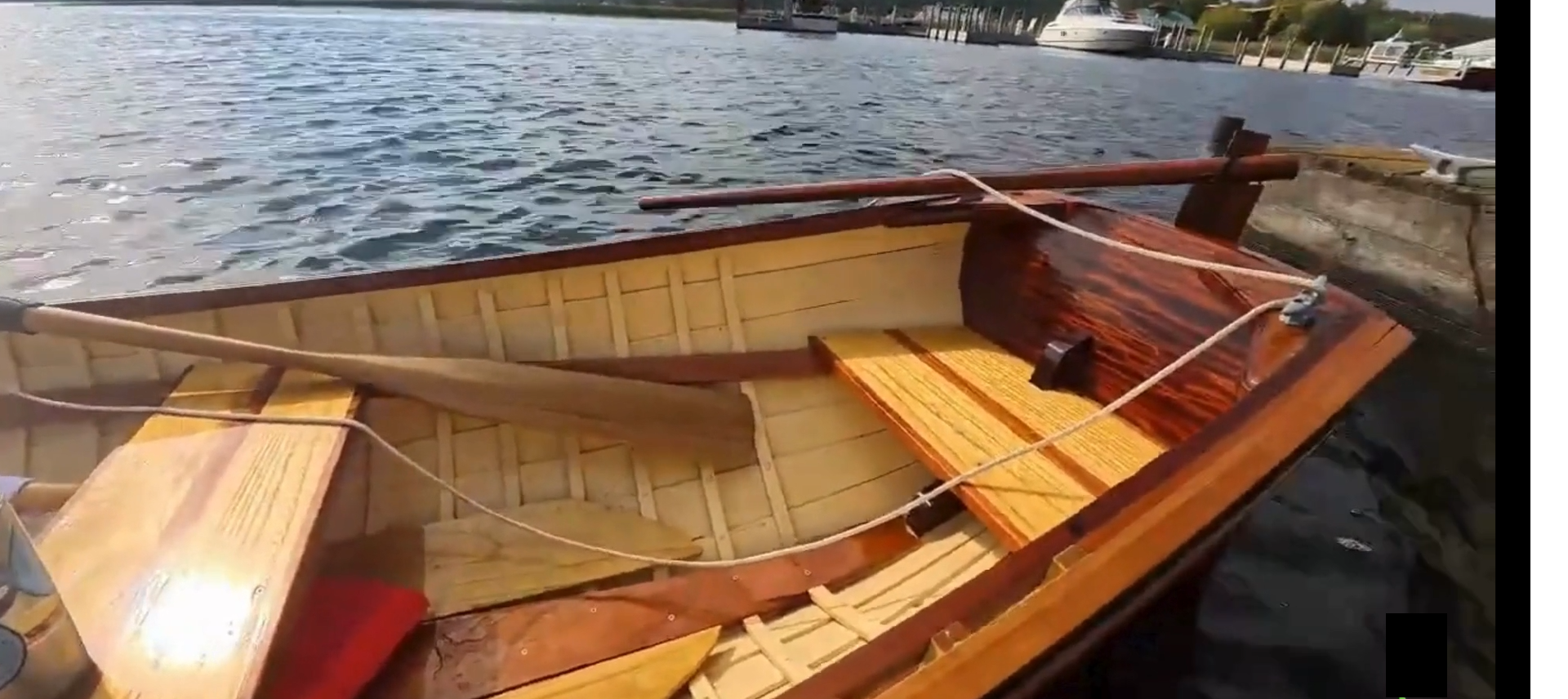
Real-world proof: Boats built with Paulownia planking sat wet for a month with no buckling, splitting, or movement. Traditional cypress boats would have warped beyond repair.

Rot and Decay Resistance

Paulownia contains natural compounds that resist fungal attack and bacterial decay. In marine environments where rot destroys most woods within years, Paulownia maintains structural integrity.

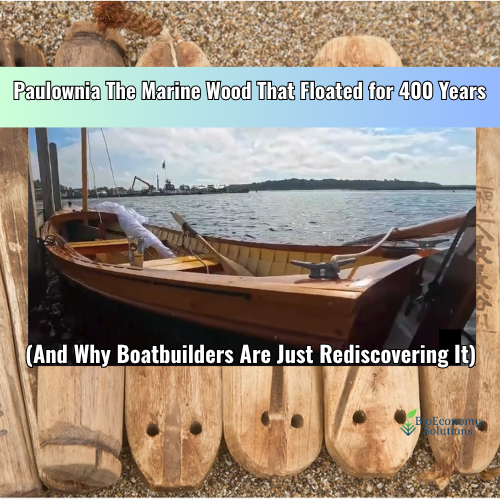
Historical evidence: 16th-century Paulownia fishing buoys still exist as antique collectibles—400+ years later.

Paulownias use as a wood for fishing floats and small buoys is more of a modern phenomenon, capitalizing on its superior buoyancy and water resistance, often as a sustainable and lightweight alternative to materials like cedar, balsa, or non-biodegradable plastics. Its role is particularly prominent today in the production of hand-crafted or high-end fishing bobbers and drift floats.
The Weight Advantage

Paulownia boats: 165-170 pounds Cypress boats: 200+ pounds

That’s 35+ pounds saved on a 14-foot boat. For larger vessels, the weight savings become exponential—improving fuel efficiency, handling, and performance.


Modern Marine Applications

Hull Planking: The Foundation

Paulownia excels in hull construction because it:

  • Maintains dimensional stability through wet/dry cycles
  • Resists the crushing forces of wave impact
  • Provides natural buoyancy enhancement
  • Eliminates the buckling that plagues traditional planking

Master boatbuilder Eric’s testimony: “There’s no buckling or movement in the planking… That’s bad for a boat, and we can’t have that.”

Surfboards and Paddleboards: Performance Plus

The surfing industry discovered Paulownia’s advantages:

Buoyancy Benefits:

  • Natural flotation superior to synthetic cores
  • Lightweight reduces fatigue during long sessions
  • Water resistance prevents waterlogging

Performance Advantages:

  • Excellent strength-to-weight ratio
  • Natural flex characteristics
  • Sustainable alternative to foam cores

Durability Factor:

  • Resists dings and pressure damage
  • Self-healing properties from minor impacts
  • Long-term structural integrity

Decking and Fittings: Beauty Meets Function

Paulownia’s aesthetic appeal combines with practical benefits:

Visual Appeal:

  • Light, attractive grain patterns
  • Takes stain and finish beautifully
  • Maintains appearance in UV exposure

Functional Benefits:

  • Non-slip surface when properly finished
  • Comfortable underfoot (doesn’t get burning hot)
  • Easy to work with standard tools
  • Excellent screw and fastener holding

The Science Behind the Performance

Cellular Structure Advantage

Paulownia’s unique cellular composition creates:

  • Natural water repellency without chemical treatment
  • Dimensional stability through moisture changes
  • Impact resistance from flexible cell walls
  • Thermal insulation properties

Natural Preservatives

The wood contains compounds that:

  • Inhibit fungal growth
  • Resist bacterial decay
  • Repel marine borers
  • Maintain structural integrity underwater

Density Sweet Spot

At 0.28-0.30 specific gravity, Paulownia hits the perfect balance:

  • Light enough for easy handling
  • Dense enough for structural strength
  • Optimal buoyancy characteristics
  • Superior strength-to-weight ratio

Why the Marine Industry Forgot

The same reason hemp disappeared: Sometimes proven technologies get lost in the shuffle of industrial change.

What happened:

  • Colonial expansion shifted to local woods
  • Industrial revolution favored mass production
  • Synthetic materials promised “better living through chemistry”
  • Traditional knowledge wasn’t systematically preserved

The result: Centuries of proven marine performance forgotten.


The Sustainability Advantage

While traditional marine woods face scarcity:

Paulownia offers abundance:

  • Plantation-grown in 5-7 years vs. decades for hardwoods
  • Coppices from stumps—no replanting required
  • Grows on marginal land—doesn’t compete with food production
  • Carbon sequestration during growth phase

Environmental benefits:

  • No old-growth forest destruction
  • Reduced transportation emissions (local production)
  • Biodegradable end-of-life (unlike fiberglass)
  • Soil improvement during cultivation

Real-World Performance Data

Marine Trades Institute Testing:

  • Paulownia planks showed minimal dimensional change
  • Superior stability compared to traditional species
  • No fastener stress from wood movement
  • Maintained water-tight integrity

Commercial Applications:

  • Surfboard manufacturers reporting excellent durability
  • Paddleboard builders citing weight and performance advantages
  • Small craft builders achieving superior strength-to-weight ratios

Historical Validation:

  • 400-year-old buoys prove long-term marine durability
  • Traditional fishing applications across multiple cultures
  • Proven performance in harsh saltwater environments
The Modern Renaissance

Smart marine manufacturers are taking notice:

Surfboard Industry Leading

  • Premium boards featuring Paulownia cores
  • Marketing sustainability alongside performance
  • Customer education about natural materials

Small Craft Builders

  • Testing Paulownia for traditional construction methods
  • Documenting performance advantages
  • Training next generation on sustainable materials

Yacht Industry Interest

  • Exploring applications for luxury craft
  • Investigating weight savings for performance boats
  • Evaluating sustainability credentials for eco-conscious buyers

Implementation Considerations

For Boatbuilders:

  • Source properly dried lumber (12% moisture content)
  • Use appropriate fasteners for lightweight wood
  • Consider hybrid construction (Paulownia with traditional reinforcement)
  • Document performance for future reference

For Manufacturers:

  • Establish reliable supply chains
  • Develop processing specifications
  • Create quality standards
  • Educate customers on benefits

For Buyers:

  • Understand maintenance requirements
  • Appreciate long-term durability benefits
  • Consider total cost of ownership
  • Support sustainable material choices

The Future of Marine Paulownia

Emerging applications:

  • Composite cores for advanced construction
  • Engineered lumber for larger vessels
  • Specialty applications (masts, spars, interior components)
  • Hybrid construction combining traditional and modern techniques

Market drivers:

  • Sustainability requirements
  • Traditional wood scarcity
  • Performance advantages
  • Cost considerations

Innovation opportunities:

  • Advanced processing techniques
  • Engineered products development
  • Hybrid material systems
  • Specialized marine treatments

The Bottom Line

Paulownia isn’t a new marine material—it’s a rediscovered one.

For 400 years, it proved itself in the harshest marine environments. Modern testing confirms what ancient craftsmen knew: this wood naturally excels in water.

The advantages are clear:

  • Natural water, rot, and decay resistance
  • Superior strength-to-weight ratio
  • Dimensional stability in marine conditions
  • Sustainable production and supply
  • Proven long-term durability

The question for marine professionals:

Will you be an early adopter of this rediscovered solution, or will you wait until everyone else figures it out?

The master boatbuilders are already placing their orders.

The surfboard industry is embracing the performance advantages.

The historical evidence speaks for itself.


Sometimes the best innovations are actually rediscoveries.

Paulownia wood: 400 years of marine performance, waiting for its modern renaissance.


Ready to explore Paulownia for your marine applications? The wood that floated for centuries is available today—with modern processing and sustainable supply chains.

CONTACT US

Contact BioEconomy Solutions lumber specialists to discuss specifications, availability, and applications for your next project.

Where To Buy Paulownia? Paulownia Wood For Sale – QUESTIONS?

Visit our web page. https://bioeconomysolutions.com/paulownia-lumber/

We’re happy to organize a time to speak with you about our paulownia trees and lumber we have for sale. Please book your preferred time to speak directly.

Here’s a link to my online calendar/schedule:

www.bioeconomysolutions.com/bookcall

BioEconomy Solutions

mail@BioEconomySolutions.com

Office: 843.305.4777


Most boatbuilders have never heard of the wood that built 16th-century fishing buoys.

But one master craftsman just proved it outperforms everything we use today.

Eric has 43 years of boatbuilding experience. He’s trained hundreds of students at Marine Trades Institute. He’s worked with every wood species you can imagine.

But when a student asked him about Paulownia wood, he’d never heard of it.

That conversation changed everything.


The Crisis Hiding in Plain Sight

The marine industry faces a quiet emergency:

Traditional woods are disappearing:

  • Western red cedar: $16+ per board foot (when available)
  • His lead instructor calls it “unobtanium” – you just can’t get it
  • White oak: Limited supply, slow growth
  • Mahogany: Increasingly scarce, shipped from Africa/Philippines

The workforce is aging:

  • 5 boatbuilders retire for every 2 entering the trade
  • World Trade Organization declared wooden boat builders “endangered” in England
  • Not from lack of work – lack of skilled craftsmen

Meanwhile, fiberglass pollution is killing marine life:

  • Scientists found fiberglass strands in oyster beds
  • Microplastics contaminating entire food chains
  • “We can’t even find a control group anymore”

The Forgotten Solution

Eric decided to test this mystery wood his student mentioned.

What he discovered shocked him:

The Stability Test

He marked a 7-11/16″ wide Paulownia plank at 72% moisture content.

Two months later:

  • Dried to 12% moisture
  • Lost only 3/32″ in width
  • Comparison: White oak shrinks 1/4″ on a 12″ board

“That’s significant in that it’s such a small amount.”

The Marine Performance Test

Eric built boats using Paulownia planking.

The boats sat wet for a month – rain, lake water, everything.

Traditional cypress boats: Planks buckle, split, stress the fasteners Paulownia boats: No movement, no buckling, no splitting

“There’s no buckling or movement in the planking… we don’t want that. We can’t have that. That’s bad for a boat.”

The Weight Advantage

  • Cypress boats: 200 pounds
  • Paulownia boats: 165-170 pounds
  • 35-pound weight savings on 14.5-foot boats

The Historical Revelation

Then Eric learned something that changed his perspective entirely:

Paulownia buoys from the 1600s still exist.

Fishermen used Paulownia for marine floats 400 years ago. These antique buoys are now collector’s items.

“This buggers the real question here… what the hell happened? How did this stuff get forgotten about?”

The answer: Like hemp, proven technologies sometimes disappear from collective memory – only to be “rediscovered” centuries later.


Why This Matters Beyond Boats

Eric’s discovery reveals something bigger:

The Sustainability Factor:

  • Plantation-grown (no old-growth forests cut)
  • Regrows from stumps in 90 days
  • Reaches 13 feet in first season after cutting
  • Carbon sequestration while producing materials

The Performance Factor:

  • Lighter than traditional woods
  • Superior dimensional stability
  • Natural rot resistance
  • Proven 400-year marine heritage

The Economic Factor:

  • Consistent supply vs. scarce traditional woods
  • Predictable pricing vs. “call for availability”
  • Multiple revenue streams from same trees

The Resistance to Change

When Eric contacted high-end boatbuilders about Paulownia:

“I’ve been in the boat business for three generations. I’ve never heard of this thing… my daddy’s daddy’s daddy has done it this way, and by god, I’m gonna do it this way.”

Sound familiar?

Every industry has this challenge. The best solutions often hide behind unfamiliarity and tradition.

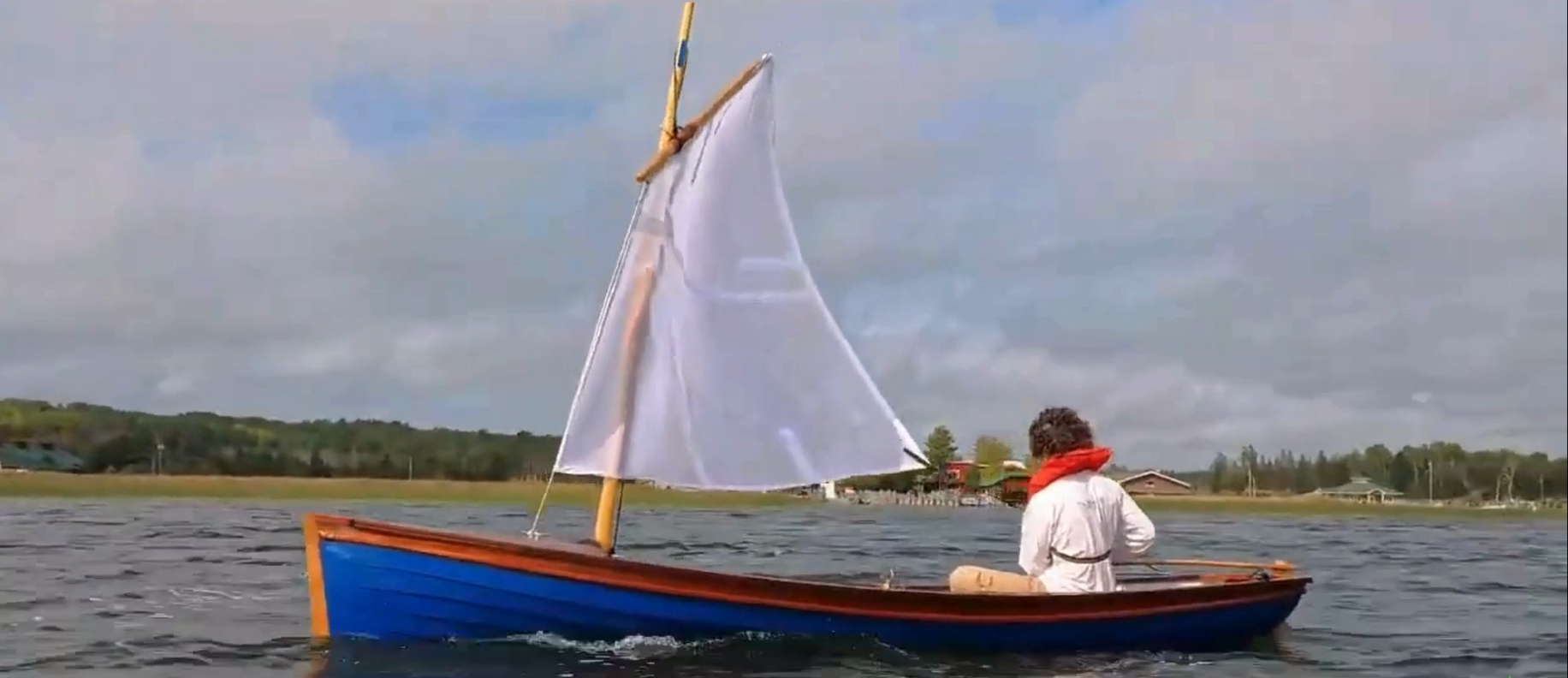
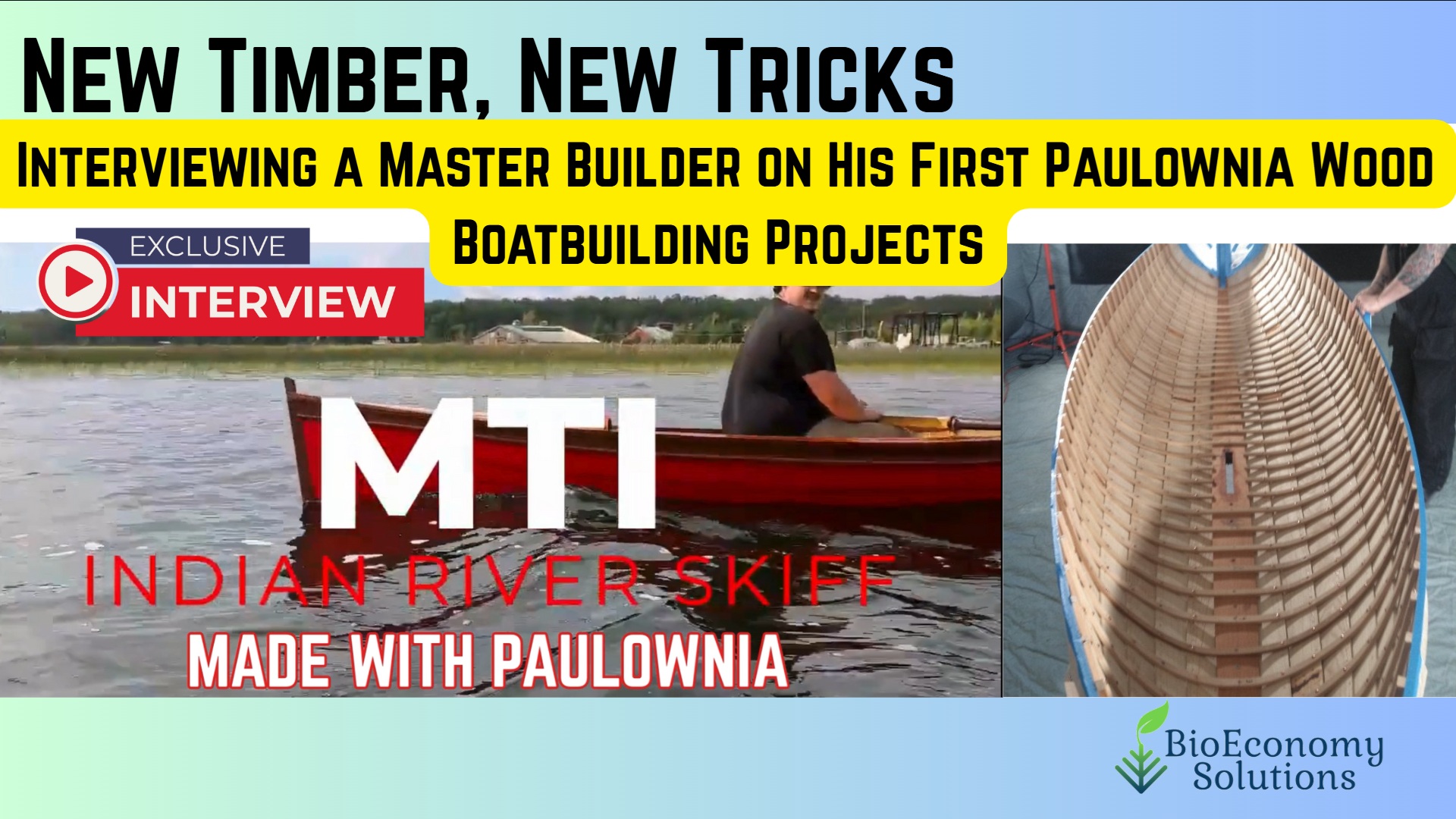
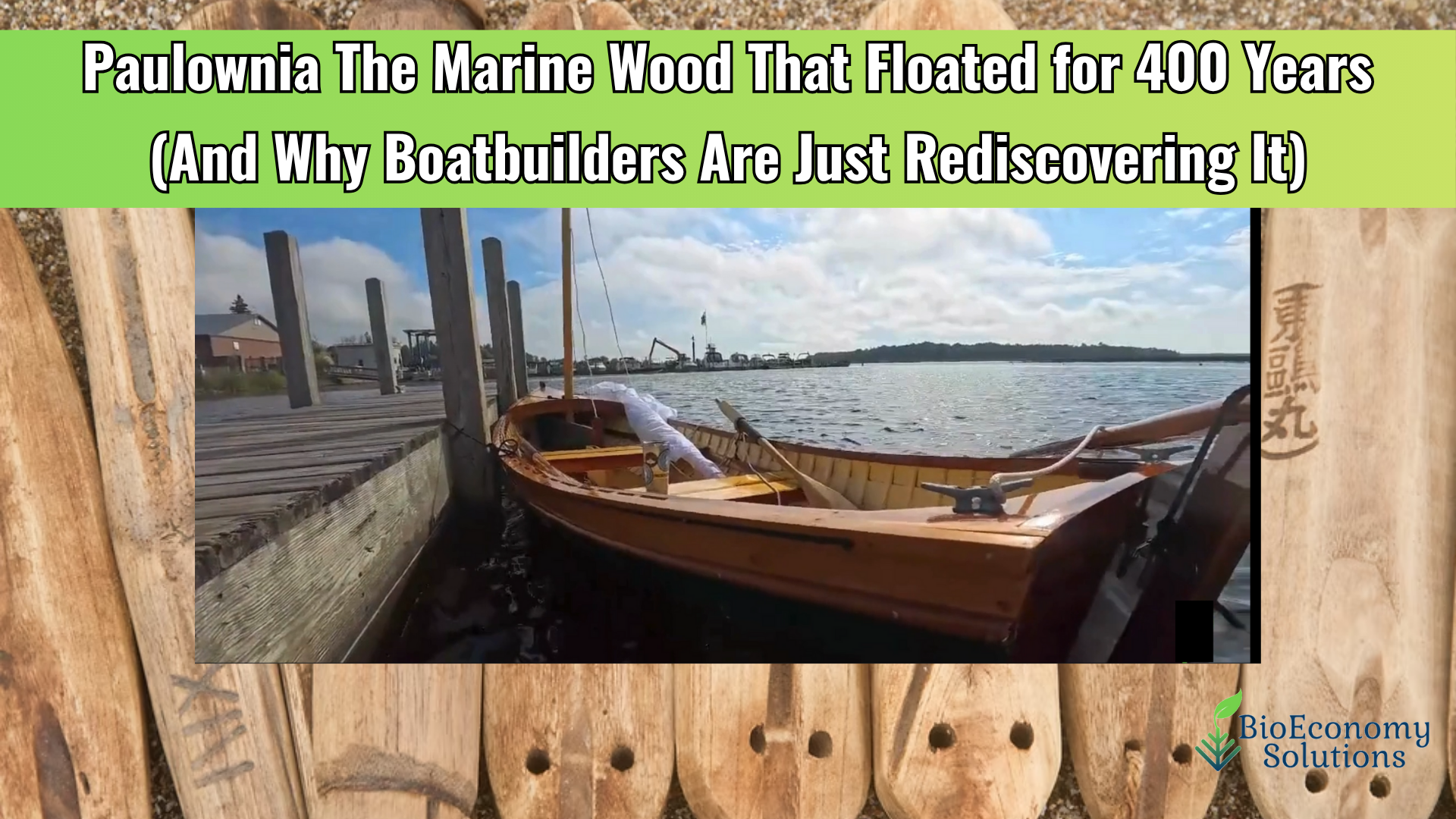
Marine Technical Institute (MTI) Paulownia Sailing Skiff Build 1 of 3

What Eric’s Teaching the Next Generation

At Marine Trades Institute, Eric now includes Paulownia in his curriculum:

“If you can build a boat, you can do damn near anything.”

His students are learning:

  • Traditional craftsmanship with modern materials
  • Sustainability without compromising performance
  • How to question assumptions and test alternatives
  • The importance of environmental responsibility

His mission: Pass proven techniques to the next generation before knowledge disappears.


The Bigger Lesson

Eric’s story isn’t just about wood or boats.

It’s about:

  • How proven solutions get forgotten
  • Why expertise matters in evaluating new materials
  • The importance of testing assumptions
  • How sustainability and performance can align

His advice to other industries: “Don’t be entrenched. This isn’t about converting you. It’s about offering you options.”


The Future Eric’s Building

Eric plans to:

  • Continue long-term durability testing
  • Share results with Traditional Small Craft Association
  • Train more students on sustainable materials
  • Document findings for future generations

His goal: Ensure valuable knowledge doesn’t disappear again.


What This Means for You

Whether you’re in construction, manufacturing, or any industry using materials:

Ask yourself:

  • What “traditional” materials are becoming scarce or expensive?
  • What proven alternatives might exist that you’ve never heard of?
  • How could testing new materials improve your products and sustainability?

Eric’s example shows: Sometimes the best innovations are actually rediscoveries of forgotten wisdom.


The master craftsman who “never heard of” Paulownia is now planning his next order.

His students are building boats that outperform traditional materials.

And a 400-year-old marine solution is getting a second chance.

Sometimes the future is found by looking at the past with fresh eyes.


What “forgotten” solutions might be hiding in your industry?

The next breakthrough might be something that worked centuries ago – waiting to be rediscovered.

View the “Entire” Live Interview

Paulownia Boatbuilder Live Interview | Interviewing a Master Builder on His 1st Paulownia Projects

Where To Buy Paulownia? Paulownia Wood For Sale – QUESTIONS?
Visit our web page. https://bioeconomysolutions.com/paulownia-lumber/

We’re happy to organize a time to speak with you about our paulownia trees and lumber we have for sale. Please book your preferred time to speak directly.

Here’s a link to my online calendar/schedule:

www.bioeconomysolutions.com/bookcall

BioEconomy Solutions

mail@BioEconomySolutions.com

Office: 843.305.4777

USA Paulownia Lumber now has “Class A” ASTM E84 Flame Spread Rating.

Download: Flame-Retardancy-of-Paulownia-Wood-and-Its-Mechanism.pdf

A Class A ASTM E84 flame spread rating for Paulownia lumber is highly significant for its advancement in the U.S. structural lumber and interior building materials market. Here’s why:


1. Compliance with Building Codes

  • Many U.S. building codes (e.g., International Building Code, NFPA standards) require interior wall and ceiling finishes to meet Class A or Class B flame spread ratings in commercial and residential structures.

  • Class A (0–25 FSI) allows Paulownia to be used in interior applications such as wall panels, ceilings, trim, and even in fire-sensitive areas, without requiring additional treatments.

  • This certification can reduce or eliminate the need for costly fire-retardant coatings or treatments, which are often necessary for traditional softwoods.


2. Competitive Positioning Against Other Woods

  • Most common U.S. lumber species like pine, fir, and spruce generally have Class C ratings (FSI 76–200) unless treated.

  • Paulownia achieving Class A naturally or with minimal treatment positions it as a premium, safer alternative for interior applications.

  • It offers an edge in markets that prioritize fire safety + sustainability, such as commercial buildings, schools, and multi-family housing.


3. Increased Acceptance in LEED and Green Building Markets

  • Paulownia is fast-growing, lightweight, and renewable, making it attractive for sustainable construction.

  • When combined with a Class A rating, it appeals to architects and developers aiming for LEED certification or other green building standards, as it reduces reliance on chemical fire retardants.


4. Potential for Structural Applications

  • While ASTM E84 addresses surface burning characteristics, structural use is governed by strength grading and code approvals (e.g., ASTM D245, D2555).

  • If Paulownia meets strength, dimensional stability, and durability requirements, its Class A rating could help it break into:

    • Glue-laminated beams

    • CLT (Cross-Laminated Timber) panels

    • Hybrid structural systems

  • Fire safety is a major barrier to wood in large-scale construction, so Paulownia’s rating provides a marketing advantage in mass timber projects.


5. Market Expansion Opportunities

  • Interior design: Wall panels, acoustic panels, cabinetry, decorative beams.

  • Public spaces: Hotels, offices, educational facilities where fire safety regulations are strict.

  • Prefab and modular construction: Class A rating simplifies compliance for off-site fabrication.

Challenges to Overcome

  • Need for code listing and ICC-ES approval for structural applications.

  • Market education about Paulownia’s properties (lightweight but strong enough | decay resistance).

  • Supply chain scaling to ensure availability and competitive pricing versus domestic species.


Bottom Line

A Class A ASTM E84 rating positions Paulownia as a safe, sustainable, and high-performance alternative in interior and potentially structural applications in the U.S. market. This could accelerate its adoption in architectural design, commercial construction, and green building sectors, provided it clears structural grading and durability hurdles.

Download: Flame-Retardancy-of-Paulownia-Wood-and-Its-Mechanism.pdf

🌿Where To Buy USA Paulownia Lumber?

Need paulownia for your next project?

Where to buy paulownia? We’re harvesting our mature U.S. South Carolina Paulownia Timber and have millions of board foot available. We can mill lumber for your business needs. Contact Us for detailsOffice: 843.305.4777 | Email: mail@bioeconomysolutions.com Here’s a link to our online calendar, schedule a conference call with us:

https://info586.youcanbook.me

USA Paulownia Wood Lumber For Sale – Need paulownia wood lumber for your next project? https://bioeconomysolutions.com/paulownia-lumber/

You will discover that paulownia wood is the “Light Strong Alternative Wood” used in many processes to obtain many types of products.

Weather you are a hobbyist or full time manufacturing company, paulownia wood grown in South Carolina USA may be a new expression of your talent.

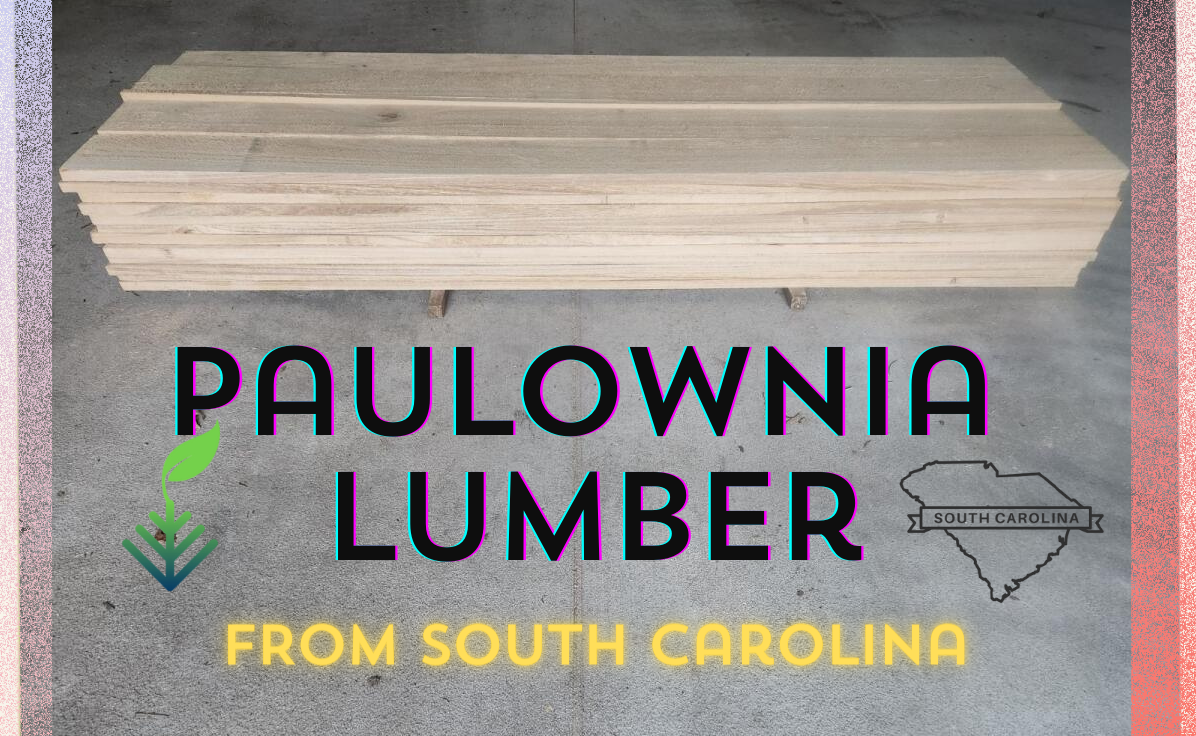
We sell Custom Paulownia boards: rough sawn or planed, we offer various sizes and thicknesses. Our Paulownia boards are processed using sustainable Paulownia hardwood grown right here in South Carolina USA.

👉 If you’re interested in paulownia, want to grow or currently growing, Subscribe to our newsletter: https://bioeconomysolutions.com/carbonreport

LIKE|SHARE|COMMENT

If you enjoyed this article, you may also like “Do Wood Carvers Use Paulownia Wood?”

Join Our News Letter

Subscribe Right Here

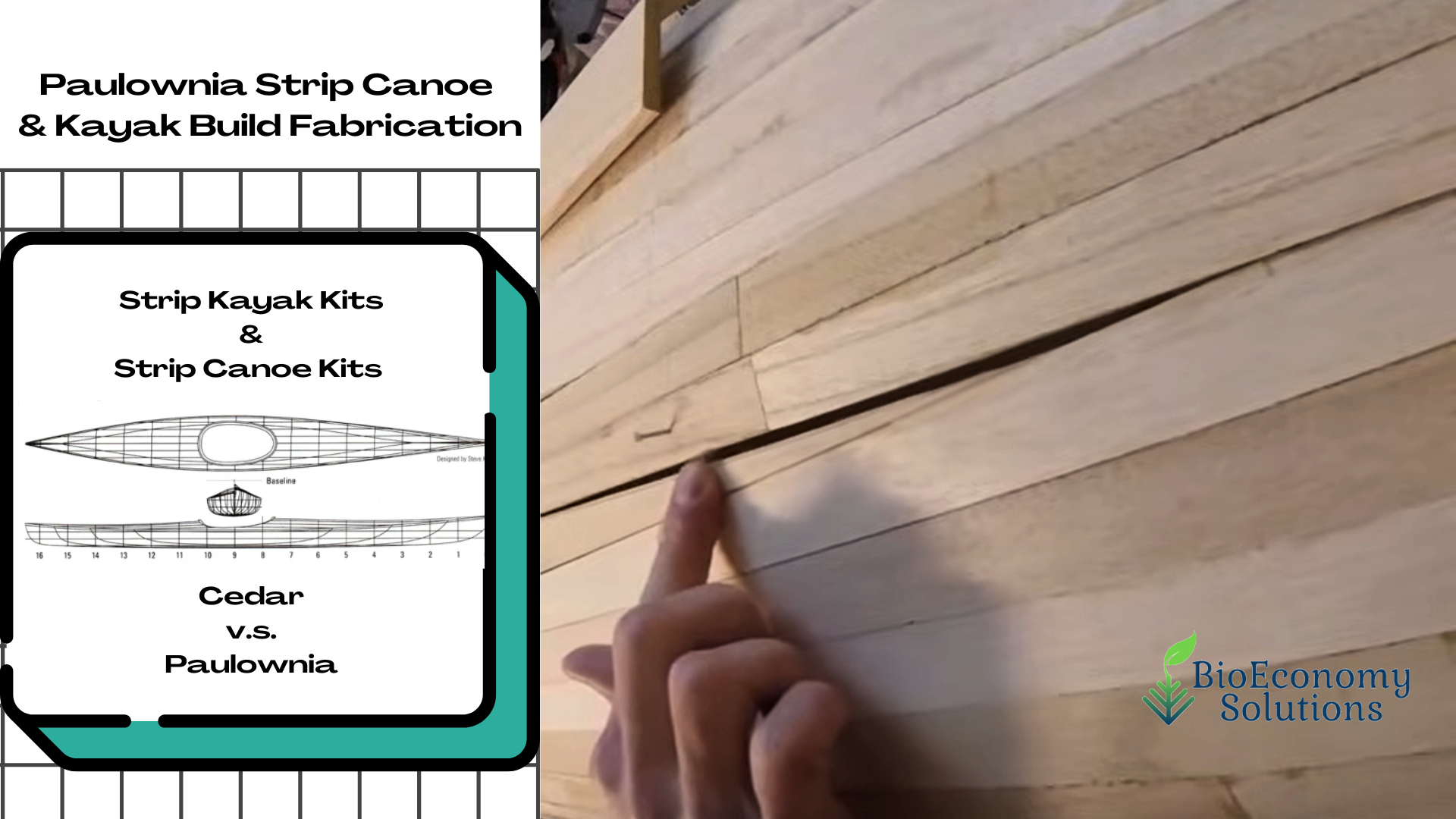
Ever consider a cedar strip canoe or kayak project? Have you also considered doing the same project with paulownia? Paulownia as a replacement for cedar? What is paulownia wood link?

A cedar strip canoe is made by assembling strips of wood over a wooden frame and they are fun DIY projects for skilled woodworkers. A quality cedar strip kayak kit or a
cedar strip canoe kit will guide you with various style designs, directions and give you’re a fun usable new toy after your finished 🙂

What is the best wood for a canoe strip?
Cedar is often used to make a wooden strip canoe but paulownia wood could also be used. Fiberglass coverings are also used to make it more durable and cut down on the required maintenance. 
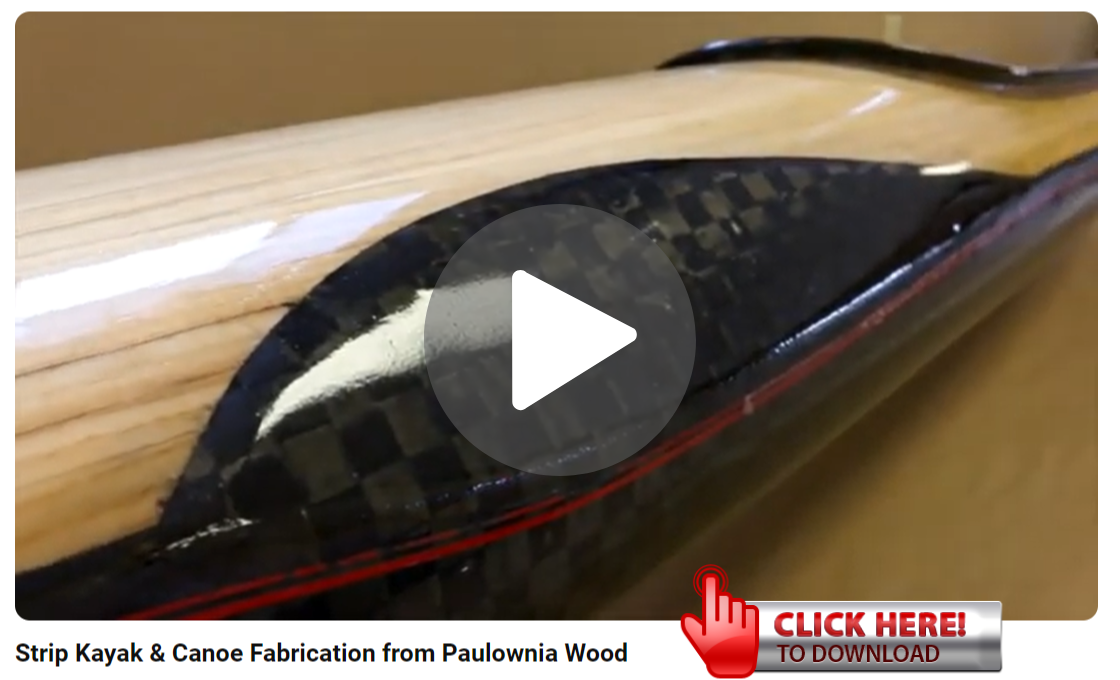
Video – Strip Kayak & Canoe Fabrication from Paulownia Wood
https://youtu.be/2CRfurszYVk?si=ft5ZmuawoTV5Yw8G


What is the weight of cedar v.s. paulownia?

  • Cedar is rated at 22 lbs per cubic foot – Janka Hardness: 320 lbf (1420 N)
  • Paulownia is rated at 18 lbs per cubic foot – Janka Hardness: 300 lbf (1,330 N)
  • Paulownia Wood Total = 18 % decrease in weight

White Cedar strip canoes & kayaks kits

Cedar is the usual goto wood for canoe ribs and planking. Its light weight, strength, flexibility and rot resistance can not be matched by any other except paulownia wood. Production of northern white cedar lumber is mainly in Maine and the Great Lake States, yet white cedar, it is still very difficult to find, select and sort out the knots and defect-free lumber that is required for kayak construction. Paulownia is usually knot free which is something common to the species.

How many hours does it take to build a paulownia strip canoe DIY style?

What can an amateur builder expect? As a guideline a first time builder who is making a stemless 15′ Anglers Day with purchased seats and thwarts, simple decks, and no fancy marquetry should commit a minimum of 10 full weekends. That’s 20 full days or 160 hours.
“I think it’s really worth the experience. I hope you try it!” It takes a lot of time, around 130 – 160 hours on average. So when it’s finished and you’ve created a beautiful, strong, light paulownia strip canoe, and you will be proud of your unique creation.

How much wood do I need for a paulownia strip canoe?
It takes 1200-to-1300 lineal feet of NWC cedar or paulownia strips to build most tandem canoes, roughly $450-500 for strips. An easy method to figure the lineal footage you need for any particular hull design is to measure the the distance gunwale to gunwale around the center form.

Northern white cedar lumber costs $4 to $7 per square foot, this variety is less dense than other cedars, making it easy to cut and maneuver.
Paulownia lumber grown in North America cost $4 to $8 per square foot, this wood is used in a variety of water action sports from surfboards, paddle boards, skis etc.

How heavy is a cedar strip canoe v.s. a paulownia strip canoe?
For standard strip built construction with 1/4″ thick western red cedar strips with 6 ounce fiberglass inside and out, a good estimate will be 0.7 pound per square foot of surface area. In other words a boat like the Guillemot with a surface area of 47 square feet, this will give a bare hull weight of about 32 pounds. Using paulownia wood strips in this same build you can expect a total bare hull weight of 26 lbs saving you a total of 6 lbs of total weight.

***

Where To Buy Paulownia? Paulownia Wood For Sale – QUESTIONS?

What is paulownia wood? https://bioeconomysolutions.com/what-is-paulownia-wood/

Visit our web page. https://bioeconomysolutions.com/paulownia-lumber/

We’re happy to organize a time to speak with you about our paulownia trees and lumber we have for sale. Please book your preferred time to speak directly.

Here’s a link to my online calendar/schedule:

www.bioeconomysolutions.com/bookcall

BioEconomy Solutions

mail@BioEconomySolutions.com

Office: 843.305.4777

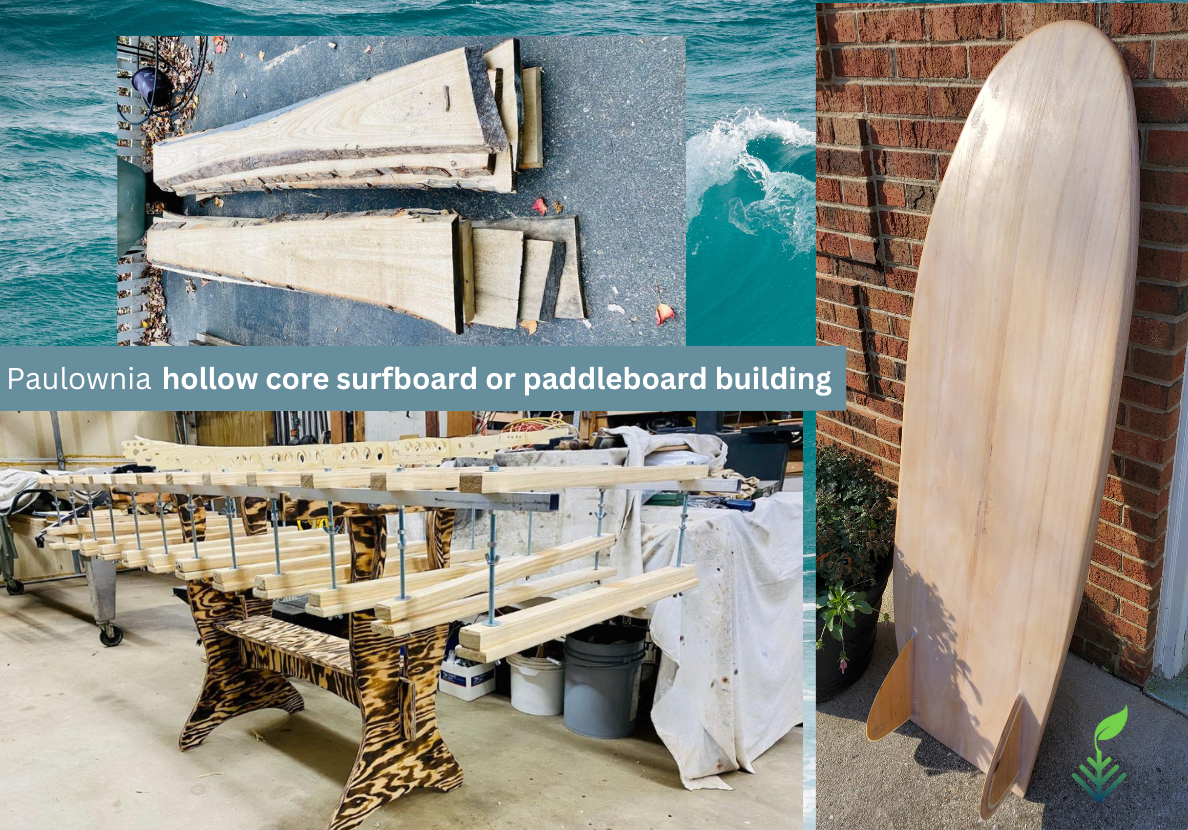
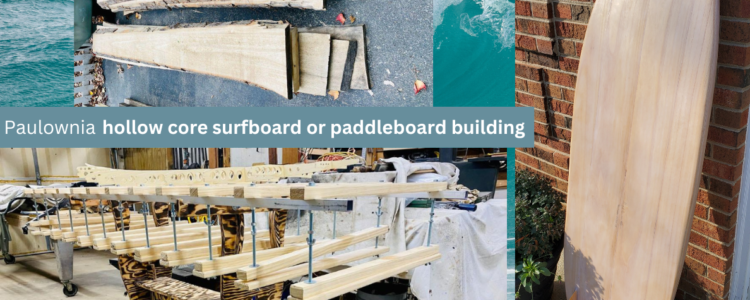
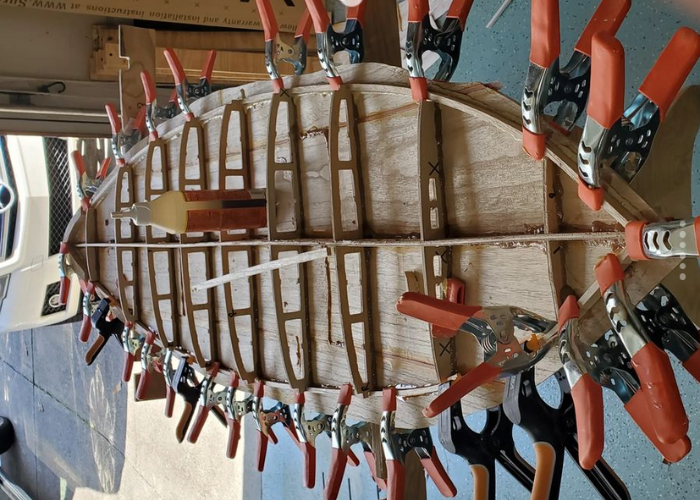
Learning How to Build a Hollow Wood Surfboard

Have you ever thought of shaping your own DIY surfboard? Making a classic surfboard out of solid timber or Hollow Wood Surfboard Kits?
For those builders who are interested in creating their own wooden surfboard, the time has never been better as a number of resources are available on line now.

If you don’t already have the experience of how to build a hollow wood surfboard you can access YouTube University free of cost and even obtain hollow wood surfboard kit plans free online as well.

You can learn how to build a hollow wood or solid wood surfboard from these resources:

RESOURCES
Surfboard Workshop & Plans – https://davidweber.com.br/en
Hollow Wood Surfboard Kits – https://jarvisboards.com
How to Build a Hollow Wood Surfboard – https://www.scribd.com/document/482881578/Hollow-Wooden-Surfboard-Instructions
Forum For Builders – https://forum.swaylocks.com


Next you will want to know what kind of wood is used to make a surfboard?

Have you considered Paulownia Hardwood lumber? Do You Know USA Paulownia Trees?🌲 Beautifully grained, water resistant and feather light, Paulownia has it all!

Weather you are a hobbyist or full time manufacturing company, paulownia wood grown in South Carolina USA may be a new expression of your talent.

You will discover that paulownia wood is the “Light Strong Alternative Wood” used in many processes to obtain many varied products.

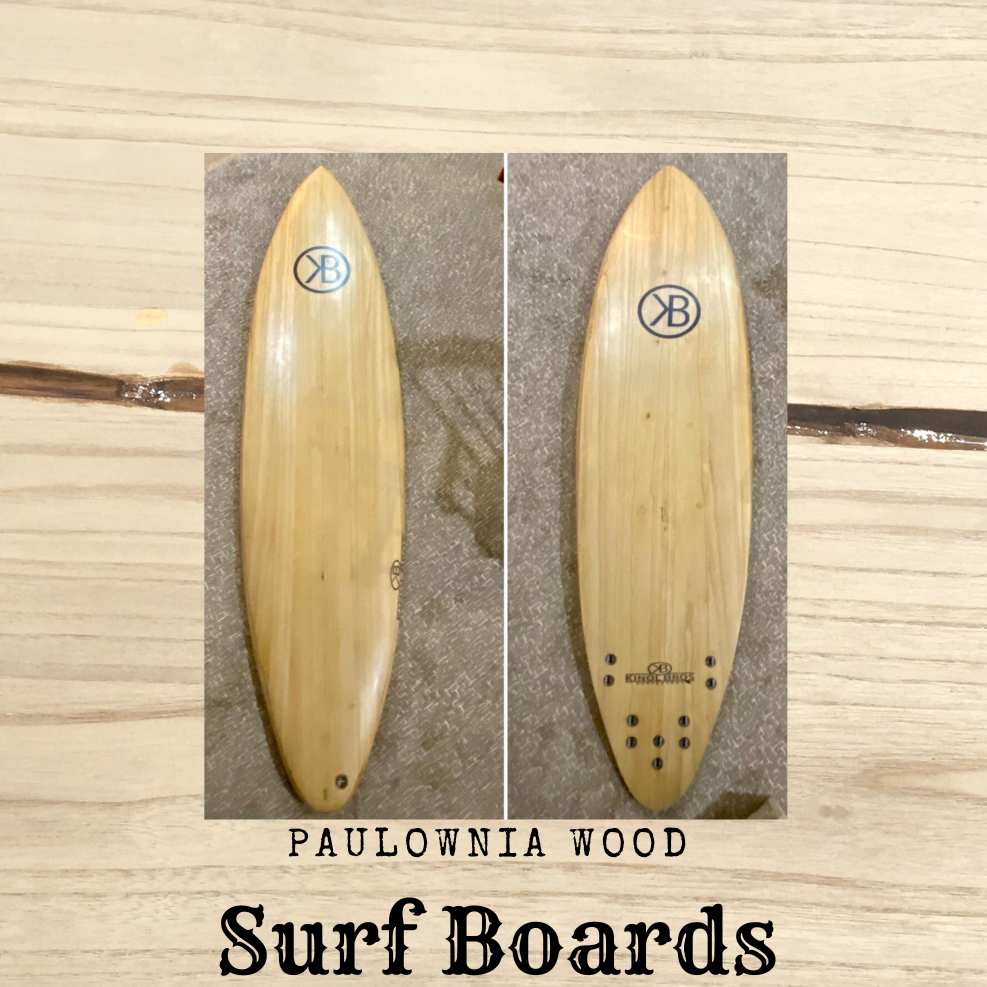
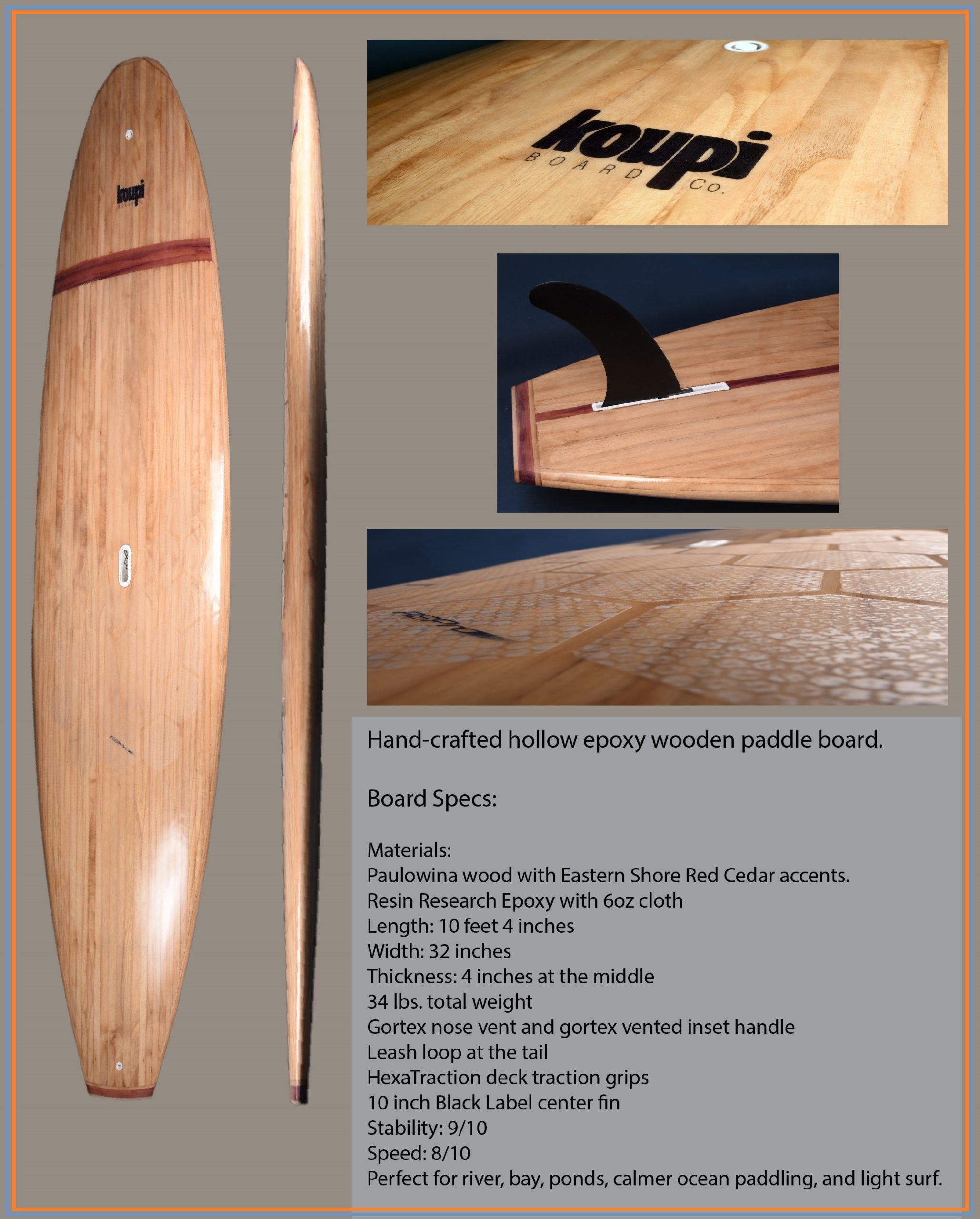
Thanks to its limited absorption of moisture and has the absence of knots and veins. Paulownia wood can be used in the production of surfboards, stand up paddle boards (SUP), skis, snowboards, saunas, but also in shipbuilding (sailing boats) and aeronautics.


Properties of Paulownia Timber

Why consider paulownia? flexibility & weight – Paulownia is a very light timber. At a dry density of around 280 kg/m³ Paulownia is lighter than most common timbers. Density comparisons are Western Red Cedar (340), Meranti (580), Pine (500), Teak (750), Robinia (750).

USA Paulownia Hardwood Lumber For Salehttps://bioeconomysolutions.com/paulownia-lumber/

LEARN MORE
Visit us at: https://bioeconomysolutions.com/paulownia-lumber/ Let’s chat about paulownia hardwood lumber for your next project.
Where to buy paulownia?

We’re providing USA paulownia lumber from our South Carolina Paulownia tree farm facility.
Contact Us for details. Office: 843.305.4777 | Email: mail@bioeconomysolutions.com Here’s a link to our online calendar, schedule a conference call with us: www.bioeconomysolutions.com/bookcall
LIKE|SHARE|COMMENT

FOLLOW US

Instagramhttps://www.instagram.com/bioeconomysolutions/

Facebookhttps://www.facebook.com/profile.php?id=61554918155254


If you liked this article… you may also like this one


hollow wood surfboard
hollow wood surfboard blanks
hollow wood surfboard kits
hollow wood surfboard plans
hollow wood surfboard template maker
hollow wood surfboard plans free
hollow wood surfboard weight
hollow wood surfboard kits USA
balsa surfboard kit
balsa surfboard shaping kits
wood surfboard supply hollow surfboard kits
How to Build a Hollow Wood Surfboard
DIY surfboard kit building supplies
stand up paddle board SUP

How to build a hollow wood surfboard?
What are hollow surfboards made of?
Can you build a surfboard out of wood?
What kind of wood is used to make a surfboard?
How do you make a homemade surfboard?

shaper supply, surfboard kit, wood surfboard, wood longboard, long board, wood long board kit, how to build a wood longboard, paulownia, balsa, surfboards, DIY surfboard kit

#cedar #chinesecedar #paulownia #paulowniatree #paulowniawood #paulowniatimber #kiri #kiriwood #kirilumber #kiritree #empresstree #paulowniaveneer #woodveneer #southcarolina #kiritimber #paulowniafurniture #USApaulowniawood #paulownialumber #paulowniatrees #megafloratrees #bioeconomy #investing

Question we were asked about paulownia recently:

“Hello any idea if Paulownia wood can be used for boat building, It can be used for paddleboards so we were wondering?” Was the question…

My answer – YES!

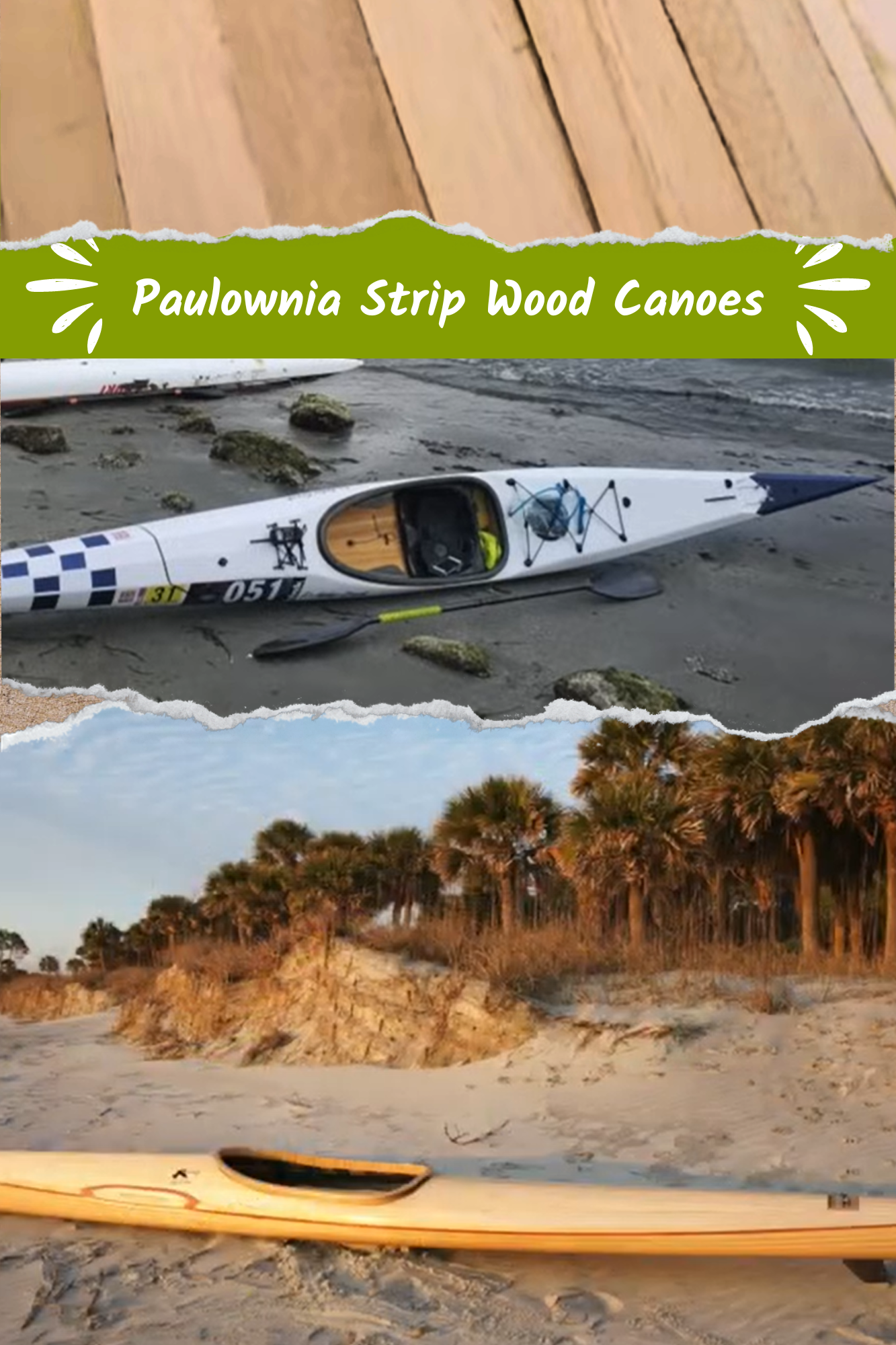
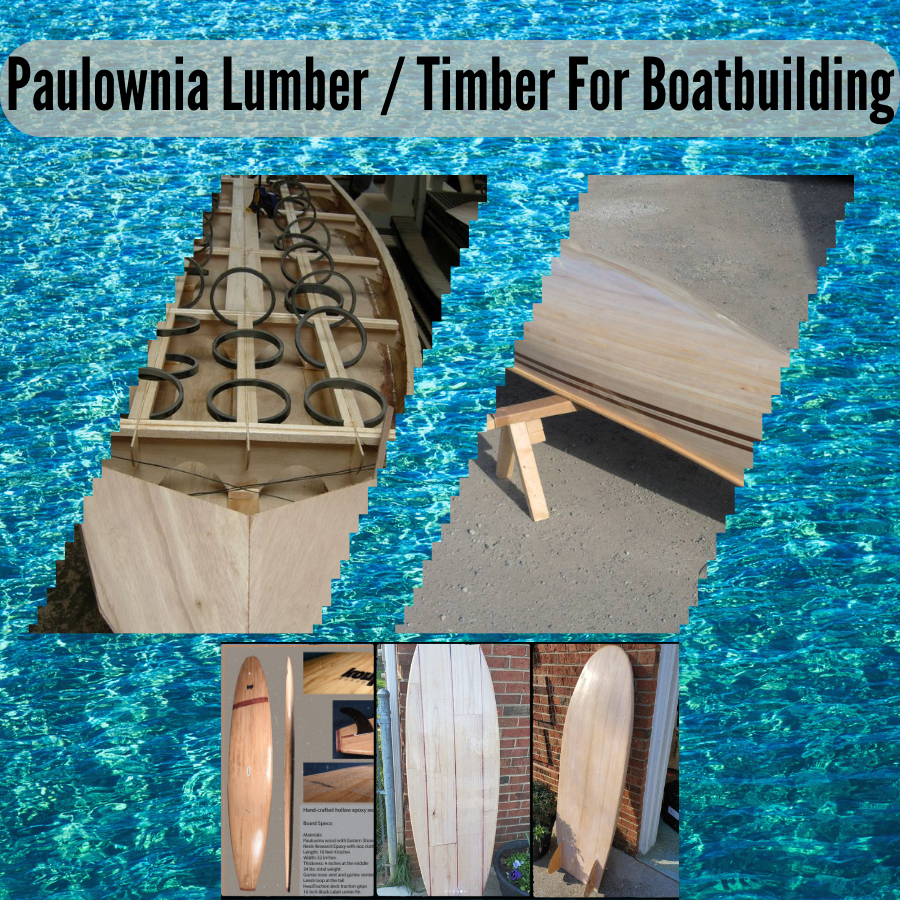
Fact is, anything that floats and carries a human is what paulownia has been and is currently used for today!

Thanks to its limited absorption of moisture and its resistance to atmospheric agents, Paulownia wood is used in the production of:

  • surfboards
  • skis
  • snowboards
  • saunas
  • shipbuilding
  • (sailing boats)
  • paddle boards
  • kayaks

The problem has been with finding the paulownia lumber wood material to use in the United States.

Paulownia Wood Boat Building

Boat Building PAULOWNIA WOOD LUMBER 843.305.4777 from BioEconomy Solutions on Vimeo.

Builders Choose Paulownia Wood Lumber From USA

Want to buy paulownia lumber grown in the USA? We can help you! Visit our website here: https://bioeconomysolutions.com/paulownia-lumber/

USA Paulownia Lumber

Contact Us for details. Office: 843.305.4777 | Email: mail@bioeconomysolutions.com Here’s a link to our online calendar, schedule a conference call with us:

LIKE|SHARE|COMMENT

#cedar #chinesecedar #balsa #paulownia #paulowniatree #paulowniawood #paulowniatimber #kiri #kiriwood #kirilumber #kiritree #empresstree #paulowniaveneer #woodveneer #southcarolina #kiritimber #paulowniafurniture #USApaulowniawood #paulownialumber #paulowniatrees #megafloratrees #bioeconomy #investing