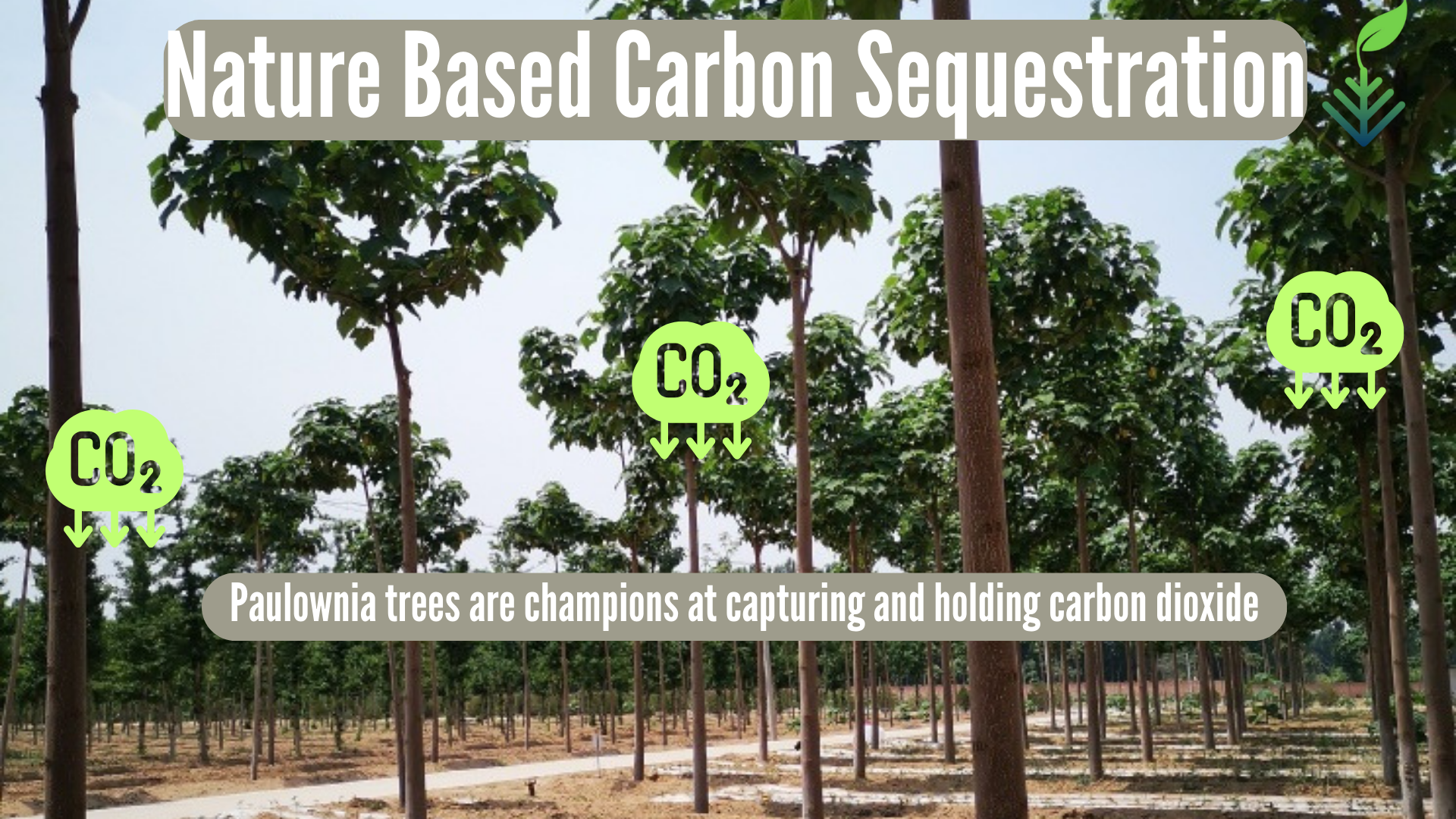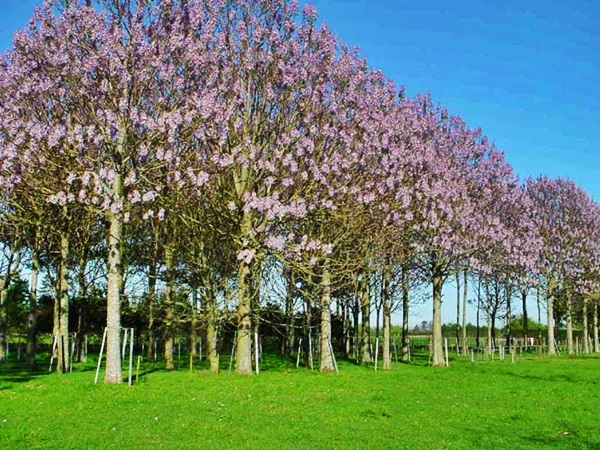
While a “pretty tree” might first catch our eye with its vibrant flowers or majestic canopy, its true power lies in the silent, tireless work it does for the environment.

Let’s break down the environmental contributions of trees, even (or especially) the “pretty” ones, beyond their aesthetic appeal:

Ecosystem Services: Beauty in Functionality

The visual appeal of trees often correlates with their health and vitality, which are directly linked to the ecosystem services they provide:

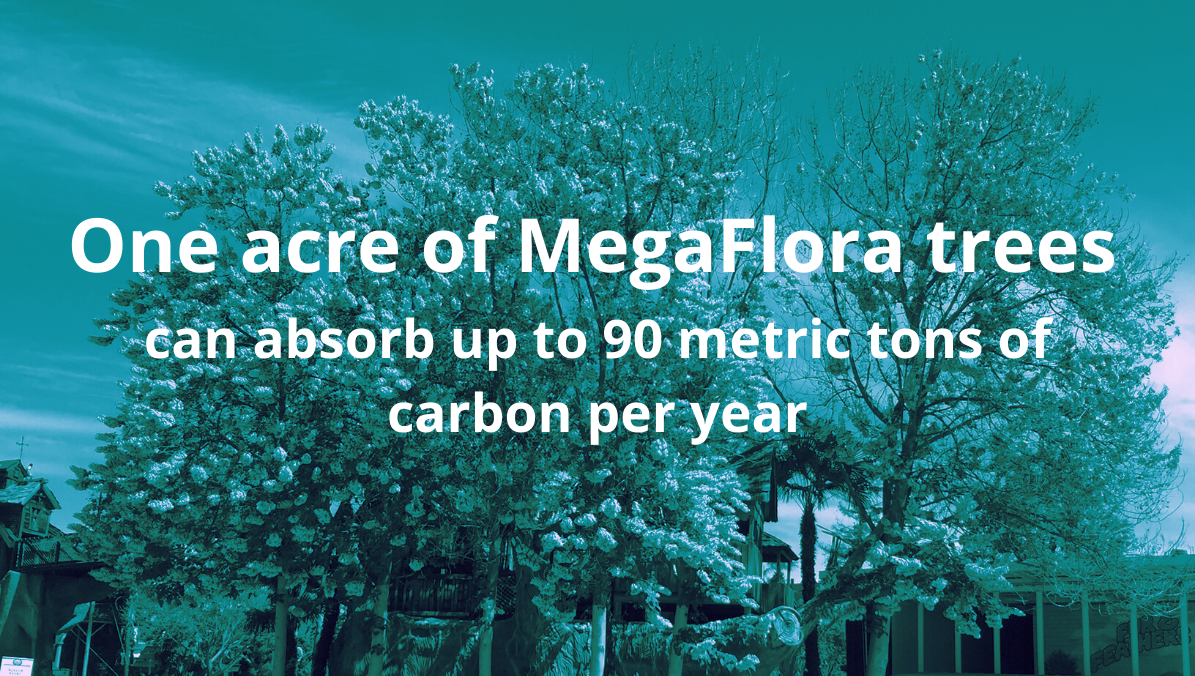
  • Improving Air Quality: Trees are natural air filters. Their leaves, with their vast surface area and tiny pores (stomata), absorb gaseous pollutants like carbon dioxide (), ozone (), nitrogen oxides (), sulfur dioxide (), and carbon monoxide (). Particulate matter (dust, pollen, smoke) also gets trapped on leaf surfaces and is later washed away by rain. This direct removal of pollutants is supplemented by trees’ ability to reduce air temperatures, which in turn lowers the formation of ground-level ozone. One large tree can provide a day’s supply of oxygen for up to four people, and an acre of forest can absorb six tons of carbon dioxide annually.

  • Moderating Temperatures: Trees are nature’s air conditioners. They reduce ambient temperatures through two primary mechanisms:

    • Shade: Their canopies block solar radiation, directly cooling surfaces below and reducing heat absorption by buildings, pavement, and other urban infrastructure.
    • Evapotranspiration: This process involves trees absorbing water through their roots and releasing it as water vapor through their leaves. This evaporation cools the surrounding air, much like a natural evaporative cooler. Urban forests can be significantly cooler (e.g., 3.0°F or 1.6°C) than non-green urban areas, reducing the “urban heat island” effect.
  • Supporting Biodiversity: A beautiful, healthy tree is a bustling apartment building for countless species. They provide:

    • Habitat: Branches and hollows offer shelter and nesting sites for birds, squirrels, insects, and other small mammals.
    • Food Sources: Flowers provide nectar and pollen for pollinators (bees, butterflies), while fruits, nuts, and leaves offer sustenance for a wide array of wildlife.
    • Microclimates: The shade and moisture provided by trees create cooler, more stable microclimates, allowing a greater diversity of understory plants and ground-dwelling organisms to thrive.
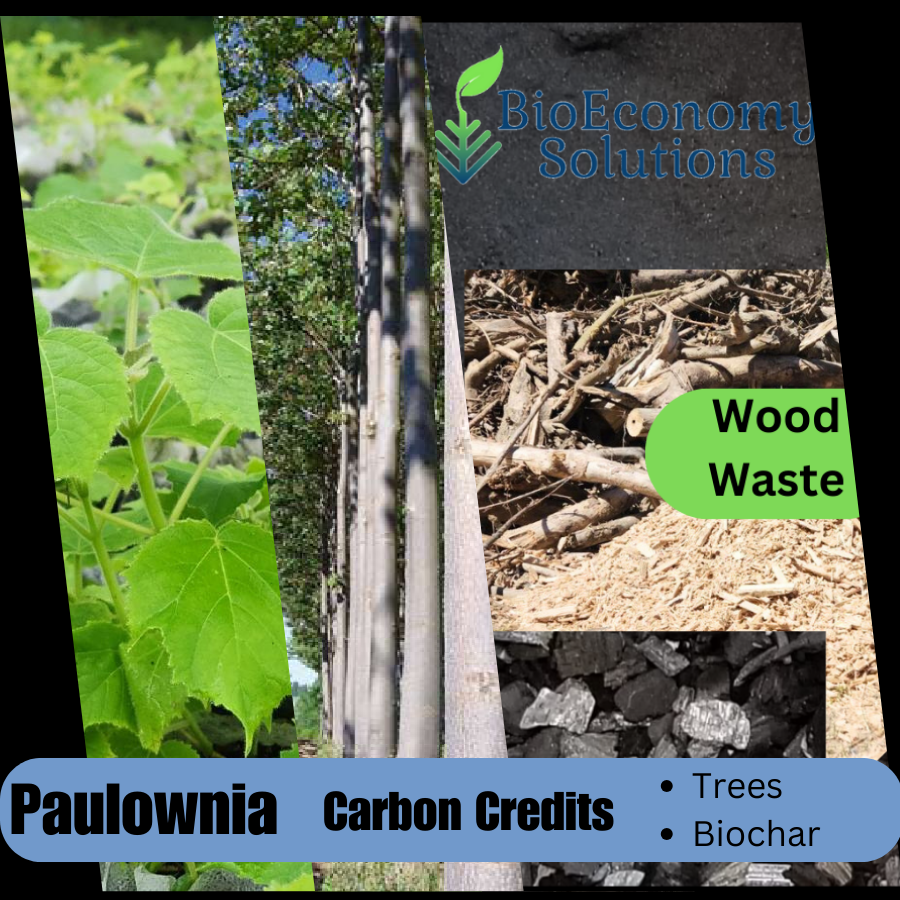
  • Preventing Soil Erosion: The extensive root systems of trees act as natural anchors, binding soil particles together and preventing them from being washed away by rain or blown away by wind. Their canopies also intercept rainfall, reducing the direct impact of raindrops on the soil surface, which can lead to erosion. This helps maintain soil quality and prevents sediment runoff into waterways.

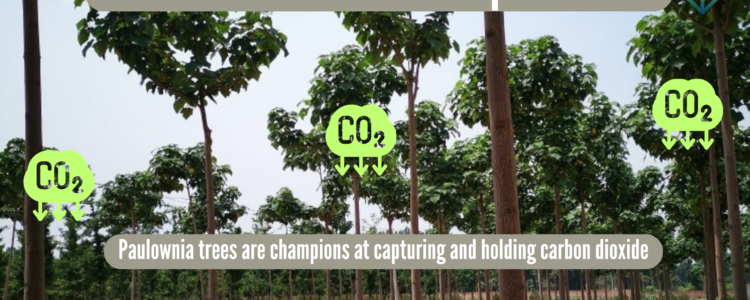
  • Sequestering Carbon: Trees are powerful carbon sinks. Through photosynthesis, they absorb atmospheric carbon dioxide () and convert it into organic compounds, storing carbon in their leaves, branches, trunks, and roots. This process is critical in mitigating climate change by reducing greenhouse gas concentrations in the atmosphere. A healthy tree can store approximately 13 pounds of carbon annually.

Urban Green Spaces: Beyond the Postcard

Aesthetically pleasing trees in urban environments offer more than just a pretty view; they are fundamental to creating livable, healthy cities:

  • Improved Quality of Life: The presence of trees contributes to a sense of calm and well-being. Studies show that access to green spaces reduces stress, lowers blood pressure, improves mood, and can even shorten hospital stays.
  • Promoting Physical Activity: Attractive, tree-lined streets and parks encourage people to walk, jog, or cycle, leading to increased physical activity and reduced risk of obesity and related health issues.
  • Fostering Community Well-being: Green spaces with trees often become natural gathering places, promoting social interaction, fostering a sense of community pride, and reducing feelings of isolation.
  • Noise Reduction: Dense tree canopies can absorb and block urban noise, creating quieter and more serene environments, which is particularly beneficial near busy roads or industrial areas.
  • Economic Benefits: Trees can increase property values due to their aesthetic appeal and the environmental benefits they provide. They also contribute to energy savings by reducing the need for air conditioning in shaded buildings and acting as windbreaks in winter.

Conservation and Preservation: Beauty as a Call to Action

The inherent beauty of trees often serves as a powerful motivator for their conservation. When people are captivated by the grandeur of an ancient forest or the delicate beauty of a blooming cherry tree, they are more likely to support efforts to protect them. This emotional connection then translates into understanding their vital ecological roles.

The United Nations Convention to Combat Desertification (UNCCD), while not solely focused on trees, plays a critical role in their conservation, especially in dryland ecosystems. As the only legally binding international agreement addressing desertification and drought, the UNCCD:

  • Promotes Sustainable Land Management: It advocates for practices like agroforestry (integrating trees into agricultural systems), conservation agriculture, and sustainable grazing, all of which often involve tree planting and protection to prevent soil degradation.
  • Restores Degraded Land: The UNCCD actively supports efforts to restore degraded lands, often through reforestation and afforestation initiatives, recognizing that trees are essential for rebuilding healthy ecosystems, combating erosion, and enhancing water retention.
  • Addresses Climate Change and Biodiversity Loss: By tackling desertification, the UNCCD indirectly contributes to climate change mitigation (through carbon sequestration by trees) and biodiversity conservation (by restoring habitats that support a wide range of species).
  • Aims for Land Degradation Neutrality (LDN): A core target of the UNCCD is to achieve a land degradation neutral world by 2030, meaning that the amount of healthy and productive land remains stable or increases. Trees are a crucial component of achieving LDN, as increasing tree cover is a key strategy for restoring degraded land and improving its productivity.
  • Mobilizes Resources and Raises Awareness: The UNCCD facilitates international cooperation and financial support for projects that involve tree planting and sustainable land management, and it raises global awareness about the importance of trees in combating desertification and improving livelihoods, especially in vulnerable communities.

In essence, the beauty of trees is not just skin deep; it’s a testament to their incredible functionality and a powerful reminder of why their protection and conservation are paramount for a sustainable future.
Learn More About Paulownia Trees

Contact Us For Details

BioEconomy Solutions is a BIOCHAR Carbon Dioxide Removal (CDR) Project Developer. Talk to us about our biochar processing technology.

We’re happy to organize a time to speak with you about our high carbon biochar we have for sale. Please book your preferred time to speak directly.

Here’s a link to my online calendar/schedule:

www.bioeconomysolutions.com/bookcall

BioEconomy Solutions

mail@BioEconomySolutions.com

Office: 843.305.4777

Visit us at: https://bioeconomysolutions.com/paulownia-carbon-credits/ Let’s chat about paulownia tree solutions for sustainable Forest carbon credits projects.

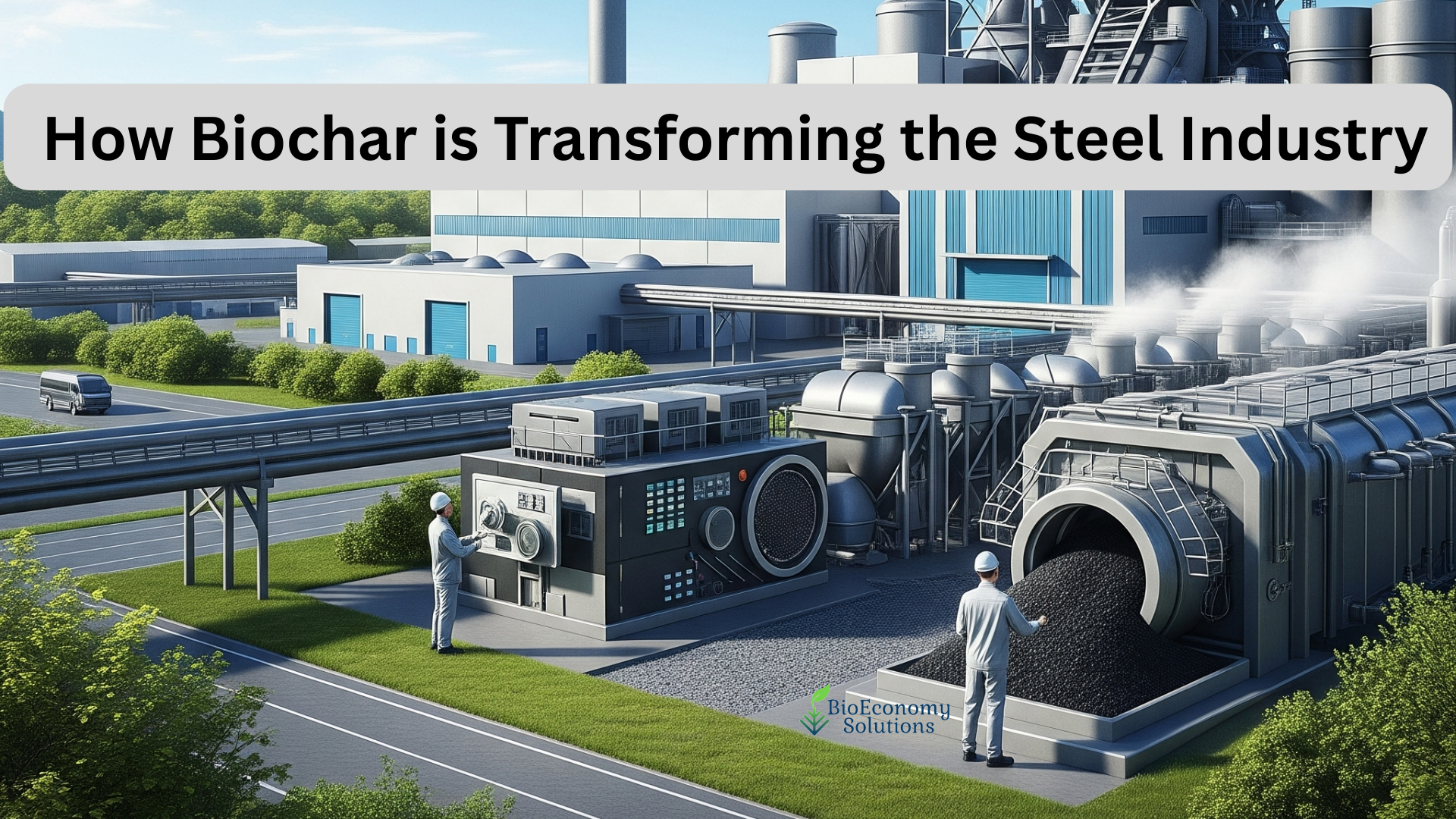
 

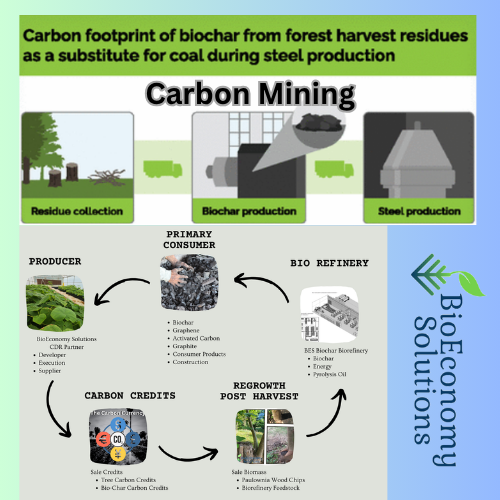
The steel industry is one of the largest industrial emitters of carbon dioxide, accounting for approximately 7–9% of global CO₂ emissions. At the heart of its carbon footprint is coal, used not only as a fuel but also as a chemical input in key processes. But what if we could replace that fossil carbon with a renewable, carbon-negative alternative?

Biochar Forging a Greener Future

What’s biochar? — a carbon-rich, plant-based material produced through pyrolysis. Already gaining attention for its role in soil enhancement and carbon sequestration, biochar is now being explored as a sustainable substitute for coal in steelmaking — and the implications are enormous.

Coke-Making: Replacing Fossil Carbon With Biochar Source

Coke, produced from metallurgical coal, is traditionally the primary carbon source in blast furnace operations. Biochar can be blended into the coking process to partially replace this fossil carbon:

  • Biochar as a co-carbon in coke ovens improves reactivity while reducing overall CO₂ emissions.
  • ✅ Reduces dependency on imported coking coal, improving supply chain resilience.

Ongoing trials suggest up to 20% biochar substitution is feasible without compromising coke quality.

Sintering: Cleaner Agglomeration for Iron Ores
In sintering, iron ore fines are agglomerated into porous lumps using coke breeze. This step emits significant particulates and CO₂.

🌱 Biochar can replace up to 40% of coke breeze without harming sinter strength or productivity (per studies on ScienceDirect).

🧪 Its higher porosity also supports better combustion efficiency and lower emissions of SOx and NOx.

Blast Furnaces: Biochar Injection and Coke Replacement

The blast furnace is where most emissions occur in steelmaking — and it’s also where biochar shines:

  • 🌬️ Pulverized Biochar Injection (PBI) into the blast furnace air inlets, offers a direct, drop-in substitute for pulverized coal injection (PCI).
  • 🌱 Partial coke replacement with dense, high-carbon biochar is under advanced testing — it supports iron ore reduction while releasing less CO₂.

Early data shows up to 28% CO₂ reduction potential when biochar replaces both PCI and part of the coke input.


Direct Reduction: A Future-Forward Path

Biochar is being explored as a renewable reducing agent in Direct Reduced Iron (DRI) processes — an alternative to blast furnaces:

  • 🔁 Combines well with hydrogen or natural gas for low-emission DRI production.
  • ♻️ Can serve as the sole solid reductant in emerging rotary kiln technologies.

As green hydrogen scales, biochar-enhanced DRI could become a key player in near-zero-emission steel.


Electric Arc Furnaces (EAF): Slag Foaming & Carbon Additives

In EAFs — where scrap metal is melted using electricity — biochar can also replace traditional carbon sources:

  • 🌋 Used to enhance slag foaming, critical for thermal efficiency and protecting furnace linings.
  • 🌱 Biochar’s light density and high carbon content make it a strong candidate for carbon injection in EAFs.

Replacing Fossil Carbon With Green Carbon

Replacing fossil coal with biochar could cut steelmaking emissions by up to 28%, according to recent studies.

Net Benefits:

✅ Lower carbon footprint

✅ Renewable feedstock

✅ Cleaner air and water

✅ Supports regenerative agriculture

Our company offers:

  • Direct Biochar production feedstock supply chain contracts.
  • Quality and consistency that matches your industrial standards.
  • Biochar & cost-competitive supply chain over traditional coal.
  • Direct carbon credit purchases for carbon offsets.

From Black Coal to Black Gold

Biochar offers more than just a coal alternative — it offers a blueprint for regenerative industry. It supports climate goals, strengthens supply chains, and enables a circular approach to carbon — all while producing the steel that still forms the backbone of modern civilization.

As the world demands climate-smart industry, biochar may well be the key to unlocking net-zero steel.


Dedicated Biochar Feedstock Supply Chain

Contact Us For Details

BioEconomy Solutions is a BIOCHAR Carbon Dioxide Removal (CDR) Project Developer. Talk to us about our biochar processing technology.

We’re happy to organize a time to speak with you about our high carbon biochar we have for sale. Please book your preferred time to speak directly.

Here’s a link to my online calendar/schedule:

www.bioeconomysolutions.com/bookcall

BioEconomy Solutions

mail@BioEconomySolutions.com

Office: 843.305.4777

Visit us at: https://bioeconomysolutions.com/paulownia-carbon-credits/ Let’s chat about paulownia tree solutions for sustainable Forest carbon credits projects


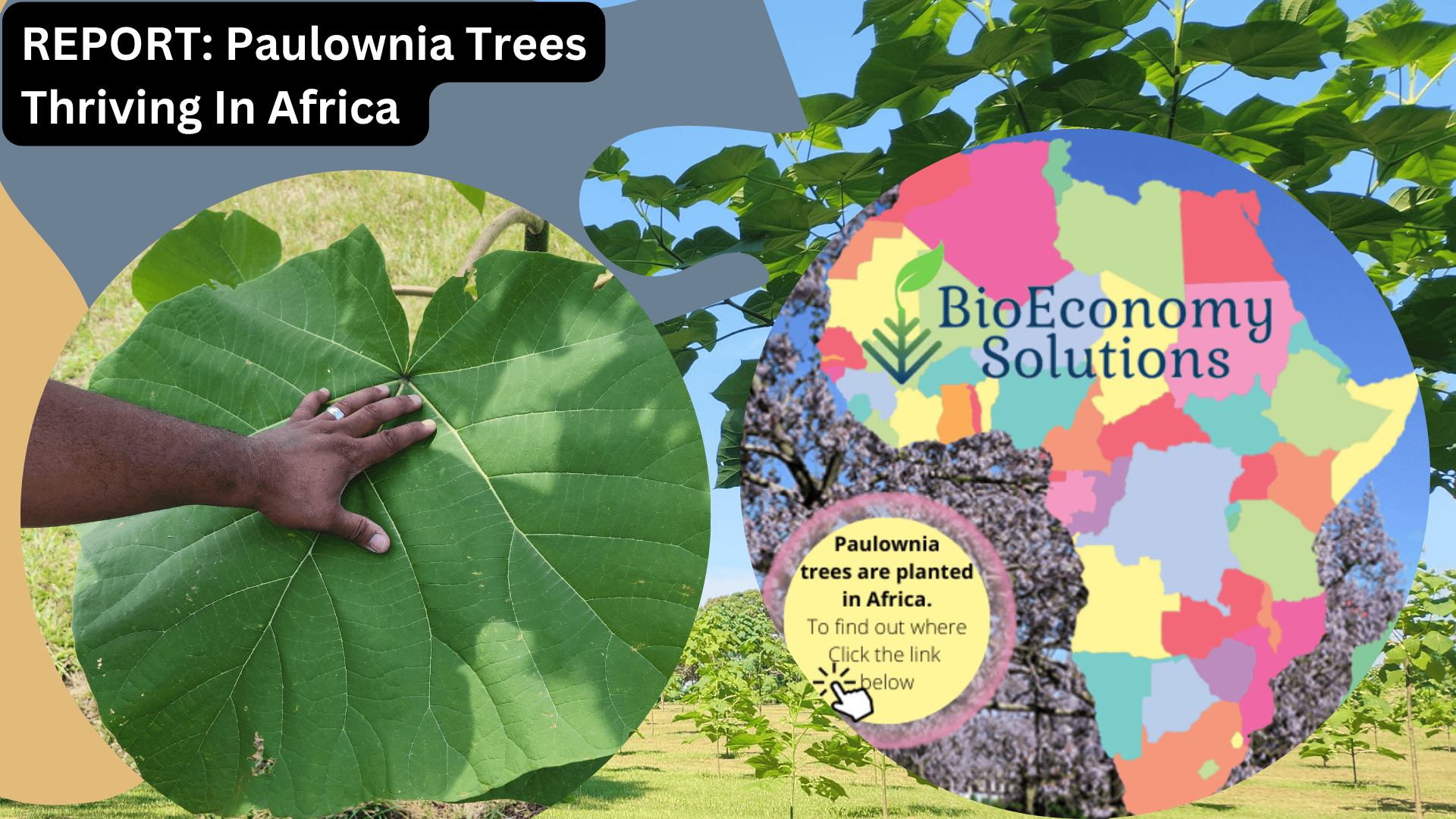
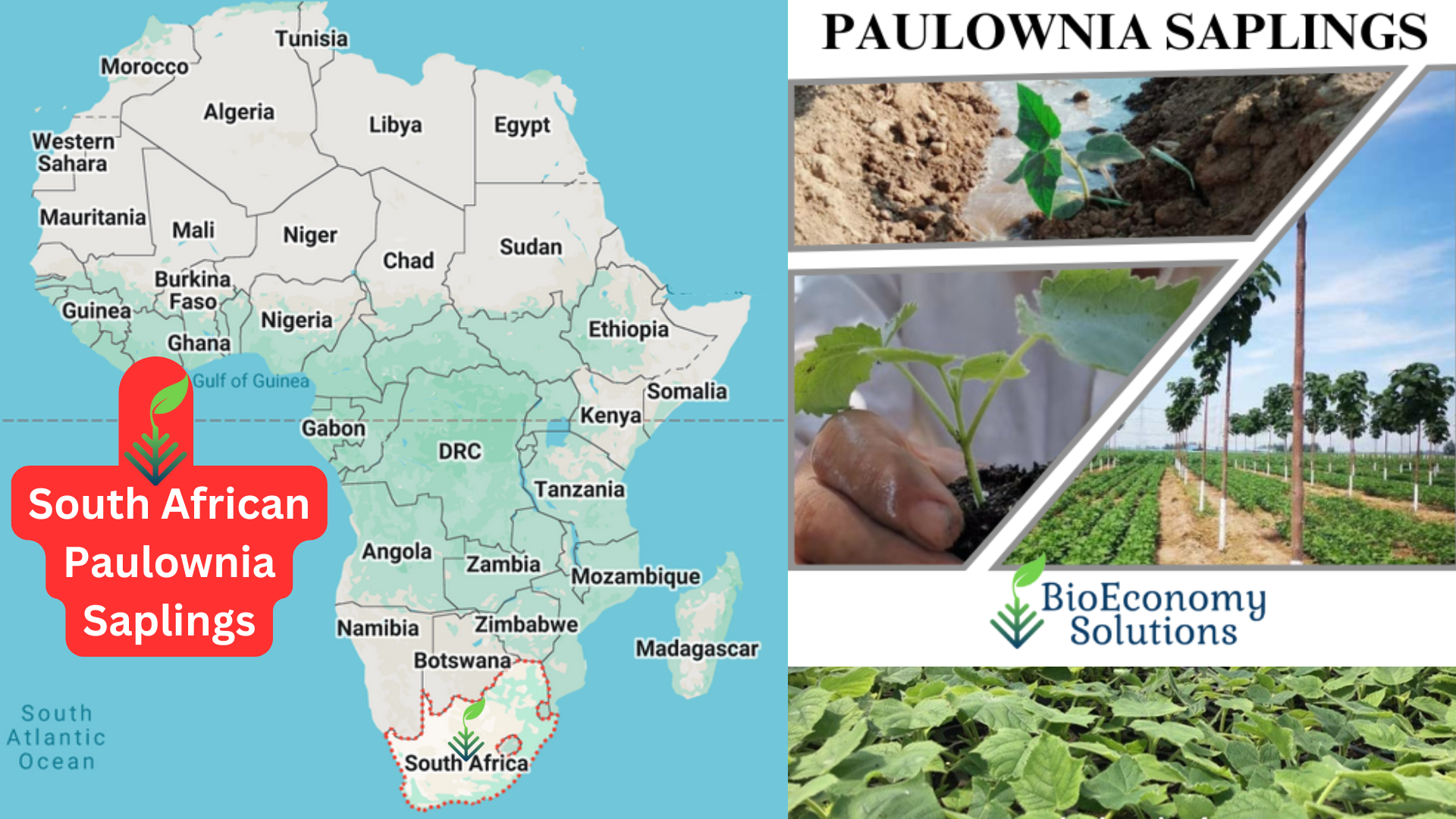
African paulownia tree farms are thriving! These initiatives were brought on by high temperatures and extreme drought. These efforts transform the area into a environment in the short term creating new jobs, cooling the environment and much more.

What Are Paulownia Trees?

Our hybrid Paulownia key benefits:

  • Fast growing
  • High-yield
  • Non-invasive
  • Non-GMO
  • Requires little water

Since 2012, our team has planted millions of Paulownia trees in the Gobi desert with great success.

Our Paulownia trees are a fast growing, high-yield, non-invasive, non-GMO hybrid. Paulownia tree that makes planet Earth a better place to live for all forms of life. Our hybrid paulownia tree is a trans-genera clone; it is not a genetically modified organism (GMO). As is the case with all trans-genera clones (example: peach x apricot = sterile nectarine), it is seed-sterile and therefore non-invasive.

Why Plant Paulownia

Planting paulownia trees promotes climate resilient investment across sub-Saharan Africa. These investment partnerships will provide policymakers with insights into where new infrastructure development can mitigate community vulnerabilities in .

Prosperity comes in the forms of monthly stipends for workers and those funds and sustainable ecology promote wealth in more ways than one for the local populations.

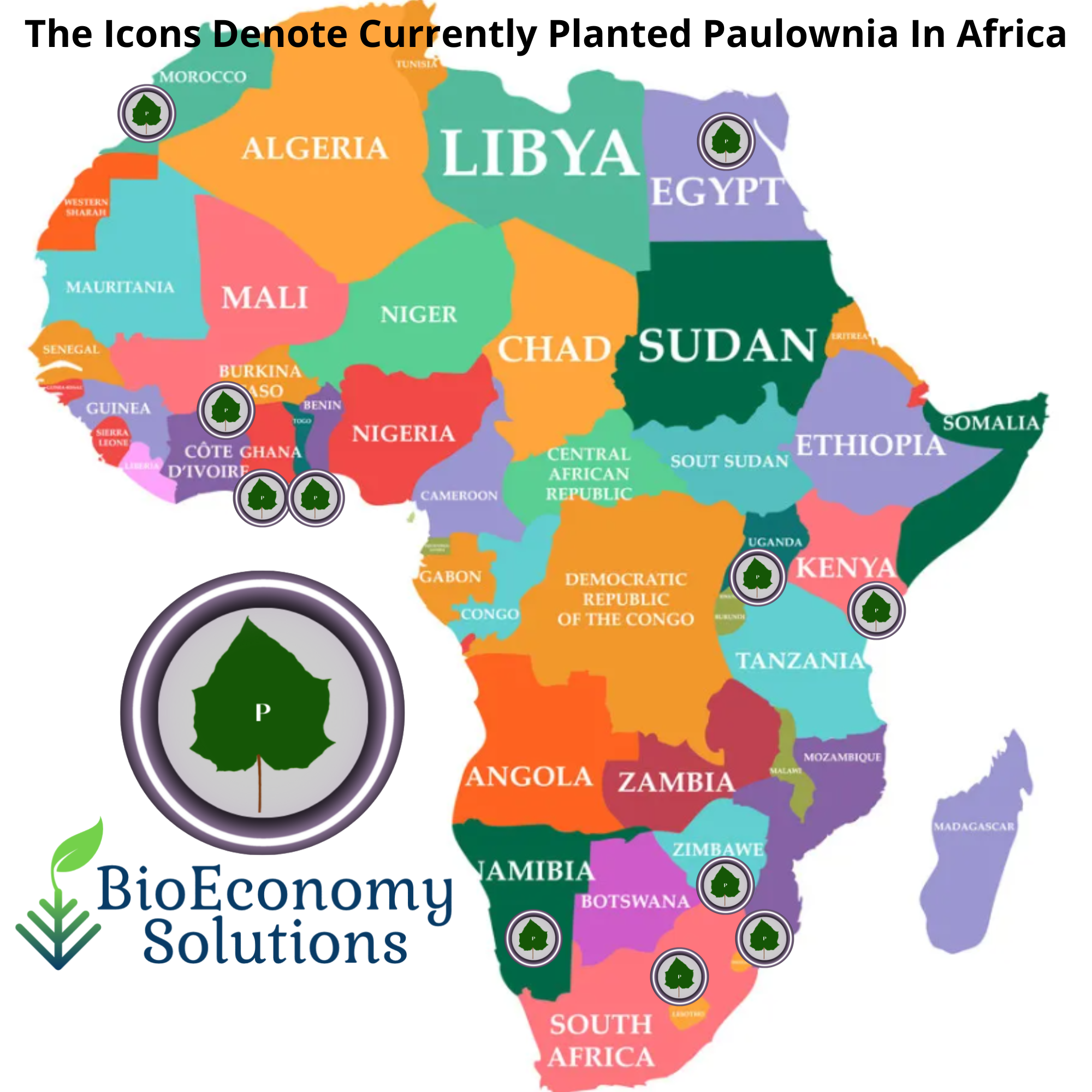
African countries with paulownia trees growing currently include:

  • Togo
  • South Africa
  • Kenya
  • Uganda
  • Morocco
  • Ghana
  • Namibia
  • Lesotho
  • Burkina Faso
  • Zimbabwe
  • Eswatini
  • Egypt

According to the United Nations there are 54 countries in Africa today. See the full list with current population and sub-region (based on the United Nations official statistics). So far 12 countries in Africa have planted paulownia trees, this is a good start but we can do so much more.

Together, these characteristics make the paulownia an ideal tree to grow for both economic and environmental reasons.

Want to purchase paulownia saplings for your project located In Africa? Have a reforestation or afforestation project? Contact us for more information.

Contact Us for details. Office: 843.305.4777 | Email: mail@bioeconomysolutions.com Here’s a link to our online calendar, schedule a conference call with us: https://info586.youcanbook.me

Learn more about South African drought tolerant hybrid species here: https://www.linkedin.com/pulse/south-african-paulownia-saplings-sale-victor-garlington-8kelc/

There is a lot of misinformation on the internet concerning paulownia trees. So we are here to set the record straight and give you real information from a real South Carolina paulownia farm owner.

Who are we? BioEconomy Solutions, we educate on the paulownia tree and it’s applications, we grow trees, harvest paulownia trees and sale paulownia timber and dimensional lumber from our saw mill operation right here in South Carolina USA.

Lot’s of famers around the world that are just beginning their journey with paulownia and have no idea of what to expect when it comes to harvesting the trees or who their potential buyers are for them.

Many new paulownia enthusiast have never held a sawn paulownia board in their hands.

We have been processing paulownia trees into lumber since 2019, so this is not theory, just practical experience you can apply to your own operation.

Let’s work together!

Paulownia Farming Facts – Video

Watch the Full Presentation

Want To Grow Paulownia?

👉Interested in growing paulownia?

https://bioeconomysolutions.com/unlock-the-secrets-of-growing-paulownia-with-the-ultimate-growers-guide/ 843.305.4777

Did you know that fast-growing Paulownia trees are being planted worldwide for their eco-friendly benefits? From reforestation projects to sustainable timber, these “miracle trees” are making a difference. Discover how Paulownias are helping the planet—one tree at a time! 🌱✨

What You Will Learn:

Paulownia trees are renowned for their remarkable ability to address and even reverse several negative environmental factors.

This will show you some key ecological benefits paulownia trees provide:

– Soil Restoration & Erosion Control

– Carbon Sequestration (Fights Climate Change)

– Phytoremediation (Cleans Polluted Soil & Water)

– Biodiversity Support

– Reduces Deforestation Pressure

– Fast Growth

– Where to purchase non-invasive paulownia hybrid tree saplings

If you’re interested in paulownia, want to grow or currently growing, this information is for you.

👉Get a FREE copy of Paulownia Carbon Report: https://bioeconomy-solutions.kit.com/45b34109e5

Paulownia: The Billion-Dollar Green Asset Class Institutional Investors Can’t Afford to Ignore

Missed our live event, “Eco-Friendly Paulownia Trees Everywhere”? The replay is now available—and for institutional investors, or any organization interested in this subject, this is more than just an environmental discussion. Paulownia tree plantations are a lucrative, scalable, and future-proof investment opportunity with unparalleled ESG upside.

Why Paulownia? The High-Growth, Low-Risk Green Asset

Paulownia isn’t just a tree—it’s a high-yield, sustainable investment vehicle with institutional-grade potential. Our event revealed a fully developed 10,000-hectare plantation model, demonstrating how Paulownia delivers:

Exceptional ROI– Fast-growing (harvest-ready in 2-7 years), premium biomass & timber markets, and carbon credit revenue streams.

Climate-Resilient Investing – One of the world’s most efficient carbon sinks, generating high-value offsets for ESG portfolios.

Natural Hedge Against Volatility– Inflation-resistant, uncorrelated to traditional markets, with rising global demand for sustainable timber.

Government & Regulatory Tailwinds– Eligible for reforestation subsidies, tax incentives, and green financing programs.

Phytoremediation & Land Appreciation – Rehabilitates degraded land, increasing asset value while cleaning pollutants (heavy metals, toxins).

Who Should Watch the Replay?

🌍 Sovereign Wealth Funds & Pension Funds – Diversify into tangible, inflation-proof assetswith long-term appreciation.

💼 Venture Capital & Private Equity – Scalable agroforestry plays with exit opportunities in carbon markets, sustainable timber, and bioenergy.

🏦 Family Offices & Impact Investors– High-growth, mission-aligned investments that balance profit with planetary impact.

📈 ESG Fund Managers – A verified, measurable green asset to bolster sustainability mandates and reporting.

The Institutional Case for Paulownia

  • Carbon Credits: Paulownia plantations generate premium voluntary carbon offsets (VCS, Gold Standard).
  • Timber & Biomass: Global demand for sustainable wood is surging, with Paulownia as a lightweight, durable alternative to traditional hardwoods.
  • Land Banking: Strategic acquisition of marginal land for value appreciation through ecological restoration.
  • Phytoremediation Projects: Partner with governments/NGOs to monetize polluted land cleanup.

Watch The Replay Now

The event replay delivers actionable insights, financial models, and case studies tailored to institutional capital deployment. This is not theoretical—it’s a proven, scalable asset class ready for portfolio allocation.

🔗 Watch the Replay Here – CLICK THE IMAGE BELOW

Who Should Watch the Replay?
🌱 Farmers & Landowners – Learn how to integrate Paulownia into agroforestry for profit and sustainability.

♻️ Eco-Entrepreneurs – Discover business opportunities in carbon credits, eco-timber, and phytoremediation projects.

🌍 Environmental Advocates – See how large-scale Paulownia planting can combat desertification and pollution.

🌳 Anyone Passionate About Reforestation – Get actionable insights on starting your own Paulownia plantation.

Schedule Private Briefing
Interested in a private briefing? Contact our investment team for exclusive data rooms and deal flow opportunities.

Book a call with us

#SustainableInvesting #InstitutionalCapital #ESG #CarbonMarkets #Agroforestry #Paulownia

Review The Financial Model For Paulownia Plantation
Want to see the numbers?

During the event we also did a full review of the financial model that IS NOT AVAILABLE TO EVERYONE as you will not see it above. But you can have access now. SEE BELOW

Subscribe For Access

Subscribe to review the full financial deck

About BioEconomy Solutions
Where To Buy Paulownia? Paulownia Wood For Sale – QUESTIONS?

Visit our web page. https://bioeconomysolutions.com/paulownia-lumber/

We’re happy to organize a time to speak with you about our paulownia trees and lumber we have for sale. Please book your preferred time to speak directly.

Here’s a link to my online calendar/schedule:

www.bioeconomysolutions.com/bookcall

BioEconomy Solutions

mail@BioEconomySolutions.com

Office: 843.305.4777

LIKE|SHARE|COMMENT

Enjoy this article? You may also enjoy “Carbon Developers Choose Paulownia Trees” https://www.linkedin.com/pulse/carbon-developers-choose-paulownia-trees-victor-garlington-imh4e/


You’re looking for a viable carbon offset solution and have considered tree planting. Before you make a decision, let us share why paulownia trees stand out in the world of natural carbon solutions:

Great Carbon Sequestration: Paulownia trees are known for their extraordinary ability to absorb and store carbon dioxide.

Fast-Growing: These trees grow astonishingly fast, meaning more carbon sequestration in less time.

Resilient: They are incredibly hardy, making them ideal for a variety of climates and regions.

High Biomass Production: Their high biomass production means they contribute significantly to carbon offset.

Economically Profitable: Paulownia wood is valuable and highly sought after for its lightweight and strong properties.

Environmentally Friendly: Besides their carbon sequestration capabilities, they improve soil quality and prevent erosion.

Low Maintenance: These trees require little water and care, making them an easy choice for entrepreneurs.

Sustainable Resource: Paulownia wood is a highly sustainable resource, providing an alternative to more environmentally destructive materials.

Aesthetic Appeal: These trees are not just functional; their lush foliage and beautiful flowers also provide aesthetic value.

Positive Brand Image: Choosing paulownia as your go-to tree sends a strong message about your commitment to innovative, natural carbon solutions.

Choosing paulownia trees for your carbon development project not only makes environmental sense but also business sense. It’s a fast, sustainable, and appealing way to improve our planet while also turning a profit. Learn more about paulownia carbon projects here: https://bioeconomysolutions.com/paulownia-carbon-credits/