Your Net-Zero strategy is only as strong as your carbon credits.

For: CFOs, Chief Sustainability Officers (CSOs), and Chief Risk Officers (CROs) at Fortune 500 companies.

Here’s Your Supplier Carbon Credit Audit CHECK LIST ✅

The market has shifted: risk management now outweighs lowest price considerations. Your Net-Zero strategy is under scrutiny, and the goal is no longer just to buy credits, but to buy verifiable integrity to protect your company from greenwashing and reputational risk.

Here is an executive guide to auditing your carbon credit suppliers based on the three pillars of a high-integrity asset:


1. Audit Supplier Integrity & Alignment (Partner vs. Broker)

Focus on eliminating middlemen and securing long-term supply.

  • Direct Partnership: Does the supplier own or directly control the core asset and project development, eliminating all brokers?
  • Supply Security: Are they able to offer multi-year forward contracts backed by performance bonds?
  • ICP Focus: Is their business model structured to serve high-volume corporate buyers, not commodity traders?
  • Reputational Risk: Does the supplier have a public track record free of “Greenwashing” allegations or retracted credits?

2. Audit Verification & Transparency Rigor (The Data Standard)

Demand the highest global standards for measurement and auditability—your legal compliance depends on it.

  • ISO Standard: Is the verification process based on international standards for GHG statements, such as ISO 14064-3?
  • Third-Party VVB: Is the project verified by a globally recognized, independent Verification Body (SGS, DNV or Other)?
  • Digital Monitoring (dMRV): Do they use Digital Monitoring, Reporting, and Verification systems (like Flux Towers, Satellite, and AI modeling)?
  • Blockchain/DLT: Is the final, verified carbon data recorded on an immutable ledger to prevent double-counting?

3. Audit Biological & Climate Performance (Real-World Impact)

Ensure the environmental impact is demonstrably superior and the CO2 permanence is durable.

  • 10x CO2 Removal: Does the project achieve CO2 removal rates demonstrably 5x or more than traditional forestry (e.g., BES achieves 33.15 tons/ha vs. 3−5 tons)?
  • Durable C-Sink: Is the sequestered CO2 stored in durable products (e.g., quality timber), not just short-lived vegetation?
  • Coppicing Ability: Does the tree species regenerate from the stump, ensuring continuous forest cover and supply without costly replanting?

Quick Tip for Executives: If your current carbon supplier scores below 50 on an audit across these criteria, STOP BUYING. You are exposed to High Reputational and Compliance Risk. Pivot immediately to a direct-partnership model.

Ready to De-Risk Your 2025 Carbon Strategy?

Get a FREE copy of Executive Checklist: De-Risking Your Net-Zero Strategy

Get a FREE copy of Carbon Executive Checklist: De-Risking Your Net-Zero Strategy:

Checklist: De-Risking Your Net-Zero Strategy:

Want more information on BioEconomy Solutions Nature-Based High Integrity Carbon Credits?

Click Here to Schedule Your Confidential Briefing: https://bioeconomysolutions.com/bookcall

What BioEconomy Solutions (BES) Uniquely Offers:

✅ Direct plantation ownership (1M+ hectare capacity)

✅ Real-time MRV systems (flux towers, satellite, IoT)

✅ Blockchain verification (Compliance)

✅ Multi-year contracts (3-7 year forward agreements)

✅ Premium performance (10x sequestration vs. competitors)

CONTACT US

Contact BioEconomy Solutions for a carbon portfolio assessment.

Your next audit could be a profit opportunity instead of a compliance expense.

Visit our web page. https://bioeconomysolutions.com

We’re happy to organize a time to speak with you about our nature-based carbon solutions. Please book your preferred time to speak directly.

Book a Conversation: Here’s a link to my online calendar/schedule:

www.bioeconomysolutions.com/bookcall

BioEconomy Solutions

mail@BioEconomySolutions.com

Office: 843.305.4777

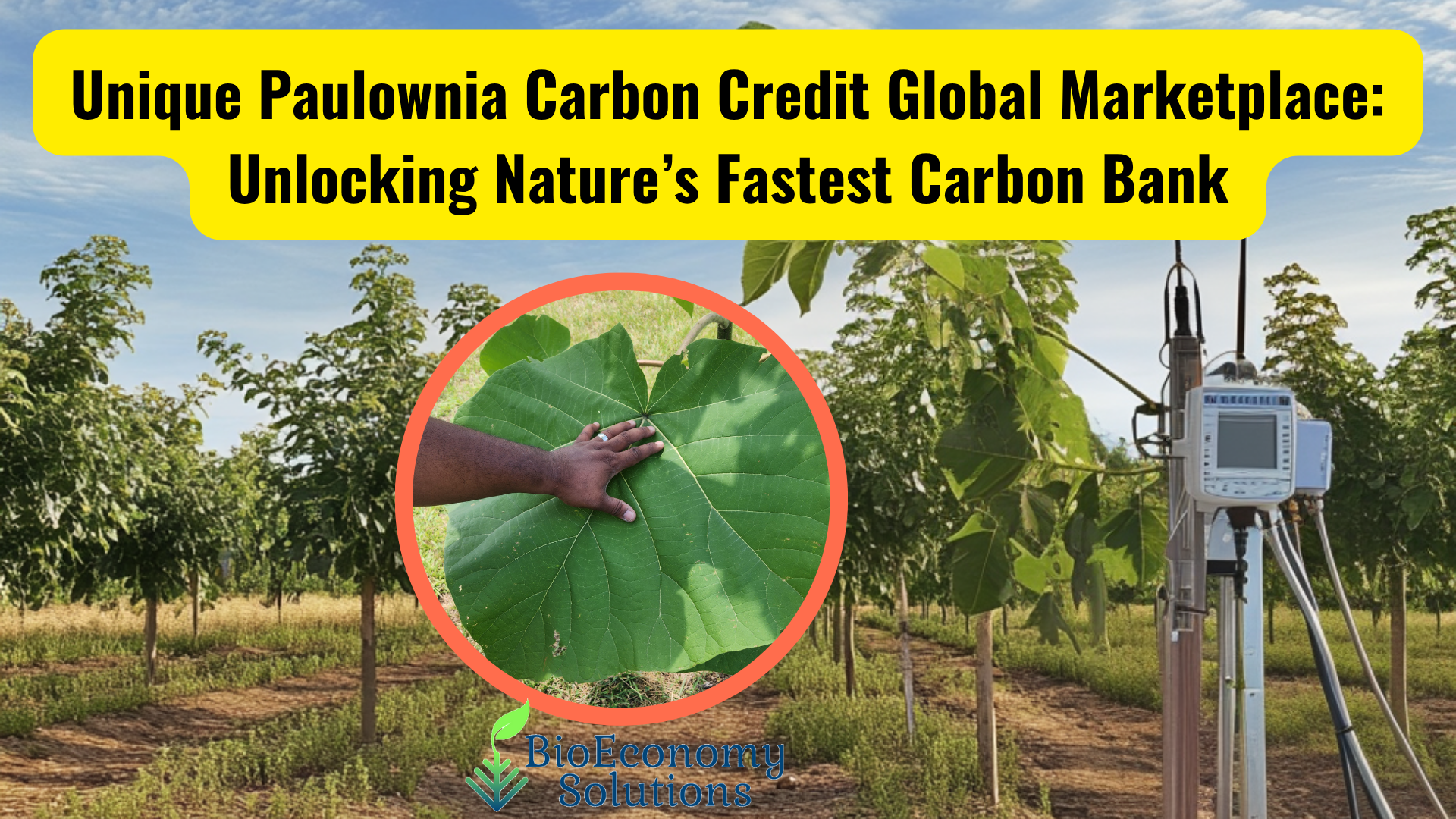
Did You enjoy this article? You may also enjoy “Unique Paulownia Carbon Credit Global Marketplace: Unlocking Nature’s Fastest Carbon Bank

https://www.linkedin.com/pulse/unique-paulownia-carbon-credit-global-marketplace-bank-garlington-jnpwe/?lipi=urn%3Ali%3Apage%3Ad_flagship3_pulse_read%3BeP8PR0mlR8i5uHWmJ3hQgA%3D%3D

Introduction

The Explosive Global Quest to combat climate change is in full swing, few “nature-based assets” are as overlooked—or as potent—as the Paulownia tree.

Desertification is also a significant concern which directly contributes to food and water insecurity worldwide. The persistent degradation of dryland ecosystems by climate change and human activities, such as unsustainable farming, overgrazing, and deforestation are the source causations.

The United Nations Convention to Combat Desertification (UNCCD)is an international agreement focused on addressing desertification, land degradation, and drought. It aims to achieve a land degradation-neutral world and is a key part of the Sustainable Development Goals.

Paulownia is rapidly becoming a centerpiece solution for re-greening and in the evolving carbon credit economy. As carbon markets expand in both scale and complexity, Paulownia-based carbon credits represent a high-growth opportunity for landowners, project developers, and institutional buyers alike.

Paulownia is reshaping the global carbon credit marketplace—and here’s why it’s becoming the tree of choice for climate-forward agroforestry Carbon Dioxide Removal (CDR) investments. What Makes Paulownia Ideal for Carbon Sequestration?

Paulownia is one of the fastest-growing trees in the world, capable of reaching 10–20 feet in its first year and maturing in under a decade. But its real power lies underground and in its chemistry:

  • Deep taproots mine carbon and water deep into the soil.
  • Abundant biomass production allows for stable biochar production.
  • Sterile hybrid varieties (like MegaFlora) eliminate invasive species risks.
  • Paulownia forests regenerate after selective harvesting, making them ideal for rotational carbon capture and continuous credit generation.

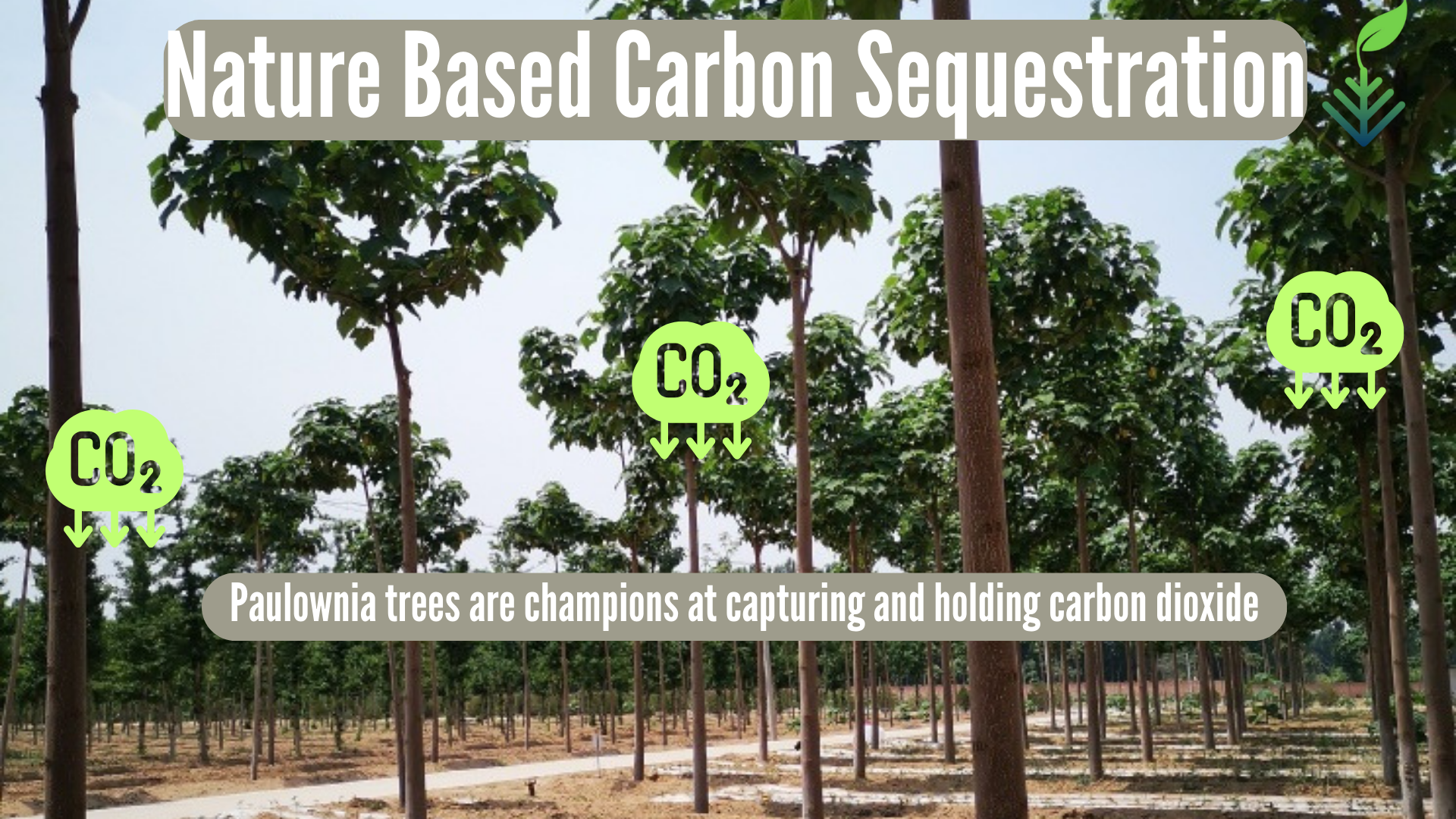
Each Paulownia tree can conservatively sequester 0.35 to 0.70 metric tons of CO₂ per year, and when planted at scale, these numbers rival DAC industrial-scale carbon offset programs.

Tech v.s. Trees: What $6.66 Billion Taught Us About Real Carbon Removal. Carbon removal is no longer a future goal — it’s a present necessity read more.

The Structure of the Global Paulownia Carbon Marketplace

The carbon credit ecosystem for Paulownia operates through a coordinated series of stages:

1. Agroforestry Development

Projects typically start by converting degraded land (e.g., arid regions or post-mining zones) into productive, monitored plantations. The optimal model includes intercropping, which both supports biodiversity and boosts soil carbon.

2. Quantification & Monitoring

Platforms like Puro.Earth, Verra, and Net Eco Exchange are being used to certify Paulownia projects. Some use green tech real-time monitoring, which provides instant data of verifiable, high-frequency CO₂ uptake transparency for institutional buyers.

3. CRU and VCU Generation

Carbon Removal Units (CRUs) and Verified Carbon Units (VCUs) are issued based on performance metrics. Paulownia projects can sell these on voluntary markets or in compliance markets like CORSIA and EU ETS, where eligible.

4. Trading & Brokerage

Once credits are verified, they’re traded through brokers, or directly via aggregators and exchanges. Pricing depends on volume, verification, co-benefits, and credit type (removal vs. avoidance).

Market Potential and Revenue Forecast

Global Compliance Market

The global compliance market for carbon credits is massive. According to Refinitiv, the market has grown substantially, reaching a trading value of approximately $1.5 trillion in 2024, up from $950 billion in 2023. This represents about 15.7Gt CO2 equivalent traded across various compliance markets worldwide.

Global Voluntary Market

  • The voluntary carbon market reached a value of $2.5 billion in 2023 and is projected to grow to $100-250 billion by 2030, according to recent analyses.

Paulownia Carbon Credits

Paulownia projects are uniquely poised to capitalize on this growth:

  • Paulownia Per Tree Revenue: $8–$20 per tree/year depending on sequestration rates and market price.
  • Paulownia Per Acre Revenue: With annual carbon income exceeds $23,000/acre/year.
  • Paulownia Large-Scale Projects: A 10,000-acre plantation could generate millions in carbon revenue, excluding additional revenue from timber, biochar, or biomass energy.

Challenges to Overcome

While the promise is strong, success depends on:

  • Public perception: Planting mono-crops vs. integration of native species and food plots.
  • Upfront capital: High costs of propagation, planting, and monitoring demand innovative finance models—like green bonds, pre-sold credits or tokenized carbon futures.

The Role of the Paulownia Carbon Market in Global Climate Strategy

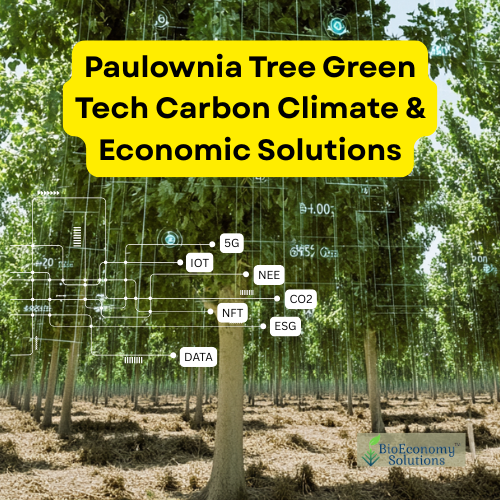
Governments and corporations alike are under pressure to meet Net Zero targets. Nature-based solutions, especially green tech engineered agroforestry with proven MRV systems (Measurement, Reporting, Verification), are increasingly attractive.

Paulownia provides:

  • ✅ High sequestration per acre
  • ✅ Low land-use conflict (can grow on degraded land)
  • ✅ Multi-benefit yield 💱 (carbon, timber, food, jobs)
  • ✅ Fast credit generation timeline

It also aligns with over 10 UN Sustainable Development Goals, from poverty alleviation to climate action.

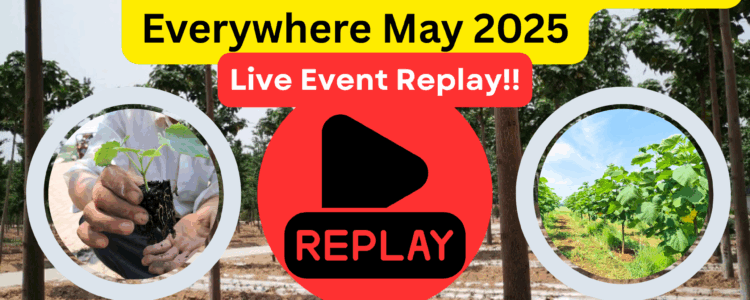
🔗 Watch the Replay Here – CLICK THE IMAGE BELOW

Conclusion: A Tree for the Times

As the world reimagines land use and carbon policy, the Paulownia carbon credit market represents a bold convergence of ecology, technology, and finance. It’s not just about planting trees—it’s about planting the right tree, in the right system, with the right data to turn carbon into capital.

With scalable potential and scientifically engineered reliability, Paulownia is more than a fast-growing tree—it’s a catalyst for a climate-resilient future and a profit center for forward-looking investors and landowners.


⏱ Next Steps

  • ❎ Landowners: Explore converting acreage into Paulownia carbon farms.
  • ❎ Investors: Evaluate biochar and carbon forestry funds linked to high-sequestration species.
  • ❎ Buyers: Offset emissions with premium, verifiable Paulownia-based removal credits.
  • ❎ Policymakers: Incentivize regenerative agroforestry under national carbon strategies.

🧭 Contact Us – Schedule a Call

Want to see what real-time ESG compliance looks like in action? Or need help building your ESG tech stack? Let’s talk.

By converting its carbon, growth, and timber value into blockchain-based tokens, Paulownia CDR creates a transparent, inclusive, and sustainable financial model that aligns with the goals of the UNCCD, Paris Agreement, and global reforestation efforts.

Contact Us

Where To Buy Paulownia Core Materials? QUESTIONS?

We’re happy to organize a time to speak with you about our ESG compliance solutions.

⏰ Here’s a link to my online calendar/schedule:

www.bioeconomysolutions.com/bookcall

BioEconomy Solutions

mail@BioEconomySolutions.com

Office: 843.305.4777

Visit us at: https://bioeconomysolutions.com/paulownia-carbon-credits/ Let’s chat about paulownia tree solutions for sustainable Forest carbon credits projects.

LIKE|SHARE|COMMENT

Subscribe to our newsletter: https://bioeconomy-solutions.kit.com/45b34109e5 

Subscribe to our newsletter

Paulownia: The Billion-Dollar Green Asset Class Institutional Investors Can’t Afford to Ignore

Missed our live event, “Eco-Friendly Paulownia Trees Everywhere”? The replay is now available—and for institutional investors, or any organization interested in this subject, this is more than just an environmental discussion. Paulownia tree plantations are a lucrative, scalable, and future-proof investment opportunity with unparalleled ESG upside.

Why Paulownia? The High-Growth, Low-Risk Green Asset

Paulownia isn’t just a tree—it’s a high-yield, sustainable investment vehicle with institutional-grade potential. Our event revealed a fully developed 10,000-hectare plantation model, demonstrating how Paulownia delivers:

Exceptional ROI– Fast-growing (harvest-ready in 2-7 years), premium biomass & timber markets, and carbon credit revenue streams.

Climate-Resilient Investing – One of the world’s most efficient carbon sinks, generating high-value offsets for ESG portfolios.

Natural Hedge Against Volatility– Inflation-resistant, uncorrelated to traditional markets, with rising global demand for sustainable timber.

Government & Regulatory Tailwinds– Eligible for reforestation subsidies, tax incentives, and green financing programs.

Phytoremediation & Land Appreciation – Rehabilitates degraded land, increasing asset value while cleaning pollutants (heavy metals, toxins).

Who Should Watch the Replay?

🌍 Sovereign Wealth Funds & Pension Funds – Diversify into tangible, inflation-proof assetswith long-term appreciation.

💼 Venture Capital & Private Equity – Scalable agroforestry plays with exit opportunities in carbon markets, sustainable timber, and bioenergy.

🏦 Family Offices & Impact Investors– High-growth, mission-aligned investments that balance profit with planetary impact.

📈 ESG Fund Managers – A verified, measurable green asset to bolster sustainability mandates and reporting.

The Institutional Case for Paulownia

  • Carbon Credits: Paulownia plantations generate premium voluntary carbon offsets (VCS, Gold Standard).
  • Timber & Biomass: Global demand for sustainable wood is surging, with Paulownia as a lightweight, durable alternative to traditional hardwoods.
  • Land Banking: Strategic acquisition of marginal land for value appreciation through ecological restoration.
  • Phytoremediation Projects: Partner with governments/NGOs to monetize polluted land cleanup.

Watch The Replay Now

The event replay delivers actionable insights, financial models, and case studies tailored to institutional capital deployment. This is not theoretical—it’s a proven, scalable asset class ready for portfolio allocation.

🔗 Watch the Replay Here – CLICK THE IMAGE BELOW

Who Should Watch the Replay?
🌱 Farmers & Landowners – Learn how to integrate Paulownia into agroforestry for profit and sustainability.

♻️ Eco-Entrepreneurs – Discover business opportunities in carbon credits, eco-timber, and phytoremediation projects.

🌍 Environmental Advocates – See how large-scale Paulownia planting can combat desertification and pollution.

🌳 Anyone Passionate About Reforestation – Get actionable insights on starting your own Paulownia plantation.

Schedule Private Briefing
Interested in a private briefing? Contact our investment team for exclusive data rooms and deal flow opportunities.

Book a call with us

#SustainableInvesting #InstitutionalCapital #ESG #CarbonMarkets #Agroforestry #Paulownia

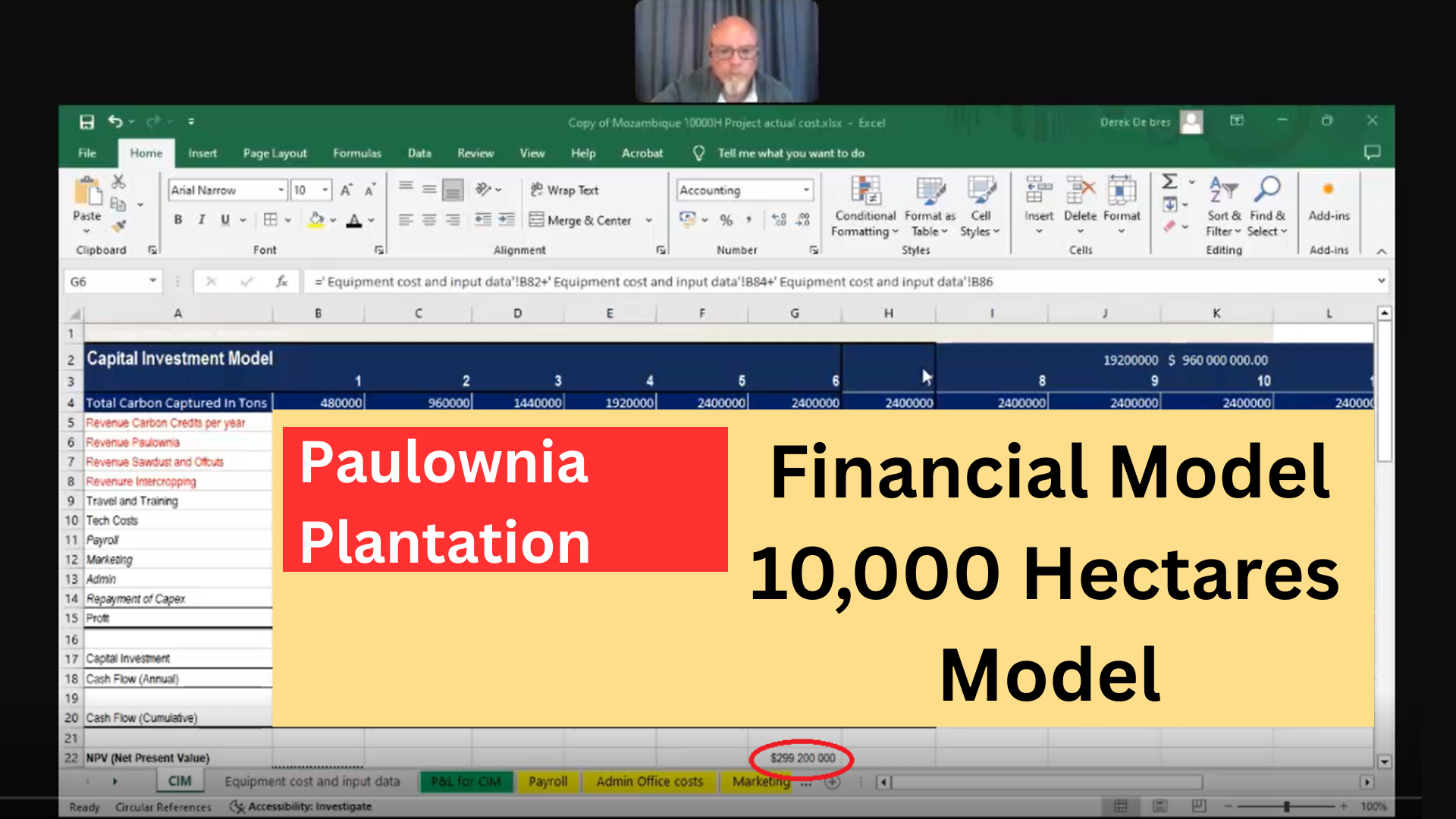
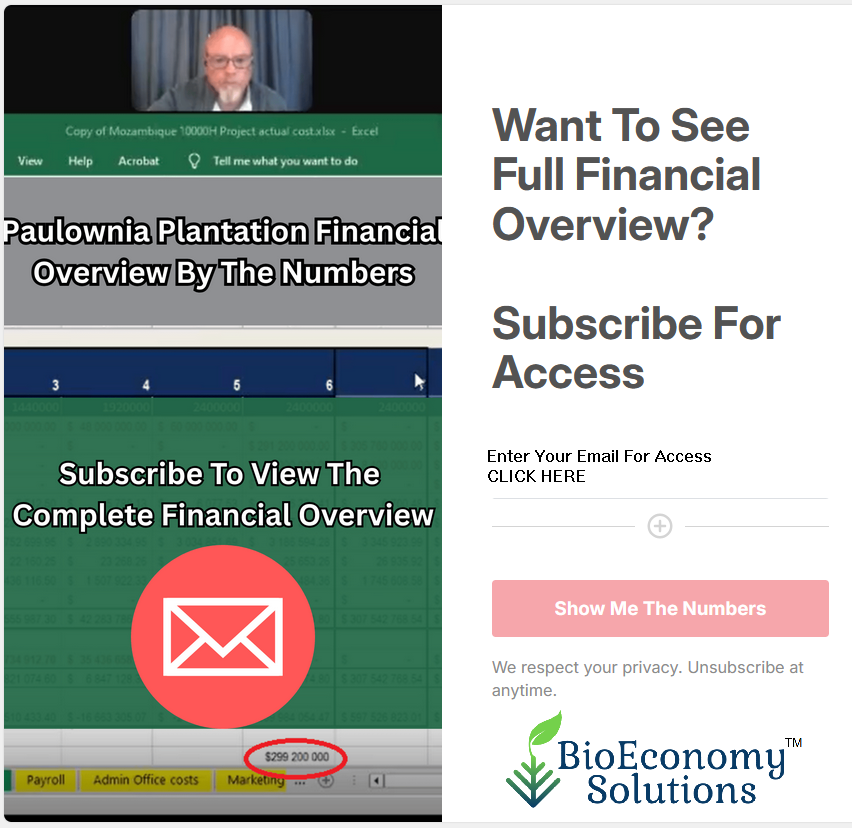
Review The Financial Model For Paulownia Plantation
Want to see the numbers?

During the event we also did a full review of the financial model that IS NOT AVAILABLE TO EVERYONE as you will not see it above. But you can have access now. SEE BELOW

Subscribe For Access

Subscribe to review the full financial deck

About BioEconomy Solutions
Where To Buy Paulownia? Paulownia Wood For Sale – QUESTIONS?

Visit our web page. https://bioeconomysolutions.com/paulownia-lumber/

We’re happy to organize a time to speak with you about our paulownia trees and lumber we have for sale. Please book your preferred time to speak directly.

Here’s a link to my online calendar/schedule:

www.bioeconomysolutions.com/bookcall

BioEconomy Solutions

mail@BioEconomySolutions.com

Office: 843.305.4777

LIKE|SHARE|COMMENT

Enjoy this article? You may also enjoy “Carbon Developers Choose Paulownia Trees” https://www.linkedin.com/pulse/carbon-developers-choose-paulownia-trees-victor-garlington-imh4e/


You’re looking for a viable carbon offset solution and have considered tree planting. Before you make a decision, let us share why paulownia trees stand out in the world of natural carbon solutions:

Great Carbon Sequestration: Paulownia trees are known for their extraordinary ability to absorb and store carbon dioxide.

Fast-Growing: These trees grow astonishingly fast, meaning more carbon sequestration in less time.

Resilient: They are incredibly hardy, making them ideal for a variety of climates and regions.

High Biomass Production: Their high biomass production means they contribute significantly to carbon offset.

Economically Profitable: Paulownia wood is valuable and highly sought after for its lightweight and strong properties.

Environmentally Friendly: Besides their carbon sequestration capabilities, they improve soil quality and prevent erosion.

Low Maintenance: These trees require little water and care, making them an easy choice for entrepreneurs.

Sustainable Resource: Paulownia wood is a highly sustainable resource, providing an alternative to more environmentally destructive materials.

Aesthetic Appeal: These trees are not just functional; their lush foliage and beautiful flowers also provide aesthetic value.

Positive Brand Image: Choosing paulownia as your go-to tree sends a strong message about your commitment to innovative, natural carbon solutions.

Choosing paulownia trees for your carbon development project not only makes environmental sense but also business sense. It’s a fast, sustainable, and appealing way to improve our planet while also turning a profit. Learn more about paulownia carbon projects here: https://bioeconomysolutions.com/paulownia-carbon-credits/