
Most boatbuilders have never heard of the wood that built 16th-century fishing buoys.
But one master craftsman just proved it outperforms everything we use today.
Eric has 43 years of boatbuilding experience. He’s trained hundreds of students at Marine Trades Institute. He’s worked with every wood species you can imagine.
But when a student asked him about Paulownia wood, he’d never heard of it.
That conversation changed everything.
The Crisis Hiding in Plain Sight
The marine industry faces a quiet emergency:
Traditional woods are disappearing:
- Western red cedar: $16+ per board foot (when available)
- His lead instructor calls it “unobtanium” – you just can’t get it
- White oak: Limited supply, slow growth
- Mahogany: Increasingly scarce, shipped from Africa/Philippines
The workforce is aging:
- 5 boatbuilders retire for every 2 entering the trade
- World Trade Organization declared wooden boat builders “endangered” in England
- Not from lack of work – lack of skilled craftsmen
Meanwhile, fiberglass pollution is killing marine life:
- Scientists found fiberglass strands in oyster beds
- Microplastics contaminating entire food chains
- “We can’t even find a control group anymore”
The Forgotten Solution
Eric decided to test this mystery wood his student mentioned.
What he discovered shocked him:
The Stability Test
He marked a 7-11/16″ wide Paulownia plank at 72% moisture content.
Two months later:
- Dried to 12% moisture
- Lost only 3/32″ in width
- Comparison: White oak shrinks 1/4″ on a 12″ board
“That’s significant in that it’s such a small amount.”
The Marine Performance Test
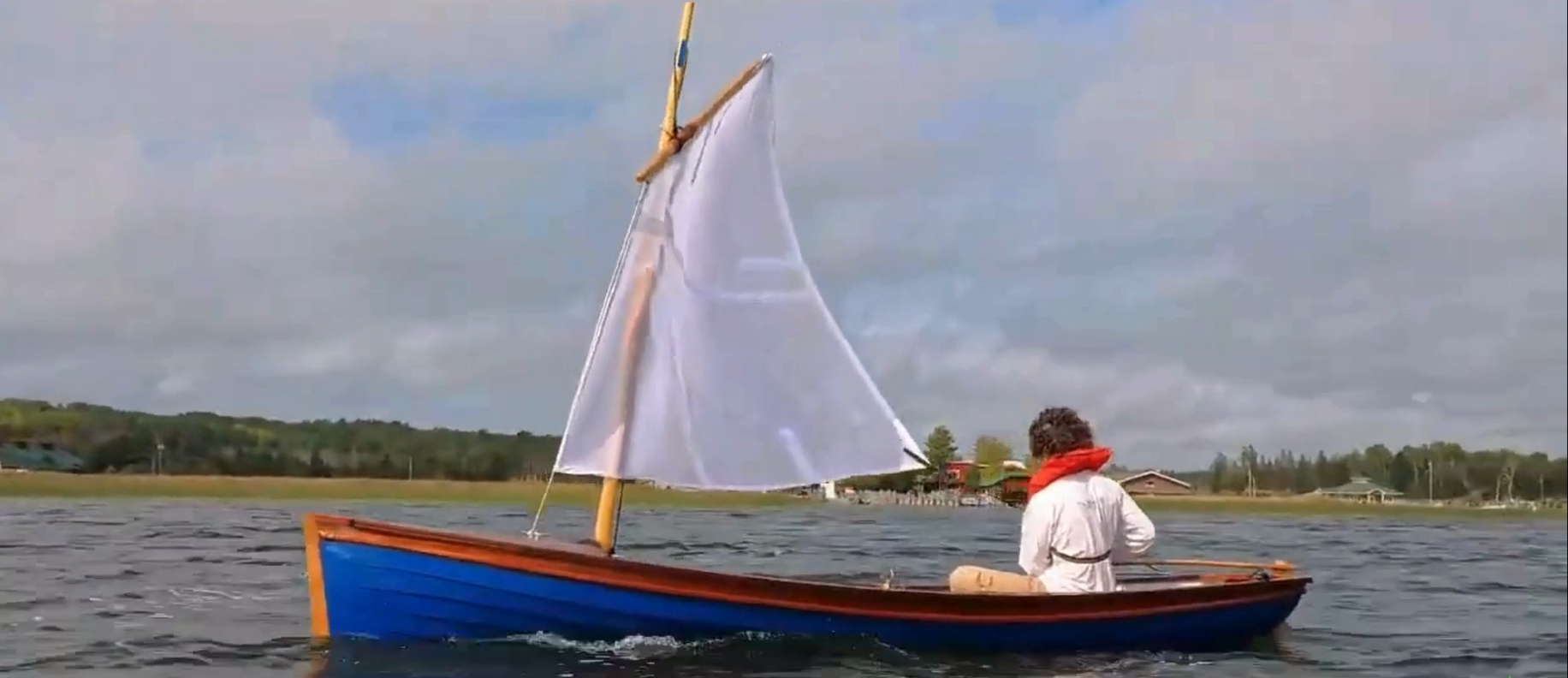
Eric built boats using Paulownia planking.
The boats sat wet for a month – rain, lake water, everything.
Traditional cypress boats: Planks buckle, split, stress the fasteners Paulownia boats: No movement, no buckling, no splitting
“There’s no buckling or movement in the planking… we don’t want that. We can’t have that. That’s bad for a boat.”
The Weight Advantage
- Cypress boats: 200 pounds
- Paulownia boats: 165-170 pounds
- 35-pound weight savings on 14.5-foot boats
The Historical Revelation
Then Eric learned something that changed his perspective entirely:
Paulownia buoys from the 1600s still exist.
Fishermen used Paulownia for marine floats 400 years ago. These antique buoys are now collector’s items.
“This buggers the real question here… what the hell happened? How did this stuff get forgotten about?”
The answer: Like hemp, proven technologies sometimes disappear from collective memory – only to be “rediscovered” centuries later.
Why This Matters Beyond Boats
Eric’s discovery reveals something bigger:
The Sustainability Factor:
- Plantation-grown (no old-growth forests cut)
- Regrows from stumps in 90 days
- Reaches 13 feet in first season after cutting
- Carbon sequestration while producing materials
The Performance Factor:
- Lighter than traditional woods
- Superior dimensional stability
- Natural rot resistance
- Proven 400-year marine heritage
The Economic Factor:
- Consistent supply vs. scarce traditional woods
- Predictable pricing vs. “call for availability”
- Multiple revenue streams from same trees
The Resistance to Change
When Eric contacted high-end boatbuilders about Paulownia:
“I’ve been in the boat business for three generations. I’ve never heard of this thing… my daddy’s daddy’s daddy has done it this way, and by god, I’m gonna do it this way.”
Sound familiar?
Every industry has this challenge. The best solutions often hide behind unfamiliarity and tradition.
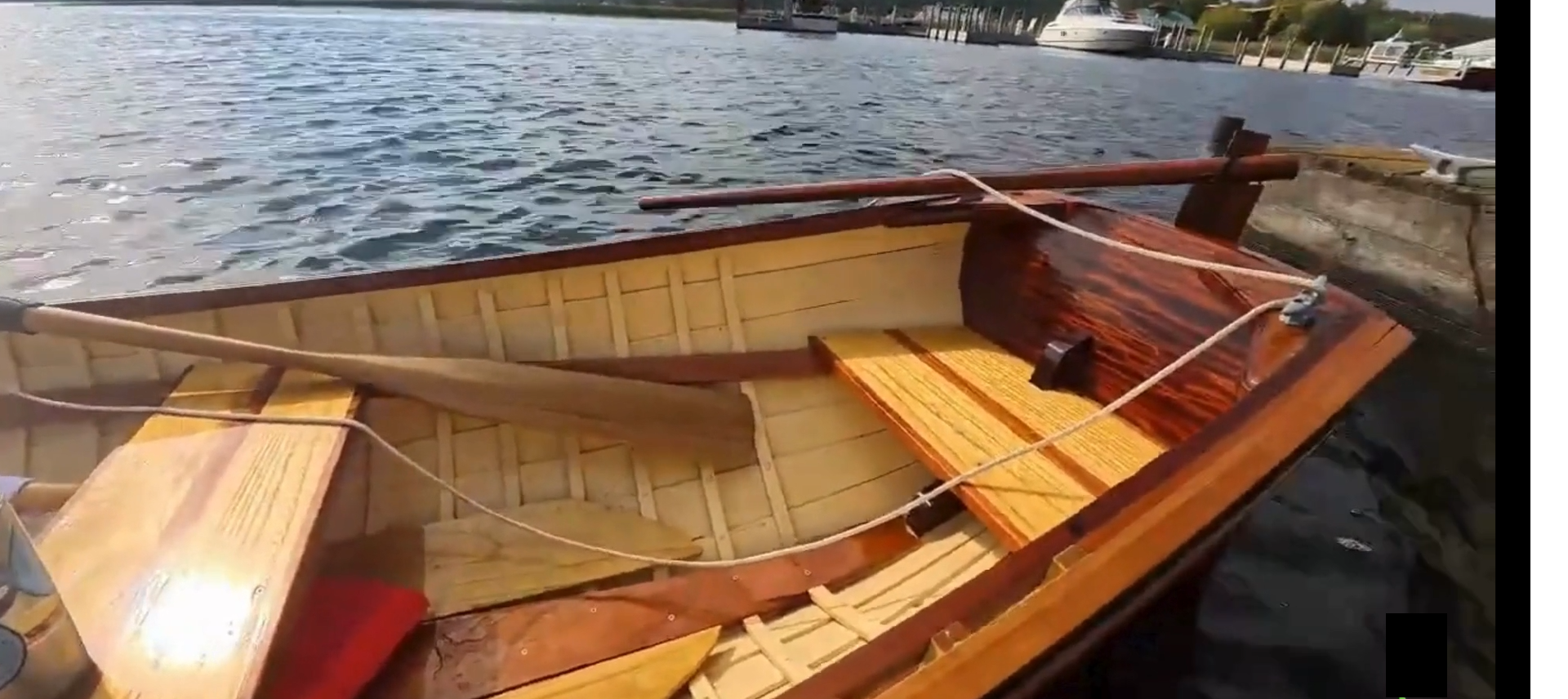
Marine Technical Institute (MTI) Paulownia Sailing Skiff Build 1 of 3
What Eric’s Teaching the Next Generation
At Marine Trades Institute, Eric now includes Paulownia in his curriculum:
“If you can build a boat, you can do damn near anything.”
His students are learning:
- Traditional craftsmanship with modern materials
- Sustainability without compromising performance
- How to question assumptions and test alternatives
- The importance of environmental responsibility
His mission: Pass proven techniques to the next generation before knowledge disappears.
The Bigger Lesson
Eric’s story isn’t just about wood or boats.
It’s about:
- How proven solutions get forgotten
- Why expertise matters in evaluating new materials
- The importance of testing assumptions
- How sustainability and performance can align
His advice to other industries: “Don’t be entrenched. This isn’t about converting you. It’s about offering you options.”
The Future Eric’s Building
Eric plans to:
- Continue long-term durability testing
- Share results with Traditional Small Craft Association
- Train more students on sustainable materials
- Document findings for future generations
His goal: Ensure valuable knowledge doesn’t disappear again.
What This Means for You
Whether you’re in construction, manufacturing, or any industry using materials:
Ask yourself:
- What “traditional” materials are becoming scarce or expensive?
- What proven alternatives might exist that you’ve never heard of?
- How could testing new materials improve your products and sustainability?
Eric’s example shows: Sometimes the best innovations are actually rediscoveries of forgotten wisdom.
The master craftsman who “never heard of” Paulownia is now planning his next order.
His students are building boats that outperform traditional materials.
And a 400-year-old marine solution is getting a second chance.
Sometimes the future is found by looking at the past with fresh eyes.
What “forgotten” solutions might be hiding in your industry?
The next breakthrough might be something that worked centuries ago – waiting to be rediscovered.
View the “Entire” Live Interview
Paulownia Boatbuilder Live Interview | Interviewing a Master Builder on His 1st Paulownia Projects
Where To Buy Paulownia? Paulownia Wood For Sale – QUESTIONS?
Visit our web page. https://bioeconomysolutions.com/paulownia-lumber/
We’re happy to organize a time to speak with you about our paulownia trees and lumber we have for sale. Please book your preferred time to speak directly.
Here’s a link to my online calendar/schedule:
www.bioeconomysolutions.com/bookcall
BioEconomy Solutions
mail@BioEconomySolutions.com
Office: 843.305.4777