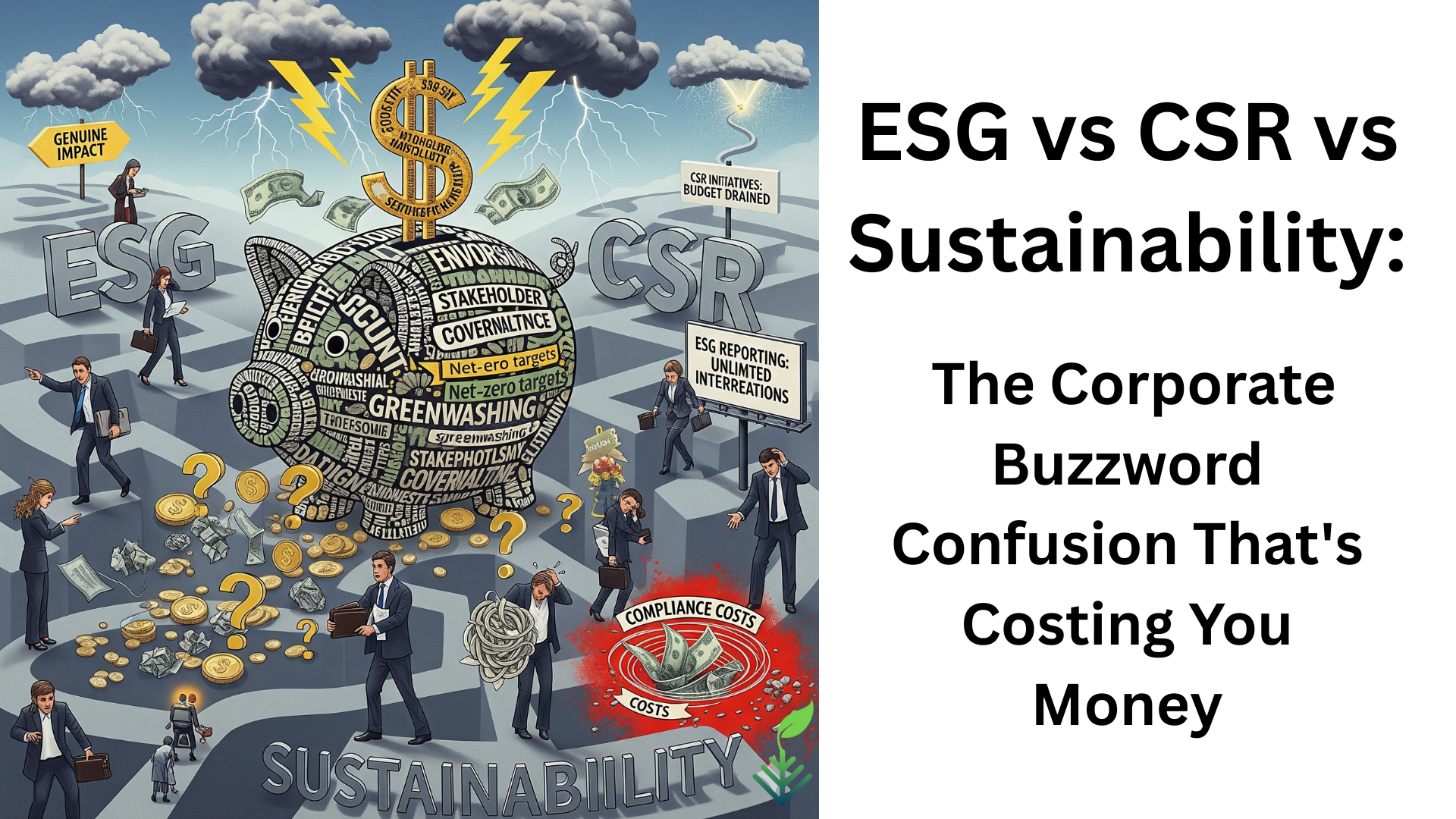
Stop using these terms wrong. It’s hurting your business.
What’s the missing link between corporate buzzwords and measurable climate action?
Most companies struggle to connect their ESG metrics, CSR programs, and sustainability goals. They end up with scattered initiatives that don’t reinforce each other.
Paulownia-based carbon credits solve this integration problem—creating a single solution that strengthens all three pillars while generating measurable returns.
Here’s how it works.
The Integration Challenge Most Companies Face
Typical Corporate Disconnect:
- Sustainability Goal: “Be carbon neutral by 2030”
- ESG Metrics: Track emissions but struggle with Scope 3 and removal verification
- CSR Programs: Plant trees somewhere, donate to environmental causes
- Result: Fragmented efforts, questionable impact, investor skepticism
The Paulownia Solution: One integrated platform that addresses sustainability goals, improves ESG scores, and powers authentic CSR programs—while generating profit.
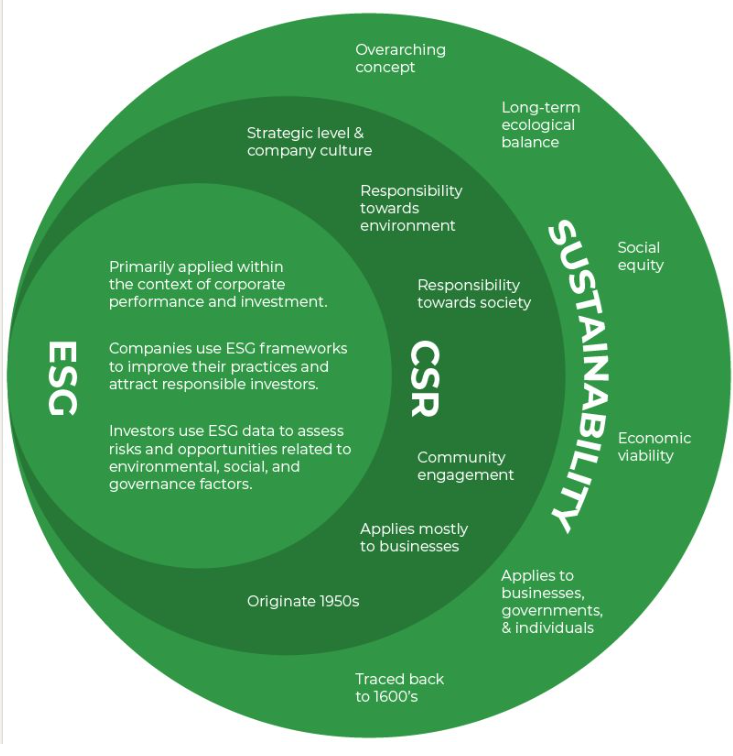
How Paulownia Strengthens Each Pillar
🌱 Sustainability: The Destination
Paulownia delivers on the triple bottom line:
People:
- Creates rural jobs and economic development
- Improves soil health and water retention
- Enables food crop intercropping for food security
- Provides sustainable building materials
Planet:
- Sequesters 80-100 tons CO₂ per acre in 5 years
- Grows on degraded land without competing with food crops
- Converts to permanent biochar storage (1,000+ year permanence)
- Combats desertification and restores ecosystems
Profit:
- Generates 5-10% IRR through multiple revenue streams
- Creates tradeable carbon assets
- Reduces compliance costs through verified removals
- Builds long-term asset value through timber and land appreciation
📊 ESG: The GPS
Environmental Metrics:
- Scope 1 & 2: Direct emissions reduction through renewable biomass
- Scope 3: Supply chain decarbonization through verified removals
- Carbon Intensity: Measurable reduction per dollar of revenue
- Biodiversity Impact: Quantified habitat restoration and soil improvement
Social Metrics:
- Community Investment: Direct economic impact in rural areas
- Job Creation: Sustainable employment in agriculture and processing
- Food Security: Intercropping capabilities support local food systems
- Environmental Justice: Restoration of degraded lands in underserved communities
Governance Metrics:
- Transparency: Blockchain-verified carbon tracking eliminates greenwashing
- Risk Management: Diversified revenue streams reduce climate transition risk
- Stakeholder Engagement: Community-based growing programs
- Regulatory Compliance: CSRD, SEC, and CORSIA-ready documentation
🤝 CSR: The Vehicle
Authentic Community Programs:
- Farmer Partnerships: Direct contracts with landowners for Paulownia cultivation
- Educational Initiatives: Training programs for sustainable agriculture
- Technology Transfer: Sharing fast-growing tree expertise globally
- Local Economic Development: Processing facilities in rural communities
Measurable Impact:
- Every CSR dollar generates quantified carbon removal
- Community programs directly support ESG metrics
- Local partnerships advance global sustainability goals
- Transparent reporting shows real outcomes, not just good intentions
Real-World Integration Example
Company: Fortune 500 manufacturer with 2030 net-zero commitment
Integrated Paulownia Strategy:
Sustainability Goal: Carbon neutrality + rural economic development
ESG Implementation:
- Environmental: 500,000 tons CO₂ removal over 10 years
- Social: 1,000 rural jobs created through farmer partnerships
- Governance: Blockchain-verified carbon tracking with quarterly reporting
CSR Programs:
- Partner with 200 farmers across 10,000 acres
- Fund agricultural training and equipment
- Support local processing facilities
- Create community profit-sharing programs
Financial Results:
- $50M investment generates $75M in carbon assets
- 15% annual returns through diversified revenue streams
- Reduced compliance costs through verified removals
- Enhanced brand value through authentic impact
Stakeholder Benefits:
- Investors: Clear ESG metrics with measurable ROI
- Employees: Pride in authentic climate action
- Communities: Economic opportunity and environmental restoration
- Customers: Verified carbon-neutral products
Why Traditional Carbon Credits Fall Short
Typical Forest Credits:
- 20-50 year payback periods
- Reversal risk from fires, disease, pests
- Limited community economic impact
- Difficult to verify and track
- Often compete with food production
Paulownia Advantage:
- 5-7 year harvest cycles with continuous regrowth
- Permanent storage through biochar conversion
- Multiple revenue streams for communities
- Blockchain-verified transparency
- Grows on marginal land, improves soil health
The Compliance Advantage
Regulatory Alignment:
- CSRD (EU): Detailed sustainability reporting with verified data
- SEC Climate Rules (US): Scope 3 emissions and climate risk disclosure
- CORSIA (Aviation): Verified carbon removals for airline compliance
- Article 6 (Paris Agreement): International carbon market participation
Audit-Ready Documentation:
- ISO 14064-3 verification
- Registry serialization
- Clear compliance controls
- Immutable blockchain audit trails
The Investment Case
Traditional ESG/CSR Approach:
- $2.3M average annual ESG compliance costs
- CSR programs as pure expense
- Difficult to measure ROI
- Investor skepticism about “greenwashing”
Paulownia Integration Model:
- ESG compliance generates measurable returns
- CSR programs create tradeable assets
- Clear ROI metrics for every sustainability dollar
- Investor confidence through verified impact
Getting Started: Your Integration Roadmap
Phase 1: Assessment (30 days)
- Map current ESG metrics to carbon removal opportunities
- Identify CSR programs that could generate carbon assets
- Assess sustainability goals for Paulownia alignment
Phase 2: Pilot Program (90 days)
- Launch 500-acre Paulownia demonstration project
- Integrate with existing CSR community partnerships
- Begin ESG metric tracking and reporting
Phase 3: Scale-Up (12 months)
- Expand to 5,000+ acres across multiple regions
- Develop biochar processing partnerships
- Launch carbon credit trading program
Phase 4: Full Integration (24 months)
- Achieve material impact on corporate carbon footprint
- Generate positive ROI from sustainability investments
- Establish industry leadership in integrated ESG/CSR
The Competitive Advantage
While competitors struggle to connect ESG metrics, CSR programs, and sustainability goals, your company will have:
Integrated Strategy:
- Every sustainability dollar generates measurable returns
- CSR programs directly improve ESG scores
- Clear line of sight from community impact to corporate goals
Authentic Impact:
- Real carbon removal, not accounting tricks
- Genuine community economic development
- Verifiable environmental restoration
Financial Performance:
- Sustainability as profit center, not cost center
- Diversified revenue streams reduce risk
- Premium valuations for ESG leadership
The Bottom Line
Paulownia-based carbon credits don’t just check ESG boxes or fund CSR programs—they create an integrated system where:
- Sustainability goals drive profitable business decisions
- ESG metrics improve through measurable environmental and social impact
- CSR programs generate tradeable assets while supporting communities
- Financial returns prove that doing good and doing well aren’t mutually exclusive
The future belongs to companies that can integrate purpose and profit.
Paulownia trees make that integration not just possible, but profitable.
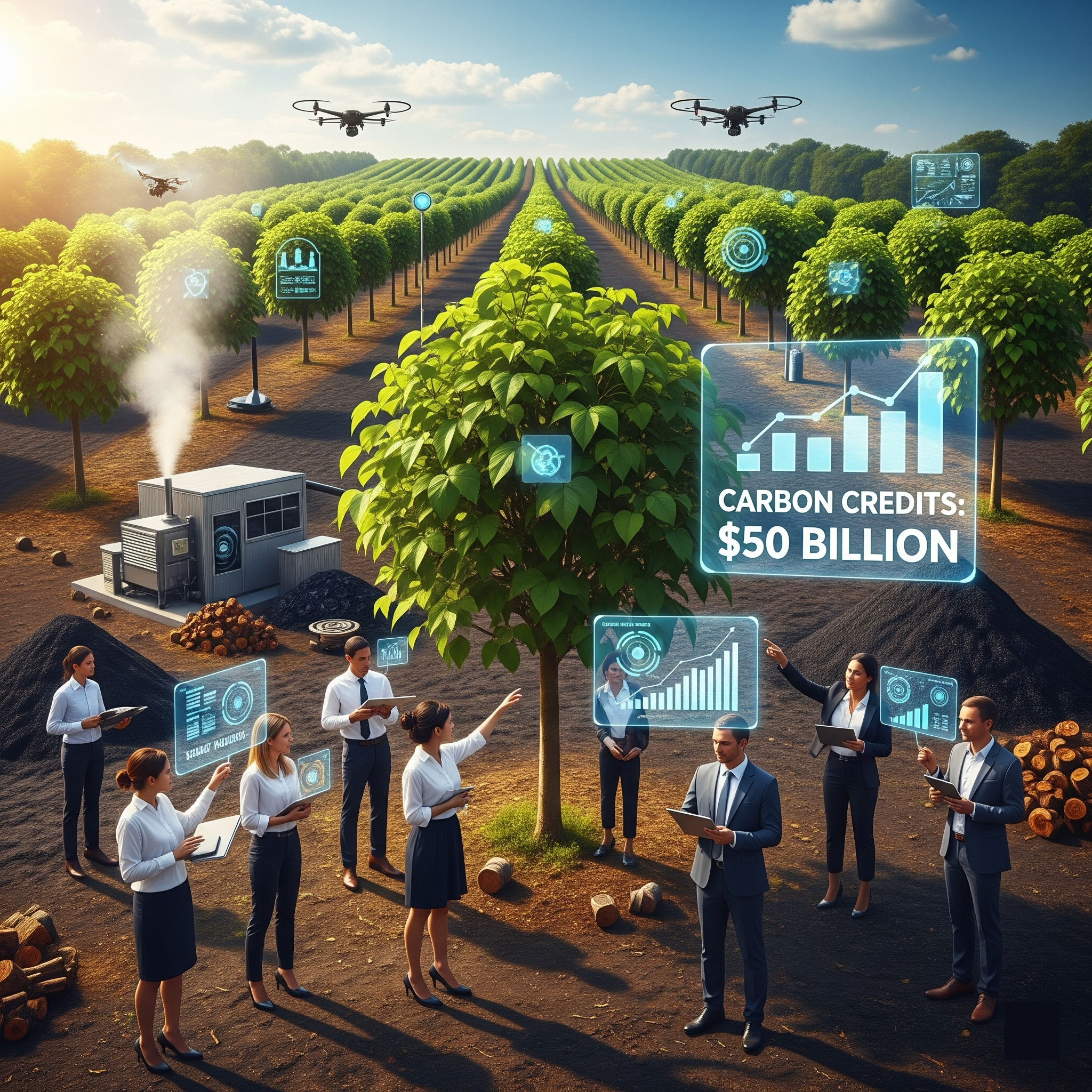
Ready to integrate your ESG, CSR, and sustainability strategies through verified carbon removal? Contact BioEconomy Solutions to explore how Paulownia-based carbon credits can transform your corporate climate strategy from cost center to profit center.
Stop managing ESG, CSR, and Sustainability as separate initiatives. Start building an integrated system that delivers measurable impact and measurable returns.
Where To Buy Paulownia? – QUESTIONS?
Visit our web page. https://bioeconomysolutions.com
We’re happy to organize a time to speak with you about our paulownia trees and lumber we have for sale. Please book your preferred time to speak directly.
Here’s a link to my online calendar/schedule:
www.bioeconomysolutions.com/bookcall
BioEconomy Solutions
Office: 843.305.4777
LIKE|SHARE|COMMENT
Enjoy this article? You may also enjoy “Carbon Developers Choose Paulownia Trees” https://www.linkedin.com/pulse/carbon-developers-choose-paulownia-trees-victor-garlington-imh4e/
Join Our Newsletter – Get a FREE copy of Paulownia Carbon Report

Subscribe to our newsletter