The world is racing to decarbonize agriculture and heavy industry. One of the biggest game-changers? Green ammonia—a clean fuel and fertilizer made without fossil fuels. But what if you could produce it from a fast-growing, carbon-sequestering tree? Enter Paulownia.

Why Green Ammonia?

Ammonia (NH₃) is a critical ingredient in fertilizer and a promising zero-carbon fuel. Traditionally, it’s made from natural gas, releasing huge amounts of CO₂. Green ammonia, produced using renewable energy and sustainable feedstocks, is the future of both food and energy security.

The primary USDA program supporting alternative fertilizers is the Fertilizer Production Expansion Program (FPEP), which provides grants to U.S. businesses and organizations to increase domestic manufacturing and processing of fertilizers and nutrient alternatives, aiming to lower costs, reduce reliance on foreign suppliers, and promote sustainable practices. Eligible projects include modernizing equipment, adopting new technologies, and building plants for producing innovative fertilizers, including biobased and organic options, and those that enhance soil health and nutrient use efficiency.

What the Program Does

  • Increases Domestic Production:
  • Promotes Innovation:
  • Boosts Competition:
  • Reduces Foreign Dependence:

The Paulownia Advantage

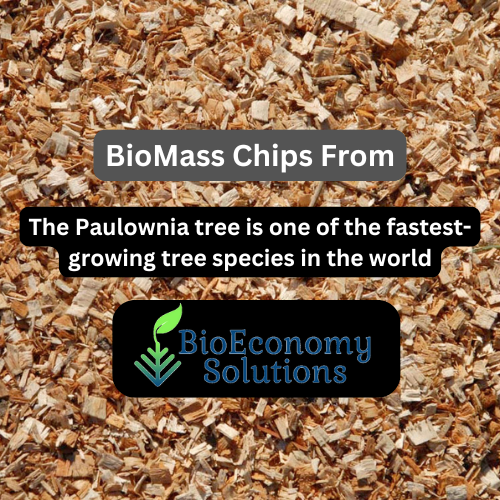
Paulownia trees are among the fastest-growing on earth, thriving on degraded land and capturing massive amounts of CO₂. Their wood chips are a renewable, high-yield biomass source—perfect for green ammonia production.

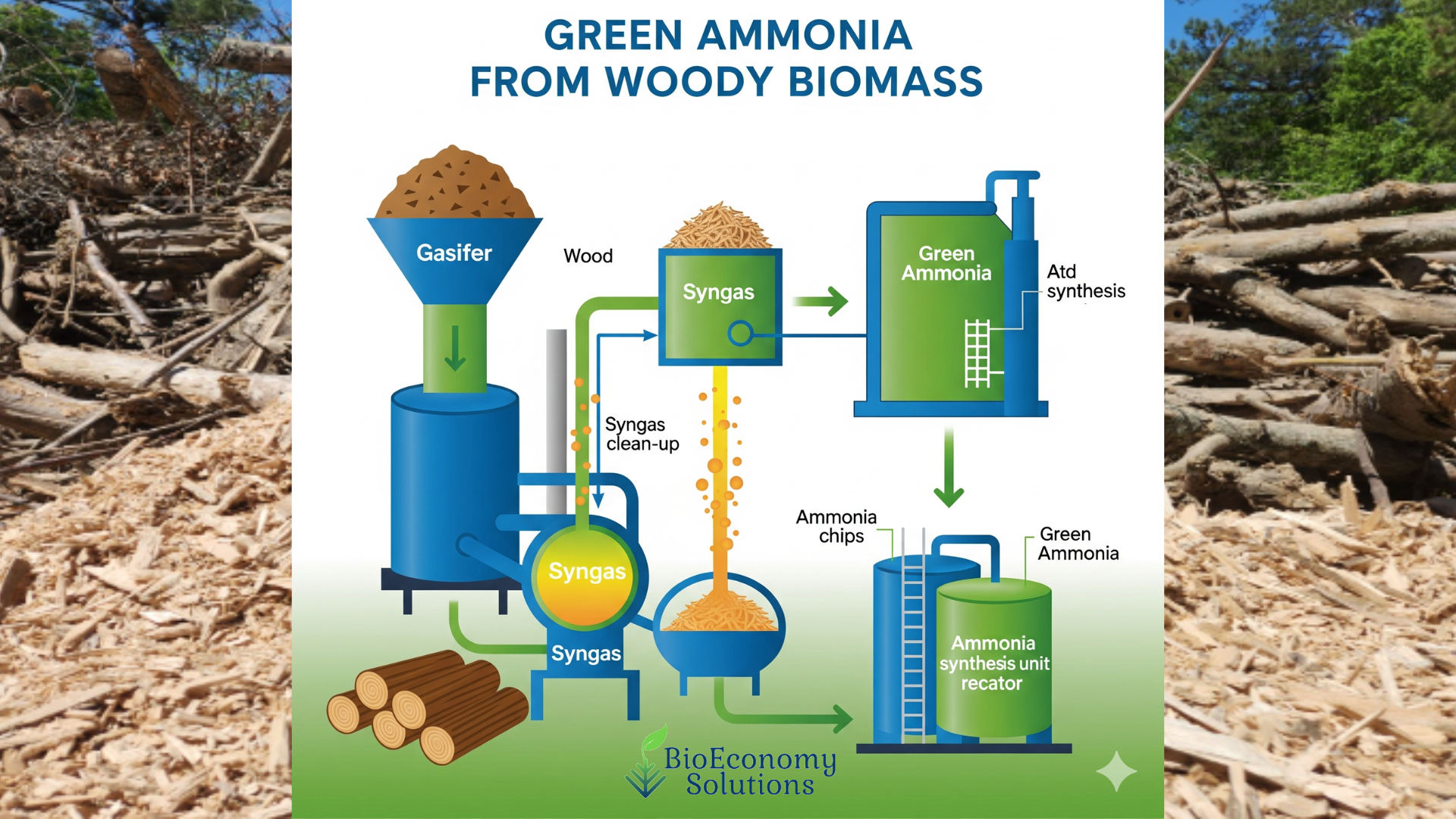
How It Works: Biomass Pathways

  1. Paulownia Cultivation
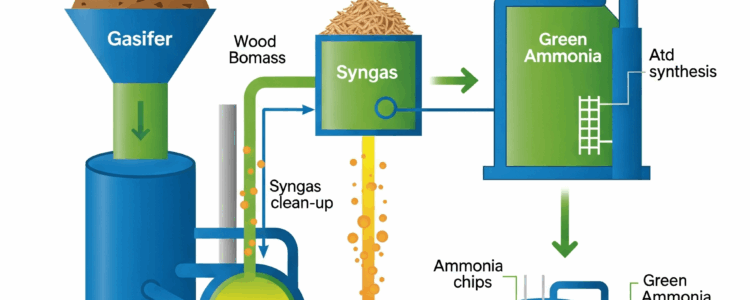
  2. Biomass Gasification
  3. Hydrogen Extraction
  4. Green Ammonia Synthesis

Why Carbon is Money

  • Carbon Credits: Every ton of CO₂ sequestered by Paulownia and every ton avoided by green ammonia production can be monetized as carbon credits. Biochar byproducts can generate 2.5–3.26 credits per ton.
  • Premium Markets: Green ammonia commands a price premium in global fertilizer and shipping markets.
  • Multiple Revenue Streams: Timber, carbon credits, biochar, and now green ammonia—all from the same tree.
Real-World Impact

  • Decarbonize Agriculture: Replace fossil-based fertilizers with green ammonia, slashing emissions.
  • Clean Shipping Fuel: Ammonia is emerging as a zero-carbon fuel for ships.
  • Rural Economic Growth: Farmers and landowners can profit from carbon, timber, and energy markets.

The Bottom Line

Paulownia isn’t just a tree—it’s a carbon mining platform. By turning its biomass into green ammonia, you’re not just growing trees. You’re growing money, decarbonizing the planet, and building the future of clean energy and agriculture.

Carbon is money. Paulownia is the bank. Green ammonia is the future.


Conclusion

The Paulownia tree, with its FAST growth rate, carbon capture abilities, and adaptability, is a powerful tool in climate change mitigation, biodiversity support, and sustainable forest management. When used appropriately in afforestation and reforestation projects, it holds the potential to restore ecosystems, combat deforestation, and provide long-term environmental and economic benefits.

Contact Us

BioEconomy Solutions is a Carbon Dioxide Removal (CDR) Project Developer. Talk to us about our TREE PLANTING strategies with Paulownia trees.

We’re happy to organize a time to speak with you about our paulownia trees and lumber we have for sale. Please book your preferred time to speak directly.

Here’s a link to my online calendar/schedule:

www.bioeconomysolutions.com/bookcall

BioEconomy Solutions

mail@BioEconomySolutions.com

Office: 843.305.4777

Visit us at: https://bioeconomysolutions.com/paulownia-carbon-credits/ Let’s chat about paulownia tree solutions for sustainable Forest carbon credits projects.

LIKE|SHARE|COMMENT

Enjoy this article? You may also enjoy “Carbon Developers Choose Paulownia Trees” https://www.linkedin.com/pulse/carbon-developers-choose-paulownia-trees-victor-garlington-imh4e/

Subscribe to our newsletter
Subscribe to our newsletter

ESG Compliance in the Age of Scrutiny: Why Real-Time Data Is Your Best Defense Against Greenwashing.

In today’s sustainability-conscious marketplace, Environmental, Social, and Governance (ESG) performance isn’t just a buzzword — it’s a business imperative. But as ESG strategies grow more common, so too does the risk of greenwashing — the act of misleading stakeholders about a company’s environmental or social credentials. In 2023 alone, regulators in the U.S. and Europe levied tens of millions in fines for ESG misstatements, with firms like DWS, Invesco, and BNY Mellon under the microscope.

So how can companies stay compliant, credible, and competitive in an increasingly transparent world? The answer lies in real-time ESG data.


💡 What’s the Problem with Traditional ESG Reporting?

Traditional ESG reporting has a few fatal flaws:

  • Lagging data: ESG reports are typically published annually or quarterly — far too slow in a world of real-time disclosures and instant media.

  • Manual processes: Data is often collected through surveys, spreadsheets, and self-reported disclosures, which are prone to bias or error.

  • Lack of verification: Claims about carbon neutrality, sustainable sourcing, or social impact often lack third-party validation or audit trails.

These gaps don’t just raise reputational risk — they’re becoming compliance risks.


🧯 Greenwashing Enforcement Is Rising

Global regulators are cracking down hard on ESG misstatements:

  • SEC: Fined DWS $25M in 2023 for exaggerating its ESG investment practices.

  • FTC (U.S.): Penalized Kohl’s and Walmart for falsely marketing rayon products as bamboo.

  • EU: Found that over 40% of green claims were unsubstantiated and is introducing a Green Claims Directive to require evidence for all environmental claims.

Investors are also paying attention. Fund managers face growing pressure to demonstrate ESG integration with clear metrics, not marketing.


🛰️ Real-Time ESG Data: The Game-Changer

Real-time data empowers companies to track, validate, and communicate ESG performance in a transparent and dynamic way. Here’s how:

1. Live Monitoring of Emissions and Energy

  • Use IoT sensors and digital twins to measure Scope 1 & 2 emissions in real time.

  • Track energy use by facility or process to identify inefficiencies instantly.

2. Supply Chain Traceability

  • Use blockchain or API-connected platforms to verify sourcing, labor practices, and supplier sustainability credentials.

  • Real-time alerts if suppliers breach ESG requirements.

3. Automated ESG Dashboards

  • Integrate internal and third-party data to feed dashboards that show real-time ESG performance vs. targets.

  • Great for internal decision-making and external transparency.

4. Dynamic ESG Reporting

  • Move from static annual reports to interactive sustainability dashboards, updated monthly or even weekly.

  • Enables investors and consumers to see progress (or problems) without delay.


🎯 Benefits of Real-Time ESG Compliance

  • Avoid penalties and investigations: Proactive monitoring catches issues before regulators do.

  • Build investor confidence: Transparent, data-backed ESG performance is a competitive advantage.

  • Enhance brand trust: Consumers are more loyal to brands that show — not just say — they’re doing good.

  • Adapt faster: Real-time data lets you pivot operations, suppliers, or products when ESG risks emerge.


🧭 Key Takeaways

In the age of ESG scrutiny, greenwashing isn’t just unethical — it’s legally and financially dangerous. Relying on outdated, self-reported ESG data is no longer tenable.

Real-time ESG data isn’t just a tool for compliance — it’s a foundation for sustainable leadership.

Companies that invest in transparent, verifiable, and real-time ESG systems are far more likely to:

  • Avoid fines,

  • Attract long-term investors,

  • And stay ahead of regulatory and market expectations.


Next Steps Schedule Conversation

Want to see what real-time ESG compliance looks like in action? Or need help building your ESG tech stack? Let’s talk.

Today’s Real World Asset – Paulownia Trees

By converting its carbon, growth, and timber value into blockchain-based tokens, Paulownia creates a transparent, inclusive, and sustainable financial model that aligns with the goals of the UNCCD, Paris Agreement, and global reforestation efforts.

Contact Us

Where To Buy Paulownia Core Materials? QUESTIONS?

We’re happy to organize a time to speak with you about our paulownia trees and lumber we have for sale. Please book your preferred time to speak directly.

Here’s a link to our online calendar/schedule:

www.bioeconomysolutions.com/bookcall

BioEconomy Solutions

mail@BioEconomySolutions.com

Office: 843.305.4777

Visit us at: https://bioeconomysolutions.com/paulownia-carbon-credits/ Let’s chat about paulownia tree solutions for sustainable Forest carbon credits projects.

LIKE|SHARE|COMMENT

Enjoy this article? You may also enjoy “Carbon Developers Choose Paulownia Treeshttps://www.linkedin.com/pulse/carbon-developers-choose-paulownia-trees-victor-garlington-imh4e/