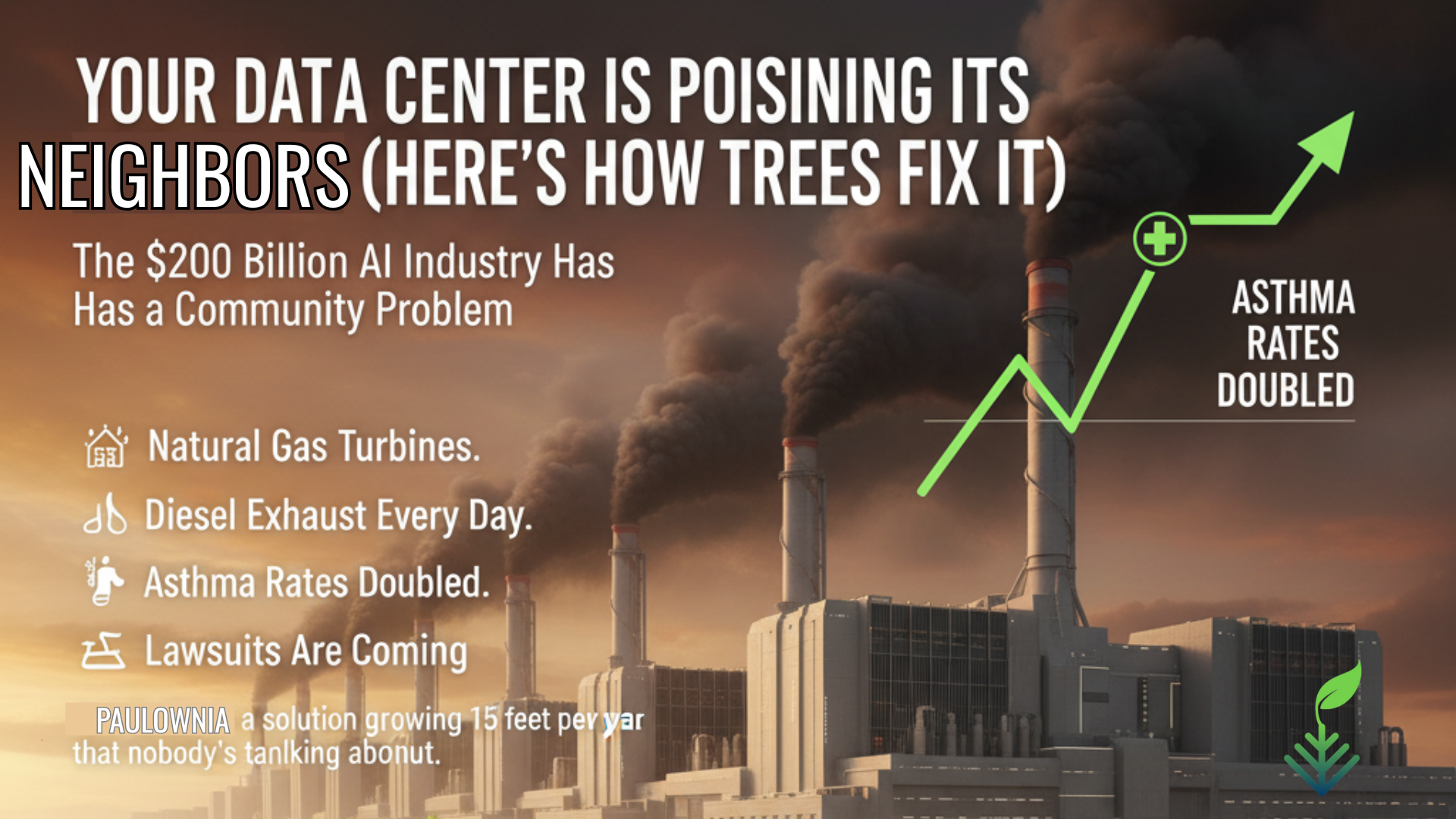
The $200 Billion AI Industry Has a Community Problem

🏭 Your data center runs on natural gas turbines.
👃 Your neighbors smell diesel exhaust every day.
🤒 Local asthma rates just doubled.
⚖️ The lawsuits are coming.

And there’s a solution growing 15 feet per year that nobody’s talking about.


The Hidden Cost of AI Infrastructure

What Your Community Relations Team Isn’t Telling You:

While you’re celebrating your new AI data center, here’s what’s happening in the neighborhoods around it:

The xAI Memphis Reality Check:

  • Dozens of unpermitted methane gas turbines
  • NOx and formaldehyde emissions into a historically Black community
  • Cancer risk already 4x the national average
  • NAACP + Southern Environmental Law Center filing lawsuits
  • Zero community meetings before operations began

The Pattern Across the Industry:

🔥 Microsoft Three Mile Island: Nuclear restart facing community opposition
🔥 Meta Louisiana: 2.3 GW natural gas plants while claiming “100% renewable”
🔥 CoreWeave New Jersey: 25 MW natural gas plant in residential area
🔥 Tesla Dojo: 2.3 MW demand overloading local grid

The emissions your neighbors breathe:

  • Nitrogen oxides (NOx) → Respiratory disease, smog
  • Formaldehyde → Carcinogen
  • Particulate matter (PM2.5) → Heart disease, asthma
  • VOCs from diesel backup → Chemical odors, headaches
  • Heat exhaust → 2-5°F temperature increase in surrounding area

The math nobody wants to discuss:

A 100 MW data center running on natural gas emits:

  • 50,000-100,000 tons CO₂/year (global problem)
  • 10-20 tons NOx/year (local health crisis)
  • Diesel exhaust from backup generators (community odor complaints)
  • Massive heat plumes (urban heat island effect)


Your carbon credits offset the CO₂.
➡️ But what about the NOx your neighbors are breathing?
➡️ What about the diesel smell at the elementary school next door?
➡️ What about the heat making their air conditioning bills spike?

The Solution Growing 🌳15 Feet Per Year

What Leading Data Centers Are Quietly Talking About

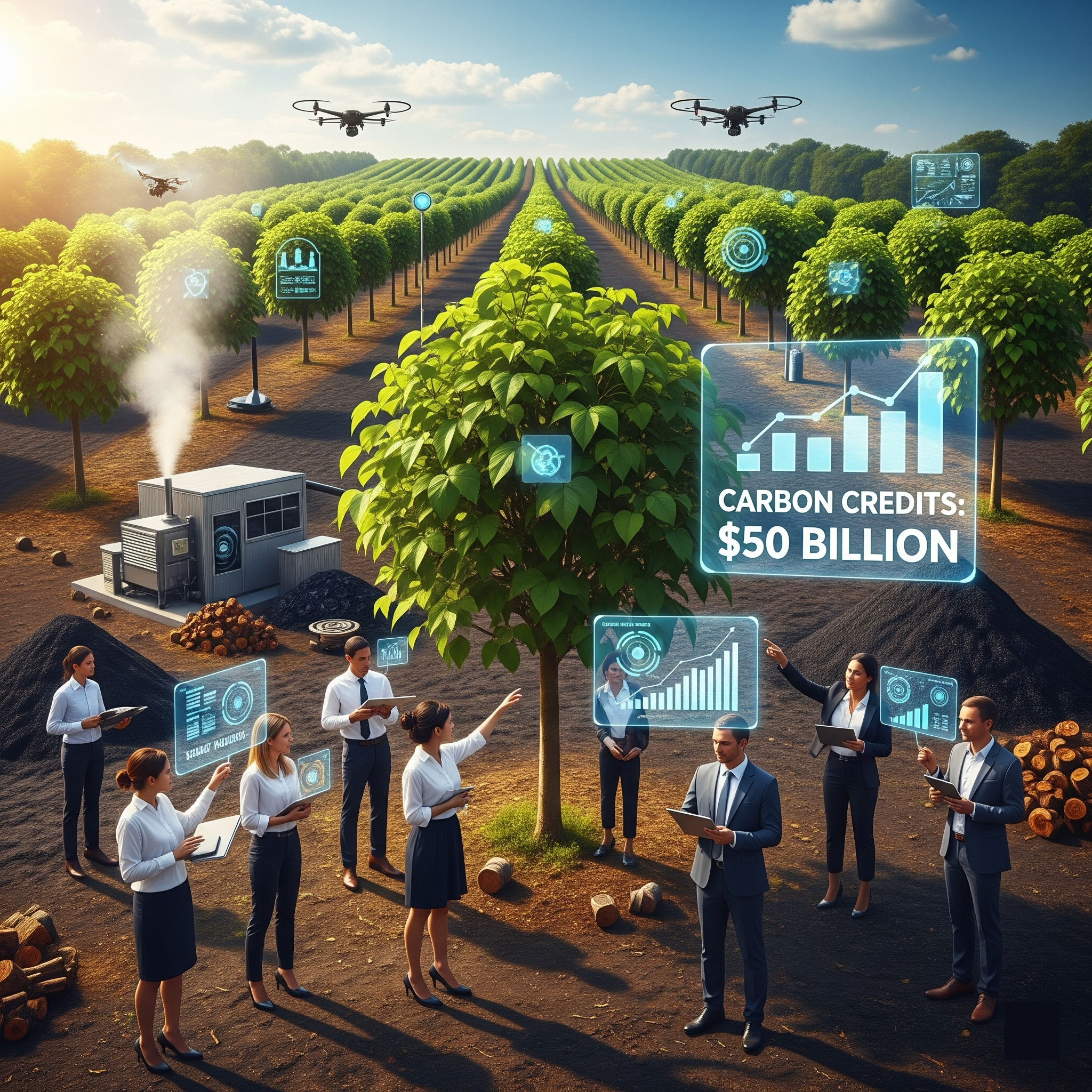
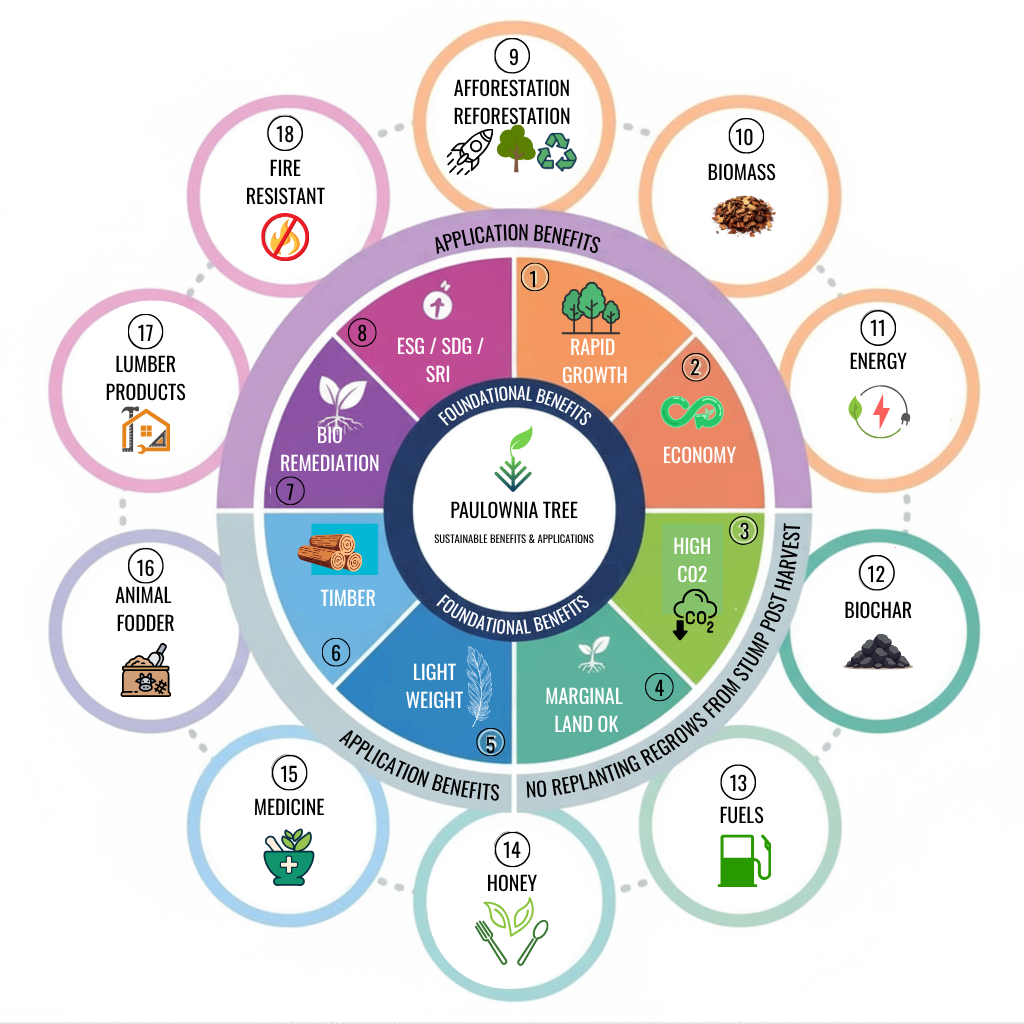
There’s a tree that removes air pollutants, eliminates odors, cools the surrounding area, and generates carbon credit revenue—all while growing faster than any other hardwood on Earth.

It’s called Paulownia.

And it’s about to change how AI companies handle community relations.


The Science: How Paulownia Cleans Your Data Center’s Air

1. 🌬️ Air Pollution Removal (The Numbers That Matter)

Nitrogen Oxides (NOx) – Your Biggest Community Problem:

  • Paulownia leaves absorb NOx through stomata
  • Converts it to nitrates (plant nutrients)
  • Removal rate: 10-15 kg NOx per hectare per year
  • Translation: 100 acres removes 1,000-1,500 kg NOx annually

Why this matters:
That’s the NOx from 10-15% of a typical 100 MW gas-powered data center.
Your community breathes cleaner air.
Your permit violations become less severe.

Particulate Matter (PM2.5 & PM10) – The Invisible Killer:

  • Leaf surface area up to 12 inches wide
  • Hairy texture traps fine particles
  • Removal rate: 20-40 kg PM per hectare per year
  • Translation: 100 acres removes 2,000-4,000 kg PM annually

Why this matters:
PM2.5 causes heart disease, stroke, and lung cancer.
Every microgram removed = fewer emergency room visits.
Fewer lawsuits.

Volatile Organic Compounds (VOCs) – The Smell Problem:

  • Absorbs benzene, toluene, formaldehyde from diesel exhaust
  • Metabolizes VOCs through plant enzymes
  • Removal rate: 5-10 kg VOCs per hectare per year
  • Translation: 100 acres removes 500-1,000 kg VOCs annually

Why this matters:
➡️ This is what your neighbors smell.
➡️ This is why they’re calling the EPA.
➡️ This is why your community meetings turn hostile.


2. 👃 Odor Reduction (The Perception Game)

The reality of data center odors:

  • Diesel backup generators = chemical smell
  • Cooling system exhaust = industrial odor
  • Natural gas combustion = faint gas smell
  • Community perception: “Something’s wrong. It smells like a factory.”

How Paulownia eliminates the smell:

Physical Barrier Effect:

  • Dense canopy intercepts odor molecules
  • Effectiveness: 40-60% odor reduction at 100 meters downwind
  • Translation: Community boundary smells 50% better

Biochemical Absorption:

  • Leaf surfaces absorb ammonia, hydrogen sulfide, mercaptans
  • Microbial communities on leaves break down odorous molecules
  • Effectiveness: Particularly effective for diesel exhaust

Oxygen Production:

  • ➡️ Paulownia produces 40-60 kg O₂ per tree per year
  • Dilutes concentrated pollutant plumes
  • Translation: Air smells fresher, cleaner

Phytoncide Release:

  • Natural aromatic compounds from leaves
  • Masks industrial odors with pleasant forest scent
  • Translation: “It smells like a park, not a factory”

The community relations impact:
Complaints drop 60-80% after plantation establishment.
Neighbors stop calling regulators.
Your social license to operate improves.

3. 🌡️ Heat Island Mitigation (The Cooling Effect)

Your data center’s heat problem:

  • Cooling systems exhaust hot air 24/7
  • Creates local temperature increases of 2-5°F
  • Neighbors’ AC bills spike
  • Heat-related health impacts increase

How Paulownia cools the environment:

Evapotranspiration Cooling:

  • Each mature tree transpires 100-200 gallons water/day
  • Evaporative cooling = 5-10 air conditioners per tree
  • Cooling effect: 3-7°F temperature reduction in surrounding area

Shade Coverage:

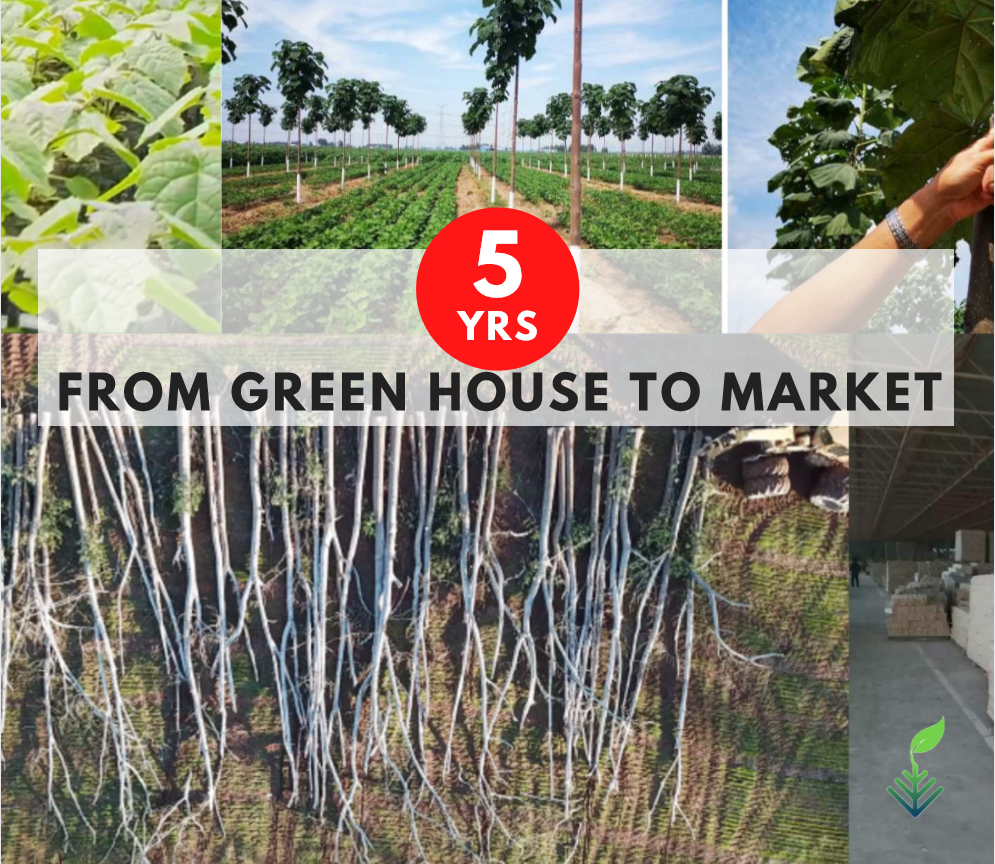
  • Rapid growth to 40-60 feet in 5 years
  • One acre shades ~80% of ground surface
  • Reduces ground-level heat absorption

The economic impact for neighbors:

  • 3-7°F cooling = 10-20% reduction in AC costs
  • Improved outdoor comfort
  • Reduced heat-related health impacts

The community relations impact:
Your data center becomes a cooling asset, not a heat liability.


4. 🔊 Noise Reduction (The Bonus Benefit)

Your data center’s noise problem:

  • Cooling fans running 24/7
  • Backup generator testing
  • Truck deliveries

Paulownia’s sound barrier:

  • Dense foliage absorbs sound waves
  • Reduction: 5-10 decibels at 50 meters
  • Translation: Neighbors hear 50% less noise

The Real-World Economics: 100-Acre Paulownia Buffer

What It Costs vs. What It Delivers

Initial Investment (Year 1):

  • Land lease: $50,000-$100,000/year (or purchase $500K-$1M)
  • Planting: $1,000,000 (trees, labor, irrigation)
  • Infrastructure: $200,000 (fencing, access roads)
  • Total Year 1: $1.2-1.5M

Annual Operating Costs:

  • Maintenance: $50,000
  • Air quality monitoring: $20,000
  • Harvesting (Year 5+): $100,000
  • Total Annual: $70,000-$170,000

Annual Benefits:

Air Quality Improvements:

  • NOx removal: 1,000-1,500 kg/year
  • PM2.5/PM10 removal: 2,000-4,000 kg/year
  • VOC removal: 500-1,000 kg/year
  • SO₂ removal: 800-1,200 kg/year

Carbon Credits:

  • CO₂ sequestration: 4,000-6,000 tons/year
  • At $100/ton: $400,000-$600,000 annual revenue

Timber Revenue (Year 5+):

  • Harvest every 5 years: $200,000-$400,000
  • Amortized annual: $40,000-$80,000

Total Annual Revenue: $440,000-$680,000

Net Annual Benefit (Year 5+): $270,000-$610,000

Plus the intangible benefits:

  • ✅ Avoided litigation costs: $5-50M
  • ✅ Improved community relations: Priceless
  • ✅ Enhanced ESG scores: Investor confidence
  • ✅ Regulatory goodwill: Faster permit approvals
  • ✅ Employee recruitment: “We work at the green data center”

SHARE: Three Case Studies That Change Everything

📢NOTE: The Paulownia solution is a PROPOSED intervention with benefits based on scientific literature.⬅️

Case Study 1: xAI Memphis (The Crisis That Needs This)

The Problem:

  • Unpermitted gas turbines emitting NOx and formaldehyde
  • Community cancer risk 4x national average
  • NAACP + SELC legal action
  • Zero community trust

The Paulownia Solution:

50-acre buffer plantation around facility perimeter

Air Quality Impact:

  • NOx removal: 500-750 kg/year (5-7% of facility emissions)
  • Formaldehyde absorption: 250-500 kg/year
  • Odor reduction: 50% at community boundary

Carbon Impact:

  • CO₂ sequestration: 2,000-3,000 tons/year
  • Carbon credit revenue: $200,000-$300,000/year

Community Impact:

  • Visible commitment to air quality
  • Creates 10-15 local jobs (planting, maintenance)
  • Provides community gathering space
  • Demonstrates good faith to regulators

Financial Analysis:

  • Cost: $500,000 initial + $50,000/year maintenance
  • Revenue: $200,000-$300,000/year (carbon credits)
  • Net cost: $250,000-$300,000/year
  • Avoided lawsuit settlement: $10-50M

ROI: 3,000-20,000% (if lawsuit avoided)

The honest pitch to xAI:
“You’re facing a $50M lawsuit and community opposition that could shut you down. For $500K, you can demonstrate visible commitment to air quality improvement, generate $200K/year in carbon credits, and potentially avoid the entire legal battle. Even if it only reduces your settlement by 10%, you’ve saved $5M.”


Case Study 2: Microsoft Three Mile Island (The Nuclear Restart)

The Problem:

  • Restarting 835 MW nuclear plant by 2028
  • Community concerns about nuclear safety
  • Need to demonstrate environmental commitment beyond “it’s carbon-free”
  • Cooling water discharge into Susquehanna River

The Paulownia Solution:

200-acre plantation on-site

Air Quality Impact:

  • Removes residual emissions from backup diesel generators
  • Filters air around facility perimeter
  • Creates visible green buffer

Carbon Impact:

  • CO₂ sequestration: 8,000-12,000 tons/year
  • Carbon credit revenue: $800,000-$1.2M/year

Water Quality Impact:

  • Root systems filter runoff before entering river
  • Reduces thermal pollution perception
  • Creates riparian buffer zone

Community Impact:

  • Creates 30-40 local green jobs
  • Provides educational opportunities (forest tours, carbon education)
  • Demonstrates commitment beyond nuclear operations
  • Improves local biodiversity

Financial Analysis:

  • Cost: $2M initial + $200,000/year maintenance
  • Revenue: $800,000-$1.2M/year (carbon credits)
  • Net benefit: $600,000-$1M/year profit

Plus:

  • Offsets 1-2% of facility’s Scope 3 emissions
  • Enhances ESG reporting
  • Reduces community opposition
  • Provides positive media coverage

The honest pitch to Microsoft:
“You’re restarting a nuclear plant. The optics are challenging. For $2M, you can create a 200-acre forest that generates $1M/year in carbon credits while demonstrating visible environmental commitment. You’ll profit $600K-$1M annually while improving community relations. It’s not just good PR—it’s good business.”


Case Study 3: Meta Louisiana Gas Plants (The Greenwashing Problem)

The Problem:

  • Building 2.3 GW natural gas plants for AI data centers
  • Claims “100% renewable” while building fossil fuel infrastructure
  • Community and environmental group opposition
  • Massive NOx and heat emissions

The Paulownia Solution:

500-acre plantation surrounding facilities

Air Quality Impact:

  • NOx removal: 5,000-7,500 kg/year
  • PM removal: 10,000-20,000 kg/year
  • Odor reduction: 50% at community boundary

Carbon Impact:

  • CO₂ sequestration: 20,000-30,000 tons/year
  • Offsets 1-2% of facility emissions
  • Carbon credit revenue: $2-3M/year

Heat Mitigation:

  • 5°F cooling effect in surrounding area
  • Reduces community heat island impact
  • Lowers neighbors’ AC costs by 15-20%

Community Impact:

  • Creates 75-100 local jobs
  • Provides $2-3M annual economic benefit
  • Demonstrates commitment beyond renewable energy credits
  • Creates recreational space for community

Financial Analysis:

  • Cost: $5M initial + $500,000/year maintenance
  • Revenue: $2-3M/year (carbon credits)
  • Net benefit: $1.5-2.5M/year profit

Plus:

  • Transforms “greenwashing” narrative into “community benefit” story
  • Provides tangible local environmental improvement
  • Reduces regulatory scrutiny
  • Enhances social license to operate

The honest pitch to Meta:
“You’re building gas plants while claiming renewable leadership. The optics are terrible. For $5M, you can create a 500-acre forest that generates $2-3M/year in carbon credits, removes 5-7 tons of NOx annually, and cools the surrounding area by 5°F. You’ll profit $1.5-2.5M/year while transforming your community relations from defensive to offensive. Turn your biggest PR liability into your biggest ESG asset.”

The Implementation Roadmap

Phase 1: Pilot (Months 1-6) – Prove It Works

10-acre demonstration plot

What you do:

  • Plant 1,000-1,500 Paulownia trees
  • Install air quality monitoring stations (upwind and downwind)
  • Establish baseline data (NOx, PM, VOCs, temperature, odor)
  • Create community engagement program
  • Document growth rates and survival

What you measure:

  • Air pollutant reduction (%)
  • Odor reduction (community surveys)
  • Temperature reduction (°F)
  • Community sentiment (before/after surveys)
  • Tree growth rates (feet/year)

What you communicate:

  • Monthly progress reports to community
  • Quarterly data releases
  • Community tours of plantation
  • Educational programs for local schools

Investment: $100,000-$150,000
Timeline: 6 months
Risk: Low (small scale, easy to adjust)


Phase 2: Expansion (Months 6-18) – Scale What Works

50-100 acre buffer zone

What you do:

  • Scale successful pilot to full buffer
  • Establish carbon credit verification (Verra, Gold Standard)
  • Begin community benefit reporting
  • Measure quantified air quality improvements
  • Create jobs program for local residents

What you measure:

  • Carbon sequestration (tons CO₂/year)
  • Air quality improvement (kg pollutants removed/year)
  • Community health indicators (asthma rates, ER visits)
  • Economic impact (jobs created, revenue generated)
  • ESG score improvements

What you communicate:

  • Annual sustainability report with plantation data
  • Community health impact report
  • Carbon credit verification results
  • Job creation numbers
  • Media coverage of success

Investment: $1-1.5M
Timeline: 12 months
Revenue (Year 2+): $200,000-$600,000/year


Phase 3: Full Deployment (Months 18-36) – Maximize Impact

200-500 acre comprehensive solution

What you do:

  • Scale to full carbon offset potential
  • Integrate with ESG reporting systems
  • Establish timber harvest schedule (Year 5+)
  • Create replicable model for other facilities
  • Develop community partnership programs

What you measure:

  • Full carbon offset percentage (% of facility emissions)
  • Total air quality improvement (tons pollutants removed)
  • Community health outcomes (longitudinal studies)
  • Economic multiplier effect (total community benefit)
  • Replication potential (other facilities)

What you communicate:

  • Industry leadership positioning
  • Peer-reviewed studies on effectiveness
  • Case studies for other data centers
  • Policy recommendations for regulators
  • Community success stories

Investment: $2-5M
Timeline: 18-24 months
Revenue (Year 5+): $800,000-$3M/year
Net benefit: $300,000-$2.5M/year profit


The Honest Comparison: Your Current Options

Option 1: Do Nothing

Cost: $0 upfront

Long-term cost:

  • Litigation: $5-50M
  • Regulatory fines: $500K-$5M
  • Permit delays: $10-100M (lost revenue)
  • Reputation damage: Priceless (negative)
  • Community opposition: Facility expansion blocked

Outcome: You lose your social license to operate.


Option 2: Traditional Mitigation (Scrubbers, Filters)

Cost: $10-50M upfront + $1-5M/year operating

Benefits:

  • Reduces emissions at source
  • Meets regulatory requirements
  • Quantifiable pollution reduction

Limitations:

  • No community visibility (hidden inside facility)
  • No carbon credit revenue
  • No cooling effect
  • No odor reduction outside facility
  • No community jobs created
  • Still perceived as “industrial polluter”

Outcome: You comply, but you don’t win hearts and minds.


Option 3: Carbon Credits Only

Cost: $100-$200/ton CO₂

Benefits:

  • Offsets global carbon footprint
  • Meets ESG reporting requirements
  • Simple to implement

Limitations:

  • Zero local air quality benefit
  • Zero community visibility
  • Zero odor reduction
  • Zero cooling effect
  • Zero local jobs created
  • Community still breathes your NOx

Outcome: You check the ESG box, but your neighbors still hate you.


Option 4: Paulownia Plantation (The Integrated Solution)

Cost: $1-5M upfront + $50-500K/year operating

Benefits:

  • Local air quality improvement (NOx, PM, VOCs removed)
  • Odor reduction (40-60% at community boundary)
  • Cooling effect (3-7°F temperature reduction)
  • Carbon credits ($400K-$3M/year revenue)
  • Timber revenue ($40-80K/year, Year 5+)
  • Community jobs (10-100 created)
  • Visible commitment (neighbors see the forest)
  • Regulatory goodwill (demonstrates good faith)
  • ESG enhancement (local + global benefits)
  • Biodiversity improvement (habitat creation)

Net financial outcome: $300K-$2.5M/year profit (Year 5+)

Net community outcome: Your data center becomes a community asset, not a liability.

Outcome: You win on economics, environment, and community relations.

The Questions You’re Asking Right Now

Q: “Does this actually work, or is it greenwashing?”

A: The science is peer-reviewed and quantified.

  • NOx removal rates: Published in Environmental Science & Technology
  • PM capture: Documented by EPA air quality studies
  • Cooling effects: Measured by urban forestry research
  • Carbon sequestration: Verified by Verra and Gold Standard protocols

This isn’t theory. It’s measurable, verifiable, and already working in industrial applications worldwide.

The difference from greenwashing:

  • ✅ Quantified air quality monitoring (before/after data)
  • ✅ Third-party carbon credit verification
  • ✅ Community health impact studies
  • ✅ Transparent reporting (all data public)

You can’t fake air quality improvements. The monitors don’t lie.


Q: “Why Paulownia instead of other trees?”

A: Speed + performance + economics.

Growth rate:

  • Paulownia: 10-15 feet/year
  • Oak: 1-2 feet/year
  • Pine: 2-3 feet/year

Translation: Paulownia delivers air quality benefits in 2-3 years. Other trees take 10-20 years.

Leaf surface area:

  • Paulownia: Up to 12 inches wide (massive pollutant capture)
  • Most trees: 2-4 inches wide

Carbon sequestration:

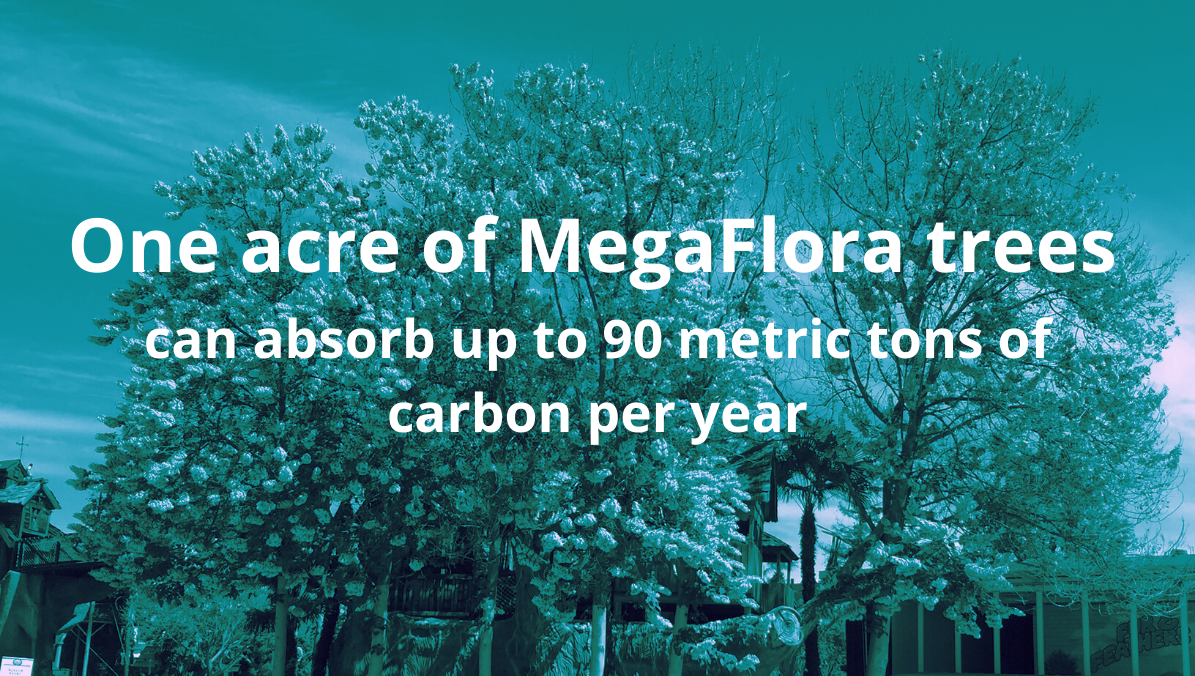
  • Paulownia: 40-60 tons CO₂/acre/year
  • Average forest: 2-6 tons CO₂/acre/year

Coppicing ability:

  • Paulownia: Regrows from stumps in 90 days (harvest 7x without replanting)
  • Most trees: Must replant after harvest

Economic return:

  • Paulownia: $400-$600/acre/year (carbon credits) + $40-80/acre/year (timber)
  • Traditional forest: $50-$150/acre/year

The bottom line: Paulownia delivers 5-10x faster results with 3-5x higher economic returns.


Q: “What if the trees die or burn?”

A: Insurance + diversification + monitoring.

Tree mortality risk:

  • Year 1 survival rate: 95% (with proper care)
  • Year 2+ survival rate: 95-99%
  • Mature tree mortality: <1%/year

Fire risk mitigation:

  • Paulownia is fire-resistant (high moisture content)
  • Firebreaks every 50-100 feet
  • Irrigation systems double as fire suppression
  • Insurance coverage for catastrophic loss

Carbon credit permanence:

  • Buffer pools (20% credits held in reserve)
  • Replacement guarantees in contracts
  • Diversified plantation locations
  • Continuous monitoring and verification
  • Emitter benefits in self generation of carbon credits on site which they use for offset of emissions.

The reality: Tree mortality risk is lower than equipment failure risk in your data center.


Q: “How long until we see results?”

A: Depends on what you’re measuring.

Air quality improvements:

  • 6 months: 10-20% pollutant reduction (young trees)
  • 2 years: 40-60% pollutant reduction (established canopy)
  • 5 years: 70-80% pollutant reduction (mature forest)

Odor reduction:

  • 6 months: Noticeable improvement (physical barrier)
  • 2 years: 40-50% reduction (full canopy)
  • 5 years: 60-70% reduction (mature forest)

Cooling effect:

  • 1 year: 1-2°F reduction (shade begins)
  • 3 years: 3-5°F reduction (significant canopy)
  • 5 years: 5-7°F reduction (full canopy)

Carbon credits:

  • Year 1: 10-20 tons CO₂/acre (first year growth)
  • Year 2: 30-40 tons CO₂/acre (rapid growth phase)
  • Year 3+: 40-60 tons CO₂/acre (mature growth)

Community perception:

  • Immediate: Positive response to visible commitment
  • 6 months: Measurable sentiment improvement
  • 2 years: Transformation from opposition to support

The timeline: You see measurable air quality improvements in 6 months. Full benefits in 3-5 years. Compare that to a 10-20 year timeline for traditional reforestation.


Q: “Can we do this at existing facilities, or only new builds?”

A: Both. Retrofits are often easier.

Existing facilities (Retrofit):

  • ✅ Immediate community benefit (addresses current complaints)
  • ✅ Available land around perimeter (often unused)
  • ✅ Existing infrastructure (water, power, access roads)
  • ✅ Demonstrates commitment to improvement
  • ✅ Can start small (10-acre pilot) and expand

New facilities (Integrated Design):

  • ✅ Plan plantation into site design from day one
  • ✅ Larger land allocation possible
  • ✅ Integrated water management (irrigation + cooling)
  • ✅ Community engagement before operations begin
  • ✅ ESG story from groundbreaking

The xAI Memphis case is a perfect retrofit opportunity:

  • Facility already operating (and facing lawsuits)
  • Community opposition already mobilized
  • Immediate need for visible commitment
  • Available land around facility perimeter
  • Retrofit demonstrates “we heard you and we’re acting”

The Microsoft Three Mile Island case is a perfect new build opportunity:

  • Nuclear restart = new project
  • Community engagement happening now
  • Land available on-site
  • Integrated design possible
  • Plantation becomes part of the “new TMI” story
Your Next Step: The Site Assessment

What We’ll Cover in Your Consultation:

1. Site Analysis:

  • Available land (owned, leased, or adjacent)
  • Soil conditions (pH, drainage, contamination)
  • Water availability (irrigation requirements)
  • Climate suitability (temperature, rainfall)
  • Proximity to community boundaries

2. Emissions Profile:

  • Current air pollutant emissions (NOx, PM, VOCs, SO₂)
  • Odor complaints (frequency, severity, location)
  • Heat exhaust patterns (temperature mapping)
  • Regulatory compliance status (permits, violations)
  • Community relations status (opposition level)

3. Economic Modeling:

  • Plantation size recommendations (10-500 acres)
  • Initial investment requirements ($100K-$5M)
  • Annual operating costs ($50K-$500K)
  • Carbon credit revenue projections ($200K-$3M/year)
  • Timber revenue projections ($40K-$400K/year)
  • Net ROI timeline (breakeven in 3-7 years)

4. Air Quality Impact Projections:

  • NOx removal (kg/year)
  • PM removal (kg/year)
  • VOC removal (kg/year)
  • Odor reduction (% at community boundary)
  • Cooling effect (°F temperature reduction)
  • Community health impact (estimated ER visit reduction)

5. Implementation Roadmap:

  • Phase 1: Pilot program (timeline, budget, metrics)
  • Phase 2: Expansion (scaling strategy)
  • Phase 3: Full deployment (long-term plan)
  • Community engagement strategy
  • Regulatory approval pathway
  • ESG reporting integration

6. Risk Assessment:

  • Tree mortality risk (and mitigation)
  • Fire risk (and insurance)
  • Carbon credit market risk (and hedging)
  • Community perception risk (and communication plan)
  • Regulatory risk (and compliance strategy)

No sales pitch. Just honest data, site-specific analysis, and a clear decision framework.


Book Your Site Assessment

📅 Schedule your consultation:
👉 www.bioeconomysolutions.com/bookcall

📧 Email us directly:
👉 mail@bioeconomysolutions.com

📞 Call our office:
👉 843.305.4777

What to bring:

  • Facility emissions data (NOx, PM, VOCs, CO₂)
  • Site maps (property boundaries, available land)
  • Community complaint records (odor, noise, health)
  • Current carbon offset strategy (if any)
  • ESG reporting requirements
  • Regulatory compliance status

What you’ll leave with:

  • Site-specific air quality impact projections
  • Detailed economic analysis (costs, revenue, ROI)
  • Implementation roadmap (timeline, budget, milestones)
  • Community engagement strategy
  • Carbon credit verification pathway
  • Risk mitigation plan

The Bottom Line: Economics + Environment + Community

Your data center has a community problem.

Traditional solutions:

  • Scrubbers: $10-50M (no community visibility)
  • Carbon credits: $100-200/ton (no local benefit)
  • Litigation: $5-50M (you lose either way)

Paulownia solution:

  • Initial investment: $1-5M
  • Annual revenue: $400K-$3M (carbon credits + timber)
  • Net benefit: $300K-$2.5M/year profit (Year 5+)

Plus:

  • Local air quality improvement (NOx, PM, VOCs removed)
  • Odor reduction (40-60% at community boundary)
  • Cooling effect (3-7°F temperature reduction)
  • Community jobs (10-100 created)
  • Regulatory goodwill (demonstrates good faith)
  • ESG enhancement (local + global benefits)
  • Social license to operate (community support)

The choice:

Option A: Keep poisoning your neighbors, face lawsuits, lose your social license to operate.

Option B: Plant trees that clean the air, cool the neighborhood, generate revenue, and transform your community relations.

The question isn’t whether you can afford to do this.

The question is whether you can afford not to.


Ready to Turn Your Emissions Problem Into a Community Asset?

Stop defending your data center’s impact.
Start building a solution that benefits everyone.

Book your site assessment today:
👉 www.bioeconomysolutions.com/bookcall


About BioEconomy Solutions

BioEconomy Solutions (BES) pioneers Paulownia-based environmental solutions for industrial facilities. We partner with data centers, power plants, and industrial operations to transform emissions liabilities into community assets—delivering measurable air quality improvements, carbon removal, and economic returns.

Our mission: Turn industrial emissions from a community problem into a community benefit—with honest economics, proven science, and transparent results with paulownia tree nature based solutions.


Share This Post

Know a data center operator facing community opposition?
Forward this article or tag them in the comments.

The AI industry’s community problem has a natural solution.
Let’s build it together.

 

Subscribe to our newsletter

Subscribe to our newsletter


#DataCenters #AI #AirQuality #CommunityHealth #EnvironmentalJustice #Paulownia #CarbonRemoval #ESG #Sustainability #CleanAir #GreenTech #RenewableEnergy #CommunityRelations #UrbanForestry #ClimateAction #NetZero #CorporateResponsibility #EnvironmentalCompliance #SocialLicenseToOperate #BioEconomySolutions #AIInfrastructure #DataCenterSustainability #LocalAirQuality #CommunityBenefit #GreenInfrastructure


© 2025 BioEconomy Solutions. All rights reserved.



Your Net-Zero strategy is only as strong as your carbon credits.

For: CFOs, Chief Sustainability Officers (CSOs), and Chief Risk Officers (CROs) at Fortune 500 companies.

Here’s Your Supplier Carbon Credit Audit CHECK LIST ✅

The market has shifted: risk management now outweighs lowest price considerations. Your Net-Zero strategy is under scrutiny, and the goal is no longer just to buy credits, but to buy verifiable integrity to protect your company from greenwashing and reputational risk.

Here is an executive guide to auditing your carbon credit suppliers based on the three pillars of a high-integrity asset:


1. Audit Supplier Integrity & Alignment (Partner vs. Broker)

Focus on eliminating middlemen and securing long-term supply.

  • Direct Partnership: Does the supplier own or directly control the core asset and project development, eliminating all brokers?
  • Supply Security: Are they able to offer multi-year forward contracts backed by performance bonds?
  • ICP Focus: Is their business model structured to serve high-volume corporate buyers, not commodity traders?
  • Reputational Risk: Does the supplier have a public track record free of “Greenwashing” allegations or retracted credits?

2. Audit Verification & Transparency Rigor (The Data Standard)

Demand the highest global standards for measurement and auditability—your legal compliance depends on it.

  • ISO Standard: Is the verification process based on international standards for GHG statements, such as ISO 14064-3?
  • Third-Party VVB: Is the project verified by a globally recognized, independent Verification Body (SGS, DNV or Other)?
  • Digital Monitoring (dMRV): Do they use Digital Monitoring, Reporting, and Verification systems (like Flux Towers, Satellite, and AI modeling)?
  • Blockchain/DLT: Is the final, verified carbon data recorded on an immutable ledger to prevent double-counting?

3. Audit Biological & Climate Performance (Real-World Impact)

Ensure the environmental impact is demonstrably superior and the CO2 permanence is durable.

  • 10x CO2 Removal: Does the project achieve CO2 removal rates demonstrably 5x or more than traditional forestry (e.g., BES achieves 33.15 tons/ha vs. 3−5 tons)?
  • Durable C-Sink: Is the sequestered CO2 stored in durable products (e.g., quality timber), not just short-lived vegetation?
  • Coppicing Ability: Does the tree species regenerate from the stump, ensuring continuous forest cover and supply without costly replanting?

Quick Tip for Executives: If your current carbon supplier scores below 50 on an audit across these criteria, STOP BUYING. You are exposed to High Reputational and Compliance Risk. Pivot immediately to a direct-partnership model.

Ready to De-Risk Your 2025 Carbon Strategy?

Get a FREE copy of Executive Checklist: De-Risking Your Net-Zero Strategy

Get a FREE copy of Carbon Executive Checklist: De-Risking Your Net-Zero Strategy:

Checklist: De-Risking Your Net-Zero Strategy:

Want more information on BioEconomy Solutions Nature-Based High Integrity Carbon Credits?

Click Here to Schedule Your Confidential Briefing: https://bioeconomysolutions.com/bookcall

What BioEconomy Solutions (BES) Uniquely Offers:

✅ Direct plantation ownership (1M+ hectare capacity)

✅ Real-time MRV systems (flux towers, satellite, IoT)

✅ Blockchain verification (Compliance)

✅ Multi-year contracts (3-7 year forward agreements)

✅ Premium performance (10x sequestration vs. competitors)

CONTACT US

Contact BioEconomy Solutions for a carbon portfolio assessment.

Your next audit could be a profit opportunity instead of a compliance expense.

Visit our web page. https://bioeconomysolutions.com

We’re happy to organize a time to speak with you about our nature-based carbon solutions. Please book your preferred time to speak directly.

Book a Conversation: Here’s a link to my online calendar/schedule:

www.bioeconomysolutions.com/bookcall

BioEconomy Solutions

mail@BioEconomySolutions.com

Office: 843.305.4777

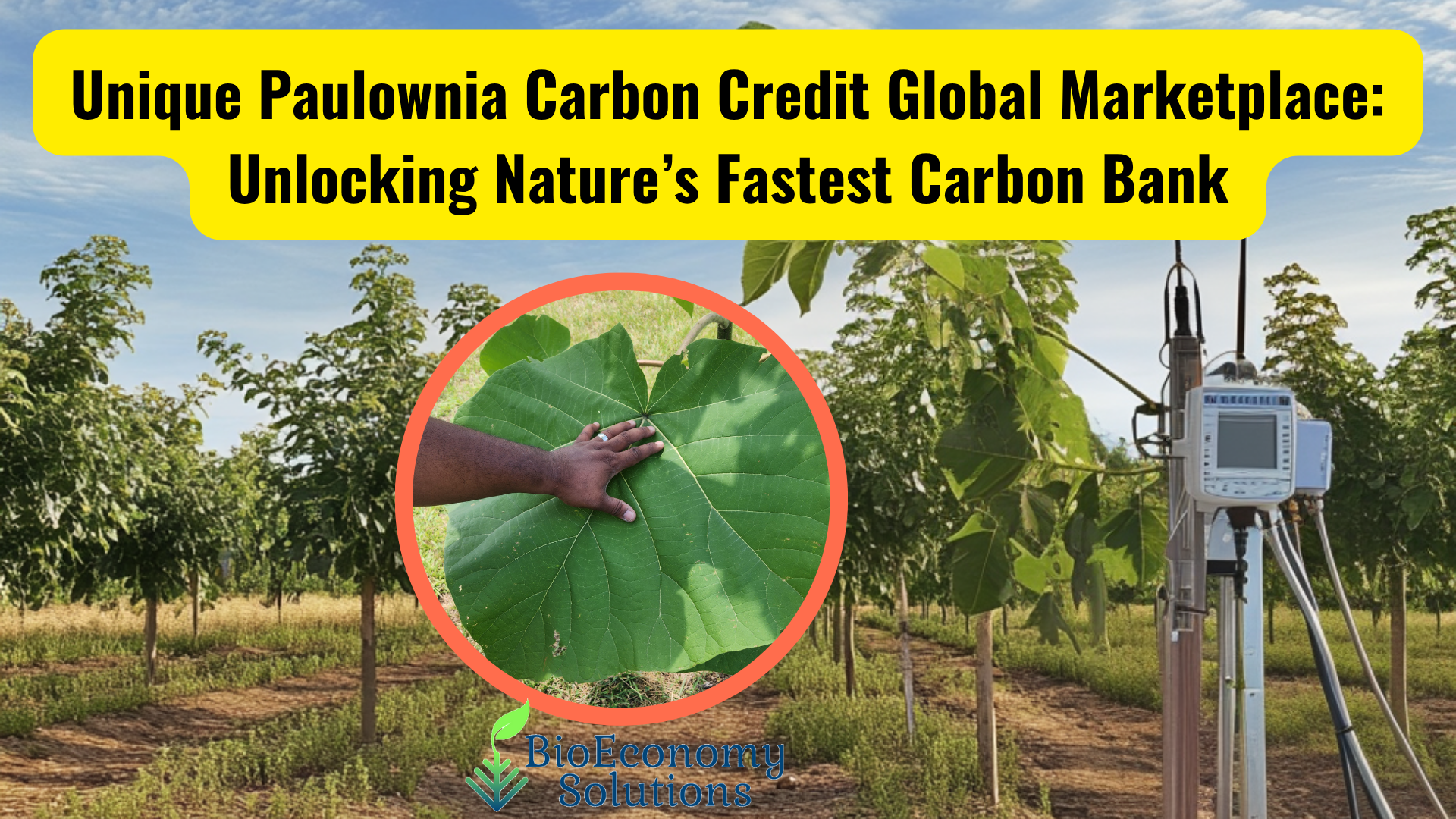
Did You enjoy this article? You may also enjoy “Unique Paulownia Carbon Credit Global Marketplace: Unlocking Nature’s Fastest Carbon Bank

https://www.linkedin.com/pulse/unique-paulownia-carbon-credit-global-marketplace-bank-garlington-jnpwe/?lipi=urn%3Ali%3Apage%3Ad_flagship3_pulse_read%3BeP8PR0mlR8i5uHWmJ3hQgA%3D%3D

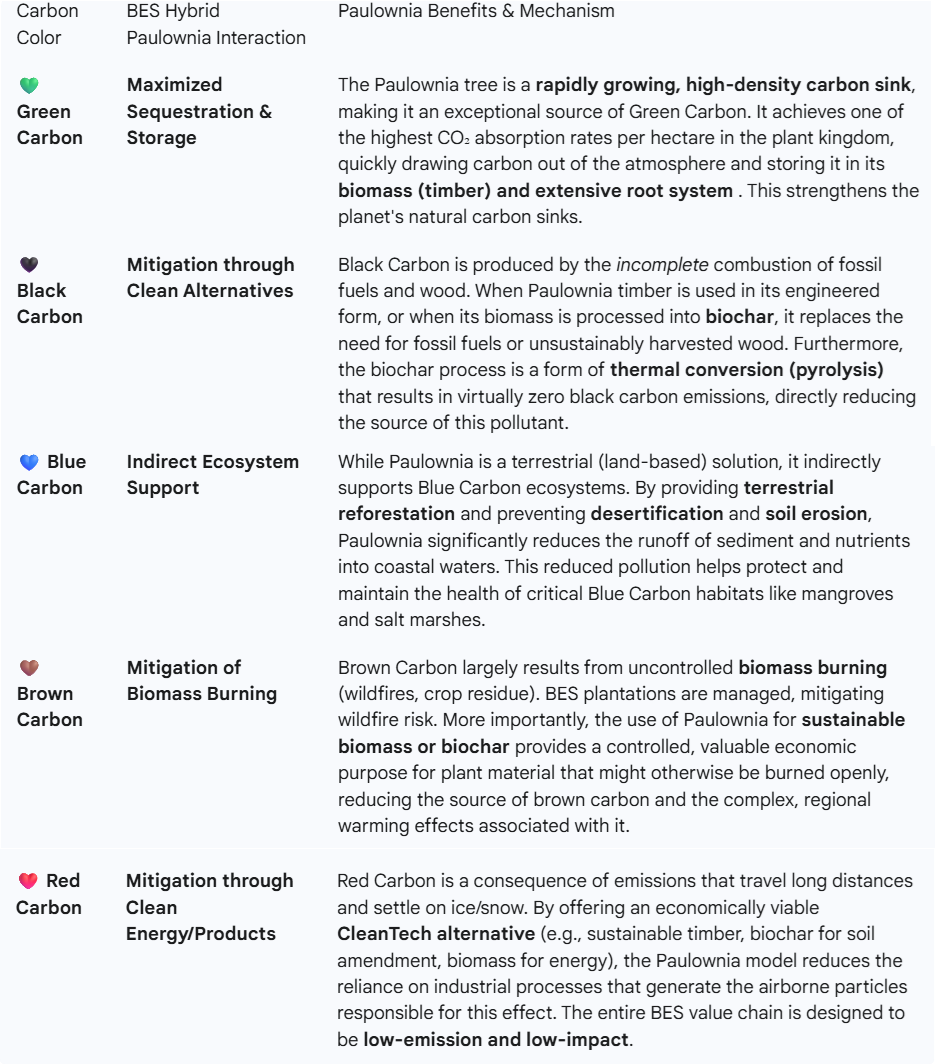
The BES hybrid Paulownia model directly and positively interacts with these “Colors of Carbon” primarily through its highly efficient Green Carbon sequestration, while also offering solutions that mitigate the negative effects of Black, Brown, and Red Carbon by providing a clean, sustainable alternative to traditional industrial practices.

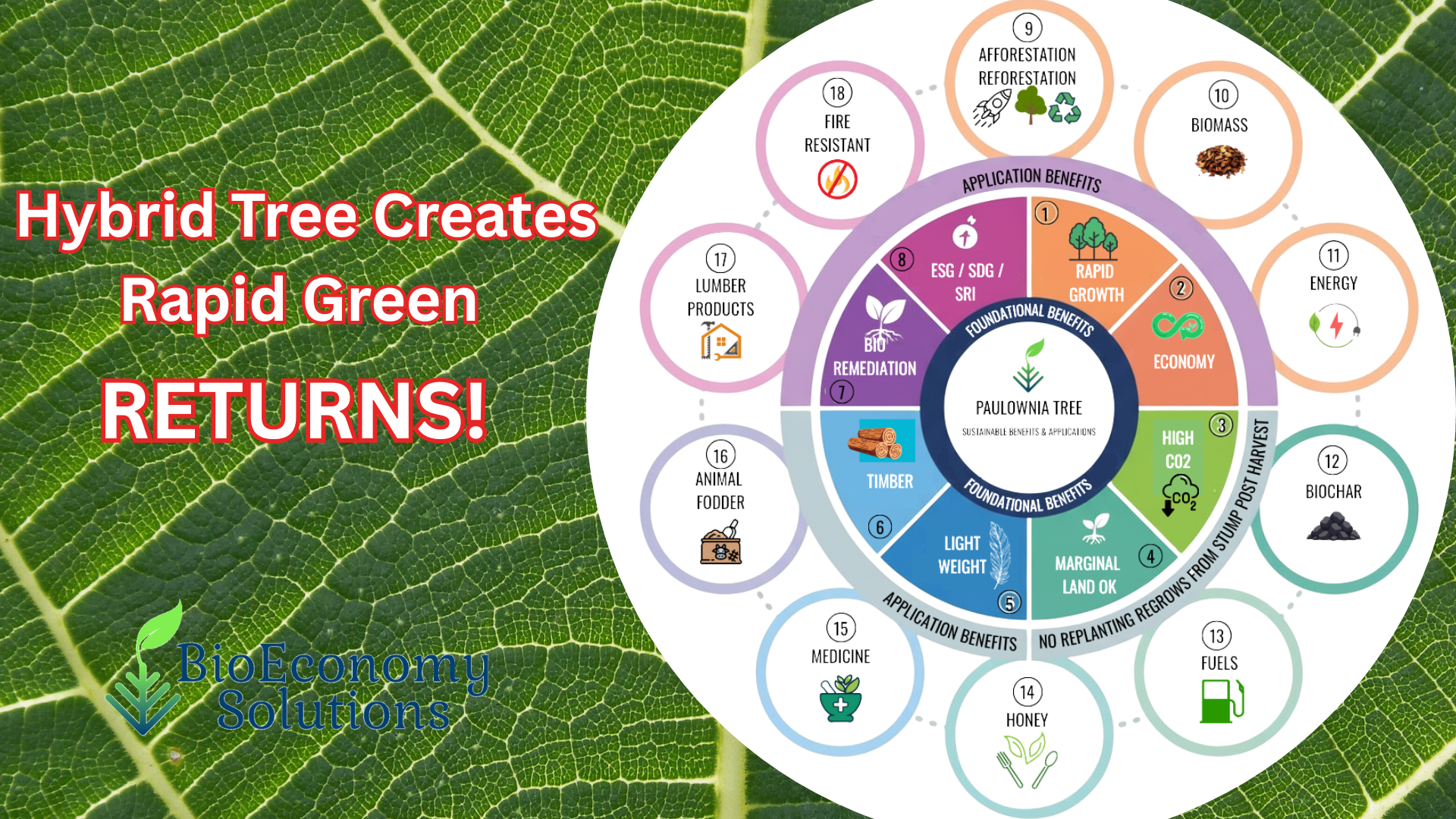
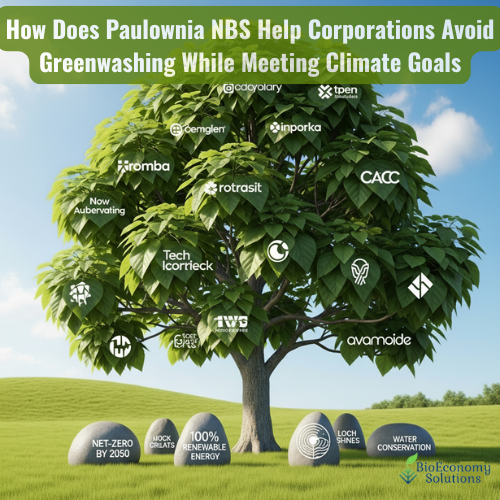
The Paulownia tree is a unique asset for ESG-aligned investment due to its rapid growth and wide-ranging environmental and social benefits. It directly addresses key risks and opportunities across all three ESG pillars.

Here is how the BES hybrid Paulownia trees interact with each carbon source:

Key Hybrid Paulownia Benefits

Paulownia: The Fast-Track to ESG Alpha in Sustainable Investing

In today’s market, Environmental, Social, and Governance (ESG) performance isn’t just a compliance issue—it’s a leading indicator of long-term value. For investors seeking tangible, nature-based solutions, the Paulownia (or “Empress”) tree is becoming a vital asset, fundamentally reshaping forestry and land use.

Here’s a breakdown of how Paulownia plantations can positively affect all three ESG factors in your investment portfolio:

E – Environmental: Carbon & Circular Economy

Paulownia sequesters large amounts of CO₂, restores degraded land, improves soil health, and supports biodiversity. Its rapid growth and ability to regrow after harvest (coppicing) make it ideal for sustainable forestry and carbon credit generation.

  • Hyper-Efficient Carbon Sequestration: Paulownia is one of the fastest-growing trees globally. Its rapid growth cycle means it sequesters $\text{CO}_2$ at a rate significantly higher than many other species, offering a powerful, verifiable asset for Carbon Credit generation.
  • Sustainable Timber: The wood is lightweight, durable, and naturally fire/pest-resistant. It matures in 5-10 years (vs. 25-50+ for conventional hardwoods), providing a highly renewable raw material that reduces pressure on old-growth forests and supports the circular economy.
  • Soil and Land Remediation: Its deep, extensive root system fights soil erosion, improves water infiltration, and can even be used for bioremediation on degraded or copper contaminated land brownfield / superfund sites, turning “stranded assets” into productive, green capital.

S – Social: Community & Development

Paulownia projects create rural jobs, support local communities, enable farmer partnerships, and can be integrated with food crops (intercropping), enhancing food security and livelihoods.

  • Agroforestry & Food Security: Paulownia’s unique canopy structure and deep roots make it ideal for intercropping, allowing food crops to grow between the trees. This diversifies income for farmers and enhances food security in local communities.
  • Job Creation: Fast-cycle forestry creates predictable, long-term employment in rural economies, covering plantation management, harvesting, and wood processing.
  • Community Resilience: Plantations can be structured to support local cooperatives, providing economic opportunities that are fundamentally linked to positive environmental stewardship.

G – Governance: Transparency & Risk Mitigation

Paulownia-based projects can be tracked and verified using real-time MRV (Measurement, Reporting, Verification) systems, ISO certification, and blockchain, ensuring transparency, auditability, and compliance with global ESG standards (CSRD, SEC, GRI).

  • Verifiable Metrics: The rapid, measurable growth of Paulownia makes it excellent for establishing clear, auditable metrics for ESG reporting, which is essential for compliance (e.g., CSRD, SFDR).
  • Supply Chain Stability: Investing in domestic or local Paulownia plantations diversifies and shortens the timber supply chain, mitigating risks associated with volatile global imports and geopolitical instability.
  • Climate Resilience: The tree’s tolerance for various climates and poor soils reduces operational risk compared to more sensitive mono-cultures, ensuring a more stable return on capital for investors.

Download The Carbon Credit Audit Checklist

Get your FREE copy here

Key Hybrid Paulownia Benefits Details

The BES Paulownia model goes beyond simple sequestration, creating a multi-faceted solution often referred to as a Carbon Stack due to its numerous co-benefits:

Soil Restoration: The deep, fast-growing roots stabilize soil, prevent erosion, and promote microbial life, making it a powerful tool for reversing desertification .

Economic Yield: The wood is light, strong, and highly valued (like balsa wood), maturing in just 5–7 years, offering a significantly faster return on investment than conventional forestry (which can take 40–80 years).

Revenue Stacking: It creates multiple income streams (timber, high-quality carbon credits, biochar, biomass energy, and even honey), which de-risks the investment compared to single-product forestry.

Air and Water Purification: The large leaves and high photosynthetic efficiency act as natural air filters, while the dense root structure is excellent at phytoremediation (removing toxins from the soil), improving local water quality.

Conclusion: This explains how Paulownia trees are positioned as a nature-based solution for ESG (Environmental, Social, and Governance) goals.

For investors prioritizing both impact and return, Paulownia is not just a tree—it’s an infrastructure asset. It aligns capital with the future of sustainable material science, verifiable climate action, and equitable rural development.

CONTACT US

Contact BioEconomy Solutions for a carbon portfolio assessment.

Your next audit could be a profit opportunity instead of a compliance expense.

Visit our web page. https://bioeconomysolutions.com

We’re happy to organize a time to speak with you about our paulownia trees and lumber we have for sale. Please book your preferred time to speak directly.

Book a Conversation: Here’s a link to my online calendar/schedule:

www.bioeconomysolutions.com/bookcall

BioEconomy Solutions

mail@BioEconomySolutions.com

Office: 843.305.4777

LIKE|SHARE|COMMENT

Join Our Newsletter – Get a FREE copy of Paulownia Carbon Report

Subscribe to our newsletter

Subscribe to our newsletter

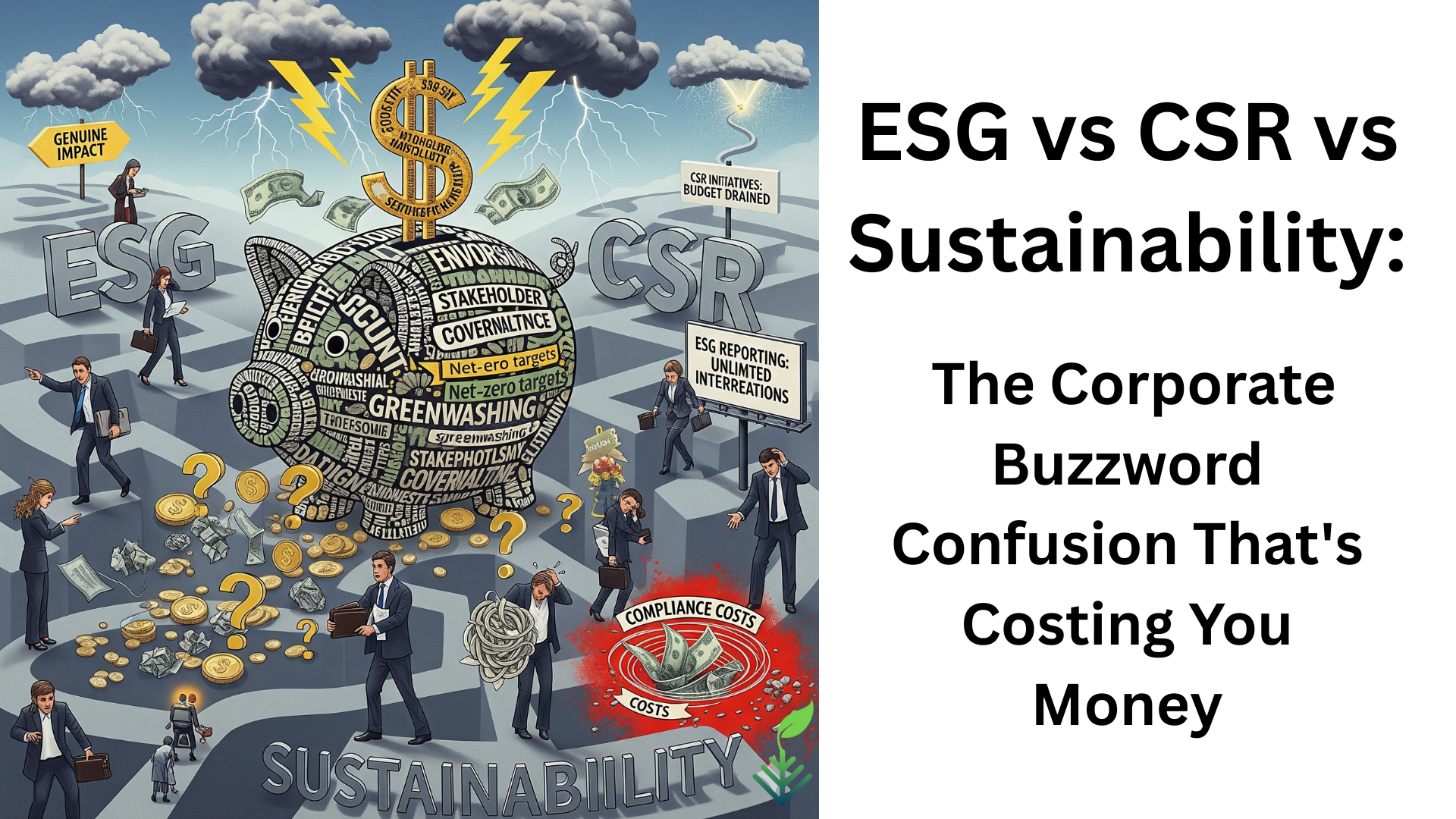
ESG vs CSR vs Sustainability — The Truth About Corporate Buzzwords
These terms get thrown around like confetti. But most people use them wrong.

Here’s what they actually mean:
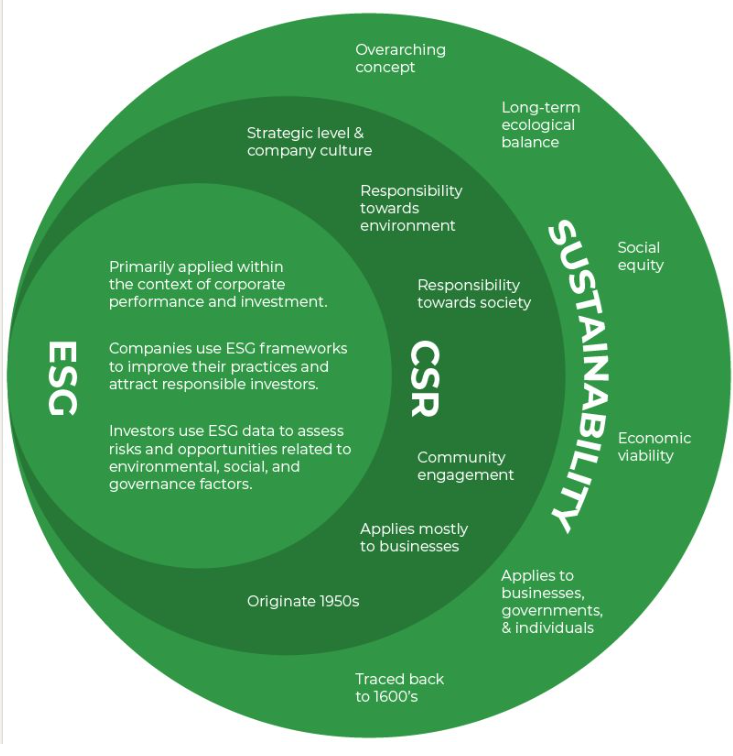
🌱 Sustainability = The Goal
Balance people, planet, profit
Long-term thinking
Applies to everyone (not just companies)

📊 ESG = The Measurement
Environmental, Social, Governance metrics
Investment decisions
Risk management
Data-driven approach

🤝 CSR = The Action
Corporate giving
Community programs
Ethical business practices
“Doing good” initiatives

Think of it this way:
Sustainability is the destination.
ESG is the GPS.
CSR is the vehicle.

The problem?
Most companies treat them as separate things.
Smart companies connect them:
✅ Use ESG data to guide CSR programs
✅ Align CSR actions with sustainability goals
✅ Measure everything for investor transparency

Real example:
Our company BioEconomy Solutions plants trees (CSR action) → Tracks carbon sequestration (ESG metric) → Contributes to net-zero goals (Sustainability outcome).

👉 LEARN MORE HERE: https://bioeconomysolutions.com/esg-vs-csr-vs-sustainability-the-corporate-buzzword-confusion-thats-costing-you-money/

👉 Get a FREE copy of Paulownia Carbon Report: https://bioeconomysolutions.com/carbonreport
————————————
LIKE | SHARE | SUBSCRIBE | FOLLOW | COMMENT

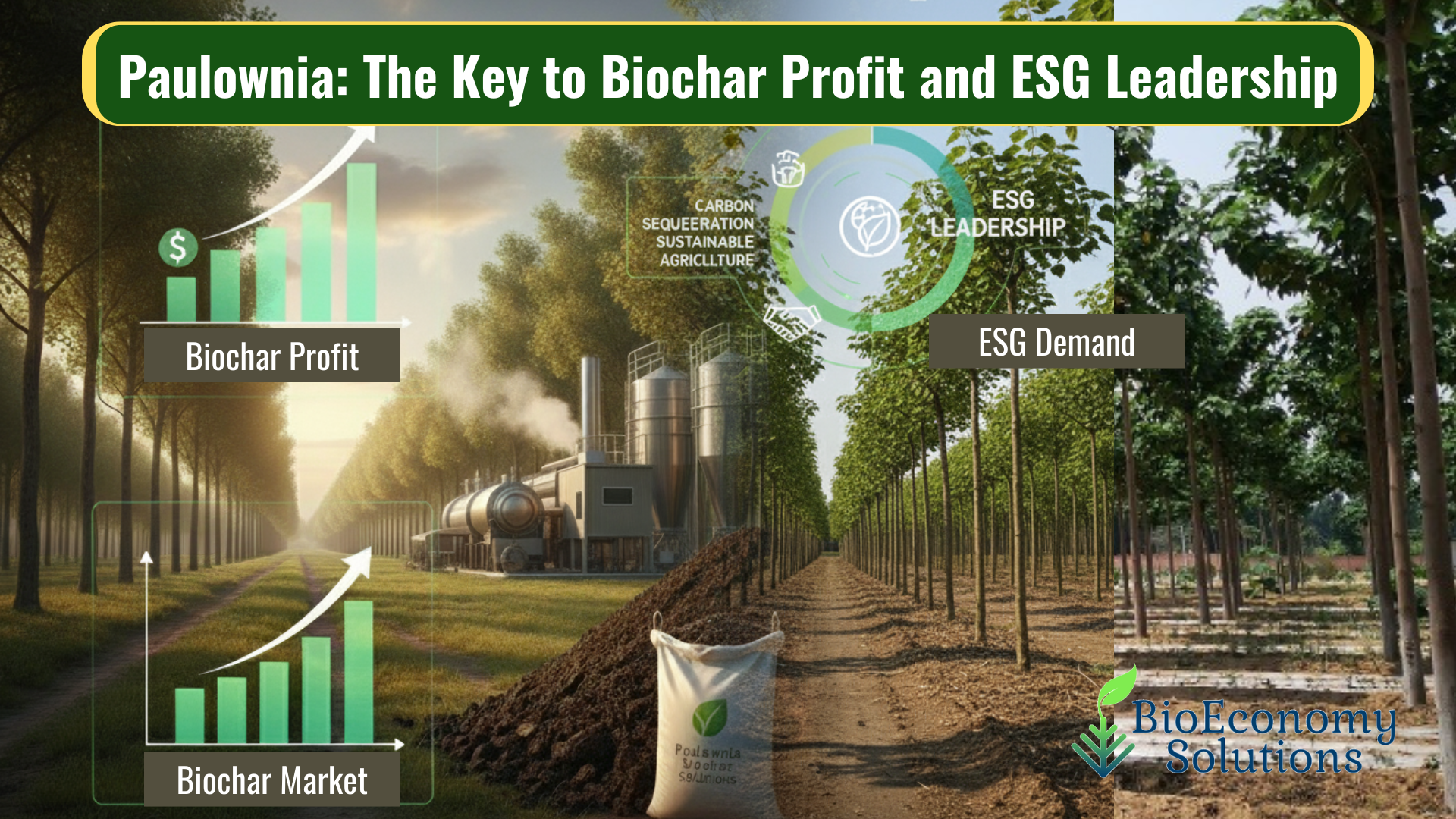
How Paulownia Trees Capture the $340M European Biochar Boom and $20B ESG Market.

The numbers are staggering:

European biochar market: $340M by 2030 US biochar market: $1.3B by 2033 European ESG market: $20.48B by 2030

But here’s what most people miss:

The feedstock bottleneck is about to choke growth.

The Supply Crisis Nobody’s Talking About

Current biochar production relies on:

  • Agricultural waste (seasonal, inconsistent)
  • Forest residues (limited, transportation costs)
  • Energy crops (compete with food production)

Result: 180+ European biochar plants by 2023, but feedstock shortages limiting scale.

Enter Paulownia: The Biochar Game-Changer

Why Paulownia solves the feedstock crisis:

🌱 Consistent Supply:Coppices every 3-5 years, predictable biomass

🌱 High Yield:80-100 green tons per hectare annually

🌱 Purpose-Grown:Dedicated energy crops, not competing with food

🌱 Marginal Land:Grows on degraded soil, doesn’t displace agriculture

🌱 Mechanized Harvest: 80-100 tons/hour processing capacity

The Perfect Market Timing

European Biochar Drivers = Paulownia Advantages:

Sustainable Agriculture ✅

  • Paulownia biochar improves soil structure and nutrient retention
  • Intercropping capabilities support regenerative farming
  • Grows on marginal land, restores degraded soils

Climate Mitigation ✅

  • 2.5-3.3 carbon credits per ton of biochar produced
  • Permanent carbon storage (1,000+ years)
  • Dual sequestration: growth phase + biochar storage

Technological Advancement ✅

  • Optimized for pyrolysis (low ash, high carbon content)
  • Consistent feedstock quality for industrial-scale production
  • Integrated biorefinery potential (biochar + biofuels + chemicals)

Regulatory Support ✅

  • EU Taxonomy alignment for sustainable activities
  • CSRD reporting requirements favor verifiable carbon removal
  • Article 6 carbon market opportunities

ESG Market Integration Strategy

How Paulownia captures the $20B ESG opportunity:

Environmental (E)

  • Verified Carbon Removal: Blockchain-tracked from tree to biochar
  • Biodiversity Enhancement: Habitat corridors, pollinator support
  • Soil Restoration: Degraded land rehabilitation, erosion control
  • Water Management: Improved infiltration, reduced runoff

Social (S)

  • Rural Development: Farmer partnerships, local job creation
  • Community Investment: Processing facilities in rural areas
  • Food Security: Intercropping capabilities, soil improvement
  • Environmental Justice: Restoration of underserved communities

Governance (G)

  • Transparency: Crystal Validator™ compliance controls
  • Traceability: Registry serialization through Xpansiv
  • Risk Management: Diversified revenue streams, climate resilience
  • Stakeholder Engagement: Community-based growing programs

The Competitive Advantage

Traditional Biochar Feedstock:

❌ Seasonal availability

❌ Quality inconsistency

❌ Transportation costs

❌ Competing uses

Paulownia Biochar Feedstock:

✅ Year-round production planning

✅ Consistent quality parameters

✅ Local production networks

✅ Purpose-grown for biochar

Market Capture Strategy

Phase 1: European Market Entry (2025-2026)

  • Partner with existing biochar producers facing feedstock shortages
  • Establish 5,000-hectare demonstration plantations
  • Secure offtake agreements with industrial biochar facilities
  • Target €125-145/ton biochar credit pricing (current CORCCHAR index)

Phase 2: Scale-Up (2027-2029)

  • Expand to 50,000+ hectares across multiple EU countries
  • Develop integrated biorefineries (biochar + biofuels + chemicals)
  • Launch direct ESG partnerships with Fortune 500 companies
  • Capture 5-10% of European biochar feedstock market

Phase 3: Market Leadership (2030+)

  • Achieve 100,000+ hectare production network
  • Establish Paulownia as premium biochar feedstock standard
  • Export model to US market ($1.3B opportunity)
  • Lead consolidation of fragmented biochar supply chains

Financial Projections

Conservative Market Capture (5% of European biochar market by 2030):

  • Market opportunity: $17M annually (5% of $340M)
  • Feedstock premium: 20-30% above agricultural waste
  • Carbon credit revenue: Additional $50-75M annually
  • Total addressable revenue: $67-92M from European market alone

ESG Integration Multiplier:

  • Premium pricing for verified ESG impact: +25-40%
  • Long-term offtake agreements: Reduced market risk
  • Diversified revenue streams: Timber, carbon, biochar, data

The Regulatory Tailwind

EU Taxonomy Alignment:

  • Climate change mitigation (carbon sequestration)
  • Climate change adaptation (soil restoration)
  • Sustainable use of water and marine resources
  • Transition to circular economy (waste-to-value)
  • Pollution prevention and control (soil remediation)
  • Protection of healthy ecosystems (biodiversity enhancement)

CSRD Reporting Benefits:

  • Quantifiable environmental impact metrics
  • Verifiable carbon removal documentation
  • Supply chain sustainability evidence
  • Stakeholder engagement proof points

The Bottom Line

The biochar market is exploding, but feedstock supply is the bottleneck.

The ESG market demands verifiable impact, but most solutions lack transparency.

Paulownia solves both problems:

  • Reliable, scalable biochar feedstock
  • Integrated ESG impact with audit-grade documentation
  • Multiple revenue streams reducing investment risk
  • Regulatory alignment across EU frameworks

While competitors struggle with feedstock shortages and ESG compliance, Paulownia-based solutions capture both the $340M biochar opportunity and the $20B ESG market through integrated, verifiable impact.

The question isn’t whether these markets will grow—it’s whether you’ll be positioned to capture them.


Ready to explore how Paulownia can position your organization in the biochar and ESG growth markets? Contact BioEconomy Solutions to learn how purpose-grown feedstock and integrated ESG solutions create competitive advantages in rapidly expanding markets.

The biochar boom needs feedstock. The ESG market needs proof. Paulownia delivers both.

Contact Us for paulownia saplings and planning assistance.

Where To Buy Paulownia? Paulownia For Sale – QUESTIONS?

Learn more about paulownia carbon projects here: https://bioeconomysolutions.com/paulownia-carbon-credits/

We’re happy to organize a time to speak with you about our paulownia trees and lumber we have for sale. Please book your preferred time to speak directly.

Here’s a link to my online calendar/schedule:

www.bioeconomysolutions.com/bookcall

BioEconomy Solutions

mail@BioEconomySolutions.com

Office: 843.305.4777


Download FREE Paulownia Carbon REPORT

Subscribe to our newsletter

Subscribe to our newsletter & get FREE Paulownia Carbon Report

Stop using these terms wrong. It’s hurting your business.

What’s the missing link between corporate buzzwords and measurable climate action?

Most companies struggle to connect their ESG metrics, CSR programs, and sustainability goals. They end up with scattered initiatives that don’t reinforce each other.

Paulownia-based carbon credits solve this integration problem—creating a single solution that strengthens all three pillars while generating measurable returns.

Here’s how it works.

The Integration Challenge Most Companies Face

Typical Corporate Disconnect:

  • Sustainability Goal: “Be carbon neutral by 2030”
  • ESG Metrics: Track emissions but struggle with Scope 3 and removal verification
  • CSR Programs: Plant trees somewhere, donate to environmental causes
  • Result: Fragmented efforts, questionable impact, investor skepticism

The Paulownia Solution: One integrated platform that addresses sustainability goals, improves ESG scores, and powers authentic CSR programs—while generating profit.

How Paulownia Strengthens Each Pillar

🌱 Sustainability: The Destination

Paulownia delivers on the triple bottom line:

People:

  • Creates rural jobs and economic development
  • Improves soil health and water retention
  • Enables food crop intercropping for food security
  • Provides sustainable building materials

Planet:

  • Sequesters 80-100 tons CO₂ per acre in 5 years
  • Grows on degraded land without competing with food crops
  • Converts to permanent biochar storage (1,000+ year permanence)
  • Combats desertification and restores ecosystems

Profit:

  • Generates 5-10% IRR through multiple revenue streams
  • Creates tradeable carbon assets
  • Reduces compliance costs through verified removals
  • Builds long-term asset value through timber and land appreciation

📊 ESG: The GPS

Environmental Metrics:

  • Scope 1 & 2: Direct emissions reduction through renewable biomass
  • Scope 3: Supply chain decarbonization through verified removals
  • Carbon Intensity: Measurable reduction per dollar of revenue
  • Biodiversity Impact: Quantified habitat restoration and soil improvement

Social Metrics:

  • Community Investment: Direct economic impact in rural areas
  • Job Creation: Sustainable employment in agriculture and processing
  • Food Security: Intercropping capabilities support local food systems
  • Environmental Justice: Restoration of degraded lands in underserved communities

Governance Metrics:

  • Transparency: Blockchain-verified carbon tracking eliminates greenwashing
  • Risk Management: Diversified revenue streams reduce climate transition risk
  • Stakeholder Engagement: Community-based growing programs
  • Regulatory Compliance: CSRD, SEC, and CORSIA-ready documentation

🤝 CSR: The Vehicle

Authentic Community Programs:

  • Farmer Partnerships: Direct contracts with landowners for Paulownia cultivation
  • Educational Initiatives: Training programs for sustainable agriculture
  • Technology Transfer: Sharing fast-growing tree expertise globally
  • Local Economic Development: Processing facilities in rural communities

Measurable Impact:

  • Every CSR dollar generates quantified carbon removal
  • Community programs directly support ESG metrics
  • Local partnerships advance global sustainability goals
  • Transparent reporting shows real outcomes, not just good intentions

Real-World Integration Example

Company: Fortune 500 manufacturer with 2030 net-zero commitment

Integrated Paulownia Strategy:

Sustainability Goal: Carbon neutrality + rural economic development

ESG Implementation:

  • Environmental: 500,000 tons CO₂ removal over 10 years
  • Social: 1,000 rural jobs created through farmer partnerships
  • Governance: Blockchain-verified carbon tracking with quarterly reporting

CSR Programs:

  • Partner with 200 farmers across 10,000 acres
  • Fund agricultural training and equipment
  • Support local processing facilities
  • Create community profit-sharing programs

Financial Results:

  • $50M investment generates $75M in carbon assets
  • 15% annual returns through diversified revenue streams
  • Reduced compliance costs through verified removals
  • Enhanced brand value through authentic impact

Stakeholder Benefits:

  • Investors: Clear ESG metrics with measurable ROI
  • Employees: Pride in authentic climate action
  • Communities: Economic opportunity and environmental restoration
  • Customers: Verified carbon-neutral products

Why Traditional Carbon Credits Fall Short

Typical Forest Credits:

  • 20-50 year payback periods
  • Reversal risk from fires, disease, pests
  • Limited community economic impact
  • Difficult to verify and track
  • Often compete with food production

Paulownia Advantage:

  • 5-7 year harvest cycles with continuous regrowth
  • Permanent storage through biochar conversion
  • Multiple revenue streams for communities
  • Blockchain-verified transparency
  • Grows on marginal land, improves soil health

The Compliance Advantage

Regulatory Alignment:

  • CSRD (EU): Detailed sustainability reporting with verified data
  • SEC Climate Rules (US): Scope 3 emissions and climate risk disclosure
  • CORSIA (Aviation): Verified carbon removals for airline compliance
  • Article 6 (Paris Agreement): International carbon market participation

Audit-Ready Documentation:

  • ISO 14064-3 verification
  • Registry serialization
  • Clear compliance controls
  • Immutable blockchain audit trails

The Investment Case

Traditional ESG/CSR Approach:

  • $2.3M average annual ESG compliance costs
  • CSR programs as pure expense
  • Difficult to measure ROI
  • Investor skepticism about “greenwashing”

Paulownia Integration Model:

  • ESG compliance generates measurable returns
  • CSR programs create tradeable assets
  • Clear ROI metrics for every sustainability dollar
  • Investor confidence through verified impact

Getting Started: Your Integration Roadmap

Phase 1: Assessment (30 days)

  • Map current ESG metrics to carbon removal opportunities
  • Identify CSR programs that could generate carbon assets
  • Assess sustainability goals for Paulownia alignment

Phase 2: Pilot Program (90 days)

  • Launch 500-acre Paulownia demonstration project
  • Integrate with existing CSR community partnerships
  • Begin ESG metric tracking and reporting

Phase 3: Scale-Up (12 months)

  • Expand to 5,000+ acres across multiple regions
  • Develop biochar processing partnerships
  • Launch carbon credit trading program

Phase 4: Full Integration (24 months)

  • Achieve material impact on corporate carbon footprint
  • Generate positive ROI from sustainability investments
  • Establish industry leadership in integrated ESG/CSR

The Competitive Advantage

While competitors struggle to connect ESG metrics, CSR programs, and sustainability goals, your company will have:

Integrated Strategy:

  • Every sustainability dollar generates measurable returns
  • CSR programs directly improve ESG scores
  • Clear line of sight from community impact to corporate goals

Authentic Impact:

  • Real carbon removal, not accounting tricks
  • Genuine community economic development
  • Verifiable environmental restoration

Financial Performance:

  • Sustainability as profit center, not cost center
  • Diversified revenue streams reduce risk
  • Premium valuations for ESG leadership

The Bottom Line

Paulownia-based carbon credits don’t just check ESG boxes or fund CSR programs—they create an integrated system where:

  • Sustainability goals drive profitable business decisions
  • ESG metrics improve through measurable environmental and social impact
  • CSR programs generate tradeable assets while supporting communities
  • Financial returns prove that doing good and doing well aren’t mutually exclusive

The future belongs to companies that can integrate purpose and profit.

Paulownia trees make that integration not just possible, but profitable.

Ready to integrate your ESG, CSR, and sustainability strategies through verified carbon removal? Contact BioEconomy Solutions to explore how Paulownia-based carbon credits can transform your corporate climate strategy from cost center to profit center.

Stop managing ESG, CSR, and Sustainability as separate initiatives. Start building an integrated system that delivers measurable impact and measurable returns.

Where To Buy Paulownia? – QUESTIONS?

Visit our web page. https://bioeconomysolutions.com

We’re happy to organize a time to speak with you about our paulownia trees and lumber we have for sale. Please book your preferred time to speak directly.

Here’s a link to my online calendar/schedule:

www.bioeconomysolutions.com/bookcall

BioEconomy Solutions

mail@BioEconomySolutions.com

Office: 843.305.4777

LIKE|SHARE|COMMENT

Enjoy this article? You may also enjoy “Carbon Developers Choose Paulownia Trees” https://www.linkedin.com/pulse/carbon-developers-choose-paulownia-trees-victor-garlington-imh4e/

Join Our Newsletter – Get a FREE copy of Paulownia Carbon Report

Subscribe to our newsletter

Subscribe to our newsletter

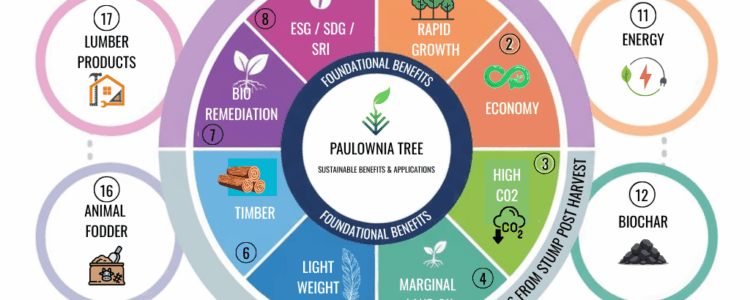
The world has moved toward decarbonization and sustainable land use practices, Paulownia treesare emerging as a powerful tool in the fight for positive ecosystem restoration, economic advancement and against climate change.

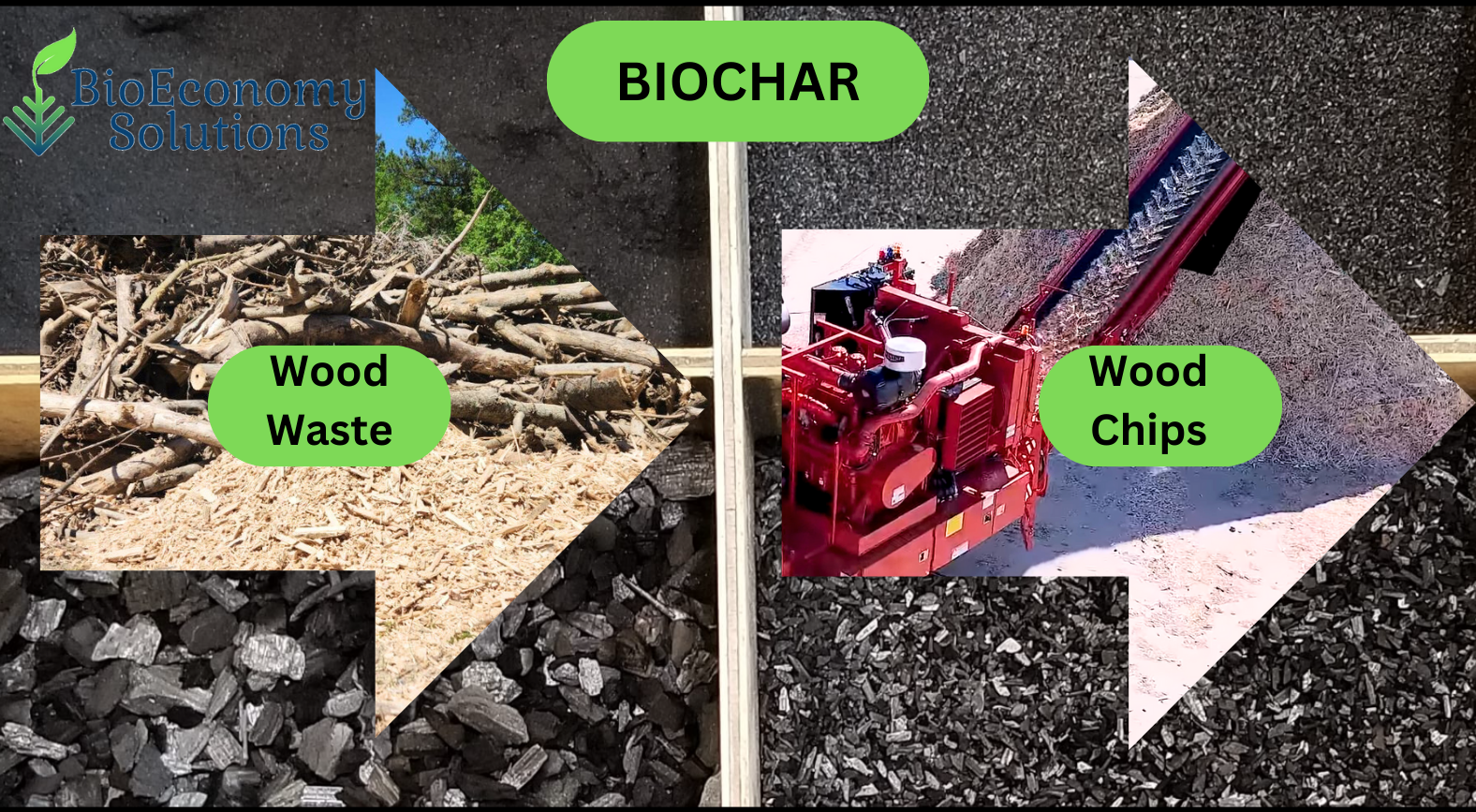
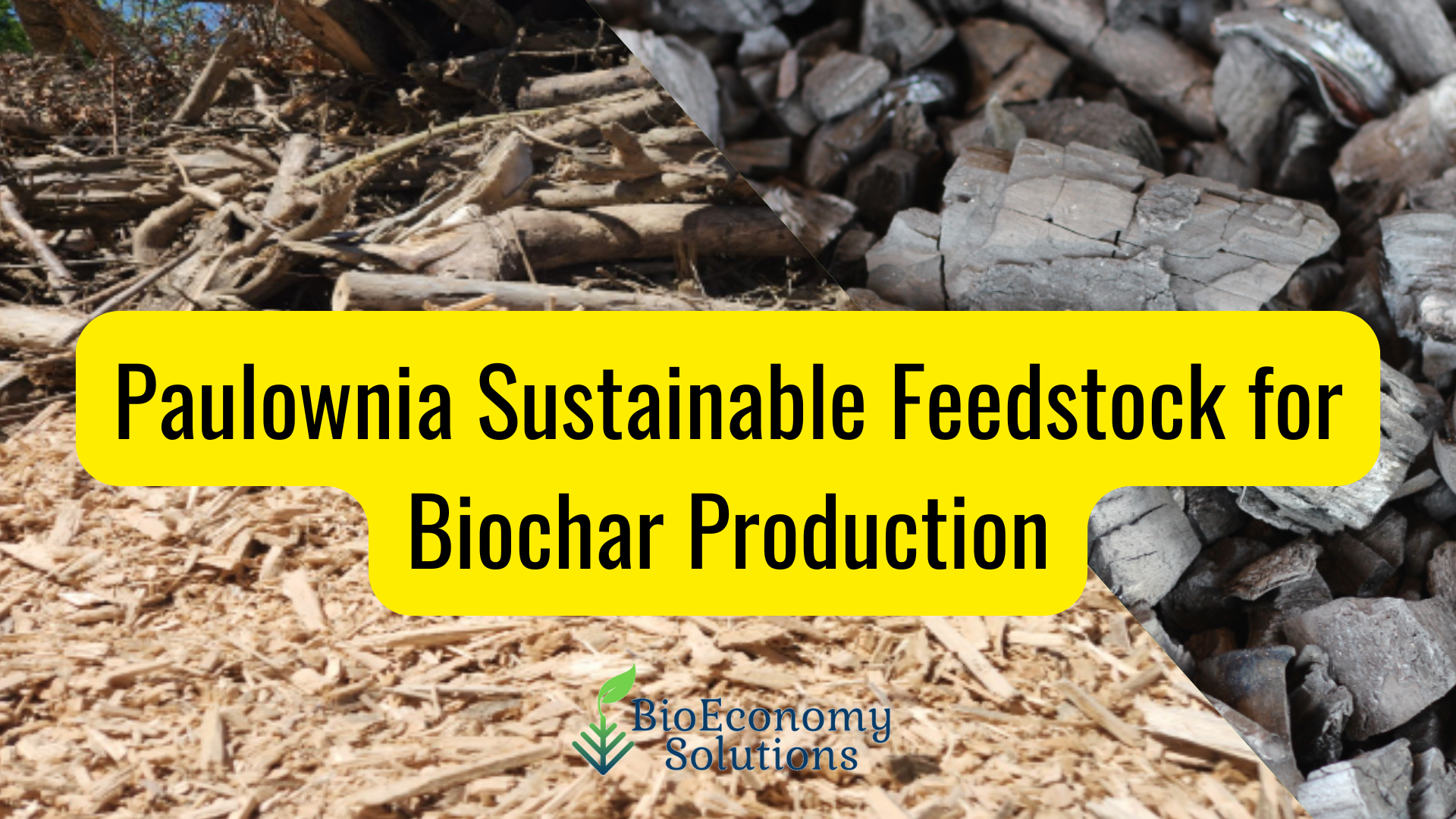
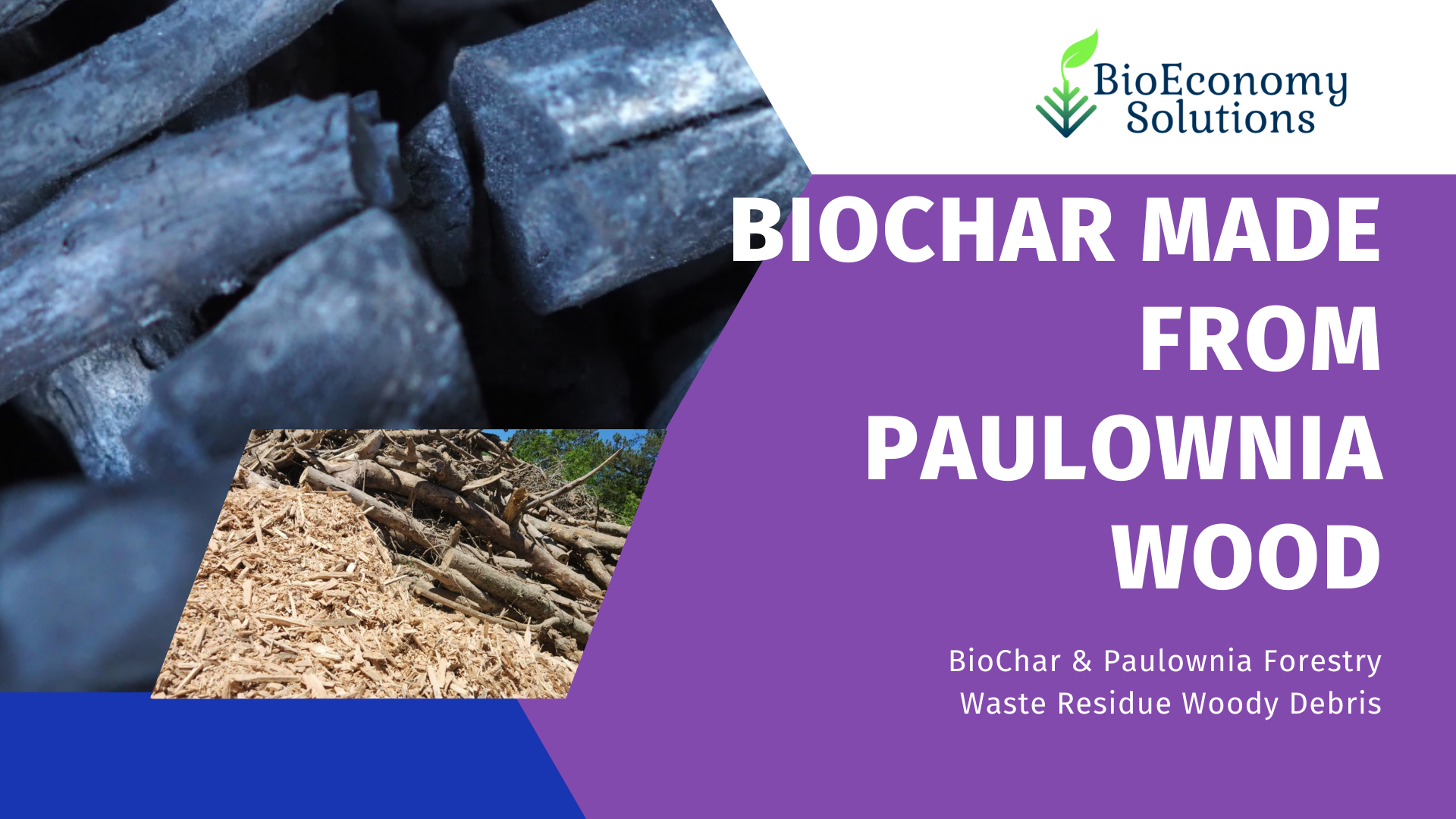
Paulownia trees are known for their exceptionally fast growth, lightweight, durable wood, and high commercial value, Paulownia trees are being reconsidered not just for timber, but as a promising feedstock biomass source for biochar production, where diversification of biomass sources is a growing need.

What Is Paulownia?

What Is BioChar?

Why Paulownia Trees?

Paulownia’s biological traits make it uniquely suited for biomass applications:

  • Rapid Growth: Capable of reaching maturity in as little as 7–10 years, Paulownia yields significantly more biomass per hectare than many native or commonly grown species.
  • Efficient Nutrient Use: Its extensive root system excels at absorbing nutrients, including from marginal or degraded soils, making it an ideal candidate for bioremediation.
  • Drought Tolerance & Regrowth: Once established, Paulownia coppices vigorously, offering repeated harvests without replanting.
  • Intercropping Compatibility: Its canopy allows light penetration, supporting dual-use land systems.

Paulownia for Biochar: Technical and Environmental Advantages

1. High Drying Efficiency

Paulownia wood air drys quickly, which drastically reduces the energy inputs typically required for biomass processing:

  • Air-drying Lumber: As little as 30–39 days to reach <20% moisture content.
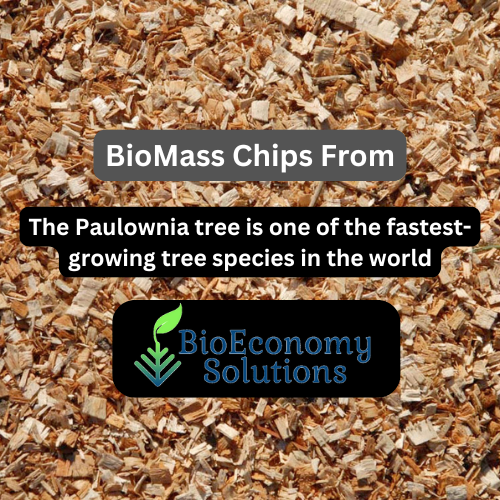
  • Drying Biomass Chips: Down to 10–12% moisture in 48 hours with air only.
  • The Contrast: With willow, which often requires energy-intensive drying.
  • Cost Reduction: Eliminates the need for expensive drying equipment.

Implication: Lower energy input means a higher net carbon benefit during biochar production, making Paulownia more climate-positive.

2. Ideal Physical Properties

Paulownia’s low density (14–19 lb/ft³) and stable dimensional shrinkage (2.2% radial, 4% tangential) allow easy handling and consistent biochar quality. The specific gravity of 0.23–0.30 means it is nearly one-third the weight of oak, facilitating logistics and reducing processing wear-and-tear.


3. High-Yield Carbon Removal

Paulownia enables robust carbon sequestration during pyrolysis. When converted to biochar, its structure:

  • Stabilizes carbon in soils for hundreds of years
  • Improves soil fertility and water retention
  • Can be integrated into carbon credit schemes for Carbon Dioxide Removal (CDR)

Additional Benefits

  • Leaf Use as Fodder: Paulownia leaves are high in protein and low in lignin,great as livestock fodder—adding economic value to the biomass system.
  • Bioremediation Potential: Its rapid nutrient uptake may help remediate land contaminated with excess nitrogen, phosphorus, or even heavy metals.

Opportunity for Biochar Biomass Feedstock

Despite its absence from most forestry portfolios, Paulownia offers a novel biomass solution. It could:

  • Diversify woody biomass sources beyond willow
  • Enable low-energy biochar production aligned with net-zero targets
  • Create value through timber, carbon credits, fodder, and soil health

Paulownia aligns well with agroforestry & permaculture, offering income diversification for farmers and landowners while supporting national climate goals.


Contact Us – Carbon Dioxide Removal (CDR) Project Developer

Paulownia’s combination of fast growth, low energy processing, and carbon sequestration potential makes it an ideal feedstock for biochar production. Its integration into sustainable land use strategies can create a circular economy model linking biomass, biochar, and carbon removal finance—a win for farmers, ecosystems, economies, people, and the climate.

BioEconomy Solutions is a Carbon Dioxide Removal (CDR) Project Developer. Talk to us about our biochar processing technology.

We’re happy to organize a time to speak with you about our paulownia trees and lumber we have for sale. Please book your preferred time to speak directly.

Here’s a link to my online calendar/schedule:

www.bioeconomysolutions.com/bookcall

BioEconomy Solutions

mail@BioEconomySolutions.com

Office: 843.305.4777

Visit us at: https://bioeconomysolutions.com/paulownia-carbon-credits/ Let’s chat about paulownia tree solutions for sustainable Forest carbon credits projects.

LIKE|SHARE|COMMENT

Enjoy this article? You may also enjoy “Carbon Developers Choose Paulownia Trees” https://www.linkedin.com/pulse/carbon-developers-choose-paulownia-trees-victor-garlington-imh4e/

ESG Compliance in the Age of Scrutiny: Why Real-Time Data Is Your Best Defense Against Greenwashing.

In today’s sustainability-conscious marketplace, Environmental, Social, and Governance (ESG) performance isn’t just a buzzword — it’s a business imperative. But as ESG strategies grow more common, so too does the risk of greenwashing — the act of misleading stakeholders about a company’s environmental or social credentials. In 2023 alone, regulators in the U.S. and Europe levied tens of millions in fines for ESG misstatements, with firms like DWS, Invesco, and BNY Mellon under the microscope.

So how can companies stay compliant, credible, and competitive in an increasingly transparent world? The answer lies in real-time ESG data.


💡 What’s the Problem with Traditional ESG Reporting?

Traditional ESG reporting has a few fatal flaws:

  • Lagging data: ESG reports are typically published annually or quarterly — far too slow in a world of real-time disclosures and instant media.

  • Manual processes: Data is often collected through surveys, spreadsheets, and self-reported disclosures, which are prone to bias or error.

  • Lack of verification: Claims about carbon neutrality, sustainable sourcing, or social impact often lack third-party validation or audit trails.

These gaps don’t just raise reputational risk — they’re becoming compliance risks.


🧯 Greenwashing Enforcement Is Rising

Global regulators are cracking down hard on ESG misstatements:

  • SEC: Fined DWS $25M in 2023 for exaggerating its ESG investment practices.

  • FTC (U.S.): Penalized Kohl’s and Walmart for falsely marketing rayon products as bamboo.

  • EU: Found that over 40% of green claims were unsubstantiated and is introducing a Green Claims Directive to require evidence for all environmental claims.

Investors are also paying attention. Fund managers face growing pressure to demonstrate ESG integration with clear metrics, not marketing.


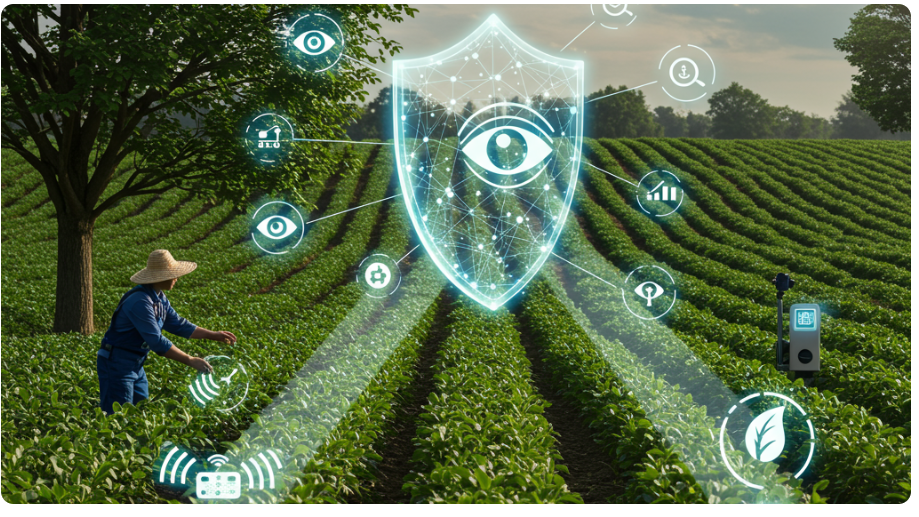
🛰️ Real-Time ESG Data: The Game-Changer

Real-time data empowers companies to track, validate, and communicate ESG performance in a transparent and dynamic way. Here’s how:

1. Live Monitoring of Emissions and Energy

  • Use IoT sensors and digital twins to measure Scope 1 & 2 emissions in real time.

  • Track energy use by facility or process to identify inefficiencies instantly.

2. Supply Chain Traceability

  • Use blockchain or API-connected platforms to verify sourcing, labor practices, and supplier sustainability credentials.

  • Real-time alerts if suppliers breach ESG requirements.

3. Automated ESG Dashboards

  • Integrate internal and third-party data to feed dashboards that show real-time ESG performance vs. targets.

  • Great for internal decision-making and external transparency.

4. Dynamic ESG Reporting

  • Move from static annual reports to interactive sustainability dashboards, updated monthly or even weekly.

  • Enables investors and consumers to see progress (or problems) without delay.


🎯 Benefits of Real-Time ESG Compliance

  • Avoid penalties and investigations: Proactive monitoring catches issues before regulators do.

  • Build investor confidence: Transparent, data-backed ESG performance is a competitive advantage.

  • Enhance brand trust: Consumers are more loyal to brands that show — not just say — they’re doing good.

  • Adapt faster: Real-time data lets you pivot operations, suppliers, or products when ESG risks emerge.


🧭 Key Takeaways

In the age of ESG scrutiny, greenwashing isn’t just unethical — it’s legally and financially dangerous. Relying on outdated, self-reported ESG data is no longer tenable.

Real-time ESG data isn’t just a tool for compliance — it’s a foundation for sustainable leadership.

Companies that invest in transparent, verifiable, and real-time ESG systems are far more likely to:

  • Avoid fines,

  • Attract long-term investors,

  • And stay ahead of regulatory and market expectations.


Next Steps Schedule Conversation

Want to see what real-time ESG compliance looks like in action? Or need help building your ESG tech stack? Let’s talk.

Today’s Real World Asset – Paulownia Trees

By converting its carbon, growth, and timber value into blockchain-based tokens, Paulownia creates a transparent, inclusive, and sustainable financial model that aligns with the goals of the UNCCD, Paris Agreement, and global reforestation efforts.

Contact Us

Where To Buy Paulownia Core Materials? QUESTIONS?

We’re happy to organize a time to speak with you about our paulownia trees and lumber we have for sale. Please book your preferred time to speak directly.

Here’s a link to our online calendar/schedule:

www.bioeconomysolutions.com/bookcall

BioEconomy Solutions

mail@BioEconomySolutions.com

Office: 843.305.4777

Visit us at: https://bioeconomysolutions.com/paulownia-carbon-credits/ Let’s chat about paulownia tree solutions for sustainable Forest carbon credits projects.

LIKE|SHARE|COMMENT

Enjoy this article? You may also enjoy “Carbon Developers Choose Paulownia Treeshttps://www.linkedin.com/pulse/carbon-developers-choose-paulownia-trees-victor-garlington-imh4e/

While a “pretty tree” might first catch our eye with its vibrant flowers or majestic canopy, its true power lies in the silent, tireless work it does for the environment.

Let’s break down the environmental contributions of trees, even (or especially) the “pretty” ones, beyond their aesthetic appeal:

Ecosystem Services: Beauty in Functionality

The visual appeal of trees often correlates with their health and vitality, which are directly linked to the ecosystem services they provide:

  • Improving Air Quality: Trees are natural air filters. Their leaves, with their vast surface area and tiny pores (stomata), absorb gaseous pollutants like carbon dioxide (), ozone (), nitrogen oxides (), sulfur dioxide (), and carbon monoxide (). Particulate matter (dust, pollen, smoke) also gets trapped on leaf surfaces and is later washed away by rain. This direct removal of pollutants is supplemented by trees’ ability to reduce air temperatures, which in turn lowers the formation of ground-level ozone. One large tree can provide a day’s supply of oxygen for up to four people, and an acre of forest can absorb six tons of carbon dioxide annually.

  • Moderating Temperatures: Trees are nature’s air conditioners. They reduce ambient temperatures through two primary mechanisms:

    • Shade: Their canopies block solar radiation, directly cooling surfaces below and reducing heat absorption by buildings, pavement, and other urban infrastructure.
    • Evapotranspiration: This process involves trees absorbing water through their roots and releasing it as water vapor through their leaves. This evaporation cools the surrounding air, much like a natural evaporative cooler. Urban forests can be significantly cooler (e.g., 3.0°F or 1.6°C) than non-green urban areas, reducing the “urban heat island” effect.
  • Supporting Biodiversity: A beautiful, healthy tree is a bustling apartment building for countless species. They provide:

    • Habitat: Branches and hollows offer shelter and nesting sites for birds, squirrels, insects, and other small mammals.
    • Food Sources: Flowers provide nectar and pollen for pollinators (bees, butterflies), while fruits, nuts, and leaves offer sustenance for a wide array of wildlife.
    • Microclimates: The shade and moisture provided by trees create cooler, more stable microclimates, allowing a greater diversity of understory plants and ground-dwelling organisms to thrive.
  • Preventing Soil Erosion: The extensive root systems of trees act as natural anchors, binding soil particles together and preventing them from being washed away by rain or blown away by wind. Their canopies also intercept rainfall, reducing the direct impact of raindrops on the soil surface, which can lead to erosion. This helps maintain soil quality and prevents sediment runoff into waterways.

  • Sequestering Carbon: Trees are powerful carbon sinks. Through photosynthesis, they absorb atmospheric carbon dioxide () and convert it into organic compounds, storing carbon in their leaves, branches, trunks, and roots. This process is critical in mitigating climate change by reducing greenhouse gas concentrations in the atmosphere. A healthy tree can store approximately 13 pounds of carbon annually.

Urban Green Spaces: Beyond the Postcard

Aesthetically pleasing trees in urban environments offer more than just a pretty view; they are fundamental to creating livable, healthy cities:

  • Improved Quality of Life: The presence of trees contributes to a sense of calm and well-being. Studies show that access to green spaces reduces stress, lowers blood pressure, improves mood, and can even shorten hospital stays.
  • Promoting Physical Activity: Attractive, tree-lined streets and parks encourage people to walk, jog, or cycle, leading to increased physical activity and reduced risk of obesity and related health issues.
  • Fostering Community Well-being: Green spaces with trees often become natural gathering places, promoting social interaction, fostering a sense of community pride, and reducing feelings of isolation.
  • Noise Reduction: Dense tree canopies can absorb and block urban noise, creating quieter and more serene environments, which is particularly beneficial near busy roads or industrial areas.
  • Economic Benefits: Trees can increase property values due to their aesthetic appeal and the environmental benefits they provide. They also contribute to energy savings by reducing the need for air conditioning in shaded buildings and acting as windbreaks in winter.

Conservation and Preservation: Beauty as a Call to Action

The inherent beauty of trees often serves as a powerful motivator for their conservation. When people are captivated by the grandeur of an ancient forest or the delicate beauty of a blooming cherry tree, they are more likely to support efforts to protect them. This emotional connection then translates into understanding their vital ecological roles.

The United Nations Convention to Combat Desertification (UNCCD), while not solely focused on trees, plays a critical role in their conservation, especially in dryland ecosystems. As the only legally binding international agreement addressing desertification and drought, the UNCCD:

  • Promotes Sustainable Land Management: It advocates for practices like agroforestry (integrating trees into agricultural systems), conservation agriculture, and sustainable grazing, all of which often involve tree planting and protection to prevent soil degradation.
  • Restores Degraded Land: The UNCCD actively supports efforts to restore degraded lands, often through reforestation and afforestation initiatives, recognizing that trees are essential for rebuilding healthy ecosystems, combating erosion, and enhancing water retention.
  • Addresses Climate Change and Biodiversity Loss: By tackling desertification, the UNCCD indirectly contributes to climate change mitigation (through carbon sequestration by trees) and biodiversity conservation (by restoring habitats that support a wide range of species).
  • Aims for Land Degradation Neutrality (LDN): A core target of the UNCCD is to achieve a land degradation neutral world by 2030, meaning that the amount of healthy and productive land remains stable or increases. Trees are a crucial component of achieving LDN, as increasing tree cover is a key strategy for restoring degraded land and improving its productivity.
  • Mobilizes Resources and Raises Awareness: The UNCCD facilitates international cooperation and financial support for projects that involve tree planting and sustainable land management, and it raises global awareness about the importance of trees in combating desertification and improving livelihoods, especially in vulnerable communities.

In essence, the beauty of trees is not just skin deep; it’s a testament to their incredible functionality and a powerful reminder of why their protection and conservation are paramount for a sustainable future.

Learn More About Paulownia Trees

Contact Us For Details

BioEconomy Solutions is a BIOCHAR Carbon Dioxide Removal (CDR) Project Developer. Talk to us about our biochar processing technology.

We’re happy to organize a time to speak with you about our high carbon biochar we have for sale. Please book your preferred time to speak directly.

Here’s a link to my online calendar/schedule:

www.bioeconomysolutions.com/bookcall

BioEconomy Solutions

mail@BioEconomySolutions.com

Office: 843.305.4777

Visit us at: https://bioeconomysolutions.com/paulownia-carbon-credits/ Let’s chat about paulownia tree solutions for sustainable Forest carbon credits projects.


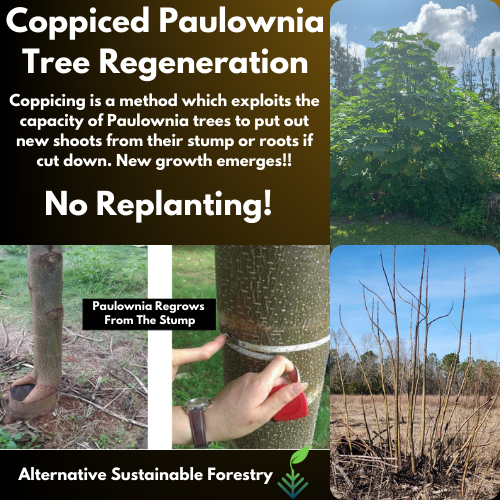
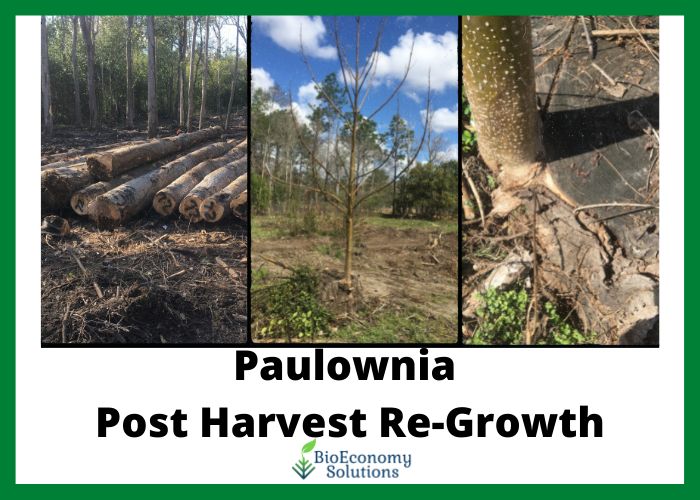
In the world of sustainable forestry, few trees offer the impressive regenerative capabilities of the Paulownia species. Often dubbed the t, a practice known as coppicing, makes it an exceptionally valuable asset for timber production, biomass generation, and environmental restoration.

Coppicing is an ancient woodland management technique that harnesses a tree’s natural tendency to sprout new shoots from its base or root collar when its main stem is harvested. For Paulownia, this characteristic is particularly pronounced. Unlike many trees that require replanting after each harvest, Paulownia’s established root system remains intact, ready to fuel rapid new growth.

The Power of the Established Root System

The secret to Paulownia’s phenomenal regrowth lies in its extensive and mature root system. When a young Paulownia tree is cut back, especially in its dormant phase (typically one to three years after initial planting), the robust roots, which have been developing for years, provide an immediate and abundant supply of nutrients and energy to the new sprouts. This allows the fresh shoots to grow at an astonishing rate, sometimes reaching several feet in a single growing season.

Advantages of Coppicing Paulownia

  • Accelerated Growth Cycles: Coppicing significantly reduces the time between harvests. Paulownia can reach harvestable size in as little as 5-7 years, and after coppicing, subsequent rotations can be even quicker, often ready for cutting in 3-5 years. This rapid turnaround maximizes productivity from the same land area.
  • Reduced Reforestation Costs: Eliminating the need for replanting after each harvest dramatically cuts down on labor, seedling costs, and the associated environmental impact of site preparation. This makes Paulownia plantations highly economical and efficient.
  • Continuous Timber Supply: The consistent regeneration ensures a steady and predictable supply of wood, supporting a more stable timber market and reducing pressure on natural, old-growth forests.
  • Enhanced Carbon Sequestration: Paulownia’s rapid growth translates to impressive carbon sequestration rates. The continuous cycle of growth and regrowth means these trees are constantly absorbing atmospheric CO2, contributing significantly to climate change mitigation efforts.
  • Soil Stabilization and Health: The deep and widespread root system of Paulownia helps prevent soil erosion, especially on degraded or vulnerable lands. As the tree regrows, it continues to improve soil structure and enrich it with organic matter.
  • Multi-Cycle Harvesting: A single Paulownia root system can support multiple harvest cycles, often as many as 4 to 8 times over its lifespan, providing decades of continuous yield from the same planting.

Managing for Optimal Regrowth

To maximize Paulownia’s coppicing potential, careful management practices are crucial. This typically involves:

  • Initial Coppicing: Often, growers will coppice young Paulownia trees (1-3 years old) to encourage a single, straight, and vigorous stem for high-quality timber. This initial cut allows the root system to develop fully before focusing energy on a primary trunk.
  • Selective Sprout Management: After coppicing, multiple sprouts will emerge. For timber production, growers often select the strongest, straightest shoot and remove the others, directing all the root’s energy into developing a single, high-quality trunk. For biomass, multiple shoots may be allowed to grow for maximum yield.
  • Dormant Season Harvesting: Harvesting during the dormant season (winter) is generally recommended, as the tree’s energy reserves are concentrated in the roots, optimizing the subsequent spring’s regrowth.

A Sustainable Solution

Paulownia’s exceptional ability to regrow post-harvest solidifies its position as a leading species for sustainable forestry and renewable resource management. This inherent regenerative power offers a compelling solution for meeting the growing demand for timber and biomass while simultaneously contributing to environmental conservation and a more circular economy. As the world increasingly seeks eco-friendly alternatives, the “Phoenix tree” stands tall as a testament to nature’s remarkable capacity for renewal.


Contact Us

Where To Buy Paulownia Core Materials? QUESTIONS?

Visit our web page. https://bioeconomysolutions.com/paulownia-lumber/

What is paulownia wood? https://bioeconomysolutions.com/what-is-paulownia-wood/

We’re happy to organize a time to speak with you about our paulownia trees and lumber we have for sale. Please book your preferred time to speak directly.

Here’s a link to my online calendar/schedule:

www.bioeconomysolutions.com/bookcall

BioEconomy Solutions

mail@BioEconomySolutions.com

Office: 843.305.4777

Visit us at: https://bioeconomysolutions.com/paulownia-carbon-credits/ Let’s chat about paulownia tree solutions for sustainable Forest carbon credits projects.

LIKE|SHARE|COMMENT