Can the Paulownia Tree Thrive in Canada? Exploring the Potential of the Paulownia Empress Tree in Canada
The Paulownia tree, also known as the Empress Tree has gained international attention for its rapid growth, ornamental beauty, and high carbon sequestration potential. Native to China and named after Princess Anna Paulownia of Russia, this tree has become a symbol of ecological innovation. Can this fast-growing species adapt to the Canadian climate?
Botanical Profile: Fast Growth Meets Fragrant Beauty
The Empress Tree is known for:
- Extraordinary growth rates — up to 3–4 meters per year under optimal conditions
- Large, heart-shaped leaves — reaching up to 30 cm in length
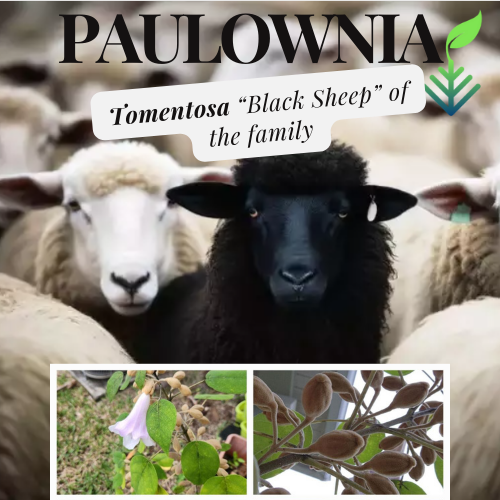
- Lavender-purple flowers — that appear in early spring before the leaves, exuding a sweet, jasmine-like fragrance
Because of its rapid growth and ability to regenerate from the root system, Paulownia has been studied for:
- Carbon offset programs
- Agroforestry
- Reforestation of degraded land
- Sustainable hardwood production
Paulownia in Canada: Possibilities and Precautions
Climate Compatibility
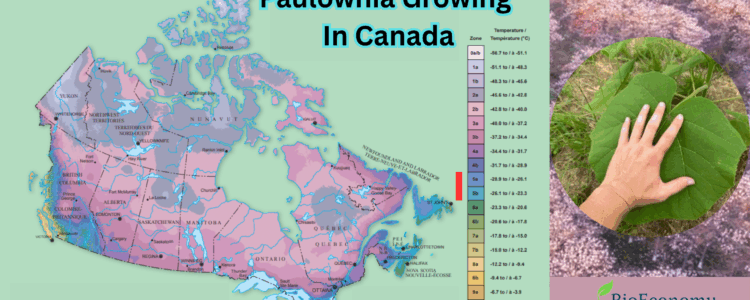
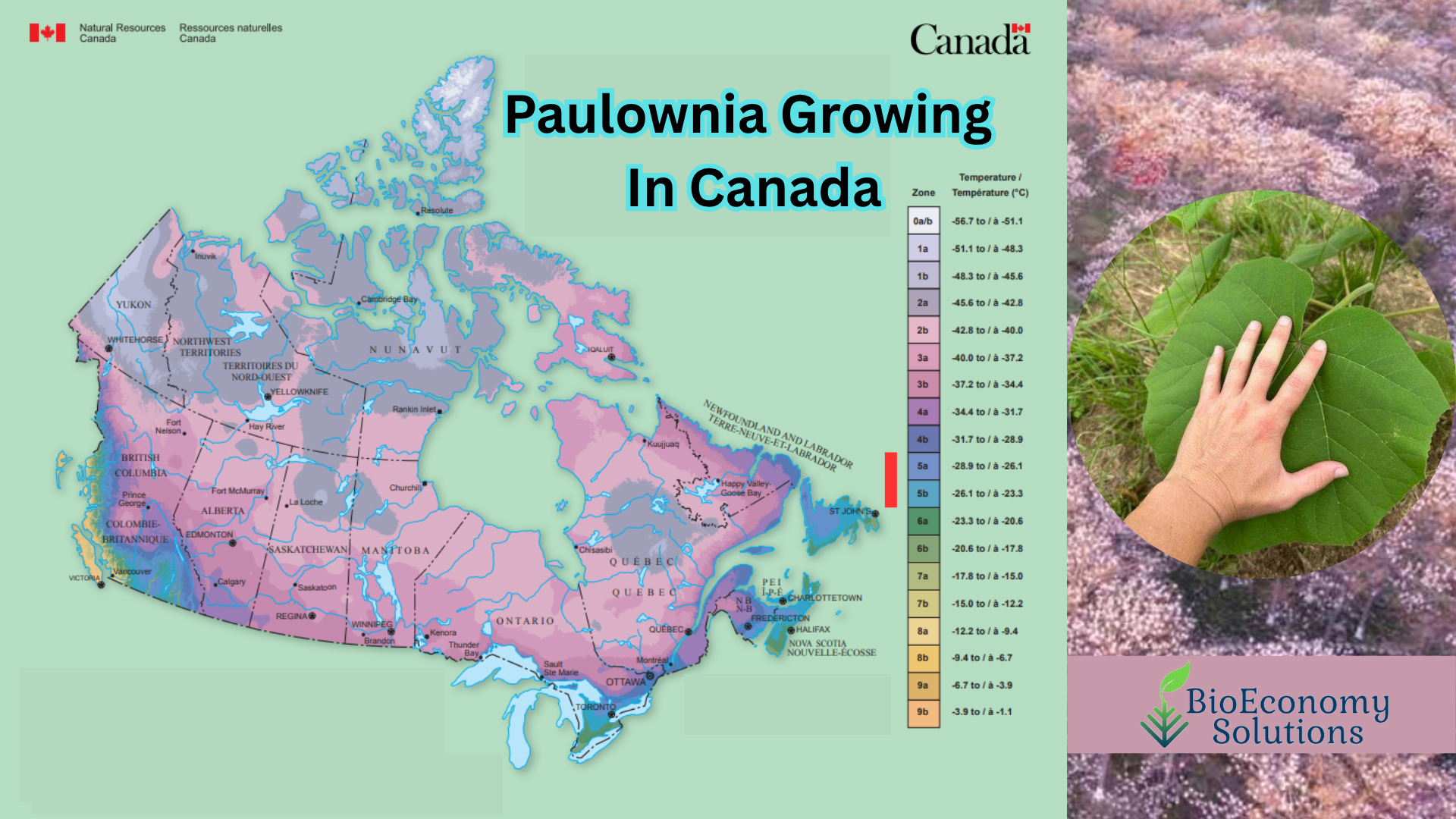
Paulownia species, especially Paulownia tomentosa, are surprisingly cold-tolerant, capable of growing in USDA hardiness zone 5, which includes parts of Southern Ontario, Quebec, and British Columbia. Some cold-hardy hybrids like Paulownia elongata × fortunei (e.g., “NordMax21” or “Phoenix One”) are even bred for cooler temperate zones.
Key requirements for growth in Canada:
- Well-drained soil — Paulownia does not tolerate waterlogged roots
- Full sun — Optimal photosynthesis fuels rapid growth
- Shelter from strong winds — Especially important for young trees
Growth Timeline in Canadian Conditions
- Year 1: Focuses energy on root development; above-ground growth may be limited
- Years 2–3: Explosive vertical growth (2–3 meters annually)
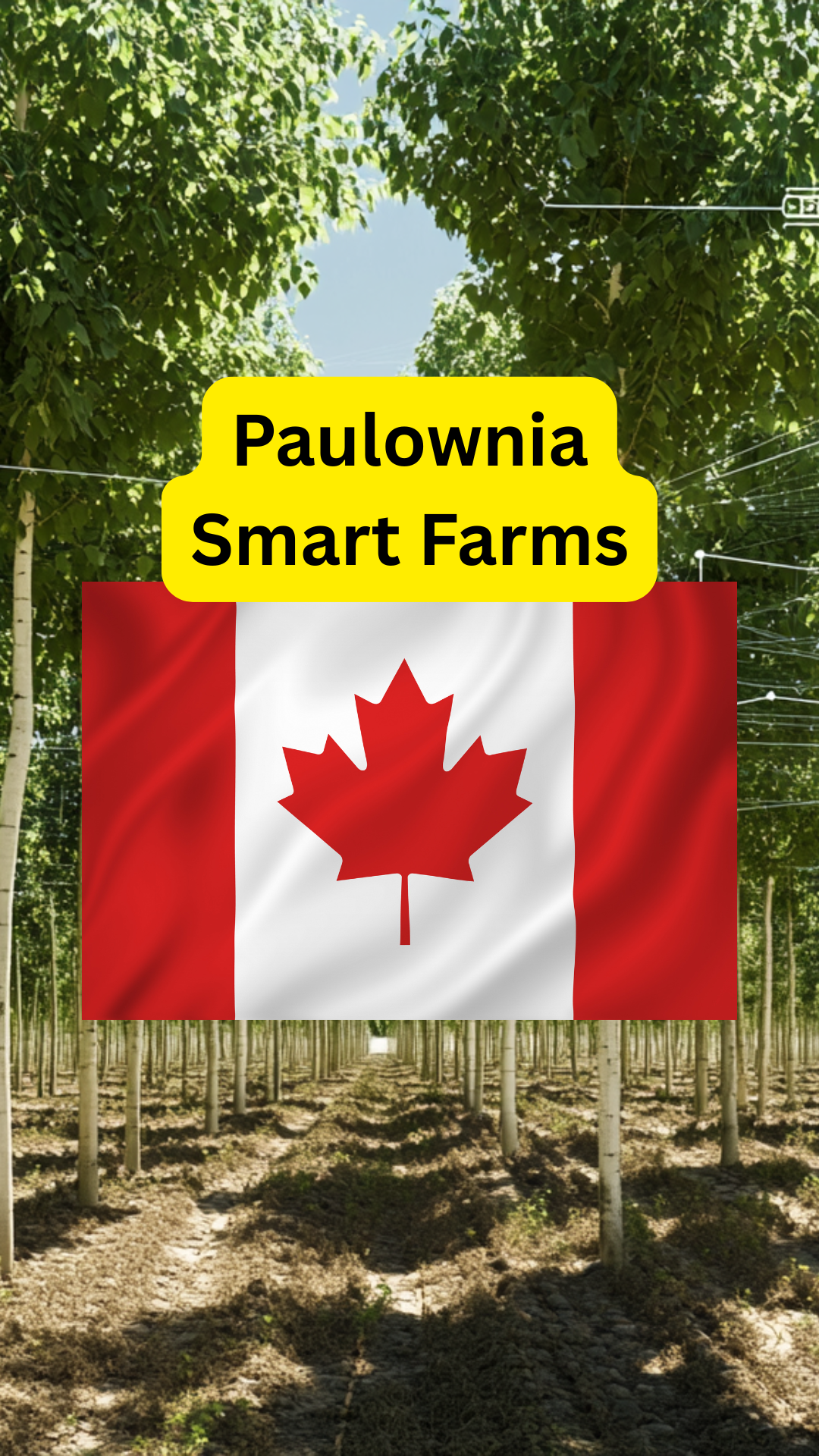
- Year 4+: Begins forming a broad canopy; suitable for use as a shade tree or windbreak
Carbon Sequestration Potential in Northern Latitudes
Paulownia’s rapid biomass accumulation makes it one of the top contenders for carbon offset projects. A single hectare of mature Paulownia plantation can sequester 10 to 20 metric tons of CO₂ per year, depending on conditions.
In Canada, this could:
- Support climate adaptation goals
- Reclaim marginal agricultural lands
- Foster green economy jobs through agroforestry partnerships
While Paulownia is not considered invasive in most parts of Canada due to cold winters and shorter growing seasons.
Recommendation:
- Use sterile hybrids or controlled planting methods in Canada
- Avoid planting near sensitive natural habitats
- Always follow local and provincial planting regulations
A Tree for Canada’s Future?
As climate conditions shift and sustainable forestry becomes a national priority, the Paulownia tree offers a compelling option — fast, functional, and beautiful. With proper species selection and site management, it may play a key role in carbon capture, reforestation, and rural economic development across suitable parts of Canada.
Key Takeaways
- Paulownia can grow in parts of Canada, particularly zone 5 and above
- It’s suitable for carbon farming, reforestation, and ornamental uses
- Cold-hardy hybrids should be prioritized for Canadian projects
- Plant responsibly — consider the local ecosystem
Contact Us For African Paulownia Saplings
Interested in starting a Paulownia planting project in Canada? Reach out to for details — and plant it in the right place.
Want to purchase paulownia saplings for your project? Have a reforestation or afforestation project? Contact us for more information.
Contact Us for details. Office: 843.305.4777 | Email: mail@bioeconomysolutions.com Here’s a link to our online calendar, schedule a conference call with us: https://info586.youcanbook.me