Paulownia wood has been hiding in plain sight for centuries.
Now marine craftsmen are realizing what 16th-century fishermen already knew.
While modern boatbuilders struggle with scarce cedar and expensive mahogany, there’s a wood that naturally resists water, rot, and decay—and it’s been proven in marine applications for over 400 years.
The question isn’t whether Paulownia works in marine environments.
The question is: why did we forget about it?
Watch Video: https://youtu.be/LZKKHAFN8mg?si=GEWcXuH7UJc_QQyy
The Marine Industry’s Hidden Crisis
Walk into any boatyard today and you’ll hear the same complaints:
“Western red cedar is unobtanium.” “Mahogany costs $16+ per board foot—when you can find it.” “We’re shipping wood from Africa and the Philippines.”
Meanwhile, the marine environment demands perfection:
- Constant wet/dry cycles that split most woods
- Salt water that accelerates decay
- UV exposure that degrades materials
- Weight considerations for performance
Traditional solutions are failing:
- Cedar: Increasingly scarce, expensive
- Teak: Overharvested, sustainability concerns
- Mahogany: Limited supply, import dependent
- Cypress: Heavy, prone to movement
But there’s a wood that solves all these problems.
The Forgotten Marine Champion
Paulownia’s natural marine advantages:
Water Resistance That Actually Works
Unlike woods that absorb water and swell, Paulownia’s cellular structure naturally repels moisture. This isn’t a treatment—it’s built into the wood’s biology.
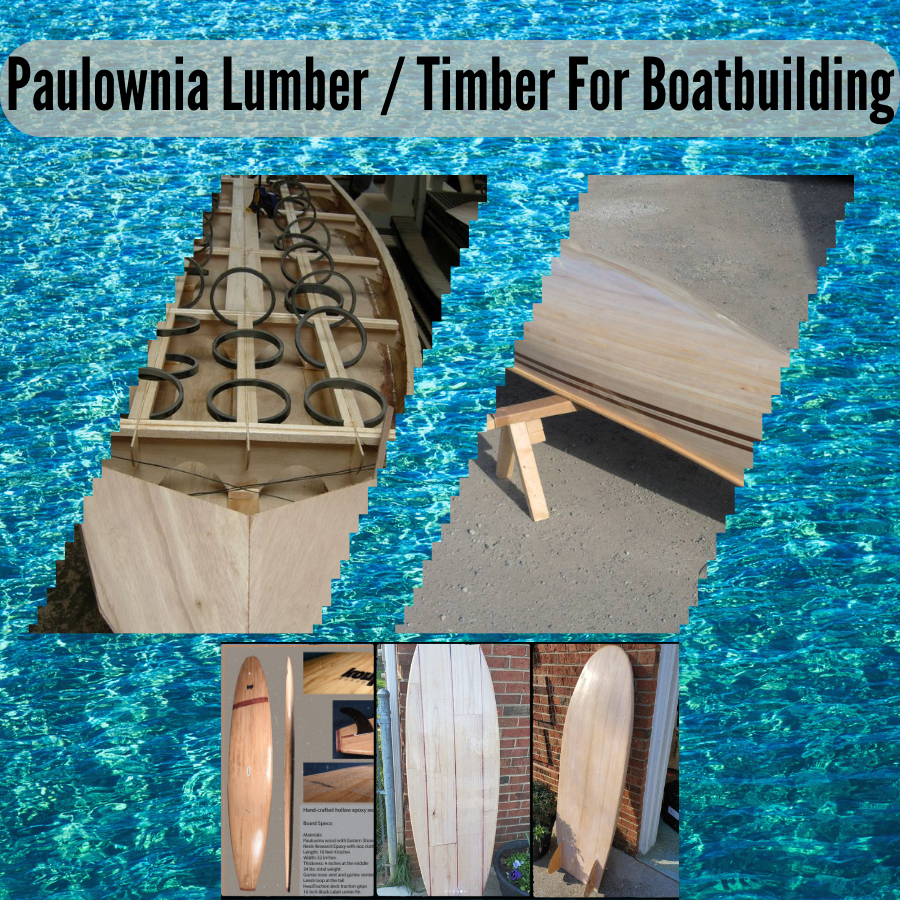
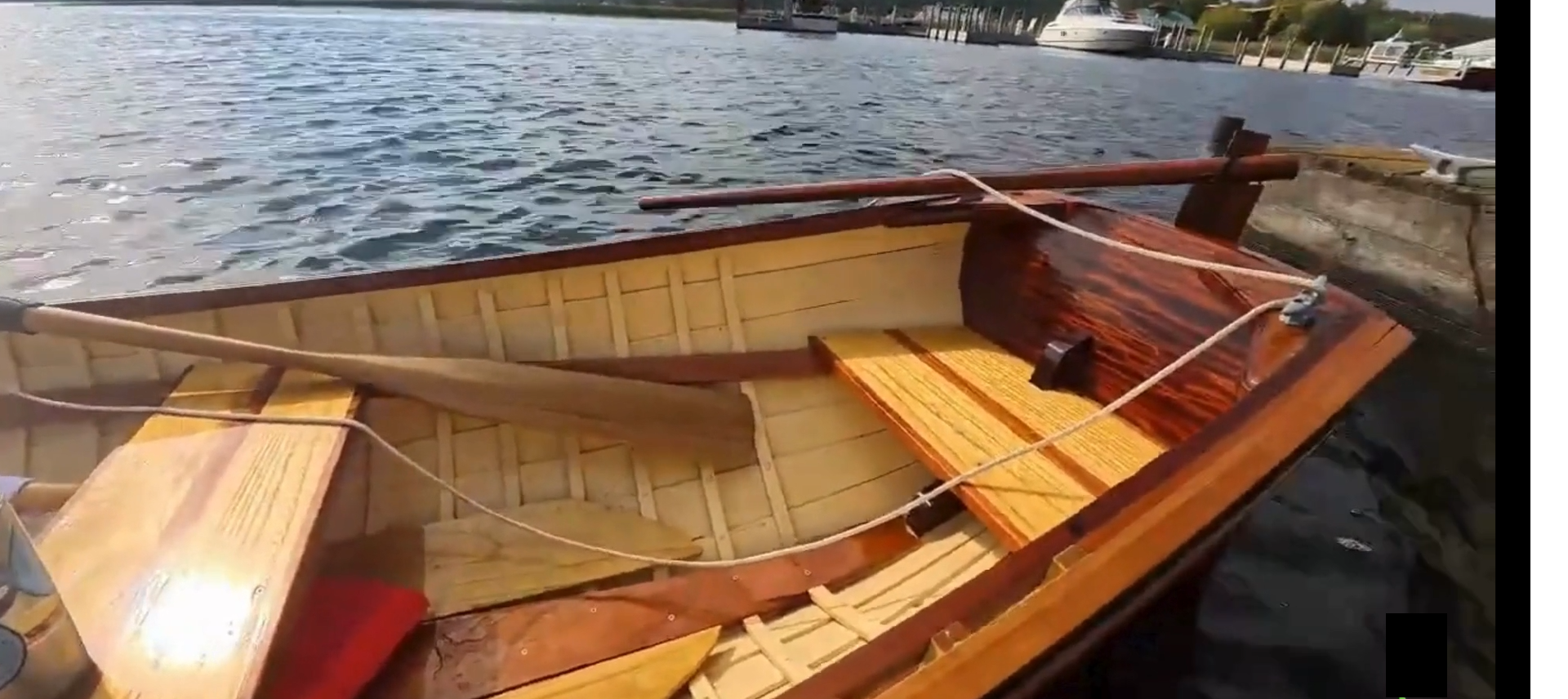
Real-world proof: Boats built with Paulownia planking sat wet for a month with no buckling, splitting, or movement. Traditional cypress boats would have warped beyond repair.
Rot and Decay Resistance
Paulownia contains natural compounds that resist fungal attack and bacterial decay. In marine environments where rot destroys most woods within years, Paulownia maintains structural integrity.
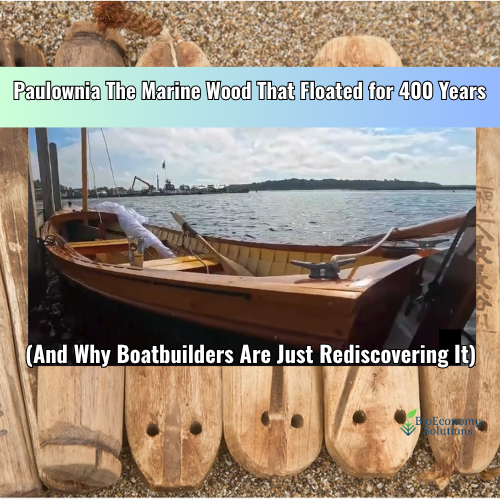
Historical evidence: 16th-century Paulownia fishing buoys still exist as antique collectibles—400+ years later.
Paulownias use as a wood for fishing floats and small buoys is more of a modern phenomenon, capitalizing on its superior buoyancy and water resistance, often as a sustainable and lightweight alternative to materials like cedar, balsa, or non-biodegradable plastics. Its role is particularly prominent today in the production of hand-crafted or high-end fishing bobbers and drift floats.
The Weight Advantage
Paulownia boats: 165-170 pounds Cypress boats: 200+ pounds
That’s 35+ pounds saved on a 14-foot boat. For larger vessels, the weight savings become exponential—improving fuel efficiency, handling, and performance.
Modern Marine Applications
Hull Planking: The Foundation
Paulownia excels in hull construction because it:
- Maintains dimensional stability through wet/dry cycles
- Resists the crushing forces of wave impact
- Provides natural buoyancy enhancement
- Eliminates the buckling that plagues traditional planking
Master boatbuilder Eric’s testimony: “There’s no buckling or movement in the planking… That’s bad for a boat, and we can’t have that.”
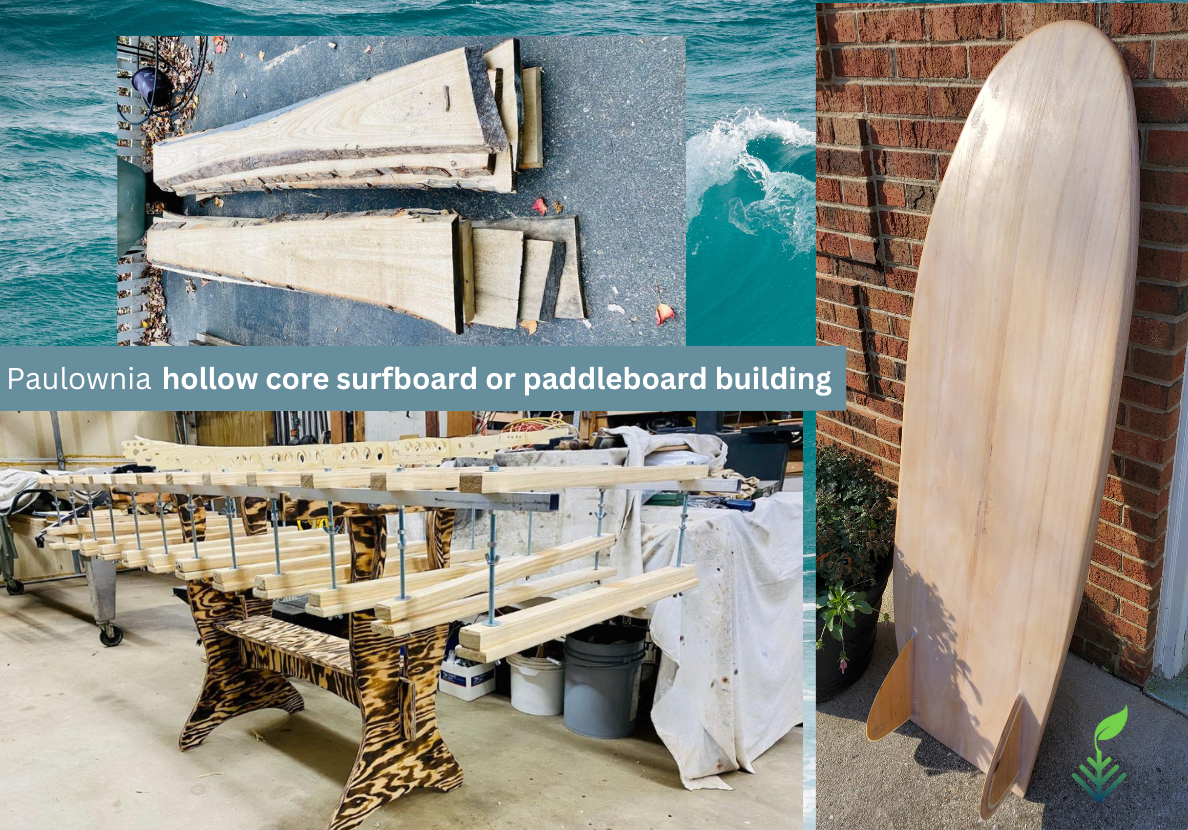
Surfboards and Paddleboards: Performance Plus
The surfing industry discovered Paulownia’s advantages:
Buoyancy Benefits:
- Natural flotation superior to synthetic cores
- Lightweight reduces fatigue during long sessions
- Water resistance prevents waterlogging
Performance Advantages:
- Excellent strength-to-weight ratio
- Natural flex characteristics
- Sustainable alternative to foam cores
Durability Factor:
- Resists dings and pressure damage
- Self-healing properties from minor impacts
- Long-term structural integrity
Decking and Fittings: Beauty Meets Function
Paulownia’s aesthetic appeal combines with practical benefits:
Visual Appeal:
- Light, attractive grain patterns
- Takes stain and finish beautifully
- Maintains appearance in UV exposure
Functional Benefits:
- Non-slip surface when properly finished
- Comfortable underfoot (doesn’t get burning hot)
- Easy to work with standard tools
- Excellent screw and fastener holding
The Science Behind the Performance
Cellular Structure Advantage
Paulownia’s unique cellular composition creates:
- Natural water repellency without chemical treatment
- Dimensional stability through moisture changes
- Impact resistance from flexible cell walls
- Thermal insulation properties
Natural Preservatives
The wood contains compounds that:
- Inhibit fungal growth
- Resist bacterial decay
- Repel marine borers
- Maintain structural integrity underwater
Density Sweet Spot
At 0.28-0.30 specific gravity, Paulownia hits the perfect balance:
- Light enough for easy handling
- Dense enough for structural strength
- Optimal buoyancy characteristics
- Superior strength-to-weight ratio
Why the Marine Industry Forgot
The same reason hemp disappeared: Sometimes proven technologies get lost in the shuffle of industrial change.
What happened:
- Colonial expansion shifted to local woods
- Industrial revolution favored mass production
- Synthetic materials promised “better living through chemistry”
- Traditional knowledge wasn’t systematically preserved
The result: Centuries of proven marine performance forgotten.
The Sustainability Advantage
While traditional marine woods face scarcity:
Paulownia offers abundance:
- Plantation-grown in 5-7 years vs. decades for hardwoods
- Coppices from stumps—no replanting required
- Grows on marginal land—doesn’t compete with food production
- Carbon sequestration during growth phase
Environmental benefits:
- No old-growth forest destruction
- Reduced transportation emissions (local production)
- Biodegradable end-of-life (unlike fiberglass)
- Soil improvement during cultivation
Real-World Performance Data
Marine Trades Institute Testing:
- Paulownia planks showed minimal dimensional change
- Superior stability compared to traditional species
- No fastener stress from wood movement
- Maintained water-tight integrity
Commercial Applications:
- Surfboard manufacturers reporting excellent durability
- Paddleboard builders citing weight and performance advantages
- Small craft builders achieving superior strength-to-weight ratios
Historical Validation:
- 400-year-old buoys prove long-term marine durability
- Traditional fishing applications across multiple cultures
- Proven performance in harsh saltwater environments
The Modern Renaissance
Smart marine manufacturers are taking notice:
Surfboard Industry Leading
- Premium boards featuring Paulownia cores
- Marketing sustainability alongside performance
- Customer education about natural materials
Small Craft Builders
- Testing Paulownia for traditional construction methods
- Documenting performance advantages
- Training next generation on sustainable materials
Yacht Industry Interest
- Exploring applications for luxury craft
- Investigating weight savings for performance boats
- Evaluating sustainability credentials for eco-conscious buyers
Implementation Considerations
For Boatbuilders:
- Source properly dried lumber (12% moisture content)
- Use appropriate fasteners for lightweight wood
- Consider hybrid construction (Paulownia with traditional reinforcement)
- Document performance for future reference
For Manufacturers:
- Establish reliable supply chains
- Develop processing specifications
- Create quality standards
- Educate customers on benefits
For Buyers:
- Understand maintenance requirements
- Appreciate long-term durability benefits
- Consider total cost of ownership
- Support sustainable material choices
The Future of Marine Paulownia
Emerging applications:
- Composite cores for advanced construction
- Engineered lumber for larger vessels
- Specialty applications (masts, spars, interior components)
- Hybrid construction combining traditional and modern techniques
Market drivers:
- Sustainability requirements
- Traditional wood scarcity
- Performance advantages
- Cost considerations
Innovation opportunities:
- Advanced processing techniques
- Engineered products development
- Hybrid material systems
- Specialized marine treatments

The Bottom Line
Paulownia isn’t a new marine material—it’s a rediscovered one.
For 400 years, it proved itself in the harshest marine environments. Modern testing confirms what ancient craftsmen knew: this wood naturally excels in water.
The advantages are clear:
- Natural water, rot, and decay resistance
- Superior strength-to-weight ratio
- Dimensional stability in marine conditions
- Sustainable production and supply
- Proven long-term durability
The question for marine professionals:
Will you be an early adopter of this rediscovered solution, or will you wait until everyone else figures it out?
The master boatbuilders are already placing their orders.
The surfboard industry is embracing the performance advantages.
The historical evidence speaks for itself.
Sometimes the best innovations are actually rediscoveries.
Paulownia wood: 400 years of marine performance, waiting for its modern renaissance.
Ready to explore Paulownia for your marine applications? The wood that floated for centuries is available today—with modern processing and sustainable supply chains.
CONTACT US
Contact BioEconomy Solutions lumber specialists to discuss specifications, availability, and applications for your next project.
Where To Buy Paulownia? Paulownia Wood For Sale – QUESTIONS?
Visit our web page. https://bioeconomysolutions.com/paulownia-lumber/
We’re happy to organize a time to speak with you about our paulownia trees and lumber we have for sale. Please book your preferred time to speak directly.
Here’s a link to my online calendar/schedule:
www.bioeconomysolutions.com/bookcall
BioEconomy Solutions
Office: 843.305.4777