Introduction
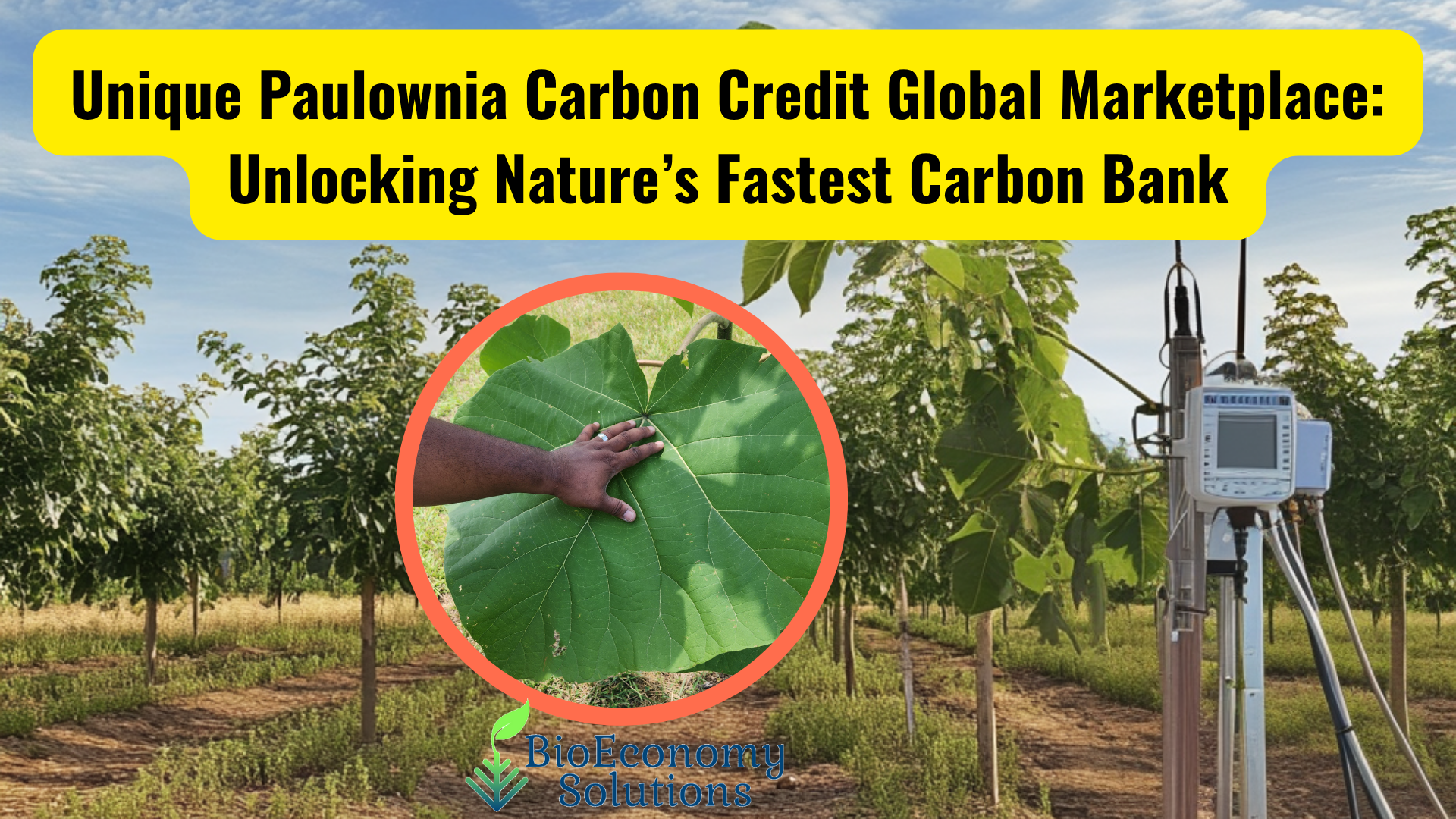
The Explosive Global Quest to combat climate change is in full swing, few “nature-based assets” are as overlooked—or as potent—as the Paulownia tree.
Desertification is also a significant concern which directly contributes to food and water insecurity worldwide. The persistent degradation of dryland ecosystems by climate change and human activities, such as unsustainable farming, overgrazing, and deforestation are the source causations.
The United Nations Convention to Combat Desertification (UNCCD)is an international agreement focused on addressing desertification, land degradation, and drought. It aims to achieve a land degradation-neutral world and is a key part of the Sustainable Development Goals.
Paulownia is rapidly becoming a centerpiece solution for re-greening and in the evolving carbon credit economy. As carbon markets expand in both scale and complexity, Paulownia-based carbon credits represent a high-growth opportunity for landowners, project developers, and institutional buyers alike.
Paulownia is reshaping the global carbon credit marketplace—and here’s why it’s becoming the tree of choice for climate-forward agroforestry Carbon Dioxide Removal (CDR) investments. What Makes Paulownia Ideal for Carbon Sequestration?
Paulownia is one of the fastest-growing trees in the world, capable of reaching 10–20 feet in its first year and maturing in under a decade. But its real power lies underground and in its chemistry:
- Deep taproots mine carbon and water deep into the soil.
- Abundant biomass production allows for stable biochar production.
- Sterile hybrid varieties (like MegaFlora) eliminate invasive species risks.
- Paulownia forests regenerate after selective harvesting, making them ideal for rotational carbon capture and continuous credit generation.
Each Paulownia tree can conservatively sequester 0.35 to 0.70 metric tons of CO₂ per year, and when planted at scale, these numbers rival DAC industrial-scale carbon offset programs.
Tech v.s. Trees: What $6.66 Billion Taught Us About Real Carbon Removal. Carbon removal is no longer a future goal — it’s a present necessity read more.
The Structure of the Global Paulownia Carbon Marketplace
The carbon credit ecosystem for Paulownia operates through a coordinated series of stages:
1. Agroforestry Development
Projects typically start by converting degraded land (e.g., arid regions or post-mining zones) into productive, monitored plantations. The optimal model includes intercropping, which both supports biodiversity and boosts soil carbon.
2. Quantification & Monitoring
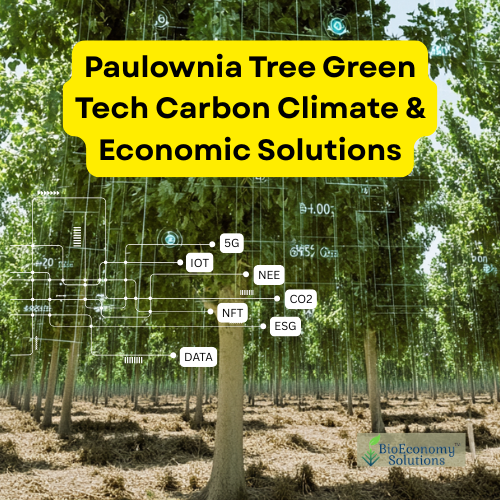
Platforms like Puro.Earth, Verra, and Net Eco Exchange are being used to certify Paulownia projects. Some use green tech real-time monitoring, which provides instant data of verifiable, high-frequency CO₂ uptake transparency for institutional buyers.
3. CRU and VCU Generation
Carbon Removal Units (CRUs) and Verified Carbon Units (VCUs) are issued based on performance metrics. Paulownia projects can sell these on voluntary markets or in compliance markets like CORSIA and EU ETS, where eligible.
4. Trading & Brokerage
Once credits are verified, they’re traded through brokers, or directly via aggregators and exchanges. Pricing depends on volume, verification, co-benefits, and credit type (removal vs. avoidance).
Market Potential and Revenue Forecast
Global Compliance Market
The global compliance market for carbon credits is massive. According to Refinitiv, the market has grown substantially, reaching a trading value of approximately $1.5 trillion in 2024, up from $950 billion in 2023. This represents about 15.7Gt CO2 equivalent traded across various compliance markets worldwide.
Global Voluntary Market
- The voluntary carbon market reached a value of $2.5 billion in 2023 and is projected to grow to $100-250 billion by 2030, according to recent analyses.
Paulownia Carbon Credits
Paulownia projects are uniquely poised to capitalize on this growth:
- Paulownia Per Tree Revenue: $8–$20 per tree/year depending on sequestration rates and market price.
- Paulownia Per Acre Revenue: With annual carbon income exceeds $23,000/acre/year.
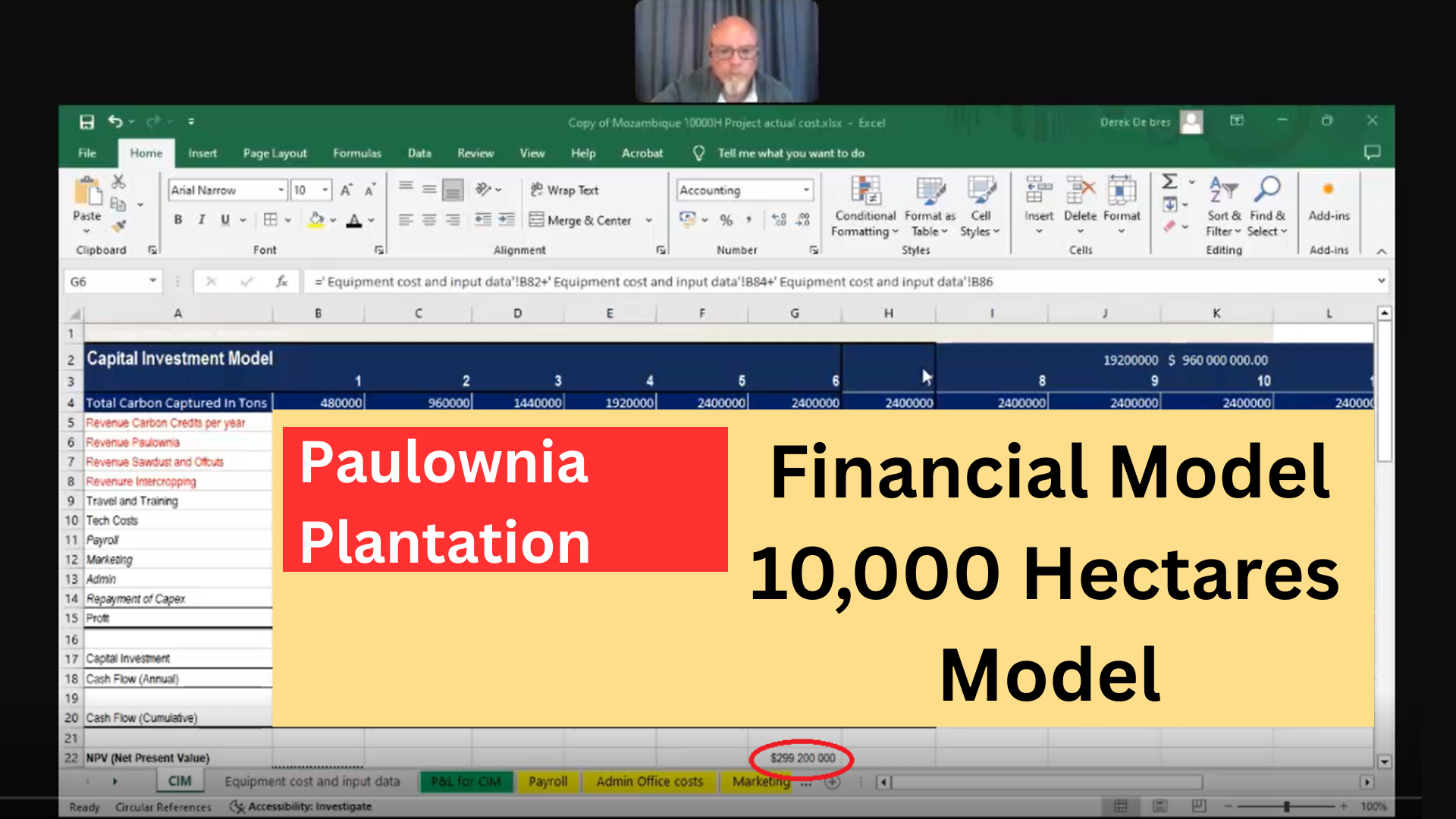
- Paulownia Large-Scale Projects: A 10,000-acre plantation could generate millions in carbon revenue, excluding additional revenue from timber, biochar, or biomass energy.
Challenges to Overcome
While the promise is strong, success depends on:
- Public perception: Planting mono-crops vs. integration of native species and food plots.
- Upfront capital: High costs of propagation, planting, and monitoring demand innovative finance models—like green bonds, pre-sold credits or tokenized carbon futures.
The Role of the Paulownia Carbon Market in Global Climate Strategy
Governments and corporations alike are under pressure to meet Net Zero targets. Nature-based solutions, especially green tech engineered agroforestry with proven MRV systems (Measurement, Reporting, Verification), are increasingly attractive.
Paulownia provides:
- ✅ High sequestration per acre
- ✅ Low land-use conflict (can grow on degraded land)
- ✅ Multi-benefit yield 💱 (carbon, timber, food, jobs)
- ✅ Fast credit generation timeline
It also aligns with over 10 UN Sustainable Development Goals, from poverty alleviation to climate action.
🔗 Watch the Replay Here – CLICK THE IMAGE BELOW

Conclusion: A Tree for the Times
As the world reimagines land use and carbon policy, the Paulownia carbon credit market represents a bold convergence of ecology, technology, and finance. It’s not just about planting trees—it’s about planting the right tree, in the right system, with the right data to turn carbon into capital.
With scalable potential and scientifically engineered reliability, Paulownia is more than a fast-growing tree—it’s a catalyst for a climate-resilient future and a profit center for forward-looking investors and landowners.
⏱ Next Steps
- ❎ Landowners: Explore converting acreage into Paulownia carbon farms.
- ❎ Investors: Evaluate biochar and carbon forestry funds linked to high-sequestration species.
- ❎ Buyers: Offset emissions with premium, verifiable Paulownia-based removal credits.
- ❎ Policymakers: Incentivize regenerative agroforestry under national carbon strategies.
🧭 Contact Us – Schedule a Call
Want to see what real-time ESG compliance looks like in action? Or need help building your ESG tech stack? Let’s talk.
By converting its carbon, growth, and timber value into blockchain-based tokens, Paulownia CDR creates a transparent, inclusive, and sustainable financial model that aligns with the goals of the UNCCD, Paris Agreement, and global reforestation efforts.
Contact Us
Where To Buy Paulownia Core Materials? QUESTIONS?
We’re happy to organize a time to speak with you about our ESG compliance solutions.
⏰ Here’s a link to my online calendar/schedule:
www.bioeconomysolutions.com/bookcall
BioEconomy Solutions
Office: 843.305.4777
Visit us at: https://bioeconomysolutions.com/paulownia-carbon-credits/ Let’s chat about paulownia tree solutions for sustainable Forest carbon credits projects.
LIKE|SHARE|COMMENT
Subscribe to our newsletter: https://bioeconomy-solutions.kit.com/45b34109e5