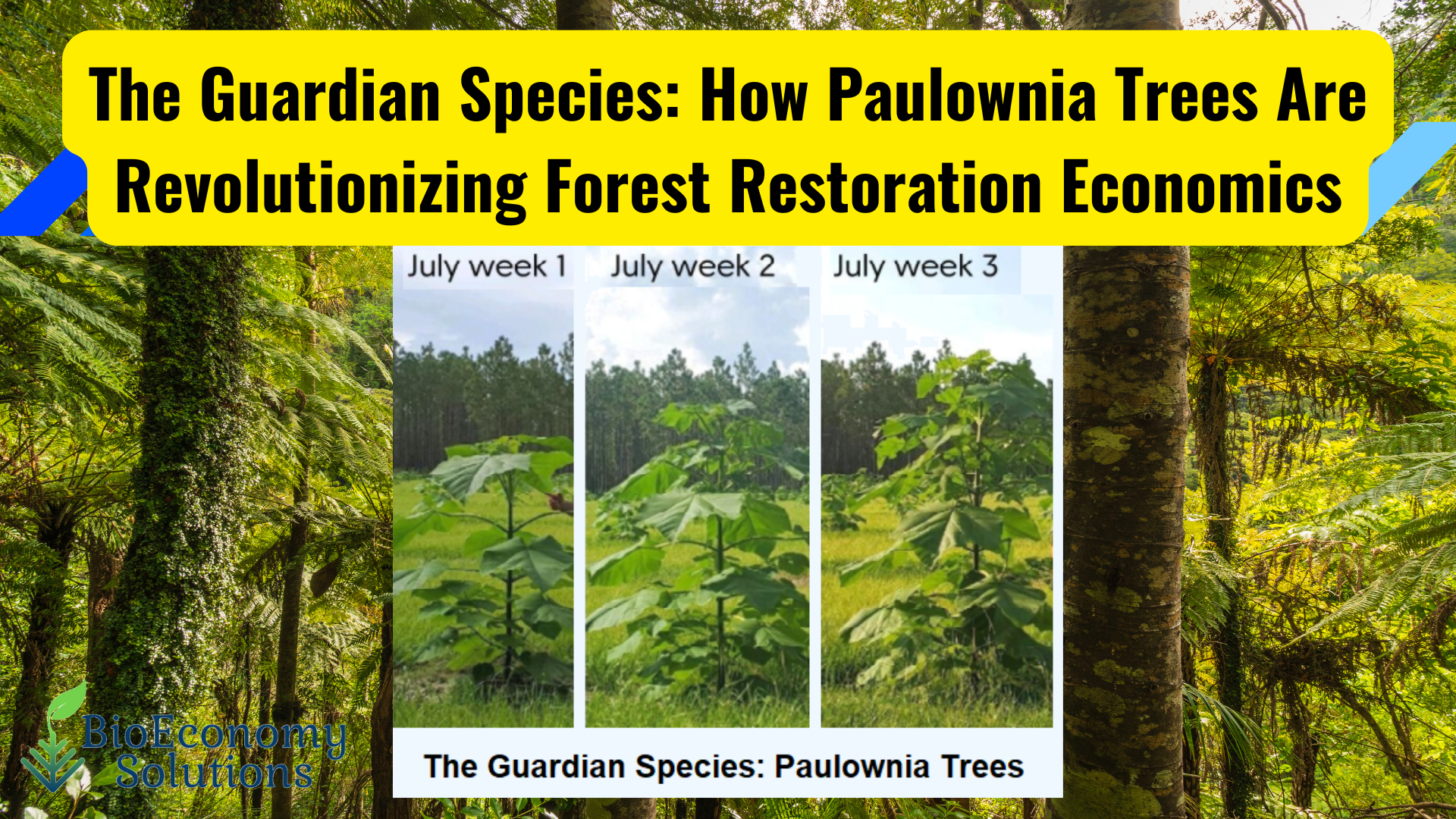
Here’s The Conservation Paradox We Can’t Ignore
Conservation projects fail at an alarming rate. Not because of bad intentions, but because of bad economics.
Traditional reforestation takes 20-50 years to show meaningful results. Investors lose patience. Communities lose income. And our climate crisis can’t wait.
But what if there was a way to accelerate ecosystem restoration while generating immediate economic returns?
Enter the concept of “guardian species” – fast-growing trees that protect and nurture native forests while delivering rapid carbon sequestration and sustainable revenue streams.
Why Native-Only Approaches Fall Short
The Brutal Reality:
- Native tree seedlings have 30-60% mortality rates in degraded soils
- Zero economic returns for the first 10-15 years
- Vulnerable to drought, pests, and human encroachment
- Limited carbon sequestration during critical establishment phase
The Economic Death Spiral: Without immediate returns, conservation projects become charity cases. Funding dries up. Local communities seek alternative income sources. The cycle of deforestation continues.
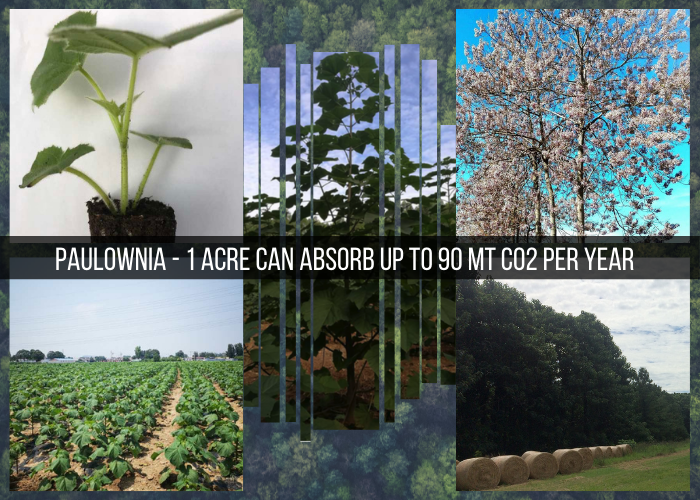
The Guardian Species Solution
Paulownia trees don’t compete with native species – they enable their success.
Here’s how the guardian model works:
Phase 1: Rapid Establishment (Years 1-3)
- Paulownia trees establish quickly in degraded soils
- Deep taproots break up compacted earth
- Large leaves create beneficial microclimate
- Immediate carbon sequestration begins (10-15 tons CO2/acre/year)
Phase 2: Ecosystem Preparation (Years 3-5)
- Nitrogen fixation improves soil fertility
- Canopy provides wind protection for native seedlings
- Root systems prevent erosion and improve water retention
- First timber harvest generates revenue for native species planting
Phase 3: Native Integration (Years 5-15)
- Native species planted in improved soil conditions
- Paulownia provides nurse tree protection
- Selective Paulownia harvesting creates forest gaps for native growth
- Continuous revenue stream funds long-term conservation
Phase 4: Mature Ecosystem (Years 15+)
- Native canopy established with 80%+ higher survival rates
- Paulownia transitions to understory or edge species
- Diversified forest ecosystem with enhanced biodiversity
- Sustainable economic model proven and replicable
The Economic Game-Changer
Traditional Conservation Model:
- $5,000-10,000/acre upfront investment
- 20+ years to break even
- High failure rates
- Dependent on grants and donations
Guardian Species Model:
- $3,000-5,000/acre initial investment
- Revenue generation begins Year 3
- 15-20% IRR over 10 years
- Self-sustaining economic engine
Revenue Streams Include:
- Premium timber harvests every 5-7 years
- Carbon credits ($50-150/ton for biochar)
- Soil improvement services
- Biodiversity offset credits
- Sustainable biomass for local energy needs
Real-World Success Stories
China’s Loess Plateau Restoration: The world’s largest ecosystem restoration project used fast-growing pioneer species to restore 35,000 square miles of degraded land. The economic model? Guardian species generated income that funded native forest establishment, lifting 2.5 million people out of poverty while sequestering massive amounts of carbon.
Costa Rica’s Payment for Ecosystem Services: By combining fast-growing timber species with native conservation, Costa Rica reversed deforestation while creating a $500 million forest economy. Forest cover increased from 24% to 54% in just 30 years.
The Climate Urgency Factor
We don’t have 50 years to wait for native forests to mature.
Climate models show we need massive carbon sequestration within the next decade. Guardian species like Paulownia can:
- Sequester 50-100 tons CO2/acre in first 5 years
- Enable native species establishment with 3x higher success rates
- Create economic incentives for long-term forest protection
- Scale rapidly across degraded landscapes worldwide
Addressing the Skeptics
“Isn’t this just greenwashing with exotic species?”
No. Guardian species are carefully selected, sterile hybrids that cannot spread naturally. They’re tools for ecosystem restoration, not ecosystem replacement.
“What about biodiversity concerns?”
Guardian species actually enhance biodiversity by:
- Creating habitat corridors during establishment
- Improving soil conditions for native species
- Providing economic alternatives to habitat destruction
- Enabling larger-scale conservation projects through economic viability
“How do we ensure native species aren’t abandoned?”
The economic model requires native species success for long-term sustainability. Guardian species revenue funds native planting, monitoring, and protection in perpetuity.

The Investment Opportunity
ESG funds and impact investors are sitting on $30+ trillion in assets seeking measurable environmental returns. The guardian species model offers:
Measurable Impact:
- Verified carbon sequestration
- Biodiversity monitoring protocols
- Soil health improvements
- Community economic development
Financial Returns:
- 15-20% IRR potential
- Multiple exit strategies
- Inflation-hedged timber assets
- Growing carbon credit premiums
Scalability:
- Applicable across 60+ countries
- Proven in diverse ecosystems
- Standardized implementation protocols
- Technology-enabled monitoring
The Path Forward
The guardian species model isn’t just about trees – it’s about reimagining conservation economics.
For Investors: Access to a $50 billion nature-based asset class with measurable returns and impact.
For Conservationists: A tool to accelerate ecosystem restoration while ensuring long-term economic sustainability.
For Communities: Immediate income opportunities that grow into generational wealth through forest stewardship.
For Our Planet: A scalable solution that addresses climate change, biodiversity loss, and rural poverty simultaneously
The Time Is Now
Every month we delay ecosystem restoration is another month of accelerating climate damage. Traditional approaches, while well-intentioned, simply can’t scale fast enough.
Guardian species offer a bridge between urgent climate action and long-term conservation success. They’re not the complete solution – but they’re the catalyst that makes comprehensive solutions economically viable.
The question isn’t whether we can afford to try this approach.
The question is whether we can afford not to.
Ready to explore guardian species opportunities for your portfolio or conservation project? The economics of forest restoration are changing. The early movers will capture both the highest returns and the greatest impact.
Contact us to learn how Paulownia guardian species can accelerate your ecosystem restoration timeline while generating sustainable returns.
Contact Us!
📣 If you’re an investor, policy leader, or sustainability advocate—we invite you to connect. Let’s put capital to work in nature-based carbon sequestration that delivers at scale.
This isn’t just green finance. This is regenerative economics.
BioEconomy Solutions is a Carbon Dioxide Removal (CDR) Project Developer. Talk to us about our TREE PLANTING strategies with Paulownia trees.
We’re happy to organize a time to speak with you about our paulownia trees and lumber we have for sale. Please book your preferred time to speak directly.
Here’s a link to my online calendar/schedule:
www.bioeconomysolutions.com/bookcall
BioEconomy Solutions
Office: 843.305.4777
Visit us at: https://bioeconomysolutions.com/paulownia-carbon-credits/ Let’s chat about paulownia tree solutions for sustainable Forest carbon credits projects.
LIKE|SHARE|COMMENT
Enjoy this article? You may also enjoy “Carbon Developers Choose Paulownia Trees” https://www.linkedin.com/pulse/carbon-developers-choose-paulownia-trees-victor-garlington-imh4e/
Download Your FREE REPORT