Paulownia 42.86% Lighter Than Swamp Ash

Paulownia wood is approximately 45% to 55% lighter than swamp ash by weight. Some sources even suggest the difference can be as high as 60% depending on the specific samples.

Pictured above: The paulownia board is larger than the swamp ash board. This Paulownia Sample Proved 42.86% Lighter Than Swamp Ash.

This percentage is derived from the average dried weights (densities) of the two woods:

Paulownia wood has an average dried weight of around 18 lbs/ft³ (280 kg/m³).
Swamp ash has an average dried weight of approximately 32 to 33 lbs/ft³ (510 to 530 kg/m³), though some sources list it as high as 42 lbs/ft³.

Guitar Builders In The Know

Here’s what boutique builders and kit makers already know:

🎸 G&L Guitarsuses Paulownia for special lightweight runs of their ASAT and Legacy models.

🎸 Reverend Guitarshas featured Paulownia in limited editions, praising its resonance and comfort.

🛠️ Warmoth and Guitar Fetish (GFS)offer Paulownia bodies for Strat and Tele-style kits—perfect for DIY builders who want featherweight guitars.

🪚 Custom luthiers are fielding more requests for Paulownia than ever, especially for players with shoulder or back issues.

Why The Switch?

  • Extreme Lightness: Paulownia is as light as balsa, making it the go-to for anyone who plays long gigs or wants a travel-friendly axe.
  • Surprising Resonance: Despite its low density, Paulownia delivers a clear, articulate tone—especially when paired with quality hardware.
  • Sustainability & Cost: Grows fast, replenishes quickly, and is far more affordable than traditional tone woods.

Paulownia is now used by major, globally recognized manufacturers like Fender for specific models aimed at achieving extreme lightness (e.g., the Brad Paisley Road Worn Telecaster).

The use of Paulownia is currently most common among:

  1. Major manufacturers for specialized, lightweight, or signature models.
  2. High-end boutique builders.
  3. Aftermarket/DIY body suppliers.

Based on industry research and known models, here is a list of Fender’s competitors and other prominent brands known to produce guitars with Paulownia cores or bodies.
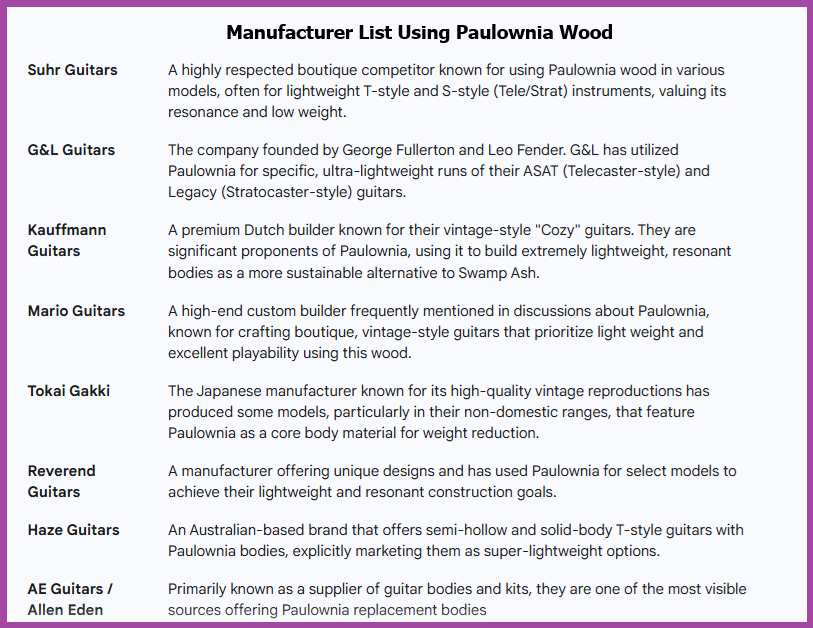
Guitar Manufacturer BIG Names Using Paulownia

Suhr Guitars
G&L Guitars
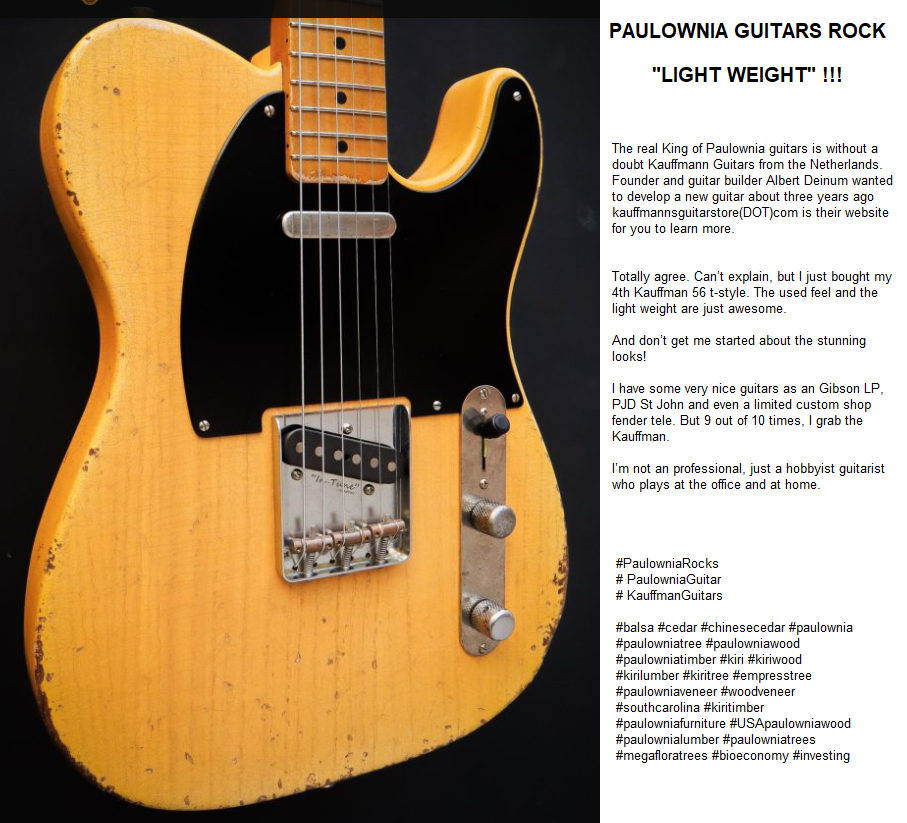
Kauffmann Guitars
Mario Guitars
Tokai Gakki
Reverend Guitars
Haze Guitars
AE Guitars / Allen Eden
Fender Guitars

Did We Miss ANY? Comment below to add your suggested guitar manufacturers using paulownia wood lightweight materials.

Making The Change
If you’re tired of heavy guitars weighing you down, it’s time to try what the pros are already using.

Whether you’re a boutique builder, a custom shop, or a DIY enthusiast, Paulownia is the material that’s changing the game for lightweight, sustainable, and great-sounding guitars.

Curious about how Paulownia could work for your next build? Drop a comment or DM for supplier info, and real-world feedback to make the switch.
CONTACT US
Contact BioEconomy Solutions paulownia lumber specialists to discuss specifications, availability, and applications for your next project.

Where To Buy Paulownia? Paulownia Wood For Sale – QUESTIONS?

Visit our web page. https://bioeconomysolutions.com/paulownia-lumber/

We’re happy to organize a time to speak with you about our paulownia trees and lumber we have for sale. Please book your preferred time to speak directly.

Here’s a link to my online calendar/schedule:

www.bioeconomysolutions.com/bookcall

BioEconomy Solutions

mail@BioEconomySolutions.com

Office: 843.305.4777
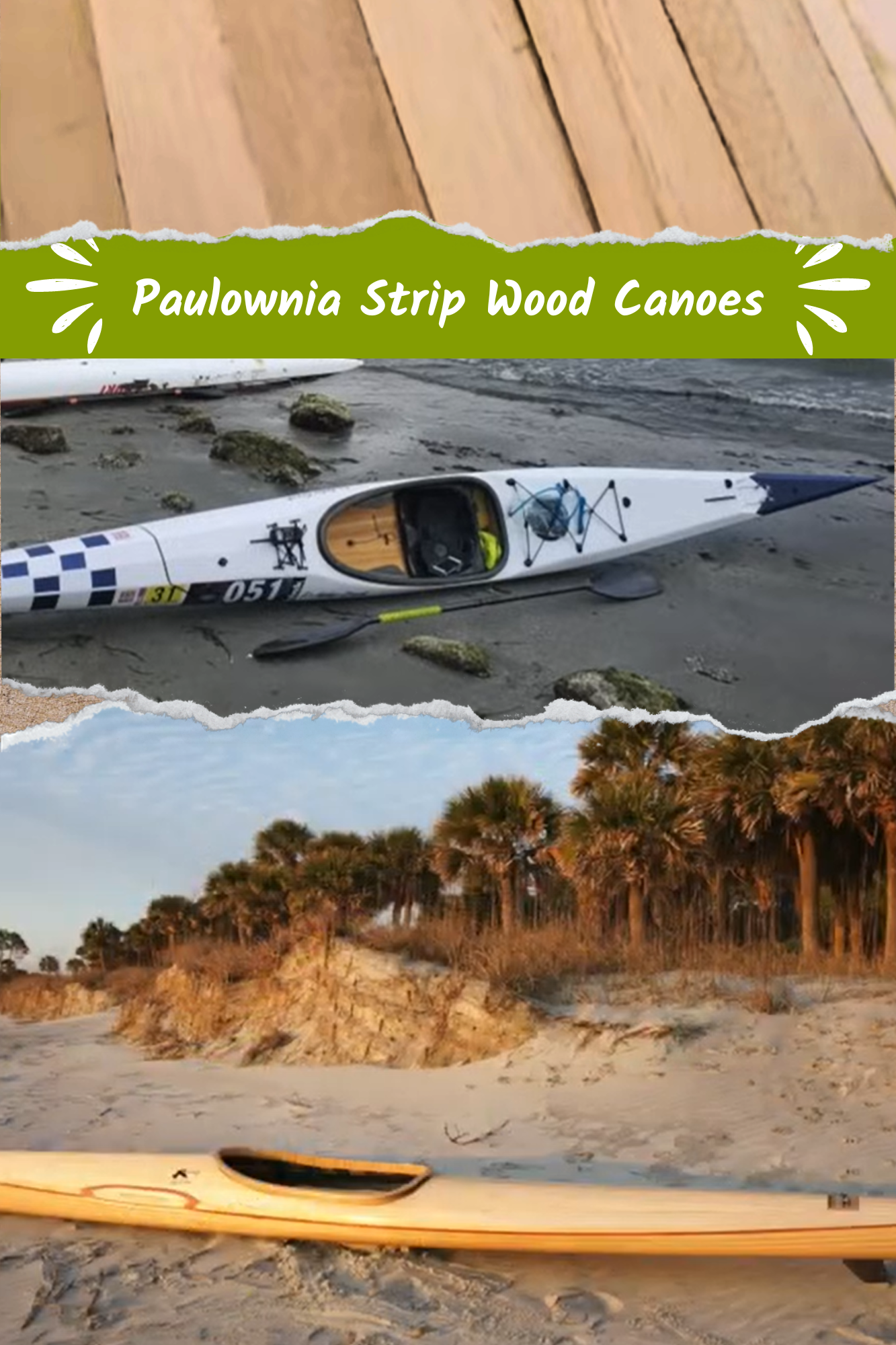
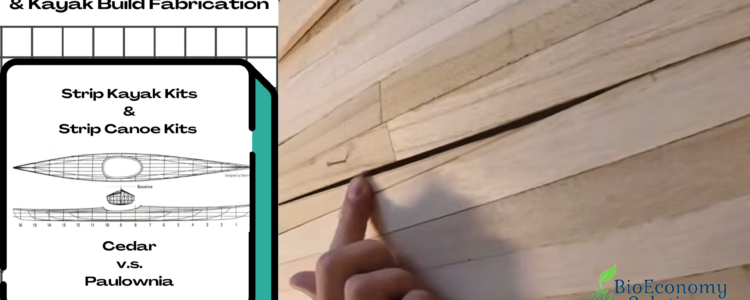
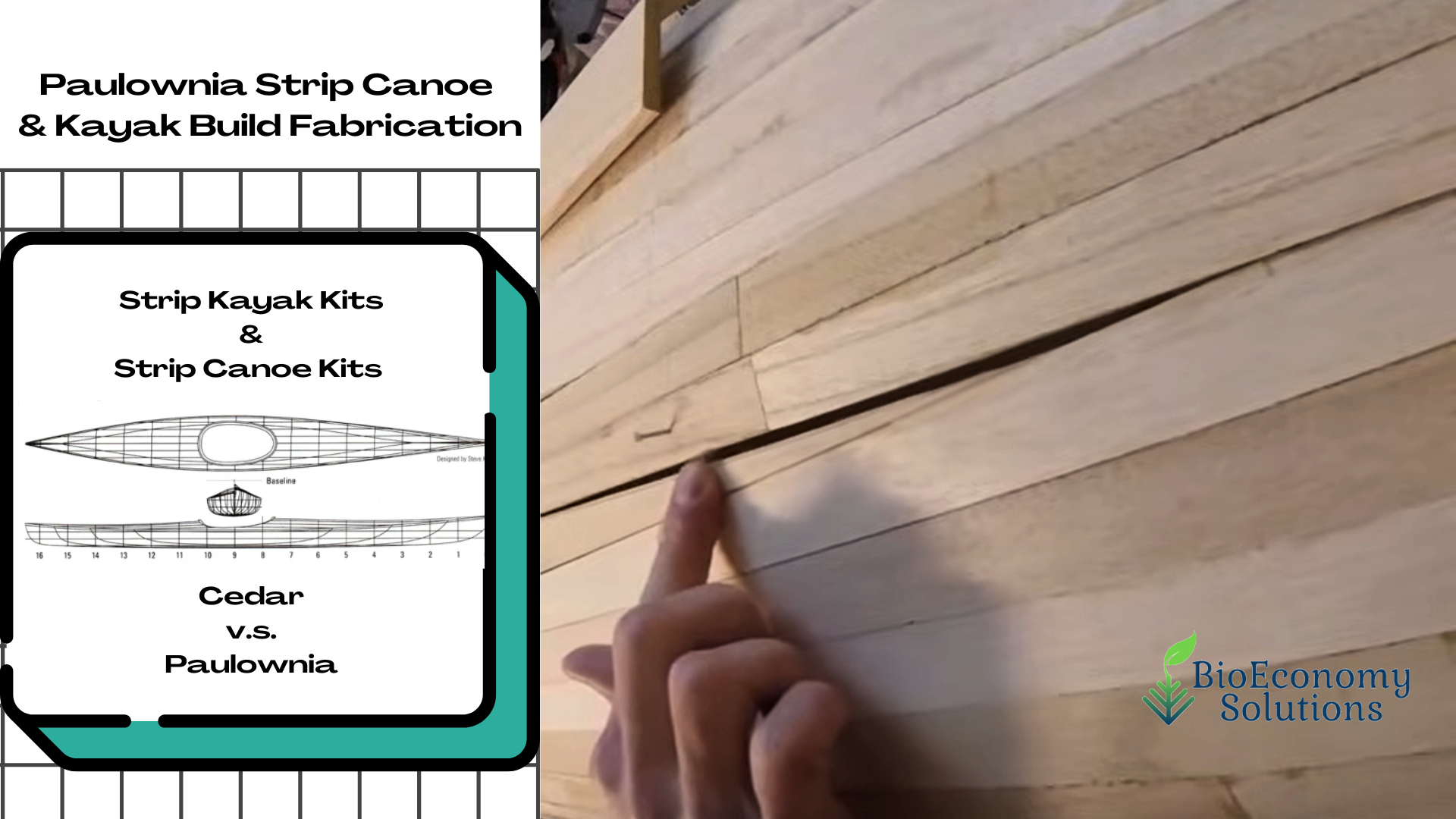
Ever consider a cedar strip canoe or kayak project? Have you also considered doing the same project with paulownia? Paulownia as a replacement for cedar? What is paulownia wood link?

A cedar strip canoe is made by assembling strips of wood over a wooden frame and they are fun DIY projects for skilled woodworkers. A quality cedar strip kayak kit or a
cedar strip canoe kit will guide you with various style designs, directions and give you’re a fun usable new toy after your finished 🙂

What is the best wood for a canoe strip?
Cedar is often used to make a wooden strip canoe but paulownia wood could also be used. Fiberglass coverings are also used to make it more durable and cut down on the required maintenance. 
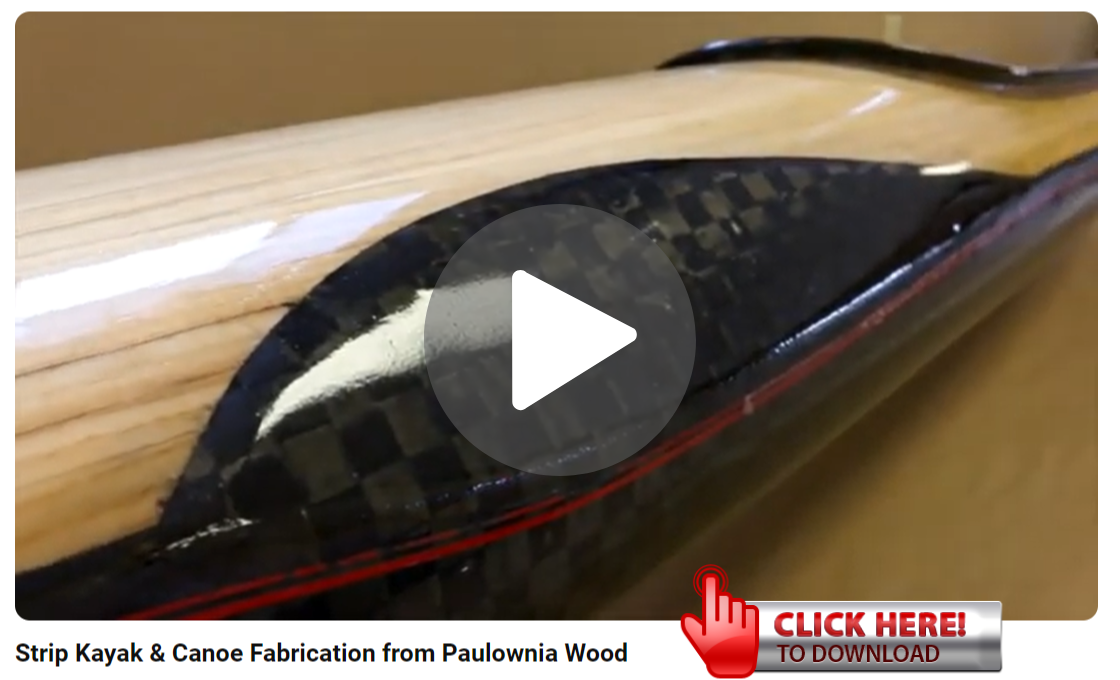
Video – Strip Kayak & Canoe Fabrication from Paulownia Wood
https://youtu.be/2CRfurszYVk?si=ft5ZmuawoTV5Yw8G


What is the weight of cedar v.s. paulownia?

  • Cedar is rated at 22 lbs per cubic foot – Janka Hardness: 320 lbf (1420 N)
  • Paulownia is rated at 18 lbs per cubic foot – Janka Hardness: 300 lbf (1,330 N)
  • Paulownia Wood Total = 18 % decrease in weight

White Cedar strip canoes & kayaks kits

Cedar is the usual goto wood for canoe ribs and planking. Its light weight, strength, flexibility and rot resistance can not be matched by any other except paulownia wood. Production of northern white cedar lumber is mainly in Maine and the Great Lake States, yet white cedar, it is still very difficult to find, select and sort out the knots and defect-free lumber that is required for kayak construction. Paulownia is usually knot free which is something common to the species.

How many hours does it take to build a paulownia strip canoe DIY style?

What can an amateur builder expect? As a guideline a first time builder who is making a stemless 15′ Anglers Day with purchased seats and thwarts, simple decks, and no fancy marquetry should commit a minimum of 10 full weekends. That’s 20 full days or 160 hours.
“I think it’s really worth the experience. I hope you try it!” It takes a lot of time, around 130 – 160 hours on average. So when it’s finished and you’ve created a beautiful, strong, light paulownia strip canoe, and you will be proud of your unique creation.

How much wood do I need for a paulownia strip canoe?
It takes 1200-to-1300 lineal feet of NWC cedar or paulownia strips to build most tandem canoes, roughly $450-500 for strips. An easy method to figure the lineal footage you need for any particular hull design is to measure the the distance gunwale to gunwale around the center form.

Northern white cedar lumber costs $4 to $7 per square foot, this variety is less dense than other cedars, making it easy to cut and maneuver.
Paulownia lumber grown in North America cost $4 to $8 per square foot, this wood is used in a variety of water action sports from surfboards, paddle boards, skis etc.

How heavy is a cedar strip canoe v.s. a paulownia strip canoe?
For standard strip built construction with 1/4″ thick western red cedar strips with 6 ounce fiberglass inside and out, a good estimate will be 0.7 pound per square foot of surface area. In other words a boat like the Guillemot with a surface area of 47 square feet, this will give a bare hull weight of about 32 pounds. Using paulownia wood strips in this same build you can expect a total bare hull weight of 26 lbs saving you a total of 6 lbs of total weight.

***

Where To Buy Paulownia? Paulownia Wood For Sale – QUESTIONS?

What is paulownia wood? https://bioeconomysolutions.com/what-is-paulownia-wood/

Visit our web page. https://bioeconomysolutions.com/paulownia-lumber/

We’re happy to organize a time to speak with you about our paulownia trees and lumber we have for sale. Please book your preferred time to speak directly.

Here’s a link to my online calendar/schedule:

www.bioeconomysolutions.com/bookcall

BioEconomy Solutions

mail@BioEconomySolutions.com

Office: 843.305.4777
Recently we had some visitors to our paulownia plantation. It was their first time with paulownia wood and as always if you place
a dried plank of paulownia in their hands their faces change as if they had seen a magic trick, because of the lightness of the paulownia wood plank.

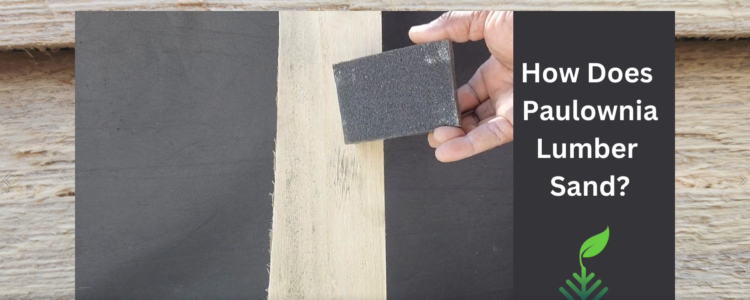
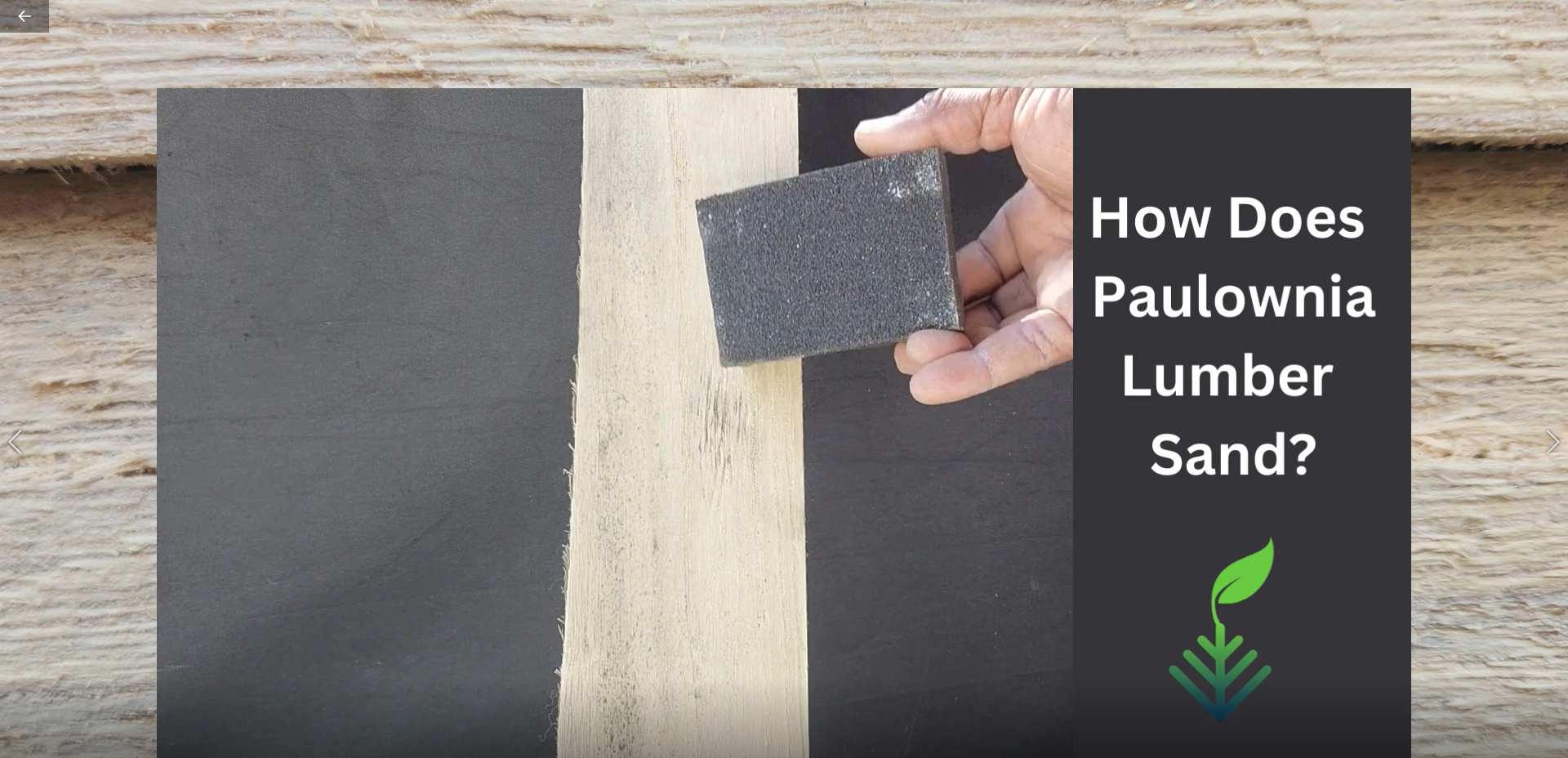
So the questions begin and this post is about one question that we are asked quite often… How does paulownia wood lumber sand?

This is part of our video short takes on the process of sanding paulownia tree wood lumber.

Video Link: https://youtu.be/hIuKduwqzvc

Paulownia wood takes nails easily, and no it did not split or crack.

Finishing – The sap of Paulownia is not gum or resinous based, thus the application of finishing products with various solvents as carriers does not risk any interaction with the timber, contributing to the very good finishing properties of Paulownia products. The timber readily takes stains, estapols and paints with excellent finished surfaces.

Workability – All aspects of carpentry such as machining, nailing, screwing, gluing, sanding, sawing and handling are very user friendly with no splinters, cracking or splitting and excellent take-up of glues and finishes.

***

Where To Buy Paulownia? Paulownia Wood For Sale – QUESTIONS?

What is paulownia wood? https://bioeconomysolutions.com/what-is-paulownia-wood/

Visit our web page. https://bioeconomysolutions.com/paulownia-lumber/

We’re happy to organize a time to speak with you about our paulownia trees and lumber we have for sale. Please book your preferred time to speak directly.

Here’s a link to my online calendar/schedule:

www.bioeconomysolutions.com/bookcall

BioEconomy Solutions

mail@BioEconomySolutions.com

Office: 843.305.4777
Recently we had some visitors to our paulownia plantation. It was their first time with paulownia wood and as always if you place
a dried plank of paulownia in their hands their faces change as if they had seen a magic trick, because of the lightness of the paulownia wood plank.

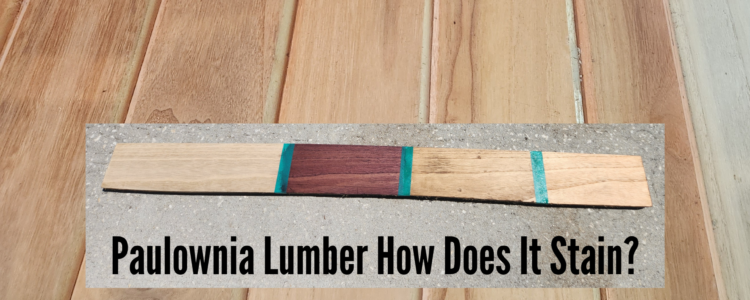
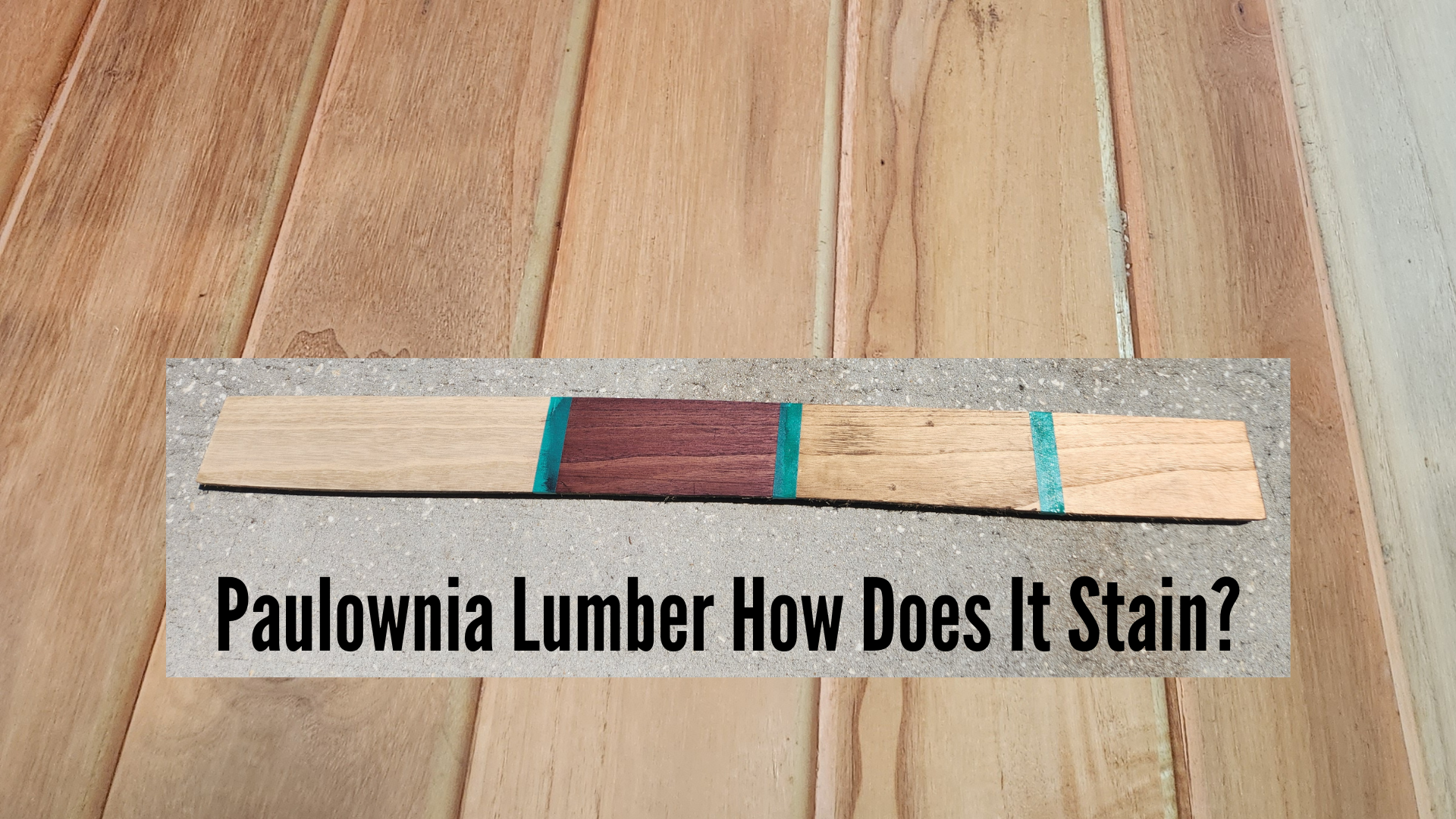
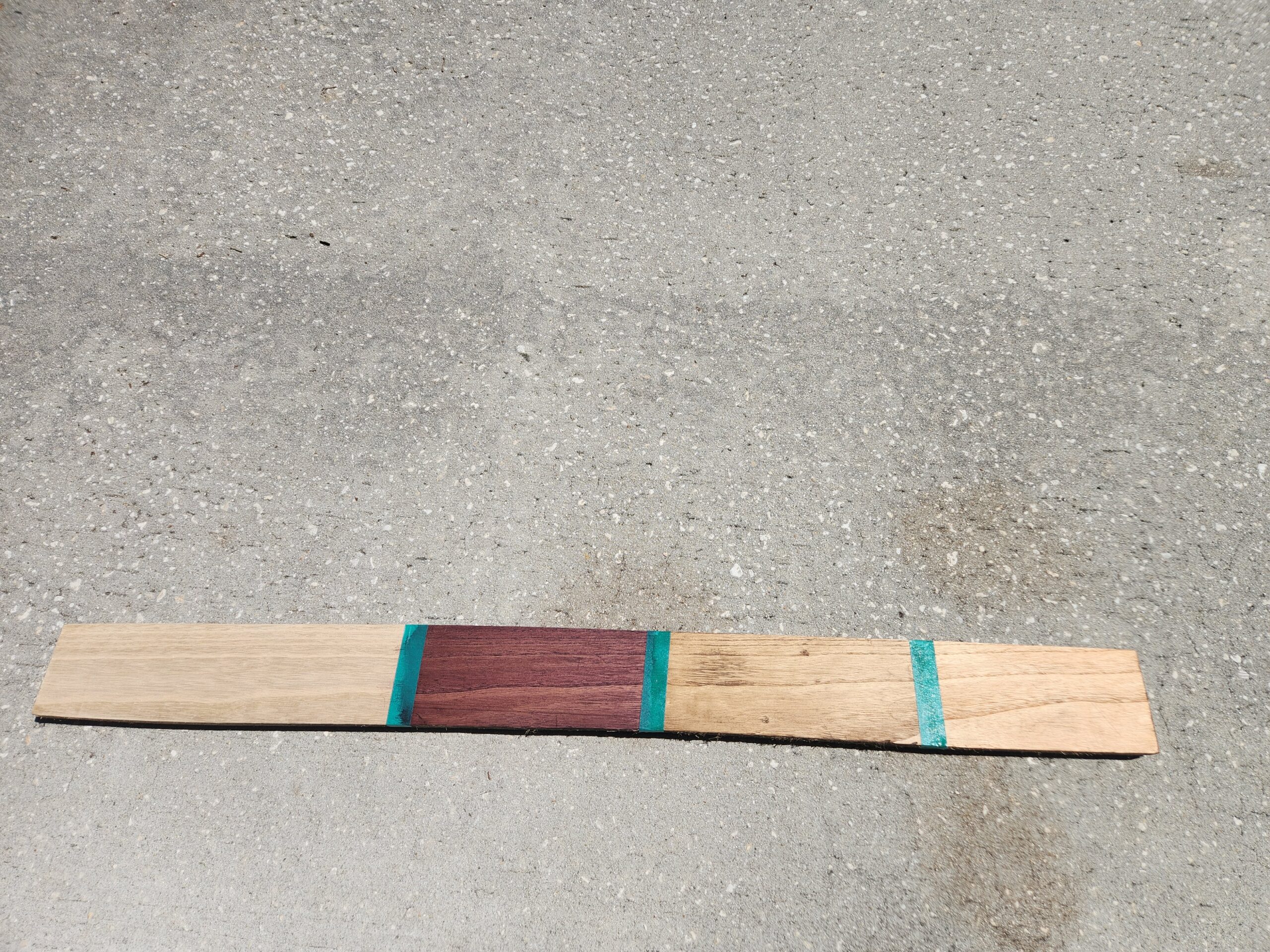
So the questions begin and this post is about one question that we are asked quite often… How does paulownia wood lumber take varnish or wood stain?

This is part of our “video short takes” on the process of staining paulownia tree wood lumber.

Video – https://youtu.be/dM7uztxipyY


Paulownia wood takes nails easily, and no it did not split or crack.

Finishing – The sap of Paulownia is not gum or resinous based, thus the application of finishing products with various solvents as carriers does not risk any interaction with the timber, contributing to the very good finishing properties of Paulownia products. The timber readily takes stains, estapols and paints with excellent finished surfaces.

Workability – All aspects of carpentry such as machining, nailing, screwing, gluing, sanding, sawing and handling are very user friendly with no splinters, cracking or splitting and excellent take-up of glues and finishes.

***

Where To Buy Paulownia? Paulownia Wood For Sale – QUESTIONS?

What is paulownia wood? https://bioeconomysolutions.com/what-is-paulownia-wood/

Visit our web page. https://bioeconomysolutions.com/paulownia-lumber/

We’re happy to organize a time to speak with you about our paulownia trees and lumber we have for sale. Please book your preferred time to speak directly.

Here’s a link to my online calendar/schedule:

www.bioeconomysolutions.com/bookcall

BioEconomy Solutions

mail@BioEconomySolutions.com

Office: 843.305.4777