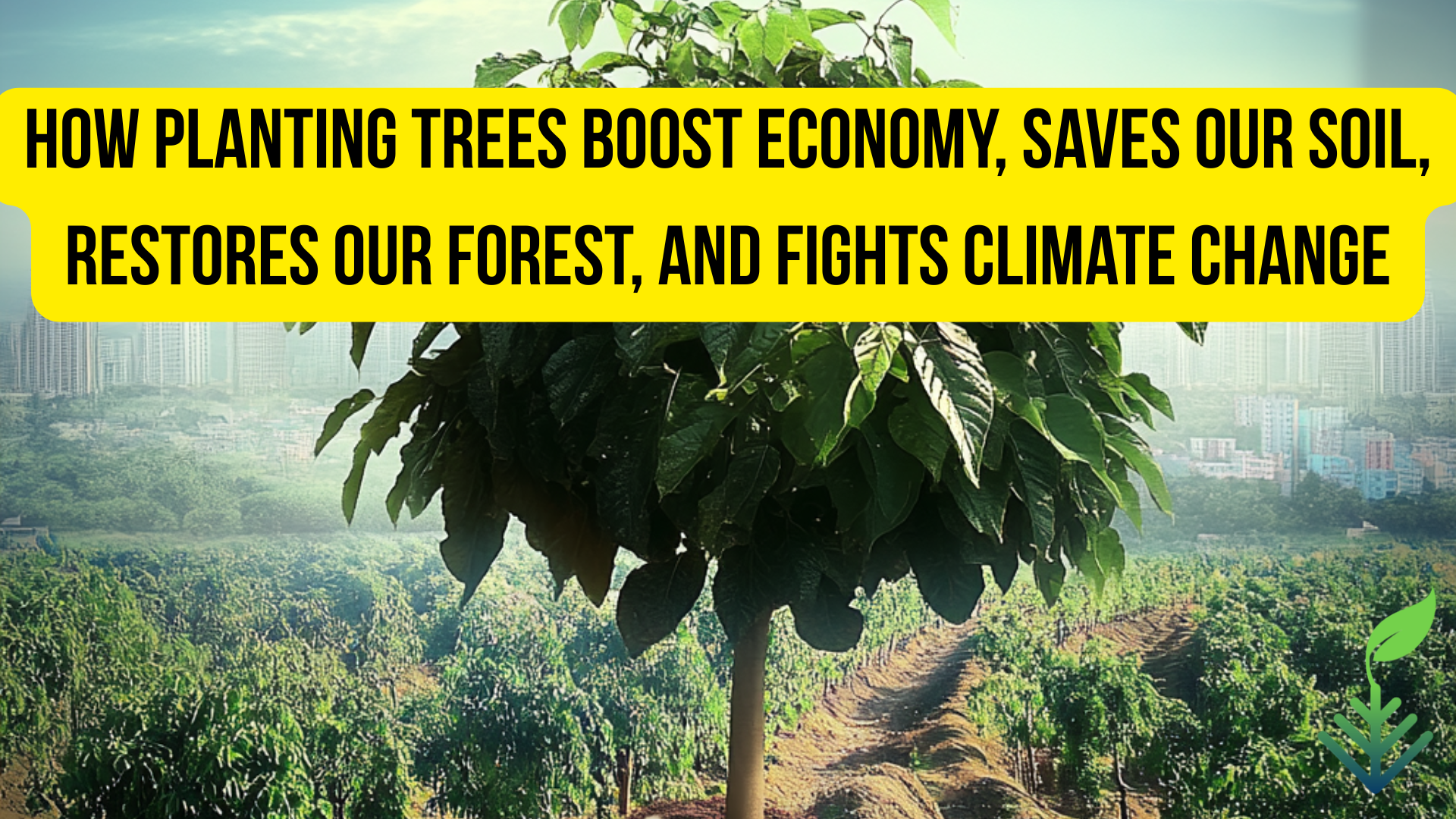
Planting trees offers multifaceted benefits, impacting the economy, soil health, forest restoration, and climate change mitigation.
Trees enhance air and water quality, sequester carbon, and contribute to a more stable climate. They also play a crucial role in soil conservation, reducing erosion and improving water retention.
Additionally, tree planting can create economic opportunities through sustainable forestry practices and agroforestry.

Here’s a more detailed look at the benefits:
Economic Boost:
- Agroforestry:Integrating trees into farms can increase crop yields, diversify income sources (timber, fruits, nuts), boosting farm revenues.
- Sustainable Forestry:Reforestation projects can create jobs in nurseries, planting, and sustainable harvesting of forest products.
- Tourism:Healthy forests attract tourists, supporting local economies.
Soil Conservation:
- Erosion Control: Tree roots bind soil together, preventing erosion from wind and water.
- Water Retention: Trees absorb rainwater, reducing runoff and allowing it to slowly infiltrate the soil, replenishing groundwater.
- Soil Fertility: Trees contribute to soil health by adding organic matter and improving nutrient cycling.
Forest Restoration:
- Ecosystem Services: Forests provide clean air and water, regulate climate, and support biodiversity.
- Habitat Restoration: Reforestation can restore habitats for numerous species, contributing to overall biodiversity.
- Resilience: Healthy forests are resilient to climate change impacts like droughts and extreme weather.
Climate Change Mitigation:
- Carbon Sequestration: Trees absorb carbon dioxide from the atmosphere and store it in biomass.
- Reduced Greenhouse Gases: By absorbing CO2, trees reduce the concentration of greenhouse gases in the atmosphere.
- Cooling Effects: Trees reduce temperatures through shading and transpiration.

Why Paulownia Trees?
We’re facing growing climate challenges and seeing a continued global push to reduce deforestation, boost biodiversity, and combat the adverse effects of climate change.
One remarkable tool in this fight is the Paulownia tree (genus Paulownia), a fast-growing hardwood that has gained attention for its numerous environmental benefits. From its rapid growth to its ability to support biodiversity and aid in reforestation efforts.
Here is why the Paulownia trees is a vital tool in the fight against deforestation, and why they’re invaluable for afforestation and reforestation efforts.
1. Paulownia Trees and Climate Action
Fast Carbon Sequestration Paulownia is one of the fastest-growing trees in the world, with some species reaching up to 15 feet of growth per year under optimal conditions. This rapid growth rate translates to an impressive ability to absorb carbon dioxide from the atmosphere. In fact, Paulownia has been shown to sequester more carbon than many other tree species due to its large leaves, vigorous growth, and high biomass production.
By planting Paulownia trees, we can significantly contribute to climate change mitigation by removing CO2 from the air, a crucial step in reducing global warming. A young Paulownia tree can absorb around 48 pounds of CO2 annually in the early stages of growth, with the potential to store more as it matures.
Soil Regeneration Another climate benefit of Paulownia is its ability to regenerate soil. The tree’s deep roots help in breaking up compacted soils and improving soil structure. This makes Paulownia ideal for areas with poor, eroded, or degraded soils, a common issue in regions struggling with deforestation. By restoring the soil’s health, Paulownia trees not only boost the local ecosystem but also enable other plants to thrive in the area.
2. Biodiversity Support: A Key to Ecosystem Health
Creating Habitat for Wildlife Paulownia trees provide important habitats for a variety of species. Their large leaves offer shelter and their blossoms provide nectar to pollinators like bees and butterflies, which are crucial for maintaining ecosystem health. Although Paulownia trees are not native in many parts of the world, they are being used successfully in agroforestry and reforestation projects to support wildlife in biodiversity hotspots.
In addition to being a pollinator-friendly tree, Paulownia’s diverse ecosystem of roots, leaves, and flowers serves as a food source for various insects, birds, and small mammals. When used in afforestation or reforestation efforts, it can enhance biodiversity by attracting a wide range of species that rely on tree-based ecosystems for sustenance and shelter.
Resilient to Pests and Diseases One of the advantages of Paulownia is its resilience to pests. It has a natural resistance to insects and diseases, which means it requires fewer pesticides and other harmful chemicals to thrive. This reduces the need for harmful agricultural practices, which is vital when looking to preserve both biodiversity and soil health.

3. Paulownia Trees and Deforestation: A Sustainable Alternative
Reducing Pressure on Natural Forests Deforestation is one of the most pressing issues facing our planet today. The world loses over 10 million hectares of forest each year due to agricultural expansion, logging, and urbanization. This loss of forested land has devastating effects on biodiversity, soil quality, and the climate.
However, Paulownia trees offer a solution to this crisis. Because they grow quickly and can be harvested for timber in as little as 8-12 years, they provide a sustainable alternative to traditional timber harvesting. This shorter harvest cycle reduces the need for logging old-growth forests, thus easing the pressure on natural ecosystems.
Additionally, Paulownia can be planted on marginal land or in agroforestry systems—a method of growing trees alongside crops. This combination of crops and trees not only helps preserve forest ecosystems but also generates additional income for farmers. By using Paulownia for sustainable timber and biomass, we can combat illegal logging and support legal, sustainable forestry practices.
4. Afforestation & Reforestation: Restoring Our Ecosystems
Rapid Reforestation Paulownia’s exceptional growth rate makes it an ideal candidate for reforestation and afforestation efforts. In reforestation, where the goal is to restore damaged or destroyed ecosystems, Paulownia can quickly cover large areas of land, providing critical canopy cover and stabilizing soil.
Its multi-stem growth (when coppiced) makes it a good candidate for restoring degraded lands, especially in areas affected by desertification or overgrazing. Once established, these trees can form the foundation of a larger ecosystem, paving the way for native species to reintroduce themselves into the area.
Afforestation for Carbon Credits In afforestation (the process of planting trees in areas where there were no previous forests), Paulownia’s rapid growth allows for large-scale planting projects that can have immediate environmental benefits. These trees help to build carbon credits, which can be sold to businesses and governments looking to offset their carbon emissions. This creates a financial incentive for afforestation projects that contribute positively to the environment.

UGANDA Paulownia Trees Growing Fast

UGANDA Paulownia Trees Growing on Arid Land
5. The Future of Paulownia in Forest Restoration and Sustainability
As the world grapples with the urgent need for climate action, Paulownia trees offer a unique tool for tackling deforestation, boosting biodiversity, and supporting afforestation and reforestation efforts. With their fast growth, carbon-sequestering power, and ability to thrive in degraded soils, Paulownia is becoming a key player in the battle against climate change.
However, it’s essential that Paulownia is planted thoughtfully in the right ecosystems, as it is not native to many parts of the world and can become invasive if not managed properly. In regions where it’s appropriate, Paulownia’s role in sustainable forestry, habitat restoration, and ecosystem management cannot be overstated.
By integrating Paulownia trees into climate strategies, we can move closer to reversing the damage done to our planet, one tree at a time. Whether it’s by reforesting degraded lands, creating sustainable timber resources, or supporting biodiversity, Paulownia proves to be a valuable ally in our shared goal of restoring a healthy, thriving planet.
Conclusion
The Paulownia tree, with its FAST growth rate, carbon capture abilities, and adaptability, is a powerful tool in climate change mitigation, biodiversity support, and sustainable forest management. When used appropriately in afforestation and reforestation projects, it holds the potential to restore ecosystems, combat deforestation, and provide long-term environmental and economic benefits.
Contact Us
BioEconomy Solutions is a Carbon Dioxide Removal (CDR) Project Developer. Talk to us about our TREE PLANTING strategies with Paulownia trees.
We’re happy to organize a time to speak with you about our paulownia trees and lumber we have for sale. Please book your preferred time to speak directly.
Here’s a link to my online calendar/schedule:
www.bioeconomysolutions.com/bookcall
BioEconomy Solutions
Office: 843.305.4777
Visit us at: https://bioeconomysolutions.com/paulownia-carbon-credits/
Let’s chat about paulownia tree solutions for sustainable Forest carbon credits projects.
LIKE|SHARE|COMMENT
Enjoy this article? You may also enjoy “Carbon Developers Choose Paulownia Trees”
https://www.linkedin.com/pulse/carbon-developers-choose-paulownia-trees-victor-garlington-imh4e/
Get a FREE copy of Paulownia Carbon Report: https://bioeconomy-solutions.kit.com/45b34109e5

Get a FREE copy of Paulownia Carbon Report
