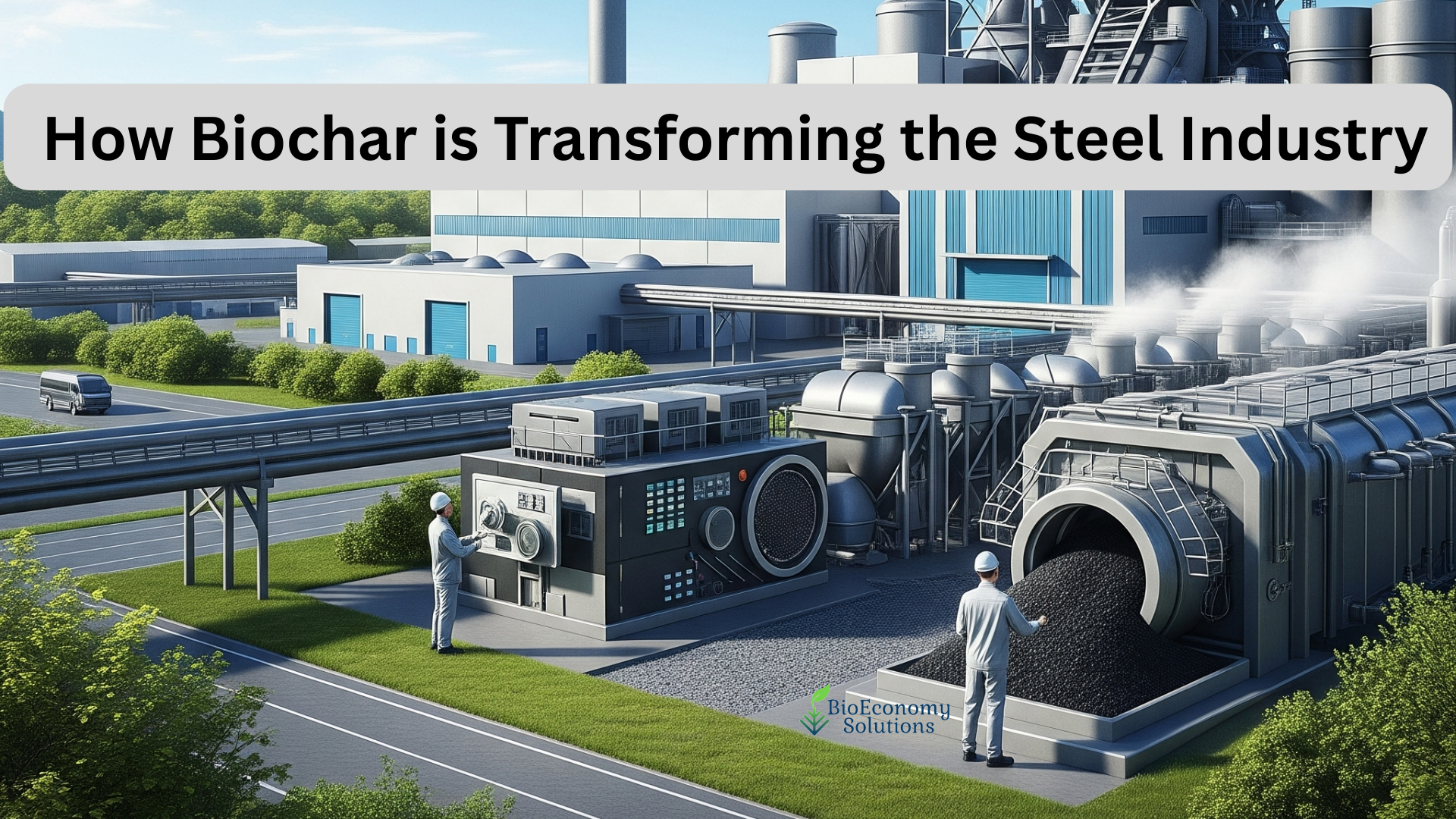
The steel industry is one of the largest industrial emitters of carbon dioxide, accounting for approximately 7–9% of global CO₂ emissions. At the heart of its carbon footprint is coal, used not only as a fuel but also as a chemical input in key processes. But what if we could replace that fossil carbon with a renewable, carbon-negative alternative?
Biochar Forging a Greener Future
What’s biochar? — a carbon-rich, plant-based material produced through pyrolysis. Already gaining attention for its role in soil enhancement and carbon sequestration, biochar is now being explored as a sustainable substitute for coal in steelmaking — and the implications are enormous.
Coke-Making: Replacing Fossil Carbon With Biochar Source
Coke, produced from metallurgical coal, is traditionally the primary carbon source in blast furnace operations. Biochar can be blended into the coking process to partially replace this fossil carbon:
- ✅ Biochar as a co-carbon in coke ovens improves reactivity while reducing overall CO₂ emissions.
- ✅ Reduces dependency on imported coking coal, improving supply chain resilience.
Ongoing trials suggest up to 20% biochar substitution is feasible without compromising coke quality.

Sintering: Cleaner Agglomeration for Iron Ores
In sintering, iron ore fines are agglomerated into porous lumps using coke breeze. This step emits significant particulates and CO₂.
🌱 Biochar can replace up to 40% of coke breeze without harming sinter strength or productivity (per studies on ScienceDirect).
🧪 Its higher porosity also supports better combustion efficiency and lower emissions of SOx and NOx.

Blast Furnaces: Biochar Injection and Coke Replacement
The blast furnace is where most emissions occur in steelmaking — and it’s also where biochar shines:
- 🌬️ Pulverized Biochar Injection (PBI) into the blast furnace air inlets, offers a direct, drop-in substitute for pulverized coal injection (PCI).
- 🌱 Partial coke replacement with dense, high-carbon biochar is under advanced testing — it supports iron ore reduction while releasing less CO₂.
Early data shows up to 28% CO₂ reduction potential when biochar replaces both PCI and part of the coke input.
Direct Reduction: A Future-Forward Path
Biochar is being explored as a renewable reducing agent in Direct Reduced Iron (DRI) processes — an alternative to blast furnaces:
- 🔁 Combines well with hydrogen or natural gas for low-emission DRI production.
- ♻️ Can serve as the sole solid reductant in emerging rotary kiln technologies.
As green hydrogen scales, biochar-enhanced DRI could become a key player in near-zero-emission steel.
Electric Arc Furnaces (EAF): Slag Foaming & Carbon Additives
In EAFs — where scrap metal is melted using electricity — biochar can also replace traditional carbon sources:
- 🌋 Used to enhance slag foaming, critical for thermal efficiency and protecting furnace linings.
- 🌱 Biochar’s light density and high carbon content make it a strong candidate for carbon injection in EAFs.

Replacing Fossil Carbon With Green Carbon
Replacing fossil coal with biochar could cut steelmaking emissions by up to 28%, according to recent studies.
Net Benefits:
✅ Lower carbon footprint
✅ Renewable feedstock
✅ Cleaner air and water
✅ Supports regenerative agriculture
Our company offers:
- Direct Biochar production feedstock supply chain contracts.
- Quality and consistency that matches your industrial standards.
- Biochar & cost-competitive supply chain over traditional coal.
- Direct carbon credit purchases for carbon offsets.
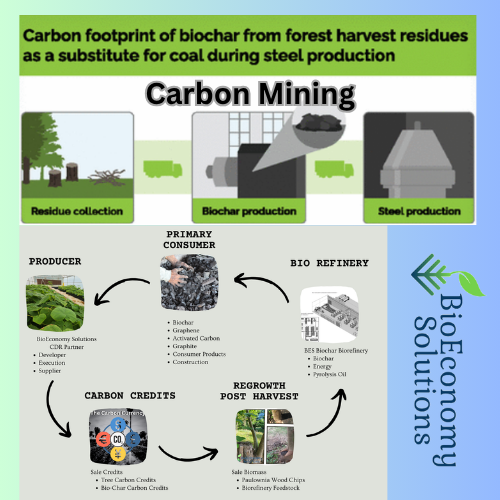
From Black Coal to Black Gold
Biochar offers more than just a coal alternative — it offers a blueprint for regenerative industry. It supports climate goals, strengthens supply chains, and enables a circular approach to carbon — all while producing the steel that still forms the backbone of modern civilization.
As the world demands climate-smart industry, biochar may well be the key to unlocking net-zero steel.
Dedicated Biochar Feedstock Supply Chain
Contact Us For Details
BioEconomy Solutions is a BIOCHAR Carbon Dioxide Removal (CDR) Project Developer. Talk to us about our biochar processing technology.
We’re happy to organize a time to speak with you about our high carbon biochar we have for sale. Please book your preferred time to speak directly.
Here’s a link to my online calendar/schedule:
www.bioeconomysolutions.com/bookcall
BioEconomy Solutions
Office: 843.305.4777
Visit us at: https://bioeconomysolutions.com/paulownia-carbon-credits/ Let’s chat about paulownia tree solutions for sustainable Forest carbon credits projects